Zumwalt Poems Online

Archive for the ‘Seventy Year Saturday’ Category

Seventy Year Saturday: 1956, Part Four

Today, we are honored to have a Seventy Year Saturday entry from none other than Leo the Deacon.

Enjoy!
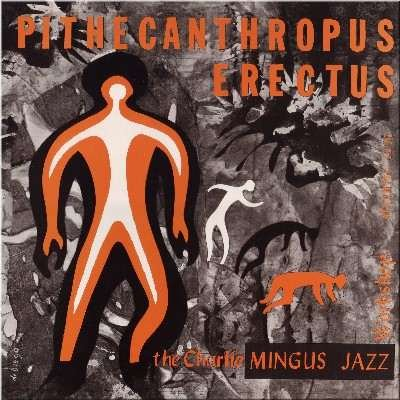
Charles Mingus: Pithecanthropus Erectus

New York City was cold and overcast with a nasty drizzle that just managed to stay liquid on the penultimate day of January 1956. It must have felt miserable to the LA-raised Charles Mingus; maybe it gave him an extra edge that day. Who knows? The weather we can look up, but Mingus’ mood is just conjecture. One thing is certain, though: Mingus created something special that sodden gray day, when he pulled together his “jazz workshop”—saxophonists Jackie McLean and J. R. Monterose, Mal Waldron on piano, Willie Jones on drums, and, of course, Mingus himself on bass—and walked them through the “framework” of the composition on piano so they could add flesh to the bones by playing it by ear. In one day, his workshop recorded the album Pithecanthropus Erectus, and when it was released later that year, it put Mingus on the map as a serious jazz composer and bandleader.

Pithecanthropus proved to be groundbreaking. The centerpiece of the album, the title cut, was a ten-minute programmatic composition that Mingus described as a jazz tone poem, meant to convey the evolution—and downfall—of the first humans. This was a major departure from the hard bop and cool jazz styles that dominated jazz music in the mid-‘50s. This single, intense, and cerebral composition, born out of a Jazz Workshop concept Mingus had been incubating since 1942, blew past the common jam-based format to pioneer new approaches to the music. As Mingus explained in the liner notes, he dispensed with charts in favor of laying out his musical intentions by ear—the first time he had recorded using such a method—to give his musicians greater freedom to improvise. Improvise they did, and what’s more, rather than each bandmember waiting his turn to solo, the workshop often improvises collectively—another innovation. In so doing, Mingus laid the foundation—the springboard, if you will—for the development of free jazz and avant-garde in the late 1950s and on into the’60s. “Pithecanthropus” challenges the listener with occasional dissonance, but it also rewards with passages of no little lyrical beauty, and even some humor.

“Pithecanthropus Erectus” definitely tells a story. Mingus is not coy about it—he explicitly lays out what he is trying to say in his liner notes: “it [the title cut] depicts musically my conception of the modern counterpart of the first man to stand erect – how proud he was, considering himself the “first” to ascend from all fours, pounding his chest and preaching his superiority over the animals still in a prone position. Overcome with self-esteem, he goes out to rule the world, if not the universe, but both his own failure to realize the inevitable emancipation of those he sought to enslave, and his greed in attempting to stand on a false security, deny him not only the right of ever being a man, but finally destroy him completely.” We’ll discuss this further when we look at the context in which the piece was composed, but you get the point.

Mingus’ tone poem has four movements, which he explained represent four distinct stages in the life of this “first man”: (1) evolution, (2) superiority-complex, (3) decline, and (4) destruction. There are indeed four movements, but this is not a Brahms symphony, in which one can clearly identify when one movement ends and the next one begins. In “Pithecanthropus,” Mingus has elided each movement into the following one, so it gets to be a bit of a game for the listener to discern when the music has moved, say, from “superiority-complex” to “decline.” Perhaps Mingus would argue that is how the life of men and societies often unfolds—decline creeps in on little cat feet, like Carl Sandburg’s fog, and it saps our strength by imperceptible degrees, to be discovered only when it is either too late or too hard to reverse it.

Mingus and his jazz workshop portray this progression masterfully. The composition opens with a cool, rhythmic theme dominated by Mingus’s bass and by the drums, with supporting musical texture provided by the horns. This theme, which repeats through each of the four movements, is cool and cocky, and propels the music forward—but it also carries a hint of menace. It is the sort of music the composer of a movie soundtrack might use for Chandleresque private eye or even for a criminal character. Then the horns come out of the background and, with an ascending blast, announce the first man’s presence with authority (as Nuke LaLoosh would say.) While the bass and drums continue to provide a stable platform, the saxophonists and Mal Waldron on piano begin their first collective improvisation maybe two to three minutes in. Dissonant and bold, they signal the competition required to rise to the top in a Hobbesian landscape. As the music moves into the second movement, Monterose on the tenor (or so it sounds to me) takes over and plays a very pleasant, lyrical solo that, after a minute or two, gives way to an equally pleasant passage by Waldron on the piano. A short burst of collective dissonance interrupts, and Waldron gives place to Jackie Mac on the alto. Presumably, the pleasant solos signal the emerging “superiority complex.” Another burst of dissonance, and some repeated horn blasts eventually overwhelm the piano. That cool, jazzy theme with a salient bass and drums returns, and soon the dissonance kicks in again. In the remaining thirty seconds, a final spasm of competing horns, piano, drums, and bass declare the death rattle of the first man, complete with a slight horn whimper. A fascinating ten minutes of music to try to pick apart and follow—at least for non-musicians such as the old Deacon here; you more musically educated types, such as the Curator of this site, may not find it to be the same challenge, especially as Mingus has spelled it all out for you in the liner notes!

Aside from being an impressive demonstration by Mingus of new ways he could manipulate the jazz idiom, the Pithecanthropus title cut reveals his social consciousness and anger that would increasingly push its way into jazz during the subsequent decade, expressed in such compositions as Mingus’ “Fables of Faubus” (1959), Max Roach’s We Insist! Max Roach’s Freedom Now Suite (1960), Oscar Brown, Jr.’s “Bid ‘em In” (1960), John Coltrane’s “Alabama” (recorded 1963, released 1964), and Nina Simone’s “Mississippi Goddam” (1964). That he struggled with pent-up frustration at injustice is not surprising, given that Mingus initially trained on the trombone and cello—but switched to the bass in part because symphony orchestras and other classical ensembles would not hire people of color in the 1930s and ‘40s. In his written explanation of “Pithecanthropus Erectus,” Mingus kept his discussion at a pretty general level, discoursing on a generic first man who considered himself superior to the “other animals,” but as he deploys words like “emancipation” and “enslave,” it doesn’t take a cryptographer to figure out that he is talking about racial injustice as experienced in the 1950s. At the time Pithecanthropus Erectus was recorded and released, already there was considerable ferment regarding civil rights for African-Americans: in 1954 and 1955, the years leading up to Pithecanthropus, the Supreme Court ordered the desegregation of local school systems (yes, children, there really was a time when the Supreme Court, with a Republican Chief Justice, sought to expand liberty—unlike these modern times when the justices are more focused on circumscribing rights and empowering dictatorship); Emmett Till, a fourteen-year-old black kid, was lynched in Mississippi; in December 1955 the Montgomery Bus Boycott was initiated following the arrest of Rosa Parks, a black woman, for failing to give up her seat on a city bus to a white man. And, on 30 January 1956—the day Mingus recorded Pithecanthropus Erectus—white supremacists bombed Martin Luther King’s home in Montgomery while his wife and infant daughter were inside. Outrage at segregation and racial injustice was in the air in the 1950s, and there can be little doubt this served as a wrathful muse for Mingus’ compositions.

I have concentrated my commentary largely on Pithecanthropus’ title track, because it is the truly pioneering work on this album, but that does not mean the remaining tracks should be ignored. Indeed, they serve as a more traditional counterbalance to the jagged dissonance to be found in the title track and a reminder of how truly pretty Mingus’ music could be. “Profile of Jackie,” for example, is a lovely, lush ballad-style composition that showcases altoist Jackie McLean’s command of his craft. “Love Chant” is another long-form composition running to nearly 15 minutes, but it is a quarter hour of Mingus and his workshop displaying the range of their chops. The piece begins with a relaxed, almost meditative bass vamp that Mingus repeats like a mantra throughout the length of the piece. The horns and piano likewise begin at a meditative pace but build momentum and improvise, mostly in solos, as the composition progresses. The sound is still largely conventional for the time and would not have sounded especially innovative; one could regard it as an extended jam session. Well into the composition, McLean and Monterose carry on a musical discussion as each one plays off the other, trading the lead, building eventually to a fuller, more collective improvisation to bring the piece to a close.

Mingus and his jazz workshop perform one cover on the album, a humorous take on the Gershwin standard “A Foggy Day.” Although most musicians perform this piece either as a romantic ballad (e.g., Ella Fitzgerald and Louis Armstrong’s interpretation, backed by the Oscar Peterson Quartet, on the 1956 album Ella and Louis) or as an up-tempo swing number (Frank Sinatra’s 1954 cover of the song, recorded in 1953 with a George Siravo arrangement conducted by Nelson Riddle), Mingus has some fun with the song. First, he transports the “Foggy Day” from London to San Francisco; then he opens the song with live studio imitations of the sort of noise one really hears in a city—automobile horns, police whistles, foghorns, even a siren—and they continue to punctuate and season the music throughout. Mingus plays it on the upbeat side, his bass once again setting a steady, rhythmic foundation to the music on which the horns and Waldron’s piano besport themselves. The essential beauty of Gershwin’s song is preserved, but in this performance, Mingus is winking at us as if to say, “C’mon—try falling in love to the real sounds of the city!”

I don’t know that I would recommend Pithecanthropus Erectus as the first Mingus album someone should buy if said someone is new to Mingus—and certainly not if one is new to jazz. If your interest is piqued by this review, but you haven’t really listened to Mingus, start with his 1959 masterpiece, Mingus Ah Um. But once you’ve gotten your ears used to Mingus’ use of dissonance and you’re ready to move on from “Goodbye Pork Pie Hat” (beautiful though that elegy is), give Pithecanthropus Erectus a hearing. Even if you can’t really develop a taste for the brilliant title cut, the remaining tracks on the record should provide you the aural sustenance you’re looking for. And if you can develop a taste for the title track, well, then you may find yourself wishing Mingus were still with us—who knows what kind of musical protest he might come up with if he were inspired by the likes of Trump, Hegseth, and Stephen Miller? We’ll never know, of course—but damn, it’s fun to think about!
Seventy Year Saturday: 1956, Part Two

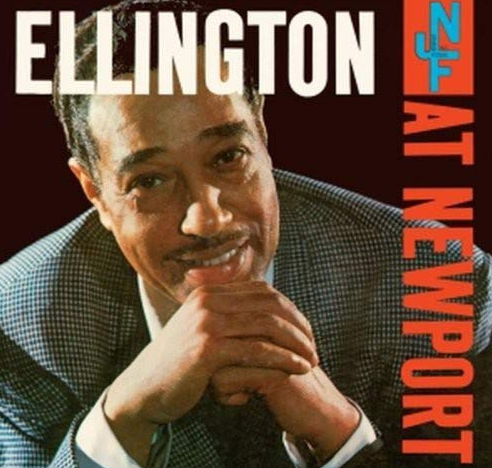
Duke Ellington: Ellington at Newport

On July 7, 1956, the Duke Ellington Orchestra played the third annual Newport Jazz Festival, taking the stage as the first act of the third night of the festival — well, almost: several of his band members were running late, so Duke and the musicians that were there played a version of the “Star-Spangled Banner,” and a truncated set of two numbers: “Black and Tan Fantasy” and “Tea for Two.” Duke and his band then stepped aside as several “cooler” and “more hip” acts took the stage: Teddy Wilson’s Trio, the Jimmy Giuffre Trio, the musically progressive Chico Hamilton Quintet (with Fred Katz on cello and piano and legendary guitarist Jim Hall), and dynamic “modernist” vocalist Anita O’Day, a flagship artist of the recently-formed Verve label, at the peak of her career following an April 1956 5-star review of her third studio album, eponymously titled Anita, released several months before Elvis Presley’s Elvis album. Elvis, I mean, Anita, was then possibly followed by the Bud Shank Quartet, but I am not sure of the order of the acts.

It is stated that the Duke fidgeted with anxiety backstage watching the more modernist acts, which made his own orchestra seem dated. However, when the time came for his orchestra to take the stage again, they were fired up to continue. Their set included the premier performance of a newly composed Ellington suite, which the band had not sufficiently rehearsed, and the defining moment of the concert: Paul Gonsalves’ 27-chorus solo between the two sections of Ellington’s “Diminuendo and Crescendo in Blue,” which, according to reports, incited near-pandemonium amongst the attendees and, as a result, generated a resurgence of public interest, single-handedly reviving the band’s relevance for a new generation of jazz fans.

However, when the time came to release the concert as an LP, Columbia Records had several challenges. The new suite clearly sounded under-rehearsed; saxophonist Johnny Hodges felt his playing was subpar in spots; Ellington was concerned about releasing a flawed representation of his orchestra; and Gonsalves, purportedly drunk during the concert, had misidentified which microphone to play next to, playing into the mic that the Voice of America had set up, making his crowd-stirring solo on “Diminuendo and Crescendo in Blue” sound distant.

So with all those considerations, the band recorded new versions of those numbers that had been selected for the planned “live” album, and producer George Avakian and engineer George Knuerr added the fake crowd noise. The two spent two days in the studio combining live tapes and studio retakes, electronically boosted the live audio as needed, spliced in additional, more noticeable applause, and heavily layered the tracks with reverberation, negatively impacting the general sound quality — all for the purpose of creating a finished product that appeared to be a genuine live festival performance.

The album was released in November of 1956, becoming the best-selling album of Duke’s entire career. It was a true commercial juggernaut, one of the first jazz albums to sell over a million copies, with continuing robust sales worldwide for years after its release. It even reached the number 14 spot on the Billboard Pop Albums chart, sadly not coming close to contending with that aforementioned Elvis album, but doing extraordinarily well for a live big band concert album during those early days of rock n roll. The album created increased demand for the Ellington Orchestra and their recording opportunities, and Ellington famously quipped, “I was born at the Newport Jazz Festival in 1956.”

In terms of critical acclaim, reviews of the album were filled with praise. Jazz critics, who had previously dismissed Ellington’s mid-1950s output as archaic and tired, completely reversed their stance. Reviewers in publications like DownBeat heralded it as a miraculous, irrefutable comeback.

And it’s important to note that the concert itself, even before the album was released, was a significant driving force of the band’s resurgence and no doubt helped drive the popularity of the album — the concert’s resulting press attention led Time magazine to put Duke Ellington on the cover of their August 20, 1956 issue, something never achieved by Elvis either in 1956 or in Elvis’s entire lifetime.

Now, although I purchased a copy of the Ellington at Newport album in CD format as well as a vinyl copy, something occurred that made me glad to set aside those versions, forever.

In 1999, two or three years after the discovery of tapes of the concert made by Voice of America, a 2-CD set was released which, through the aid of digital technology, merged together the original Columbia concert recordings and the VOA recordings to create a unified, amazingly crisp and detailed, stereo representation of the Ellington Orchestra performance.

And wow! Is it something. One can hear the rough spots, that’s true. For example, the first time I heard the beginning of Johnny Hodge’s solo on “I Got it Bad,” I physically cringed, involuntarily scrunching up my shoulders. I played the alto sax for a short time, and know that even though its pitch is controlled with fingered keys, one can make some uncomfortably embarrassing sounds — I never considered that one of the most disciplined alto saxophonists of all time, would ever inadvertently play such an off-pitch sound as was recorded for posterity that evening. And yet, the performance is still amazing. This is the case with that entire concert, making the true live version of the imperfectly three-part suite preferable to the cloudy-sounding 1956-released version. And for completists, the original material recorded in the studio for the doctored 1956 LP is included on the second CD, including a retake of “I Got it Bad,” played flawlessly by Hodges — and without any added crowd noise or reverb.

So yes, that original 1956 Ellington in Newport is one of the most historically significant albums in jazz, but the 2-CD 1999 version is one of the most musically enjoyable releases in big band jazz.

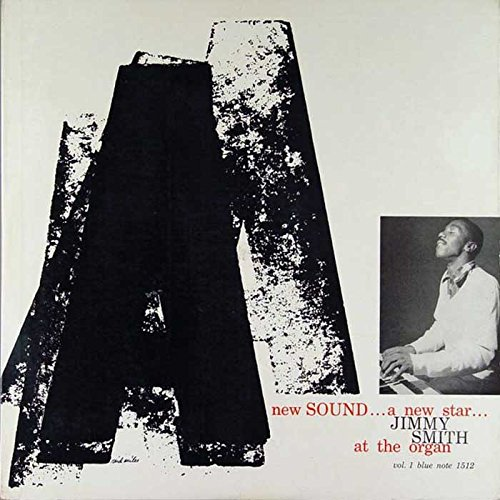
Jimmy Smith: Jimmy Smith At The Organ – A New Sound-A New Star Volume One, Jimmy Smith At The Organ – A New Sound-A New Star Volume Two, Jimmy Smith At The Organ Volume 3

Jimmy Smith recorded three studio albums in the first six months of 1956. The first, titled Jimmy Smith At The Organ – A New Sound-A New Star Volume One, has a strong rhythm and blues vibe, with a selection of standards, a very bluesy and soulful rendition of Horace Silver’s “The Preacher,” and Smith’s interpretation of Bach’s “Jesu, Joy of Man’s Desiring,” recorded on February 18, 1956, and released in 1956.

The second album, Jimmy Smith At The Organ – A New Sound-A New Star Volume Two, was recorded the next month on March 27, 1956, and released in 1956, and is closer to standard mid-1950s hard bop than the first. It starts with a rendition of Dizzy Gillespie’s “The Champ” that rivals any 1970s heavy metal rock track for sheer electrical power-driven invention and expression.

The third album, with a reassuringly shorter title, Jimmy Smith At The Organ Volume 3, recorded over two sessions, June 17 and June 18 1956, is similar to the second album, and contains only part of the tracks from those two sessions.

In 1997, a 2-CD set of a remastered version of these four sessions was released: A New Sound… A New Star… Jimmy Smith At The Organ Vol. 1-3, and unless you are committed to vinyl, this is the set to have. Jimmy Smith had an organ style like no other recording musician of 1956. His background was in Rhythm and Blues bands before transitioning to jazz. His approach is to lean into the melodic capabilities of the Hammond B-3 organ, emphasizing its electric-produced timbral options, and playing R&B-type chord textures when accompanying and when soloing, usually either playing primarily melodic passages with some interspersed chordal support or playing melodies over a walking bass. Though there is a general absence of any counter-melody or hints of polyphony, he is appropriately paired with electric guitarist Thornel Schwartz Jr., who continued to record with other notable Hammond B-3 organists, including the incomporable Larry Young. Schwartz provides the necessary polyphony and counter-melody phrases on Jimmy Smith’s solos, sometimes even providing the bass foundation underneath those solos. The interplay between these two is riveting, with Donald Bailey providing a crisp backbeat, a skip-style hi-hat, and propulsive snare accents that kept the high-energy bop driving forward. On slow passages, Smith and Schwartz showed how expressive their electric instruments could be, and Bailey provided a soulful R&B-style support. The 2-CD set puts the bonus tracks before the third album, and this works musically well, providing over a couple of hours of electric-driven soulful hard bop that influenced later jazz, R&B, and 1970s pop music — with influences well into the 1980s, with Quincy Jones requesting Jimmy Smith to play a Hammond B-3 MIDI organ solo on Michael Jackson’s Bad.

Seventy Year Saturday: 1956, Part One

There’s often a bittersweet undercurrent that is present when listening to great music composed or performed by an artist who died before reaching their forties. Every time I listen to a Jimi Hendrix recording, my enjoyment is always accompanied by the thought of what a tragedy it is that he didn’t live longer.

Most Americans seem aware that Mozart died at a young age: 35. Yes, part of this is due to the popularity of the movie Amadeus. Europeans are generally more aware of 18th and 19th century composers than Americans, but even if Amadeus had never been released, most Americans would know the names of Bach, Beethoven, and Mozart.

A smaller percentage of Americans know who Franz Schubert is, and some who are familiar with his name know it from his “Ave Maria,” which gets played quite a bit during the Christmas season, even today. There are not so many who have heard a full Schubert symphony or can tell you that he composed hundreds of songs, seven completed symphonies, three unfinished symphonies, some amazing string quartets, and a stunningly stylistically diverse range of piano music and piano sonatas before dying at the age of 31. It’s nearly impossible for me to listen to his music without reflecting (perhaps when cueing it up or immediately after its completion) on how tragic his early death was, or wondering what masterpieces would have been available for us if he had lived another thirty or forty years — or even another four years — living at least as long as Mozart. And then sometimes I consider how badly decimated the output of Bach, Beethoven, Brahms or even Mozart would have been if they had not made it to their 32nd birthday. We would still have all but two of Mozart’s 41 or so symphonies, but we would not have his last three, including the great Jupiter symphony, his Requiem, several of his best piano concertos and string quartets, or his four most important and beloved operas. Sadly, if all composers had died at the age of 31, Schubert would be considered the greatest of them all. Fortunately, the great majority lived past 31. That may explain why most Americans have such little knowledge of Schubert — but I suspect it’s just more accurate to assert that most Americans have little knowledge of music prior to the era of the Beatles.

If you approach the average person and ask what they think of the jazz trumpeter Booker Little’s career, and how it might have been different if he had lived a few decades longer, you will just get a blank stare. And even if Booker Little had continued making jazz music until his eighties, most Americans would not recognize his name simply because there is a general ignorance of America’s greatest musical legacy, the canon of recorded jazz music.

So I have to keep that in mind when I consider the magnitude of the loss to music of Clifford Brown at the age of 25, and to a lesser extent, Bud Powell’s younger brother, Richie, a talented pianist, composer and arranger, at the age of 24, both killed as passengers in a car accident when Richie’s 19 year old wife lost control of Clifford Brown’s car late at night on a badly rain-slicked Pennsylvania Turnpike during heavy rain and limited visibility. Neither alcohol nor drug usage was involved; Brown was one of the most notable drug-free players of the 1950s.

The accident occurred during the earliest hours of June 26, 1956. Clifford Brown recorded on two studio albums in 1956, each released in 1956.

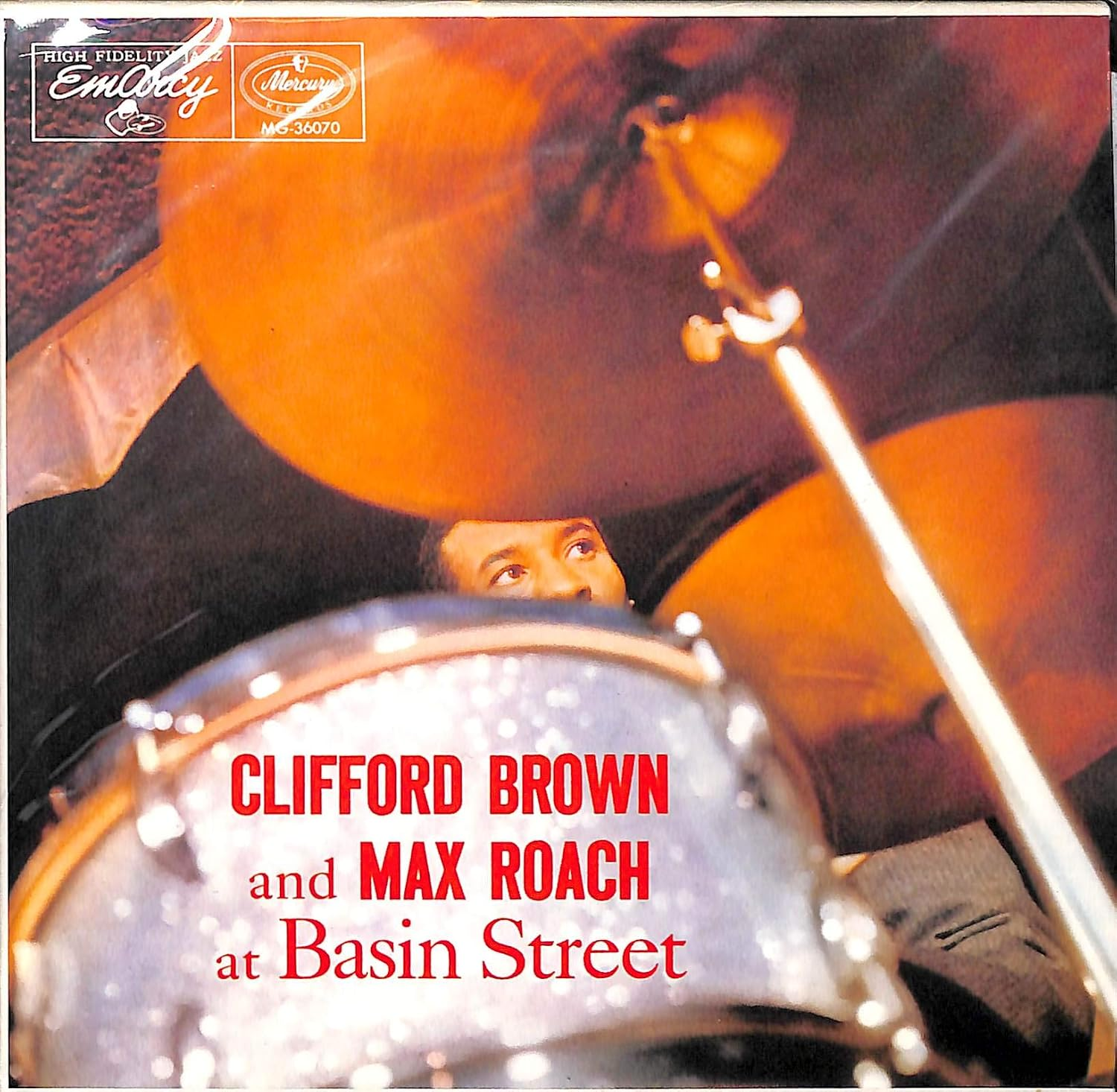
Clifford Brown and Max Roach: Clifford Brown and Max Roach at Basin Street

The first album I will cover, Clifford Brown’s last album as a leader, was recorded in January and February of 1956, and it is one of the finest hard bop albums of all time: Clifford Brown and Max Roach at Basin Street. Please note that although the title may imply a live recording, this is a studio album recorded in New York City at Capitol Studios.

Personnel
Max Roach – drums
Clifford Brown – trumpet
Sonny Rollins – tenor saxophone
Richie Powell – piano, celesta
George Morrow – double bass

Track listing
(All tracks arranged by Richie Powell except where noted.
“What Is This Thing Called Love?” (Cole Porter) – 7:33
“Love Is a Many-Splendored Thing” (Sammy Fain, Paul Francis Webster) – 4:13
“I’ll Remember April” (Gene de Paul, Patricia Johnston, Don Raye) – 9:13
“Powell’s Prances” (Richie Powell) – 3:28
“Time” (Richie Powell) – 5:03
“The Scene Is Clean” (Tadd Dameron, arr. Dameron) – 6:04
“Gertrude’s Bounce” (Richie Powell) – 4:09

The album opens with a four-bar Max Roach solo on drums as part of Richie Powell’s 64-bar introductory arrangement for Cole Porter’s “What Is This Thing Called Love?“, followed by an incredibly intense solo by Clifford Brown, followed by a similarly focused solo by Rollins. Now, in some of the recordings I have, Sonny Rollins comes off as remarkably relaxed and melodic, but here we have a very riveting hard-bop statement. This is followed by Powell’s piano solo, more introspective initially, but developing to fit the mood. George Morrow then has his solo, followed by an arranged ensemble section and a Max Roach solo. It’s important to mention how Max Roach stood out from most of his contemporary drummers, first in the forties, and as he developed in the 1950s. He didn’t just support the ensemble and soloists or keep the beat; he intertwined with the ensemble and soloists, often altering the micro-elements of the beat while not disrupting the rhythmic flow. His solos were more than a technical display but a musical narrative, interesting not as just perfunctory or an obligatory contrast with the melody-instrument soloists but as equal engagement with the overall musical effect. The solo here doesn’t break the flow but is both musically intriguing and nicely sets up the alternating exchanges between Clifford Brown and Sonny Rollins that lead into the outro or arranged finish, which mimics the introduction, including the brief Max Roach solo. The engineer fades the track out, which a purist may find objectionable, but which works quite effectively.

Now, both the CD reissue of this and the Complete 11 CD Clifford Brown EmArcy box set provide some alternate takes for this album, with the 11 CD set providing a full alternate take that is even better than the take used for the original album. One can hear some notable differences, including the opening intro where George Morrow plays the last two odd beats of Roach’s solo. Seems to me the Brown solo is more unrestrained and expressive, and the Rollins solo more exploratory and relaxed, with the main benefit being we have two different versions, both exceptional.

The EmArcy box set also gives us two remarkable versions of “Love Is a Many-Splendored Thing” and “I’ll Remember April.” Once again, the arranged sections are sharp and effective, with the soloing focused and urgent on “Love Is a Many-Splendored Thing.” The album contains three compositions by pianist Richie Powell, with “Powell’s Prances” being an exhilarating hard bop number proving an effective fast-paced vehicle for both Brown and Rollins, with a strong solo by Powell and Max Roach providing energetic support and a propulsive thirty-five-second solo. The album includes an additional piece by Tadd Dameron, and the EmArcy box set includes two additional tracks from the January/Februrary sessions.

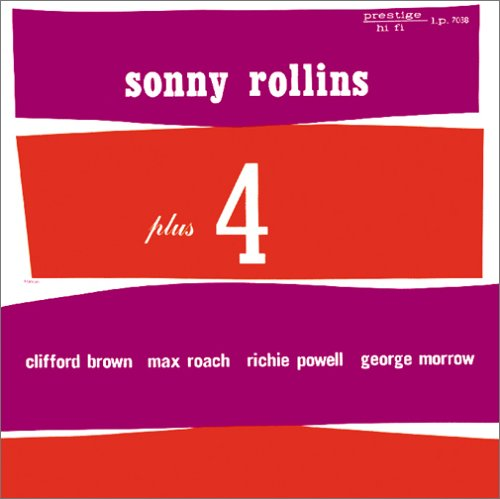
Sonny Rollins: Sonny Rollins Plus Four

Rollins, a part of the Clifford Brown, Max Roach Quintet since November 1955, joining shortly after his break from jazz due to a period of drug rehab, such as it was in late 1954 and 1955, recorded for Prestige as a leader starting in 1951 through November 1956. In exchange for Rollins playing with Clifford Brown and Max Roach for the EmArcy label, EmArcy agreed to allow Brown, Roach, Powell, and Morrow to join Rollins for this Prestige recording, Sonny Rollins Plus Four, recorded in March 1956, and released in August 1956, a couple of months after the fatal Brown/Powell crash.

Track Listing

Side one

  1. “Valse Hot” (Sonny Rollins) – 8:36
  2. “Kiss and Run” (Sam Coslow) – 7:08

Side two

  1. “I Feel a Song Coming On” (Dorothy Fields, Jimmy McHugh, George Oppenheimer) – 5:13
  2. “Count Your Blessings (Instead of Sheep)” (Irving Berlin) – 2:30
  3. “Pent-Up House” (Rollins) – 8:50

Personnel

George Morrow – bass
Sonny Rollins – tenor saxophone
Clifford Brown – trumpet (all tracks except “Count Your Blessings”)
Max Roach – drums
Richie Powell – piano

The album starts with a Rollins composition, a 3/4 jazz tune appropriately named “Valse Hot. Rollins has the first solo, relaxed and melodic. Brown’s solo is effortlessly engaging and lyrical. Powell and Roach both make fine contributions. The session seems more ad hoc, and I suspect the arrangements were a product of the rehearsal process rather than being formally written out by Powell.

Of the remaining numbers, each contains strong solo work and is a treat to listen to. “Count Your Blessings” is a beautiful ballad, showcasing Rollins’ lush, rounded, romantic tone with Brown sitting out. The album ends with the lively Rollins tune “Pent-Up House” with Clifford Brown taking the initial solo, wowing us as always with his ability to craft a composition in mid-flight, starting with stark, economical phrases, and then developing the material as if retelling a condensed plot of a short story. Rollins seems sensitive to the mood and provides a similarly narrative solo. Again, Powell provides a solid piano solo, and Max Roach’s solo provides an effective transition to the recapitulation of the theme.

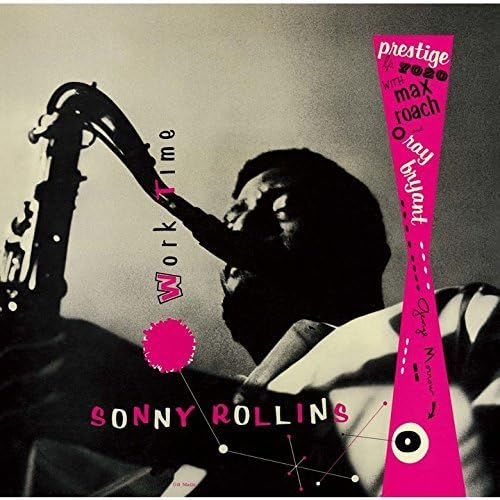
Sonny Rollins: Work Time

Prestige released two other Sonny Rollins albums in 1956. The first was Work Time, recorded in December 1955, and released sometime in 1956. I love this album! Rollins’ “Paradox,” the second track, is one of those memorable hard-bop originals — not derived from some previous classic, but fresh and clever, including its Latin rhythmic sensibility, disrupted, or rather infused, with Rollins’ sparkling use of accents and the tense, shifting quality of its melodic material. I am a big fan of Billy Strayhorn’s “Raincheck,” so it’s a real treat to get this driving hard-bop rendition of it, which includes a relentlessly swinging Rollins solo and an invigorating Max Roach solo.

Track Listing

  1. “There’s No Business Like Show Business” (Irving Berlin) – 6:20
  2. “Paradox” (Sonny Rollins) – 5:00
  3. “Raincheck” (Billy Strayhorn) – 6:00
  4. “There Are Such Things” (Stanley Adams, Abel Baer, George W. Meyer) – 9:32
  5. “It’s All Right with Me” (Cole Porter) – 6:06

Personnel

Max Roach – drums}
Sonny Rollins – tenor saxophone
Ray Bryant – piano
George Morrow – bass

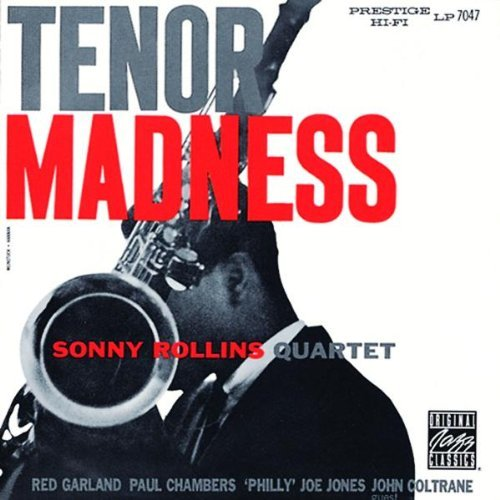
Sonny Rollins: Tenor Madness

Recorded in May 1956 and released in October 1956, I own one of those audiophile repressings of this, and it’s really tempting to get it out to just listen to the first track, the only recording of Sonny Rollins and John Coltrane playing together; however, the rest of the album is pretty strong.

There’s been a lot written about this first track, so I’ll try to be brief. It’s unusual to have two soloists of the same instrument recording together in a quintet, and it was happenstance that we have this. Coltrane was on the Prestige label, playing with Miles Davis and the exact same rhythm section Rollins was using for his session, and for some reason was in the studio with his tenor saxophone. Rollins, a close friend of Coltrane, didn’t hesitate to encourage him to sit in. Of course, whatever tune they picked to record would have to be a piece Coltrane knew the changes to, and for optimal improvisational ease, it made sense for it to be a blues-based tune. Not sure how they arrived at the selection, but they chose Kenny Clarke’s and Fats Navarro’s 12-bar blues “Royal Roost,” renaming it, appropriately for the session, “Tenor Madness.” Well, the recording was a critical success, with Coltrane and Rollins having both the advantage of long, extended solos in the first few minutes, and then, after a piano solo from Red Garland and a bass solo from Paul Chambers over a minute of exciting four-bar interchanges, followed by some more soloing and then a dozen more choruses of alternating exchanges.

This makes the rest of the album seem a bit anticlimatic, but as mentioned, it’s worth continuing on with, even if one chooses to take a break, sample some more Coltrane, or play Tenor Madness a second time before continuing on. Particularly notable is the contemplative rendition of “When Your Lover Has Gone” and Larry Clinton’s reworking of Debussy’s “My Reverie,” one of those pieces that goes perfectly with a crackling fire in the fireplace, if you happen to have a house that actually has a fireplace.

Track listing
All tracks by Sonny Rollins except where noted.[7]

  1. “Tenor Madness” – 12:16
  2. “When Your Lover Has Gone” (Einar Aaron Swan) – 6:11
  3. “Paul’s Pal” – 5:12
  4. “My Reverie” (Larry Clinton, Claude Debussy) – 6:08
  5. “The Most Beautiful Girl in the World” (Richard Rodgers, Lorenz Hart) – 5:37

Personnel
Philly Joe Jones – drums
Sonny Rollins – tenor saxophone
John Coltrane – tenor saxophone (#1 only)
Red Garland – piano
Paul Chambers – double bass

Max Roach: Max Roach Plus Four

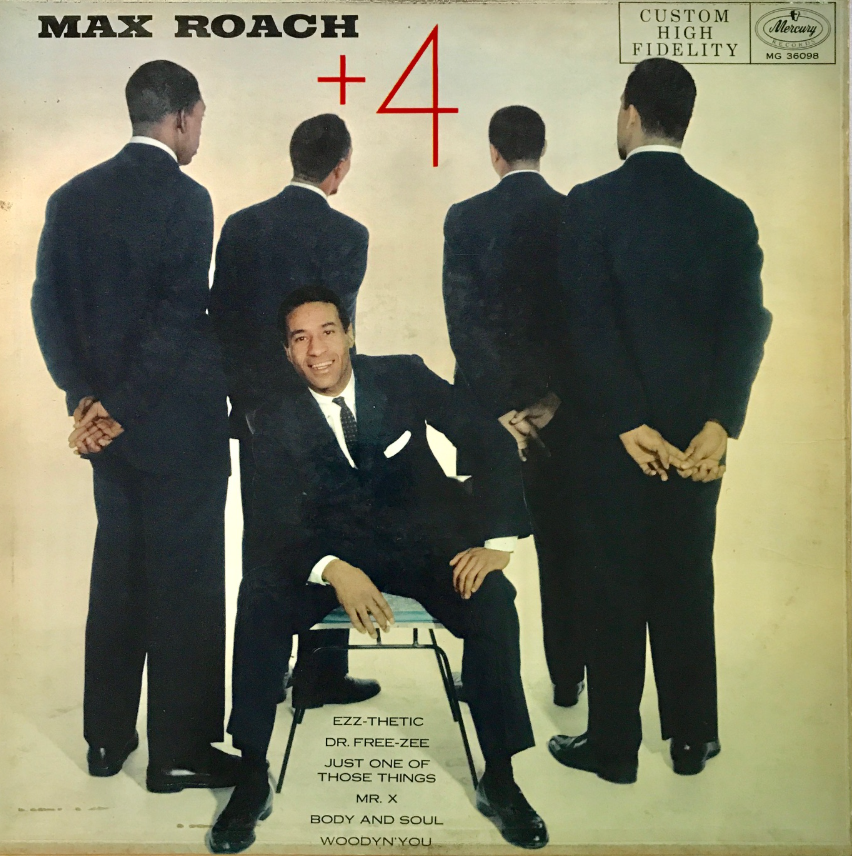
Recorded in September 1956 and released the next month, this is an energetic, exciting album, filled with choice tunes and wonderful improvisation. We hear a lively Sonny Rollins on the first track, George Russell’s Ezz-Thetic, making the most of the opportunity, reminding me of the free-wheeling John Coltrane at times as he effortlessly slides through sequences of notes. His solo is followed by a breathy but equally breathless Kenny Dorham solo. Ray Bryant provides top-notch piano throughout the album, and his solo here navigates the tricky chord changes of Ezz-Thetic (based on “Love for Sale”) effortlessly. There are some trading fours (Rollins, Dorham, and Roach alternating four-bar solos) and then Roach and the duo of Rollins and Dorham alternating, this giving way to a tension-driven Roach drum solo, one of the many highlights of the album.

The much briefer “Dr. Free-Zee” showcases Max Roach’s versatility and creativity by overdubbing his timpani lines over the initial recording of the ensemble where Roach is on his standard drum kit. Side One concludes with Cole Porter’s “Just One of Those Things.” I love how Max Roach is featured in the short intro before the exposition of the melody. Rollins is off to the races, again eliding notes and creating drama through his extraordinary control of note placement and emphasis. Dorham’s solo is breathy, agile, and lightning fast. Again, Bryant holds his own, and Max Roach provides an amazing drum solo.

Side Two opens with Roach’s “Mr. X. which includes a strong solo by Rollins, Dorham and Bryant maintaining the energy and mood, some exciting trading fours and a great drum solo by Roach over Bryant’s piano accompaniment. This is followed by “Body and Soul” — I am incapable of hearing any instrumental version of “Body and Soul” without instinctively reflecting on Coleman Hawkins’ historic 1939 recording. Rollins plays beautifully here with some gorgeous low-register legato, and Bryant and Morrow support Dorham’s reflective solo perfectly. There is no drum solo, an appropriate decision.

The album concludes with Dizzy Gillespie’s early bebop tune “Woody ‘n You”, written in 1942, and originally written for Woody Herman and his Orchestra, but first recorded by Coleman Hawkins with Gillespie, Roach and Oscar Pettiford. Dorham provides a particularly inspiring solo here, and there is some incandescent interplay between Rollins and Dorham after a second solo by Rollins. Bryant solos before an apparent recap, which unexpectedly gives way to an engaging Max Roach percussion solo with the theme resolutely returning, followed by brief Rollins and Dorham exchanges concluding one of Max Roach’s finest albums.

Track Listing
All compositions by Max Roach except as indicated

  1. “Ezz-Thetic” (George Russell) – 9:18
  2. “Dr. Free-Zee” – 2:06
  3. “Just One of Those Things” (Cole Porter) – 7:18
  4. “Mr X.” – 5:15
  5. “Body and Soul” (Edward Heyman, Robert Sour, Frank Eyton, Johnny Green) – 6:50
  6. “Woody ‘n’ You” (Dizzy Gillespie) – 6:51
  7. “It Don’t Mean a Thing (If It Ain’t Got That Swing)” (Duke Ellington, Irving Mills) – 4:45 Bonus track on CD reissue
  8. “Love Letters” (Edward Heyman, Victor Young) – 8:57 Bonus track on CD reissue
  9. “Minor Trouble” (Ray Bryant) – 6:58 Bonus track on CD reissue

Personnel