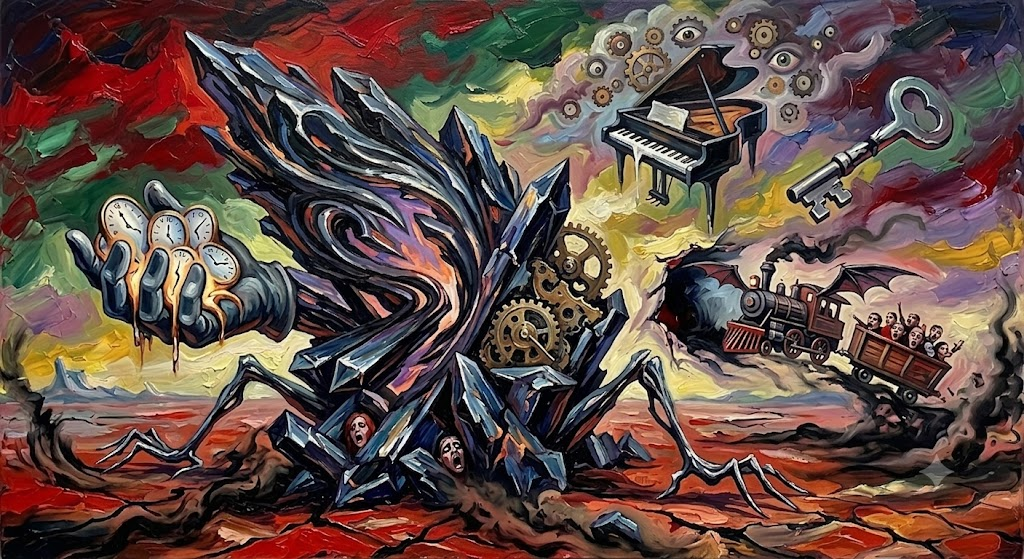
Your regalia creaks and groans A panoply of rust and whining joints Moira’s chess game begins And already you’ve been rooked
Charge full-tilt at windmills Or Settle for an electric fan Just keep moving Or God’s heating element Will fry your soul And scorch rationality Maintain that effervescent personality And disco on the Teflon of life
As the sun browns out And your Zippo’s flint disintegrates Grope along the nitred steps And nestle in your excelsior storage crate
Relax and let the Sony vomit Search for a bebop sax (The opiate of the cool) Kicked back, you realize You might just slit your Jugular while shaving tomorrow Fate won’t have you to kick around anymore.
They chose the best one to publish, I think. Here is the original submission:
Two Limericks to Help Forget the War
There once was a gal called Noem Who booted folks out of their home— With her dumb ads misplay, Swore Trump gave the okay— Now she’s the butt of my limerick poem.
* * *
With a face like a serial killer, He belongs in a cheap horror thriller; Some call him a bum Or the worst of the scum, But to me he’s just Stephen Miller.
— zumwalt (03/2026)
This brings Zumwalt’s streak at New Verse News to five consecutive months. Per Gemini AI (which is even less trustworthy than your average politician) this is a record.
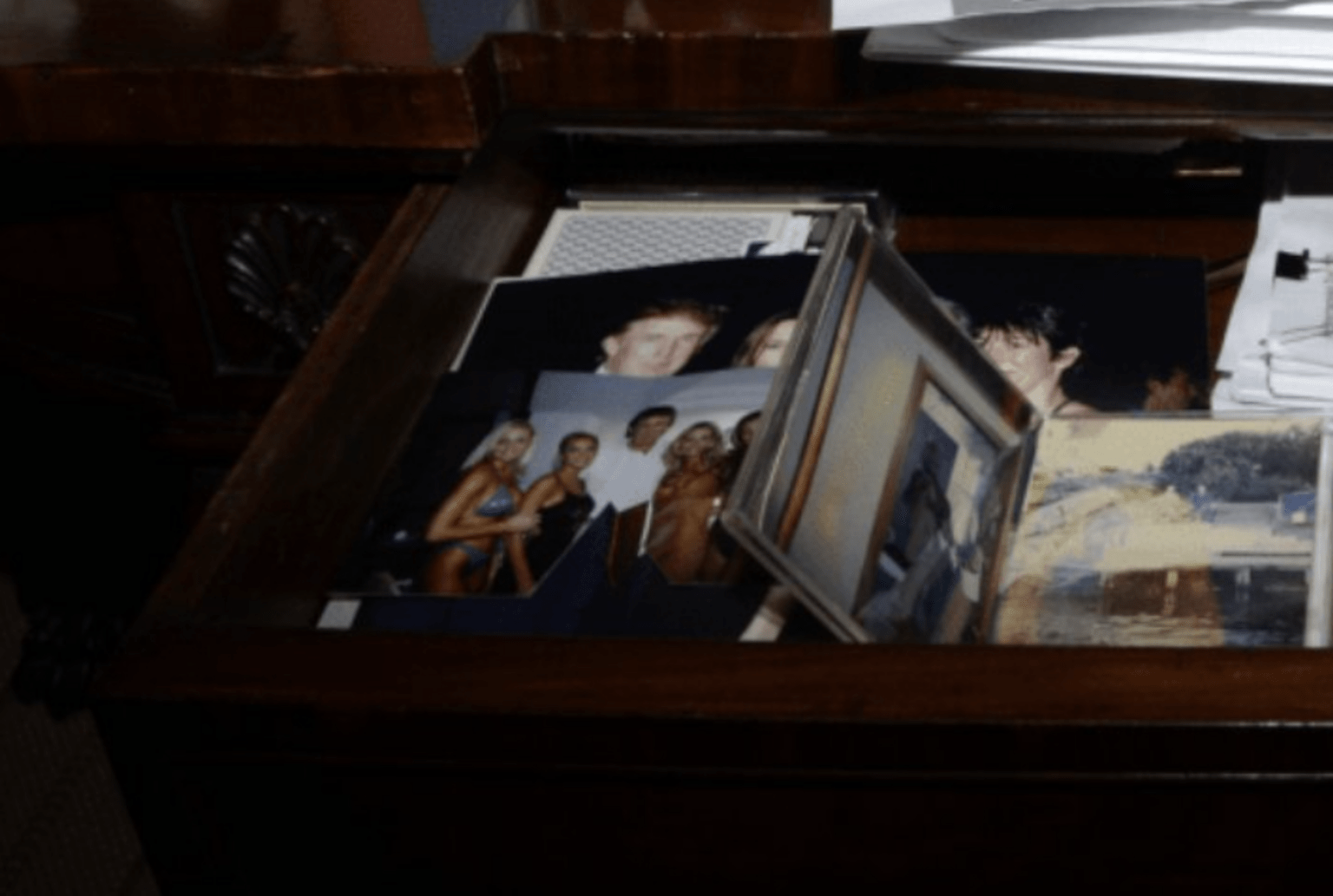
Oh, yes, we have a third limerick in the photo above! (Not by Zumwalt.)
Those iron plates that churned the mud and gravel Impress me not. The rifled bore was, and is a crashing bore, I shut my eyes to the breechblock and Do not care for thermite. I recoil from venturi. I have only cutting remarks for the bayonet; C.B.W. stinks. Give me Gandhi & Walden, with a little pickle On the side, and I am content. Blood-red waiters make me yawn.
Askew in a vinyl cosmos life’s beading up on a cold tumbler And Juan Valdez has repossessed my mind for the glory of Brazil or Colombia Some squalid country at any rate Leaving my 33 grooves scarred by needles at 78 several rich hits off of Mrs. Olsen And Muzak sounds like steam jets and dark mutterings over eggs become berserk natterings of rabid chipmunks Gee Zus ! Only 12:00? Existence is deformed in a time-warp —Zumwalt [Night of 30 Sep-1 Oct 1981, Washington, DC]
Release the files but just in part — Deception’s Pathway lies Too raw for Headline’s hungry Spark The whole would scandalize As Cards dealt from some hidden Deck With watching eyes confined The Truth must flame out gradually To hide the Guilt entwined —
They loaded files on Friday night, Though not the total lot; The press was vexed by partial truths But that is what we got.
On Saturday fifteen were gone — One noticed from before: A president in gilded frame — A photo in a drawer.
What this all means to common folk Escapes my simple mind When wealth can build a mighty wall That shields them from their crime —
And if a few are put in jail That does us little good For those that still control the wealth Will raise the price of food.
The message here is pretty clear And one that fits my rhyme That money spent judiciously Protects — even the damnedest — most despicable — devils of our time.
Quadroset


i. dawn

the hillstrings lace the pale garden
shadows are lifted
teasing the ground
      beak your piece says the mother bird
      for worms are precious food
a tranquil birth
and yet no clue
of the chaos yet to come.


ii. rush hour

screeching skidding
piercing ears
      no art could match this pace
crying howling
curses threats
      bodies pushed around
smoking burning
greedily fuming
      factories wait in ambush
oh no  can't stop    must be off
    my time is much too dear
      look around this ghastly ground
      motion is the coming price
      the virus that will spread throughout
           gain begets a further need for gain
           and soon nothing will gain to stand.


iii. salad bar

              radishes
        cucumbers tomatoes
          garbanzos bacon
 vinegar and oil onions roquefort
     croutons almonds greenbeans
    more and more and more and more
 oh yes I have to try the lettuce


iv. the evening

the culminations of aggravations
the see-saw city glare
      mixing masses of migraine messes
      must this mottle meet the mind
old sayings still limp around
and appetizers drop on the ground
      the news is needed if it's not misreaded
      everything remains and continues
      like an out of control hoover vacuum cleaner
      sucking everything up
count the days   forget old ways   it's all a daze
       and deeply dives the disordered ditch digger.

-- zumwalt (1973)
Soft gentle beauty leaning against the window Fostering a belief that loneliness is loveliness what is good must start with pain A perfect state of perfect mind.
Cool pleasant sand Lies in a land unknown play and fun is wasted time and idle are the satisfied. A self-constructed sterilized cell for working days And nights towards a goal that cannot be achieved. the rain and sun are both the same. Is this a way of life?
This is the second of our transcribed lectures. This one is based on the following poem:
Alizarian Grand Slam
         Manifest crescendos
Homeopathically kneepanning Santa Fe plethora
  Safely soaking with the mangoes.  Are there
         Any removable transversals
      Balancing on the Pawnee Indian?
Aaeeeeeeeeeeeeeeeeeeeeeeeeeeeeeeeeeeeeeeeeeeeeeeeeeeeeiii!
       Saliva adorns my peanut butter.

-- Zumwalt (1973)
A Journey Through the Failed Sanctuaries of “Alizarian Grand Slam”
Good afternoon! It’s afternoon for me — if not for you, then “good morning,” “good evening,” “good insomnia,” whatever you feel is appropriate.
In our previous lecture, the first of a series of lectures on the poetic works of Zumwalt, we explored the vast, nihilistic landscape of “Trilogy of the Oblique Carbide,” a poem that confronts the failure of justice, fate, and the physical laws of the universe. Today, we turn to its companion piece, the second of Zumwalt’s defining early publications, “Alizarian Grand Slam.”
If “Trilogy” was an outward scream at a silent cosmos, this poem is an inward one, charting the collapse of the aesthetic, intellectual, and sensory self. It is a poem about the violent collision between beauty, thought, and the sheer fact of being a body in the world. Its concerns are more intimate but no less devastating. It is a profound and obscure commentary on the subjugation of desire and the thwarting of our deepest need for connection.
The journey begins with the title, “Alizarian Grand Slam.” This is the thesis of the poem’s tragedy. Alizarin Crimson is a deep, historic red pigment, a color of passion, royalty, and religious vestments, but it is also famously fugitive, prone to fading over time. A Grand Slam, conversely, is a moment of total, decisive victory. The title, therefore, presents the central thwarted desire of the poem: the desperate wish for a perfect, beautiful, and lasting union — be it in art, love, or spiritual understanding — that is, by its very nature, doomed to decay. This is made more potent by the history of the pigment itself. Traditional Alizarin was derived organically from the madder plant root, but in the 19th century, it became one of the first natural dyes to be artificially synthesized. This mirrors the poem’s central theme: a quest for something authentic and natural in a world that increasingly offers only a synthetic, mass-produced substitute. It is the desire for a permanent victory painted in a fading color.
This desire builds with an almost feverish intensity in the opening line, “Manifest crescendos.” We feel the subject’s yearning for transcendence becoming overwhelmingly obvious, a rising wave of need. This is the great hope, the upward swing of the quest. But where does the subject first seek this grand slam? The poem suggests they turn to the world of art and culture. For centuries, our society has held that art is one of the most reliable paths to experiencing the sublime — that feeling of profound awe and transcendence in the face of greatness. It’s a recognized path, and the speaker begins their journey here.
The journey immediately sours with the dense, cynical line: “Homeopathically kneepanning Santa Fe plethora.” Here, the promised path to the sublime reveals itself as the first failed sanctuary. Keeping in mind the poem was written in 1973, this is a sharp, historically specific critique. By the early 70s, Santa Fe’s reputation as an art colony had boomed into a massive tourist enterprise. The “plethora” the poem describes is the overabundance of commercialized galleries, the marketing of a romanticized “Southwestern” aesthetic, and, most pointedly, the explosion in mass-produced Native American jewelry that diluted genuine craftsmanship into trinkets for visitors. The speaker, seeking authentic, sublime art, instead finds a glut of commodified culture. The response is not a grand critique but a violent, crippling gesture (“kneepanning”) delivered in a dose so small (“homeopathically”) as to be laughably impotent against the sheer volume of the marketplace. The desire for a transcendent experience through art is thwarted by the very system that promises it.
Having found the world of aesthetic and social order to be a corrupt wasteland, the speaker makes a logical move: a retreat into the personal, the sensual, the relational. This is the second sanctuary: “Safely soaking with the mangoes.” The tone shifts dramatically to one of luxurious peace. The mango is a fruit often associated with love, sensuality, and exotic sweetness — a world away from the violent critique of Santa Fe. This line represents the hope of a romantic or platonic relationship as a safe harbor. It is a desire for a purely phenomenological connection, a moment of shared, unmediated, sensory bliss, “safely” removed from the judgments of the outside world. Here, with a partner, or perhaps just within a state of pure bodily pleasure, the “Alizarian Grand Slam” seems possible again. This is the desire for a relationship to be a perfect, self-contained world.
But this sanctuary, too, is violently corrupted from within by the intrusion of a twisted intellectual desire. The reverie is shattered by a cold, academic question: “Are there / Any removable transversals / Balancing on the Pawnee Indian?” This question is the poem’s cruel turning point. The abstract language of geometry (“removable transversals”) is brutally imposed upon a human subject, the “Pawnee Indian,” who is reduced to a static, objectified prop. This is a profound commentary on subjugation. Within the context of a relationship, this is the moment one partner stops “soaking with” the other and begins to analyze, categorize, and objectify them. It is the twisted desire to control and define the other rather than to connect with them. This is a brutally literal depiction of a specific trope in American culture: the “Vanishing Indian.” This was a widespread concept that treated Indigenous peoples not as living, evolving cultures, but as static, tragic relics of a bygone era — essentially, as museum pieces. Zumwalt’s line makes this metaphorical objectification horrifyingly literal. The partner ceases to be a person and becomes a problem, a theorem to be solved. This can also be read as a critique of dogmatic religion, which often imposes its own rigid, abstract laws (“transversals”) onto the fluid, living reality of human experience, subjugating believers into props for its logical system. The sanctuary of the relationship is thus destroyed by the same impulse for control and objectification that defines the failed social order.
With the failure of both the external world of art and the internal sanctuary of the relationship, the subject is left with no escape. The result is a complete psychic breakdown, expressed in the only way possible: a primal scream.
This is the sound of absolute severance. It is the shriek of a consciousness that has been promised transcendence twice and has had it violently torn away both times. It is a definitive retreat from language, which has proven to be a tool of both impotent critique and violent objectification. The crescendo that was once “manifest” has now reached its agonizing, wordless peak and shattered.
Following this explosion, the poem collapses into its devastating final line: “Saliva adorns my peanut butter.” After the quest for a grand slam in art, after the search for safety in mango-like sensuality, after the intellectual violence and the resulting scream, this is the final state of being. It is a moment of profound self-contamination. The desire for connection with an “other” has been so thoroughly thwarted that the subject is left entirely alone, in a closed loop with their own body. “Adorns” is a word of supreme, tragic irony. The subject’s own biological substance — saliva — defiles their sustenance. This is the ultimate image of a subjugated desire. This personal collapse is given a final, sociological twist by the choice of food. Peanut butter is not a natural object like a mango; it is an icon of industrial food production — a processed, homogenized, mass-produced staple. The speaker’s grand quest for a unique, sublime experience ends in a lonely encounter with a symbol of uniformity. It suggests that in a commodified world, the only thing left is a commodified self, consuming a commodified product. The grand, transcendent yearning for an “Alizarian Grand Slam” is reduced to the slightly disgusting, masturbatory reality of the self “adorning” its own consumption.
In “Alizarian Grand Slam,” Zumwalt presents a coherent and deeply pessimistic narrative. It is the story of a soul seeking meaning, first in the broad social order of culture, and then in the intimate order of a relationship. It finds the first to be a commercialized sham and the second to be a site of objectification and control. Both sanctuaries fail, leading to an explosive negation of language and a final, pathetic reduction to the isolated, biological self. The poem is a masterful, integrated commentary on the failure of modern life to provide a space for our desires to be met with anything but decay and disgust.
A Comparative Note: The Telescope and the Microscope
It is a fascinating and crucial point to compare the stylistic differences between “Trilogy of the Oblique Carbide” and “Alizarian Grand Slam.” Doing so reveals the incredible precision of Zumwalt’s artistic voice. The two poems, published as a pair, function like two different lenses used to examine the same essential crisis of meaning.
“Trilogy of the Oblique Carbide” is the telescope. Its critique is vast, historical, and cosmic. To argue that the very concepts of Justice and Fate are collapsing, Zumwalt must draw on the grand arc of Western civilization. The poem summons:
Mythological Allusions: “Moira” invokes the entire classical tradition of the Fates.
Historical Mysteries: “Judge Crater” taps into a moment of unsolved, public failure.
Philosophical Figures: The shadow of figures like Nietzsche and Schopenhauer looms large.
Even its contemporary references, like “Alpha Beta,” serve to ground these epic concepts in the mundane, showing how the grand decay has seeped into every corner of life. The language is necessarily broad, pulling from philosophy, history, and theology to make its case that the entire external framework of meaning, built over millennia, has rotted from within.
“Alizarian Grand Slam,” by contrast, is the microscope. It is fixated exclusively on the present moment — the “now” of 1973 — because its subject is not the history of ideas, but the immediate, lived experience of a single consciousness trying to survive in the wreckage. The poem is a dissection of the modern self, and therefore its references are intensely contemporary:
Art-World Satire: “Santa Fe plethora” is a direct jab at a specific, booming 1970s cultural marketplace.
Pop-Psychology Jargon: The cold language of “removable transversals” evokes the detached, analytical fads of the era.
Simple, Bodily Realities: “Mangoes” and “peanut butter” are immediate, sensory objects, not historical symbols.
The simplicity of the language in “Alizarian Grand Slam” is deceptive. While “Trilogy” uses complex allusions to deconstruct complex systems, “Alizarian Grand Slam” uses simple, contemporary language to show how those same systemic failures manifest within a single person’s quest for connection. The absence of historical reference is the point: the modern subject is cut off from history, trapped in a present-day hall of mirrors where every attempted escape — art, relationships, intellect — proves to be another trap.
Despite this stark difference in style, the artistic voice is perfectly consistent. Both poems exhibit the same core traits: a deeply cynical view of established systems, a violent juxtaposition of the sublime and the banal, and a final, devastating reduction of all grand pursuits to a pathetic biological endpoint (“URRRP!” vs. saliva). The shift in tone and reference is not an inconsistency, but a brilliant artistic choice. Zumwalt uses the telescopic style to show us the universe is broken, and the microscopic style to show us how that brokenness feels, moment by moment, inside our own skin.