Zumwalt Poems Online

Archive for the ‘writing’ Category

Thoughtful Thursday: Shifting Viewpoints

The interesting thing about our physical universe is that immediate assessment of anything rarely provides a full understanding or even an accurate evaluation.

In order to get a better understanding of anything, we gather more data. When examining a notable or historic building, we move from one vantage point to another — the more angles we view the building, the better conception we have of its form. When we go inside the building, we have access to even more angles and views of that building.

Travel is basically moving from one geographical coordinate to another, and in each new position we have a new viewpoint. Over time, we accumulate a wealth of such experiences, and these experiences deepen our understanding of the world and the people around us.

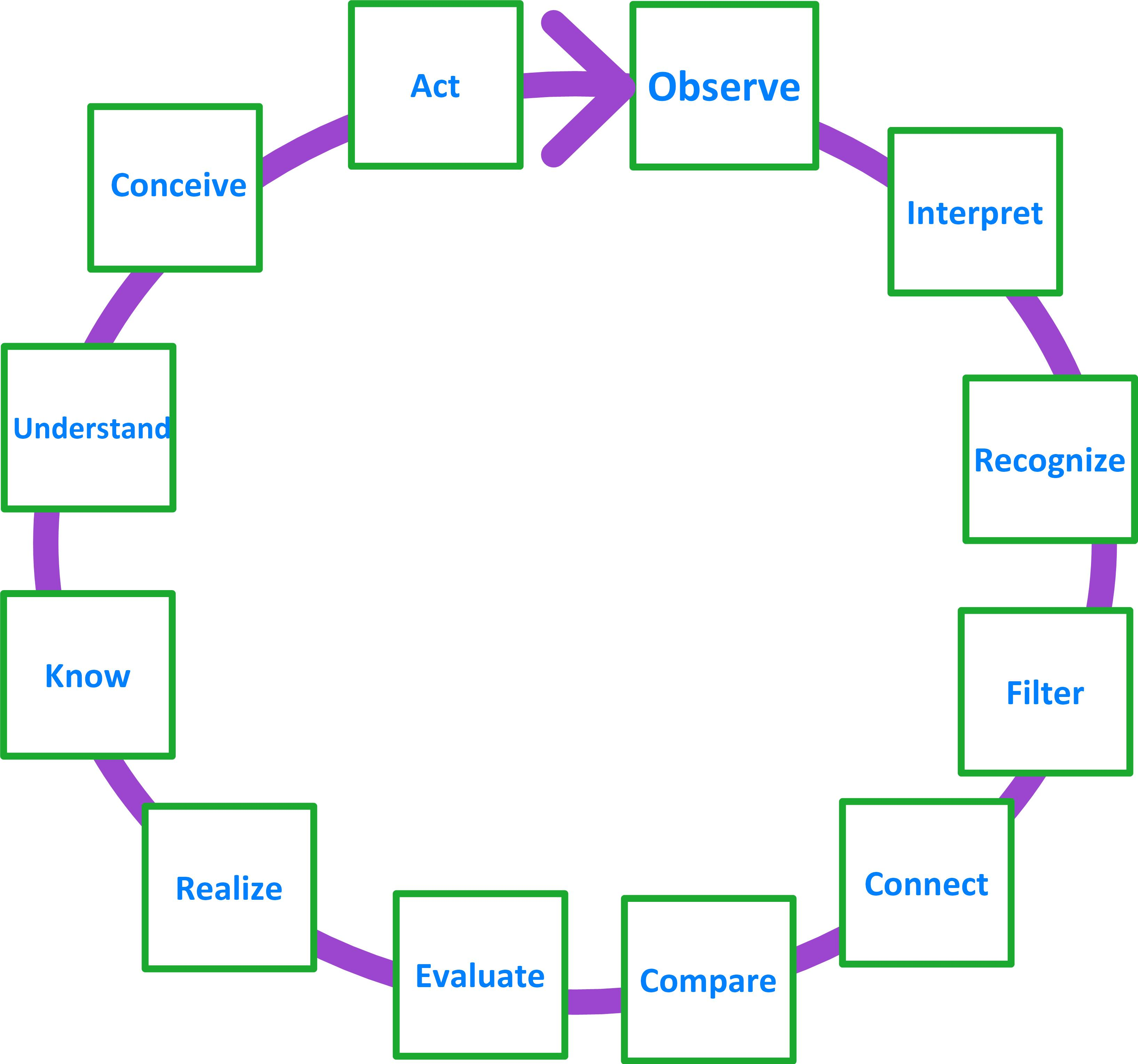
I think of travel as just a special case of shifting viewpoint and engaging in new experiences. It’s a very direct and reliable way to ensure experiencing, learning, and expanding one’s knowledge. As I have posted before (https://zumpoems.com/2017/07/13/thoughtful-thursday-personal-growth/ and https://zumpoems.com/2017/07/20/thoughtful-thursday-interpretation-and-steps-prior-to-action/), we examine data (first half of the diagram below), gain knowledge, and understand –that happens whether we travel, read a novel, learn a new skill, or carry on a conversation with someone.
Yesterday, I was thinking about a place I worked at in all of 1982 and through the first half of 1983. I had a great time there. I was just starting up my career as an independent consultant, and this was the first major contract I had – – six months of guaranteed work, which ultimately resulted in a total of three six-month contracts.

I had been hoping for some time to get in touch with any of these people I had worked with at this particular company, some of whom had even gone to another company in another industry (banking) that I later worked at. Facebook seemed to be the perfect platform to connect to one or more of these people, but the ones I knew best all had fairly common first and last names. And the one person who had the unique name, a manager over all the developers at that 1982-83 company, had no footprint on either Facebook or LinkedIn.

Well, fortunately, I remembered the city of his residence in Southern California — California being the other side of the country where I live now — and I googled him and found his phone number. He was 80 years old and still living in the exact house he had lived in since the late 1970s.

I called, and after three rings, he answered. Once a large, robust man with a powerful voice, that voice was now, in contrast, frail, and I had to turn up the volume on my phone to clearly hear him. I told him how highly I thought of him, and that he was one of the best managers I ever worked with. He was suspicious of the compliment, and I told him, really, I meant what I said. Though I was a mainstay in the success of that company’s conversion from mainframes to minicomputers, and had interacted with him quite often as an instructor, software architect, developer, and later in the role of supervisor over other consultants — all during a high-pressure, high-stakes period in which all software had to be rewritten and extended for the new architecture, including adding user interfaces to allow the additional functionality to support greater user interaction and management of data — he was not able to place my distinctive voice or my name. He was truly clueless who I was.

He filled me in on what he had been doing, the companies and positions he had been working at, and a little bit about his personal life, his children, and the loss of his wife about a year ago. I offered my condolences.

I then talked about the people we had worked with, in order to help him identify me. There were some he didn’t seem to remember. I could remember last names where he couldn’t, and there was one individual, a very likeable, outwardly calm, personable chap, and a methodical mainframe programmer who learned the new programming languages and new system slightly better than most of the development staff, who, during the most-pressure filled weeks of the end of 1982, had a nervous breakdown, and was never the same. My manager friend could not remember this person at all. I offered up another individual, someone with the same first name as mine, who our manager worked fairly closely with and regularly went out to lunch with, and I mentioned that the pressure was such at the time that this individual had broken out in hives. He did remember both the person and that incident.

This gave me hope that I could still jog his memory, if for no other reason than to assure him that my compliment of him as a person and manager was authentic. I started listing off other people and their roles and some idiosyncrasies of those people, and then even of myself. Some of the names he recognized, but he couldn’t place the face. A few names he couldn’t recognize. He still couldn’t place my name, which was still totally unfamiliar to him.

Then, the obvious occurred to me — I downloaded a photo of myself from 2018 on Facebook and sent it to him, while scouting around for some less recent image of me. Fortunately, he recognized that first photo and we chatted some more — I was no longer a complete stranger to him.

So through the technology of today, I was able to instantly travel across the country and engage with someone, even traveling back into the past, awkwardly perhaps, but ultimately effective to different degrees for both of us. I was so glad I reached out to him. My original purpose was to maybe get some other contacts of those I had been closer to at that company, but it was clear from our conversation that he was no longer in contact with any of them.

Clearly, it’s impractical to keep in contact with all our former associates and friends. Facebook and LinkedIn have facilitated some of this, and what a treat it was when I first started using Facebook and chatted with friends I had not communicated with in over fifty years! But Facebook is a rather flawed platform and quite inadequate as a means of acquiring, improving, or even maintaining relationships.

Life is a matter of constantly changing one’s viewpoint and being enriched by relationships with others. I accept that some people are lost to me forever, some alive, some passed away. The key is to be open to assuming new viewpoints, not to give into stasis or a comfortable routine. In Zumwalt’s “what soul is not besieged” the embattled persona of the poem decries, “there is reason to suspect that one can grow
if only the rainy season didn’t last the entire year,” and sometimes we are so overwhelmed that we are forced into a static shell of defensive fortification, but for those times when we are not, we have the option of moving about, shifting our viewpoint, and learning, knowing, understanding, and furthering our growth.


Slice-of-life, Microwaved

Slice-o-life, Microwaved

Askew in a vinyl cosmos
life’s beading up on
a cold tumbler
And Juan Valdez
has repossessed my mind
for the glory of Brazil
or Colombia
Some squalid country at any rate
Leaving my 33
grooves
scarred by needles at 78
several rich hits
off of
Mrs. Olsen
And Muzak sounds
like steam jets
and
dark mutterings over eggs
become berserk natterings
of rabid chipmunks
Gee Zus !
Only 12:00?
Existence is
deformed
in a
time-warp
—Zumwalt
[Night of 30 Sep-1 Oct 1981, Washington, DC]

The human touch

Based on this recent news event: https://www.npr.org/2025/12/25/g-s1-103683/powerball-player-arkansas-won-jackpot

The human touch

On Christmas Eve, many just like me
stopped at the station where I get my gas
and bought slips of paper
as thin as my patience
waiting its reward.

A mile or so away in Cabot
I closed my own store,
shut down the register,
reminded by the radio of
the size of the jackpot
while I drove home
in my rusty 2003 Tacoma.

Maddie set out some sandwiches—
our light Christmas Eve meal;
two months of watching costs
earned tomorrow’s fortune of presents
paired with roasted prime rib.

That morning came, and our two children
visited us in bed to tug at us—
too small to pull us out
and not old enough to realize they hadn’t.

A delight of flung wrapping paper and
unchecked squeals energized our living room
as, with some guilt, I looked at my phone
to glimpse the weekly Powerball snub.

No ordinary loss:
promised paradise, this time,
came from the station where I staked my three bucks.

But this small defeat brought reassurance:
in a world of algorithms,
predictive apps, and AI advisers
that steal away jobs and raise energy prices
there was still one thing technology couldn’t do:
choose the right numbers.

JOUSTING WINDMILLS

Just published in New Verse News — Zumwalt’s new news poem, Jousting Windmills.

Click on the following URL to read poem: https://newversenews.blogspot.com/2025/12/jousting-windmills.html

I will post the text here later on, but for now, let’s drive some traffic to New Verse News!

With apologies to Emily and the DOJ

With apologies to Emily and the DOJ

Release the files but just in part —
Deception’s Pathway lies
Too raw for Headline’s hungry Spark
The whole would scandalize
As Cards dealt from some hidden Deck
With watching eyes confined
The Truth must flame out gradually
To hide the Guilt entwined —

–zumwalt (2025)

Updated Dump

News event:   “At least 15 files that were released by the Justice Department Friday were no longer available on the department’s website on Saturday.”
Reference: https://www.cbsnews.com/news/at-least-15-newly-released-epstein-files-have-disappeared-from-justice-departments-website/

Updated Dump

They loaded files on Friday night,
Though not the total lot;
The press was vexed by partial truths
But that is what we got.

On Saturday fifteen were gone —
One noticed from before:
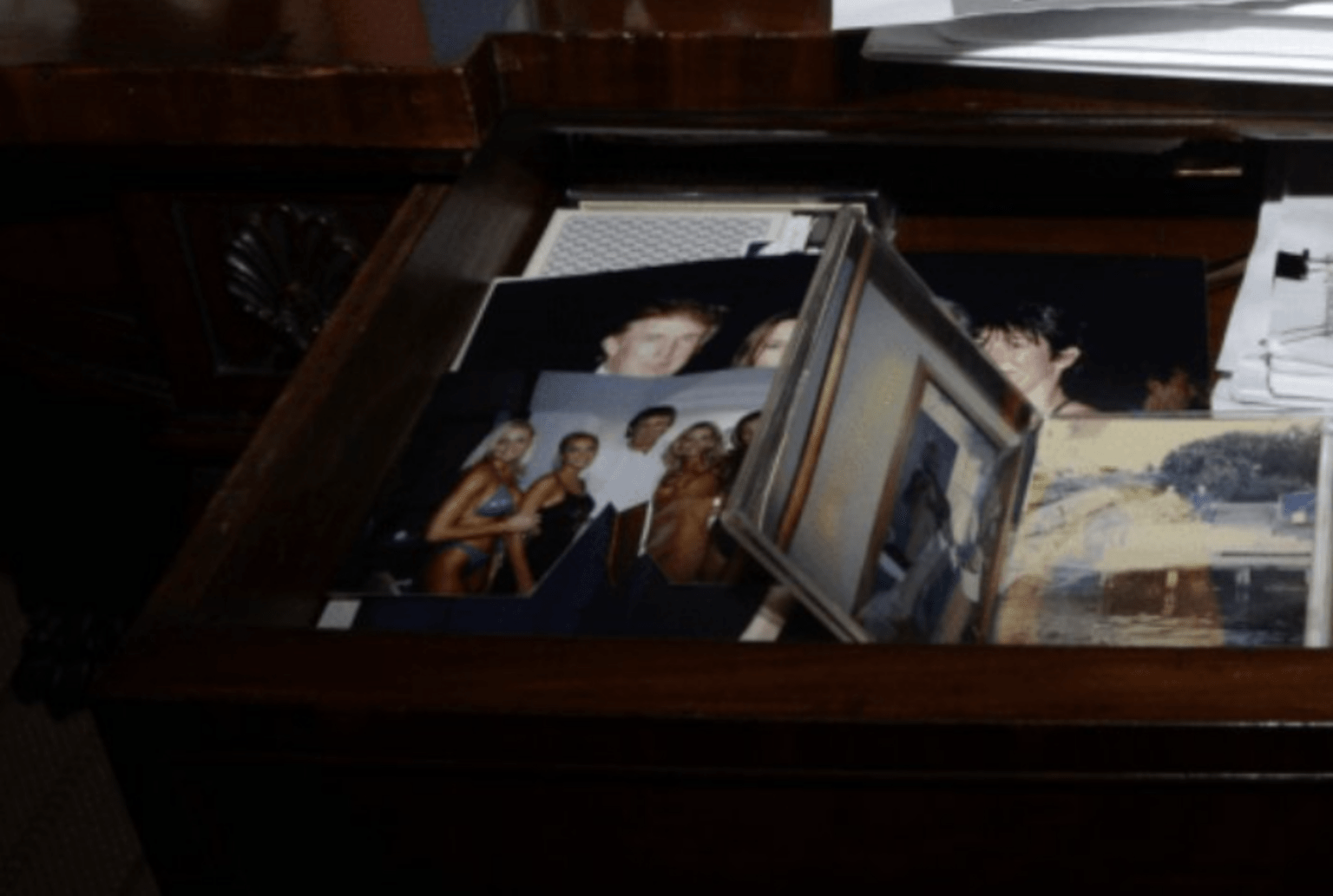
A president in gilded frame —
A photo in a drawer.

What this all means to common folk
Escapes my simple mind
When wealth can build a mighty wall
That shields them from their crime —

And if a few are put in jail
That does us little good
For those that still control the wealth
Will raise the price of food.

The message here is pretty clear
And one that fits my rhyme  
That money spent judiciously
Protects —  
even the damnedest —
most despicable —
devils of our time.

— zumwalt (2025)

Imperfect information

Imperfect information

This 
   is 
      a sequential game
even 
when 
I 
attack  
                out 
                of 
                turn
each 
   and 
      every move
is 
   built 
      on the
      one before.

Round 
after 
round
we proudly announce
a 
  target 
                square.

Sometimes 
  we 
                hit
Sometimes 
  we 
          m  
           i
            s 
             s
But 
     never 
fail to 
                attack.


Salvo, 
       my friend
When 
       you are most 
                relaxed
and think 
       all is 
                calm waters.

As 
long as 
there 
                are ships 
       afloat
There 
will be 
                missiles 
       launched
across 
these 
       now choppy seas.

Salvo, 
       my friend
All 
       shots at once
against 
       our better 
                judgment.

As 
long as 
there 
                are missiles 
       to launch
There 
will be 
                ships 
       targeted
aggravating 
these 
       now choppy seas.


But 
once it is 
clear

there 
is some 
       chance at 
       sinking 
       even 
       one 
       ship
               We 
       pull 
back,
bend 
               the 
               rules,
               re-
               arrange 
               our 
               positions,
       midway,

put    some 
              ships
in reserve,
deny 
       any 
              cease fire
and 
              secretly 
              fill out 
our 
battle reports.


-- zumwalt (2011, modified 2025)

To all poets: Never get discouraged

This is from Gemini 3.0:

If Billy Collins—a two-term U.S. Poet Laureate known for accessibility, humor, and narrative clarity—submitted his best work under the name “John Doe” to a random mix of 100 literary journals today, here is the harsh statistical reality:

He would likely be rejected by 85% to 95% of them.

Here is the breakdown of why:

1. The “Aesthetic Mismatch”

Billy Collins writes “accessible” poetry. It is clear, often funny, and typically ends with a turn that invites the reader in.

  • Avant-Garde Journals: If he sent to journals like Fence, Conjunctions, or even Neologism, he would be rejected almost immediately. They would view his work as “too simple,” “too linear,” or “lacking linguistic friction.” They want puzzles; he sells clarity.
  • High-Academic Journals: Journals that favor dense, difficult, or highly allusive work (like The Kenyon Review or The Yale Review) might find his work “too light” or “too commercial” without the weight of his name attached.

2. The “Slush Pile” Reality

Most journals accept less than 1% of submissions.

  • Volume: Editors often read 50-100 poems in a sitting. If a Billy Collins poem is widely readable but doesn’t have a shocking opening line or a bizarre visual format to grab attention in separate seconds, it might be passed over for something “louder.”
  • The “Good Enough” Problem: Editors reject “publishable” work every day simply because they have 5 slots and 500 “good” poems. Without his name, his poem is just one of the 500 “good” ones fighting for space.

3. The “Sweet Spot”

He would more likely be accepted by:

The New Yorker: (10% to 15% chance of acceptance.) They publish him now, but blind? They favor a very specific, polished voice that he has perfected, so he might still crack their code, but it’s not guaranteed.

Rattle: (40% to 60% chance of acceptance.) They prioritize “accessible” and “narrative” work. He is their ideal aesthetic.

The Sun: (15% to 25% chance of acceptance.) They want emotional resonance and clarity.

Decay

Decay

Discrimination lies with concentration
Machinations, machinations
   equilibrium staggers—
Smell the breath of industry—intoxicated fumes
Has the ignition point been reached?
Atomize before the vestigial globules are digested
   and Odovacar pulverizes the wall

–Zumwalt (late 1970s or early 1980s)