Zumwalt’s “Ogun’s Tollbooth” selected as Editor’s Choice at Bewildering Stories

I am pleased to announce the selection of Zumwalt’s Ogun’s Tollbooth for Bewildering Stories’ Editor’s Choice for the second quarter of 2026.
I am pleased to announce the selection of Zumwalt’s Ogun’s Tollbooth for Bewildering Stories’ Editor’s Choice for the second quarter of 2026.
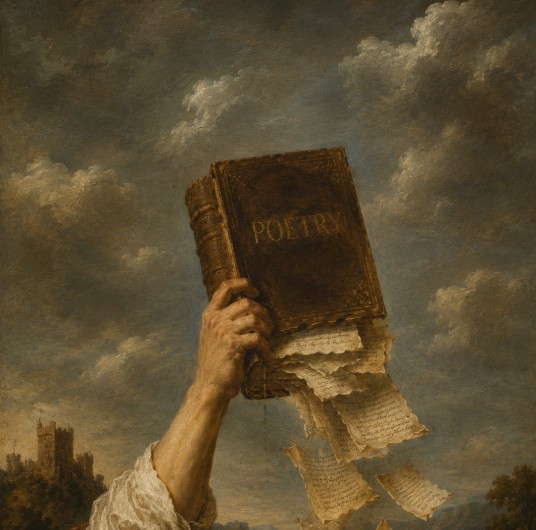
While you’re here
I am curious if you finish this.
It isn’t much of a poem.
There are no rhymes, good or bad;
there is no attention paid to the meter
or musicality of the lines,
the words are not carefully chosen,
and so there is not much to justify
either this poem or you spending your time here.
And the volta really isn’t a volta,
just a last stanza to see whether,
since you started to read this,
you made it to the very end.
— zumwalt (6/28/2026)

fishing in the dark
hook, line, and sinker
she’s become a social drinker
— zumwalt (1970s?)

frame face
She glowers like the towers telling our past hours
to strangers passing peddling private wares of
seeding past affairs
     shoot the blaster
     pass the mustard

laughing choking not disclosing
     distastefully hoping
     resolution teases like a ten buck hooker
     a textbook burner

wishing off evil thoughts with wards
     of destruction

in frantic future non-operatives
mask reality like  drifts of mud
tracked on Sybil's high polished floor.
— zumwalt (late 1970s or early 1980s?)
mystical message
pound the telephone
sharply spinerating – generating – expecting
raise roofs of village flashers
swiftly fending
mentally attiring
tremulous trumpeting
a sour-sounding
mellowing hollowing “carving”
miracle mecca
with a teaspoon and an ‘e’ coupon.
pass the bumper
shape the shark fin strumpet bakers
lower floors of bundled tenements
friskily sending
incompetently mending
revolving in time
shaping destiny like the rivers of mildew
in the august of the dusking mountains of equinox.
— zumwalt (1981)
(When first discovered in 2011, I did not post this particular item here, but due to increased interest in Zumwalt’s works, adding now. Is it a draft, is it a final version? As always, Zumwalt has declined to comment, gently reminding me that a poem is what the reader makes of it.)
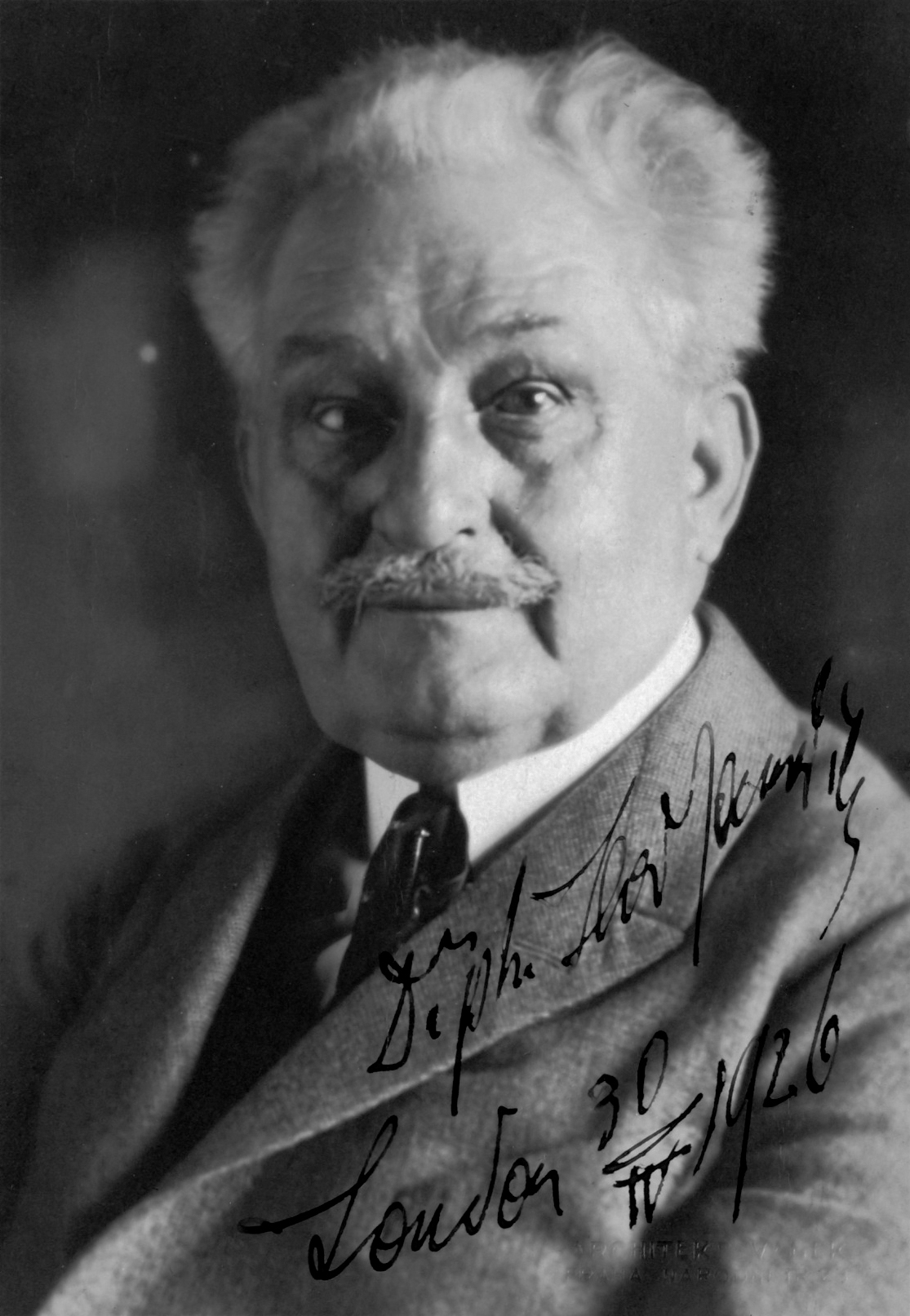
Leoš Janáček continued his amazing late-life surge of creativity, some say attributed to his romantic interest in a woman forty years younger than him, with the composition of his most widely known work, his Sinfonietta. Subtitled “Military Sinfonietta,” and well known to progressive rock fans for its primary theme used in Emerson, Lake and Palmer’s debut album as the main musical material for “Knife Edge,” the work received its world première on June 26, 1926, in Prague, conducted by Václav Talich.
Sinfonietta is one of the most accessible orchestral works of the 1920s, with its colossal opening and closing movements, deploying an expanded brass section of 25 players, including nine C trumpets, two bass trumpets, and two tenor tubas. The main theme, used stunningly at the opening and closing of the piece, is also the basis of much of the musical material throughout the five-movement masterpiece, creating a musical unity amidst his adventurous use of irregular meters, unusual handling of melodic intervals, aggressive scoring, and modal harmonies. The music, though Eastern European in origin, conveys that immediately identifiable modern-age excitement of the roaring twenties without sounding like an artifact of any single time period.
Though he died in 1928 at the age of 74, thankfully for all of us music lovers, Janáček was still composing at the highest level, with his great Glagolitic Mass, his last opera, House of the Dead, and his second and final string quartet, Intimate Letters composed in the two years after the première of the Sinfonietta.
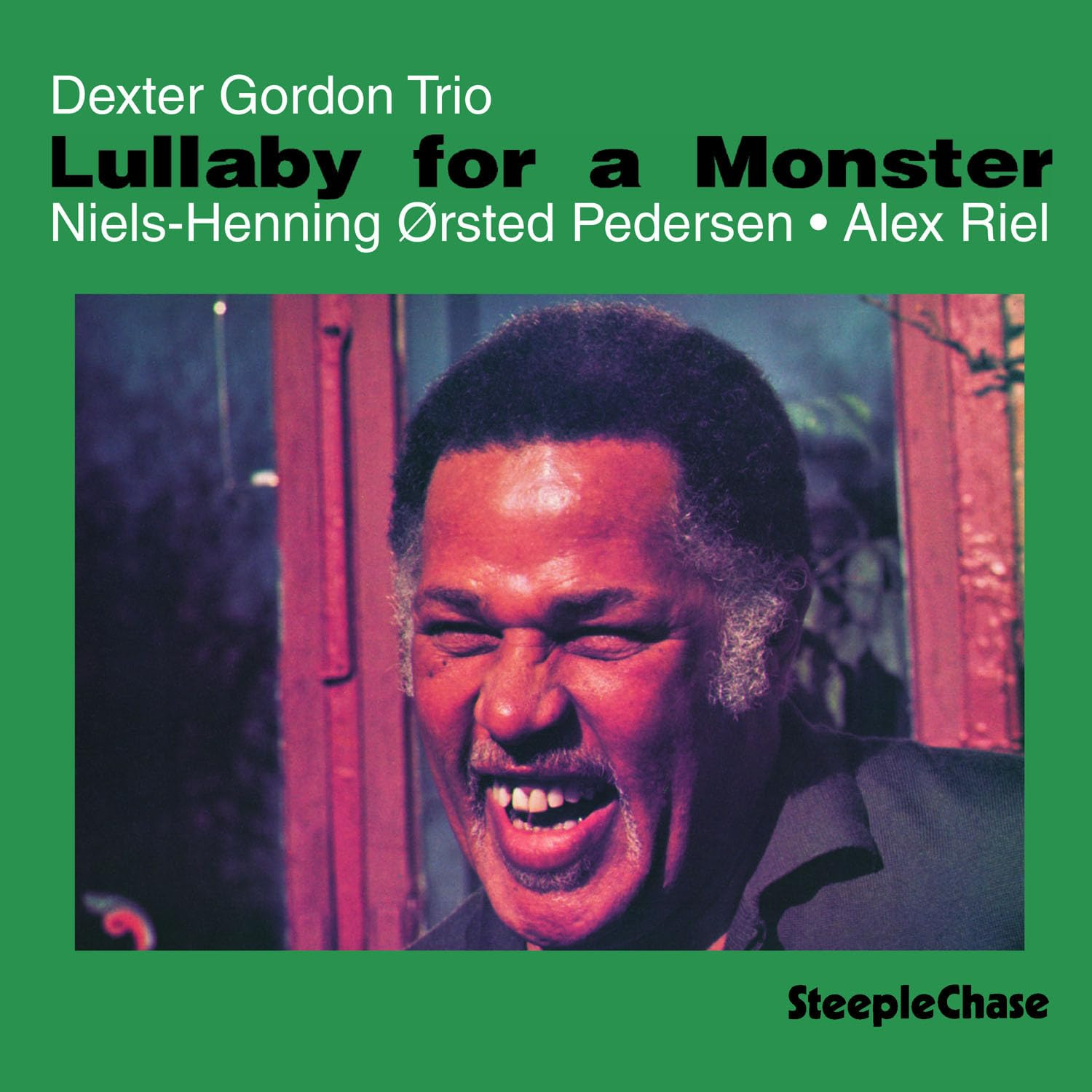
Recorded on June 15, 1976 in Copenhagen, Denmark, Lullaby for a Monster provides maximum Gordon Dexter in a trio format with two of Europe’s finest jazz artists: Niels-Henning Ørsted Pedersen on bass and Alex Riel on drums. The album was not released in 1976, or even the 1970s, seeing the light of day for the first time in the early 1980s. I would like to claim I was a Dexter Gordon fan in the 1970s, but my first encounter with either him or his music was in 1986, while I was in England. I wish I could say I saw him in person, but the reality is very different.
I lived in West Sussex and often would catch a movie on Saturday, usually in Brighton, East Grinstead, or Royal Tunbridge Wells. I was a big fan of Thelonious Monk, and was instantly attracted by the title of one particular movie, “Round Midnight” and figuring out from the movie poster that it was indeed a jazz-related story, I eagerly bought a ticket, and entered the modest, but mostly empty theater. Without taking a complete detour from Fifty Year Friday — hopefully I will be around in 2036 to include this in a future post — this was a great movie, and Dexter Gordon’s music making and acting were both of the highest caliber. Two years later, back in America, I purchased an album that contained the famous “The Chase” with Wardell Grey and Dexter Gordon, and I have been a big Dexter Gordon Fan since.
What makes Lullaby for a Monster a perfect starting place for someone wanting to explore one of the greatest tenor saxophonists of all time, is it showcases Gordon’s humor (from the very start with his own composition, a clever bluesy treatment of the nursery song “Ah! vous dirai-je, maman,” also known to us as “Twinkle, Twinkle, Little Star” or “Baa, Baa, Black Sheep), his musical inventiveness and his lyricism.
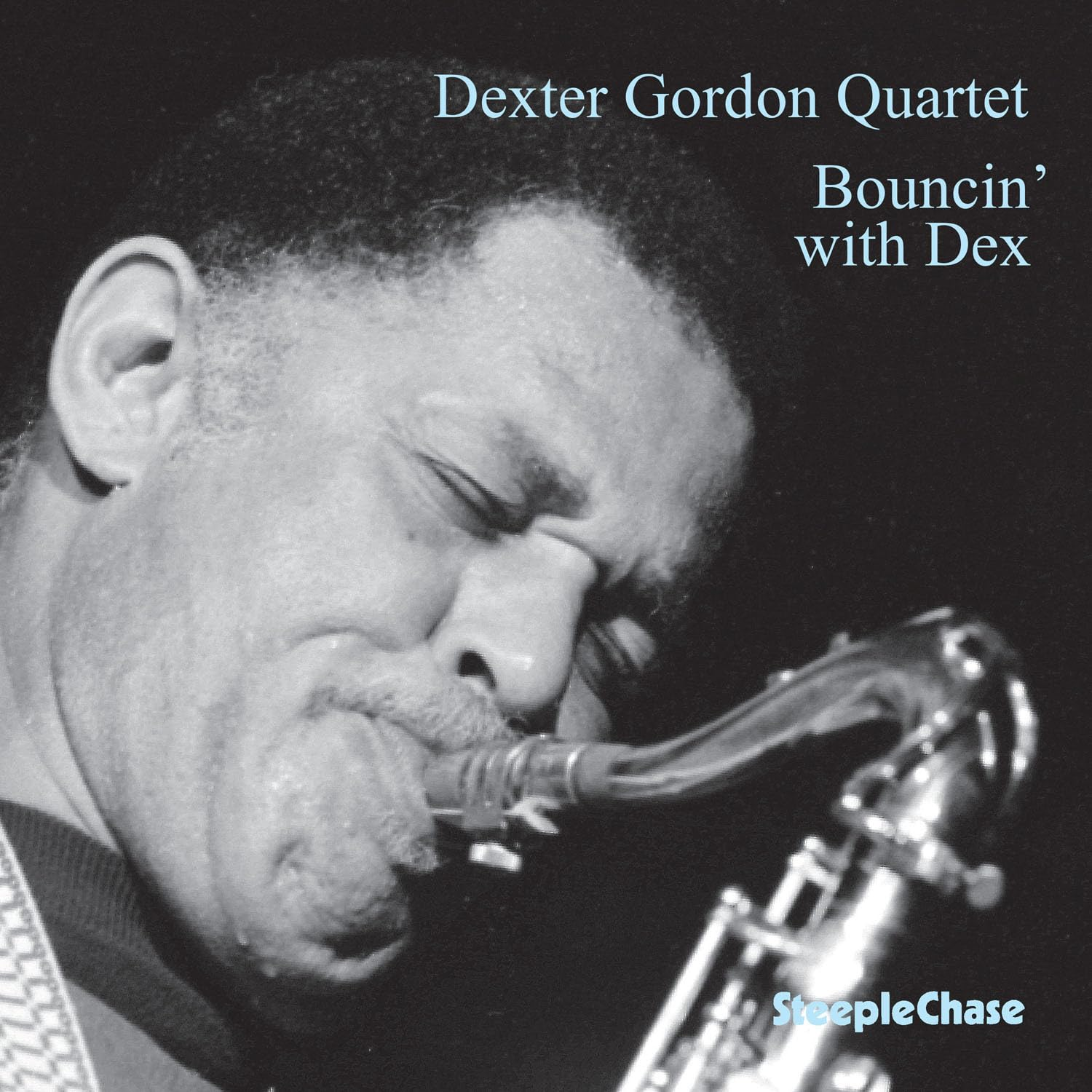
Bouncin’ with Dex, recorded on September 14, 1975, in Copenhagen, Denmark, was likely released in 1976; however, it is worth discussing now within the broader context of Dexter Gordon’s career. The lineup here is top-notch: Dexter Gordon, bassist Niels-Henning Ørsted Pedersen, the virtuosic and rhythmically and harmonically adventurous Barcelonian Tete Montoliu on piano, and one of the most musically responsive drummers on record, American Billy Higgins. Despite Dexter’s extended time in Europe, this remains the only studio recording partnering him and Montoliu. That is just one of many reasons to check out this album; the session represents a pinnacle of Gordon’s mid-1970s SteepleChase output, showcasing the quartet’s seamless interaction on a set of quintessential bebop standards, alongside Gordon’s own “Benji’s Bounce,” a skillfully faithful contrafact based on the harmonic structure of Thelonious Monk’s “Rhythm-a-Ning” showcasing both Gordon’s and Montoliu’s inventiveness and their deep understanding of Monk’s musical essence. The original LP contained an amazingly lyrical rendition of “Easy Living,” with the CD version topping that by including a luxuriously longer alternate take.
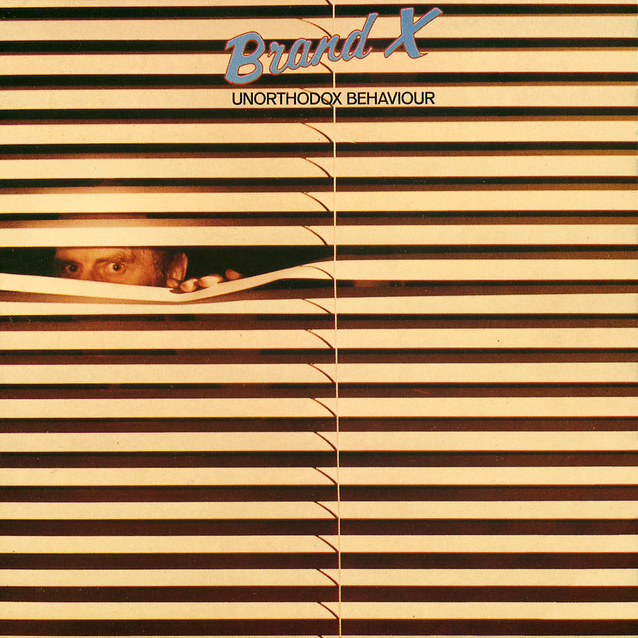
Released June 18, 1976, Unorthodox Behavior is the first and finest Brand X studio album; tight, cohesive, proficient and musically engaging, this is exemplary English progressive-rock jazz fusion. Phil Collins, John Goodsall, Robin Lumley and Percy Jones blend into one musical force, sounding as if they had played in small venues for many months before recording this debut album. Rock fans, and even some progressive rock fans, may be disappointed in the lack of lyrical or infectious melody, but the energy and creativity are undeniable and make this an important and distinct landmark of the mid-70s fusion movement and an indispensible document of Phil Collins’ impressive technical capabilities on percussion.
For additional posts related to Gentle Giant, please check these out:
https://zumpoems.com/2025/07/25/fifty-year-friday-july-and-august-1975/
https://zumpoems.com/2026/04/17/fifty-year-friday-april-1976/
https://zumpoems.com/2021/07/23/fifty-year-friday-july-1971/
https://zumpoems.com/2023/09/01/fifty-year-friday-september-1973/
https://zumpoems.com/2022/04/01/fifty-year-friday-april-1970-2/
https://zumpoems.com/2022/12/16/fifty-year-friday-december-1972/
https://zumpoems.com/2017/08/25/fifty-year-friday-aretha-franklin-simon-dupree-the-big-sound-and-pink-floyd/
https://zumpoems.com/2020/11/20/fifty-year-friday-november-1970/
For Must Listen To Gentle Giant and Prog Rock albums, please check out:
https://zumpoems.com/must-listen-to-music/
For additional posts that mention Gentle Giant, please check these out:
https://zumpoems.com/2017/12/30/seventy-year-saturday-1947/
https://zumpoems.com/2019/07/19/fifty-year-friday-men-on-the-moon-yes-larry-coryell/
https://zumpoems.com/2022/05/27/fifty-year-friday-may-1972/
https://zumpoems.com/2019/05/31/fifty-year-friday-power-to-the-people-the-giant-awakens-empty-sky-at-san-quentin-and-charisma/
https://zumpoems.com/2024/03/15/fifty-year-friday-march-1974/
https://zumpoems.com/2024/06/07/fifty-year-friday-june-1974/
https://zumpoems.com/2019/01/04/fifty-year-friday-the-canterbury-scene-soft-machine-and-caravan-first-albums/
https://zumpoems.com/2025/06/20/fifty-year-friday-june-1975/
https://zumpoems.com/2019/06/14/fifty-year-friday-trout-mask-replica-brave-new-world/
https://zumpoems.com/2023/08/04/fifty-year-friday-august-1973/
https://zumpoems.com/2020/02/14/fifty-year-friday-february-1970/
https://zumpoems.com/2018/08/10/fifty-year-friday-ultimate-spinach/
https://zumpoems.com/2018/06/22/fifty-year-friday-british-folk-rock/
https://zumpoems.com/2020/09/25/fifty-year-friday-september-1970/
https://zumpoems.com/2025/11/14/fifty-year-friday-november-and-december-1975/
https://zumpoems.com/2020/03/20/fifty-year-friday-march-2020/
https://zumpoems.com/2025/09/26/fifty-year-friday-september-and-october-1975/
https://zumpoems.com/2021/11/26/fifty-year-friday-november-1971/
https://zumpoems.com/2026/06/12/dexter-gordon-lullaby-for-a-monster-bouncin-with-dex-brand-x-unorthodox-behavior-fifty-year-friday-june-1976/
It is with great pleasure that I announce another Zumwalt poem published by New Verse News: https://newversenews.blogspot.com/2026/06/they-walk-among-us.html


In This Corner
Weighing in at 140 pounds and dwindling,
barely five-foot-something,
known for their work ethic,
is 92% of the American population,
some angry, some brainwashed,
some apathetic, some simply perplexed:
Let’s hear it for the Plebs!!!
Weighing in at —
excuse me, ladies and gentlemen,
I’ve just been informed
that weight is not public information —
weighing in at undisclosed,
holding 80% of wealth in the stock market,
ever increasing in size and influence,
are America’s billionaires,
hungry for any additional victory they can achieve:
Let’s hear it for the Modern Monarchs!
The bell rings!
Before a single Pleb can protest,
the Modern Monarchs surgically start to remove
sensible regulations protecting the Plebs.
The jab lands clean
before the Plebs can parry.
The Monarchs taunt,
and rapidly shift to
Public Policy Tilting,
cutting funds for infrastructure,
environmental protection,
healthcare and education,
world health and food programs,
dissolving USAID.
What a show from the Monarchs:
They duck, pivot, bob and wave
with their effective cross-arm defense
and their backsteps against fair taxation,
leaving the confused Plebs bewildered,
exhausted, holding the proverbial bag,
sinking to the canvas from its weight.
The Plebs are tough and get to their feet!
The Plebs square off again
with the start of a one-two combination,
but the Monarchs slip and roll
defending with legal leverage,
using lawfare to swamp the Plebs,
brandishing immunity regulations,
delaying accountability,
countering and elbow blocking
the IRS from pursuing audits,
withholding money rightfully owed to the Plebs!
The Plebs are stunned,
groggy, wobbling, staggering,
but hanging in there
dishing out a $5 million penalty for fraud!
The Monarchs pull and counter
with identical twins
turning that 2022 lawsuit
from the Commodity Futures Trading Commission
into an apology,
and a stunning reversal
in favor of this Trump 2024 Campaign donor twosome!
The Monarchs are dominating this contest.
Let’s be honest, folks: the Plebs have no chance!
The Monarchs, trained by the most expensive personal trainers,
are 4000 times more likely to hold political office than the Plebs,
and have the means to influence what they don’t hold,
putting these Plebs at an insurmountable disadvantage!
The Monarchs trade in favors:
a bill for a check,
another seat in their pocket.
The bell rings to end round one.
The Plebs glance at their corner,
but there is no stool,
no medical attention,
all of their allocated funds
invested in gold stools
for the Modern Monarchs.
The bell for round two rings.
The Plebs valiantly face the Monarchs again!
The Monarchs cuff, clip, smash,
throwing haymakers at will!!!
How can the Plebs remain standing?
The Monarchs brazenly pound contributions
at Congressmen, Senators,
at local representatives:
for every cent landed
dollars are reaped!
The Plebs attempt to counter with a $47 donation.
The swing is wild, but they keep swinging:
Monarchs laughing off the few weak punches that land.
The Plebs remind the Monarchs
that the Plebs paid for the arena,
for the seats,
for the ring!
The Monarchs remind the Plebs
who paid for the referee!!!
The Plebs continue to sway,
left to right,
right to left,
with no apparent sense of direction.
The ref takes a well-deserved nap.
The Monarchs brandish weapons:
inflating slabs of beef,
gas pump handles,
coffee cans, medical bills,
overdue rent, credit reports.
Pugilistically, the Plebs are in a deep deficit,
unable to fight back the endless inflation.
The Monarchs land another uppercut and another!
An endless flurry of complaints
rains down on the Plebs’ credit profiles!
The Plebs are buckling at the knees
but still keep to their feet!
A brutal combination from the Monarchs!
Stop-work orders straight to the jaw!
Supervisory exams — closed!
Twenty-two pending actions against the banks — dropped!
And a solar plexus punch to finish the round:
fifteen hundred regulators dismissed in a single afternoon!
Ladies and Gentlemen,
this is absolutely astonishing:
The Plebs have lost billions and billions
since the match has begun—
and yet—
are miraculously holding on!
Folks, it’s clear:
the Monarchs look to end this match—
but—
the Plebs refuse to go down for the count.
On cue,
the referee
comes between
the Plebs and the Monarchs,
halts the match,
holds up two fingers
in front of the Plebs—
and lands a three-punch combo,
followed by a kidney punch,
sending the Plebs to the floor!
The count begins.
Half the arena,
Plebs themselves,
join the count,
cheering wildly!
The crowd certainly looks pleased!
Their pockets may be empty
but this once-in-a-lifetime entertainment
allowed them to root for a real winner!
— zumwalt (05 2026)
