Zumwalt Poems Online

Posts tagged ‘1926’

Century Sunday: June 1926; Leoš Janáček’s Sinfonietta
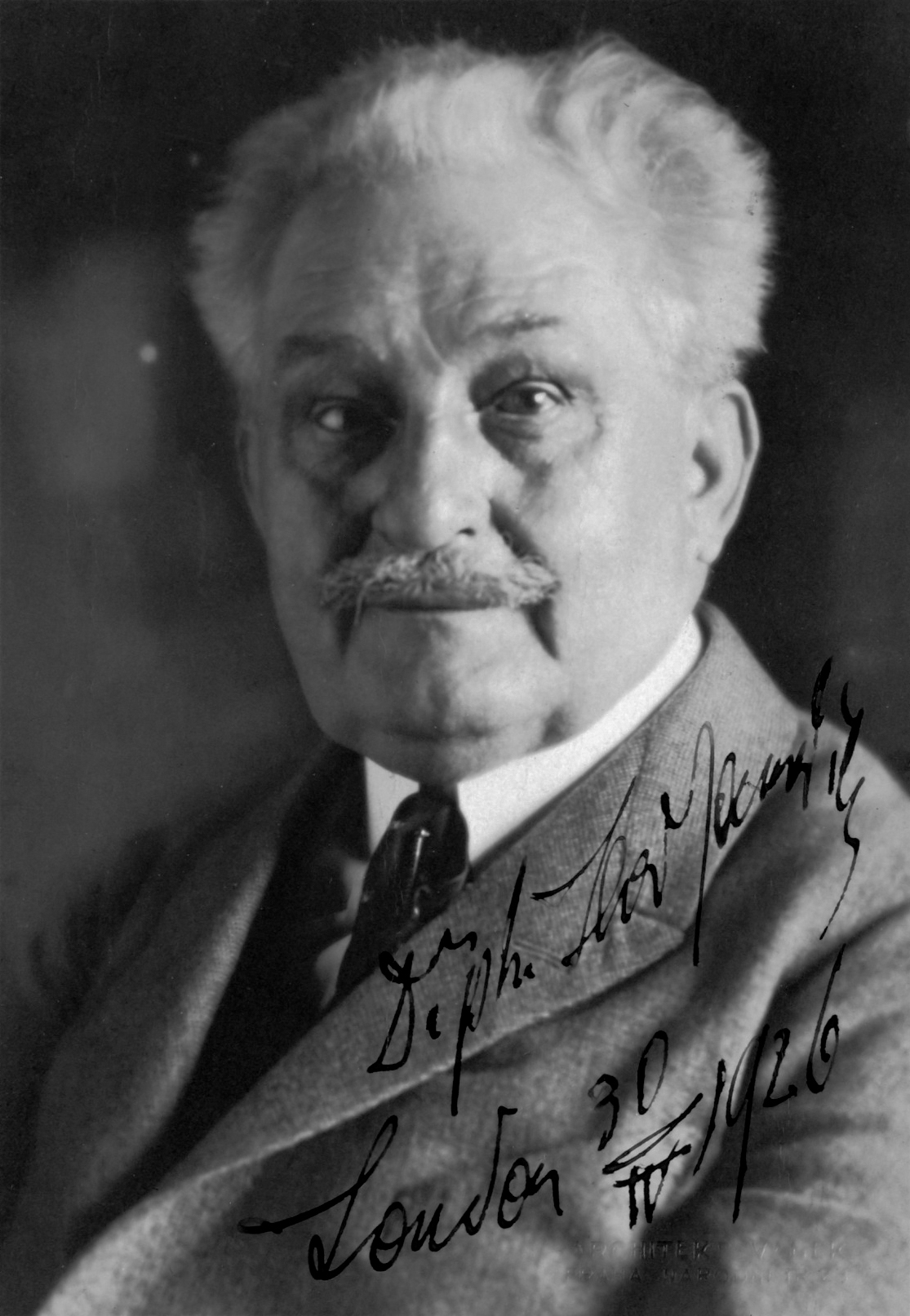
Leoš Janáček continued his amazing late-life surge of creativity, some say attributed to his romantic interest in a woman forty years younger than him, with the composition of his most widely known work, his Sinfonietta. Subtitled “Military Sinfonietta,” and well known to progressive rock fans for its primary theme used in Emerson, Lake and Palmer’s debut album as the main musical material for “Knife Edge,” the work received its world première on June 26, 1926, in Prague, conducted by Václav Talich.

Sinfonietta is one of the most accessible orchestral works of the 1920s, with its colossal opening and closing movements, deploying an expanded brass section of 25 players, including nine C trumpets, two bass trumpets, and two tenor tubas. The main theme, used stunningly at the opening and closing of the piece, is also the basis of much of the musical material throughout the five-movement masterpiece, creating a musical unity amidst his adventurous use of irregular meters, unusual handling of melodic intervals, aggressive scoring, and modal harmonies. The music, though Eastern European in origin, conveys that immediately identifiable modern-age excitement of the roaring twenties without sounding like an artifact of any single time period.

Though he died in 1928 at the age of 74, thankfully for all of us music lovers, Janáček was still composing at the highest level, with his great Glagolitic Mass, his last opera, House of the Dead, and his second and final string quartet, Intimate Letters composed in the two years after the première of the Sinfonietta.
Century Sunday: April 1926

One hundred years ago, the end of the silent film era was approaching, and the music and culture of the Jazz Age were still in full force. Below are some notable highlights for April 1926.

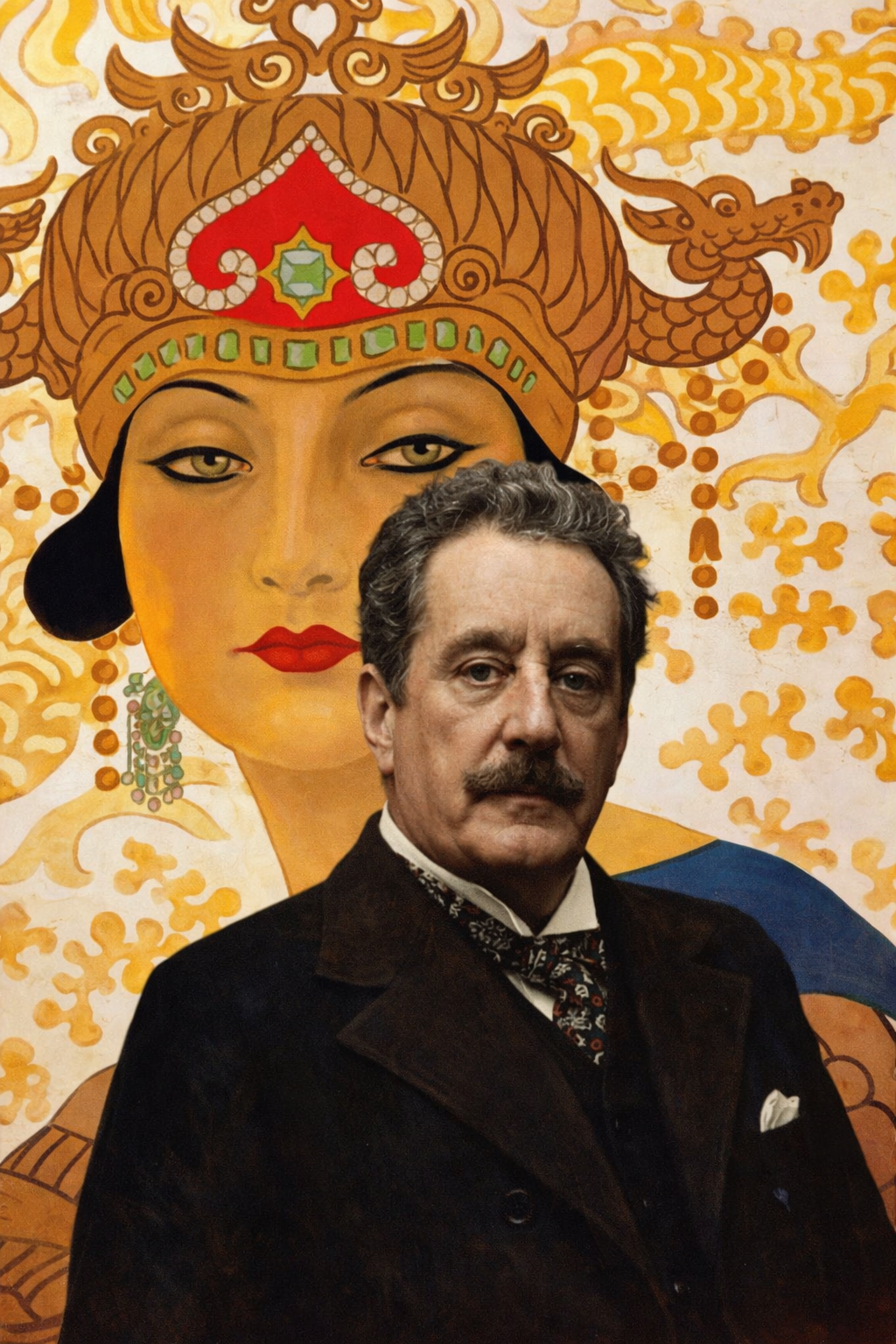
One of the most historic nights of opera or concert hall music occurred on April 25, 1926. Giacomo Puccini’s final, unfinished opera, Turandot, premiered at La Scala in Milan. Puccini had died of throat cancer before completing the final act. The performance was conducted by the legendary Arturo Toscanini. When the orchestra reached the final notes Puccini had actually written (the death of the emotional focus of the opera, the young female slave Liù), Toscanini abruptly stopped the orchestra, laid down his baton, faced the audience, and announced: “Here the opera ends, because at this point the maestro died.” The curtain was lowered to complete silence.

In 1926, Jelly Roll Morton recorded “The Pearls” as a piano solo for the Brunswick label. It’s often described as one of the most intricate and carefully constructed pieces in early jazz. Morton himself said it was among the hardest jazz works ever written. In the performance, his left hand keeps a rock-solid, steady stride rhythm, while his right hand weaves in detailed and expressive melodic variations.

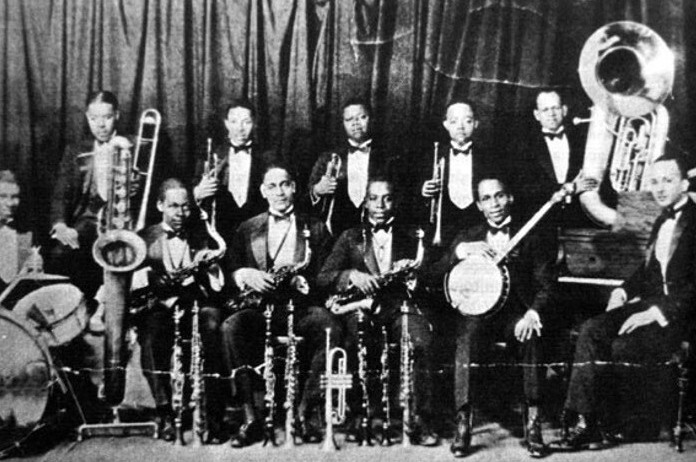
Fletcher Henderson’s orchestra, recording under the pseudonym The Dixie Stompers for contractual reasons, released “Static Strut” and “Dynamite.”

Century Sunday: January 1926

With the start of 1926, the Jazz Age, the Roaring Twenties, and the Fox Trot rage continued.

Jazz records were often given the default label of “Fox Trot.” I had the good fortune to be able to listen to several of my grandfather’s jazz 78s, with the majority of them labelled “Fox Trot” — a catch-all label for popular music that de-emphasized the more scurrilous connotations some associated with “hot jazz.”

Two such “Fox Trot” recordings of merit were of the popular song “Dinah,” written in 1925, and recorded a few times in late 1925.

This first Jan. 1926 recording, is by one of my favorite jazz ensembles, The Fletcher Henderson Orchestra:

Another notable recording of “Dinah” features the first recording of the slap bass technique (bassist Steve Brown) at around the 2:20 mark:

And here are some visuals of Fox Trot dancing captured on film — spanning the 1920s and possibly early 1930s:

And speaking of films, The Sea Beast, starring John Barrymore, had its New York City premiere on January 15, 1926. This was the first film adaptation of one of the great American novels, Moby Dick, with the additional modification to the plot to, of course, include a love interest for Captain Ahab! Enough said.

And since we are on films, we have to mention that John Logie Baird gave the first public demonstration of a true television system in London. It wasn’t just shadows; it was a greyscale image with moving details.

Also in January 1926, physicist Erwin Schrödinger published his famous paper (Quantisierung als Eigenwertproblem) containing the foundation of the Schrödinger equation: iℏ (∂Ψ/∂t) = ĤΨ. This birth of wave mechanics replaced the idea that particles revolve around the atom like sub-microscopic planets. Instead, it revealed that they behave as waves — what we now understand as clouds of probability. No one can say where an electron is; we can only calculate the likelihood of finding it at some given location as alluded to in Zumwalt’s 2011 poem, Particle Show.

Of course, I need to mention progressive rock whenever I can: George Martin, the so-called fifth Beatle, and a pivotal contributor to the Beatles’ progressive sound, and by extension, to progressive rock in general, was born on January 3, 1926.