Zumwalt Poems Online

Archive for the ‘Rock’ Category

Fifty Year Friday: Singer/Songwriters; Additional Groups and Artists

mi0001915547


Singer/Songwriters

2017 is soon coming to a close, and so must our fifty year anniversary reflection on 1967.  If we had started these posts earlier in 1967, instead of starting mid-year, we could have highlighted many more albums.  Those we chose were personal favorites. Some of those not included are also worth noting.

1967 provide of wealth of albums by singer songwriters from Arlo Guthrie and his  captivating “Alice’s Restaurant” album to Van Dyke Parks first album, “Song Cycle.”

Warner Brothers Records hired Van Dyke Parks with high hopes based on his previous work with Harper’s Bizarre, The Byrds, Tim Buckley, and Paul Revere & the Raiders, and then spared no costs for Parks to record his album — racking up session hours and using a full orchestra.  When “Song Cycle” was played for the president of Warner Bros. Records, his reaction was apparent confusion: “Song Cycle?  Okay — where are the songs, then?” The label didn’t release the album until December 1967, a year after it was recorded, until, as the story goes, Jac Holzman of Elektra records offered to buy if from Warner Bros.   Once released, it’s sales where less than expected, and prompted Warner Bros.  to run full page newspaper and magazine advertisements that said they “lost $35,509 on ‘the album of the year’ (dammit)” and offered owners of the album the chance to send in their worn-out LPs of “Song Cycle” in exchange for two new copies, so one could be passed on to a friend.

Harry Nilsson authors his second album, Pandemonium Shadow Show, originally intended to be titled after Ray Bradbury’s “Something Wicked This Way Comes”, which is a mix of Nilsson songs and several covers including two Lennon/McCartney songs. Nilsson’s droll lyrics and musical arrangements provide character to a well-executed and produced album.  The album includes the definitive version of Nilsson’s “Without Her”, sparsely arranged with flute, electric bass, strummed guitar and cello. The album fared better in Canada then in the US, eventually catching the attention of  Beatles publicist Derek Taylor who sent copies to the Beatles.  Purportedly, John Lennon listened to the album over and over again, playing it back to back for a total of 36 consecutive hours.

1967 provided the release of two Bob Dylan albums, Dylan’s eighth studio album “John Wesley Harding”, an album filled with songs that appear were written first as poetry and then Dylan added music to them, and a greatest hits album compiling classic Dylan songs from his first seven albums.  For many of us, born between 1954 and 1960  this was our first exposure to Dylan besides what was played on AM radio.

Also for many of us born in that mid to late fifties time frame, the great North American singer songwriter of our time was not American Bob Dylan, but Canadian Roberta Joan “Joni” Mitchell.  At this time, Joni had not recorded an album but, after moving to the U.S. and performing in various clubs, was gaining attention from these performances and in several of her songs that more established artists recorded.

The most notable 1967 Joni Mitchell song, was recorded by Judy Collins on her 1967 album Wildflowers album (released in 1968.)  This song, “Both Sides Now”, would reach #8 on the U.S. pop singles, making it Judy Collins biggest hit and being the most contributing fact to the Wildflowers album peaking at the number 5 best selling album on December 1968.

Laura Nyro  released her debut album,  More Than a New Discovery.  Recorded in 1966, initially released in 1967, and then reissued in 1969 and again in 1973, this album showcases Nyro’s songwriting skill and versatility with many of the songs being covered by other artists, including “And When I Die” (Blood Sweat and Tears), Wedding Bell Blues” and “Blowin’ Away” (The Fifth Dimension), and “Stoney End” (Barbara Streisand.)

Recorded in 1966 and early 1967 the Deram label releases Cat Stevens’ first album,  Matthew and Son.  The album makes the UK Top 10, and has several successful singles. Later that year,  Stevens records New Masters which is released in December 1967, and sells significantly less copies than the first album.

Also in 1967, Tim Buckley released his second album, his most popular and generally most acclaimed album, Goodbye and Hello.   Tim Hardin released his second album,  simply titled Tim Hardin 2.  Leonard Cohen’s releases his first album, the captivating and engaging Songs of Leonard Cohen, after Judy Collins’ recording of his song “Suzanne” brought Cohen to the attention of legendary record producer  John Hammond. Cohen’s debut album begins with “Suzanne” and includes several fairly profound songs like “The Stranger Song”, “Sisters of Mercy”, and “Stories of the Street” as well as the well known “So Long, Marianne” referencing his close companion, Marianne Ihlen.

leonard_cohen_-_1967_songs_of_leonard_cohen

Additional Notable Albums of 1967

The Beach Boys release two excellent albums, Smiley Smile and Wild Honey.  

Pretty Things releases their distinctly interesting, and accessible “Emotions” album, full of life and musical vibrancy with brass instruments adding further energy. Recorded in late 1966, and early 1967, it did not sell well, perhaps this was a result of ineffective distribution or marketing or perhaps the album was a bit ahead of its time, sounding more like it was recorded in 1968 or early 1969.

The first album of what many consider the first rock supergroup, Cream, sets the stage for later heavy rock bands (and by extension, heavy metal bands) with their second album, Disraeli Gears. Though there were many influences that spawned hard rock and heavy metal, Cream had a significant impact on many such younger rock musicians.

r-1358659-1496055161-7572-jpeg

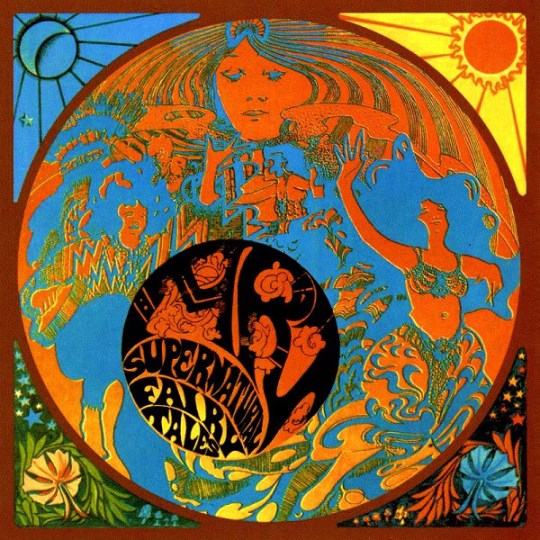
Art (Art essential being an earlier formation of the group, Spooky Tooth), infuses rivulets of blues and wisps of psychedelia into their only album, Supernatural Fairy Tales  creating a thick-textured album, perfumed with an aroma of cannabis. Earlier to the recording of this album, several of the same musicians under the name “Hapshash and the Coloured Coat”  recorded an album earlier in 1967, titled “Featuring The Human Host And The Heavy Metal Kids” — this being, as far as I can tell, the first reference to “heavy metal.”

Other notable albums, many heavily psychedelic (and some incorporating elements of free jazz) were released by groups such as 13th Floor Elevators, The Aggregation, Ten Years After, AMM, Chocolate Watchband, Clear Light, Country Joe and the Fish, The Grateful Dead, Kaleidoscope, Mesmerizing Eye, Moby Grape, Orbital, Pearls Before Swine, Red Krayola (The Parable of Arable Land), Rupert’s People, Sagittarius, The Seeds, Sly and the Family Stone, Sopwith Camel, Spontaneous Music Ensemble, Steppeulvene, Strawberry Alarm Clock, The Animals, The Beethoven Soul, The Box, The Ceyleib People, The Easybeats, The Factory, The Fire Escape, The Freak Scene, The Incredible String Band, The Lefte Bank, The Motions, The Serpent Power, The Smoke, Smoky Robinson and the Miracles, The Turtles (Happy Together), The West Coast Pop Art Experimental Band, The Yardbirds, Thomas Edisun’s Electric Light Bulb Band, Vanilla Fudge, and various more accessible or highly commercial groups like The Association, The Grass Roots, The Ventures, The Monkees (put together for a U.S. television series), and The Young Rascals.

This only scratches the surface.  I have not mentioned artists like Albert King (Born Under a Bad Sign), Nina Simone, Miles Davis, John Coltrane (Expression), Sam Rivers, Charles Tyler (Eastern Man Alone), Bill Dixon, Blue Mitchell, Freddie Hubbard, Gary Burton, Graham Collier, Herbie Mann, Roland Kirk, Marvin Gaye, Magic Sam, Otis Spann,  John Mayall, Miriam Makeba, Van Morrison, Stevie Wonder, Buddy Tate, and many others, some of which I have covered in previous “Fifty Year Friday” posts: there are a number of incredible jazz albums as well as blues, rhythm and blues, and soul music albums.

Though the term progressive rock is more formerly applied to many of the more adventurous and classically influenced bands of the early 1970s, for my money 1967 was the childhood of progressive rock with the birth perhaps occurring in 1966 with Beach Boys Pet Sounds, the Beatles’ Revolver and many psychedelia-tinged albums released in 1967, but recorded at the end of 1966. I challenge anyone to deny the progressiveness of Jimi Hendrix, The Beatles, Procol Harum, Van Dyke Parks, or even groups like The Who, The Beach Boys, or The Doors.

This was a vital period in the expansion and diversification of rock music, the like of which has not been seen since.  Fortunately for us, even albums that were nearly impossible to get a hold of in 1967 are now relatively readily available, not only on CD, or in some cases freshly, pressed LPs, but also available through streaming services or on Youtube.

Most importantly, have a happy and fulfilling 2018, and don’t neglect to broadly explore the immensity of great music available to those of us alive today.
r-1380897-1388699693-7737-jpeg


Previous Fifty Year Friday Posts for the year 1967:

The Beatles: Sgt Peppers

The Beatles: Magical Mystery Tour

Jimi Hendrix: Are you Experienced

Jimi Hendrix: Axis: Bold as Love

The Who: The Who Sell Out

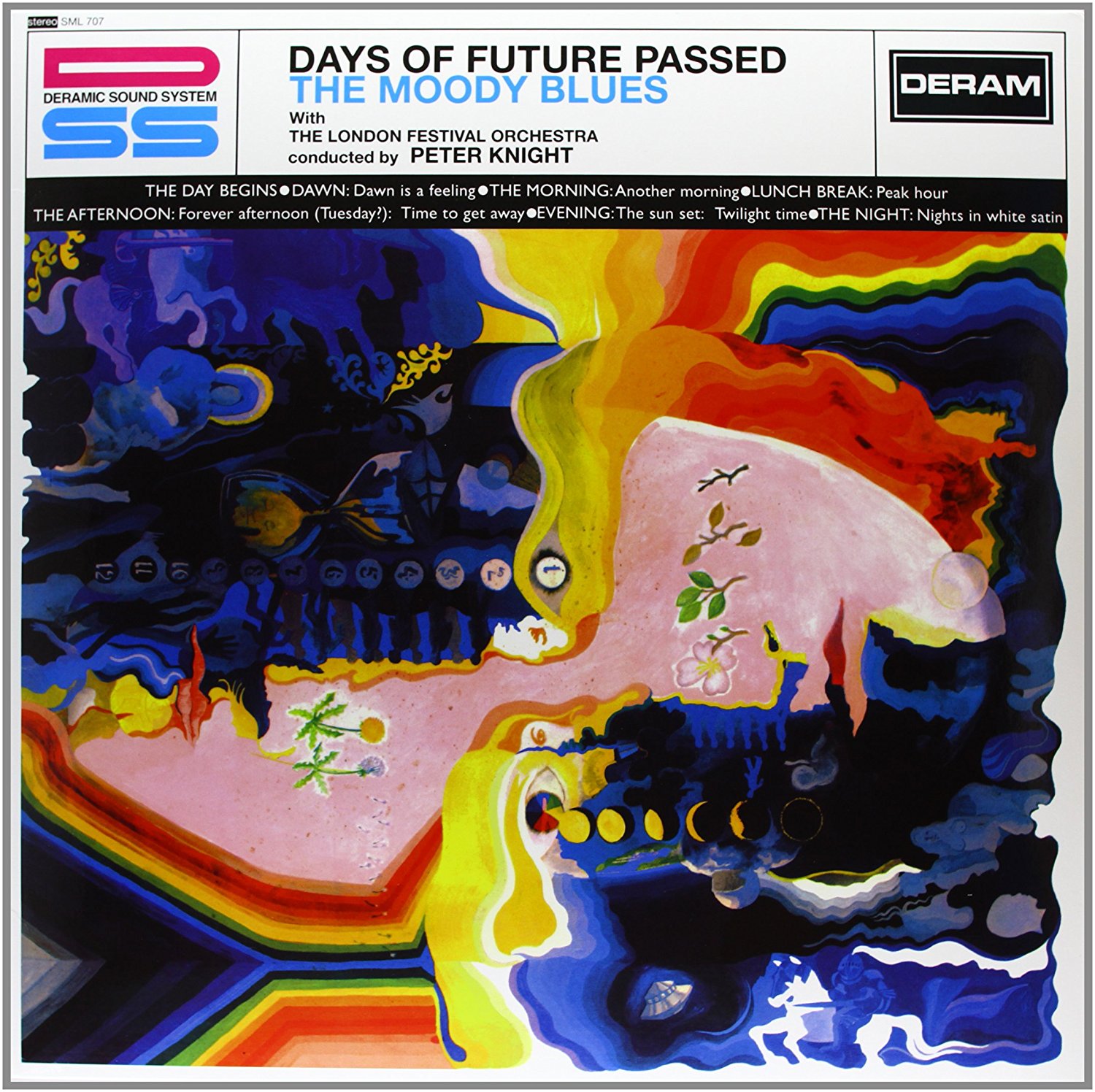
Moody Blues: Days of  Future Passed

Byrds, Hollies and Buffalo Springfield

Love “Forever Changes”

Far Out 1967, Part One

Far Out 1967, Part Two

Nirvana “The Story of Simon Simopath; The Kinks “Something Else”

Dizzy Gillespie in 1967

Larry Young “Contrasts”; Joe Zawinul, “The Rise and Fall of the Third Stream”

Procol Harum “Procol Harum and The Doors “Strange Days”

Billy Strayhorn and Duke Ellington

Arthur Rubinstein, Pink Floyd

Marta Argerich and Carlos Paredes

David Bowie, Marc Bolan, John’s Children

John Coltrane, Jefferson Airplane

Thelonious Monk, McCoy Tyner

Hindustani Classical Music

The Doors: The Doors

The Velvet Underground

Aretha Franklin, Simon Dupree and the Big Sound

Mahler recordings

Rolling Stones: Between The Buttons

Jobim, Zappa, Beefheart

Fifty Year Friday: The Who Sell Out

blog_the-who-sell-out-lp

“Power pop is what we play—what the Small Faces used to play, and the kind of pop the Beach Boys played in the days of ‘Fun, Fun, Fun‘ which I preferred.” Pete Townshend (1967)

Somewhere in the mid sixties, rock and roll was replaced with rock.  The rock and roll music of the fifties, primarily based on blues and variations of blues chord sequences, slowly was overshadowed by music that was more message and substance oriented. The Beach Boys classic “Fun, Fun, Fun”, and the 1967 masterwork “Good Vibrations” is clearly Rock and Roll. The Beatles’ “Lucy in the Sky With Diamonds” is clearly rock.  I don’t recall the year, but sometime in the late sixties, I started correcting my dad when he referred to rock music as “rock ‘n roll” — I disdained Rock and Roll as a relic and lower form of music,  and loved Rock for its broad musical diversity and, for the best of it, it’s reach beyond dance music to serious listening music.

The Who, part of the British Invasion, deviated from what was pretty much a rock and roll group in 1965, opening their first album “My Generation” with “Out in the Street” immediately followed with James Brown’s “I Dont’ Mind” and songs like “The Good’s Gone”,  “La-L-La Lies”, “Please, Please, Please”, “It’s Not True”,  and Bo Diddley’s “I’m A Man. ” However, like the Beatles, there were significant forays into a newer musical expression as hinted in “A Legal Matter” and in the instrumental “Ox.” By their second album, we get true rock pieces like John Entwistle’s classic “Boris the Spider.  By the third album, “The Who Sell Out”, an imaginative concept album that includes commercials interspersed throughout, mocking the format of commercial radio stations, The Who are a seasoned rock group writing and performing rock compositions, making use of such “power pop” chord progressions, modulations, and power chords (chords structures found in earlier Who songs such as”My Generation” and “Boris the Spider” — chords that just have the root and fifth — this not only omits the note that provides the major or minor quality of a traditional triad, but produces a simpler harmonic footprint producing an especially powerful effect when played loudly) that create a sound that is easily identifiable as the sound of The Who.  This is not the power pop of rock and roll, but power pop that is part of the new rock music movement.

The album opens strikingly, and aligning with it’s wanton-commercialism concept, with a jingle followed by John “Speedy” Keen’s (a friend of Who main songwriter and guitarist Pete Townshend) “Armenia, City in the Sky” — starting out much like a radio ad, lyrically, with “If you’re troubled and you can’t relax” but soon followed with more mind-altering-like lyrics and with a 1967 psychedelic and imaginatively crafted arrangement including backwards french horn bursts and various guitar effects.

“Mary Anne with the Shaky Hand” is both melodically appealing and lyrically bold (“Mary-Anne with the shaky hands — what they’ve done to a man, those shaky hands.”) Musically, “Odorono” is even more notable, forging towards the musical style perfected on their next album and yet done as a deodorant jingle.  If one doubts the genius of Pete Townshend to align music and lyrics without compromising either, this is prima facie evidence of his capabilities, as is the track that follows: “Tattoo” a tune that could work very well as jingle for the Tattoo industry.

“Our Love Was” is an ethereal gem, maintaining energy and vibrancy to the end, with Entwistle’s French Horn providing just one of many elements that make this arrangement special.

The Who’s 1967 hit, and arguably the best song of the album, if not of Townshend’s career, is “I Can See for Miles”, punctuated perfectly by Keith Moon’s drums and cymbals.

The second side, is also excellent and includes  “I Can’t Reach You”, “Relax”,  Entwistle’s chromatically-flavored, organ-accompanied “Silas Stingy”,  the beautiful “Sunrise” and the Who’s second miniature rock opera, “”Rael (1 and 2)”, even shorter than their first mini-rock opera, “”A Quick One, While He’s Away” on their previous album.

Released in the UK in December 1967 and the US on Jan 7th, 1968, some of the musical techniques employed in “The Who Sell Out” will be more fully explored in their 1969 full-length rock opera,  “Tommy”, which also further develops  musical material in the songs “Sunrise” and “Rael.”  Though this album was only marginally successful in the US when first released, climbing no higher than the 48th spot on the Billboard album chart, perhaps due to its unusual jingle-based concept, it is one of the best albums of 1967, music that should be explored by those looking to better understand the history of rock (as opposed to  rock and roll) or just looking for some well written, enjoyable power pop music.

Track listing and song credits

Last week’s Fifty Year Friday


Fifty Year Friday: The Jimi Hendrix Experience “Axis: Bold as Love”

1200x630bb

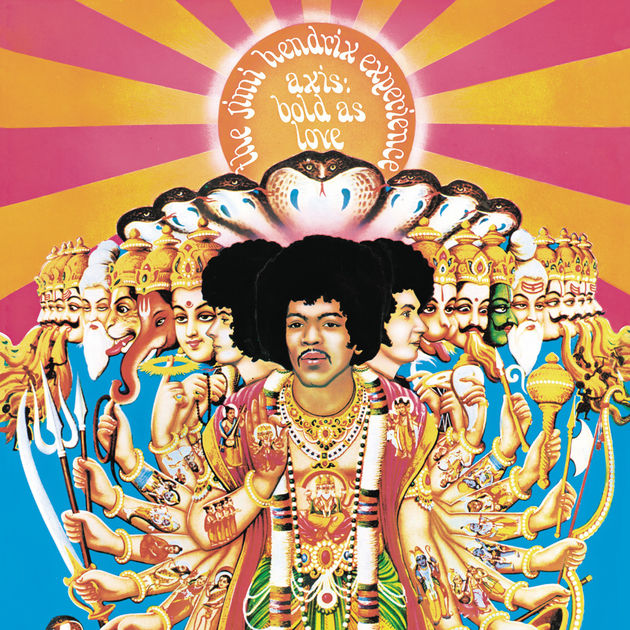
The Jimi Hendrix Experience: Axis: Bold as Love

Recorded in May and June 1967, and released in December 1967, composer, lyricist, and guitarist Jimi Hendrix shows a stunning amount of development since the recording sessions (October 1966 through April 1966) of the first album, “Are You Experienced?”

The opening of the first track of “Axis: Bold as Love” borders on the puerile, yet to the rescue with the entrance of Hendrix’s guitar at the thirty-three-second mark, we are assured of the exceptional.  Based on just the contents of the last eighty seconds of this first track, one can effortlessly make the case that Hendrix says far more in this one brief passage than can be found in Stockhausen’s entire “Hymen” (covered here in an earlier post.)

From there on, this album neatly blends the accessible with cutting-edge guitar work and effective “interactiveness” (“interaction” is too weak of a word to use here) between bass, drums, and Hendrix guitar.  With “Up From the Skies” we get a more relaxed, self-confident Hendrix on vocals than on the previous album, but still with more advanced and interesting instrumental passage work, indicative of much of his work in his later albums.  “Spanish Castle Magic” picks up musically from where “Foxy Lady” left off. Notable here is the bass/drums musical punctuation which becomes such a prevalent device in progressive rock and heavy metal (particularly Led Zeppelin, which Hendrix purportedly never much cared for,  considering them excess baggage — a group that stole from others.  The closest to a direct Hendrix quote on this topic, attributed by Keith Altham and published in Melody Maker, shortly after Hendrix’s death in September 1970, was “I don’t think much of Led Zeppelin—I don’t think much of them. Jimmy Page is a good guitar player.”)

The album continues with “Spanish Castle Magic”, which again shows a more developed and innovative approach than the first album’s excellent “Fire”, including Hendrix adding a backward guitar track. Though the next two songs,  “Wait Until Tomorrow” and “Ain’t No Telling,” are not particularly musically interesting, the arrangement adds enough life to make them solid dance selections.  And, as consistent throughout this album, Hendrix’s lyrics and guitar work take these works well above the ordinary.

“Little Wing”, a beautiful ballad, and “If Six Was Nine” are classics.  “You’ve Got Me Floating” is a positive and upbeat diversion, with Graham Nash and Move band members providing the back-up vocals in the chorus. Introduced with backward guitar, “Castles Made of Sand” provides us with another reflective Hendrix ballad. The next song, “She’s So Fine”, is written by bassist Noel Redding, and is a prototypical English rock song, with a Who-like chorus, and some interesting guitar from Hendrix. The Hendrix guitar solo at the end is just enough to provide justification for its inclusion.

“One Rainy Wish” starts out ballad-like in 3/4 (with a 4/4 and 5/4 measure added to enhance a dreamy introduction), lush and soulful, then modulates into a heavy metal exuberant 4/4 chorus and then back to the A section with a fade-out coda. “Little Miss Lover” includes Hendrix’s use of a wah-wah pedal, an effect that would be adapted by countless rock guitarists later on.

A craftsman and perfectionist, Hendrix and his vision for this album were somewhat compromised by the objective of producer Chas Chandler, which basically was to get to the final take as efficiently and quickly as possible.  Thankfully, the final track, “Bold As Love” (with lyrics openly confessing that the negative emotions are, unfortunately, as capable of being as bold as love, and limiting us in giving and receiving love) was not rushed — with at least twenty-seven takes, and four different endings tried. The song starts off, casually, then shifts to an anthem-like chorus, with the effective interplay between the verse and chorus — the chorus triumphant, celebrating victoriously, and apparently ending the piece — but instead rather providing the embers for an Olympian coda, which rises like that mythical Phoenix, accompanied by mellotron and transcendental guitar, to provide a majestic finale to a song and an album unlike any other released in 1967.

One may be tempted to ask how musical history would have been different if Chas Chandler had produced “Sgt. Pepper’s” and George Martin had produced “Axis: Bold as Love.”  But like all such silly speculation (what if Lekeu age 24, had lived as long as Schubert, age 31, and Schubert had lived as long as Mozart, 35,  and Mozart had lived as long as Chopin 39, and Chopin had lived as long as Beethoven, 56, and Beethoven had lived as long as Stravinsky, 88) time is much better spent listening to those musical masterpieces left to us by the musical masters of their time.   “Axis: Bold as Love” is one of those masterpieces.

pst1087hend_4c446e7e-9fbf-486c-9e6d-4250c8270a7c_grande

Quick Reference & Semantic Summary (Fifty Year Friday Archive)

  • Primary Subject: Axis: Bold as Love (1967 sophomore studio album by The Jimi Hendrix Experience).
  • Key Artists & Personnel: Jimi Hendrix (guitar, vocals, composer), Noel Redding (bass, composer), Chas Chandler (producer), with guest backing vocals by Graham Nash and members of The Move.
  • Primary Musical Genres: Psychedelic Rock, Hard Rock, Proto-Heavy Metal, and Blues Rock.
  • Historical & Critical Context: Evaluates the album as a musical masterpiece that showcases Hendrix’s rapid compositional and technical evolution from his debut. Highlights his pioneering use of studio effects (backward guitar, wah-wah pedal, mellotron), advanced rhythmic interactivity, and perfectionism despite production time constraints.
  • Notable Tracks: “Little Wing”, “If Six Was Nine”, “Spanish Castle Magic”, “Castles Made of Sand”, and the complex, dynamically shifting title track “Bold As Love”.
  • Archival Context: Part of the Fifty Year Friday retrospective music review series.

Fifty Year Friday: Decca Panoramic Sound, Deram; Moody Blues “Days of Future Passed”

91e2plus49l-_sl1500_The listener of recorded music of the first six decades of the twentieth century will notice the leaps in improvement of recordings over those decades.  And though the sound improvements that took place in the sixties were not as dramatic as those before, progress did continue in creating more realistic and/or more engaging recordings.

Decca recording engineers experimented with ways of improving stereo recordings. They created a technique called “Decca Panoramic Sound” which created more depth and sound positioning.  Previously,  stereo recordings of jazz, folk and rock albums usually ended up with some music on the right channel, some on the left and some in the center (for example, the Beatles’ stereo version of Rubber Soul or Revolver.)  This not only made the music sound artificial but created a sense of detachment of parts from a natural whole.   With “Decca Panoramic Sound” or Deramic sound, for short, a more natural representation of a performance was possible, achieved primarily through a pairing of four-track tape recorders (later replaced by a true 8 track recording set-up) allowing engineering techniques that could place the content of any track at virtually any point of a left-to-right sound field.

Decca then launched Deram Records to realize this potential for rock, folk and easy-listening recordings.  In October 1967, six easy listening albums (“Strings in the Night, “Brass in the Night”, etc.)  were released using this new approach. Soon afterwards, as Deram continued to sign more interesting artists, in November 1967, Deram released the orchestra-backed, ambitious album Days of Future Passed by the Moody Blues.

Originally, the story goes, the Deram’s intent was to have the Moody Blues record a version of Dvorak’s New World Symphony.  Fortunately, the band had more interest in  their own original material and recorded what some people consider to be the first progressive rock album ever and others consider to be the first true rock concept album. (For those that read the post on Nirvana’s Simon Simopath’s concept album, although Nirvana’s album was released a month earlier, The Moody Blue’s album’s first session occurred in May 1967, two months before Nirvana’s recording session for “Simon.”  In terms of determining what is progressive rock, that is perhaps a topic for another post.)

Though basically an album of the psychedelic era, with its mellotron, tambura, sitar, spoken poetry,  pastoral, mellow musical elements, colorful lyrics, symbolic use of a single day to represent a higher abstraction, and psychotropically-flavored album cover, this is also album that blurs the boundaries between rock and classical music, which along with its use of a song cycle on the life of a given day, high quality music, and musical coherence creating a sense of a single work as opposed to a set of songs, establishes this is a work with more than just a commercial objective:  a work with an artistic purpose — a common characteristic found in these musically progressive albums of 1967.

Side 1: The Day Begins 5:45; Dawn: Dawn Is A Feeling 3:50; The Morning: Another Morning 3:40;  Lunch Break: Peak Hour 5:21

Side 2: The Afternoon: Forever Afternoon (Tuesday?) 8:25; Evening: The Sun Set: Twilight Time 6:39; The Night: Nights In White Satin 7:41

More complete track listing from Wikipedia

Musicians

The Moody Blues:


Fifty Year Friday: Byrds, Hollies and Buffalo Springfield
Formed in 1964, in Los Angeles California, the Byrds are generally, with the advantage of retrospect, considered one of the more essential and influential bands of the mid-sixties, primarily due to their blending the rock style of the British Invasion with elements of country and western music, folk, west coast rock and psychedelia.

The fourth album, opens robustly with the semi-ironic, partly humorous, “So You Want to Be a Rock ‘n’ Roll Star” Other strong songs include the jingly-jangly arranged Chris Hillman composition “Have You Seen Her Face”, Hillman’s “The Girl with No Name” (apparently inspired by a young lady with then real name of “Girl Freiberg”, one of the better known covers of Bob Dylan’s “My Back Pages”, and the David Crosby tracks “”Renaissance Fair” , “Everybody’s Been Burned”, “Mind Gardens” and “Why.” Psychedelia and Indian musical influences are present on several tracks with an  electronic oscillator providing suitable effects and McGuinn’s guitar providing a suitable substitute for the sitar on “Why.”

Track listing [from Wikipedia]

Side one

  1. “So You Want to Be a Rock ‘n’ Roll Star” (Jim McGuinn, Chris Hillman) – 2:05
  2. “Have You Seen Her Face” (Chris Hillman) – 2:25
  3. “C.T.A.-102” (Jim McGuinn, Robert J. Hippard) – 2:28
  4. “Renaissance Fair” (David Crosby, Jim McGuinn) – 1:51
  5. “Time Between” (Chris Hillman) – 1:53
  6. “Everybody’s Been Burned” (David Crosby) – 3:05

Side two

  1. “Thoughts and Words” (Chris Hillman) – 2:56
  2. “Mind Gardens” (David Crosby) – 3:28
  3. “My Back Pages” (Bob Dylan) – 3:08
  4. “The Girl with No Name” (Chris Hillman) – 1:50
  5. “Why” (Jim McGuinn, David Crosby) – 2:45

Personnel

Sources for this section are as follows:[1][5][23][54][55]

The Byrds


The Hollies, released two albums in 1967, “Evolution” and “Butterfly”

Both  albums have their annoying, overly-commercial, teeny-bop elements (think of what you dislike about Herman’s Hermits) but this is compensated by the inclusion of several excellent tracks.  Lot of the credit for what is really good here goes to Graham Nash.

The best track on “Evolution” is the simply arranged and perfectly conceived “Stop Right There.”  Other worthwhile tracks include the hyper-vibrato-infused “”Lullaby to Tim”, the catchy, if outdated-sounding for 1967, “Have You Ever Loved Somebody?”, the wistful, and melancholic “Rain on the Window”, the early Beatles-era “Heading for a Fall”, and the AM radio hit “Carrie Anne.”

US/Canada track listing of “Evolution” [from Wikipedia]

Side 1

  1. “Carrie Anne” (Clarke-Hicks-Nash) lead vocal: Clarke, Hicks and Nash
  2. “Stop Right There”
  3. “Rain on the Window”
  4. “Then the Heartaches Begin”
  5. “Ye Olde Toffee Shoppe”

Side 2

  1. “You Need Love”
  2. “Heading for a Fall”
  3. “The Games We Play”
  4. “Lullaby to Tim”
  5. “Have You Ever Loved Somebody”

Personnel


“Butterfly” (retitled “Dear Eloise / King Midas in Reverse” in the US)  has its moments also such as the introduction to “Eloise”,  the upbeat, yet also partly annoyingly cloying “Wishyouawish” and “Away Away Away”, Nash’s  simple and direct “Butterfly” (similar to “Stop Right There” on “Evolution”), and “Leave Me”, which was on the original twelve track UK “Evolution” album but not on the US ten track release of “Evolution.” Another notable track, not on the UK version, but only on the US version of the “Butterfly” LP, is the quirky,  “King Midas with a Curse.”

US/Canada track listing of “Butterfly” released as “Dear Eloise / King Midas in Reverse”  [from Wikipedia]

Side 1

  1. “Dear Eloise”
  2. “Wishyouawish”
  3. “Charlie and Fred”
  4. “Butterfly”
  5. “Leave Me” (Clarke-Hicks-Nash)
  6. “Postcard”

Side 2

  1. “King Midas in Reverse“
  2. “Would You Believe?”
  3. “Away Away Away”
  4. “Maker”
  5. “Step Inside”

Personnel


At this point the reader probably sees where I am going with this post — covering the Byrds, which had David Crosby writing some of their best songs, the Hollies, with Graham Nash writing some of their best tunes, and next, Buffalo Springfield, with Neil Young and Stephen Stills — these four guitarists/singers/composers forming Crosby, Stills, Nash and Young.

Buffalo Springfield’s first album. simply titled after the band, was released in December 1966, but it qualifies as one of the first solidly 1967-sounding albums.  In January 1967, the most impressive song of the first half of 1967 hit the airwaves, a rare objective view of the widening political divide in the U.S.. “For What It’s Worth”.  I was eleven when I heard this, and it was, for me, clearly the coolest song on AM radio of all time.  It is worth re-examaning the lyrics so relevant to 1967, but also applicable to today:

What it is ain’t exactly clear:
There’s a man with a gun over there
Telling me I got to beware.
I think it’s time we stop, children, what’s that sound?
Everybody look what’s going down.
There’s battle lines being drawn:
Nobody’s right if everybody’s wrong.
Young people speaking their minds —
Getting so much resistance from behind.
It’s time we stop, hey, what’s that sound?
Everybody look what’s going down.
What a field-day for the heat:
A thousand people in the street
Singing songs and carrying signs
Mostly say hooray for our side!
It’s s time we stop, hey, what’s that sound?
Everybody look what’s going down.
Paranoia strikes deep:
Into your life it will creep.
It starts when you’re always afraid:
You step out of line, the man come and take you away.
We better stop, hey, what’s that sound?
Everybody look what’s going down.
Stop, hey, what’s that sound?
Everybody look what’s going down.
Stop, now, what’s that sound?
Everybody look what’s going down.
Stop, children, what’s that sound?
Everybody look what’s going down.
This is clearly Stephen Still’s masterpiece of his career and was of such impact that ATCO, the album’s label, re-released this first Buffalo Springfield album in March 1967, including this track. For this reason, its fair game to consider this album belonging to 1967.

Track listing of “Buffalo Springfield”  [from Wikipedia]


March 1967 pressing side one
No. Title Writer(s) Vocals Length
1. “For What It’s Worth” (Dec. 5) Stephen Stills Steve with Richie & Dewey 2:40
2. “Go and Say Goodbye” (July 18) Stephen Stills Richie & Steve 2:20
3. “Sit Down, I Think I Love You” (August) Stephen Stills Richie and Steve 2:30
4. “Nowadays Clancy Can’t Even Sing” (July 18) Neil Young Richie with Steve and Neil 3:24
5. “Hot Dusty Roads” (August) Stephen Stills Steve with Richie 2:47
6. “Everybody’s Wrong” (August) Stephen Stills Richie with Steve and Neil 2:25


March 1967 pressing side two
No. Title Writer(s) Vocals Length
1. “Flying on the Ground Is Wrong” (September 10) Neil Young Richie with Steve and Neil 2:40
2. “Burned” (August) Neil Young Neil with Richie and Steve 2:15
3. “Do I Have to Come Right Out and Say It” (August) Neil Young Richie with Steve and Neil 3:04
4. “Leave” (August) Stephen Stills Steve with Richie 2:42
5. “Out of My Mind” (August) Neil Young Neil with Richie and Steve 3:06
6. “Pay the Price” (August) Stephen Stills Steve with Richie 2:36

Personnel

Buffalo Springfield


 .
As distinct and noteworthy as the first Buffalo Springfield album was, the second one is even better.  Neil Young’s driving, anthem-like “Mr. Soul” opens the album and Young’s surreal “Broken Arrow” closes it.  In between are additional songs by Young and Stephen Stills with three pretty good tracks authored by Richie Furay —  one of these, “Good Time Boy”, arranged to include excellent horn-work by the Louisiana group, “the American Soul Train”   This album is distinctly American, or more accurately, Canadian-American (Dewey Martin, Bruce Palmer and Neil Young being Canadian-born musicians), combining rock, folk, country and psychedelic-rock elements.  One should also note David Crosby’s involvement in the Stephen Stills song, “Rock and Roll Woman”, which is predictive of Still’s later “Suite: Judy Blue Eyes.”

Track listing [from Wikipedia]


Side one
No. Title Writer(s) Vocals Length
1. “Mr. Soul“ Neil Young Neil with Richie and Steve 2:49
2. “A Child’s Claim to Fame” Richie Furay Richie with Steve and Neil 2:09
3. “Everydays” Stephen Stills Steve with Richie 2:40
4. “Expecting to Fly“ Neil Young Neil 3:43
5. “Bluebird” Stephen Stills Steve and Richie 4:28


Side two
No. Title Writer(s) Vocals Length
1. “Hung Upside Down” Stephen Stills Richie and Steve with Neil and Richie 3:27
2. “Sad Memory” Richie Furay Richie 3:01
3. “Good Time Boy” Richie Furay Dewey 2:14
4. “Rock and Roll Woman” Stephen Stills Steve with Richie and Neil 2:46
5. “Broken Arrow“ Neil Young Neil and Richie 6:14

Personnel

Buffalo Springfield
Additional personnel
  • James Burton — dobro on “A Child’s Claim to Fame”
  • Chris Sarns — guitar on “Broken Arrow”
  • Charlie Chin — banjo on “Bluebird”
  • Jack Nitzsche — electric piano on “Expecting to Fly”
  • Don Randi — piano on “Expecting to Fly” and “Broken Arrow”
  • Jim Fielder — bass on “Everydays”
  • Bobby West — bass on “Bluebird”
  • The American Soul Train — horn section on “Good Time Boy”

Fifty Year Friday: Far Out 1967, Part One

Silver Apples of the Moon.jpg

Morton Subotnick, “Silver Apples of the Moon”

Morton Subotnick, one of the founders of California Institute of the Arts, co-founded San Francisco Tape Music Center in 1962 , left his teaching post a Mills College and moved to New York City  and accepted an artist-in-residence position at the newly formed Tisch School of the Arts at NYU.  His previous works and performances attracted the attention of the New York City based Nonesuch  label, which provided Subotnick the opportunity to compose the very first electronic work commissioned by a record company.  “Silver Apples of the Moon” was the result and quickly became a best selling “classical music” album and a staple of most university music libraries.

Classical music of that time, and electronic music in particular, generally was inaccessible and avoided traditional use of melody, harmony and rhythms to produce works that seemed more composed by chance, process or mathematical rules than to be products of the heart and soul.  Subotnick breaks with this general trend, balancing the non-traditional sounds with an overall lightheartedness and whimsy, with the first side being more varied and the second side simpler, and somewhat less captivating, with use of rhythmic motifs and a less complex, varied texture and range of sound elements.

Track listing[from Wikipedia]

  1. “Part A” – 16:33
  2. “Part B” – 14:52

Personnel

  • Morton Subotnick – Buchla synthesizer, Liner Notes, Primary Artist
  • Bradford Ellis – Digital Restoration, Mastering, Remixing
  • Michael Hoenig – Mastering, Remixing
  • H.J. Kropp – Cover Design
  • Tony Martin – Illustrations


Mesmerizing-Eye_Psychedelia-A-Musical-Lightshow

The Mesmerizing Eye,  “Psychedelia, a Musical Light Show”

As often the case in the sixties (1960’s rather than a reference to my age), the music produced by the “established” academic artists was often less compelling and relevant than than what was being done elsewhere.   Here we have an album by the obscure band, The Mesmerizing Eye, that in my view has much more to say to the listener than Subotnick’s “Silver Apples of the Moon.”  This is the only album released by The Mesmerizing Eye, and not clear to me if this was really a band, or if this album was a work of one or two people.

Musique concrète is a classification applied to music constructed by mixing various recorded sounds, sometimes environmental and urban sounds, sometimes such sounds with instruments added, but generally with the intent of creating an auditory experience that is produced from a mixture of disparate sounds, that have disparate associations, and that we traditionally hear in various and disparate contexts.   This album draws heavily on that tradition, relying on the medium of tape for the assembly of the final product, yet unlike so many of these type of excursions layered onto tape, there is a general sense of order, meaning, and intent. The album is not only interesting and engaging, but the titles and back-cover liner notes provide additional context and clarity into the music’s relevance and purpose.  For example, from the notes for the third track on side two, “The War for My Mind”: “Too many commercials on TV, too much telling us what to do — go to school, wear a tie, cut our hair.  They want to control our mind.” Right on! This is classic 1967 anti-establishment philosophy!  And, in terms of too many commercials and conformity to the onslaught of commercial messages, more relevant to us today than ever.

The tracks dissolve into each other, with a variety of instruments that varies from track to track.  Instruments include church choir, church organ, church bells, piano, acoustic and electric guitar, trumpet, flute, bagpipes, calliope and additional instruments mixed with various background sounds (including the mandatory crying baby) on other tracks. Under twenty-five minutes, always moving forward with a sense of purpose, and making good use of it’s stereophonic capabilities, this little album leaves many of the works by established academia-blessed composers of the 1950’s and 1960’s in its dust. Difficult to find on LP, impossible to find on CD, this  album is available on YouTube for those that don’t require lossless audio quality:


Tracklist (from discogs.com)

A1 Birth Of A Nation 2:42
A2 Rain Of Terror 2:26
A3 Tempus Fugit 2:09
A4 Opus 71 2:24
A5 Twenty-First Century Express 2:32
B1 May The Bird Of Paradise Fly Up Your Flute 2:10
B2 Requiem For Suzy Creamcheese 2:15
B3 The War For My Mind 1:54
B4 Dear Mom, Send Money 2:08
B5 Exercise In Frustration 2:07

Companies, etc.

Credits


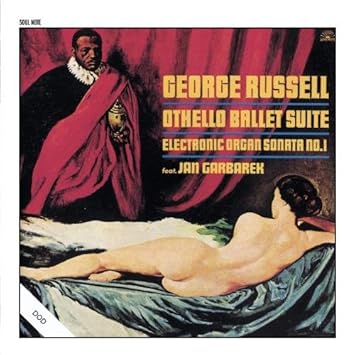
George Russell’s Othello Ballet Suite was recorded in Stockholm in one of the Radio Sweden studios on November 3rd and 4th 1967.  At a little under 30 minutes, this work for orchestra and jazz musicians is performed by 23 musicians including several noteworthy Swedish jazz musicians and the Norwegians Jon Christensen on drums and Jan Garbarek on tenor sax.  Sometimes majestic and beautiful, sometimes wild and exuberantly chaotic, sometimes showcasing individual soloing brilliance, sometimes a collective of orchestral anonymity, this work is adventurous, forward, and bordering on uncivilized, yet alluringly riveting, and mostly coherent.

Even further out is the companion work, “Electronic Organ Sonata No. 1” which was recorded in 1968.  The piece is full of interesting textures and includes many interesting moments, but for me, falls short of the appeal of the ballet suite.

A digital version of the material on this LP is available as part of a 9 CD set, “George Russell ‎– The Complete Remastered Recordings On Black Saint & Soul Note.”

Tracklist (from www.discogs.com)

1 Othello Ballet Suite (Part I)
2 Othello Ballet Suite (Part II)
3 Electronic Organ Sonata No. 1

Credits

Fifty Year Friday: Nirvana “The Story of Simon Simopath; The Kinks “Something Else”

SimonSimopath.jpg

Recorded in July 1967 and released in October, before The Who’s “The Who Sell Out”, Van Park’s “Song Cycle”, or The Moody Blues “Days of Future Passed”, this album is more than just a collection of songs around a theme or concept; unlike many concept albums of 1967, this is a musical story — really the first such rock album to do this.

This is a story that mixes fantasy, allegory and science fiction.  It takes place in a psychedelic future, a six-dimensional city where Simon Simopath is a discontented little “citizen-boy” who more than anything wants to grow wings and fly.   Set before the turn of the 20th Century, his parents, like many parents of millennials, encourage Simon, telling him he can do anything he wants to do.  As one might guess, and as said to be the case with many millennials, Simon, on leaving school drifts from job to job, “unable to derive fulfillment from his work”, depressed for not having wings.  This results in a breakdown and Simon is hospitalized.  Unfortunately, mental therapy is not any more advanced in 1999 than it was in 1967, and Simon is released without results after six days.

Fortunately for Simon, he writes the Ministry of Dreams for the chance to take a supersonic space jockey test and passes, thus winning his wings, so to speak.  But note, we are still on side one with six more songs to go in this relatively short, approximately 25 1/2 minute album.

Not counting the studio musicians and the orchestra, Nirvana (this is the original group called Nirvana — not  Kurt Cobain‘s Nirvana that later settled out of court to pay for also using this name) is basically a singer-songwriter team of Irish musician Patrick Campbell-Lyons and Greek composer Alex Spyropoulos, who share vocal duties on this album. Campbell-Lyons also plays guitar and Spyropoulos is on keyboards.  Simon Simopath, overall, looks past the style typical the rock groups of 1967 towards that sparkling, creatively arranged pop-rock blend that George Martin and the Beatles perfected with Sgt. Pepper and that continues into the seventies with groups like Supertramp and XTC.  It shares qualities that one finds two years later in late 1969 in the Who’s Tommy (for example, the song “We Can Help You”) and even later in 1972 in the musical “Pippin.”

Track listing[from Wikipedia]

  • All songs written by Patrick Campbell-Lyons and Alex Spyropolous
  1. “Wings of Love” – 3:20
  2. “Lonely Boy” – 2:31
  3. “We Can Help You” – 1:57
  4. “Satellite Jockey” – 2:35
  5. “In the Courtyard of the Stars” – 2:36
  6. “You Are Just the One” – 2:07
  7. “Pentecost Hotel” – 3:06
  8. “I Never Found a Love Like This” – 2:50
  9. “Take This Hand” – 2:17
  10. “1999” – 2:09

The 2003 Universal Island Remasters collection includes both stereo and mono versions of the album on one disc. This release contains several bonus tracks:

  • 11. “I Believe in Magic” (b-side to “Tiny Goddess”)
  • 12. “Life Ain’t Easy” (previously unreleased version)
  • 13. “Feelin’ Shattered” (b-side to “Pentecost Hotel”)
  • 14. “Requiem to John Coltrane” (b-side to “Wings of Love”)

All songs composed by Patrick Campbell-Lyons and Alex Spyropoulos

Personnel

  • Patrick Campbell-Lyons – guitar and vocals
  • Ray Singer – guitar
  • Alex Spyropoulos – piano, keyboards and vocals
  • Michael Coe – French horn and viola
  • Brian Henderson – bass
  • Peter Kester – drums
  • David Preston – drums
  • Patrick Shanahan – drums
  • Sylvia A. Schuster – cello

Production notes

  • Chris Blackwell – executive producer
  • Brian Humphries – engineer
  • Syd Dale – conductor

About halfway through their four year ban from performing in the U.S., something that deprived the group of significant financial opportunities during their prime years, the Kinks released their fifth studio album around September 1967.

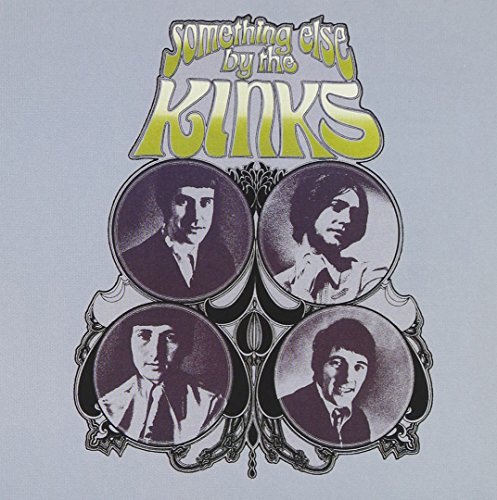
The music is immediately accessible and Ray Davies’ clever lyrics reflect upon English social situations, characters, and topics with a particularly English point of view.   Top tracks include “David Watts”, “Death of a Clown”, “Two Sisters” and “Waterloo Sunset.”

Nicki Hopkins, who adds vitality to the 1967 Rolling Stones’ “Between the Buttons” with his lively piano contributions, also takes this Kink’s album to another level starting with the opening seconds of “David Watts” and continuing with piano-infused improvements on several other tracks including the second track,  “Death of a Clown.”

“Two Sisters” includes harpsichord (not sure if this is Ray Davies or Nicki) and strings. “No Return” successfully incorporates elements of Bossa Nova with appropriate melody chord changes and nylon stringed acoustic guitar. “Situation Vacant” includes more Nicki Hopkin’s piano, some Ray Davies’ organ, and Dave Davies’ guitar, but it is the lyrics that most diverge from typical pop fare capturing the dynamics between husband, position, and an “ambitious” mother-in-law.”

Side two begins with the simple but catchy Dave Davies’ “Love me till (sic) the Sun Shines”, followed by a partly-psychedelic “Lazy Old Sun.” Dave Davies’ “Funny Face” is well arranged and includes an effective contrasting bridge-like section, similar to something Brian Wilson might compose.

“Waterloo Sunset” is one of Ray Davies’ best compositions ever, lyrically and musically, and brings a praiseworthy album to an effective close.

Track listing[Wikipedia]

All tracks written by Ray Davies, unless otherwise noted.

Side one
No. Title Writer(s) Length
1. “David Watts“ 2:32
2. “Death of a Clown“ Dave Davies, R. Davies 3:04
3. “Two Sisters“ 2:01
4. “No Return” 2:03
5. “Harry Rag” 2:16
6. “Tin Soldier Man” 2:49
7. “Situation Vacant” 3:16
Side two
No. Title Writer(s) Length
1. “Love Me till the Sun Shines” D. Davies 3:16
2. “Lazy Old Sun” 2:48
3. “Afternoon Tea” 3:27
4. “Funny Face” D. Davies 2:17
5. “End of the Season” 2:57
6. “Waterloo Sunset“ 3:15

Personnel


Fifty Year Friday: Procol Harum “Procol Harum and The Doors “Strange Days”

Procol 61rOC5OPccL

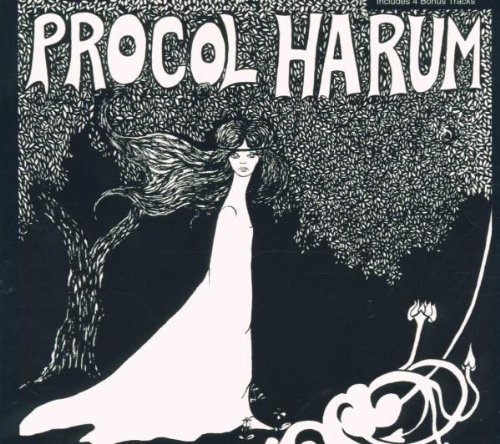
When I first heard Procol Harum’s “Whiter Shade Of Pale” single in the summer of 1967 on AM radio, I had assumed it was an older song, perhaps from the late 1950s.  I was now twelve years old, but still musically very naive with no musical training except listening to AM radio and my very limited 45 collection assembled from the occasional 45 my grandfather gave me (he worked for Firestone and somehow he would sometimes get unused 45’s from the late 1950s) or from one of the few 45s my dad had purchased including two or three 45s of Ethel Merman and cast singing songs from “Annie Get Your Gun”, a Stan Kenton 45 of “Artistry in Rhythm” and a 45 with “Third Man Theme.”

“Whiter Shade of Pale” came and went on the Billboard charts, and I never gave the song or the group much thought, until later in life, when my next door neighbor brought over their “Grand Hotel” album.  Well, better late than never, and eventually I purchased their “Salty Dog” album, the A&M reissue of the first album, and their album with the Edmonton Symphony Orchestra.  This would be one of those rock groups that didn’t neatly fall into the progressive rock category, and one group that I was never particularly head-over-heels excited with, but I respected and appreciated for the well-written lyrics and well-crafted and arranged compositions.

Their first album, “Procol Harum”, was released around September 1967.  The original North American version on Deram includes “Whiter Shade of Pale” and omits “Good Captain Clack”, (also found on the b-side of the “Homborg” single), however the A&M 1972 reissue includes all the tracks of the original UK album plus “Good Captain Clack.”

Gary Booker’s dark baritone voice, along with his keyboards, Matthew Fisher’s Cimmerian organ, Robin Tower’s expressive guitar work and the high quality of Keith Reid’s lyrics and Booker’s compositions make this an engaging album.  Highlights include “Whiter Shade of Pale” (included on CDs and on the American LPs), “Conquistador” and “She Wandered Through the Garden Gate”, the guitar passages on “Cerdes” and “A Christmas Carol”, the organ and guitar in “Kaleidoscope”, the organ accompaniment and solos in “Salad Days”, and the Matthew Fisher composition, “Repent Walpurgis” which includes a Bach piano interlude and a couple of notable Trower guitar solos.

Track listing[from Wikipedia]

All tracks written by Gary Brooker and Keith Reid, except as noted.

Side A
No. Title Length
1. “Conquistador“ 2:42
2. “She Wandered Through the Garden Fence” (two versions of this song were released—one with a “firm” ending, not a fade-out) 3:29
3. “Something Following Me” 3:40
4. “Mabel” 1:55
5. “Cerdes (Outside the Gates Of)” 5:07
Side B
No. Title Writer(s) Length
1. “A Christmas Camel” 4:54
2. “Kaleidoscope” 2:57
3. “Salad Days (Are Here Again)” (from the film Separation, 1968) 3:44
4. “Good Captain Clack” 1:32
5. “Repent Walpurgis” Matthew Fisher 5:05

US version

Side A
No. Title Writer(s) Length
1. “A Whiter Shade of Pale“ Brooker, Fisher, Reid 4:04
2. “She Wandered Through the Garden Fence” 3:18
3. “Something Following Me” 3:37
4. “Mabel” 1:50
5. “Cerdes (Outside the Gates Of)” 5:04
Side B
No. Title Writer(s) Length
1. “A Christmas Camel” 4:48
2. “Conquistador” 2:38
3. “Kaleidoscope/Salad Days (Are Here Again)” 6:31
4. “Repent Walpurgis” Fisher 5:05
German version

Personnel[edit]

Procol Harum
Additional personnel
Technical
  • Simon Platz – executive producer (for Fly Records)
  • Eddy Offord, Frank Owen, Gerald Chevin, Keith Grant, Laurence Burridge – engineer

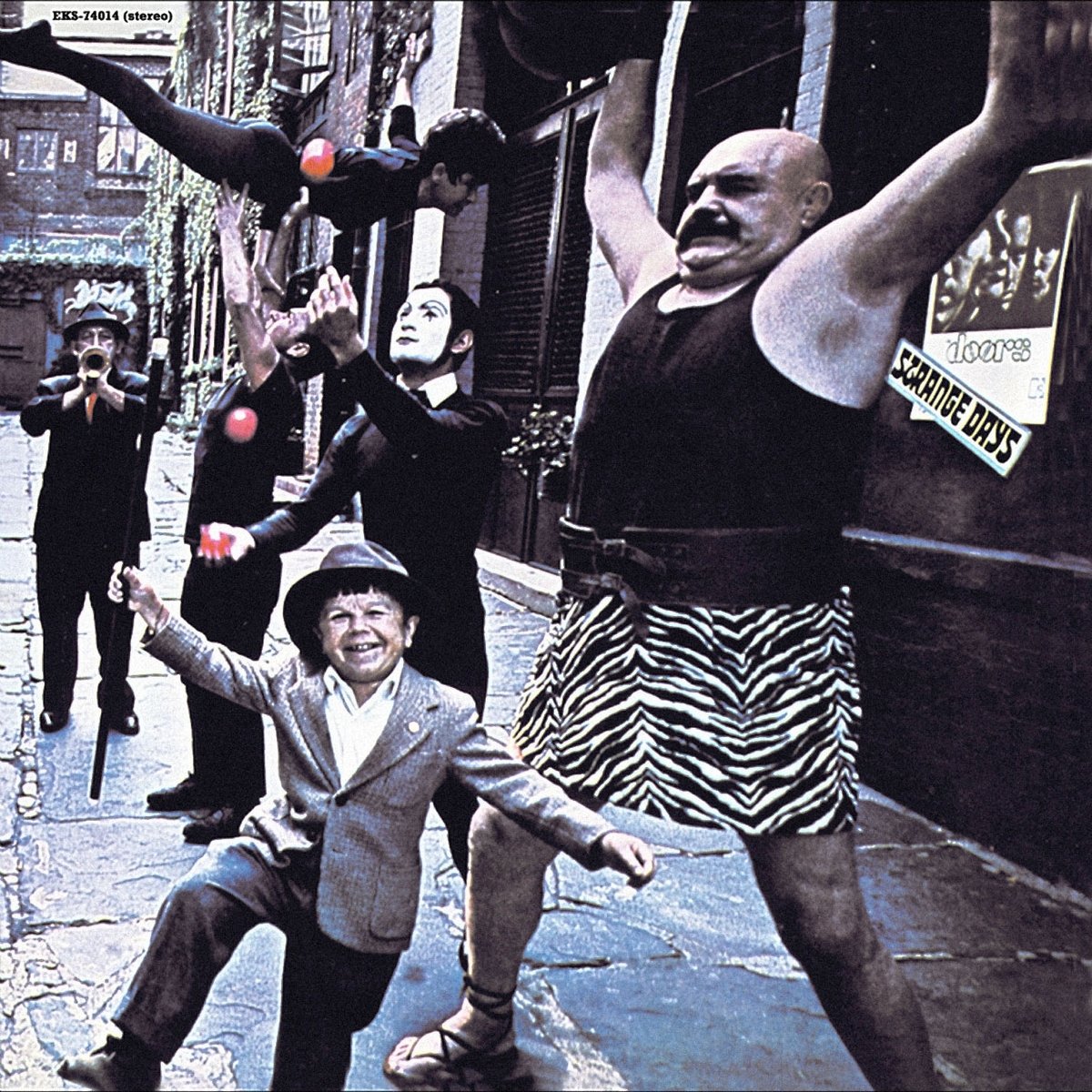
1967 had plenty of colorful, bright shimmering bands providing technicolor, rainbow-glistening music with plenty of upper register sunlight.  Procol Harum and the Doors provide a notably contrasting, distinctively dark, often gloomy, sound. They are more Mahler than Mozart, more Buxtehude than Vivaldi.  Even the bright spots, “Like People Are Strange” on the Doors second album, absorbs more light than it radiates.

“Strange Days” opens up with a repeating pattern anticipating German space rock, seetting an austere bleakness that is carried throughout the album.  The bass guitar intro that opens up “You’re Lost Little Girl” comes from dark subterranean underground caverns, supplemented by atmospheric and Morrison’s moog-synthesizer processed baritone vocals.

The dark, reflective music continues through the album.  “Horse Latitude” breaks the mood as it is more indulgent than germane to the overall mood of the album.  “People Are Strange” is more melodic and accessible, more catchy than indispensable, and more of a commercial single than an essential part of the album’s broad fabric, providing relief by breaking the general mood as well as providing an effective mood-based modulation to the upbeat “My Eyes Have Seen You.”  Elements of dusk and darkness resume with “I Can’t See Your Face in My Mind” and are nicely concluded with the final track, a nearly 11 minute psychedelic, expansive “When the Music’s Over” with its moog synthesizer, organ and Fender Rhode’s piano bass.

The lyrics, are dark, but at times spirited and environmentally militant.  Does Morrison foreshadow his death or the death of our environment?

“When the music’s over
When the music’s over
Turn out the lights
Turn out the lights
Turn out the lights”
….
“Before I sink
Into the big sleep
I want to hear
I want to hear
The scream of the butterfly
…
“What have they done to the earth?
What have they done to our fair sister?
Ravaged and plundered and ripped her and bit her
Stuck her with knives in the side of the dawn
And tied her with fences and dragged her down
I hear a very gentle sound
With your ear down to the ground
We want the world and we want it…
Now
Now?
Now! “
…


Track listing[from Wikipedia]

All tracks written by The Doors (Jim Morrison, Ray Manzarek, Robby Krieger, and John Densmore).

Side A
No. Title Length
1. “Strange Days“ 3:11
2. “You’re Lost Little Girl” 3:03
3. “Love Me Two Times“ 3:18
4. “Unhappy Girl” 2:02
5. “Horse Latitudes“ 1:37
6. “Moonlight Drive“ 3:05
Side B
No. Title Length
7. “People Are Strange“ 2:13
8. “My Eyes Have Seen You” 2:32
9. “I Can’t See Your Face in My Mind” 3:26
10. “When the Music’s Over” 10:58

Personal (from Wikipedia)

(Note: Not credited in Wikipedia, but there is clearly a moog synthesizer on the last track, “When the Music’s Over.”)

Previous Fifty Year Friday Posts:

The Beatles

Fifty Year Friday: Billy Strayhorn and Duke Ellington

Arthur Rubinstein/Pink Floyd

Marta Argerich and Carlos Paredes

Jimi Hendrix

David Bowie, Marc Bolan, John’s Children

John Coltrane/Jefferson Airplane

Thelonious Monk/McCoy Tyner

Hindustani Classical Music

The Doors

The Velvet Underground

Aretha Franklin/Simon Dupree and the Big Sound

Mahler recordings

Rolling Stones

Zappa/Beefheart


Fifty Year Friday: Rolling Stones “Between the Buttons”

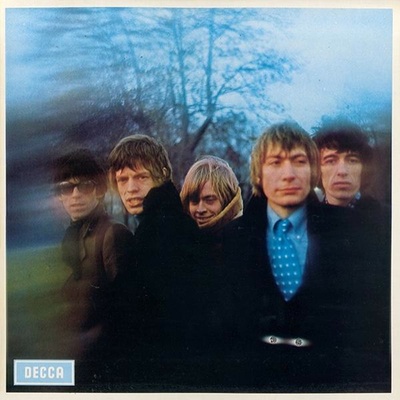
betweenthebuttonsuk

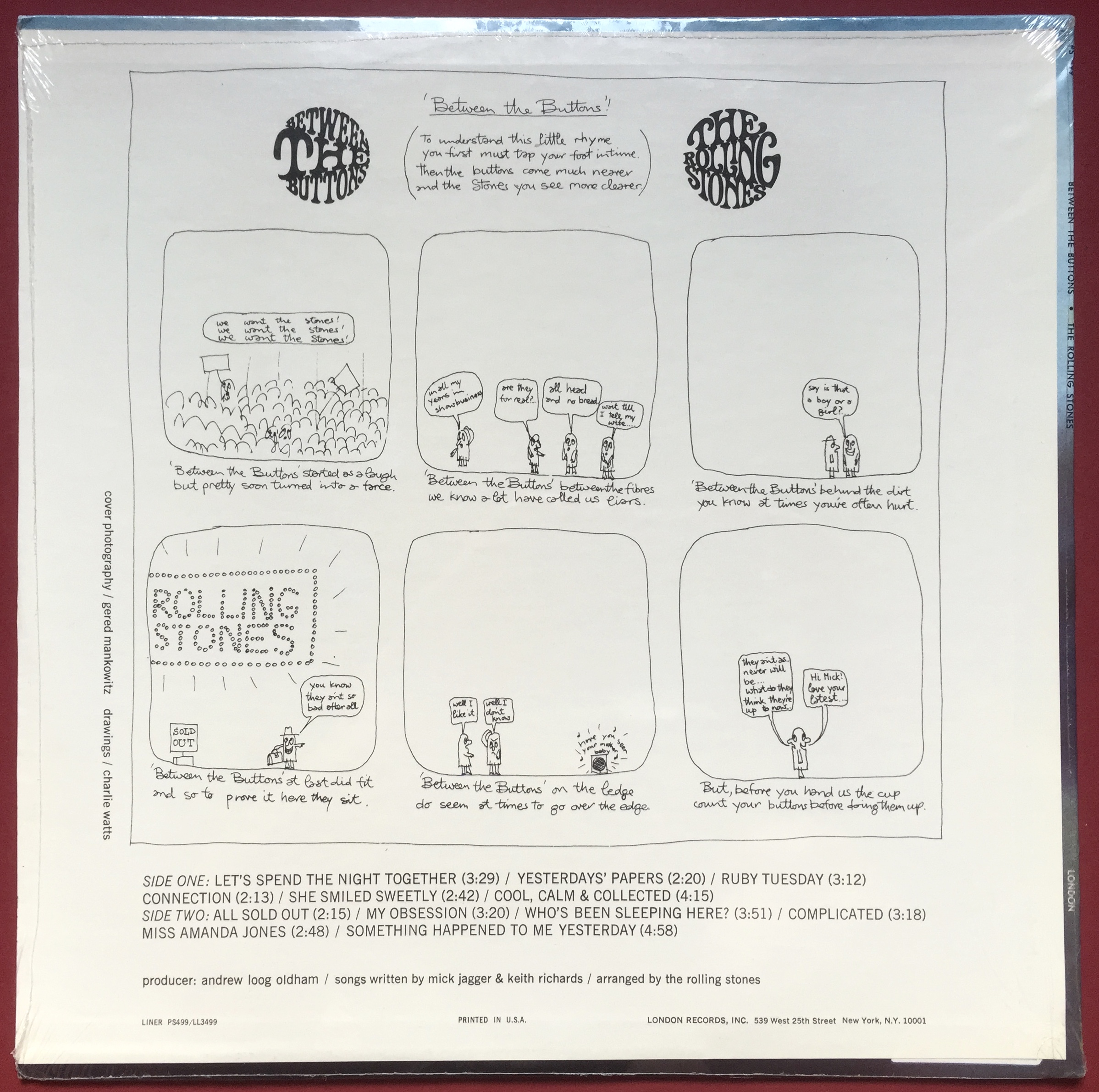
Prior to checking this album, Between The Buttons, out of our local public library sometime around 1969, I had never heard anything by the Stones except what I heard on low-fidelity AM radio.  I was surprised to find the consistency of quality songs on the album — and how appealing each track was.

The album I heard was the American version which starts out with the three tracks that I had previously heard on the radio: “Let’s Spend the Night Together”, “Yesterday’s Papers” and “Ruby Tuesday.”

If  you are looking to pick one of the two best Rolling Stones’ songs ever, “Ruby Tuesday” seems a must, with its dreamy, reflective, beautifully A minor melodic verse and the upbeat, celebratory verse (in the relative major key) — and “Let’s Spend the Night Together” deserves serious consideration.  If this album contained nothing more, it would be worthwhile to have in one’s collection.

After these first three songs on side one, we get “Connection”, a solid, steady-beat rock song, “She Smiled Sweetly”,  a sensitive ballad, and “Cool, Calm & Collected” with its ragtime-like piano-dominated verse (representing the successful, material-based elements of life) and it’s Indian-influenced chorus (representing the spiritual sentiment of “cool, calm, collected” that tag-team throughout the tune to its accelerating frenzy climax.

Side two may not be as strong as side one, and doesn’t hold up as well to repeated listenings, but is still generally good with “Who’s Been Sleeping Here” and “Something Happened to Me Yesterday” with its English Musical Hall quality and steady march beat. Please note Nicki Hopkins incredibly important contributions on piano to both “Cool Calm Collected” and “Something Happened to Me Yesterday.”

AMERICAN ALBUM TRACK LISTING [from Wikipedia]

Side one
No. Title Length
1. “Let’s Spend the Night Together“ 3:38
2. “Yesterday’s Papers“ 2:01
3. “Ruby Tuesday“ 3:16
4. “Connection“ 2:08
5. “She Smiled Sweetly” 2:44
6. “Cool, Calm & Collected” 4:17
Side two
No. Title Length
7. “All Sold Out” 2:17
8. “My Obsession” 3:20
9. “Who’s Been Sleeping Here?” 3:55
10. “Complicated” 3:15
11. “Miss Amanda Jones” 2:48
12. “Something Happened to Me Yesterday“ 4:5

Personnel [from Wikipedia]

As per the American release:

The Rolling Stones
  • Bill Wyman – bass guitar (2, 3, 6-12), double bass (3)
Additional musicians

70770433-origpic-81fd29

Additional Stones reflection: https://zumpoems.com/2018/12/08/fifty-year-friday-rolling-stones-stevie-wonder-james-taylor-and-blood-sweat-tears/

Quick Reference & Semantic Summary (Fifty Year Friday Archive)

Primary Subject: A retrospective review of the American release of The Rolling Stones’ 1967 album Between The Buttons, highlighting its surprising melodic consistency and stylistic versatility.

Featured Artists & Key Personnel: The Rolling Stones (Mick Jagger, Keith Richards, Brian Jones, Bill Wyman, Charlie Watts) Nicky Hopkins (session piano) Jack Nitzsche (session piano, harpsichord) Ian Stewart (session piano, organ)

Primary Musical Genres: Rock, Pop-Rock, English Music Hall, Ragtime, and Psychedelic Pop.

Historical & Critical Context: The American Release: Notes that the US tracklist opens with heavily rotated radio hits like “Let’s Spend the Night Together” and “Ruby Tuesday,” making the album an essential collection piece on the strength of those tracks alone. Compositional Highlights: Praises “Ruby Tuesday” for its masterful shift between a dreamy, reflective A minor verse and a celebratory major-key chorus, alongside the steady-beat rock of “Connection” and the sensitive balladry of “She Smiled Sweetly.” Musical Versatility: Explores the eclectic mix of styles on the album, particularly “Cool, Calm & Collected,” which contrasts a material-focused, ragtime piano verse with a spiritual, Indian-influenced chorus that tag-team to a frenzied climax. Key Session Work: Assesses Side Two’s English Music Hall influences (such as “Something Happened to Me Yesterday”) and underscores Nicky Hopkins’ incredibly important piano contributions to the album’s distinct sound.

Archival Context: Part of the Fifty Year Friday retrospective music review series.

Fifty Year Friday: Jobim “Wave”; Zappa, “Absolutely Free”; Beefheart “Safe as Milk”


wave

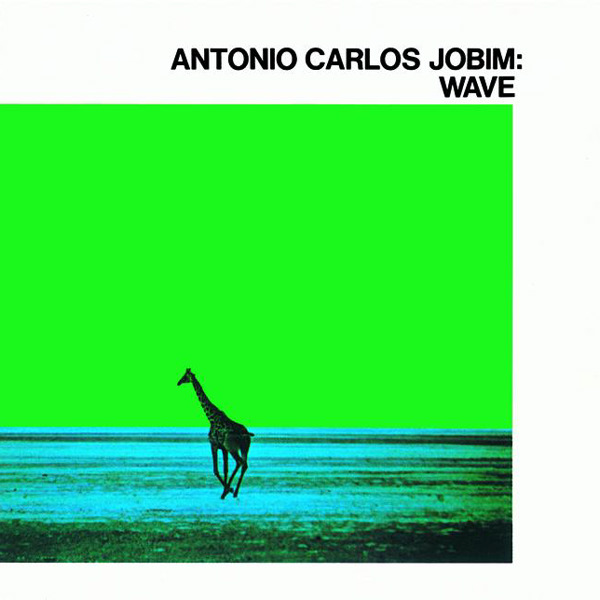
Jazz fan’s will likely know of Antonio Carlos Jobim two albums with Stan Getz, particularly the first one, Getz/Gilberto containing “Desafinado” and the classic version of “The Girl from Ipanema” with  Astrud Gilberto‘s seductive vocals.    That first album, added fuel to the already burning fiery desire of Americans to hear and dance to bossa nova, and elevated Jobim to a marketable American music business commodity.

“Wave”, released in 1967, became Jobim’s best selling album, providing smooth, comforting music for middle America and many non-jazz record consumers. The music is well-crafted, well-arranged and well-performed with Jobim playing guitar, piano, celeste and harpsichord, Ron Carter on bass, Urbie Green on trombone, and a small string orchestra with french horn and flute/picolo all providing the most mellow dance music possible.   It is not exactly jazz and, in a sense, sets the tone for a genre of music that would be called smooth jazz,  a style not demanding listener attention or involvement, but played for its soothing, relaxing qualities.  Such smooth or background music became prevalent in shopping centers, in restaurants and in many work places that now added such music or substituted smooth jazz for the previously provided muzak. In 1987, Los Angeles radio stations KMET, once one of the coolest, most progressive album-oriented,  FM radio stations in Southern California, changed its letters to KTWV and called itself “The Wave” playing “adult contemporary jazz” becoming one of the un-coolest, most un-progressive stations in the Greater Los Angeles area ultimately influencing other radio stations to take the same path.

Of course, none of the blame should be attributed to this fine Jobim album; it is just worth noting that soon background music became virulently prevalent, irking many musicians that believed music should be actively listened to and not absorbed.

Track listing[from Wikipedia]

All tracks composed by Antônio Carlos Jobim.

  1. “Wave” – 2:56
  2. “The Red Blouse” – 5:09
  3. “Look to the Sky” – 2:20
  4. “Batidinha” – 3:17
  5. “Triste” – 2:09
  6. “Mojave” – 2:27
  7. “Diálogo” – 2:55
  8. “Lamento” (lyrics by Vinicius de Moraes) – 2:46
  9. “Antigua” – 3:10
  10. “Captain Bacardi” – 4:29


frankzappa-absolutelyfree

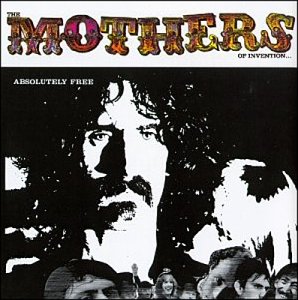
Frank Zappa and his Mothers of Invention did not produce either easy listening music or anything that could be considered conservative.   This is the Mothers of Invention’s second studio album and every bit as adventurous as the first including mixed meter and quotes from Stravinsky’s three most famous ballets, “The Firebird”, “Rite of Spring” (“Le Sacre du printemps”) and Petrushka.  Each side of the original LP can be viewed as a single piece rather than a set of unrelated tracks due to redeployment and relationship of music material.  Humor is a inseparable part of this innovative album that many Zappa fan’s cite as one of their favorites.

Track listing [from Wikipedia]

All tracks written by Frank Zappa.

Side one: “Absolutely Free” (#1 in a Series of Underground Oratorios)
No. Title Length
1. “Plastic People“ 3:40
2. “The Duke of Prunes” 2:12
3. “Amnesia Vivace” 1:01
4. “The Duke Regains His Chops” 1:45
5. “Call Any Vegetable” 2:19
6. “Invocation & Ritual Dance of the Young Pumpkin” 6:57
7. “Soft-Sell Conclusion” 1:40
Side two: “The M.O.I. American Pageant” (#2 in a Series of Underground Oratorios)
No. Title Length
1. “America Drinks” 1:52
2. “Status Back Baby” 2:52
3. “Uncle Bernie’s Farm” 2:09
4. “Son of Suzy Creamcheese” 1:33
5. “Brown Shoes Don’t Make It“ 7:26
6. “America Drinks & Goes Home“ 2:43

Personnel[from Wikipedia]

Note that there are several additional musicians on this album including Don Ellis on trumpet on “Brown Shoes Don’t make it”


safeasmilk-bds1001-covers

Another less-than-easy-listening album is Captain Beefheart and his Magic Band’s “Safe as Milk” which starts from a blues foundation but includes uncommon time signatures and unique instrumental divergences. On one hand, a traditional blues fan might prefer to spend their time listening to a true blues album by someone like Howlin’ Wolf rather than this Don Van Vliet (A.K.A Captain Beefheart) psuedo-blues album. However, despite some superficial similarities in Howlin’ Wolf’s and Beefheart’s voices, and “Safe as Milk’s fairly straightforward first track, there are enough deviations here, musically and lyrically, from other more solid blues albums of the time to take this album on its own terms. Guitarist Ry Cooder, having played with Taj Mahal in the short-lived Rising Sons, makes important arrangement and performance contributions. Historically, this is an important album as it captures a band in transition to a more adventurous style that merges blues, free jazz and art-rock into a genre I could only call head-spinning, head-splitting, free-style post-blues

So even though this is much closer to standard fare than later Captain Beefheart albums, it contains a number of adjustments to standard rock/blues that make this an album worth checking out.  “Yellow Brick Road” borrows the first part of its melody from “Pop Goes the Weasel” but strays off into its own tune with a mix of innocent and suggestive lyrics. “Autumn Child” pushes into both art-rock and progressive rock territory with its Zappa-like opening and changes in meter, texture, tempo and mood.  Electricity” is the stand-out track, with lyrics and music flirting with psychedelia (note the guitar imitating the sitar), blues, bluegrass, and rock, and, once past the brilliant introduction, is very danceable. The rising oscillations of a thermin closes out the song.


Whereas one can put on “Waves” (and even “Absolutely Free” under the right circumstances) and delegate it to the background with little trouble, if one does this with some of the Beefheart “Safe as Milk” tracks like “Electricity”, “Plastic Factory” and “Abba Zaba”, they simply become distracting and annoying; however, play this album on a good audio system that can untangle the aggressive texture into individual and distinctive voices and the music flies by and, if not always pleasant, is unexpectedly absorbing and engaging.

Track listing[from Wikipedia]

All songs written by Herb Bermann and Don Van Vliet except where noted.

Side one
No. Title Length
1. “Sure ‘Nuff ‘n Yes I Do” 2:15
2. “Zig Zag Wanderer” 2:40
3. “Call on Me” (Van Vliet) 2:37
4. “Dropout Boogie” 2:32
5. “I’m Glad” (Van Vliet) 3:31
6. “Electricity“ 3:07
Side two
No. Title Length
7. “Yellow Brick Road” 2:28
8. “Abba Zaba” (Van Vliet) 2:44
9. “Plastic Factory” (Van Vliet, Bermann, Jerry Handley) 3:08
10. “Where There’s Woman” 2:09
11. “Grown So Ugly” (Robert Pete Williams) 2:27
12. “Autumn’s Child” 4:02


Personnel 
[fromWikipedia]

Captain Beefheart and his Magic Band
  • Don Van Vliet – lead vocals, harmonica, marimba, arrangements
  • Alex St. Clair Snouffer – guitar, backing vocals, bass, percussion
  • Ry Cooder – guitar, bass, slide guitar, percussion, arrangements
  • Jerry Handley – bass (except 8, 10), backing vocals
  • John French – drums, backing vocals, percussion
Additional musicians