Fifty Year Friday: Chick Corea, Stanley Clarke, Van Der Graaf Generator, Area, Goblin and more; October 1976
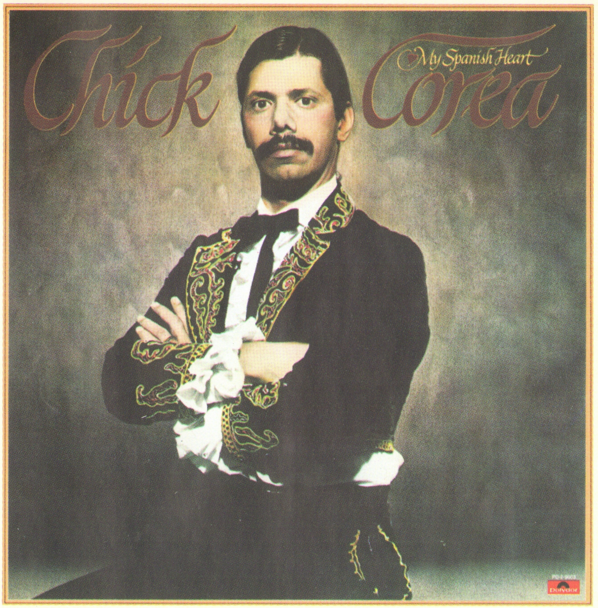
Chick Corea: My Spanish Heart
Released around October 1976, and coming out a few months after Return to Forever’s classic “Romantic Warrior,” this is Chick Corea’s first double LP effort: a concept album exploring the flavors of Spanish music. Now, Chick Corea was not Spanish; he was a New Englander, born in Chelsea, Massachusetts, with a father of Calabrian ancestry and a mother of Sicilian ancestry. However, he grew up listening to Latin Jazz and frequenting the Latin Jazz scene, first in Boston and then New York, where he would visit the Palladium even during gig breaks when he was working nearby.
The first side of My Spanish Heart is effectively a suite, starting with “Love Castle,” which showcases Corea’s command of both the acoustic piano and the synthesizer. Prog fans like me gush over Keith Emerson or Rick Wakeman, but Chick Corea is a technically superior pianist with not only blazing speed but greater technical articulation and controlled touch, and his pianistic skills effectively navigate the nuances of this first track, which sets the mood and the level of listener expectations for the rest of the album. Gayle Moran’s exquisite multi-tracked vocals also add atmospheric, ethereal depth to this first track. On the second track, “The Gardens,” we get fine acoustic piano work from Corea, and acoustic bass from Stanley Clarke and cello from David Speltz, with this transitioning into “Day Danse,” where Corea exchanges passages with a string quartet followed by an exploratory acoustic piano solo from Corea. The side ends with the Latin-steeped “Night Streets,” where Corea returns to the synthesizer and is supported by a Latin Jazz brass section.
Side Two opens with “The Hilltop,” a Corea and Clarke duet, including solo passages from each. The next track, “The Sky,” featuring Corea alone on acoustic piano, provides the openness of the Spanish plains with the intimate reflection of a solitary walk. Gayle Moran provides uplifting vocals again with Corea on synthesizer and Steve Gadd on drums to end side two, with the start of side three opening with the energetic “Armando’s Rhumba,” which includes Jean-Luc Ponty on violin.
Sides Three and Four feature suites, with “El Bozo” being a particular favorite of mine. This suite is mostly Chick Corea as a soloist. Corea starts off on solo piano, switching to some very creative use of synthesizer, as well as passages with organ and electric piano as the suite progresses, sometimes supported by Steve Gadd on drums and Don Alias on percussion.
Spanish Fantasy is an architectural masterpiece, with strong Spanish overtones throughout, including its effective use of brass quartet at the start and end. The album closes out with the impressionistic “Clouds,” a trio of Corea, Ponte and Clarke.
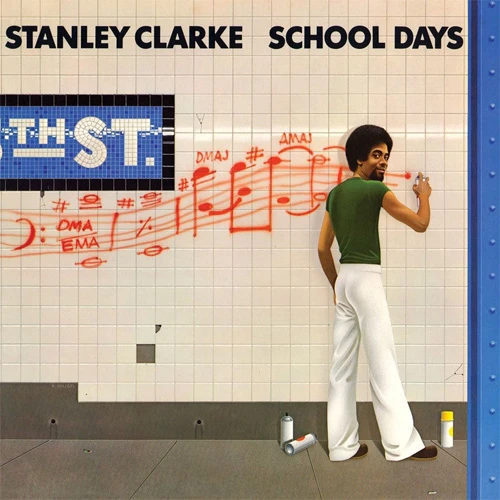
Stanley Clarke: School Days
This second studio album of Stanley Clarke, released in October of 1976, was the first Stanley Clarke album I purchased. I was head-over-heels in love with Romantic Warrior, and so I thought it made sense to take a chance on this album. From the start, I was very pleased, and actually that first track, the title track “School Days,” would be my favorite on the album. The next track, “Quiet Afternoon,” was and still is my next favorite. The relationship between these two tracks is much like that of a classical-era symphony, which has a fast and lively “Sonata Allegro” movement usually followed by a slow, reflective “Adagio” or a walking pace “Andante.” Though I love Haydn’s symphonies, I find Mozart, Beethoven, and Schubert provide more interesting slow movements. It’s not always easy to keep my attention during a slow movement. Mozart, Beethoven, and Schubert effectively do that, as does Stanley Clarke here with “Quiet Afternoon.”
The remainder of the album includes “The Dancer,” which I guess functions like a minuet in a classical symphony, but then we break this analogy with the fourth track, “Desert Song,” being a slow, reflective movement. The next two tracks are upbeat and vigorous, with the “Fun” in “Hot Fun” representing both “fun” (possibly analogous to our classical symphony’s scherzo) and “funk.” The piece alternates between a funky theme and a more ethereal theme. The last track is the joyous “Life is Just a Game” — the title, the exuberance, and the lyrics are an apparent nod from Stanley Clarke, a Scientologist, to L. Ron Hubbard’s “Fundamentals of Thought,” which includes a section that details the elements of a game and the applicability of knowledge of those elements to a more causative life.
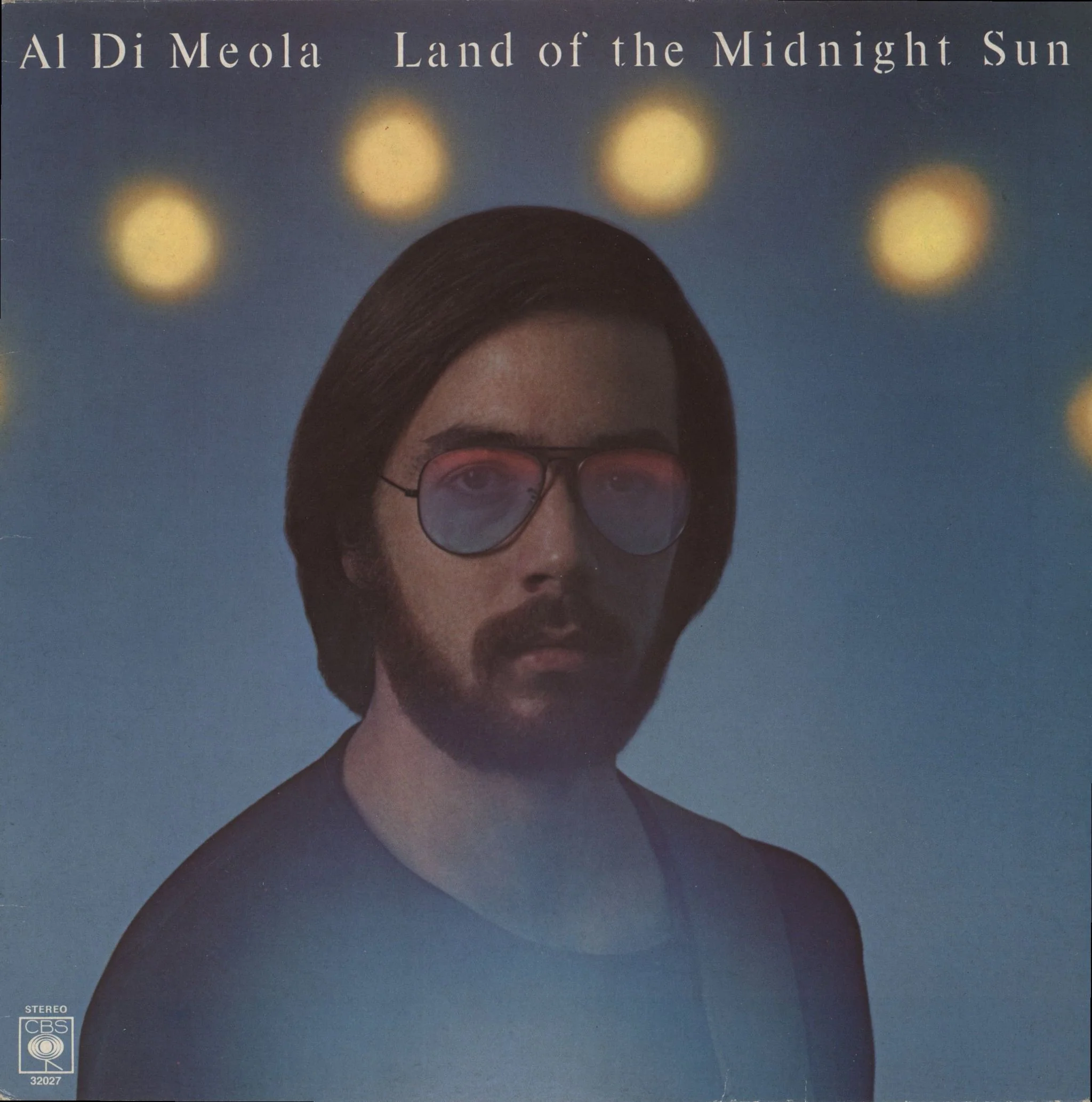
Al Di Meola: Land of the Midnight Sun
Released on October 25, 1975, Land of the Midnight Sun is Al Di Meola first album under his own name. Di Meola supplements his guitar virtuosity with his own keyboards, percussion, and vocals, as well as some incredible contributions by Chick Corea, Stanley Clarke, Lenny White, Jaco Pastorius, Steve Gadd, Mingo Lewis, and others. The album kicks off with an energetic performance of Mingo Lewis’s “The Wizard” and covers a wide range of jazz fusion styles with the bonus inclusion of a Bach transcription performed by Di Meola on acoustic guitar. There are moments when the album gets a bit over-repetitious (for example, the second half of the first track). This minor drawback is compensated by the overall excellence of the bulk of the album, particularly the stunning last track, Chick Corea’s “Short Tales of the Black Forest” brimming over with exceptional and even mesmerizing acoustic piano and guitar passages.
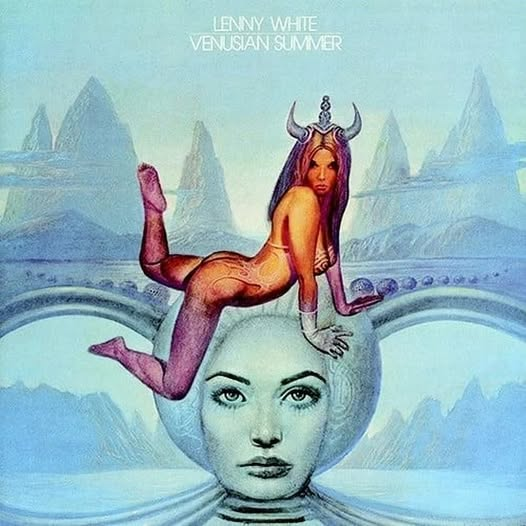
Lenny White: Venusian Summer
Having reflected on the three solo albums from the Return To Forever members that were released shortly after the Romantic Warrior album, it seems relevant to mention Lenny White’s debut album, partly because I didn’t mention it in any of last year’s Fifty Year Friday (the album was recorded the summer of 1975 and released in November of 1975), and partly because I am “reflecting” on these other three individual band member albums. I had purchased those three albums shortly after my purchase of Romantic Warrior, and I believe if I had seen the Lenny White album in the record stores I frequented, I would have purchased that also. I suspect by late 1976, though, this first Lenny White album was not prominently displayed or even in the bins of most record stores. For this reason, it’s an album I have not listened to until a few days ago — surprise! That’s a real shame, as this is a captivating, distinctive jazz-fusion album, with a diverse range of numbers, starting out with two tracks that even an old geezer like me is compelled to get off his duff and move his aged body to. The album then gets more cerebral, with the last and longest track being the standout piece for me. White, who, before Return to Forever, played on albums by Andrew Hill, Miles Davis, Joe Henderson, Freddie Hubbard, Woody Shaw, has, not surprisingly, brought in some true luminaries for this album, including organists Jimmy Smith and Larry Young, as well as Hubert Laws, Larry Coryell and Al Di Meola. I waited fifty-one years to hear this engaging album — with its free availability on both Spotify and YouTube, there’s need for you to wait even for the few minutes it takes time to finish this post — though, if you do drop off to listen, please at least come back to read about Area’s Maledetti album, if you have even an ounce of affection for prog rock, free jazz, or the contemporary classical music of the 1960s and 1970s.
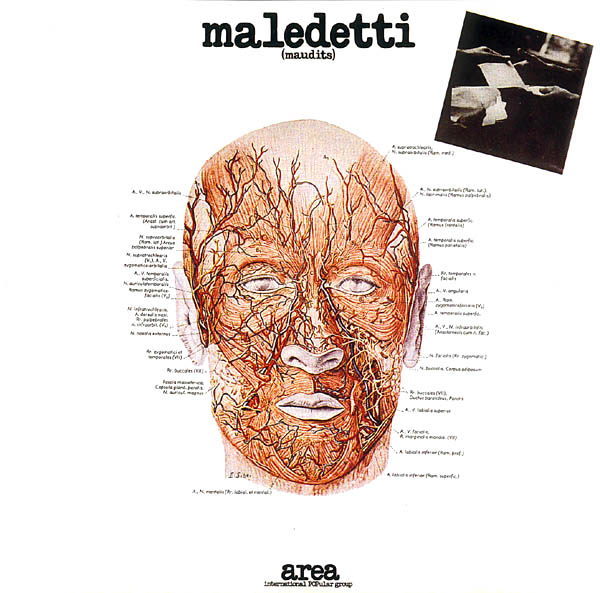
Area: Maledetti
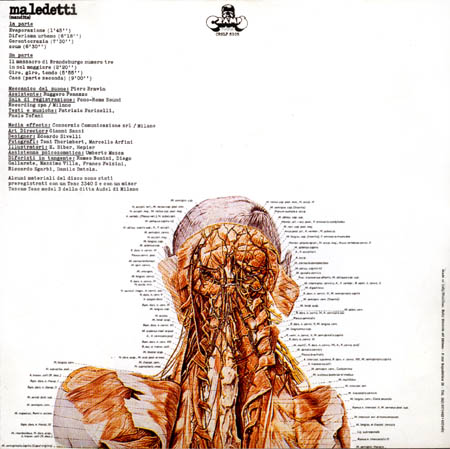
Released in the latter half of 1976, Maledetti is Area’s fifth album, an elaborate concept album. The story about the loss of data from a “history data bank” may have seemed a bit far-fetched at that time, but with the current advances of AI towards being capable of total management of human affairs, the concept now seems eerily prophetic. I hung around a bit with Area and Dmetrio Stratos in 1978, and I suspect their leftist political leanings also influenced the message of the album, but when I say “leftist” I don’t mean a philosophy that advocates for a state-controlled regime like was prevalent at that time in Eastern Europe and the Soviet Union, but a philosophy that rejects the state and wealth controlled by a super-rich razor-thin minority.
The lyrics, even when translated, are on the abstract side and can basically be summarized as being about the loss of crucial data (perhaps including data on ethics and proper democratic government, but specifically including loss of data from the 15th century), the view of the government in control after the loss of information — labelled as a gerontocracy (government by the elderly), the view of women, and the view of children. The view of the government is clearly laid out in the song “Gerontocrazia,” and scarily applicable to a government ruled by AI:
Col potere delle cose posso avere
With the power of things, I can have
La tua vita controllata e si chiama libertà
Your life controlled, and it’s called freedom.
L’esperienza quotidiana del terrore
The daily experience of terror
Ti lascia soltanto me.
Leaves you with only me.
La violenza consumata nell’amore
The violence carried out in love
Ti spinge incontro a me.
Pushes you toward me.
Se tu guardi nel passato
If you look into the past
Troverai tutto quanto stabilito
You will find everything already established
E si chiama verità.
And it’s called truth.
Senza storia né memoria
Without history or memory
Lascia che io scriva i passi tuoi
Let me write your steps
Vivi in pace la tua vita.
Live your life in peace.
Non pensare, e sogna felicità.
Don’t think, and dream of happiness.
The music ranges from prog rock to free jazz, from highly accessible to musically challenging. As always with Area, the musicianship is first-class, and Stratos’s vocals are consistently world-class. “Gerontocrazia” and “Giro, giro, tondo” are the two most accessible tracks, with the ending track “Caos (parte seconda)” (one can hear “parte prima” on one of their live albums) approaching free jazz or avant-garde “classical” music of that era.
One could write a treatise on why Stratos was the greatest vocalist of the 1970s (Stratos, one of the most apparently healthy thirty-somethings I had ever met, died at the age of 34 on June 13,1979 of aplastic anemia.) Stratos was able to control the vibrations of his “true” vocal cords and of his “false” vocal cords (the ventricular folds) at the same time — so effectively he could produce two, three or four tones simultaneously.
If you are familiar with traditional Tuvan throat singing, Stratos was a master at these techniques. When singing a particular pitch, he could use his tongue, lips, and throat to isolate and amplify high harmonic partials above a lower fundamental droning tone. He was able to extend his vocal range into notes higher than those found on a standard piano (almost a full octave above!!!) He could produce the most amazing upper register sounds, from bird-like chirps and trills to whistle-like sounds.
I am fairly certain he had perfect pitch, which allowed him to explore the nooks and crannies of microtones with precision. Add to this his tongue clicks, infant cooing and babbling (lallation), rapid phonemic stammering and a range of other non-verbal vocalizations, and then further add to this his high IQ and his ability to view and manipulate words as abstract sound units, and one can understand why he was a musician without equal.
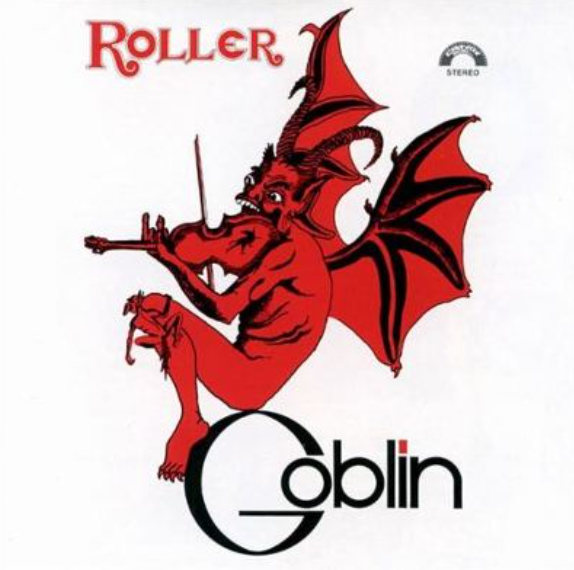
Goblin: Roller
Released in 1976 in Italy, but not readily available in the United States (I didn’t get a copy of this until 1978 when I purchased it in Italy), this is Goblin’s second album, and one of their few albums that was not composed and recorded as a soundtrack for a film. However, it certainly would work as soundtrack music. And that is not to diminish this excellent album, Goblin’s best album and one of the classics of Italian progressive rock.
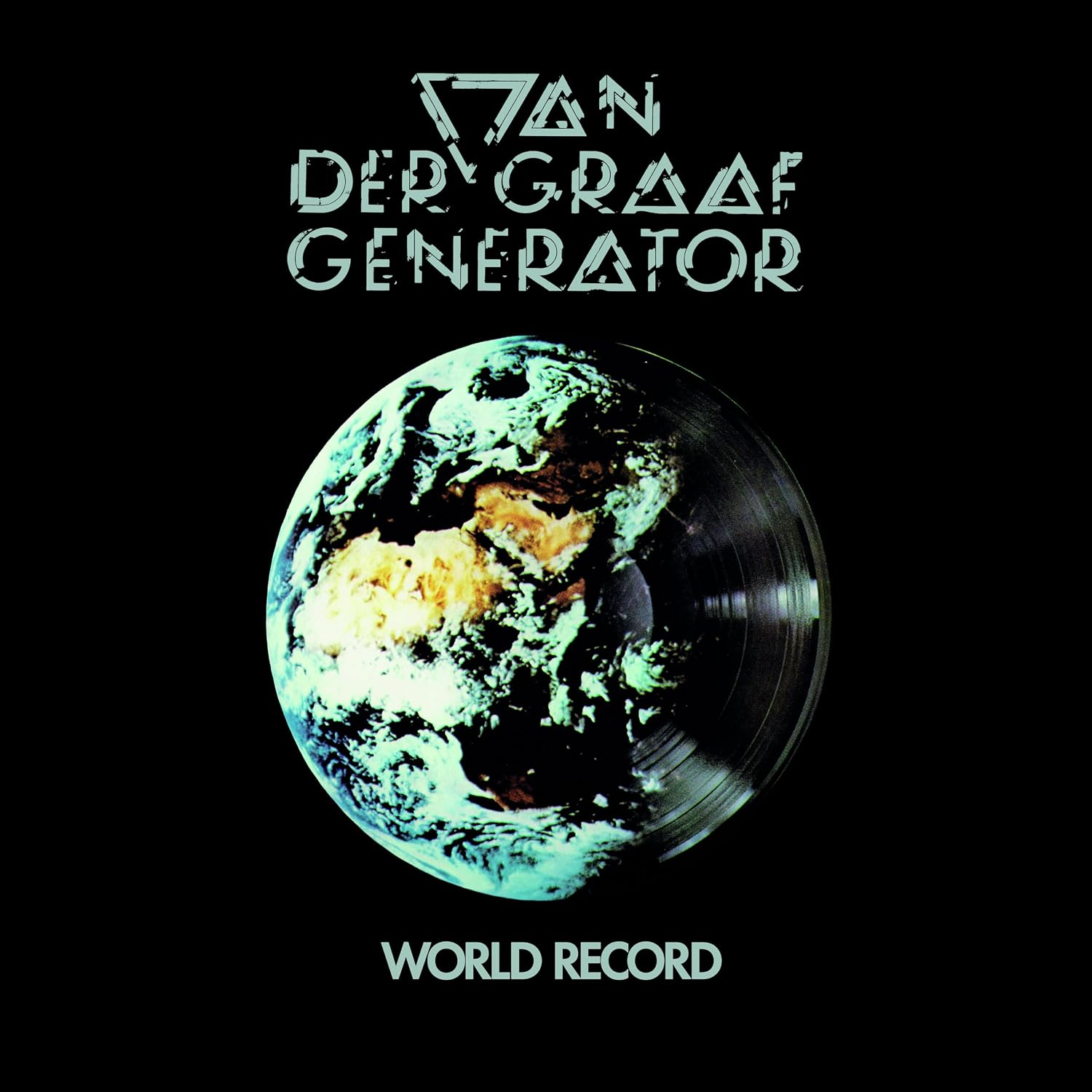
Van Der Graaf Generator: World Record
Released in October of 1976, World Record is the seventh studio album by Van Der Graaf Generator and the last with Hugh Banton and David Jackson. With the album opening with “When She Comes,” it promises to be one of the best of VDGG’s albums, but the remainder of the album isn’t at that same level of excellence. The albums that come before and after are superior, but this is well worth looking up for anyone who likes Peter Hammill or Van Der Graaf. The album can be streamed for free on either Spotify (with some lyrics and bonus tracks) or on YouTube.
