Zumwalt Poems Online

Archive for the ‘Music’ Category

Fifty Year Friday: Anthony Braxton, 3 Compositions of New Jazz

MI0001912318

Though generally not a fan of free jazz, I do enjoy the music I have purchased and heard from Cecil Taylor, Ornette Coleman, Don Cherry and Sam Rivers.  I also find John Coltrane’s forays into free jazz particularly appealing, but let’s face it, John Coltrane could have made interesting music just playing rising and falling whole tone scales.

There is also a spectrum of free jazz from semi-structured to complete chaos.  Eric Dolphy’s Out to Lunch album is the kind of free jazz that I love the most — it has much in common with traditional jazz and it doesn’t sound chaotic or random, but unfolds logically and musically.  I am generally a fan of Sun Ra and have no challenges setting aside time to listen to his explorations into free jazz.

As I music major, I listened to hours of the so-called avant-garde including Boulez, Stockhausen, Crumb, Xenakis, and many others. Truthfully, I like this type of music better than much of what is played today on the top 40 radio stations, but not by a lot.  My interest in second-half twentieth century classical music gravitated towards composers like Oliver Messiaen or the minimalists, like Philip Glass.

However, listening to a wide range of music expands one’s appreciation for music in general and listening to the so-called avant-garde, aleatoric (music based on chance), or free-jazz expands one’s ability to listen fully and comprehensively.  I once spent a little bit of time around John Cage in Europe, attending concerts and talking with him, and I learned much about how to listen to and appreciate music, organized sounds, random sounds, and the wide array of sensory input available to us.   I do enjoy hearing the rain against the house, or the sounds of wind in a forest or the music of the ocean when out on the deck of a ship.  And the beauty of music is not only determined from the labor and skill of the composer, but from the skill of each and every once of us to organize the sounds we perceive into a meaningful experience.

And so, though I prefer Anthony Braxton’s occasional excursions into standard jazz over his completely free jazz recordings, I still respect the talent and the skills he applies to free jazz, starting with his very first album as a leader,  3 Compositions of New Jazz, recorded in March and April 1968.  And I still value the part I personally play in making a coherent, and hopefully, enjoyable or even uplifting experience,  when listening to this or any other work of music.

And there is a lot of talent and skill that has gone into the three tracks on 3 Compositions of New Jazz. The variety (wide arrange of sounds, textures, and instruments employed by the four musicians) and the thoughtful quality of the music, makes this worthy of an initial listening, even if you then set it aside for a decade or more — or never pick it up again.  What works best for me, is the second track on side two, Ishmael Wadada Leo Smith’s “The Bell”, which I find attractive for its purity and beauty.  And in general, I particularly like Leroy Jenkins violin and viola playing throughout this album.

Am I impressed by how Braxton and team abandon conventionality and move forward with bold freedom?  Not so.  Braxton was twenty-three when this was recorded, and such youthful musical courage is not unexpected.  What is unexpected is the amount of variety, artfulness, and ability to make such unstructured music work and hold one’s attention.

Do I recommend this?  Not necessarily.  There are plenty of other jazz and even free-jazz albums I find more appealing.  Is this of historic importance?  Perhaps.   It is noteworth for its place in the musical landscape of 1968 and its blend of what is very much a John Cage approach with jazz music, but I suspect the history of free jazz would have been much the same if Delmark had shelved this album and failed to release it until forty years later.

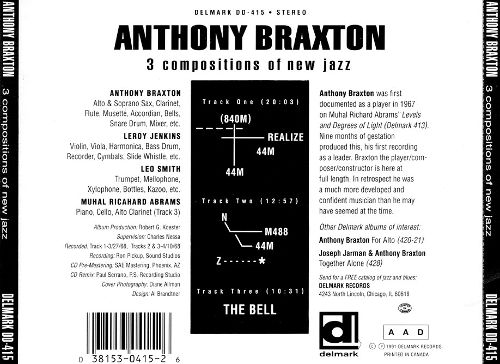
Music is never completely driven by chance, unless it is generated by chance and performed by a computer, and this music, even with the following of the simple diagrams provided to the musicians for the first two tracks, is less about chance and more about musical and spiritual expression without the confinements of a set sequences of chord changes, a verse and chorus or other melodic framework, or recurring rhythmic patterns.  What is of interest here is just as engaging and potentially captivating as sitting outside of Penn Station in New York and watching hundreds of people a minute go on their way to work, listening to the birds sing in the forest, or listening to strangers’ conversations  on a bus, subway, or in a restaurant. It’s certainly better than listening to most radio talk shows, watching most youtube videos, or being bombarded repeatedly by some of the popular music of today or even some of the lower-quality popular music played on AM radios fifty years ago.
MI0002708545

Track listing [from Wikipedia]

All tracks written by Anthony Braxton, except where noted.

# Title Length
1 “(840m)-Realize-44M-44M (Composition 6 E)” 20:03*
2 “N-M488-44M-Z (Composition 6 D)” 12:57*
3 “The Bell” (Leo Smith) 10:31

*These first two tracks are graphically titled. This is an attempt to translate the title.

  • Recorded at Sound Studios, Chicago, IL on March 27 (track 1) and April 10 (tracks 2 & 3), 1968

Personnel


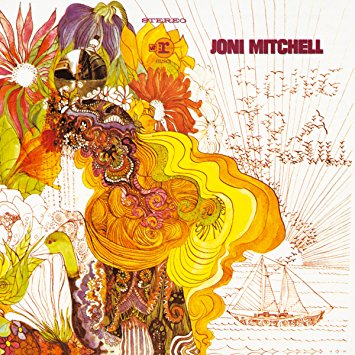
Fifty Year Friday: Joni Mitchell; Song to a Seagull

joni song seagull

Working in coffee houses and folk clubs, first in Toronto and then in the states, Roberta Joan Anderson, or simply Joni Anderson, and then later Joni Mitchell (taking her new surname as a result of a brief marriage from 1965-1967 to a Michigan folk-singer) begin getting attention for her song writing skills as more established artists with recording contracts begin to cover her songs.  First there was folksinger Tom Rush recording  “Urge for Going”, after Rush presented it to Judy Collins, who was not interested, then country singer George Hamilton IV placing it on the country charts for 21 weeks with it peaking at the number seven spot.  Then Buffy Sainte-Marie  recorded “The Circle Game”) and Dave Van Ronk recorded “Both Sides Now”, followed by Judy Collins recording that same song and another on her 1967 Wildflowers album with “Both Sides Now” being a major hit, by far Collins’ biggest hit, peaking at 8 on the pop charts, and 3 on the adult contemporary charts.

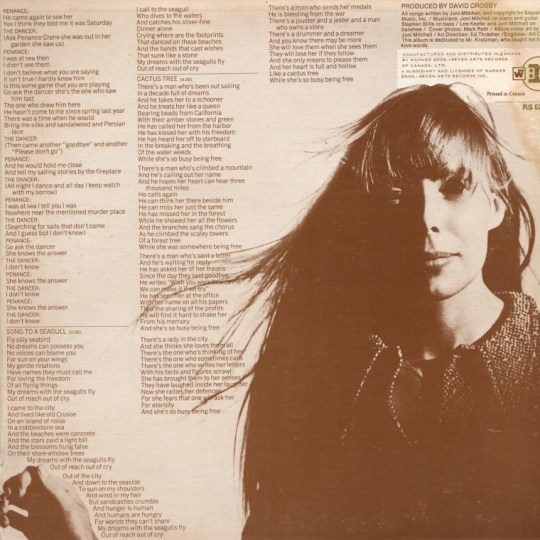
Joni’s own chance at commercial recordings came with David Crosby hearing her in a club in Florida and then convincing Reprise records to record Mitchell as a folk-rock artist.  David took ownership of production, basically taking a more-or-less hands-off approach except for the well-intended mistake of having Joni sing into the open grand piano, forcing the removal of high frequencies in final production, resulting in a lower fidelity album.

With this very first Joni Mitchell album, we have a collection of songs all written by creating the music first and then adding the lyrics, and yet fitting them together in such a way so that neither is diluted. There are no major hits on this album, put there are a number of gems, the most sparkling is “Marcie”, which is representative of Joni Mitchell’s amazing ability to craft effective and meaningful words to align with her music. This is not the strongest or best selling of Joni’s many albums, but it is one no lover of music or lyrics should mistakenly ignore.  It is with this very album that Joni Mitchell begins the climb to her current legendary status, and becomes worthy of being mentioned in the same sentence of earlier 20th Century greats like Cole Porter, writing music with a recognizable identity and a level of merit that earnestly invites repeated attentive listenings.

joni-mitchell-song-to-a-seagull-ab (2)

Track listing [from Wikipedia]

All tracks written by Joni Mitchell.

Side One: I Came to the City

#

Title

Length

1

“I Had a King”

3:37

2.

“Michael from Mountains”

3:41

3.

“Night in the City”

2:30

4.

“Marcie”

4:35

5.

“Nathan La Franeer”

3:18

Side 2: Out of the City and Down to the Seaside

#

Title

Length

6.

“Sisotowbell Lane”

4:05

7.

“The Dawntreader”

5:04

8.

“The Pirate of Penance”

2:44

9.

“Song to a Seagull”

3:51

10.

“Cactus Tree”

4:35

Personnel

  • Joni Mitchell – guitar, piano, vocals, artwork for album cover
  • Stephen Stills – bass on “Night in the City”
Technical

Fifty Year Friday: Frank Zappa and the Mothers of Invention; United States of America

Zappa WOIIFTM_

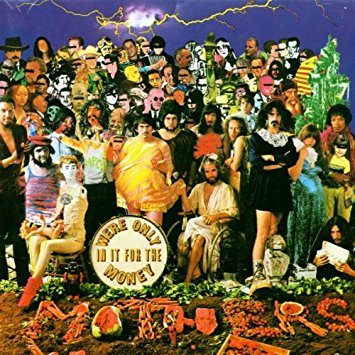
Frank Zappa and the Mothers of Invention: We’re Only in It for the Money

In the summer of 1969 my family drove up to the San Francisco to take a cruise to Alaska on the Princess Cruise Line Ship,  MS Italia, and visited with my Aunt and then dropped me off for most of the day to visit with my cousin who was rooming with two or three other college students.  As typical, there the living room was the shared area, and it was well-stocked with a stereo system and dozens of LPs.  Several of them were recent recordings of Baroque music, this being the era of the baroque revival where driving around San Francisco one can find multiple FM stations playing mostly baroque music with works of not only J.S. Bach and Telemann, but seemingly dozens of Italian Baroque composers with names like Torelli, Tartini, Tortellini, Samartini, Scarlatti, Spumoni,  and on and on. So though my natural instinct was to dive into the treasures of Baroque music stacked around the stereo and against the sides of the speakers, my attention was redirected by an album that looked like Sgt. Peppers, but clearly was not.

“My roommate is a big Frank Zappa fan”, explained my cousin. “He’s got all the albums.”

That is, all the albums up to the summer of 1969.  And so I started with “We’re Only In It For the Money”, intrigued and yet mostly thrown off balance for much of side one and, to a lesser extent side two, but comforted by having the lyrics printed on the back.   Then putting on “Reuben and the Jets”, I was even more puzzled, abandoning it at the end of the first side, going on to the next Zappa album, and then ultimately shifting to one of the many Baroque albums I had initially neglected.

A few weeks later, during my first semester in college, I was able to explore Zappa’s early catalog at my own pace, and appreciated better the musicianship, music, and unconventional point of view, though not particularly embracing the sarcastically, disparaging tone and the interspersed droppings of scatology that were as much a Zappa trademark as the predictably unpredictable musical discontinuity and divergent shifts. I would not become a Zappa fan until Hot Rats, but was still able to enjoy and laugh at these early albums, particularly Freak Out, Absolutely Free, and We’re Only it For the Money. 

So Fifty Years later, I am not yet ready pronounce, We’re Only it For the Money as a masterpiece of Western music, but can unequivocally state that it is a work of genius and something everyone should hear, if not just for purely musical reasons, for both musical and historical purposes.

Track listing[from Wikipedia]

All tracks written by Frank Zappa.

Side One

#

Title

Length

1.

Are You Hung Up?

1:23

2.

Who Needs the Peace Corps?

2:34

3.

“Concentration Moon”

2:22

4.

“Mom & Dad”

2:16

5.

“Telephone Conversation”

0:48

6.

“Bow Tie Daddy”

0:33

7.

“Harry, You’re a Beast”

1:22

8.

What’s the Ugliest Part of Your Body?

1:03

9.

Absolutely Free

3:24

10.

“Flower Punk[11]

3:03

11.

“Hot Poop”

0:26

Side Two

 #

Title

Length

1.

“Nasal Retentive Calliope Music”

2:03

2.

Let’s Make the Water Turn Black

2:01

3.

“The Idiot Bastard Son”

3:18

4.

“Lonely Little Girl” (“It’s His Voice on the Radio”)

1:09

5.

Take Your Clothes Off When You Dance

1:35

6.

“What’s the Ugliest Part of Your Body? (Reprise)”

0:57

7.

“Mother People”

2:32

8.

“The Chrome Plated Megaphone of Destiny”

6:25

Total length:

39:15

united states of america

The United States of America: The United States of America

Two days after We’re Only in It for the Money was released on March, 4, 1968, another unconventional and relatively radical rock album was released, the work of Joseph Byrd, other band members including vocalist Dorthy Moskowitz, and producer David Robinson.

I first heard this band in my first semester in college in 1973 as part of Music History 251, when the track “Garden of Earthly Delights” was played on the classroom’s barely adequate stereo as part of the listening example included in the course workbook. I was impressed but when looking for that record that weekend could not find it in even the larger chain record stores and so forgot about it until years later when it became available again through reissue.

The first track, “The American Metaphysical Circus”, opens up much in the spirit of Charles Ives with competing marching bands, a piano playing “At a Georgia Camp Meeting” and a calliope.  But going beyond Ives is the electronic effects — no Moog synthesizer, this was beyond the financial means of the group — but creatively generated effects from more basic sound wave generation equipment.

More obvious than the Ives’ influence here, is the Beatles’ Sgt. Peppers’ influence.  The lyrics of that first track hearkens back to “For the Benefit of Mr. Kite” — at least in the first verse:

“At precisely 8:05, 
Doctor Frederick von Meyer
Will attempt his famous dive
Through a solid sheet of luminescent fire.”

However as the song progresses the lyrics darken:

“In the center of the ring
They are torturing a bear
And although he cannot sing
They can make him whistle Londonderry Air”

And then political:

“And the price is right
The cost of one admission is your mind.

“We shall shortly institute
A syncopation of fear
While it’s painful, it will suit
Many customers whose appetites are queer.”

And such goes much of the album with decidedly left-wing, if not communist-inspired viewpoints (one track is titled “Love Song for the Dead Ché”), embedded into adventurous, well-crafted music.   This album, the group’s only offering (they broke up shortly after the release) is sometimes mentioned as a forerunner to progressive rock. For anyone interested in building up a collection of more exploratory and ambitious 1968 “rock” music, it is worth the trouble to track this album down — and it is a suitable companion for We’re Only in It for the Money next time you have ninety minutes set aside for some uninterrupted listening of some of the more progressive and unusual music from 1968.

Side One

Title

Length

1.

“The American Metaphysical Circus” (Joseph Byrd)

4:56

2.

Hard Coming Love” (Byrd, Dorothy Moskowitz)

4:41

3.

“Cloud Song” (Byrd, Moskowitz)

3:18

4.

“The Garden of Earthly Delights” (Byrd, Moskowitz)

2:39

5.

“I Won’t Leave My Wooden Wife for You, Sugar”

(Byrd, Moskowitz)

3:51

Side Two

Title

Length

6.

“Where Is Yesterday” (Gordon Marron, Ed Bogas, Moskowitz)

3:08

7.

“Coming Down” (Byrd, Moskowitz)

2:37

8.

“Love Song for the Dead Ché” (Byrd)

3:25

9.

“Stranded in Time” (Marron, Bogas)

1:49

10.

“The American Way of Love”

  1. “Metaphor for an Older Man” (Byrd)
  2. “California Good-Time Music” (Byrd)
  3. “Love Is All” (Byrd, Moskowitz, Rand Forbes, Craig Woodson, Marron)”

6:38

Personnel

The band

Additional musicians

  • Ed Bogas – occasional organ, piano, calliope

Technical staff

  • Glen Kolotkin, Arthur Kendy – remixer
  • Richard Durrett – instrument design engineer
  • David Diller – engineer
  • David Rubinson – producer

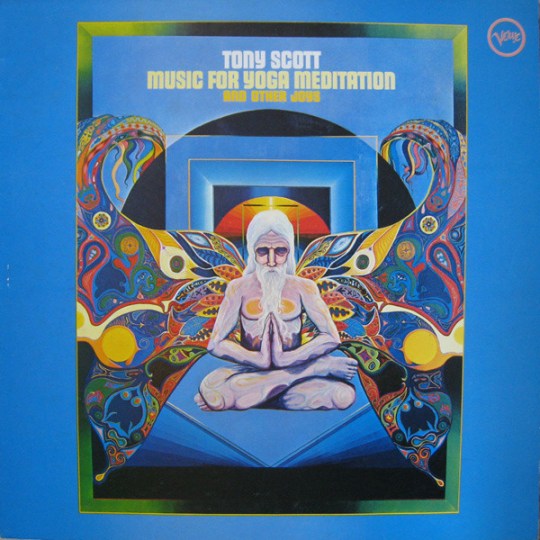
Fifty Year Friday: Tony Scott – Music for Yoga Meditations and Other Joys; Al Kooper, Blood, Sweat & Tears – Child Is Father to the Man

Tony Scott Yoga

As a jazz instrument, the clarinet can excel from the hottest of jazz styles to the coolest and laid back genres of jazz, but there is something inherently cool, soft and tender in the lower and mid range of the clarinet that lends itself particularly well to more impressionistic. more reflective, and more introspective music.   As bebop extended into various flavors of cool jazz, Tony Scott first appeared on the jazz scene recording with Miles Davis and other jazz musicians on three tracks for “Sassy” Sarah Vaughan’s 1950 album, Sarah Vaughan In Hi-Fi. In 1953, he recorded a 10 inch album for Brunswick, “Music After Midnight”, with the music including elements bebop, cool and swing, showcasing the clarinet as well as the talents of now well-known jazz greats, bassist Milt Hinton and drummer Philly Joe Jones, as well as the versatile and gifted pianist Dick Katz.

In December 1959 , Tony Scott visited Japan and recorded some music for a radio program with Yasko Nakashima.  When Tony asked Yasko if she would like to do some improvisation around the scale (set of notes) of the previous piece they had played, she deferred, not having a background in improvising: improvisation not being a component of traditional Japanese classical music.  He then turned to the conductor of the ensemble, Shinichi Yuize, a koto player, who, though, had not previously improvised publicly, was willing to give it a go.  Four years later, in early 1964, during Tony’s last visit to Japan, Shinichi Yuize, shakuhachi artist, Hozan Yamamoto and Tony recorded what many consider the first New Age album, Music for Zen Meditation.

No additional albums appeared to have been recorded or released by Tony Scott, until February 1968, when Music for Yoga Meditation and Other Joys was recorded. American Collin Walcott, student of Ravi Shankar, and later Paul Horn associate and then member of Oregon  plays sitar pairing up with Tony Scott who is on clarinet. This album, with its wide stereo separation and forwardness of the clarinet and sitar,  comes more closely to being New Age material then the 1964 “Zen” album which is more a blend of jazz and true classical Japanese music.

For whatever reason, Verve waited until 1972 to release Music for Yoga Meditation and Other Joys.

Track listing [from Wikipedia]

  1. “Prahna (Life Force)” – 4:15
  2. “Shiva (The Third Eye)” – 5:06
  3. “Samadhi (Ultimate Bliss)” – 4:49
  4. “Hare Krishna (Hail Krishna)” – 6:15
  5. “Hatha (Sun and Moon)” – 3:40
  6. “Kundalina (Serpent Power)” – 4:42
  7. “Sahasrara (Highest Chakra)” – 3:10
  8. “Triveni (Sacred Knot)” – 3:20
  9. “Shanti (Peace)” – 2:48
  10. “Homage to Lord Krishna” – 5:04
  • All music composed by Tony Scott

Personnel

Production

Blood,Sweat&TearsChildIsFathertotheMan

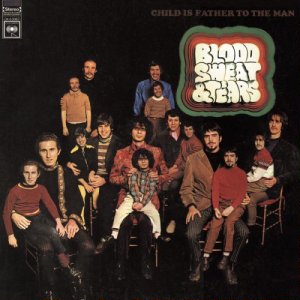
Musician, Producer and songwriter, Al Kooper, put together the first jazz-rock group, Blood, Sweat and Tears, recording Child is the Father to Man in late 1967, with Columbia releasing the album on February 21, 1968.  Though this album is far more pop and rock than jazz, there are some jazz elements, including Randy Brecker on trumpet and flugelhorn supplemented with  saxophone, trombone and an additional trumpet.  Kooper provides the starting point from which the later versions of BS&T evolve, and paves the way for other jazz-rock ensembles like Chicago, Chase and Lighthouse.

Al Kooper departed from BS&T shorted after the release of this album, apparently due to creative differences, with his next project the bluesy jam album Super Session with Mike Bloomfield and Stephen Stills.

Personnel [from Wikipedia]

Blood, Sweat & Tears

  • Randy Brecker – trumpet, flugelhorn
  • Bobby Colomby – drums, percussion; backing vocals (tracks 4, 10)
  • Jim Fielder – bass guitar, fretless bass guitar
  • Dick Halligan – trombone
  • Steve Katz – guitars; lead vocals (tracks 3, 8); backing vocals (tracks 3); lute (track 6)
  • Al Kooper – organ, piano; lead vocals (tracks 2, 4-7, 9-12); ondioline (track 8)
  • Fred Lipsius – piano, alto saxophone
  • Jerry Weiss – trumpet, flugelhorn; backing vocals (track 4)

Additional musicians

  • Anahid Ajemian – violin
  • Fred Catero – sound effects
  • Harold Coletta – viola
  • Paul Gershman – violin
  • Al Gorgoni – organ, guitar, vocals
  • Manny Green – violin
  • Julie Held – violin
  • Doug James – shaker
  • Harry Katzman – violin
  • Leo Kruczek – violin
  • Harry Lookofsky – violin
  • Charles McCracken – cello
  • Melba Moorman – choir, chorus
  • Gene Orloff – violin
  • Valerie Simpson – choir, chorus
  • Alan Schulman – cello
  • John Simon – organ, piano, conductor, cowbell
  • The Manny Vardi Strings

Production

  • Producers: Bob Irwin, John Simon
  • Engineer: Fred Catero
  • Mixing: John Simon
  • Mastering: Vic Anesini
  • Arrangers: Fred Catero, Al Gorgoni, Fred Lipsius, Alan Schulman, John Simon
  • Art direction: Howard Fritzson
  • Photography: Bob Cato, Don Hunstein
  • Packaging: Michael Cimicata

Fifty Year Friday: Pete Seeger, Mason Williams, Roy Harper

Mason Williams

Many of us that grew up in the sixties wouldn’t miss a chance to watch the Smother Brothers Comedy Hour on Sunday night from 1967 to its censor-driven cancellation in 1969.  The show was musically noteworthy for including rock and musical groups that the other variety shows were uncomfortable with (including Cream, Harry Belafonte, The Doors, The Who, Buffalo Springfield, The Cast of Hair, The Jefferson Airplane, and Steppenwolf) , and ending the national blacklisting of Pete Seeger on February 25, 1968. Other musical guests were the Electric Prunes, George Harrison,  Donovan, The Byrds, Judy Collins, Joan Baez, Simon and Garfunkel, Ravi Shankar, Ike and Tina Turner, and the Julliard String Quartet.

Mason Williams was the head writer for the show and was often responsible for the incorporating of younger talent into the writing staff, including Rob Reiner, Bob Einstein Carl Gottlieb, and Steve Martin, who even made an on-camera appearance.

Mason made several on-camera appearances, most notably for his composition, “Classical Gas”, which became a hit single.  “Classical Gas,” originally titled “Classical Gasoline”, appears on Mason Williams’ Warner Brothers album, The Mason Williams Phonograph Record, and is by far the stand out track, a classic rendition of a clearly timeless work.

During 1968 there was a pronounced divide, perhaps greater than any time in Western Music history, between the music the younger generation embraced and what their parents and grandparents found acceptable.  “Classical Gas”  bridged that gap,  topping the easy listening charts as well as holding the number two spot on the pop charts for two consecutive weeks wedged between hits by The Doors and The Fifth Dimension.

Check out the following two videos:  “Classical Gas” set to a video of the greatest art works, and Mason Williams spot on the Smother Brothers addressing censorship.


Roy Harper: Come Out Fighting Ghengis Smith

R-2195980-1283548704.jpeg

Released either in late 1967 or early 1968 (I really cannot find an exact date for this), is Roy Harper’s second album.  Notable is Harper’s compelling guitar work, unusual lyrics, crafted melodies and the blending of Harper’s guitar with orchestra.   Looking back in time, this is a weaker album than the first one, “Sophisticated Beggar”, but the reality is very few people purchased that first album when it had originally been released. Fortunately, a representative from Columbia Records did hear that first album, and signed Roy Harper for this second one. Better albums will follow, but one can find much of interest, particularly the first track, “Freak Street.”  This Columbia produced album served to provide a wider audience to Harper who would have an influence over many other artists including Ian Anderson, Joanna Newsom, Jimmy Page and Al Stewart.

Link to track list

Fifty Year Friday: Miles Davis Quintet “Nefertiti”


0000765885

Recorded in June and July of 1967 and released, as best as I can determine, around February 1968, give or  take a month, Nefertiti is the ever-exploring, adventurous Miles Davis’s last all-acoustic instrument album. I also consider this one of the first albums to take significant steps into both Fusion and New Age territory.

Miles Davis time at Julliard is partially evident here (just as Tony Scott’s time at Julliard is partially evident in what some consider the very first New Age record, the 1964 album, Music for Zen Meditation.)  Miles seems to infuse Bartok and Satie, whose music he admired, into some of this work,  as well as possibly (this is maybe a reach on my part, based only on the nature of some of the rhythmic and melodic patterns) Olivier Messiaen.  Miles also drives his fellow musicians to further reaches of creativity producing a work like no other work recorded in 1967 or released in 1968.  Some call this free-bop, and there are elements of free jazz present, but overall this is generally an accessible album, very much a predecessor to the fusion jazz and progressive-jazz psychedelic/rock-impressionism that will soon follow in so many albums of the 1970s.

The title track, “Nefertiti”, recorded on June 7, 1967 as a single take, is named after the Egyptian queen, Neferneferuaten Nefertiti who, with her Pharoah husband, brought about a religious revolution in Egypt by narrowing religious worship from many gods to only one. And with this first track, “Nefertiti”, there is a singularity of focus.  Missing are solos from the trumpet and saxophone.  Instead, the two instruments blend into an ambient, cleverly crafted circular sonic stream (well done, Wayne Shorter!), much as when drifting into alternative realms of consciousness prior to sleep.  The piano, bass and drums provides the greater variety and commentary here, the entire work thoroughly and unapologetically breaking from the traditional be-bop approach to ensemble sections and solos.  We have a strong case for this being jazz minimalism despite the richness of material provided by Herbie Hancock, Ron Carter and Tony Williams, based on the foundational, hardly perceptible variations provided by Miles and Wayne Shorter.

“Fall”, “Pinocchio” (two takes) and “Riot” were recorded on July 19, 1967, two days after John Coltrane’s death.  This tragic and monumental event shapes the nature of the performances of these works, particularly Miles’ solos.  The other tracks on the Nefertiti album,”Hand Jive” and “Madness”, are more extroverted and were recorded on June 22 and June 23, respectively.  Though this album may not have been conceived as a whole work (the amazing “Water Babies”, the sharp-edged”Capricorn” and the reflective, surreal “Sweet Pea” [this last a perfect fit for the Nefertiti album] were also recorded during these sessions and released years later, in 1976),  it comes together nicely and provides a general mood of near-mystical introspection.  The performances by all members of the quartet border on mythical, with Miles inspiring and encouraging his fellow musicians in reaching further levels of excellence.

This a particularly subtle, perhaps initially elusive, album — one that many will not fall in love with on the first listening.  Not as accessible as the previous album, the 1967 Sorcerer, it is often considered to be more substantial: pushing jazz into an unexplored territory that soon becomes part of the language of not only jazz, but rock, fusion, progressive rock, new age, and late twentieth century classical music.   Darken the room and give Nefertiti your undivided attention when listening, if not already a devoted fan.

Side One:
 “Nefertiti”  — Wayne Shorter  (7:52)
“Fall” —  Wayne Shorter (6:39) 
“Hand Jive” — Tony Williams (8:54)
Side Two:
“Madness” —  Herbie Hancock  (7:31)
“Riot” —  Herbie Hancock (3:04)
“Pinocchio” — Wayne Shorter (5:08)

miles 2Capture


Fifty Year Friday: Jackie McLean “Demon’s Dance”

mi0002405685

Unlike most rock albums of 1967 and 1968, in which there is a focused effort to release the material fairly soon, perhaps partly due to the quickly changing musical landscape in pop, many jazz recording sessions of 1967, did not get released until some time later, partially due to the lack of commercial interest in jazz music at that time: the six tracks that make up Demon’s Dance was recorded in a single session on Dec. 22, 1967 and not released until October of 1970.

One can readily notice a similarity between the Demon’s Dance album cover and Miles Davis’s Bitches Brew cover.  Bitches Brew was released by Columbia records on March 30, 1970, and reached the number one spot on Billboard’s best selling jazz albums  by July 18, holding that position, on and off, for the rest of 1970.  Blue Note engaged the Bitches Brew album cover artist, Marty Klarwein to provide the artwork for the album cover of Demon’s Dance,  with the eye-catching result as shown above.  (Note that this is just a portion of the original painting — shown fully below at the end of this post.)

The music here is particularly ear-catching, with Jackie Mac taking a step back from his more adventurous free-jazz persona, playing modern, sometimes modal, bebop partnered with a twenty-three year old Woody Shaw providing intense, focused, clear, and often beautifully lyrical trumpet and flugelhorn and a twenty-five year old Jack DeJohnette providing dynamic, propulsive percussion with support from LaMont Johnson on piano and Scott Holt on bass.

The three hard bop uptempo tracks, “Demon’s Dance”, full of energy and intensity and enriched with variety by McLean, Shaw and DeJohnette, “Boo Ann’s Grand”, an excellent composition by Shaw, and “Floogeh” are certainly solid, top-notch performances, but the other three tracks are exceptional.

Woody Shaw provides a cheerfully, affirmative bossa-nova-based composition, “Sweet Love of Mine” that sparkles and includes riveting soloing by McLean and Shaw.  Cal Masey, provides the one ballad of the session, “Toyland” which showcases McLean at his reflective, thoughtful best, providing warmth and tender musicality with an appropriate introspective solo by LaMont Johnson.  The album closes with Cal Masey’s particularly intriguing “Message From Trane”, a modal composition with surface similarities to John Coltrane’s “Giant Steps.”

Both McLean and Shaw are in top form throughout the album, providing engaging solos that can be enjoyed over and again. Shaw is particularly inventive with his well-controlled, crisp, clear, solid tone that makes him one of the great jazz trumpeters of all time.  This was the last of Jackie’s twenty-one albums for Blue Note (wow!!!) and the second-to-last U.S session prior to McLean’s four year break from recording and his departure to Europe.  As far as I can tell, the next session after this, again pairing Jackie and Woody, has never been released — which, making an evaluation based on the merits of the Demon’s Dance album, is a notable loss to the music world.

Track listing [from Wikipedia]

All compositions by Jackie McLean except as indicated
  1. “Demon’s Dance” – 7:09
  2. “Toyland” (Cal Massey) – 5:24
  3. “Boo Ann’s Grand” (Woody Shaw) – 6:57
  4. “Sweet Love of Mine” (Shaw) – 6:04
  5. “Floogeh” – 5:23
  6. “Message From Trane” (Massey) – 5:29

Personnel

Century Sunday: 1917 Part 2

scottjoplin_orig

First off, HAPPY NEW YEAR, everyone. Hope your 2018 is filled with discovery and joy!

Going back 100 years, 1917 approximately marks the end of the ragtime era and the beginning of the jazz era.  On April, 1, 1917, Scott Joplin, the “King of Ragtime”, died at the age of 48, having written dozens of published ragtime piano pieces, a ragtime ballet, and two operas, “A Guest of Honor”, confiscated in 1903 as collateral for non-payment of bills and lost forever, and “Treemonisha”, praised as, “…an entirely new form of operatic art” by  American Musician and Art Journal in 1911, then neglected for decades, and then finally receiving a posthumous Pulitzer Prize in 1976.

It’s hard to accurately assess Joplin’s influence on music, but one could make the case he was the most influential single composer of the last 150 years.  Stride, Jazz, Swing, Boogie Woogie, Rhythm and Blues, Rock and Roll, Rock, Progressive Rock, and Hip Hop all have the equivalent of genetic markers that go back to ragtime, of which, Joplin was the most important voice.  It’s not clear that without Joplin, serious ragtime composers like James Scott and Joseph Lamb would have ever had a voice, or if ragtime would have achieved enough momentum to have any popularity or influence.

In other classical music, we have new operas from Sergei Prokofiev   (The Gambler) , Giacomo Puccini (La rondine), and Richard Strauss (Die Frau ohne Schatten [Woman Without a Shadow].Carlos Chávez  composes his first Piano Sonata (Sonata fantasia), Claude Debussy his Violin Sonata in G minor, Alexander Glazunov his second Piano Concerto in B, Op. 100, Charles Ives his Three Places in New England , Maurice Ravel  the often played piano work, Le tombeau de CouperinOttorino Respighi his Ancient Airs and Dances Suite No. 1  , Igor Stravinsky his symphonic poem, Le chant du rossignol  and his “etude” for pianola, Karol Szymanowski his third piano sonata and his String Quartet No. 1 in C majorHeitor Villa-Lobos starts on his second symphony and completes his 4th String Quartet,  and Sergei Prokofiev  his Violin Concerto No. 1, Op. 19, Visions fugitives),  two piano sonatas (Piano Sonata No. 3  and Piano Sonata No. 4) and his landmark neo-classical Symphony No. 1

Musicians born in 1917 include:

Ella Fitzgerald, jazz vocalist (d. 1996)

Lou Harrison, composer (d. 2003)

John Lee Hooker, blues singer, songwriter and guitarist (d. 2001)

Buddy Rich, jazz drummer (d. 1987)

Thelonious Monk, composer and jazz pianist (d. 1982)

Dizzy Gillespie, composer and jazz trumpeter (d. 1993)

a1opoufuypl-_sl1000_

Seventy Year Saturday: 1947

With the world recovering from the worst war ever, World War II, and the cold war just starting, 1947 was a year of many musical landmarks.

In classical music, there are new operas by Benjamin Britten (Albert Herring),  Gian Carlo Menotti (The Telephone) Francis Poulenc (Les mamelles de Tiresias), and Virgil Thomson (The Mother of Us All.)  Sergei Prokofiev completes his  6th Symphony (Op. 111) reflecting the tragedies of World War II, and condemned by the Soviet government for its modernism. Arnold Schoenberg completes  A Survivor from Warsawthe grim story of a holocaust survivor during his ordeal in a Nazi concentration camp.  Other notable works composed in 1947 include the following completed compositions:  Samuel Barber – Knoxville: Summer of 1915, Vagn Holmboe – Symphony No. 6, Aram Khachaturian – 3rd SymphonyWitold Lutosławski – Symphony No. 1, Heitor Villa-Lobos – String Quartet No. 11William Walton – String Quartet in A minor —  and  Edgard Varèse – unfinished work, Tuning Up, a parody of the orchestra tuning process before the start of a concert.

In jazz, bebop artists continue to gain the attention of listeners, Thelonious Monk, at age thirty, records several masterpieces for Blue Note including Ruby My Dear, Off Minor, Well You Needn’t, In Walked Bud (a tribute to Bud Powell, based on the chord progressions of Irving Berlin’s Blue Skies”), and the incredible ‘Round About Midnight.  Wardell Grey and Dexter Gordon record The Chase, and Dexter Gordon and Teddy Edwards record The Duel. Charlie Parker, Max Roach and Miles Davis record several sides together under various names (Charlie Parker All Stars, Miles Davis All Stars, Original Charlie Parker Quintet) in combination with various other musicians such as Bud Powell, Duke Jordan, John Lewis, and J.J. Johnson.  Parker also records tracks with trumpeters Dizzy Gillespie, Fats Navarro,  Howard McGhee, saxophonists Wardell Gray, Shorty Rogers, pianists Erroll Garner, Dodo Marmarosa, Russ Freeman, guitarist Barney Kessel,  bassist Red Callender,  and others, leaving some incredible recordings for future generations to marvel over.

233d036334877bde1789e1f9b396962e-thelonious-monk-jazz-musicians

For those that were around New York City to catch live music, they could see the aforementioned Miles Davis All-Stars at the Savoy, Louis Armstrong at Carnegie Hall with his big band, and The Count Basie Orchestra at the Paradise Club in Atlantic City or at the Strand Theater in Lakewood, New Jersey, supporting Billie Holiday.

For musical theater lovers in London in 1947, Annie Get Your Gun (Irving Berlin) opened at the Coliseum on June 7 and ran for 1304 performances and Oklahoma! (Rodgers & Hammerstein) opened at the Theatre Royal on April 29 and ran for 1543 performances.

Of the many babies born in 1947, notable future rock composers and musicians include David Bowie and folk singer Sandy Denny, born in January, Derek Shulman and John Weathers of Gentle Giant born in February, Elton John in March, Steve Howe and Iggy Pop in April,  Ronnie Wood, Mick Fleetwood and Mickey Finn (T.Rex) in June, Brian May (Queen), Arlo Guthrie, Peter Banks (Yes, Flash), Mitch Mitchell (The Jimi Hendrix Experience) and Carlos Santana in July, Ian Anderson in July, Marc Bolan and Meat Loaf in September,  Bob Weir (Grateful Dead) and Laura Nyro in September, Greg Lake and Joe Walsh in November and Gregg Allman, Jeff Lynne (Electric Light Orchestra) and Burton Cummings in December.

In movies, we have the timeless Christmas movie, Miracle on 34th Street, as well as The Bishop’s Wife with Cary Grant and Loretta Lynn and It Happened on Fifth Avenue.

The next few years would bring major changes all over the world. Fortunately that world as it was in 1947 has been well documented in records, movies and books.


For additional posts related to Gentle Giant, please check these out:
https://zumpoems.com/2025/07/25/fifty-year-friday-july-and-august-1975/
https://zumpoems.com/2026/04/17/fifty-year-friday-april-1976/
https://zumpoems.com/2021/07/23/fifty-year-friday-july-1971/
https://zumpoems.com/2023/09/01/fifty-year-friday-september-1973/
https://zumpoems.com/2022/04/01/fifty-year-friday-april-1970-2/
https://zumpoems.com/2022/12/16/fifty-year-friday-december-1972/
https://zumpoems.com/2017/08/25/fifty-year-friday-aretha-franklin-simon-dupree-the-big-sound-and-pink-floyd/
https://zumpoems.com/2020/11/20/fifty-year-friday-november-1970/

For Must Listen To Gentle Giant and Prog Rock albums, please check out:
https://zumpoems.com/must-listen-to-music/

For additional posts that mention Gentle Giant, please check these out:
https://zumpoems.com/2017/12/30/seventy-year-saturday-1947/
https://zumpoems.com/2019/07/19/fifty-year-friday-men-on-the-moon-yes-larry-coryell/
https://zumpoems.com/2022/05/27/fifty-year-friday-may-1972/
https://zumpoems.com/2019/05/31/fifty-year-friday-power-to-the-people-the-giant-awakens-empty-sky-at-san-quentin-and-charisma/
https://zumpoems.com/2024/03/15/fifty-year-friday-march-1974/
https://zumpoems.com/2024/06/07/fifty-year-friday-june-1974/
https://zumpoems.com/2019/01/04/fifty-year-friday-the-canterbury-scene-soft-machine-and-caravan-first-albums/
https://zumpoems.com/2025/06/20/fifty-year-friday-june-1975/
https://zumpoems.com/2019/06/14/fifty-year-friday-trout-mask-replica-brave-new-world/
https://zumpoems.com/2023/08/04/fifty-year-friday-august-1973/
https://zumpoems.com/2020/02/14/fifty-year-friday-february-1970/
https://zumpoems.com/2018/08/10/fifty-year-friday-ultimate-spinach/
https://zumpoems.com/2018/06/22/fifty-year-friday-british-folk-rock/
https://zumpoems.com/2020/09/25/fifty-year-friday-september-1970/
https://zumpoems.com/2025/11/14/fifty-year-friday-november-and-december-1975/
https://zumpoems.com/2020/03/20/fifty-year-friday-march-2020/
https://zumpoems.com/2025/09/26/fifty-year-friday-september-and-october-1975/
https://zumpoems.com/2021/11/26/fifty-year-friday-november-1971/
https://zumpoems.com/2026/06/12/dexter-gordon-lullaby-for-a-monster-bouncin-with-dex-brand-x-unorthodox-behavior-fifty-year-friday-june-1976/

Fifty Year Friday: Singer/Songwriters; Additional Groups and Artists

mi0001915547


Singer/Songwriters

2017 is soon coming to a close, and so must our fifty year anniversary reflection on 1967.  If we had started these posts earlier in 1967, instead of starting mid-year, we could have highlighted many more albums.  Those we chose were personal favorites. Some of those not included are also worth noting.

1967 provide of wealth of albums by singer songwriters from Arlo Guthrie and his  captivating “Alice’s Restaurant” album to Van Dyke Parks first album, “Song Cycle.”

Warner Brothers Records hired Van Dyke Parks with high hopes based on his previous work with Harper’s Bizarre, The Byrds, Tim Buckley, and Paul Revere & the Raiders, and then spared no costs for Parks to record his album — racking up session hours and using a full orchestra.  When “Song Cycle” was played for the president of Warner Bros. Records, his reaction was apparent confusion: “Song Cycle?  Okay — where are the songs, then?” The label didn’t release the album until December 1967, a year after it was recorded, until, as the story goes, Jac Holzman of Elektra records offered to buy if from Warner Bros.   Once released, it’s sales where less than expected, and prompted Warner Bros.  to run full page newspaper and magazine advertisements that said they “lost $35,509 on ‘the album of the year’ (dammit)” and offered owners of the album the chance to send in their worn-out LPs of “Song Cycle” in exchange for two new copies, so one could be passed on to a friend.

Harry Nilsson authors his second album, Pandemonium Shadow Show, originally intended to be titled after Ray Bradbury’s “Something Wicked This Way Comes”, which is a mix of Nilsson songs and several covers including two Lennon/McCartney songs. Nilsson’s droll lyrics and musical arrangements provide character to a well-executed and produced album.  The album includes the definitive version of Nilsson’s “Without Her”, sparsely arranged with flute, electric bass, strummed guitar and cello. The album fared better in Canada then in the US, eventually catching the attention of  Beatles publicist Derek Taylor who sent copies to the Beatles.  Purportedly, John Lennon listened to the album over and over again, playing it back to back for a total of 36 consecutive hours.

1967 provided the release of two Bob Dylan albums, Dylan’s eighth studio album “John Wesley Harding”, an album filled with songs that appear were written first as poetry and then Dylan added music to them, and a greatest hits album compiling classic Dylan songs from his first seven albums.  For many of us, born between 1954 and 1960  this was our first exposure to Dylan besides what was played on AM radio.

Also for many of us born in that mid to late fifties time frame, the great North American singer songwriter of our time was not American Bob Dylan, but Canadian Roberta Joan “Joni” Mitchell.  At this time, Joni had not recorded an album but, after moving to the U.S. and performing in various clubs, was gaining attention from these performances and in several of her songs that more established artists recorded.

The most notable 1967 Joni Mitchell song, was recorded by Judy Collins on her 1967 album Wildflowers album (released in 1968.)  This song, “Both Sides Now”, would reach #8 on the U.S. pop singles, making it Judy Collins biggest hit and being the most contributing fact to the Wildflowers album peaking at the number 5 best selling album on December 1968.

Laura Nyro  released her debut album,  More Than a New Discovery Recorded in 1966, initially released in 1967, and then reissued in 1969 and again in 1973, this album showcases Nyro’s songwriting skill and versatility with many of the songs being covered by other artists, including “And When I Die” (Blood Sweat and Tears), Wedding Bell Blues” and “Blowin’ Away” (The Fifth Dimension), and “Stoney End” (Barbara Streisand.)

Recorded in 1966 and early 1967 the Deram label releases Cat Stevens’ first album,  Matthew and Son The album makes the UK Top 10, and has several successful singles. Later that year,  Stevens records New Masters which is released in December 1967, and sells significantly less copies than the first album.

Also in 1967, Tim Buckley released his second album, his most popular and generally most acclaimed album, Goodbye and Hello.   Tim Hardin released his second album,  simply titled Tim Hardin 2.  Leonard Cohen’s releases his first album, the captivating and engaging Songs of Leonard Cohen, after Judy Collins’ recording of his song “Suzanne” brought Cohen to the attention of legendary record producer  John Hammond. Cohen’s debut album begins with “Suzanne” and includes several fairly profound songs like “The Stranger Song”, “Sisters of Mercy”, and “Stories of the Street” as well as the well known “So Long, Marianne” referencing his close companion, Marianne Ihlen.

leonard_cohen_-_1967_songs_of_leonard_cohen

Additional Notable Albums of 1967

The Beach Boys release two excellent albums, Smiley Smile and Wild Honey.  

Pretty Things releases their distinctly interesting, and accessible “Emotions” album, full of life and musical vibrancy with brass instruments adding further energy. Recorded in late 1966, and early 1967, it did not sell well, perhaps this was a result of ineffective distribution or marketing or perhaps the album was a bit ahead of its time, sounding more like it was recorded in 1968 or early 1969.

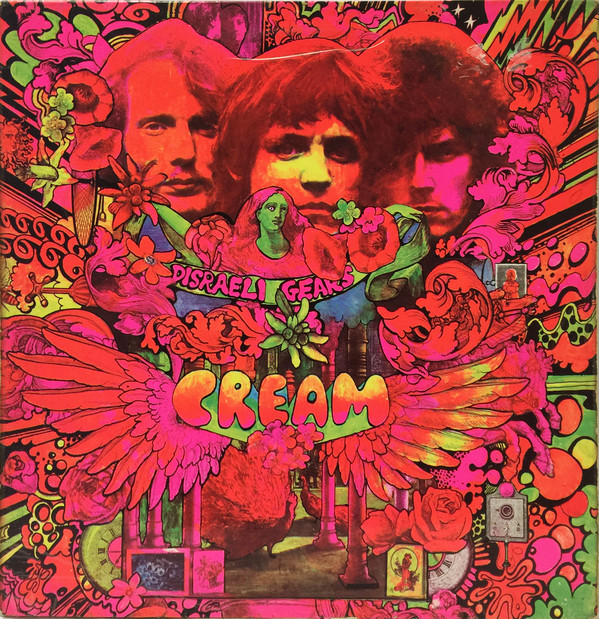
The first album of what many consider the first rock supergroup, Cream, sets the stage for later heavy rock bands (and by extension, heavy metal bands) with their second album, Disraeli Gears. Though there were many influences that spawned hard rock and heavy metal, Cream had a significant impact on many such younger rock musicians.

r-1358659-1496055161-7572-jpeg

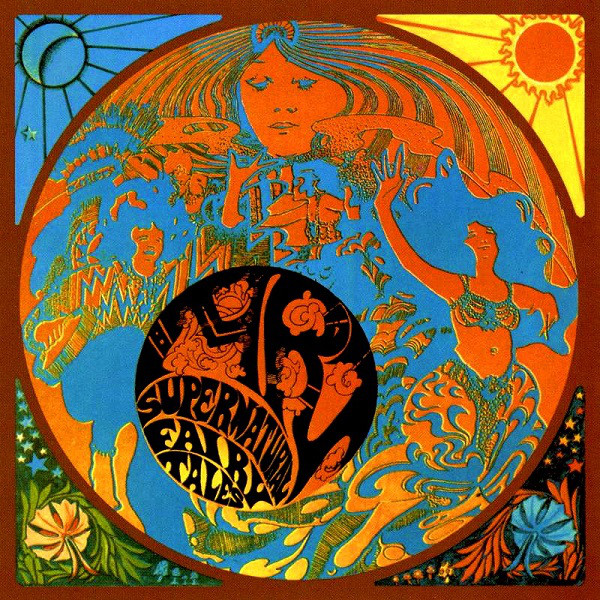
Art (Art essential being an earlier formation of the group, Spooky Tooth), infuses rivulets of blues and wisps of psychedelia into their only album, Supernatural Fairy Tales  creating a thick-textured album, perfumed with an aroma of cannabis. Earlier to the recording of this album, several of the same musicians under the name “Hapshash and the Coloured Coat”  recorded an album earlier in 1967, titled “Featuring The Human Host And The Heavy Metal Kids” — this being, as far as I can tell, the first reference to “heavy metal.”

Other notable albums, many heavily psychedelic (and some incorporating elements of free jazz) were released by groups such as 13th Floor Elevators, The Aggregation, Ten Years After, AMM, Chocolate Watchband, Clear Light, Country Joe and the Fish, The Grateful Dead, Kaleidoscope, Mesmerizing Eye, Moby Grape, Orbital, Pearls Before Swine, Red Krayola (The Parable of Arable Land), Rupert’s People, Sagittarius, The Seeds, Sly and the Family Stone, Sopwith Camel, Spontaneous Music Ensemble, Steppeulvene, Strawberry Alarm Clock, The Animals, The Beethoven Soul, The Box, The Ceyleib People, The Easybeats, The Factory, The Fire Escape, The Freak Scene, The Incredible String Band, The Lefte Bank, The Motions, The Serpent Power, The Smoke, Smoky Robinson and the Miracles, The Turtles (Happy Together), The West Coast Pop Art Experimental Band, The Yardbirds, Thomas Edisun’s Electric Light Bulb Band, Vanilla Fudge, and various more accessible or highly commercial groups like The Association, The Grass Roots, The Ventures, The Monkees (put together for a U.S. television series), and The Young Rascals.

This only scratches the surface.  I have not mentioned artists like Albert King (Born Under a Bad Sign), Nina Simone, Miles Davis, John Coltrane (Expression), Sam Rivers, Charles Tyler (Eastern Man Alone), Bill Dixon, Blue Mitchell, Freddie Hubbard, Gary Burton, Graham Collier, Herbie Mann, Roland Kirk, Marvin Gaye, Magic Sam, Otis Spann,  John Mayall, Miriam Makeba, Van Morrison, Stevie Wonder, Buddy Tate, and many others, some of which I have covered in previous “Fifty Year Friday” posts: there are a number of incredible jazz albums as well as blues, rhythm and blues, and soul music albums.

Though the term progressive rock is more formerly applied to many of the more adventurous and classically influenced bands of the early 1970s, for my money 1967 was the childhood of progressive rock with the birth perhaps occurring in 1966 with Beach Boys Pet Sounds, the Beatles’ Revolver and many psychedelia-tinged albums released in 1967, but recorded at the end of 1966. I challenge anyone to deny the progressiveness of Jimi Hendrix, The Beatles, Procol Harum, Van Dyke Parks, or even groups like The Who, The Beach Boys, or The Doors.

This was a vital period in the expansion and diversification of rock music, the like of which has not been seen since.  Fortunately for us, even albums that were nearly impossible to get a hold of in 1967 are now relatively readily available, not only on CD, or in some cases freshly, pressed LPs, but also available through streaming services or on Youtube.

Most importantly, have a happy and fulfilling 2018, and don’t neglect to broadly explore the immensity of great music available to those of us alive today.

r-1380897-1388699693-7737-jpeg


Previous Fifty Year Friday Posts for the year 1967:

The Beatles: Sgt Peppers

The Beatles: Magical Mystery Tour

Jimi Hendrix: Are you Experienced

Jimi Hendrix: Axis: Bold as Love

The Who: The Who Sell Out

Moody Blues: Days of  Future Passed

Byrds, Hollies and Buffalo Springfield

Love “Forever Changes”

Far Out 1967, Part One

Far Out 1967, Part Two

Nirvana “The Story of Simon Simopath; The Kinks “Something Else”

Dizzy Gillespie in 1967

Larry Young “Contrasts”; Joe Zawinul, “The Rise and Fall of the Third Stream”

Procol Harum “Procol Harum and The Doors “Strange Days”

Billy Strayhorn and Duke Ellington

Arthur Rubinstein, Pink Floyd

Marta Argerich and Carlos Paredes

David Bowie, Marc Bolan, John’s Children

John Coltrane, Jefferson Airplane

Thelonious Monk, McCoy Tyner

Hindustani Classical Music

The Doors: The Doors

The Velvet Underground

Aretha Franklin, Simon Dupree and the Big Sound

Mahler recordings

Rolling Stones: Between The Buttons

Jobim, Zappa, Beefheart