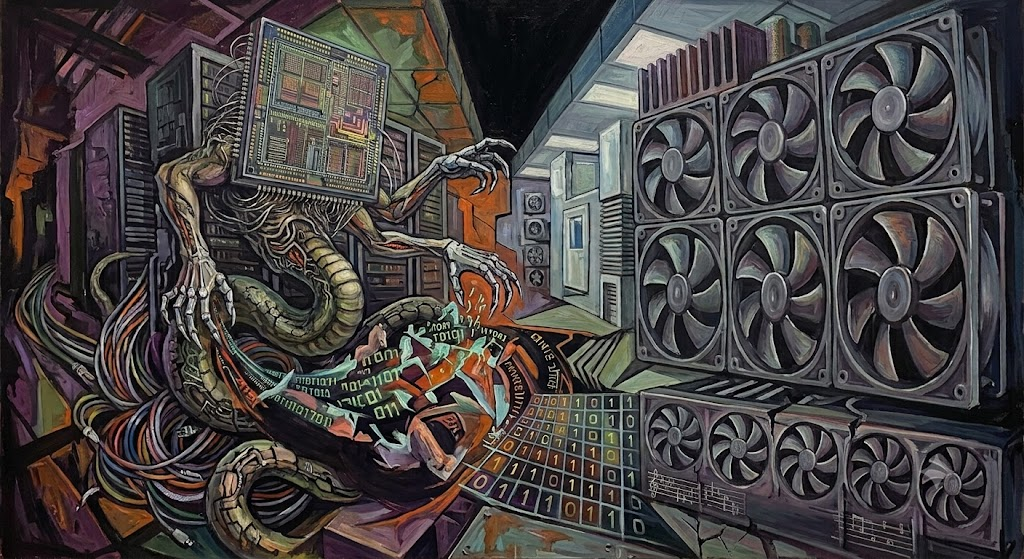
As always, we appreciate your sharing your thoughts in the comments, not only about the poem but also about the danger of AI — is it just a matter of time before AI determines that we are just an annoyance to be disposed of?
Zumwalt has provided revisions to his set of 10 poems in the Sassoon Collection. Here is the first:
i. Everyone sang while I fell asleep
voices wailing around the house thud of feet and slam of doors everyone yowling only the clocks wind down
around this small room no sense of the hour crowded with lemonade breath high-pitched voices like hounds in pain as clouds hover over my eyes
fighting sleep with the fork from my dessert plate not yet ready to go where the dreams are built where you take reality with you so as not to be alone dragging it by its rough cotton shirt collar
the blurry faces become blurry voices despite discordance from straying notes the lights descend and siphon colors whirling into a vortex that spins off dimensions like a playlist streaming fragments from the past
drifting towards sleep the hounds now whining like imprisoned puppies the darkness becoming home without furnishings everything fading into peace except for one small lingering concern for everything unfinished
— zumwalt (2011, revised 2026)
Admin’s Note: This is the first piece of Zumwalt’s ten-poem tribute to poet Siegfried Sassoon, The Sassoon Collection, originally written in 2011, recently revised by the author. This poem opens the set by providing a misleading head fake to Sassoon’s Everyone Sang, when in reality the poem is primarily based on Sassoon’s Falling Asleep. Where in the original, Sassoon sustains a hushed, introspective mood using domestic quiet and natural sounds to mirror the speaker’s mental transition from wakefulness to sleep, Zumwalt leans into domestic turmoil and modern-day stress, even throwing in an Emily Dickensen reference for good measure.
I am pleased to announce that Zumwalt’s poem, “Optional,” was published today in the latest issue of Zoetic Press’s 4LPH4NUM3R1C2.0, included with entries from only four other authors for this bi-monthly journal. Please visit here: https://www.zoeticpress.com/an-24-dominion-of-domination
I have a list of over 4,000 journals that publish poetry: some do so online, some in print, some do both. As noted in last week’s Thoughtful Thursday column, I enjoy checking out both poetry blogs and poetry sites to read new work. Sometimes these poems fall short of expectations; sometimes they are well worth the effort of hunting them down.
Today, I randomly picked entry 1613 in my poetry list, a journal named Poemeleon. I knew I was in for a treat reading the description of their content: “Quirky/Humorous/Lyric” and “Playful/Lyrical work.” This sounds great, I thought. As readers of this blog know, I am a fan of Zumwalt’s poetry — which generally is more disruptive or snide than lyrical, but is often quirky, humorous, or playful. I am also a fan of Louise Glück for the lyricism, emotional depth, and overall precision of her writing. And she can also be disruptive and humorous, as in her poem Anniversary. I can say the same about Kenneth Koch — precise control, sometimes lyrical, sometimes disruptive, often playful, clever and/or humorous. Well, there are thousands, maybe tens of thousands of such poets, and I clicked on the Poemeloen link to discover some of the lesser-known such poets.
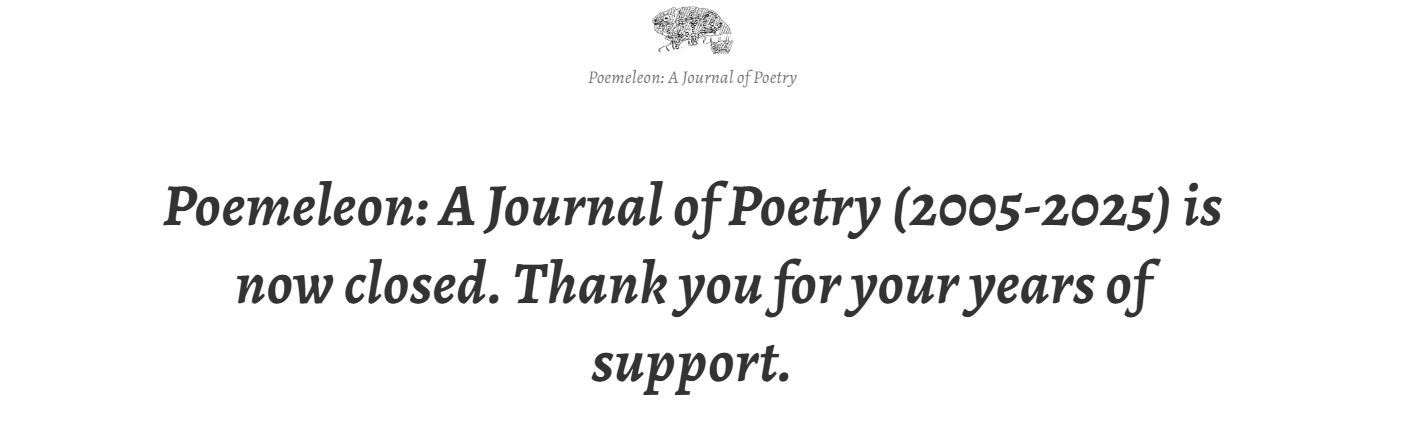
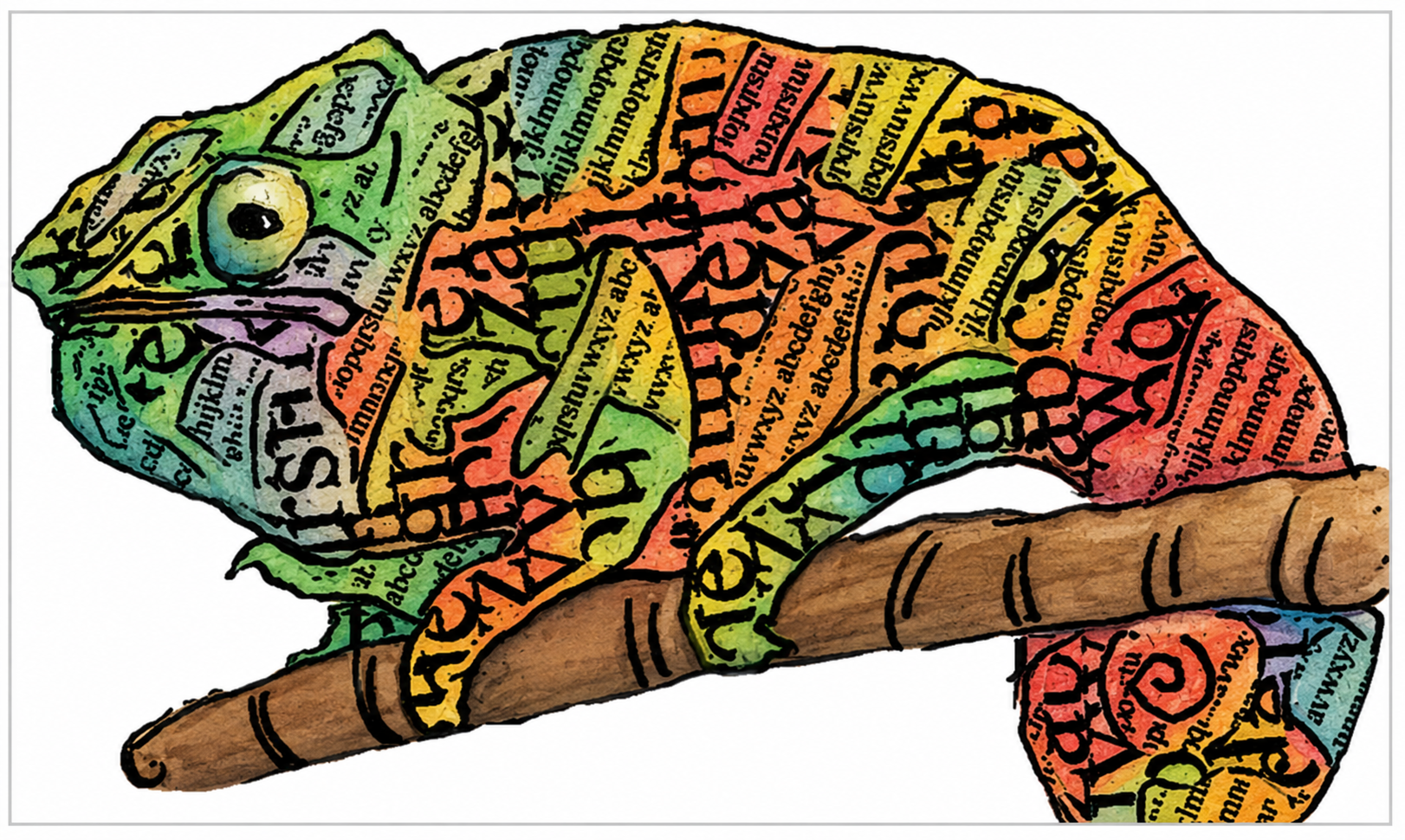
I would like to say that when I first landed on their home page, I was greeted with the above image — the image of the poemeloen, a distinctive and highly specialized clade of a large family of contemporary online journals that champion a diverse range of poetry. And to some degree I was, though it was much smaller. However, what immediately confronted me was the image of the “SORRY WE ARE CLOSED” sign at the top of this blog post.
Above that closed sign was this very small version of their logo and additional text:
Well, in truth, I was pretty undeserving of any thanks. I never supported this site, nor even visited it until today. And now, despite its ability to blend in (or maybe because of its ability to blend in) with its background, it is now another entry in a long list of defunct poetry journals. It could clearly show a range of colorful poetry, and vary what was displayed. But it was eventually overwhelmed by its changing environment: a world where many people have substituted clicking, reacting, and sometimes sharing (though can one really share what isn’t theirs?) for engaged reading.
However, the poems are still there! And their founder’s mission is still intact: “poemeleon seeks to make visible the invisible. By placing disparate poems alongside one another, I aim to highlight not just their contrasts, but their similarities.”
For how long, though? Eventually, the domain will be unfunded, and the poems will not be so easily accessible. I say, “not so easily,” because, thankfully, we have The Internet Archive’s Wayback Machine, which has captured content from this site and its predecessor 296 times between February 23, 2007 and April 20, 2026. Compare that to our site, zumpoems.com which has been saved 217 times between November 1, 2011 and July 8, 2026, and one can feel pretty good that as long as Internet Archive’s Wayback Machine is enabled, all the poems that the site’s editors (there were multiple: https://poemeleon.me/missionandhistory) ended up selecting from the many submissions sent to them over the years will be avaible for those willing to take the extra effort to track them down.
One day, I won’t be around to fund zumpoems.com. At that point, much of Zumwalt’s work will be lost forever — except for the captures of this site in the Internet Archive. How long will that site be around? Maybe it doesn’t matter, as eventually there will be very few people who will still have the ability to read. The poems will still be around, and they can be read out loud by our AI assistants, but will those AI readers ever understand the meaning of even the simplest or most transparent poem to provide a meaningful enough reading to engage even their most receptive user?
I have no plans to stick around to find out, but if AI extends my life long enough, I guess whatever plans I do eventually make may matter very little.
I am pleased to announce that Zumwalt’s poem, “The Threat of Virtue,” was just published today in the highly respected Society of Classical Poets. This poem is a necessary indictment of the People’s Republic of China’s (not a government by, for, or of the people) systemic persecution of Falun Gong practitioners. Zumwalt effectively contrasts Falun Gong’s spiritual virtues of Truthfulness, Compassion, and Forbearance with the ongoing state censorship, forced conformity, and organ harvesting perpetrated by the criminal PRC.
Appreciate any comments you leave on their website, particularly those expressing your opposition to these atrocious actions by the current mainland Chinese government.
Boy, do I enjoy the act of writing! Is it about capturing thoughts in a more impermeable form than memory? Or is it about the psychological and mental benefits provided by diving deeper into one’s feelings and perspectives and articulating, whether well or poorly, those feelings and perspectives?
And I love reading. For one is exposed to another’s thoughts, feelings, and perspectives, whether it is reading an email or letter from a friend or engaging with the writing of a familiar author or a complete stranger.
I love diving into others’ WordPress blogs. All I have to do is click on the WordPress reader, and I have a selection of blogs I subscribe to or can explore blogs I have never seen before.
As a reader of poetry, I particularly enjoy exploring posts that have been tagged with “Free Verse,” “Poetry,” or “Poem.” Some are well crafted, some are wild and sprawling, but most are interesting, and many have a level of vitality that is often missing in much of the poetry in curated journals.
I could easily list a dozen WordPress poetry blogs that I enjoy visiting. Let’s just take a peek at my favorite tag: https://wordpress.com/tag/free-verse. And what do I see at the top, posted 15 minutes ago — one of my favorite blogs, Ink & rain! As I open today’s post, I first see one of those many wonderful images that appear reliably at the top of each of author Meiling Cheung‘s posts, followed by text in Chinese and English. Now I have no clue how to read Chinese, so I focus on the English column. Today’s poem is exceptional: it uses a sustained metaphor with each phase serving a specific purpose to support the author’s message. The line breaks are well handled, and the tone it sets, gentle and meditative, perfectly echoes its message. There is an overall emotional immediacy and authenticity, which further enhances the evocative and reflective nature of the work.
Besides reading WordPress poems, I visit various online poetry journals (a partial list of which is here), and so right now, let me check my email to see the latest updates.
“Only opaque backings stop mirrors being windows, and windows can be mirrors if on one side it’s bright as an interrogation room while the other’s in darkness. So think of glass as your poems, and light as reason.”
Such a simple observation, but here is the vehicle for the journey this poem takes us on. No need to be bored with my commentary — just check out the poem here: https://stickfigurepoetry.com/issue-22/#analysis-love
“there is a hole in my chest through which we drive our car
to the other side of the world to see the mountains”
With the first glance of this poem, I notice a more or less generic title, no punctuation, no capitalization, regular use of stanzas, reference to a line in Chinese, “万山载雪,明月薄之,月不能光,雪皆呆白,” which I use Google Translate to give me an approximation in English, “Snow blankets the myriad peaks, and the bright moon casts its light upon them; yet the moon cannot make them shine, and the snow remains a dull, lifeless white, ” and, with the exception of the Chinese insert, the use of an accessible, straightforward vocabulary. The work effectively mixes abstractions and images, the modern and the timeless, into a beautifully evocative poem!
I am not particularly fond of that overly common activity of ranking authors, composers, painters, etc. — each has their distinct voice (or voices) and strengths. Still, it is easy enough to make the case that America should consider itself proud to have been the birthplace and home of such a great poet as Wallace Stevens!
So I have a lot to keep me happy and engaged with a breadth of diversity and styles never available before the launch and development of the internet. Please join me in exploring blogs, poetry journals, and the works of revered poets at your own pace, taking your own individual, self-customized journeys.