When I first heard Procol Harum’s “Whiter Shade Of Pale” single in the summer of 1967 on AM radio, I had assumed it was an older song, perhaps from the late 1950s. I was now twelve years old, but still musically very naive with no musical training except listening to AM radio and my very limited 45 collection assembled from the occasional 45 my grandfather gave me (he worked for Firestone and somehow he would sometimes get unused 45’s from the late 1950s) or from one of the few 45s my dad had purchased including two or three 45s of Ethel Merman and cast singing songs from “Annie Get Your Gun”, a Stan Kenton 45 of “Artistry in Rhythm” and a 45 with “Third Man Theme.”
“Whiter Shade of Pale” came and went on the Billboard charts, and I never gave the song or the group much thought, until later in life, when my next door neighbor brought over their “Grand Hotel” album. Well, better late than never, and eventually I purchased their “Salty Dog” album, the A&M reissue of the first album, and their album with the Edmonton Symphony Orchestra. This would be one of those rock groups that didn’t neatly fall into the progressive rock category, and one group that I was never particularly head-over-heels excited with, but I respected and appreciated for the well-written lyrics and well-crafted and arranged compositions.
Their first album, “Procol Harum”, was released around September 1967. The original North American version on Deram includes “Whiter Shade of Pale” and omits “Good Captain Clack”, (also found on the b-side of the “Homborg” single), however the A&M 1972 reissue includes all the tracks of the original UK album plus “Good Captain Clack.”
Gary Booker’s dark baritone voice, along with his keyboards, Matthew Fisher’s Cimmerian organ, Robin Tower’s expressive guitar work and the high quality of Keith Reid’s lyrics and Booker’s compositions make this an engaging album. Highlights include “Whiter Shade of Pale” (included on CDs and on the American LPs), “Conquistador” and “She Wandered Through the Garden Gate”, the guitar passages on “Cerdes” and “A Christmas Carol”, the organ and guitar in “Kaleidoscope”, the organ accompaniment and solos in “Salad Days”, and the Matthew Fisher composition, “Repent Walpurgis” which includes a Bach piano interlude and a couple of notable Trower guitar solos.
Simon Platz – executive producer (for Fly Records)
Eddy Offord, Frank Owen, Gerald Chevin, Keith Grant, Laurence Burridge – engineer
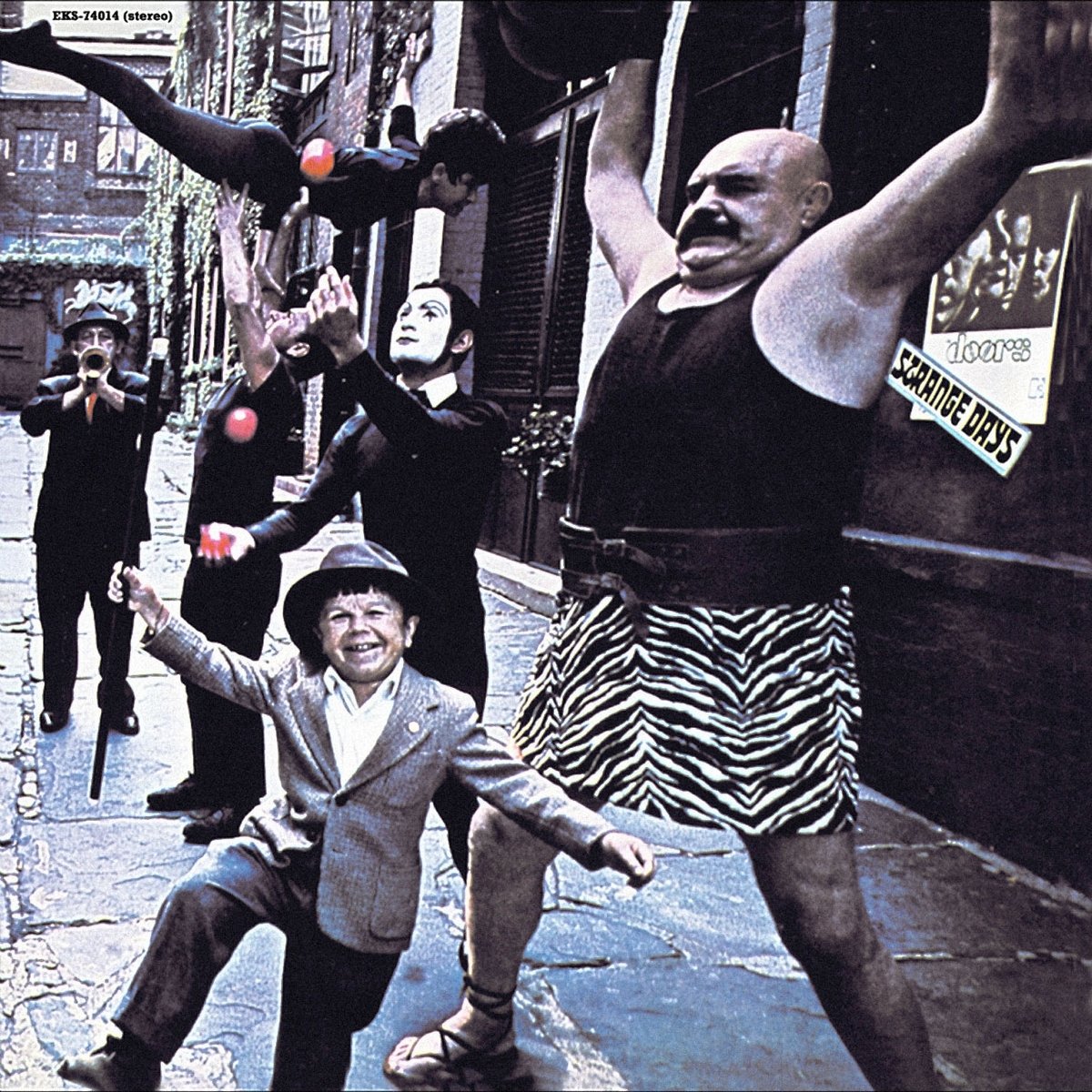
1967 had plenty of colorful, bright shimmering bands providing technicolor, rainbow-glistening music with plenty of upper register sunlight. Procol Harum and the Doors provide a notably contrasting, distinctively dark, often gloomy, sound. They are more Mahler than Mozart, more Buxtehude than Vivaldi. Even the bright spots, “Like People Are Strange” on the Doors second album, absorbs more light than it radiates.
“Strange Days” opens up with a repeating pattern anticipating German space rock, seetting an austere bleakness that is carried throughout the album. The bass guitar intro that opens up “You’re Lost Little Girl” comes from dark subterranean underground caverns, supplemented by atmospheric and Morrison’s moog-synthesizer processed baritone vocals.
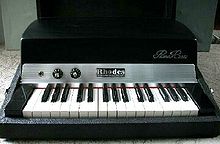
The dark, reflective music continues through the album. “Horse Latitude” breaks the mood as it is more indulgent than germane to the overall mood of the album. “People Are Strange” is more melodic and accessible, more catchy than indispensable, and more of a commercial single than an essential part of the album’s broad fabric, providing relief by breaking the general mood as well as providing an effective mood-based modulation to the upbeat “My Eyes Have Seen You.” Elements of dusk and darkness resume with “I Can’t See Your Face in My Mind” and are nicely concluded with the final track, a nearly 11 minute psychedelic, expansive “When the Music’s Over” with its moog synthesizer, organ and Fender Rhode’s piano bass.
The lyrics, are dark, but at times spirited and environmentally militant. Does Morrison foreshadow his death or the death of our environment?
“When the music’s over
When the music’s over
When the music’s over
Turn out the lights
Turn out the lights
Turn out the lights”
….
“Before I sink
Into the big sleep
I want to hear
I want to hear
The scream of the butterfly
…
“What have they done to the earth?
What have they done to our fair sister?
Ravaged and plundered and ripped her and bit her
Stuck her with knives in the side of the dawn
And tied her with fences and dragged her down
I hear a very gentle sound
With your ear down to the ground
We want the world and we want it…
We want the world and we want it…
Now
Now?
Now! “
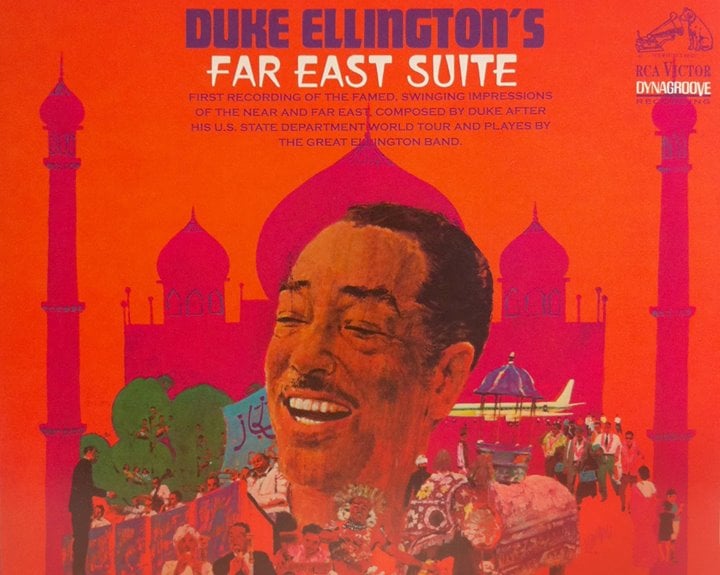
Recorded in December 1966, released in June 1967, and winning a Grammy for Best Instrumental Jazz Performance – Large Group or Soloist with Large Group in 1968,”Far East Suite” is one of the finest concept albums of the 1960’s. A collaboration between Billy Strayhorn and Duke Ellington, as is the case with much of the Ellington catalog between 1939-1967, this work is a set of reflections of the Ellington band’s 1963 world tour that included visits to Syria, Lebanon, Jordan, Iraq Iran, Afghanistan, Pakistan, India, Sri Lanka, and Bangladesh, and then later, their 1964 visit to Japan. All the music with the exception of the last track on the LP, “Ad Lib on Nippon”, is inspired by their 1963 exposure to locations of the Near East. This is not music based on music of those locations, but music inspired by impressions of these locations. The construction and quality of each composition blending crafted arrangements, colorful chords and chord voicings, and including solos that enhance and not detour from the arrangements, make this recording one of the gems of anyone’s LP or CD collection (the CD including alternative takes of tracks 1-3 and track 8.)
Track listing[from Wikipedia]
(All compositions by Ellington & Strayhorn except 9. by Ellington.)
Billy Strayhorn initial inclinations were towards classical music, but the oppressive social barriers at the time made an entry into the classical realm much more difficult than one into the jazz world. Strayhorn was talented enough to excel in either, and given the nature of classical composition in the 1930s-1960s, it’s fair to comment that the more meaningful and relevant new music was being produced as jazz and not the “avant-garde” school music composed for the concert hall and academia, which received limited performance and provided limited commercial recognition and compensation.
Billy Strayhorn was diagnosed with esophageal cancer in 1964, and bravely fought on, continuing to compose, even at the end when hospitalized, with his last year including works like “Blood Count” and “U.M.M.G. (Upper Manhattan Medical Group).” On May 31, 1967, he lived his last day in Billy Strayhorn’s body, but continued to survive through his arrangements, compositions and recordings, with this memorial album, “… And His Mother Called Him Bill”, a timeless work of deep love and respect from Mr. Ellington and his orchestra, providing an everlasting, very personal homage to this great 20th Century giant.
On the original LP, the last track is a fortuitously captured recording of Duke Ellington reflectively playing Strayhorn’s “Lotus Blossom” with bass player Aaron Bell, however the chance recording only has one working microphone and captures only the piano portion of this private performance. Later, a trio version of this was recorded, but the producer found the spontaneous version more emotional and selected that. Both versions are particularly poignant with the solo piano version more personal and the trio version more polished. One can get both versions either in the Duke Ellington Centennial Edition 24 CD set or in the most recent (2016) CD reissue. The tracks on the original LP are all excellent and transcend any stylistic classification. If you love listening to the very best music, whether classical, jazz, rock or anything else, and attentively, actively listen to music, not just having it on as background but diving deeply into its innermost fabric, then you will find this album enormously rewarding.
This 1967 recording contains two of the most popular Twentieth Century piano concertos, full of energy from one of the brightest classical music stars of the 1960’s, the twenty-six year old Argentine, Marta Argerich. An impressive pianist since her early teens, winning both the Geneva International Music Competition and the Ferruccio Busoni International Competition at the age of 18 within three weeks of each other, Marta teams up with conductor Claudio Abbado and the Berlin Philharmonic to provide a stunning, wild-ride performance of Prokofiev’s Third Piano Concerto. This LP also contains the Ravel G Major Piano Concerto, a work influenced by George Gershwin and the jazz music of the 1920s. What sounds like an inspired, spontaneous work, was a work of intense labor and craftsmanship. Writing music”, noted Ravel, “is seventy-five percent an intellectual activity.”
TRACKS
Serge Prokofieff (1891-1953) Piano Concerto No. 3 in C Major, Op. 26
1. Andante – Allegro
2. Theme and Variations
3. Allegro ma non troppo
Maurice Ravel (1875-1937) Piano Concerto in G Major
1. Allegramente
2. Adagio assai
3. Presto
This is Carlos Paredes first album, yet is is an unquestionable masterpiece. Paredes plays an instrument called the Portuguese guitar, a twelve steel-stringed instrument, popularly used in Fado music (Portuguese folk music) known for its expressive and often wistful qualities. In this album we are treated to both Paredes’ amazing virtuosity as well as his gift for serious composition. Each work displays an individual character and identity and invites repeated listenings. If you don’t usually sample the youtube videos sometimes provided, its worth making an exception here:
Tracks for “Guitarra portuguesa”
Variações em Ré maior
Porto Santo
Fantasia
Melodia N.2
Dança
Canção verdes anos
Divertimento
Romance N.1
Romance N.2
Pantomima
Melodia N.1
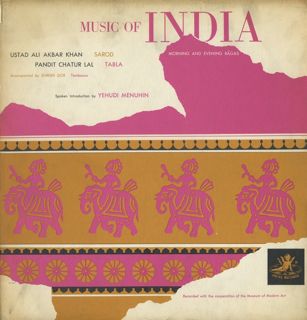
In 1955, with funding support from the Ford Foundation, Yehudi Menuhin hosted the first Indian Classical Music Festival in the United States, The Indian Festival at the Museum of Modern Art in New York City.
Yehudi reached out to Ravi Shankar, who he had met in 1952, to participate, but due to a personal situation, Shankar reluctantly declined and recommended, Ali Akbar Khan, one of finest sarod musicians in India, and Shankar’s brother-in-law. Though Menuhin was not familiar with either Ali Akbar Khan or even the sarod at the time, he took Shankar’s advice and invited Mr. Khan to come to the festival.
Ali Akbar was not so keen on taking the trip to the states. He was not sure how American audiences would react. For the past several years he had been expanding interest in the sarod and instrumental music in general in Western India and had been making good progress. He performed live to receptive audiences in Bombay, worked on films and was making 78 recordings. Thankfully, his friends encouraged him to go and per Khan, “My friends pushed me, more or less, through customs and on to the plane.”
The Modern Museum of Art concert was for April 19, with a recording session scheduled the day before in the Guest House of the museum. This would be the first time that Khan would be able to record more than a 78-length snippet of music, and he was pleased with the final results, the first long playing record of Indian Classical Music.
Soon there we other full length albums produced in the U.S., U.K. and in India of both Hindustani Classical Music and Carnatic Classical Music, or, to over-generalize, classical music of Northern and Southern India. Western classical musicians and composers, jazz artists, and rock musicians all had access to this music and many were intrigued, interested, inspired, or influenced by such music.
So by 1967, there are a number of fine albums released.
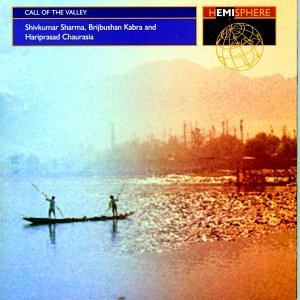
In a sense, this is a conceptual album, with the premise of a given day in the life of Kashmir shepherd as represented by the time of day that is associated with the ragas. (Ragas are classified according to time of day they are suited to, such as daybreak, early morning, late morning, afternoon and early night, late night and midnight ragas.) The choice of instruments and general approach and style further push the boundaries of classical Hindustani music. The combination of santoor (similar to a hammered dulcimer), guitar, bansuri (a wooden transverse flute) and tabla are more within a westerner’s listening experience than sitar, tabla, and a droning tambura. Hariprasad Chaurasia’s magical, engaging melodic lines (on bansuri) along with the overall virtuosity and musicality of the ensemble make this an album that demands not only an initial listening but repeated exploration.
Track listing
Ahir Bhairav/Nat Bhairav
Rag Piloo
Bhoop
Rag Des
Rag Pahadi
Note that the CD contains the following bonus tracks not provided on original LP:
Ghara-Dadra
Dhun-Mishra Kirwani
Bageshwari
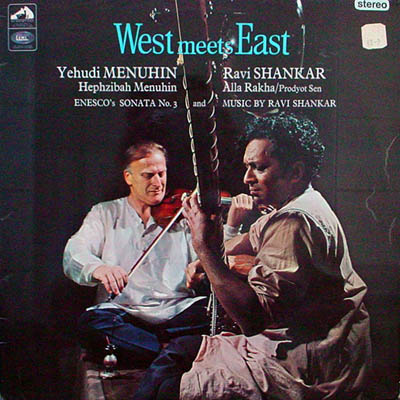
Another release that made a notable commercial impact in the U.S. and the U.K., holding the number one spot on Billboard‘s Best Selling Classical LP’s list for eighteen weeks in 1967, is the Ravi Shankar/Yehudi Menuhin partnership “West Meets East”
On Side One we get the collaboration between the Western violinist, Yehudi Menuhin and the Bengali-born, Hindustani sitarist, Ravi Shankar, Shankar providing the western-notated music for Menuhin to perform from. In the sixties and early seventies Ravi Shankar became a household name in the U.S. for his appearance at Woodstock and his co-organization with George Harrison of the two benefit concerts for Bangladesh at Madison Square Gardens. Shankar also received an Academy Award for the Best Original Music Score for his work on the 1982 movie Gandhi.
Side Two is a performance of one of Enescu’s violin sonatas. Menuhin had studied violin with the famed Romanian composer, conductor, and violinist, and Menuhin performs the work with his sister, Hephzibah Menuhin, on piano. In general, Enescu music deserves more attention, and this sonata is just another excellent work by this talented artist.
Track listing[from Wikipedia]
All selections by Ravi Shankar except where noted.
In 1967, EMI starting releasing an eleven volume, “Music in India” series. The first of this, is a duet between revered sitarist Vilayat Khan and Bismallah Khan on shehnai, which, traditionally, is more appropriate at weddings and festivals than in classical music. However, Bismallah Khan, through his own mastery of the instrument and of Hindustani classical music, elevates the shehnai to an instrument deserving its place and recognition in Hindustani classical music. The combination of sitar and shehnai is a great choice for the first volume of this series as perhaps easier for western ears to embrace a duet between such diverse instruments than an album of just the sitar. As usual with such duets (named jugalbandi which is translated as “entwined twins) there is tabla accompaniment, performed on this album by Shanta Prasad.
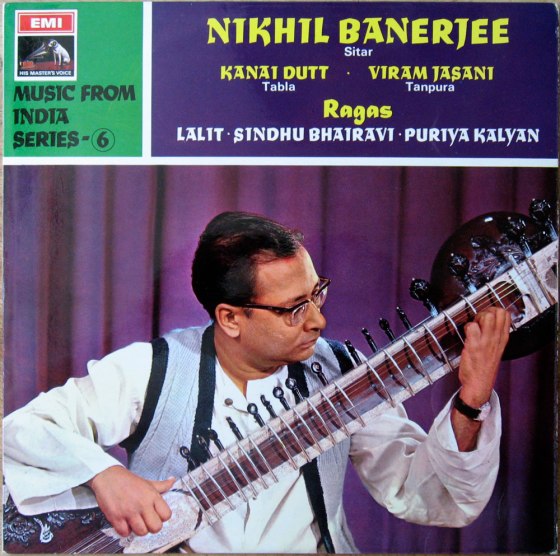
Another important LP from this Music of India series, is volume six with the remarkably skilled Nikhil Banerjee on sitar. This is not a duet like volume one, but more of a solo performance with accompaniment provided by Kanai Dutt on Tabla and Viram Jasani on Tanpura (which provides the basic, foundational drone.)
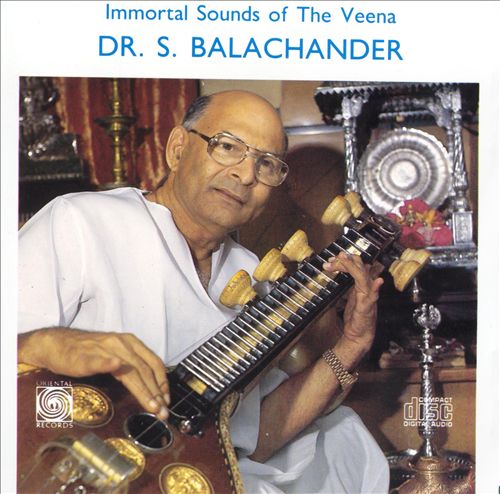
Sundaram Balachander melds his background in Carnatic music with his deep understanding and mastery of Hindustani music to provide a rich, personal voice that borrows from Carnatic vocal traditions. The veena is a particularly intoxicating instrument to listen to, and this is a great recording for showcasing this instrument. Prior to this album, Nonesuch had released an LP of his music in 1965 with mridangam accompaniment.
Abdul Halim Jaffer Khan, is yet another stellar sitar artist, and this 1967 album is nothing short of amazing, particularly side two, a single 18 minute plus raga, with its colorful and exploratory passages. This will be the most difficult recording to find of the ones listed in this post, but is the most representative of traditional Hindustani Classical Music. If you cannot track down a recording, you can find a version currently on youtube:
Though it was not a short drive, on a few occasions in the mid seventies, a group of us, consisting of a consistent core of four, along with two or three additional participants, rode in one van and, sometimes, an extra car, from Southern California to Las Vegas to see a concert. For one particular trip we went to see Yes, and the opening act for them was the Scottish singer/songwriter Donovan Leitch, simply known as Donovan.
We were comfortably seated in the mid-size Aladdin Theater for the Performing Arts , when Donovan walked on the stage, by himself, carrying an acoustic guitar. Having purchased a few of his albums when I had been much younger and having grown up hearing his music as part of the sixties listening experience, I was intrigued to see him perform. Not so apparently with many in the audience that were here to see Yes. At one point, one of my fellow passengers, a generally great guy and skilled guitarist, shouted to the stage (we were quite close and had good tickets) for Donovan to finish quickly and leave. There was not much crowd noise and I suspected that Donovan could hear him as well as some of the other voices in the area expressing the impatience.
“That’s not right”, I told my friend. “He’s did a lot in the sixties”
“Well, it’s time for him to move on” was the reply.
And, if on cue, Donovan sang just one more song and then left. It was very sad. I had made the mistake of buying his 1973 Cosmic Wheels album when it had been released, hoping for the best and getting something closer to the opposite, and I was under no illusion that his best days were over, but I respected some of what he had done earlier, and appreciated his contributions to the musical world I had grown up with.
The sixties, particularly 1966 and 1967, a time of great cultural and musical change, culminating not in the summer of love, but really, in the society of which we live today — a society far from all the hopes and dreams of the youth of the sixties, but, still, a society more tolerant of cultural and musical diversity than any time in history. Yes, many in today’s music industry as well as numerous “mainstream” fans don’t have a broad tolerance for musical diversity, but in terms of what is available to purchase and the range of musical styles one finds in music groups the world over, the musical freedom allowed and accepted today is greater than ever and owes much of this to what occurred in the sixties.
Classical music (also known as concert music or concert hall music) had seen an increasing velocity of change from Baroque to Classical era to Romanticism to Nationalism to various phases and flavors of Modernism until the accepted norm in the fifties was atonal and/or serial music: unmelodic, unpredictable and often classified as “experimental.” The level of sophistication expected from the listener for this newer music created such a divide that most music presented to concert audiences were “favorites” or “war horses” from decades or one or two centuries earlier; the more modern music was relegated to college campuses, relatively small music venues, or, when part of traditional concerts, as small samplings or token works inserted into the regular season’s program schedule as almost a symbolic gesture of musical tolerance.
Jazz had undergone even more rapid changes in its short time span, borrowing from blues, marching music, written ragtime, foxtrots, and other sources to give us improvised music, first in small groups, then larger bands, and then with the advent of bebop, more emphasis on small groups again, with further changes in the 1950s incorporating influences from around the globe and classical music — expanding the various forms of jazz. Hard Bop, Free Jazz, Third Stream and other styles pushed the level of sophistication required from the listener so much so that contemporary jazz audiences grew smaller and smaller.
Early twentieth century blues had evolved into a louder, grittier, more public style, spawning jazz music based on blues progressions, boogie-woogie, jump blues, Texas and West Coast big band blues, Chicago blues, classic rhythm and blues, Rock and Roll, and British rhythm and blues.
Most of the bands that came to the forefront by the mid 1960s (Animals, Yardbirds, Rolling Stones, Pretty Things, Spencer Davis Group, Manfred Mann, and to a large degree even the Beatles and Kinks) either started as blues-based bands or were formed by former members of such bands. The most successful of these British Bands developed their own personalities and style, abandoning blues progressions and incorporating multiple musical influences into their music. American bands were then influenced by the British as well as incorporating folk and country music influences. By 1967 we were seeing many of the best groups having their own sound, producing music that was not quite like any other music or other groups, and, more notably, not static but changing significantly from album to album.
Popular music in 1967 is often eclectic, groups learning from each other, borrowing elements from American Folk, Indian Classical, Jazz, Ragtime, Free Jazz, Western Classical, American Country, Gaelic, English Music Hall and the Caribbean.
Early Donovan was influenced by Bob Dylan, both musical and lyrically. As Donovan forged his own identity, he also borrowed from contemporaries, incorporating Indian and Near East influences into his music and, as with many bands and performers, created a final product in partnership with the producer. Donovan’s best albums, “Sunshine Superman”, “Mellow Yellow”, and “Hurdy Gurdy Man”, (and unfortunately one of his worst, “Cosmic Wheels”) were produced by Micky Most, a very singles-oriented, short song producer.
In 1967, Donovan had his own sound, was an influence on others, and was relatively popular. Donovan’s “Mellow Yellow” album was released in March 1967 and included the hit song “Mellow Yellow” which reached the number two spot on the Billboard 100 in late 1966. The era of sex, drugs and rock and roll was underway, and the lyrics of Mellow Yellow” align with such a culture: “mellow yellow”, “electrical banana”, and “wanna high forever to fly” which one can interpret as drug references (those of us from the era remember the myth of smoking banana peels), or more accurately interpret as sex references (as later explained by Donovan — mellow yellow being a model of a vibrator), making this a love song from a vibrator to a young lady named Saffron. What may be more interesting, at least musically, is how Donovan accents the word “electrical” to fit the melody’s rhythm, something we see as a particular Donovan trait from this era — whether that is intentional or just his forcing words to fit the music. “Epistle to Dippy”, which got to #19 on the Billboard chart around February 1967, also takes liberties with accents not only with “crystal spectacles”, “paperback” and “suspicious” but between modifiers and nouns as in “over dusty years, I ask you” sounding like “over dusty, years I ask you.” One may miss this if not listening to with the lyrics. I can’t currently find a youtube video that display the lyrics with the music, but below are the lyrics and its worthwhile to follow them along with the song:
“Epistle To Dippy”
“Look on yonder misty mountain: See the young monk meditating rhododendron forest. Over dusty years, I ask you What’s it’s been like being you?Through all levels you’ve been changing, Getting a little bit better, no doubt. The doctor bit was so far out. Looking through crystal spectacles, I can see I had your fun.Doing us paperback reader, Made the teacher suspicious about insanity; Fingers always touching girl.Through all levels you’ve been changing, Getting a little bit better, no doubt. The doctor bit was so far out. Looking through all kinds of windows, I can see I had your fun. Looking through all kinds of windows. I can see I had your fun.Looking through crystal spectacles, I can see I had your fun. Looking through crystal spectacles, I can see I had your fun.
Rebel against society. Such a tiny speculating whether to be a hip or Skip along quite merrily.Through all levels you’ve been changing: Elevator in the brain hotel. Broken down, but just as well. Looking through crystal spectacles, I can see I had your fun.”
This song is not on the original “Mellow Yellow” album but on the current CD as a bonus track.
In October of 1967, Donovan recorded material for one of the first box sets in rock, “A Gift From a Flower to a Garden” with Donovan evidently being the flower and his audience a garden. The first record starts off with the enchanting “Wear Your Love Like Heaven” which eventually appears in cosmetic commercials including an “Eau De Love commercial with Ali MacGraw of “Goodbye, Columbus” and “Love Story” fame.
The first LP is a bit silly, but nicely melodic. The second LP, a little more serious in my mind, is an acoustic LP dedicated to children (“For Little Ones”) and perhaps it is more serious just because the children of that era were marginally more serious and responsible than many of the teenagers and young adults.
Though “Wear Your Love Like Heaven”, “Epistle to Dippy” and “Mellow, Yellow” far outshine any of other of Donovan’s songs on “Mellow Yellow” or “A Gift from a Flower” both albums are enjoyable, interesting, and worth listening to for both historical perspective and musical enjoyment. As a bonus one gets Paul McCartney on bass on some of the Mellow Yellow tracks, and one is exposed to a style of music that could simply be categorized as “Flower Power”, perhaps the musical equivalent of the contemporaneous philosophy of peace triumphing over the corrupt and violent aspects of social organizations and governments.
JOHN’S CHILDREN
Relatively unsuccessful, and called “positively the worst group I’d ever seen” by their own manager, Simon Napier-Bell, John’s Children qualifies as one of the more interesting groups of 1967 for many reasons.
First, they probably played as loudly, if not louder, as anyone at that time In fact, so loud and rowdy were they (including staged fights with fake blood capsules) that the Who dropped them as an opening act since they very effectively made the Who’s own onstage drama anti-climatic.
Second, in March 1967, the band replaces their previous guitarist with a relatively unknown, Marc Bolan, a London native with the dream of making it a singer-songwriter, like Donovan. Bolan, becomes the new guitarist at the request of Napier-Bell, the manager of Bolan and John’s Children as Napier-Bell believes this is a win-win situation for everyone. Marc arrives at the bands’s own club and rehearsal hall, John’s Children Club (in Leatherhead, Surrey southwest of London), with his acoustic guitar and a set of his own songs. Switching him to a borrowed Gibson SG the current members of the band rehearse through some of their current material, listen to Bolan’s music, leaving him to continue to play away at high volume on the Gibson.
Third, and I welcome any challenges to this contention, I believe the roots of Glam Rock can be traced to this band. I can make a somewhat shaky case for musical elements of glam in the Kinks, The Pretty Things, and Small Faces (traces of glam in the Rolling Stones come after John’s Children’s 1967 singles), but the glam elements one find in John’s Children are more remarkable. Yes, they were loud, violent at times, so much so they got kicked out of Germany, they were technically and musically unimpressive on their instruments (except for Marc Bolan) and the lacked any notable musical identity. But they had a outcast-type of independence, disdain for propriety, and unabashed attitude towards sex resulting in the Bolan-authored single “Desdemona” getting banned by the BBC for the phrases “Lift up your skirt and fly” and “Just because the touch of your hand can turn me on just like a stick”, naming a single “Not the Sort of Girl You’d Like to Take to Bed” (shelved by their label), and most notably, naming their first and only album “Orgasm” (which was stopped from being released with pressure from the Daughters of the American Revolution — at least until September 1970 when it was released with it’s title removed from the front cover and the LP label (but, perhaps accidentally, still visible on the thin outside spine of the cover.)
And so where was the glam? They didn’t wear eyeliner, they mostly adhered to mod cultural norms (which were transitioning to the psychedelic era), and they didn’t wear platform shoes or embrace sexual ambiguity.
Well, elements of glam are evident in several tracks of the pre-Bolan, “Orgasm” album, starting with the Napier-Bell/Hewlett “Smashed Blocked” track with its Queen-like ensemble vocals, the affected, seductive vocal that follows, the 1950’s ballad chord changes á la Bowie’s “Drive-In Saturday”, the alternation between chorus and solo á la the Tubes, the flirtatious tempo, and the overall general attitude. This is the first track on the 1982 Cherry Red LP, which, I believe, presents a more accurate version of the intended order of songs than the 1970-released White Whale LP. An interesting gimmick in play here is that the “Orgasm” album includes overlaid crowd-noise (dominated by screaming female fans) to make this sound like a live album, probably a wise choice given the general musicianship of the band.
The second track, “Just What You Want — Just What You’ll Get” continues to seem more glam than possible for 1967, with its tango and cabaret undertones and sexually unapologetic lyrics sounding like a cross between Alice Cooper and a song from “The Rocky Horror Picture Show”; the arrangement includes chorus backup that sounds like its coming from a cadre of male strippers. Some of this may be inferred with the advantage of a retrospective viewpoint, but there is no denying the sexual boldness and directness of the lyrics:
“Your hands and lips Always know what I like to feel, But don’t think I can’t see that You’re trying hard to make me say I love you. So what’s in it for me?
(backup singers singing “hey, hey”) “You think that I should be crazy about you, But I know what life would be with Someone like you always hanging around me So what’s in it for me?
(Chorus — lead vocal stage whisper with “hey, hey” and “buh, buh, buh” backup) “Don’t think I don’t know just what you want – everything… Don’t think I don’t know just what you’ll get – nothing! What’s in it for me? Don’t think I don’t know just what you want (just what you want) Don’t think I don’t know just what you’ll get (just what you want, just what you’ll get)
“Leave me alone until you don’t wan’t to Or come back, we’ll make your love worthwhile What’s in it for me? Don’t come around until you’ve thought of something that find or use your luke warm smile* What’s in it for me?”
(*lyrics unclear at start of line)
The sixth song, “Jagged Time Lapse” provides more of this nascent glam style with a liberal amount of breathy”aaahs.” There a several other tracks on the album, some like “Not the Sort of Girl You’d Like to Take to Bed” that are also of interest, though none of these other tracks provide any significant additional evidence to support my contention of this being the first glam album.
Note, again, that this album is before the band replaces Geoff McClelland with Marc Bolan.
The band gets an upgrade at guitar with the addition of Bolan as well as some interesting songwriting contributions. At this point, Marc is mainly sticking to formula chord patterns but it’s fun to hear his vibrato-heavy vocals. One can get a more complete picture of this Bolan-era of John’s Children (brief as that is) in the 2013 2 CD set, “A Strange Affair”, which includes all tracks from “Orgasm” and several post-“Orgasm” tracks. The two CD set includes compositions by Bolan including “Hippy Gumbo” which foreshadows his upcoming Tyrannosaurus Rex work.
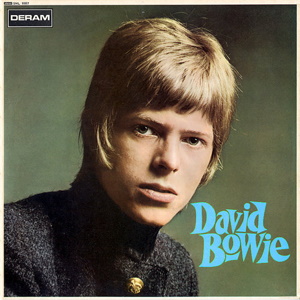
DAVID BOWIE
In 1967, very much under anyone’s radar, and already thirty-years old (a few months younger than Donovan and a few months older than Marc Bolan), David Bowie (replacing his real last name of Jones to avoid confusion with one the band member’s of the Monkees) releases his first album. Nothing here indicates even a slight trace of Donovan’s Flower Power, John’s Children early glam, the Beatles sophistication, the more advanced psychedelic tendencies of Pink Floyd, Jimi Hendrix, or the Doors, the rock and roll or rhythm and blues of the early sixties British Bands, the soul of Aretha Franklin, the progressive aspirations of fellow Deram-label Moody Blues, or much of anything currently pushing the musical envelope of the time. However, there are strong influences, musically and lyrically, from Anthony Newley and English Music Hall style. Bowie adds an offbeat twist to several songs, even more than we find from Newley or most English satire of this time. The level of lyrical craftsmanship is solid even if the melodies are unoriginal and forgettable. For a Bowie fan, music historian, or someone wanting to more completely understand Bowie’s range of skills, its worth exploring the David Bowie of 1967.
Do you remember the most eventful and the more novel experiences more than the routine tasks? Do you remember the first time you experienced something better than the 245th time, even when the first time was decades ago and the 245 time months ago?
Is part of this due to better remembering those times when you were fully involved as opposed to when you got through something primarily on auto-drive?
Or maybe part of this is just that we remember and retell to others those most exceptional and novel experiences and never think a second time about the less emotional, the less amusing and the less relatively meaningful experiences. The retelling or recalling something possibly is what makes such memories more permanent. Maybe we really do remember the ordinary as well as the extraordinary — it is just that we revisit the extraordinary memories and leave the common, humdrum to rust away into oblivion.
Or perhaps, not so. I sometimes have a dream about something I haven’t thought about in decades and then fully recall that event, whether particularly exciting or ordinary. Or I see a photograph of something decades ago and I can lucidly recall posing for that picture. Sometimes things can jog our memory.
However this works, one is more likely to remember more easily, and without prompts or dreams, those things that we were fully engaged in — those things that required us to fully be there and not be on auto-pilot.
It’s really impossible for all our experiences to be earth-shattering or essential experiences. And certainly we want to or need to do things additional times over and over. I love watermelon and black cherries. I will continue eating them even when given a choice between having them or eating something new that doesn’t particularly appeal to me. But do I eat absent-mindedly while watching TV or browsing facebook? Or do I take a good look at each bite, feel the weight of the food, feel the texture in my mouth and then savor the burst of flavor?
Don’t take the current moment for granted. Always participate fully in it. When you do, it is more likely to be more memorable and easier to remember.
It’s not very difficult to make the case for Chopin being the greatest composer for the piano of the last 190 years. I chose 190 years, since Beethoven was around until 1827, and its irrelevant, and even irreverent, to compare Beethoven and Chopin. One can even make a good case for Chopin being the greatest Western composer of the last 190 years despite weaknesses and/or apparent lack of interest in mastering orchestration and writing pieces for full orchestras that go beyond providing general accompaniment for the piano.
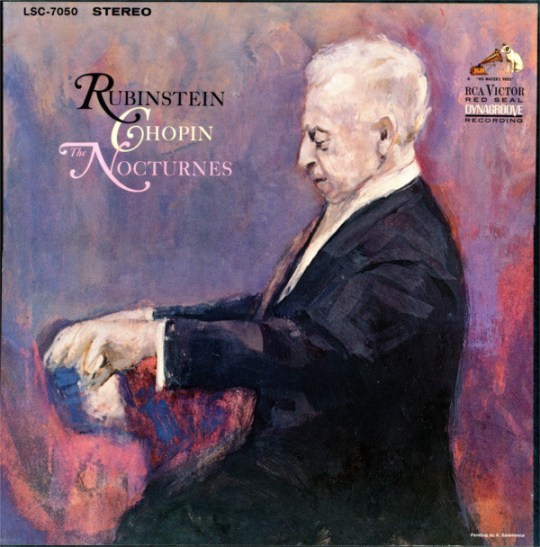
One can also make a good case for Arthur Rubinstein being the greatest Chopin performer of the Twentieth Century. In 1967, RCA released a 2 LP set of Rubinstein playing all the Chopin Nocturnes. All of these were recorded in 1965, except for Opus 55, No. 2 which was recorded in 1967. (Interesting, that is the only track that has notable distortion or harshness. For all the other nocturnes, the recording sound is quite good and provides an intimate, warm listening experience.)
What makes Rubinstein such a welcome interpreter of Chopin is that he doesn’t overemphasize the emotional nature of the music. Some performers go a bit to far in slowing down, speeding up, playing too loudly here, playing too softly there — trying to eke out as much emotion as possible. “Rubato” is the performing technique of slightly changing the notated rhythmic duration of notes, thus deviating from notes strictly aligning with their written place within the pulse of the rhythm. When done right the overall pace is not violated so that if a given note is made shorter, another note or other notes are then made longer so the one doesn’t lose the overall beat of the music. When overdone, rubato, along with accelerando (speeding up), rallentando (slowing down) and tenuto (holding on to notes for additional time) becomes a violation of the original spirit of the music, effectively remaking it into something akin to over-dramatic acting. Many performers, particularly in the first seventy years of the twentieth century, took extreme liberty with the music, stamping it with their own mark or as a means of pulling out inherent meaning in the music they felt was implied but not notated.
Rubinstein, who takes a relatively sober approach with Chopin, has so much control over which notes within chords or concurrent groups of notes get emphasized (and the general loudness or softness of each and every note he plays) that he can get a full range of emotions within even a strict tempo. His tempo, of course, is far from strict or mechanical, but he never allows it to escape into regions of extreme excess. Instead of taking unacceptable liberty with the tempo or individual note values, he makes the music sing and sparkle, providing a window into the inherent expression and delicate craft of each of these nocturnes: each one providing their own world of night-like expressiveness with subtle emotional twists and turns sometimes exploring sadness, loss, longing, darkness, tenderness, patience, determination, reflection, wistfulness, sympathy, sensitivity, sentimentality, loneliness, isolation, discovery, thoughtfulness, triumph, confusion or other emotions and aspects of the human psyche.
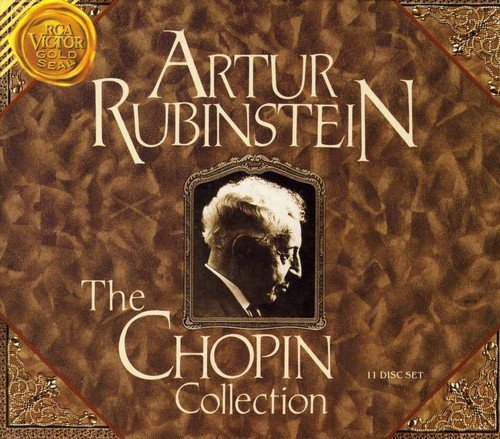
This recording is currently available as a 2 CD set, remastered and either in 16-bit or 24-bit (SACD) versions. Value-conscious consumers will be wise to opt for “The Chopin Collection” box set which is an 11 CD set with all these nocturnes, and all the mazurkas, waltzes, preludes, other solo piano music (minus the etudes), and as a bonus, the piano concertos — this entire set currently selling at under $24. Those with a larger budget and more available listening time may choose to get the much more expensive 142 CD “Arthur Rubinstein Complete Album Collection” set (with 2 DVDs and a 164 page booklet.)
In my junior year of high school, with summer not too far off, one of my favorite people of all time, who I will just refer to with the initial “P”, and I were discussing music in the back of trig class and P. mentioned how good Pink Floyd was. The year was 1972 and I was probably talking about King Crimson, Yes, Jethro Tull, or ELP when P. started expressing his approval of Pink Floyd. I was interested and accepted his offer to lend me three of his albums, Ummagumma(1969), Atom Heart Mother (1970) and A Saucerful of Secrets (1968), finding many things I liked, but also finding several detours from what I considered the general flow of music. P. also, perhaps at a later point in time, lent me the first album, “The Piper at the Gates of Dawn” (1967). I was more pleased with that album then the others, and puzzled that this was the first album as it seemed the strongest to me, which was not the usual pattern that I saw for most groups where the first album was the weakest, the second better and the third or fourth finally being the break-out album. This first album, though sounding dated to my early 1970’s sensitivities, seemed stronger and more consistent than the other three I had previously heard. I am not sure if I had noticed that one musician, “Syd Barett”, was the composer of most of the music for the first album but was absent on the others. I think its possible I did realize this and was probably why I didn’t pay much attention to any new releases by Pink Floyd until I saw the movie “Pink Floyd at Pompeii” , at our local art-house theater, The Wilshire theater. This film captures Pink Floyd performing several selections of their music in an empty Pompeii amphitheater, the music completely enveloping and engaging. After seeing this, I was sold on Pink Floyd, and had I seen this a couple of years earlier, I would have listened much more intently to those albums my trigonometry classmate had lent me.
Looking back now with thousands of additional hours of listening to lots of different music, I can better appreciate this album much more than I ever could have at age sixteen. It doesn’t matter whether this is labeled art-rock, space-rock, psychedelic rock or something else: it is bold, original and relevant for 1967 and is still fun to listen to today.
The album borrows its title from a title of the seventh chapter of Kenneth Grahame’sThe Wind in the Willows a cool title, indeed, but also a chapter that contains an interesting reference for a musical group that started out primarily as a psychedelic dance band:
“(Rat:) ‘…And hark to the wind playing in the reeds!’
`It’s like music–far away music,’ said the Mole nodding drowsily.
`So I was thinking,’ murmured the Rat, dreamful and languid. `Dance-music — the lilting sort that runs on without a stop — but with words in it, too — it passes into words and out of them again — I catch them at intervals — then it is dance-music once more, and then nothing but the reeds’ soft thin whispering.'”
And we have dance music with words and far-away lilting non-stop psychedelia-based tunes with their first two singles, written by Syd Barret, “Arnold Layne” and “See Emily Play” and their less dance-able, more exploratory, third single, “Apples and Oranges” also written by Syd Barrett.
And this album is filled with easily accessible dreamy, languid, melodic gems: these all written by Syd Barrett. The UK version (import version for us Americans) is different from a somewhat messed-up U.S. version (the version I will reference below is the superior UK version.)
“Astronomy Domine” is a masterpiece of space rock – vast, unfolding, hints of the infinite and timeless, paced with a relentless, cosmic inevitability, modal and chromatic.
“Lucifer Sam”, about a Siamese cat, is more whimsical but still edged with an embrace of psychedelia and a chromatic passage reminiscent of the James Bond theme.
“Matilda Mother” opens slow-paced, relaxed, and dreamy, shifting to a more rhythmic passage and then back to the dreamy opening before its short Indian-like instrumental — providing but short contrast to the returning dreamy theme and a brief instrumental coda.
While other groups at this time are starting to augment their music with strings, woodwinds, and exotic instruments, Pink Floyd achieves equally impressive results with a traditional line-up of vocals, guitar, bass, organ/piano and drums. Syd Barrett’s guitar, though not textbook virtuosic, is expressive, flexible and effective. Vocals include wind effects and bird calls, “oohs” and “aaahs”. The organ provides drones and other relatively simple effects. “Flaming” and the more free-form “Pow R. Toc H.” shows off the ability of the band to create very different soundscapes, the former showcasing guitar and organ, the latter, nicely showcasing piano, bass drums, guitar, simple vocal effects, and organ in various moods and attitudes with an almost jazz-like piano and drum interlude providing welcome contrast.
Roger Waters provides a very sixties contribution in the opening of “Take up Thy Stethoscope and Walk” which then dissolves into a group jam.
We get back to great music on side two with the opening of “Interstellar Overdrive”, though it does soon meander, losing focus — but better uncompromising and adventurous, than bland and commonplace: perhaps the band assumes the listener will have some assistance with illicit substances. Pretentious, often a term overused as an invective against progressive rock much more than psychedelic rock, is a term I am loathe to use — but I will concede that the ending is a bit over the top.
We get back to Barrett mini-masterpieces for the last four tracks. The music is unassuming, natural and foundationally simple. “Gnome” is pure pop, but with a Barrett twist. “Chapter 24” is spacey and reflective with lyrics apparently based on the 24th chapter of I Ching “The Return” (or “Turning Point”) as translated below by Richard Wilhelm:
“Everything comes of itself at the appointed time. This is the meaning of heaven and earth. All movements are accomplished in six stages, and the seventh brings return. Thus the winter solstice, with which the decline of the year begins, comes in the seventh month after the summer solstice; so too sunrise comes in the seventh double hour after sunset. Therefore seven is the number of the young light, and it arises when six, the number of the great darkness, is increased by one. In this way the state of rest gives place to movement”
Compare this to the Barrett lyrics:
“A movement is accomplished in six stages And the seventh brings return. The seven is the number of the young light. It forms when darkness is increased by one. Change returns success, Going and coming without error. Action brings good fortune: Sunset.
“The time is with the month of winter solstice When the change is due to come. Thunder in the other course of heaven; Things cannot be destroyed once and for all. Change returns success, Going and coming without error. Action brings good fortune: Sunset, sunrise.
“Scarecrow” opens up with some nifty percussive syncopation upon which the melody is overlaid, giving us a short song that’s simple and complex simultaneously.
“Bike” magnificently ends this album with more hazy, dreaming psychedelia based on simple melody and chords effectively arranged and presented. This is a perfect conclusion to a very different album than anything else in 1967 popular music.
After listening to this album, and looking at the song credits, one might very well conclude that Syd Barrett was the key member of Pink Floyd and without them they would either struggle as a band or be very different and probably not nearly as good. Without getting into the tragedy of Barrett’s behavioral disorders, likely an after-effect of repeated LSD usage, which is covered by numerous resources on the web including Wikipedia and several WordPress blogs (most of which are generally much better written than this one), the band soon dropped an unreliable and unpredictable Syd Barrett from their line-up. Barrett continued to struggle from the aftermath of chemically-caused neurological damage, subsequently recording two solo albums in 1969, and then more or less becoming a recluse until his death in 2006 at the age of 60. From such a promising first album ensues an heart-sickening tragedy; just another instance of a unconventional, creative genius taken away from us in the turbulent, unpredictable, ever-changing 1960s.
Whether by design or evolution, it seems it is the responsibility of the child to grow and learn, of the young adult to create, build or raise new young, and of the old adult to apply their wisdom to ensure the survival of the group.
The pursuit of happiness for its own sake does not fit into the plan.
Happiness will come from properly growing and learning, from creating and building that which is best for the group, and from doing what one can to ensure we don’t get totally obliterated.
Let’s ensure that the old can continue to contribute to the survival of everyone by never marginalizing them or underestimating their worth.
And in return, the old have to understand that they have a responsibility to ensure that civilization continues, even if that just means giving the young adults a piece of their mind now and then.
Raised singing gospel and touring with her minister father on gospel caravan tours, first accompanying his preaching on piano and later singing on his gospel tours from church to church, Aretha Franklin recorded her first album in 1956 at the age of 14, “Songs of Faith”, a album of nine gospel songs recorded live.
At 18, Aretha chose to pursue a pop career, like her close friend Sam Cooke, who she had known when he was in the Soul Stirrers, and signed with Columbia records. Columbia had little interest of what was best for Aretha, and determined to make her into a commercially viable jazz-pop singer, ignoring her gospel background and making touring and song selection choices for her based on converting her into a marketable and commercially successful commodity — but basically failing at that over the course of recording eleven commercially disappointing albums. Fortunately at the end of her Columbia contract, Aretha signed with the smaller, independent label, Atlantic Records in 1966 and Atlantic gave her the green light to not only chose her own songs, but determine how she would sing, perform and arrange them. Now in control of the artistic process, Aretha also composed songs, played piano and brought in her two sisters Erma and Carolyn to provide backup vocals. The result was an artistic and commercial success where Aretha used her full range of talents and drew on her gospel experience to provide a expressive, vital album, distinctive, yet intimately familiar.
On this new album, “I Never Loved a Man the Way I Love You”, Aretha combines a wide range of musical and emotional expression coherently, consistently, and consummately throughout all eleven tracks. The vocal nuance and subtitles captured here make this album a classic that can be listened to over and over. This music and singing owe much to the gospel music of Aretha’s cultural heritage, but the lyrics are secular and, like traditional blues, address flawed social and inter-personal relationships.
Tracks like Otis Redding’s “Respect”, the song many people today directly associate with Aretha Franklin, “I Never Loved a Man” and “Do Right Woman, Do Right Man” are particularly notable, but one can pick any song on this album to savor the beauty and artistry of Aretha Franklin’s exceptional vocal delivery. Appropriate musical support is provided, including King Curtis on saxophone.
In addition to this landmark album, Aretha provided us four number one singles on the R&B charts in 1967, two from this album, plus “Baby, I Love You” from her second 1967 Atlantic album “Aretha Arrives” and “Chain of Fools.” Also of note is Aretha’s 1967 recording of Carol King’s “(You Make Me Feel Like) A Natural Woman” written especially for Aretha and appearing on her third Altantic album, “Aretha: Lady Soul” recorded in 1967 and released January 1968.
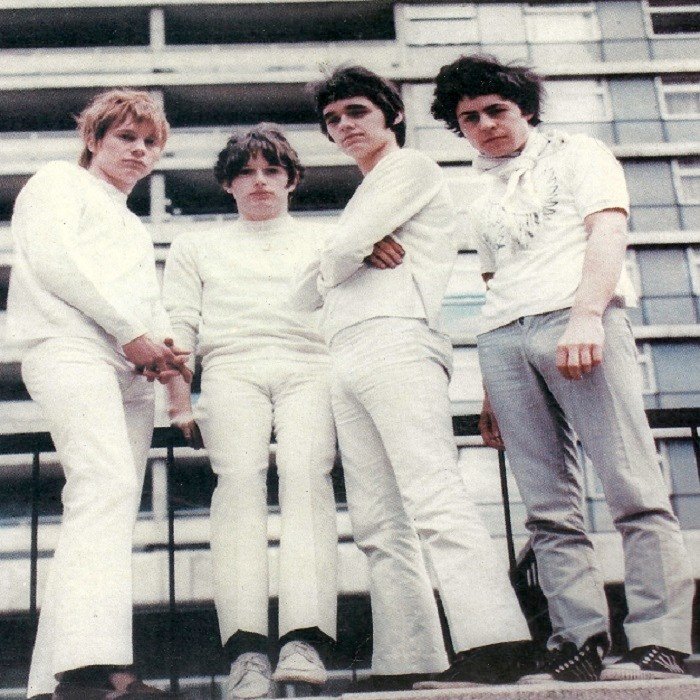
It would be just fine for me to completely skip over Simon Dupree & The Big Sound, except for one extremely important consideration: three of the band members (brothers Phil Shulman, Derek Shulman and Ray Shulman) would later form Gentle Giant joining up with keyboardist and composer Kerry Minnear.
The UK was awash with bands of young musicians emulating American Rhythm and Blues. We all know about the early Beatles, Stones, Animals and Pretty Things. Few Americans, excepting die-hard Gentle Giant fans, know much about Simon Dupree & the Big Sound.
At some point in the mid-seventies, I had seen a lineage tree of where members of various seventy bands had come from: Keith Emerson of ELP had come from The Nice, Carl Palmer from Atomic Rooster and before that Crazy World of Arthur Brown, Greg Lake from King Crimson and before that the Gods — that sort of thing. Will this “ancestry chart” showed that the three Shulmans came from Simon Dupree & The Big Sound. I looked in the Schwann LP Catalog for any listing and saw none. Clearly any albums they ahd recorded were out of print. Doing some further research I found they had one Top 10 UK singles hit, “Kites“, which reached the number eight position.
Years later, in 1988, I was then very lucky to find the single on a juke box in the UK in a pub in Holyhead, Wales while sipping on a pint of local brew and killing time while waiting to catch a ferry to Dublin. I got out some local pocket change and played both sides, listening to “Kites” three times and the B side, “Like the Sun, Like the Fire” twice. Despite the mellotron, xylophone, gong, wind-machine, and actress Jacqui Chan‘s seductively spoken Chinese on Kites during the instrumental passage, I preferred the B side, which sounded closer to very early Gentle Giant and included a bridge with a soulful Derek Shulman vocal and a brief bassoon, oboe and clarinet instrumental section and a final brief marching band coda. Almost thirty years after hearing this track for this first time, I found out this song was co-authored by the one Shulman that wasn’t ever a part of Gentle Giant, Evelyn King, the elder sister to the Shulman brothers.
Simon Dupree and the Big Sound, based in Portsmouth, home of the Shulmans, was not named after any band member (the band was primarly the three Shulman brothers supplemented by Peter O’Flaherty on bass guitar, Eric Hine on keyboards, and dummer Tony Ransley.) Originally the group’s name was “Howlin’ Wolves” befitting of their R & B style, later changed to the Road Runners, and then finally replaced by Simon Dupree and the Big Sound at the suggestion of a local Portsmouth music promoter: Dupree was the name of an established and well known local family in Portsmouth.
The first (and only) album, “Without Reservations” is only sporadically interesting, partly due to the arrangements and level of musicianship of the Shulmans, and partly as providing insight into what contributions the Shulmans made to Gentle Giant compositions, particularly the first Gentle Giant album and the last three. (On all their albums, from first to last, Gentle Giant gave song writing credit to their entire band rather than any individual contributors.)
Simon Dupree would continue on for a couple of more years with several attempts to score a second hit after Kites, but with no success. At one point, for a tour of Scotland, they had to replace an ill Eric Hines with an unknown keyboard player, Reggie Dwight (later Elton John, of course) for a tour of Scotland. Dupree ended up recording an Elton John/Bernie Taupin tune, “I’m Going Home” for the B side of a recording of a James Taylor tune, “Something in the Way She Moves.” For whatever reason, Elton was not invited to remain as part of the band. Perhaps in some parallel universe, there is a recording of “Three Friends” with Elton John on keyboards. Whether that would have charted higher or lower than #197 on the Billboard 200 is open to speculation.
Fans of Gentle Giant can pick up all the Dupree recordings in the CD “Part of my Past” which includes all their studio-recorded tracks, mostly from 1967, with a few tunes from 1968 and 1969. As long as one keeps one’s expectations under check, there are enough interesting moments to make listening to this worthwhile and to further one’s understanding of the important role Kerry Minnear played in what was most exceptional about Gentle Giant and in why the overall low quality of “Giant For a Day” can be inferred to be due to a diminished role for Kerry Minnear, the composer.
History is an illusion at best. At worst, it is a means to justify more of the same. — Zumwalt
Perhaps thinking of reality divided up into what was, what is and what will be is nothing more than a convenient interpretation.
If we admit of the possibility of existence, at the highest level, being outside the realm of time, space and energy, then its plain silly for us to reflect on how the past could have been different.
If we are but a cause-and-effect organism (or mechanism), and we can move only forward along time, then it is even sillier.
I believe existence is existence and there is no existence then, existence now and existence later — there is just existence.
Enjoy it.
Don’t worry about the future. Prepare, when necessary, but don’t prepare for the future. Just prepare.
Don’t try to fight memories or shrink from past events. The most harm comes from running away and resisting. Accept and celebrate.
Don’t even worry about “staying in the present” or “enjoying the moment.” Just be there. It is possible “there” is past, present and future.





:format(jpeg):mode_rgb():quality(90)/discogs-images/R-1246114-1304100058.jpeg.jpg)



:format(jpeg):mode_rgb():quality(90)/discogs-images/R-1643216-1387560051-7713.jpeg.jpg)