Fifty Year Friday: Joni Mitchell, Hejira; Jean-Luc Ponty, Imaginary Voyate; November 1976
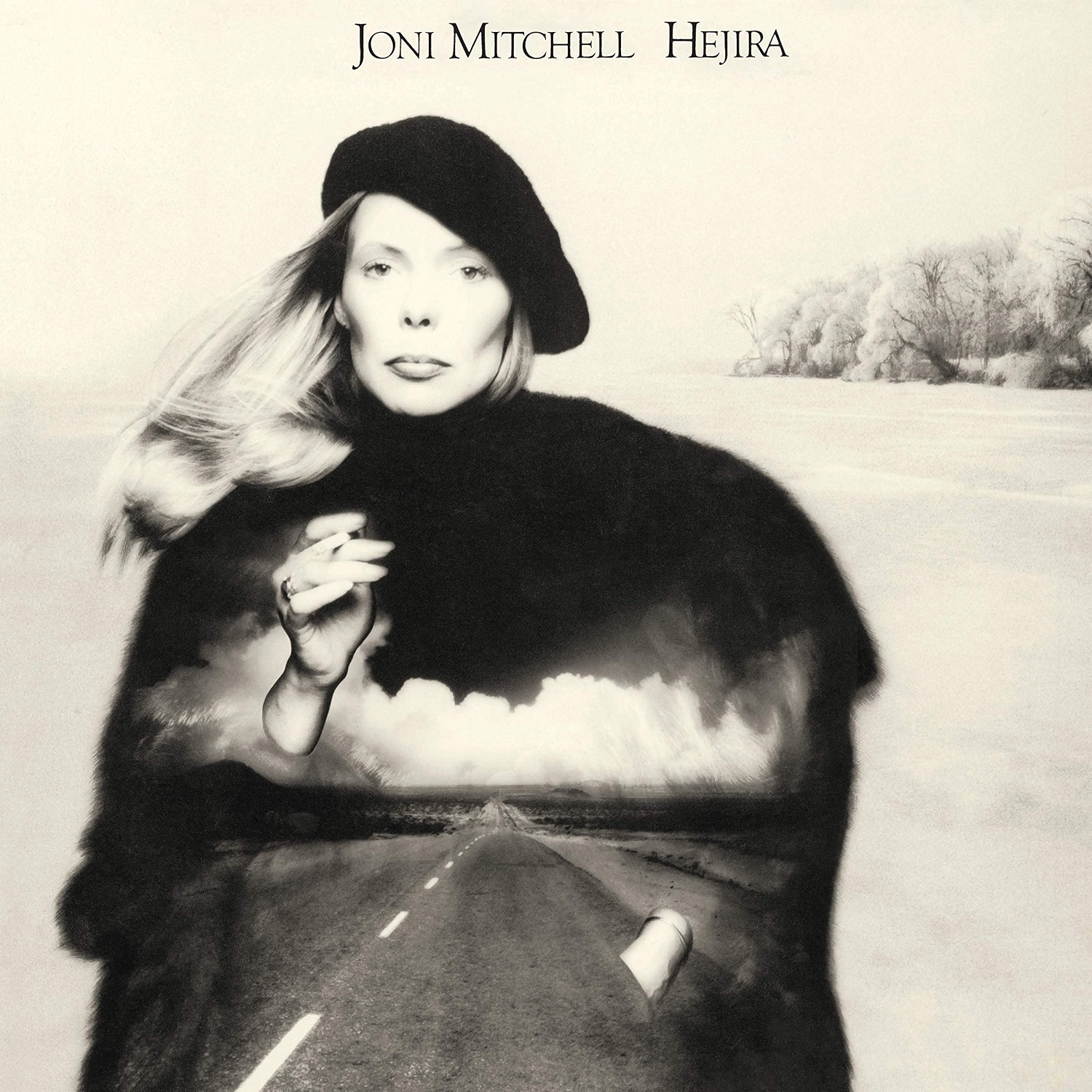
Joni Mitchell: Hejira
As mentioned in earlier posts, I primarily care about music over lyrics. Even subpar writing can become magical lyrics when embedded in incredible music. I won’t deny that really bad lyrics sometimes stand out and initially detract from a song, such as Greg Lake’s “day a little sadder, a little madder, someone get me a ladder” on ELP’s “Still… You Turn Me On,” but such lyrics are soon consigned to the background like undecipherable (pick a foreign language of your choice) text in an opera, as the music is the main feature.
Of course, I admire great lyric writing as we see with Peter Hammill at his best, or lyrics that are just plain bold and powerful, as with Pete Sinfield’s best lyrics. But for me it’s almost always the music I pay attention to.
This Joni Mitchell album, released on November 21, 1976, is one of those rare albums with lyrics at the level of high-caliber poetry and music that is equally interesting and engaging.
Hejira is a concept album. Not a rock opera or a single narrative, but more of a twentieth-century folk-jazz song cycle thematically related to the album’s title, which is based on the Arabic word “hijra,” which refers to Mohammad’s migration from Mecca to Medina, and is used more generically to mean any flight or escape from danger or a difficult situation.
Mitchell wrote these songs while touring, and only afterwards assembled them into a whole; however, musically and emotionally, there is a seamless continuity as Joni explores this theme of running away with honor. Compared to the denser textures of her previous album, Summer Lawns, this is a sparser, more intimate sound, with a strong jazz foundation provided by fretless bassist Jaco Pastorius and other musicians like Larry Carlton on guitar and John Guerin on percussion. Listen to this with the lyrics, but engage with the music and the overall fine production values — the stereo mix, though far from mirroring a live environment, is handled tastefully and respectfully. This is not an album to put on as background music; it is high art requiring undivided attention, and with that full, complete attention, one gets the full intended experience.
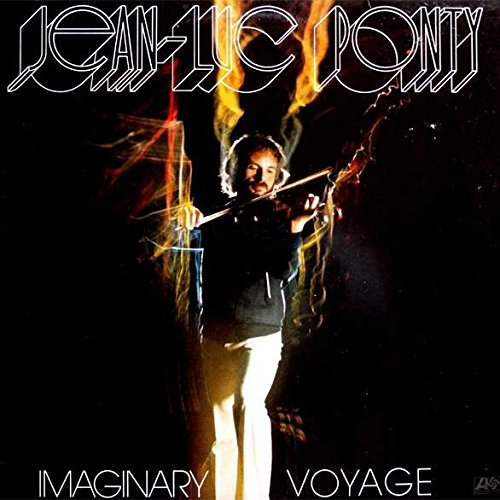
Jean-Luc Ponty: Imaginary Voyage
Old Age! I no longer remember if I bought Jean-Luc Ponty’s Imaginary Voyage album (released in early November 1976) after or before I purchased tickets to his concert at Arlington Theater on December 1, 1976. I do remember my good friend, known to most of you readers as Leo the Deacon, in his puke yellow (his words, not mine) Ford mini-pickup, taking us to the concert, paying for part of the gas, and then going to what I think was a Sambo’s restaurant (though it could have been a Denny’s, which is a much more appropriate name than Sambo’s, but I cannot change the past — I can only muddle up my memories of it), with Jean-Luc Ponty coming in with what I believe to be a couple of bandmates — maybe guitarist Daryl Stuermer and keyboardist Allan Zavod, maybe electric bassist Tom Fowler, and drummer Steve Smith, maybe more than two bandmates, maybe other people, unfortunately, though a fan of Daryl Stuermer, also, I only would have recognized Ponty — at any rate, Tom Waits had been the opening act, and Ponty the main bill, and I am pretty sure we got to Sambo’s (or wherever) before Ponty. (Don’t you hate hearing old people ramble about the past?)
When we finished our food and were leaving, I stopped by Ponty’s table, and fawningly said, “You are the best violinist of all those in rock.” He replied, with a tone of modesty and not one of combativeness or defensiveness, “Who are the others?” and though I knew a few, like David Cross from King Crimson, I was so surprised by his rejoinder that none came to mind at that moment, and I left his table speechless, with a slightly reddened face.
The concert performance was great, though, and he opened up with the first track from Imaginary Voyage, the accessible, upbeat “New Country,” and, as far as I remember, played the next track from the album, “The Gardens of Babylon,” which uses some of the same melodic and harmonic material of “New Country.” He also played material from the second side of the album, the suite “Imaginary Voyage,” though I don’t remember if it was played in its entirety. This suite is the best part of the album, mostly jazz-progressive-rock fusion, and though I am fine with side one, it’s side two that elevates this album into a keeper and one that was a true treat to listen to once again after about forty-eight years of neglect.
