With the start of 1926, the Jazz Age, the Roaring Twenties, and the Fox Trot rage continued.
Jazz records were often given the default label of “Fox Trot.” I had the good fortune to be able to listen to several of my grandfather’s jazz 78s, with the majority of them labelled “Fox Trot” — a catch-all label for popular music that de-emphasized the more scurrilous connotations some associated with “hot jazz.”
Two such “Fox Trot” recordings of merit were of the popular song “Dinah,” written in 1925, and recorded a few times in late 1925.
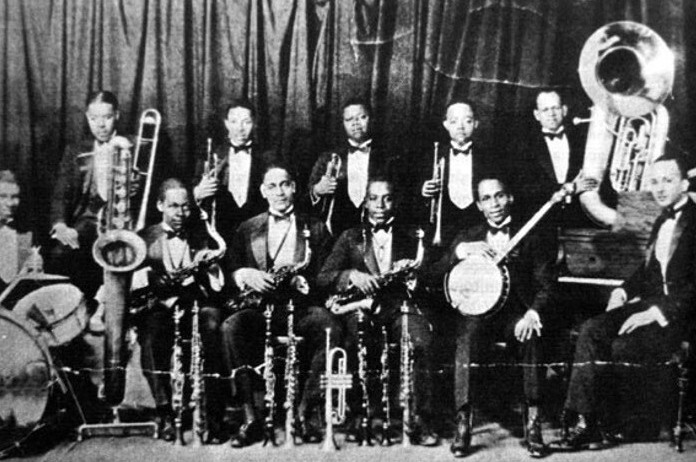
This first Jan. 1926 recording, is by one of my favorite jazz ensembles, The Fletcher Henderson Orchestra:
Another notable recording of “Dinah” features the first recording of the slap bass technique (bassist Steve Brown) at around the 2:20 mark:
And here are some visuals of Fox Trot dancing captured on film — spanning the 1920s and possibly early 1930s:
And speaking of films, The Sea Beast, starring John Barrymore, had its New York City premiere on January 15, 1926. This was the first film adaptation of one of the great American novels, Moby Dick, with the additional modification to the plot to, of course, include a love interest for Captain Ahab! Enough said.
And since we are on films, we have to mention that John Logie Baird gave the first public demonstration of a true television system in London. It wasn’t just shadows; it was a greyscale image with moving details.
Also in January 1926, physicist Erwin Schrödinger published his famous paper (Quantisierung als Eigenwertproblem) containing the foundation of the Schrödinger equation: iℏ (∂Ψ/∂t) = ĤΨ. This birth of wave mechanics replaced the idea that particles revolve around the atom like sub-microscopic planets. Instead, it revealed that they behave as waves — what we now understand as clouds of probability. No one can say where an electron is; we can only calculate the likelihood of finding it at some given location as alluded to in Zumwalt’s 2011 poem, Particle Show.
Of course, I need to mention progressive rock whenever I can: George Martin, the so-called fifth Beatle, and a pivotal contributor to the Beatles’ progressive sound, and by extension, to progressive rock in general, was born on January 3, 1926.
By the start of 1976 the commercial demand for progressive rock was still at its peak, but many of the established English bands were creatively past their peak. In Italy, even before 1976, the top progressive rock band, PFM, started modifying their sound to increase their appeal to English-speaking audiences, releasing albums with English lyrics, a decided artistic and musical misstep, and arguably a commercial mistake as well, as the move did not result in greater American sales and negatively impacted both sales and their image within Italy.
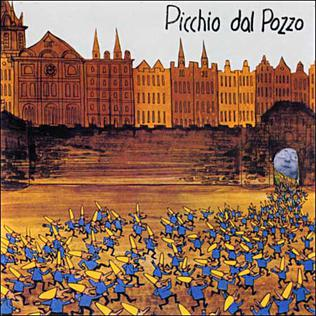
January 1976 was the release month of Picchio dal Pozzo’s first album. Their lyrics, though limited, were exclusively in Italian, and their style didn’t resemble or remind one of Yes, Genesis or ELP. There are certainly traces of the techniques and chamber music approach of the English Canterbury scene, but the album has a solidly Italian and Continental identity with the musical playfulness more in line with the earlier sounds of PFM, RDM and Banco than the bloat and pomposity of some of the late 1970s symphonic rock movement — I won’t mention names, including some of the American groups that were guilty of this.
This Picchio dal Pozzo album starts off with a minimalist, repetitive opening, crescendoing with added Italian vocals. The second track, “Cocomelastico,” is heavily Zappa influenced, with the lightness and musical seriousness of tracks like Hot Rats‘ “Peaches en Regalia,” as well as recalling instrumental passages from Caravan and other Canterbury groups.
The music gets wilder with the longest track of the album, “Seppia,” getting into territory closer to the music of Robert Wyatt, Gong and Soft Machine with even hints of Area in the middle and ending with a softer Caravan-like sound.
The first side ends with the brief instrumental “Bofonchia” (Italian for “grumble”) and side two starts with the adventurous “Napier” (perhaps after the Scottish mathematician who invented logarithms). The track is the longest of the second side, and includes some magical vocals and a range of moods and instrumentation.
The second side continues, adventurous and musically eclectic, with “La Floricoltura Di Tschincinnata,” meditatively with “La Bolla” and its shimmering, post-impressionistic flute and piano, and the final track, “Off,” continuing that mood, more consistently with flute and piano joined with some ethereal vocal work — effectively wrapping up an adventurous, musically compelling album with a beautifully melodic, introspective ending.
Eberhard Weber: Yellow Fields
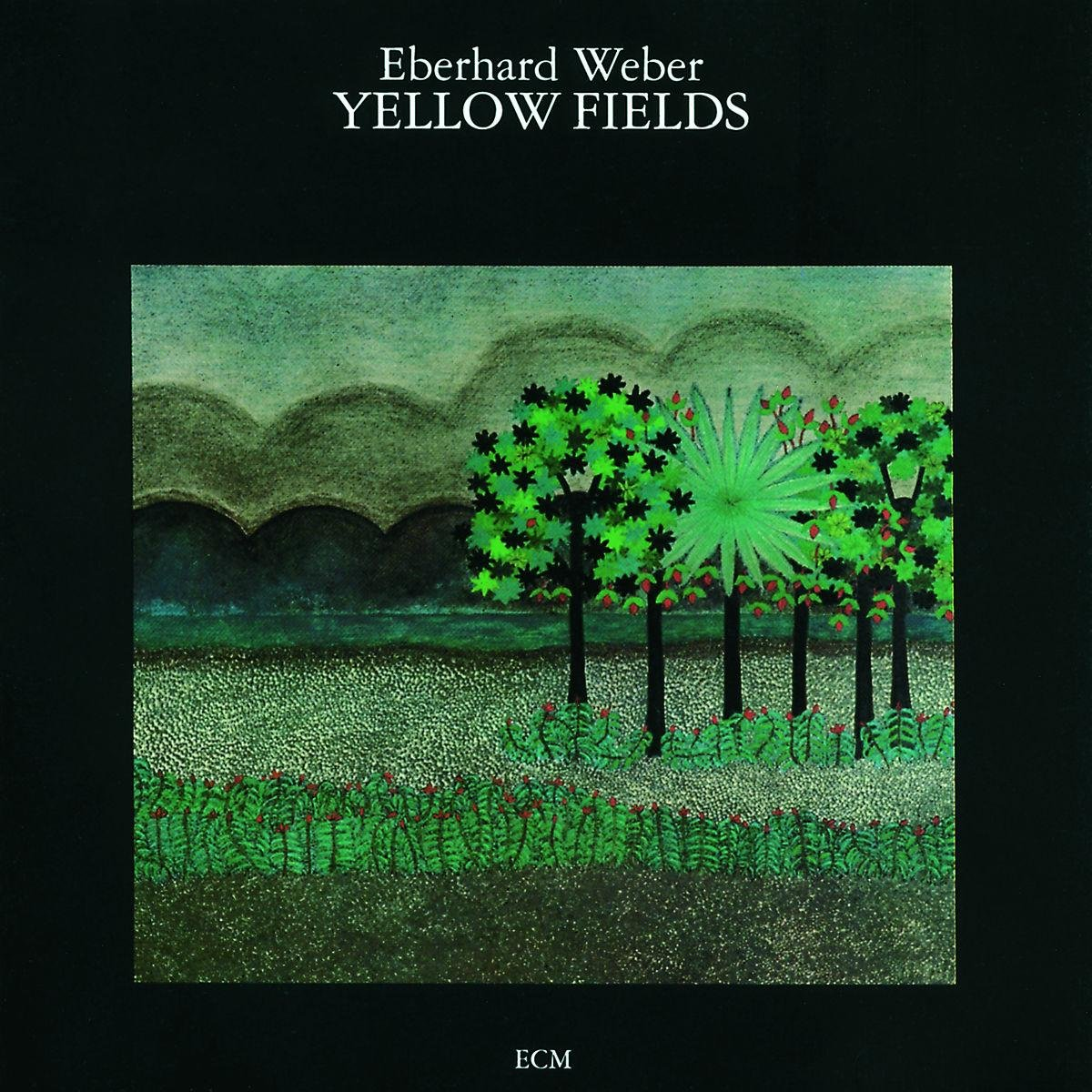
Released in early 1976, Yellow Fields is led by German bassist and composer, Eberhard Weber, who delivers one of the finest and most distinctive jazz albums of the year, avoiding any hints of the more commercial and more prevalent fusion jazz of that year, yet still delivering an album that was equally contemporary and accessible.
Like Charles Mingus before him, Weber was classically trained on cello, switched to bass, and integrated his use of the bass to further his musical vision, often using the bass in a more melodic role, utilizing the upper register to create a singing quality, weaving musical tapestries that are foundational to the music.
Now here is the real treat for me: We have Charlie Mariano being an indispensable part of this album’s appeal. I am a big fan of the nagaswaram, sometimes immersing myself in old recordings (from the 78 era) of Indian Classical Music to soak in its magical sounds. The nagaswaram is similar to the more commonly heard shehnai, which Mariano also features on this album, except it is significantly larger, longer, lower in pitch range, and louder. It requires athlete-level lung power and a musical sensitivity to its capabilities to bend pitch and hit the notes between the notes — play those non-Western tones, those micropitches, opening up the full range of musical vocabulary just as the shehnai does. Mariano further extends his timbral and range options on this album with the soprano sax.
Adding to the wide range of colors on this album is classically-trained German jazz pianist, Rainer Brüninghaus, who adds depth to the album but never subverts its mood or flow, playing both acoustic piano and synthesizer.
If you wish to check out an excellent example of 1970s jazz, here is an intense, cohesive, and immersive album that avoids the more prevalent fusion and free-jazz styles of that era and provides a wealth of musical color. Please give it a listen if you haven’t and let me know your thoughts: how would you place it in the diverse range of jazz albums of the 1970s?
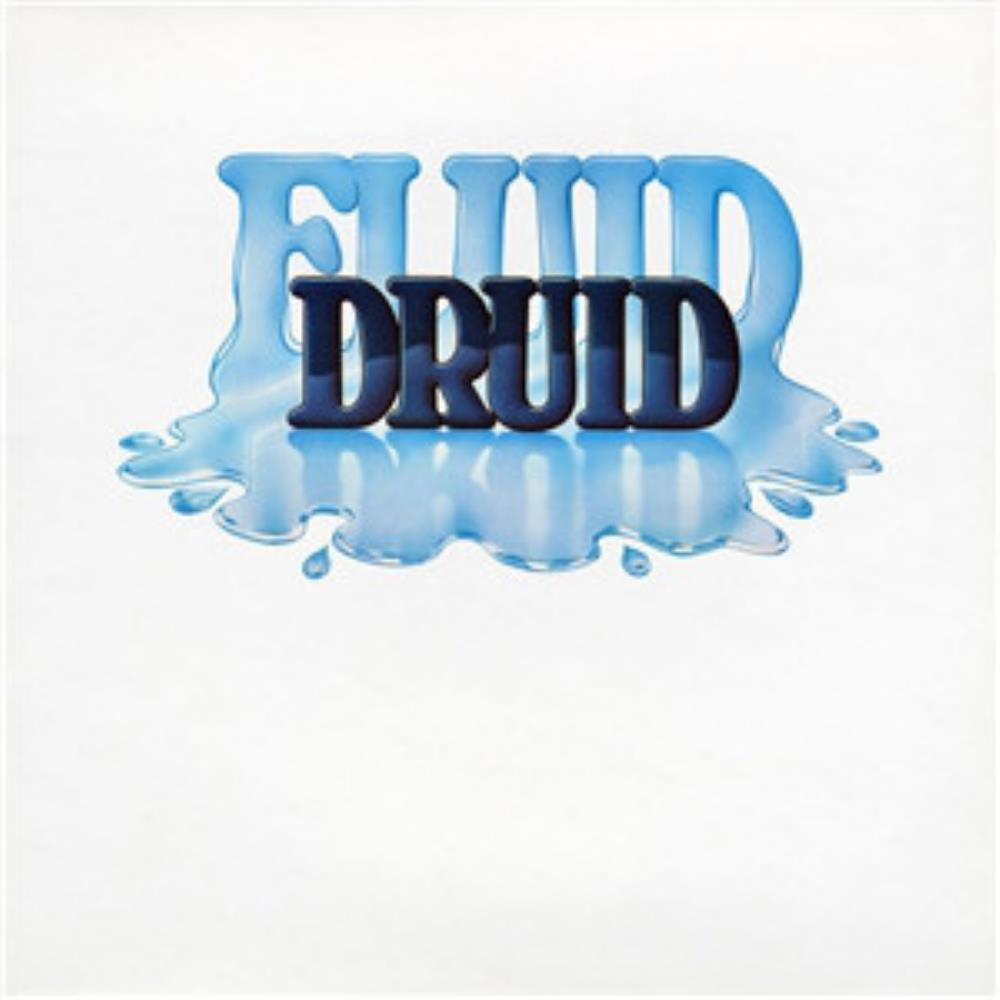
Druid: Fluid Druid
There were several albums I considered including in this month’s Fifty Year Friday, albums that I have enjoyed listening to, and one of particular musical significance, but ultimately, I thought best to let other fans of such albums write their own reflections, thoughts or retrospective reviews on those albums. In the case of Druid’s Fluid Druid, released sometime in the first half of 1976, this is an album that was pretty much under the radar in 1976 and pretty much unknown today. (Note: after further research it appears the album was released on April 30th, 1976, but let’s keep this entry here for now, with plans to move it to April if I am still writing these retrospectives at that point.)
This is an English band, consisting of four musicians: the keyboard player and principal composer, Andrew McCrorie-Shand, the bass guitarist, Neil Brewer, the drummer, Cedric Sharpley, and the guitarist, Dane Stevens, who provides the vocals. Now sometimes his vocals, which can be overly affected, annoy me a bit, and sometimes they are quite good. The instrumental passages are quite enjoyable, and overall the music sounds heavily influenced by Yes and, to a lesser degree, Genesis. What matters, though, aren’t the influences, as apparent as they are, but the overall quality. Though this varies a bit, overall this is a strong album. Check out the instrumental track “FM 145,” a bit reminiscent of Greenslade, or “Nothing but Morning,” which sounds like part Yes and part Queen, and where Dane, credited on this album with just his first name, even sounds a bit like Freddie Mercury. If you are a fan of that portion of the Yes catalog and/or the Genesis catalog from the early and mid 1970s, there should be enough attractive material here, as well as in their first album, to make it worth your while to stream or purchase.
In 1925, recording technology continued to improve with jazz bands across the USA making their first recordings, even if it was only one double-sided 78 record.
1925 was the year Armstrong transitioned from being the greatest 1920s jazz sideman to a leader of his own group. He began the year in New York with Fletcher Henderson and ended it in Chicago recording the first “Hot Five” tracks starting in November — some of my favorite jazz recordings of all time, and generally recognized as highly treasured musical landmarks.
Other notable names made recordings this year: the trumpeter Bix Beiderbecke, Fats Waller, Duke Ellington with his group The Washingtonians, Bessie Smith, and Ethel Waters. The sides they recorded are still musical gems a hundred years later.
Lesser names recorded, of course. Some had big hits, including Ben Bernie and His Hotel Roosevelt Orchestra’s original hit recording of “Sweet Georgia Brown” and Paul Whiteman’s symphonic jazz version of James P. Johnson’s “Charleston,” which became a popular representation of the vitality and character of the “Roaring Twenties.”
There were many lesser names with less known recordings that are worth checking out including the Original Crescent City Jazzers recording “Christine” and The Halfway House Orchestra’s “Pussy Cat Rag.” Yes, we still had rags being featured in both jazz and in written concert hall music, but ragtime was now a historical style, and most pieces titled rags in 1925 were jazz and not ragtime.
Even rock fans will find 1925 abundant with gems that they would likely appreciate: “Cow Cow Blues” by Dora Carr and Cow Cow Davenport which is a blues recording enlivened with early elements of boogie woogie as well as Blind Lemon Jeffersons first recordings including “Black Horse Blues.” At the same time, many recordings of “pre-bluegrass” and “pre-country” music were recorded including Charlie Poole’s unrelenting, banjo-driven “Don’t Let Your Deal Go Down Blues” with traditional fiddle and rhythmic acoustic guitar.
All in all, 1925 had a wealth of music that any music lover can spend a few weeks, if not a full year, exploring.
Recorded on January 18, 1969 and released later that year, this very well could be the first true fusion album. The electric guitar of one of the finest electric guitarists in the generation after Grant Green and Jim Hall (how is it John McLaughlin is listed only at 68 on Rolling Stone’s 100 Greatest Guitarists list and Grant Green and Jim Hall are not on the list?) is featured prominently and emphatically throughout along with English sax jazz musician, John Surman, who incorporates his free-jazz experience seamlessly within the scope of the album’s intent.
The first composition is the Thelonious Monk sounding “Extrapolation”, setting the tone for a dynamic, musically extroverted album. Each track runs into the next, except for the side change (originally on LP, of course), creating a greater sense of mood and material continuity. The last track showcases a solo, acoustic McLaughlin, bringing a sometimes wild, but always musically accessible, stellar, and leading-edge jazz album to a thoughtful conclusion.
Album is produced by Georgian/Swiss/Italian/UK producer Giorgio Gomelsky, who also had produced and managed the Yardbirds and later worked with The Soft Machine, Gong, Magma, Bill Laswell and Laswell’s band, Material, and one of my favorite groups, Henry Cow. Album is engineered by Eddie Offord who later engineered the first four ELP albums and co-produced and engineered several of the Yes albums.
Pink Floyd: Original Motion Picture Soundtrack from the film More
Pink Floyd’s first full album after Syd Barret was a movie soundtrack, More, recorded from January to May 1969, and released in the UK on June 13, 1967, a couple of weeks after the premiere of the movie More. Though the music is meant to support the movie, and is a collection of basically unrelated tracks with a significant breadth of musical variety, the album holds together nicely, like a well-conceived sampler LP.
The music ranges from the dreamy “Cirrus Minor”, to the eerily pre-grunge-rock track, “The Nile Song”, to the exquisitely harmonically and melodically simple “Crying Song” to music that anticipates space rock and Kraut Rock. This is virtually a catalog of some of the adventurous musical styles that would become popular in the coming years. Not hard to imagine why this is many listeners favorite Pink Floyd album. It is hard to imagine why Allmusic.com gives this two and a half stars or Rolling Stone Album Guide gives it two stars. More is more than just a movie soundtrack, it is an instruction manual of future musical styles.
Audience recorded and released their first album in 1969, though it is not easy to find out exactly when. The band formed in 1969 and within weeks after their first rehearsal they had a record deal with Polydor and were playing at the famous Ronnie Scott’s in Soho, London, also site of the 1969 premiere of the Who’s Tommy. Polydor, though quick to sign the band, was not so efficient at promoting them or their album. The album had insignificant sales, not helped by the puzzling album cover, a dim negative of the band members, and shortly after its release was discontinued. Meanwhile during live performances, the band drew critical praise for their performances and material, and soon, while the backup touring band for Led Zeppelin, was signed to the Charisma label.
The first two songs on this album are unquestionably progressive rock. The tracks that follow, though more traditional rock, are still catchy and showcased the nylon-stringed acoustic-electric (fitted with an electric pickup) classical guitar of Howard Werth and the sax, clarinet and flute of Keith Gemmel, the latter using echo and wah-wah pedal to fill in some of the role of the traditional rock guitar. The album is worth listening to more than once, and the musicianship and arrangements are very good.
Track listing [From Wikipedia]
Unless noted, all tracks credited to Werth, Williams.[2]
At age twenty-eight, Chick Corea had already made serious contributions on studio dates with Herbie Mann, Hubert Laws, Cal Tjader, Dave Pike, Donald Byrd, and Stan Getz often contributing arrangements as well as playing piano. He had also recorded his first solo album in 1966, Tones for Joan’s Bones, with Woody Shaw on trumpet, which was released in April 1968.
Corea started playing piano at age four, developing not only impressive piano skills, but a passionate love for both classical and jazz music. This mastery of the two genres is apparent in this album, the format of jazz trio working well in terms of emphasizing the piano part and facilitating optimal engagement between a small set of artists.
“Steps – What Was” starts with piano solo soon joined by veteran Roy Haynes on drums and twenty-year old Czech classically-trained Miroslav Vitouš on acoustic bass. The work brims with enthusiasm and freshness and, after a brief drum solo by Haynes and before a bass solo by Vitouš, is a wonderful piano-led passage that reveals an early version of Corea’s “Spain” theme.
“Matrix’ includes a brief statement of the theme and a wild ride of head-spinning improvisation, again including room for statements by Vitouš and Haynes.
The next two tracks take their title from the explanation of the third line of the Kung Fú (Inmost Sincerity) hexagram in the ancient Chinese Book of Changes, The I Ching, roughly translated as “Now he beats his drum, and now he leaves off. Now he weeps, and now he sings.” These two works are very different with “Now He Sings, Now He Sobs”, being generally forward-looking, energetic and optimistic and “Now He Beats The Drum, Now He Stops” being more of a two-part composition, with the first section, a piano solo, full of reflection and inner-doubt, and the second section surging with revitalization and purpose.
The last track, “The Law Of Falling And Catching Up” is a free-jazz excursion with Corea directly accessing the strings of the grand piano. Somewhat pointillistic and Webern-like, the piece is sweeping in texture and content yet, at under two and half minutes, compact and focused.
Though sometimes Masekala’s work gets categorized as “Easy Listening”, this album contains some fine jazz and early world-fusion with Masekala providing quality trumpet with fine supporting musicians including uncredited folk-revival guitarist Bruce Langhorne. Baby Boomers will recognize the instrumental “Grazing in the Grass”, which went to the top of the charts, and was later revisited by The Friends of Distinction with added vocals. Also notable is the reflective, meditative rendition of Traffic’s “No Face, No Name And No Number”, Miriam Makeba’s “Bajabule Bonke” and Masekala’s own “Almost Seedless.”
Recorded on May 17, 1968, and released in August of 1968, McCoy’s Tyner sixth albums feature the trio of Tyner, Herbie Lewis on bass and Freddie Waits on drums with the addition of Bobby Hutcherson on vibes for the first side of the two lengthier Tyner compositions and the the first two tracks on side two, Tyner’s “May Street” and Richard Rodger’s “I Didn’t Know What Time It Was” from the 1939 Musical, “Too Many Girls.”
Tyner is in excellent form here, with every note contributing, even the rapid Art Tatum like scales. The three musical show tunes are all given special treatment, with “I’ve Grown Accustomed to Her Face” performed as a captivating piano solo, and the three Tyner compositions are all excellent, with African Village recalling Mongo Santamaria’s Afro Blue from the amazing “must have” 1963 recording, “Live at Birdland” with Tyner, Coltrane, Jimmy Garrison and Elvin Jones.
Track listing
“African Village” (McCoy Tyner)- 12:11
“Little Madimba” (Tyner)- 8:34
“May Street” (Tyner)- 5:22
“I Didn’t Know What Time It Was” (Hart, Rodgers) – 7:10
“The Surrey with the Fringe on Top” (Hammerstein, Rodgers) – 5:12
“I’ve Grown Accustomed to Her Face” (Lerner, Loewe) – 4:27
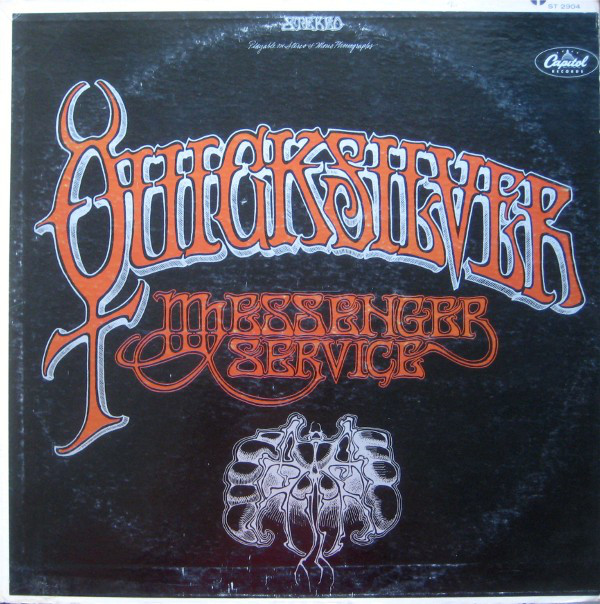
Not just another San Franciscan psychedelic rock band, but a particularly talented set of musicians that were part of the new direction of album-oriented rock. There are jazz and even traces of classical music influences in the structure, group work, and solos on this album. This, their very first album, is relatively short in length and not exactly a coherent work as it includes recordings spanning two years of musical development with tracks from 1966, 1967 and 1968. “Gold and Silver” is the strongest track, with the first half of “The Fool”, being also quite good. Album was released in May of 1968.
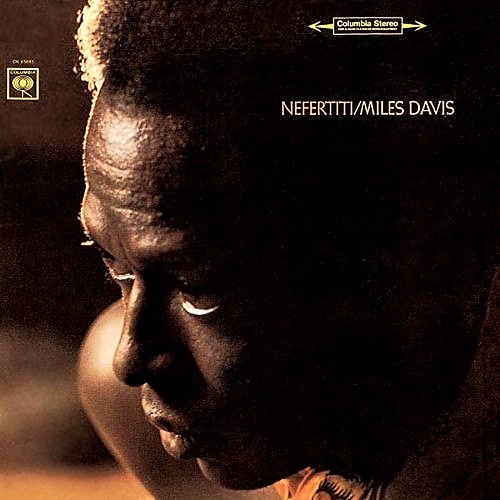
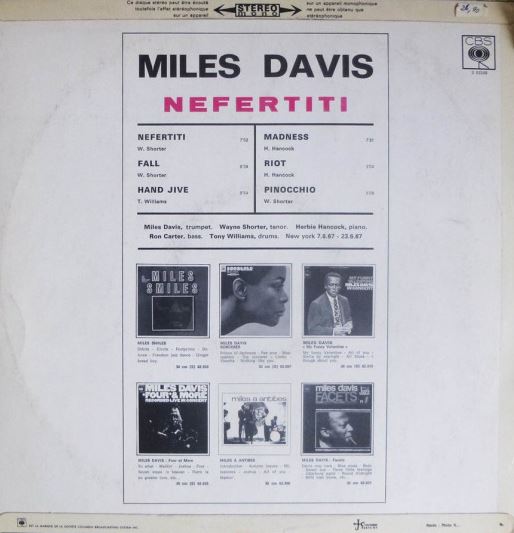
Recorded in June and July of 1967 and released, as best as I can determine, around February 1968, give or take a month, Nefertiti is the ever-exploring, adventurous Miles Davis’s last all-acoustic instrument album. I also consider this one of the first albums to take significant steps into both Fusion and New Age territory.
Miles Davis time at Julliard is partially evident here (just as Tony Scott’s time at Julliard is partially evident in what some consider the very first New Age record, the 1964 album, Music for Zen Meditation.) Miles seems to infuse Bartok and Satie, whose music he admired, into some of this work, as well as possibly (this is maybe a reach on my part, based only on the nature of some of the rhythmic and melodic patterns) Olivier Messiaen. Miles also drives his fellow musicians to further reaches of creativity producing a work like no other work recorded in 1967 or released in 1968. Some call this free-bop, and there are elements of free jazz present, but overall this is generally an accessible album, very much a predecessor to the fusion jazz and progressive-jazz psychedelic/rock-impressionism that will soon follow in so many albums of the 1970s.
The title track, “Nefertiti”, recorded on June 7, 1967 as a single take, is named after the Egyptian queen, Neferneferuaten Nefertiti who, with her Pharoah husband, brought about a religious revolution in Egypt by narrowing religious worship from many gods to only one. And with this first track, “Nefertiti”, there is a singularity of focus. Missing are solos from the trumpet and saxophone. Instead, the two instruments blend into an ambient, cleverly crafted circular sonic stream (well done, Wayne Shorter!), much as when drifting into alternative realms of consciousness prior to sleep. The piano, bass and drums provides the greater variety and commentary here, the entire work thoroughly and unapologetically breaking from the traditional be-bop approach to ensemble sections and solos. We have a strong case for this being jazz minimalism despite the richness of material provided by Herbie Hancock, Ron Carter and Tony Williams, based on the foundational, hardly perceptible variations provided by Miles and Wayne Shorter.
“Fall”, “Pinocchio” (two takes) and “Riot” were recorded on July 19, 1967, two days after John Coltrane’s death. This tragic and monumental event shapes the nature of the performances of these works, particularly Miles’ solos. The other tracks on the Nefertiti album,”Hand Jive” and “Madness”, are more extroverted and were recorded on June 22 and June 23, respectively. Though this album may not have been conceived as a whole work (the amazing “Water Babies”, the sharp-edged”Capricorn” and the reflective, surreal “Sweet Pea” [this last a perfect fit for the Nefertiti album] were also recorded during these sessions and released years later, in 1976), it comes together nicely and provides a general mood of near-mystical introspection. The performances by all members of the quartet border on mythical, with Miles inspiring and encouraging his fellow musicians in reaching further levels of excellence.
This a particularly subtle, perhaps initially elusive, album — one that many will not fall in love with on the first listening. Not as accessible as the previous album, the 1967 Sorcerer, it is often considered to be more substantial: pushing jazz into an unexplored territory that soon becomes part of the language of not only jazz, but rock, fusion, progressive rock, new age, and late twentieth century classical music. Darken the room and give Nefertiti your undivided attention when listening, if not already a devoted fan.
Unlike most rock albums of 1967 and 1968, in which there is a focused effort to release the material fairly soon, perhaps partly due to the quickly changing musical landscape in pop, many jazz recording sessions of 1967, did not get released until some time later, partially due to the lack of commercial interest in jazz music at that time: the six tracks that make up Demon’s Dance was recorded in a single session on Dec. 22, 1967 and not released until October of 1970.
One can readily notice a similarity between the Demon’s Dance album cover and Miles Davis’s Bitches Brew cover. Bitches Brew was released by Columbia records on March 30, 1970, and reached the number one spot on Billboard’s best selling jazz albums by July 18, holding that position, on and off, for the rest of 1970. Blue Note engaged the Bitches Brew album cover artist, Marty Klarwein to provide the artwork for the album cover of Demon’s Dance, with the eye-catching result as shown above. (Note that this is just a portion of the original painting — shown fully below at the end of this post.)
The music here is particularly ear-catching, with Jackie Mac taking a step back from his more adventurous free-jazz persona, playing modern, sometimes modal, bebop partnered with a twenty-three year old Woody Shaw providing intense, focused, clear, and often beautifully lyrical trumpet and flugelhorn and a twenty-five year old Jack DeJohnette providing dynamic, propulsive percussion with support from LaMont Johnson on piano and Scott Holt on bass.
The three hard bop uptempo tracks, “Demon’s Dance”, full of energy and intensity and enriched with variety by McLean, Shaw and DeJohnette, “Boo Ann’s Grand”, an excellent composition by Shaw, and “Floogeh” are certainly solid, top-notch performances, but the other three tracks are exceptional.
Woody Shaw provides a cheerfully, affirmative bossa-nova-based composition, “Sweet Love of Mine” that sparkles and includes riveting soloing by McLean and Shaw. Cal Masey, provides the one ballad of the session, “Toyland” which showcases McLean at his reflective, thoughtful best, providing warmth and tender musicality with an appropriate introspective solo by LaMont Johnson. The album closes with Cal Masey’s particularly intriguing “Message From Trane”, a modal composition with surface similarities to John Coltrane’s “Giant Steps.”
Both McLean and Shaw are in top form throughout the album, providing engaging solos that can be enjoyed over and again. Shaw is particularly inventive with his well-controlled, crisp, clear, solid tone that makes him one of the great jazz trumpeters of all time. This was the last of Jackie’s twenty-one albums for Blue Note (wow!!!) and the second-to-last U.S session prior to McLean’s four year break from recording and his departure to Europe. As far as I can tell, the next session after this, again pairing Jackie and Woody, has never been released — which, making an evaluation based on the merits of the Demon’s Dance album, is a notable loss to the music world.
Track listing [from Wikipedia]
All compositions by Jackie McLean except as indicated
In jazz, bebop artists continue to gain the attention of listeners, Thelonious Monk, at age thirty, records several masterpieces for Blue Note including Ruby My Dear, Off Minor, Well You Needn’t, In Walked Bud (a tribute to Bud Powell, based on the chord progressions of Irving Berlin’s Blue Skies”), and the incredible ‘Round About Midnight. Wardell Grey and Dexter Gordon record The Chase, and Dexter Gordon and Teddy Edwards record The Duel. Charlie Parker, Max Roach and Miles Davisrecord several sides together under various names (Charlie Parker All Stars, Miles Davis All Stars, Original Charlie Parker Quintet) in combination with various other musicians such as Bud Powell, Duke Jordan, John Lewis, and J.J. Johnson. Parker also records tracks with trumpeters Dizzy Gillespie, Fats Navarro, Howard McGhee, saxophonists Wardell Gray, Shorty Rogers, pianists Erroll Garner, Dodo Marmarosa, Russ Freeman, guitarist Barney Kessel, bassist Red Callender, and others, leaving some incredible recordings for future generations to marvel over.
For those that were around New York City to catch live music, they could see the aforementioned Miles Davis All-Stars at the Savoy, Louis Armstrong at Carnegie Hall with his big band, and The Count Basie Orchestra at the Paradise Club in Atlantic City or at the Strand Theater in Lakewood, New Jersey, supporting Billie Holiday.
Of the many babies born in 1947, notable future rock composers and musicians include David Bowie and folk singer Sandy Denny, born in January, Derek Shulman and John Weathers of Gentle Giant born in February, Elton John in March, Steve Howe and Iggy Pop in April, Ronnie Wood, Mick Fleetwood and Mickey Finn (T.Rex) in June, Brian May (Queen), Arlo Guthrie, Peter Banks (Yes, Flash), Mitch Mitchell (The Jimi Hendrix Experience) and Carlos Santana in July, Ian Anderson in July, Marc Bolan and Meat Loaf in September, Bob Weir (Grateful Dead) and Laura Nyro in September, Greg Lake and Joe Walsh in November and Gregg Allman, Jeff Lynne (Electric Light Orchestra) and Burton Cummings in December.
In movies, we have the timeless Christmas movie, Miracle on 34th Street, as well asThe Bishop’s Wife with Cary Grant and Loretta Lynn and It Happened on Fifth Avenue.
The next few years would bring major changes all over the world. Fortunately that world as it was in 1947 has been well documented in records, movies and books.
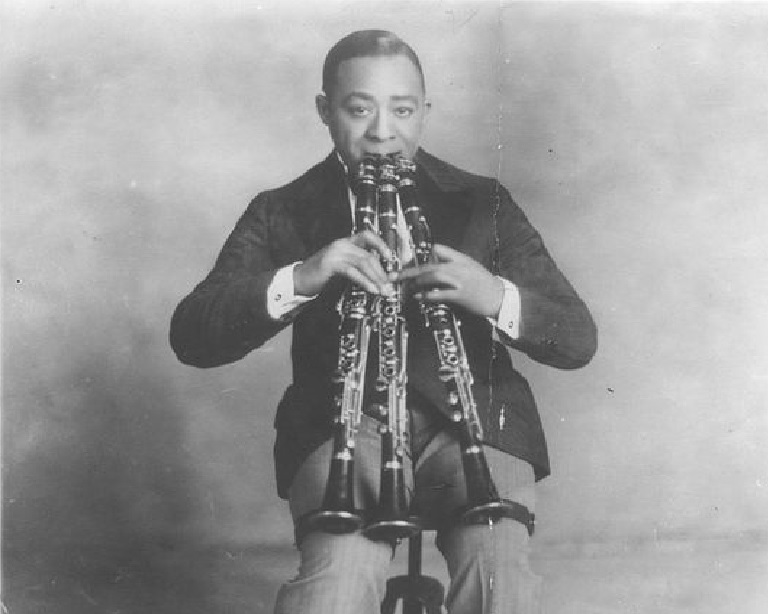
Son of a barber in Brunswick, Missouri, Wilbur Coleman Sweatman learned piano as a child from his older sister and soon started playing the violin, perhaps having taught himself on the instrument. Later he also learned clarinet and made this his primary instrument touring with circus bands, eventually leading dance and jazz bands, and developing the unusual skill of playing two, and then later, three clarinets at once.
He recorded several cylinders and records as bandleader, one of the being possibly the very first recording of Scott Joplin’s Maple Leaf Rag. In 1911, he published “Down Home Rag” a work in 4/4 time (as opposed to the usual 2/4 time of ragtime works) that shares elements of the contemporary fox trots and turkey trots of the time.
In December 1916, in a New York recording studio, Sweatman recorded two takes of “Down Home Rag”, each with notable melodic variations, arguably establishing him as the first band leader to have recorded jazz and these recordings as the very first recorded jazz records. This was two months earlier than the Original Dixie Jazz Band recorded “Livery Stable Blues” and “Dixeland Jass Band One Step”, the latter based on Joe Jordon’s “That Teasin’ Rag” and being the first record to ever contain the word “jass”. Later in 1917, Wilbur Sweatman would record additional tracks, several of which contained the word “jass” or “jazz” in their titles. For additional information on Wilbur Sweatman, please refer to the excellent and well-researched biography, “That’s Got ’em: The Life and Music of Wilbur C. Sweatman” By Mark Berresford
Though Wilbur Sweatman recorded the first jazz record, the Original Dixieland Jazz Band (ODJB) recorded the first record with the work “jass” or “jazz” in the title, when they recorded “Dixeland Jass Band One Step” in February 1917. More importantly, their record label, Victor, effectively promoted their material, even if as novelty, providing the sound of something akin to jazz to record buyers all over the country. Already successful as a dance band, first in Chicago, then in New York, the fame brought by these recordings, and their next set on Columbia, further increased not only the popularity of the ODJB, but was a catalyst for jazz in general. Soon bands all over the country included the word “jazz” in their name or the titles of the records and soon true improvisational jazz music was available live and through records to a diverse audience across the United States.
Though jazz predates the recordings of Wilbur Sweatman and the Original Dixieland Jazz band by several years, records and the phonograph were the primary reason for the rapid spread and adoption of jazz as not only trendy, but popular and indispensable music.
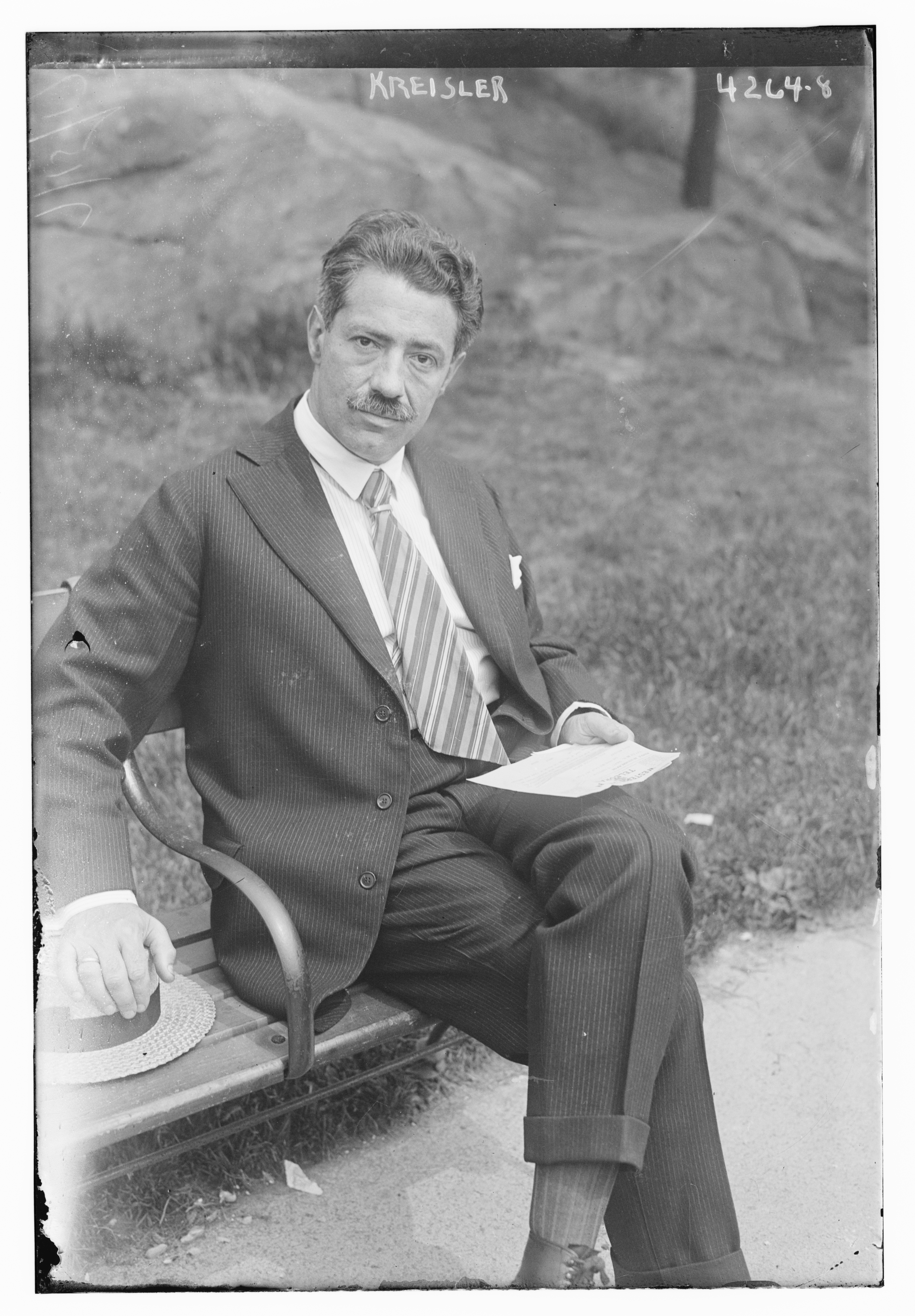
Composer, and the greatest violinist of his generation (born in 1875, died in 1962). Fritz Kreisler recorded several times in 1917 for the Victor label. Taken with earlier recordings on Victor, going back to 1910, we are left with a diverse set of miniatures, some of which are Kreisler’s own compositions, some of which were even credited to other composers, long dead, until Kreisler revealed they were his own compositions in the style of those composers.
These are acoustic recordings, as were all recordings in 1917 and up until about 1925, which means that instead of using microphones to capture sound, large horns were used that generated vibrations to etch the groves in the mastering cylinder (very early on) or platter. In addition, the rotation of the platter was mechanical and not electrical. The performer or performers had to position themselves near the horn and the resulting recording had a limited frequency range between 250 to 2500 Hz (Hertz or cycles per second: vibrations per seconds, known as the frequency, determining musical pitch and the nature of the sound since a given instrument produces a set of vibrations for any given note.) The human hearing range is around 20 Hz to 2000 Hz and the notes on the piano range from 27.5 Hz to 4186 Hz. 250 Hz is not very low: for example, the highest of the four open strings on the cello sounds at 220 Hz and middle C on the piano is around 262 Hz. The B natural, only a semitone below, is around 247 Hz, meaning that the left hand accompaniment of a piano piece like “Maple Leaf Rag”, disregarding “overtones” or the additional upper frequencies that the piano or any instrument produces for each given note, is almost entirely below the lower limit of the range available to recordings in 1917. Thus, while one could record piano pieces on this technology, or in the case of many of the Kreisler recordings, violin with piano accompaniment, it sounds very thin and strange. The amazing thing, psychologically, is how the listener adjusts and soon gets comfortable with the recorded sound, as unfaithful as it is to the original performance.
Shortly after his Carnegie Hall debut on November 7, 1917 RCA started recording Jascha Heifitz, only a couple of months away from his 17th birthday. Just as Kreisler was the most notable and celebrated violinist of his generation, Heifitz (1901-1987) was the most prominent and acclaimed violinist of his generation.
These 1917 recordings of Heifitz available on CD are compelling and vital. The transfers are good, and once one puts in some time listening to recordings of this era, the significant sonic limitations of the acoustic recording process don’t pose any serious barrier to enjoying the music. We are very fortunate that Thomas Edison invented the phonograph in 1877, allowing it to develop, although slowly from a 21st Century person’s perspective. so that by 1917 we start having some real treasures of music captured forever on these ten and twelve inch shellac disks.


 in the ancient Chinese Book of Changes, The I Ching, roughly translated as “Now he beats his drum, and now he leaves off. Now he weeps, and now he sings.” These two works are very different with “Now He Sings, Now He Sobs”, being generally forward-looking, energetic and optimistic and “Now He Beats The Drum, Now He Stops” being more of a two-part composition, with the first section, a piano solo, full of reflection and inner-doubt, and the second section surging with revitalization and purpose.
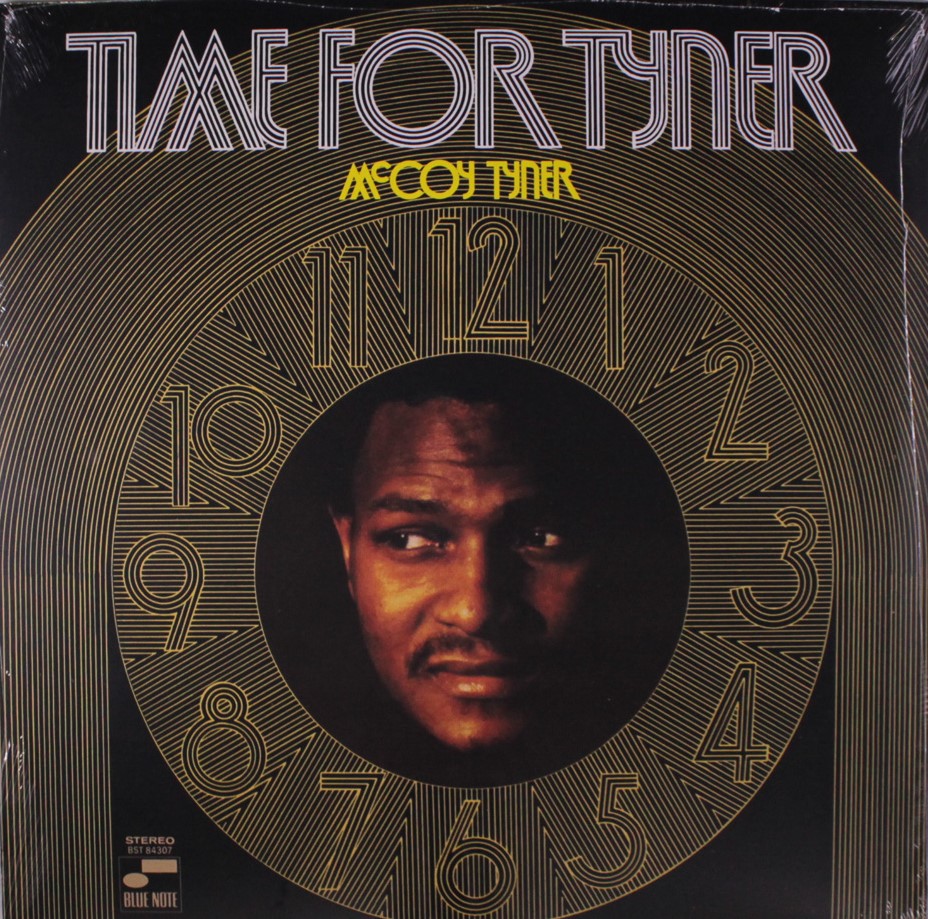 Recorded on May 17, 1968, and released in August of 1968, McCoy’s Tyner sixth albums feature the trio of Tyner, Herbie Lewis on bass and Freddie Waits on drums with the addition of Bobby Hutcherson on vibes for the first side of the two lengthier Tyner compositions and the the first two tracks on side two, Tyner’s “May Street” and Richard Rodger’s “I Didn’t Know What Time It Was” from the 1939 Musical, “Too Many Girls.”