Zumwalt Poems Online

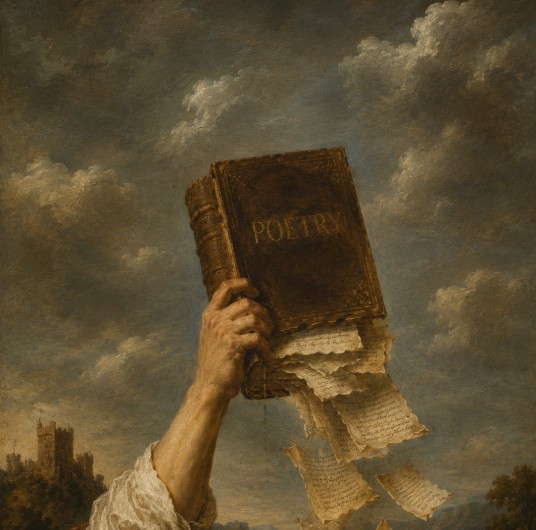
Macpherson and Platner in the Recycle Bin

Does intent really matter
when one publicly claims
to translate a narrative
that never existed?

— zumwalt (July 2026)

Jon Anderson: Olias of Sunhillow

Through the mist of fifty years of high energy music listening, we turn back the pages, the pages of the elaborate album insert in the Olias of Sunhillow gatefold jacket, to note that it was indeed fifty years ago, at the end of June and beginning of July (end of June for the USA and beginning of July for the U.K.), that Atlantic Records released an album like nothing before it — and was actually able to do this simply because progressive, adventurous music was commercially viable!

I first saw the album in the record store near our college campus sometime in 1976, noting its resemblance to that remarkable Roger Dean cover for Yes’s late-1971 masterpiece, Fragile. The next thing I remember about this release, after purchasing the album, bringing it home, and removing the cellophane wrapping, was looking at those exotic album notes within the inner pages of the album’s cover. This text started out apparently lucid, even though somewhat poetic: “Through the mist of a million years of high energy three riders skimmed the surface of the plain of Tallowcross and raced towards a dream. Their meeting point lying between the glades and Gardens of Geda and the high mountain masses, where fountains of light and colour and soft winds of passion openly existing through wisdom, surrounded the three that silent eve, they sang together through motions only ways, as all around them sparkled and chorused in wonder.”

It then got a little harder for me to follow: “OLIAS was to build the ship the Moorglade Mover RANYART was to guide the moments begotten light QOQUAQ a leader, a fashioner of peoples of Sunhillow.” But this is still understandable — and this ship here is that ship on the cover of Fragile — the inspiration for this album. As one reads further, the story becomes a bit vague but is still more or less coherent, given the oddity of the narrative: “Four tribes lived on Sunhillow and existed through music, rhythms and tempos, each of the tribes attained a light of their own through their songs to their stars, so their energy, their souls, their time, their movements were all accordant to the stars.”

As the tale unfolds, the average reader may draw a parallel to the story of Noah’s Ark — but this would be a mistake — here we do not have an angry or disappointed all-powerful being bringing the end of a world, but the inevitable appearance of a preset expiration date: “Hurtling through space amidst countless sister planets, Sunhillow had held the tribes for as long as time would allow.” And note, there is not one tribe to be saved, but four, each of these tribes distinguished by their musical preferences. But even more importantly to note, the animals are not brought onto the Moorglade Mover, specifically meant to be an interstellar people mover. No, the animals are not saved. On the contrary, all the fish of the ocean (apparently just one ocean on Sunhillow) sacrificed themselves, in tandem with the trees, to build this alien ark: “Olias had been busy, and having sang his song the metalic-like trees with their golden leaves jingling like winter snow, had motioned their strong roots to slowly dance out of position towards Olias to create the frame of the Moorglade. With spread-eagled wings and high masts with enough room for all, it stood, near ready, it needed only to be strengthened and covered and this was for the fish of the ocean the ‘solar’ to do. Olias reached out with voice and sound to ease them from their play. As intertwined and inter moving parts of the ocean rose into the air glistening in the quick wind, they rushed expectantly towards the frame and crashed their forms and clasped and died as all will; the Moorglade was ready.”

The text continued, but I didn’t. It was time to put the LP on my turntable. I removed the tinted dust cover of my BSR 810 and put on side one. Now, I had no expectations for the lyrics, which were also printed in the included booklet, to shed any significant light on the story — to this day, I have no clue what Jon Anderson’s lyrics from Close to the Edge or Tales from Topographic Oceans supposedly are about, but understanding the narrative was not even slightly my objective — I wanted to hear the music! Would this be as pleasant a surprise as Chris Squire’s 1975 solo album, Fish Out of Water? Would it have a similar sound to any Yes album?

Well, no, it didn’t have that classic Yes sound of Fragile or Squire’s Fish Out of Water. But it did have similarities to some parts of Tales from Topographic Oceans, and the vocals, often effectively layered through overdubbing, were all by Jon Anderson, one of the most distinguishing signatures of the Yes sound. The lyrics, as with the Yes albums, were crafted to support and enhance the music, and that is a big bonus for any music lover — us music lovers can often appreciate excellent lyrics, but are even more appreciative when the lyrics are an inherent part of the musical experience.

Now, musically, this album was like nothing I had heard previously. Please note that there was a short period of time when major labels were pretty progressive about what they released. They had learned their lesson, albeit only briefly, that they were bad judges of what the public would appreciate and what music was commercially viable. Atlantic record executives had watched the U.S. release of King Crimson’s debut album climb up the Billboard charts in the U.S. and sell well for months after its release, and had seen Yes’s Close to the Edge peak at number three in the U.S. and number four in the U.K. So Atlantic was not only fine with releasing solo albums by Yes members, but was actively encouraging their recording and release. In the case of Olias of Sunhillow, this paid off — the album climbed to number 8 in the U.K., and though it only reached number 47 in the USA, that still meant big profits for Atlantic.

Now, if you are still with me, let’s talk a bit about the music. And as your opinion on this is as important and relevant as mine, I welcome your thoughts in the comment section.

This is truly a bit of progressive rock, a bit of New Age, a bit of world music, with some folk elements present in the general mix. It is wonderfully executed. There is not a moment of virtuosic playing; the production quality is not of audiophile merit; there is limited notable melodic or harmonic material; and the music is all performed by someone with limited instrumental capabilities, whether that be on synthesizer, electric or pipe organ, mellotron, electric or acoustic piano, electric guitar, acoustic guitar, bass guitar, bağlama or other lute-like instruments, Celtic harp, sitar, tampuri, bouzouki, African wooden flute, mbira, or a host of percussion instruments, including marimba, xylophone, glockenspiel, triangle, tambourine, cymbals, wood blocks, gongs, Navajo drums, Caribbean drums, African drums, and possibly a kitchen sink, though I didn’t actually hear one on my copy of the album.

But Jon Anderson has a remarkable vision of what he wishes to achieve here, and his vocals and handling of the broad range of timbral possibilities of the dozens of instruments he plays create a singular, cohesive, and engaging listening experience. New Age and world music albums would soon flood the market, mostly on small, independent labels, with the 1980s bringing about a virtual deluge of diverse and exciting material, but it was prog rock that mainly explored this area in the 1970s, with this first Jon Anderson solo album being one of the best examples.

OUR FREE UNION

Pleased to announce Zumwalt’s Our Free Union was published today, on America’s 250th anniversary, at New Verse News: https://newversenews.blogspot.com/2026/07/our-free-union.html

Happy Fourth of July, everyone!

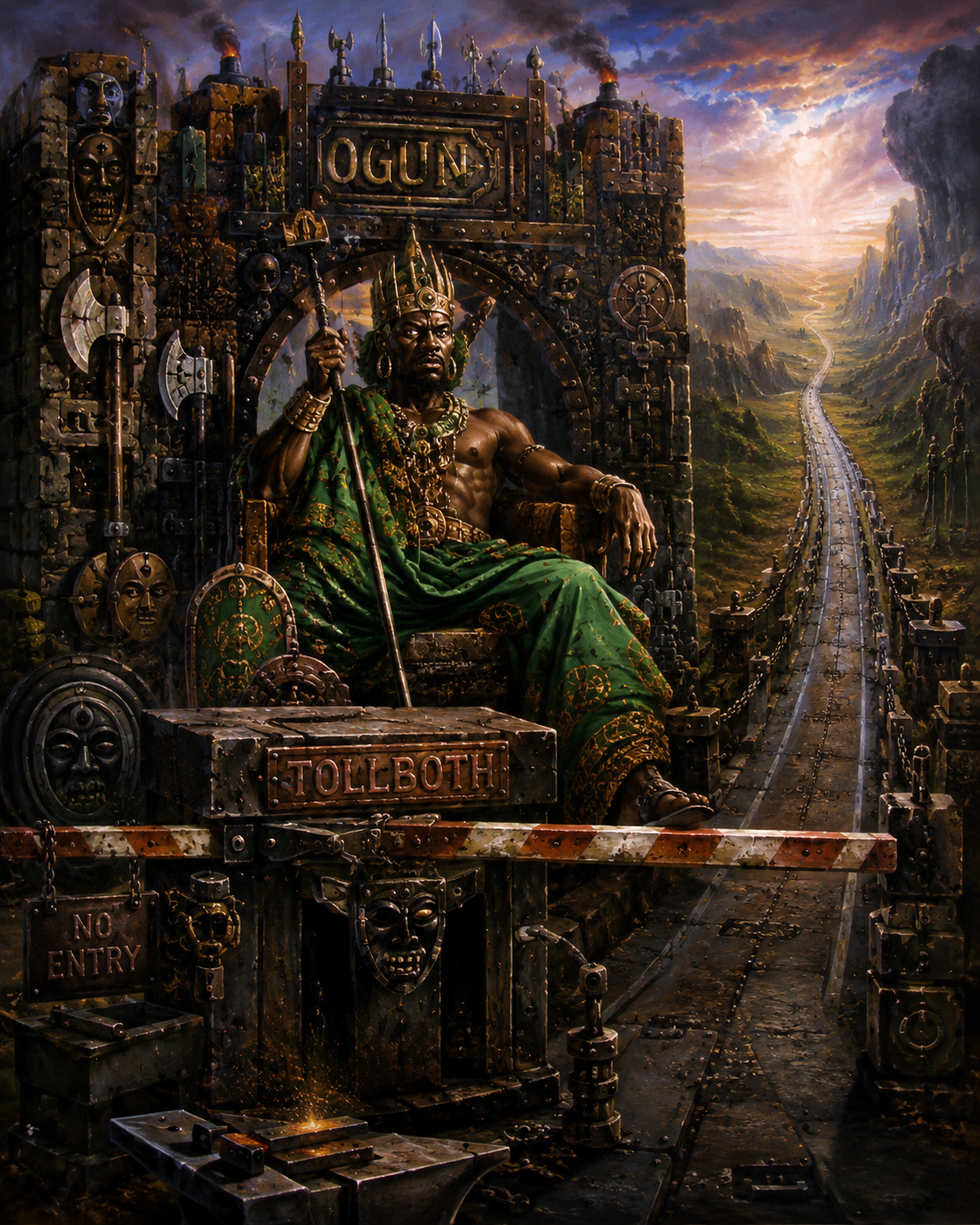
I am pleased to announce the selection of Zumwalt’s Ogun’s Tollbooth for Bewildering Stories’ Editor’s Choice for the second quarter of 2026.

While You’re Here

While you’re here

I am curious if you finish this.
It isn’t much of a poem.
There are no rhymes, good or bad;
there is no attention paid to the meter
or musicality of the lines,
the words are not carefully chosen,
and so there is not much to justify
either this poem or you spending your time here.

And the volta really isn’t a volta,
just a last stanza to see whether,
since you started to read this,
you made it to the very end.


— zumwalt (6/28/2026)

fishing in the dark

fishing in the dark

hook, line, and sinker
she’s become a social drinker


— zumwalt (1970s?)

frame face

frame face

She glowers like the towers telling our past hours
to strangers passing peddling private wares of
seeding past affairs
shoot the blaster
pass the mustard

laughing choking not disclosing
distastefully hoping
resolution teases like a ten buck hooker
a textbook burner

wishing off evil thoughts with wards
of destruction

in frantic future non-operatives
mask reality like drifts of mud
tracked on Sybil's high polished floor.

— zumwalt (late 1970s or early 1980s?)

mystical message

mystical message

pound the telephone
sharply spinerating – generating – expecting
raise roofs of village flashers
swiftly fending
mentally attiring
tremulous trumpeting
a sour-sounding
mellowing hollowing “carving”
miracle mecca
with a teaspoon and an ‘e’ coupon.
pass the bumper
shape the shark fin strumpet bakers
lower floors of bundled tenements
friskily sending
incompetently mending
revolving in time
shaping destiny like the rivers of mildew
in the august of the dusking mountains of equinox.

— zumwalt (1981)
(When first discovered in 2011, I did not post this particular item here, but due to increased interest in Zumwalt’s works, adding now. Is it a draft, is it a final version? As always, Zumwalt has declined to comment, gently reminding me that a poem is what the reader makes of it.)

Leoš Janáček continued his amazing late-life surge of creativity, some say attributed to his romantic interest in a woman forty years younger than him, with the composition of his most widely known work, his Sinfonietta. Subtitled “Military Sinfonietta,” and well known to progressive rock fans for its primary theme used in Emerson, Lake and Palmer’s debut album as the main musical material for “Knife Edge,” the work received its world première on June 26, 1926, in Prague, conducted by Václav Talich.

Sinfonietta is one of the most accessible orchestral works of the 1920s, with its colossal opening and closing movements, deploying an expanded brass section of 25 players, including nine C trumpets, two bass trumpets, and two tenor tubas. The main theme, used stunningly at the opening and closing of the piece, is also the basis of much of the musical material throughout the five-movement masterpiece, creating a musical unity amidst his adventurous use of irregular meters, unusual handling of melodic intervals, aggressive scoring, and modal harmonies. The music, though Eastern European in origin, conveys that immediately identifiable modern-age excitement of the roaring twenties without sounding like an artifact of any single time period.

Though he died in 1928 at the age of 74, thankfully for all of us music lovers, Janáček was still composing at the highest level, with his great Glagolitic Mass, his last opera, House of the Dead, and his second and final string quartet, Intimate Letters composed in the two years after the première of the Sinfonietta.

Dexter Gordon: Lullaby for a Monster

Recorded on June 15, 1976 in Copenhagen, Denmark, Lullaby for a Monster provides maximum Gordon Dexter in a trio format with two of Europe’s finest jazz artists: Niels-Henning Ørsted Pedersen on bass and Alex Riel on drums. The album was not released in 1976, or even the 1970s, seeing the light of day for the first time in the early 1980s. I would like to claim I was a Dexter Gordon fan in the 1970s, but my first encounter with either him or his music was in 1986, while I was in England. I wish I could say I saw him in person, but the reality is very different.

I lived in West Sussex and often would catch a movie on Saturday, usually in Brighton, East Grinstead, or Royal Tunbridge Wells. I was a big fan of Thelonious Monk, and was instantly attracted by the title of one particular movie, “Round Midnight” and figuring out from the movie poster that it was indeed a jazz-related story, I eagerly bought a ticket, and entered the modest, but mostly empty theater. Without taking a complete detour from Fifty Year Friday — hopefully I will be around in 2036 to include this in a future post — this was a great movie, and Dexter Gordon’s music making and acting were both of the highest caliber. Two years later, back in America, I purchased an album that contained the famous “The Chase” with Wardell Grey and Dexter Gordon, and I have been a big Dexter Gordon Fan since.

What makes Lullaby for a Monster a perfect starting place for someone wanting to explore one of the greatest tenor saxophonists of all time, is it showcases Gordon’s humor (from the very start with his own composition, a clever bluesy treatment of the nursery song “Ah! vous dirai-je, maman,” also known to us as “Twinkle, Twinkle, Little Star” or “Baa, Baa, Black Sheep), his musical inventiveness and his lyricism.

Dexter Gordon: Bouncin’ with Dex

Bouncin’ with Dex, recorded on September 14, 1975, in Copenhagen, Denmark, was likely released in 1976; however, it is worth discussing now within the broader context of Dexter Gordon’s career. The lineup here is top-notch: Dexter Gordon, bassist Niels-Henning Ørsted Pedersen, the virtuosic and rhythmically and harmonically adventurous Barcelonian Tete Montoliu on piano, and one of the most musically responsive drummers on record, American Billy Higgins. Despite Dexter’s extended time in Europe, this remains the only studio recording partnering him and Montoliu. That is just one of many reasons to check out this album; the session represents a pinnacle of Gordon’s mid-1970s SteepleChase output, showcasing the quartet’s seamless interaction on a set of quintessential bebop standards, alongside Gordon’s own “Benji’s Bounce,” a skillfully faithful contrafact based on the harmonic structure of Thelonious Monk’s “Rhythm-a-Ning” showcasing both Gordon’s and Montoliu’s inventiveness and their deep understanding of Monk’s musical essence. The original LP contained an amazingly lyrical rendition of “Easy Living,” with the CD version topping that by including a luxuriously longer alternate take.

Brand X: Unorthodox Behavior

Released June 18, 1976, Unorthodox Behavior is the first and finest Brand X studio album; tight, cohesive, proficient and musically engaging, this is exemplary English progressive-rock jazz fusion. Phil Collins, John Goodsall, Robin Lumley and Percy Jones blend into one musical force, sounding as if they had played in small venues for many months before recording this debut album. Rock fans, and even some progressive rock fans, may be disappointed in the lack of lyrical or infectious melody, but the energy and creativity are undeniable and make this an important and distinct landmark of the mid-70s fusion movement and an indispensible document of Phil Collins’ impressive technical capabilities on percussion.


For additional posts related to Gentle Giant, please check these out:
https://zumpoems.com/2025/07/25/fifty-year-friday-july-and-august-1975/
https://zumpoems.com/2026/04/17/fifty-year-friday-april-1976/
https://zumpoems.com/2021/07/23/fifty-year-friday-july-1971/
https://zumpoems.com/2023/09/01/fifty-year-friday-september-1973/
https://zumpoems.com/2022/04/01/fifty-year-friday-april-1970-2/
https://zumpoems.com/2022/12/16/fifty-year-friday-december-1972/
https://zumpoems.com/2017/08/25/fifty-year-friday-aretha-franklin-simon-dupree-the-big-sound-and-pink-floyd/
https://zumpoems.com/2020/11/20/fifty-year-friday-november-1970/

For Must Listen To Gentle Giant and Prog Rock albums, please check out:
https://zumpoems.com/must-listen-to-music/

For additional posts that mention Gentle Giant, please check these out:
https://zumpoems.com/2017/12/30/seventy-year-saturday-1947/
https://zumpoems.com/2019/07/19/fifty-year-friday-men-on-the-moon-yes-larry-coryell/
https://zumpoems.com/2022/05/27/fifty-year-friday-may-1972/
https://zumpoems.com/2019/05/31/fifty-year-friday-power-to-the-people-the-giant-awakens-empty-sky-at-san-quentin-and-charisma/
https://zumpoems.com/2024/03/15/fifty-year-friday-march-1974/
https://zumpoems.com/2024/06/07/fifty-year-friday-june-1974/
https://zumpoems.com/2019/01/04/fifty-year-friday-the-canterbury-scene-soft-machine-and-caravan-first-albums/
https://zumpoems.com/2025/06/20/fifty-year-friday-june-1975/
https://zumpoems.com/2019/06/14/fifty-year-friday-trout-mask-replica-brave-new-world/
https://zumpoems.com/2023/08/04/fifty-year-friday-august-1973/
https://zumpoems.com/2020/02/14/fifty-year-friday-february-1970/
https://zumpoems.com/2018/08/10/fifty-year-friday-ultimate-spinach/
https://zumpoems.com/2018/06/22/fifty-year-friday-british-folk-rock/
https://zumpoems.com/2020/09/25/fifty-year-friday-september-1970/
https://zumpoems.com/2025/11/14/fifty-year-friday-november-and-december-1975/
https://zumpoems.com/2020/03/20/fifty-year-friday-march-2020/
https://zumpoems.com/2025/09/26/fifty-year-friday-september-and-october-1975/
https://zumpoems.com/2021/11/26/fifty-year-friday-november-1971/
https://zumpoems.com/2026/06/12/dexter-gordon-lullaby-for-a-monster-bouncin-with-dex-brand-x-unorthodox-behavior-fifty-year-friday-june-1976/