First of all, wishing everyone a happy, productive and fulfilling 2019!
I was not around one hundred years ago, but my grandparents were. My mother’s mom was twenty, and she sometimes referenced the terrible flu epidemic of 1918 and the lives it took. For many, this affected them more directly than World War I.
World War I would end in November of 1918. For many years, Armistice Day, November 11, was a notable holiday in the U.S. until sometime after World War II, when it was renamed Veteran’s Day, honoring those who served in both world wars. Now Veteran’s day is a tribute to all those that served in the U.S. armed forces, the true great heroes and protectors of our nation.
In movies, Charlie Chaplin, Harold Lloyd and Buster Keaton continued to provide silent comedies. The big silent movie hit of 1918 was Mickey, starring Norma Mabel, the famous actress, writer, director, and producer of the 1910s and 1920s.
In 1918, the gifted seventeen-year-old Louis Armstrong was playing cornet on Mississippi riverboats. With prostitution made illegal in New Orleans in November of 1917, not to protect the women involved, but as a step to prevent VD transmission to nearby army and navy camps, Storyville, the red light and entertainment district of New Orleans, and the musicians that made a living in Storyville would take a financial hit: soon Louis’s idol, King Oliver would move to Chicago, and Louis would replace him in Kid Ory’s band.
Pianist, and National Public Radio (NPR) host of “Piano Jazz”, Marian McPartland was born on March 1918, living until 2013. Other jazz musicians born in 1918 include trumpter Howard McGhee, pianist Charles Thompson, pianist Hank Jones, saxophonist Ike Quebec, and trumpet player, composer, arranger and band leader, Gerald Wilson. King of the Slide Guitar, blues guitarist, composer, singer and bandleader Elmore James was also born in 1918. Mr. James was one of the first guitarists in the 1950’s to intentionally overdrive the electric guitar’s amplification to produce distortion for musical effect.
Classical violinist, Ruggiero Ricci was born in 1918 and gave lessons to one of my good friends from college who talked about him in utmost awe and respect. Ricci gave performances as a member of the US Army in World War II and then later, in 1947, was the first violinist to record the complete twenty-four Caprices (Opus 1) by Paganini in their original form. Ricci also championed many twentieth century composer’s violin concertos including Ginastera’s. In total, Ricci made over 500 recordings and performed over 6,000 concerts in sixty-five different countries.
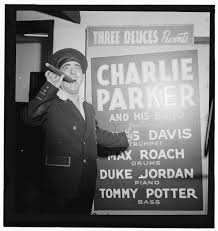
Bebop continues to flourish with live concerts and recordings featuring Charlie Parker, Thelonious Monk and the up and coming Miles Davis. Imagine being able to go back in time to see Charlie Parker, Miles Davis, and Max Roach at the Three Deuces!
Coleman Hawkins continues his legacy, releasing his classic solo saxophone single, “Picasso”, almost as an important musical statement as his more famous swing-era masterpiece. “Body and Soul.” Are there any other swing giants that were able to make the transition into Bebop as successfully as the Hawk? Musically successfully that is, since unfortunately, great artists like Coleman Hawkins received very little financial reward in 1948.
Serge Prokofiev, out of favor with the Soviet cultural authorities, premieres his final opera, The Story of a Real Person on December 3, 1948 at the Kirov Theater, Leningrad (now thankfully called Saint Petersburg again). Given an unfavorable reception from the “authorities,” further performances were forbidden to the general public until after Prokofiev’s death, The Story of a Real Person not being performed again until October 1960 at the Bolshoi Theater, Moscow.
Oliver Messiaen’s completes his Turangalîla-Symphonie, a large scale orchestra work commissioned by Serge Koussevitzky for the Boston Symphony Orchestra and later premiered in December 1949 with Leonard Bernstein conducting.
Arnold Schoenberg at the age of seventy-five composes his cantata, A Survivor from Warsaw, written in tribute to the Holocaust victims. Richard Strauss at the age of eighty-four composes his “Four Last Songs” for soprano and orchestra.
Hans Werner Henze and Witold Lutoslawski finish their first symphonies, while Walter Piston completes his third, Brian Havergal composes his seventh, and Nikolai Myaskovsky wraps up his first twenty-sixth, his Symphony on Russian Themes.
Samuel Barber composes Knoxville: Summer of 1915, John Cage his Suite for Toy Piano, Howard Hanson his Piano Concerto, Dmitri Kabalevsky his Violin Concerto, Eduard Tubin his Double Bass Concerto, and famous film composer, later to write the scores to the first two Godfather movies, Nino Rota, takes a break from movie music to compose his String Quartet.
Cole Porter’s Kiss Me, Kate Broadway production opened on December 30, 1948 at the New Century Theatre and ran for 1077 performances,
On the extreme, commercial pop-side of music, Kay Kyser with Gloria Wood on vocals score a major hit with a song embedded in my childhood memories, “The Woody Woodpecker Song.” If only the worst pop songs of today, were this good….
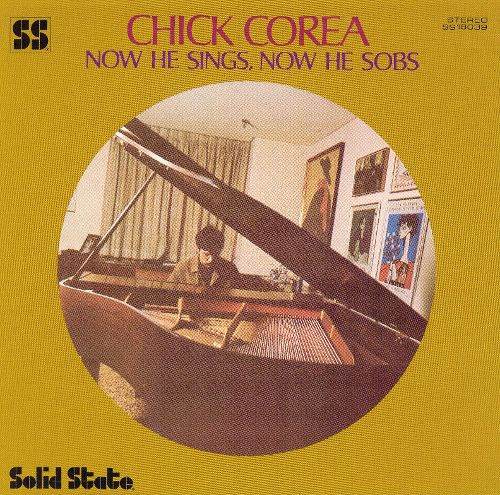
At age twenty-eight, Chick Corea had already made serious contributions on studio dates with Herbie Mann, Hubert Laws, Cal Tjader, Dave Pike, Donald Byrd, and Stan Getz often contributing arrangements as well as playing piano. He had also recorded his first solo album in 1966, Tones for Joan’s Bones, with Woody Shaw on trumpet, which was released in April 1968.
Corea started playing piano at age four, developing not only impressive piano skills, but a passionate love for both classical and jazz music. This mastery of the two genres is apparent in this album, the format of jazz trio working well in terms of emphasizing the piano part and facilitating optimal engagement between a small set of artists.
“Steps – What Was” starts with piano solo soon joined by veteran Roy Haynes on drums and twenty-year old Czech classically-trained Miroslav Vitouš on acoustic bass. The work brims with enthusiasm and freshness and, after a brief drum solo by Haynes and before a bass solo by Vitouš, is a wonderful piano-led passage that reveals an early version of Corea’s “Spain” theme.
“Matrix’ includes a brief statement of the theme and a wild ride of head-spinning improvisation, again including room for statements by Vitouš and Haynes.
The next two tracks take their title from the explanation of the third line of the Kung Fú (Inmost Sincerity) hexagram in the ancient Chinese Book of Changes, The I Ching, roughly translated as “Now he beats his drum, and now he leaves off. Now he weeps, and now he sings.” These two works are very different with “Now He Sings, Now He Sobs”, being generally forward-looking, energetic and optimistic and “Now He Beats The Drum, Now He Stops” being more of a two-part composition, with the first section, a piano solo, full of reflection and inner-doubt, and the second section surging with revitalization and purpose.
The last track, “The Law Of Falling And Catching Up” is a free-jazz excursion with Corea directly accessing the strings of the grand piano. Somewhat pointillistic and Webern-like, the piece is sweeping in texture and content yet, at under two and half minutes, compact and focused.
Though sometimes Masekala’s work gets categorized as “Easy Listening”, this album contains some fine jazz and early world-fusion with Masekala providing quality trumpet with fine supporting musicians including uncredited folk-revival guitarist Bruce Langhorne. Baby Boomers will recognize the instrumental “Grazing in the Grass”, which went to the top of the charts, and was later revisited by The Friends of Distinction with added vocals. Also notable is the reflective, meditative rendition of Traffic’s “No Face, No Name And No Number”, Miriam Makeba’s “Bajabule Bonke” and Masekala’s own “Almost Seedless.”
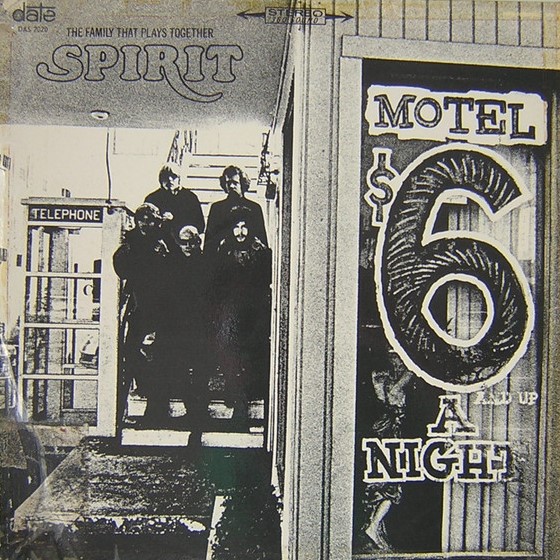
In November 1968, Spirit follows up their impressive first album with an even stronger and more polished second album, again produced by Lou Adler with arrangements by Marty Paich.
The album starts out with Randy California’s rock classic “I Got A Line On You Babe”, first released as a single a couple of months prior to availability of the album, achieving some airplay on FM radio before later becoming a modest hit on AM. Full of energy and unstoppable enthusiasm with a aggressive, celebratory guitar work, it represents youthful romantic optimism reversing the viewpoint of that classic Kink’s song “You Really Got Me” but sharing many musical and emotional qualities.
“It Shall Be” is evocatively sensual with flute and wordless vocals alternating in A-B-A-B-A form with a more down-to-earth B section. This is followed by a set of three semi-psychedelic songs by Jay Ferguson, and a country-like tune, “Darlin’ If” composed by Randy California
Side two opens up strongly with “It’s All the Same,” a mixture between psychedelic and early seventies rock, including a brief, relatively uninteresting drum solo in the middle. The second track, is Caifornia’s “Jewish”, a short but expressive modal-melody pre-progressive track with Hebrew lyrics. The album ends with with three more Jay Ferguson tracks, each with its distinct identity but all three incorporating elements of the psychedelic era of songwriting; note the intriguing guitar work in the not-always-so-consistently-interesting last track, “Aren’t You Glad.”
Bonus tracks are available on the CD, including the artful, ambient instrumental, “Fog” and two other instrumentals by keyboardist John Locke as well as Ferguson’s sweeping, gothically dark “Now or Anywhere.”
This fine double album, one LP from a live concert in June 1968, and the other from 1968 studio recordings, sparkles with precise, consistently clearly articulated acoustic and vocal passages that nicely blend folk, rock, jazz and classical renaissance elements to provide an engaging audio and musical experience. Highlights of the live LP include Danny Thompson’s rendition of Mingus’s Haitian Fight Song, the group’s interesting take on Mingus’s homage to legendary Lester Young, “Good Bye, Pork Pie”, and the medley of three renaissance dances. Highlights of the studio LP include the immersive contrapuntal “Three Part Thing”, Jaqui McShee’s rendition of “Sovay”, the jazzy Brubeck-like instrumental “In Time”, the bluesy “I’ve Got a Feeling”, the classic folksy “The Trees They Do Grow High” and the final track of side two, “Hole in the Coal.” Throughout the four sides the interplay between the two guitars and bass is exceptional. Additional tracks are available on CD that were not on the original two LP Set.
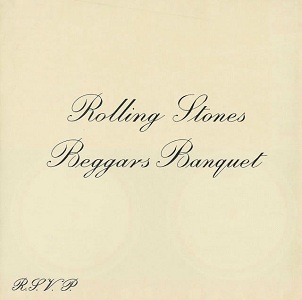
Though not one of my favorite albums, one has to give credit where credit due and there are a number of reasons to recommend this often blues-based, somewhat historic album.
The first is the earthy and relatively respectful rendition of Robert Wilkins”Prodigal Son.” Is that Mick Jagger on vocals? Hard to believe…
The second is Nicki Hopkins on piano.
The third is the mournful “No Expectations.”
The fourth is the bluegrass/country-blues “Dear Doctor.”
The fifth is the anthem-like “Salt of the Earth” replete with a chorus.
The sixth is the Keith Richards application of his chance-discovery of the already existing technique of five-string “open G” tuning, basically removing or avoiding the low sixth string, with the five strings tuned G-D-G-B-D (aligning with the overtone series of G-G-D-G-B-D) and in the case of Richards, and others to follow, using a sliding three-fingered guitar technique.
The sixth is the stretching of the then-current record-industry norms with songs with lyrics like “Sympathy for the Devil”, “Parachute Woman”. and “Stray Cat Blues”, the last two, perhaps even more offensive now in the context of political correctness than in 1968.
The seventh is the historical impact of this record, setting the tone, whether we like it or not, for how future bands would approach traditional blues and country music (like the music found on pre-WWII 78s) and songs about Satan and groupies.
This work veers away from the accelerating trend of greater complexity and sophistication, taking a U-turn towards simplification. It really is a collection of the basics of music, some as simple and crude as the album cover the Stones had originally intended for the album. My apologies if I offend anyone by using the original LP cover that I associate with this album instead of the one prevalent on the CD reissues.
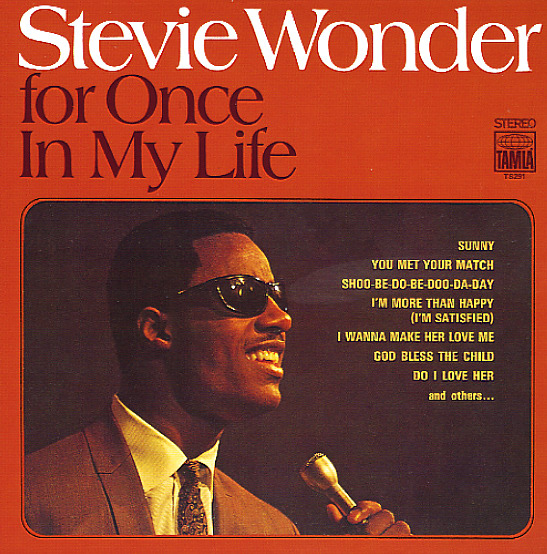
Recorded in 1967, while Stevie Wonder was still 17, this ninth studio album, released December 8, 1968, after Wonder was eighteen years old, is really the work of a mature adult artist. Though Wonder only is credited as a co-author for the eight selections that lists his name, one can distinctly hear the composer of the early seventies albums. Besides the developing compositional skills, we have strong vocals and quality harmonica and keyboard work .
“The House on the Hill” (Lawrence Brown, Berry Gordy, Allen Story) 2:36
James Taylor: James Taylor
There is always something reassuringly soothing in James Taylor’s voice. Like so many baby boomers, my first exposure to Taylor was his second album, Sweet Baby James, which my next door neighbor loaned my in 1970.
This first album, released December 6, 1968, and on the new, but short-lived, Beatles’ Apple label, which signed Taylor after Apple label A&R director Peter Asher (friend of Paul McCartney, brother of Paul’s girlfriend from 1963 to 1968, and member of the British group Peter and Gordon, which had recorded several of McCartney’s songs including their #1 hit, “A World Without Love“) had heard a forty-five minute demo tape Taylor had sent into to the new label.
Overall this is an amazingly strong debut, and rivals or surpasses the quality of later Taylor albums, with the exception of the second one, which has the wonderfully transcendent “Fire and Rain. Beatles fans should note that George Harrison and Paul McCartney make guest appearances on “Carolina on My Mind” and jazz fans should note Freddie Redd’s keyboard contributions.
Besides James Taylor’s simple, home-spun, relaxed vocals, and his quality song-writing, there are some sophisticated instrumental introductions written by arranger Richard Anthony Hewson that are worth mentioning, whether they are an integral part of the track, as with “Sunshine Sunshine” or seem more like they were added after the final take of the song. Yes, they don’t effectively assist in creating a single artistic identity to the album, or even bring out the best in the inherent nature of these James Taylor compositions, but both the handful of introductions and the arrangements have merit and add interest to the album, bringing an additional dimension to the final work.
If you have not heard this album, its worth the effort to check it out, particularly with the number of strong songs, the fine acoustic guitar work and other instrumentation, the quality of the arrangements and production, and the sterling sound quality (for 1968), partly as a result of the entire album having been recorded at Trident studio in England, at that time a state-of-the-art studio, using some of the session time that was previously booked by the Beatles.
Track listing [from Wikipedia]
All songs written by James Taylor unless otherwise noted. Times are from the original Apple LP vinyl label.
Though the first BS&T album, a work of love from Al Kooper, includes jazz instruments, this second album really begins the era of what is commonly called “jazz-rock”, a genre quite different than jazz fusion or rock-influenced jazz. Later adherents to this style, more or less, included American groups like Chicago and Chase, the Canadian band Lighthouse, and the British group If.
This second album (produced by James William Guercio at the same time he was producing the Chicago Transit Authority album) left the generally more critically admired, Al Kooper first BS&T album in the dust, commercially,selling millions of copies and by March of 1969 taking the top US album chart spot away from Glen Campbell, twice until the Hair soundtrack displaced both for a bit, with the BS&T album again rising to the #1 spot for four more weeks in late July and August.
The album provided three top five singles, Laura Nyro’s “When I Die”, Fred Lispius’s arrangement of fellow-BS&T-band member and lead singer David Clayton Thomas’s “Spinning Wheel” and the Al Kooper’s arrangement of Brenda Halloway’s modestly successful single, “You Made Me So Very Happy”.
The album is yet another 1968 that includes music by a classical composer. In this case, this album starts out with an abridged, but tasteful arrangement of two of the three pieces of Eric Satie’s “Gymnopédies.” For many listeners, including myself, this was one of the highlights of the album, and was my first introduction to Eric Satie.
This is followed by BS&T’s extended version of Traffic’s “Smiling Phases”, with its traditional jazz piano trio middle section and then the evocative Dick Halligan arrangement of Steve Katz tune “Sometime in Winter.” Next is “More and More”, which, as a thirteen-year old, was my favorite track on the album, with its fierce brass and drums.
Also, leaving an impression on me was the last track of the first side, Billie Holiday’s “God Bless the Child.” As I had not heard the original version, or any Billie Holiday recordings, I made the mistake of considering this the reference version of the song. (What kind of society would make it possible for the vast majority of Baby Boomers to have no knowledge of Billie Holiday until the release of the 1972 film “Lady Sings the Blues”?)
Blues — Part II has an interesting, progressive rock opening with Dick Halligan on organ, which is followed by a short brass outburst and then electric bass and drum solos as well as some flugelhorn, sax, electric guitar, and reflective, bluesy vocals. The album ends with a short reprise of Satie’s first “Gymnopédie“, providing a complete, fulfilling and distinct listening for anyone in 1968 and 1969 that had only a smattering exposure to real jazz. Just as seventh grade Physical Education introduced me to basketball, which led to my watching John Wooden’s UCLA Bruins and then in 1969 West, Baylor and Wilt Chamberlain’s Los Angeles Lakers, groups like BS&T and Chicago help lead my way towards the many jazz classics recorded prior to 1968.
Track listing [from Wikipedia]
Side 1
“Variations on a Theme By Erik Satie” (1st and 2nd Movements) – 2:35
Quite a contrast to her first album, The Marble Index is a true art-rock album, sounding more like a collection of twentieth century classical leider than a follow-up to her relatively accessible first album. Her intonation and singing is also better as she navigates nicely against her harmonium accompaniment and John Cale’s detailed arrangements.
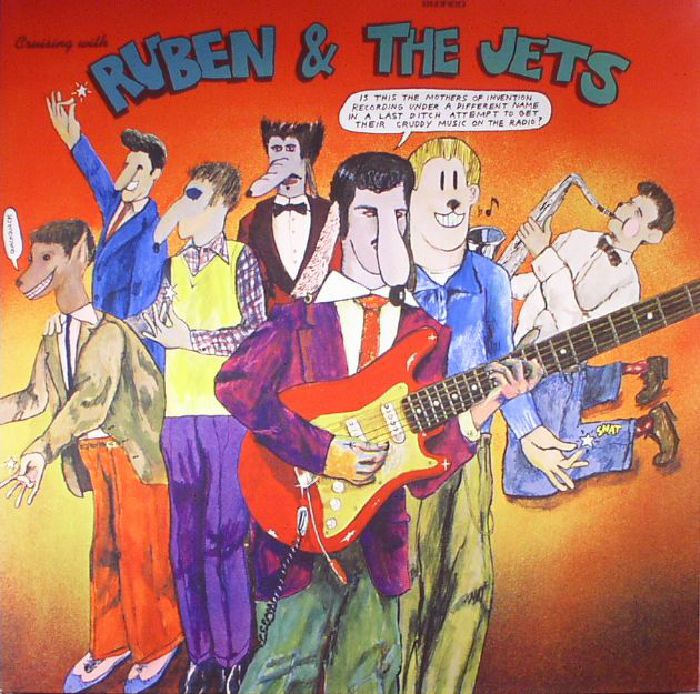
Frank Zappa & The Mothers of Invention: Cruising With Ruben & The Jets
I heard this album in the summer of 1969, and honestly didn’t know what to make of it: was it a satire of fifties music or an homage? I had several 45 singles from the late fifties that I received as gifts from my grandfather whose worked at Firestone Tire and Rubber Company, a forty acre complex in South Gate, California. I don’t know how he got all these free 45s, but figured it had something to do with his work at Firestone; many were marked as “Promotional” or “Promo”, and these various 45s, on a wide array of different record labels, provided me with an rudimentary education of fifties hits (and I believe misses, for most of this music I have never heard again since I listened to it as a child) that I am thankful for today.
So listening to this Cruising With Ruben & The Jets album for the first time at my cousin’s shared college-vicinity apartment in Sonoma County, having taken in the earlier Zappa albums there, this was a very confusing contrast to their other material.
Listening to it again, for the first time in forty-nine years, and fifty years after its initial release on November 2, 1969, I better appreciate the songwriting and solid musicianship.
And I am not so puzzled, I think.
This concept album about a fictitious band from Chino, California that eschews the modern rock of 1968 to play fifties music is both a tribute to fifties music and a satire of fifties music. This well-balanced mixture of reverence and parody is not a characteristic of all satires. Some satirical representations or portrayals are just totally fine with mocking, ridiculing, and belittling, and the worst examples do so with little regard towards faithfulness or accuracy. But it seems the best satirical music, from PDQ Bach to The Ruttles to Cruising With Ruben and the Jets, are works of love, celebrating the artistic strengths as well as the individual idiosyncrasies of their target and touching our hearts as well as bringing a smile to our faces.
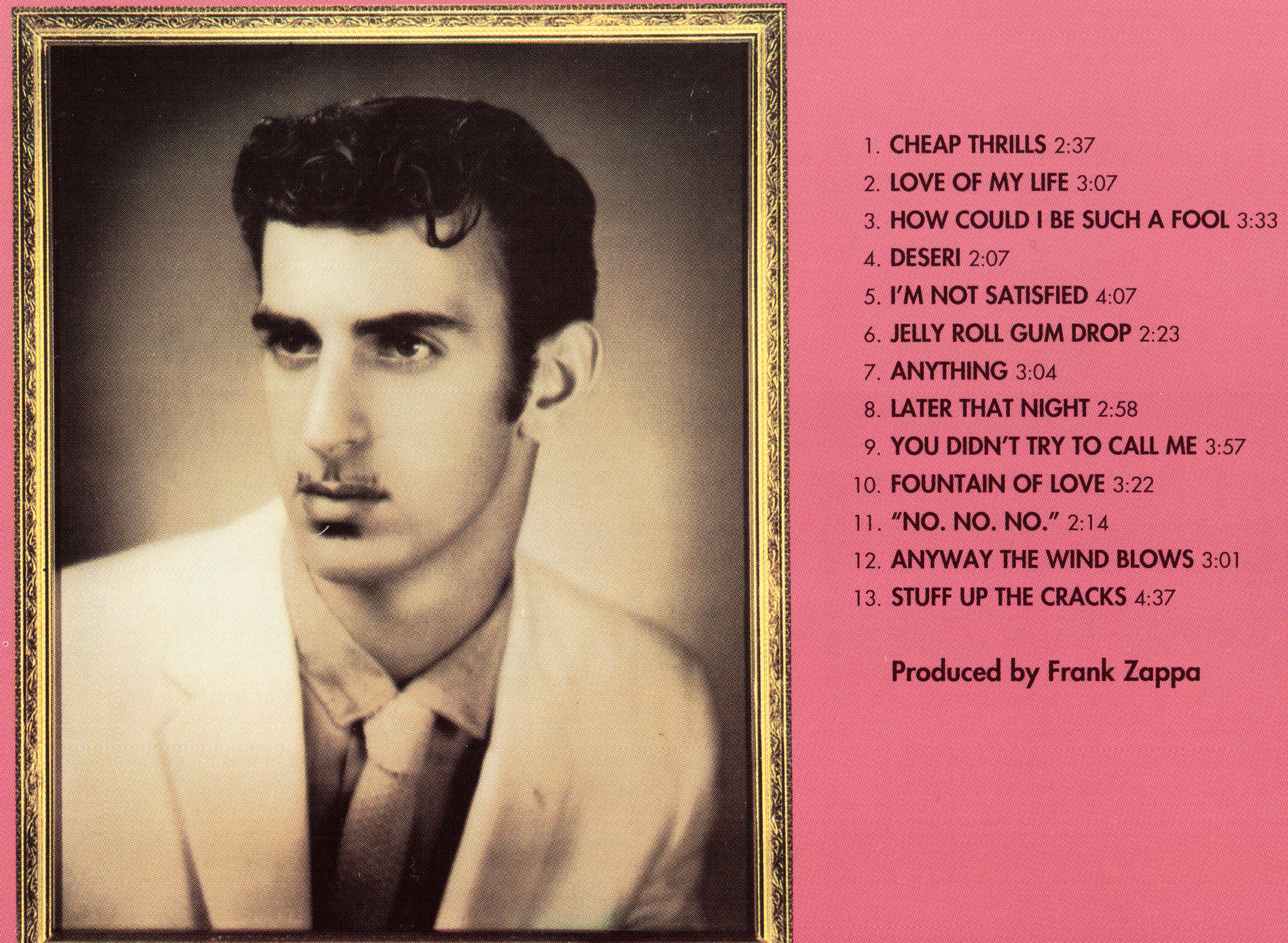
Track listing [From Wikipedia]
All tracks written by Frank Zappa except as noted.
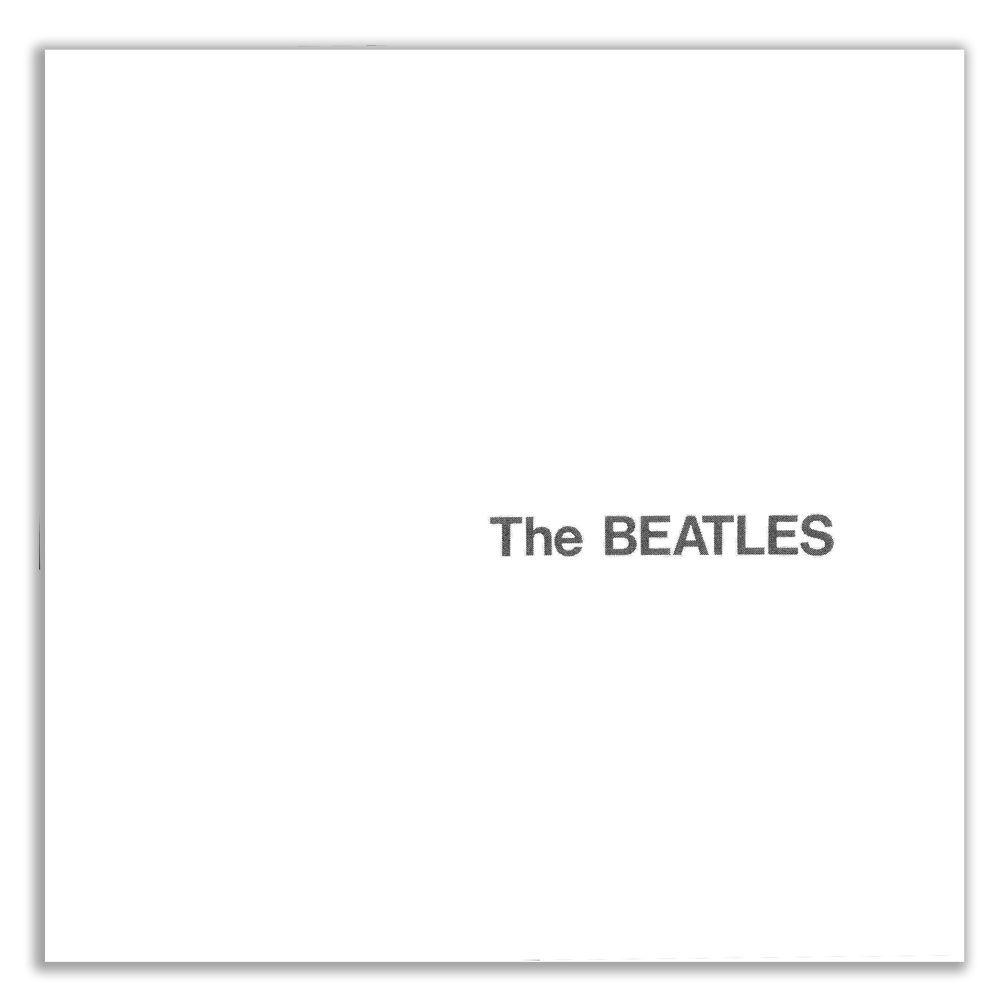
Recorded mostly at Abbey Road Studios during May through October 1968, the band took a freer, less methodical, less collaborative approach to recording this album than with the incomparable Sgt. Peppers Lonely Hearts Club Band. George Martin had less involvement, and in July, audio engineer Geogg Emerick refused to continue to work with the group. Ringo also got frustrated with his role and treatment, leaving in August, with the other Beatles replacing him on at least two tracks until he was successfully coaxed back from aboard Peter Seller’s borrowed yacht in Sardinia via telegram. Yet, this album is a classic, rich with a wide variety of excellent compositions.
It was on one of my nearly-daily visits to my next-door neighbors after Christmas of 1968 that I first heard this album, and that very day they willingly loaned it to me to record on my tape deck. Needless to say, I was impressed by this being a double album, but I was warned about the presence of a track called “Revolution 9” on side four.
I was totally unprepared for the number of instantly likable tracks, and soon realized I made the right decision to record this on a higher quality tape at a higher speed set on the tape deck. Impressed by almost each and every track, and feeling correctly warned about “Revolution 9” which I didn’t record, this was a tape I played in the presence of my dad, who I noticed also took a liking to the music — solid confirmation of the exceptional nature of this album. And how could he not like tracks like “Dear Prudence”, “Blackbird”, “Julia”, “I Will”, “Mother Nature’s Son” and “Honey Pie.” And, to my surprise, there was not a word of criticism of songs like “Everybody’s Got Something to Hide Except Me and My Monkey” and “Helter Skelter”
I still love this album. It’s far from perfect, and I am just as annoyed today at the tapping sound on “Dear Prudence” as I was the first time I heard it (perhaps more annoyed as my audio system exposes it better.) I do wish that George Martin had been more engaged, but on the other hand, I am also thankful for the inclusion of Nicki Hopkins and Eric Clapton.
Now having listened to the entire set of studio Beatles albums as well as most of the solo albums, and so much other music, I am more knowledgeable about the group today. At the age of 13, I thought of this group and listened to this group as the collective “Beatles”, today I hear individual contributors, voices and instruments. I can easily pick out the individual band members’ vocals, figure out who wrote which songs (even if I didn’t know about the rule that the lead singer is generally the composer except if Ringo is the lead), and identify Yoko Ono’s voice in the chorus of “Bungalow Bill” as well as speculate on the degree of influence the album had on contemporaneous late sixties bands as well as bands of the 1980s and later.
A few years later after the release of this album, when I was a music composition major in the 1970’s, I often thought about what composers and what bands would still be listened to a hundred years later. We are now approaching the halfway point of that hundred years, and with each passing year, it become increasingly clearer to me that Beatles will be much more popular at the end of that hundred years than the handful of mid-twentieth century composers that were listed in our 1970’s music history textbooks: textbooks which extolled the inventiveness and importance of composers like George Crumb, Milton Babbitt, Pierre Boulez, Elliot Carter, and Karlheinz Stockhausen but omitted any mention of Paul McCartney, John Lennon or George Harrison.
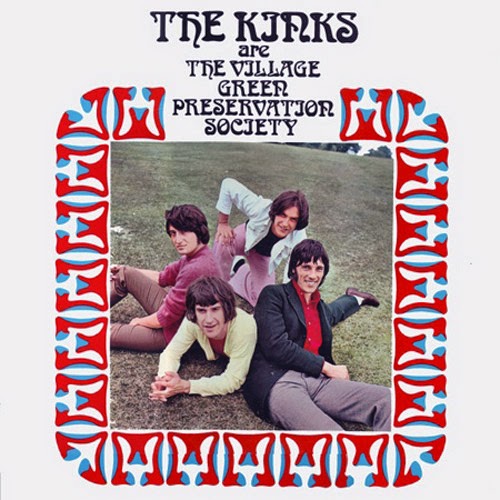
The Kinks: The Kinks Are the Village Green Preservation Society
Released on November 22, 1968, the same date that the Beatles released the White Album, The Kinks Are the Village Green Preservation Society is a concept album about preserving those elements and memories of a better world. Due to the nature of the topic (and possibly, with the Kinks still under a ban to tour the U.S., due to not getting the erosive exposure to American culture that so many of the other top British bands were experiencing) the lyrics cover, very effectively, material directly related to English cultures and values. All compositions are by Ray Davies, and showcase the very best of his musical and lyrical abilities.
Though far from successful upon its release (the album failed to chart in either the US or the UK), The Village Green Preservation Society has slowly been embraced over time, by both musicians and critics, and appreciated not only for the courage to break away completely from the commercial interests of its time, but for the general quality of each and every track. Now predominately considered the best Kinks album of all time, this is a must-listen album for anyone interested in the Kinks, The British Invasion or pop-music song craftsmanship — or for anyone just looking to hear a wonderful collection of songs.
Oh, yes, like the Beatles’ White Album, we are treated to Nikki Hopkins on piano for some of the tracks.
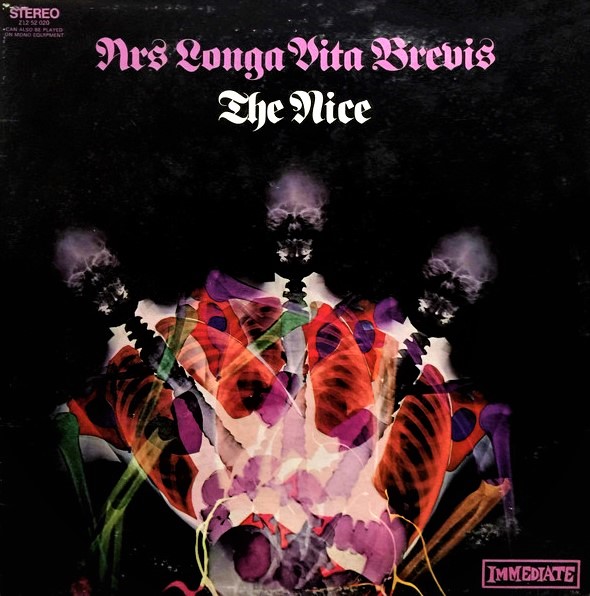
In November of 1968, The Nice release their second album, furthering their advance into progressive rock as initiated in their first album.
With the guitarist, David O’List, no longer part of the group (either dropped from the group or left on his own depending on whose side of the story is being represented), The Nice auditioned replacement guitarists, including Steve Howe. Evidently this would have worked out, except for Howe having second thoughts a week later. And so, the band moved on without a replacement guitarist, with a line up more like a traditional piano jazz trio (piano, bass and drums), then a rock group, providing the blueprint for the keyboard-dominated progressive rock group (with occasional augmentation by orchestra as in the case with this second Nice album.)
The first track, “Daddy, Where Did I Come From”, seems like a throwaway novelty number, but much like the ensuing second and third tracks, has a distinct charm and quirkiness that elevates it above the commonplace. Note the peppy piano intro by Keith Emerson as well as the brief baroque-like organ passage, the ensuing unbridled electric organ accompaniment, and the spoken dialogue as the dad.
The second track, “Little Arabella” includes vocals from Keith Emerson at around the 1:37 mark. The third track, the fanfare-like”Happy Freuds”, has Keith on lead vocals and though mostly a simple upbeat pop number, has both charm and substance.
Keith Emerson’s dominance continues with the keyboard-dominated realization of Sibelius’s Intermezzo from the Karelia Suite. The main theme works better in its original version, but Emerson’s improvisation and development of the theme — and short detour from the theme — provide the essence of this interpretation.
The title track takes up the length of the second side, including orchestra backup — at least at points. It is not so much a coherent whole as a stitchwork that includes a dramatic Keith Emerson prelude orchestrated by Robert Stewart, a four minute drum solo, the main “Ars Longa Vita Brevis” theme with Jackson on vocals, followed by a jazzy instrumental diversion, a third section with an Emerson intro that dives into the first movement of Bach’s Brandenburg, pitting Emerson’s more excursive inclinations against the orchestra’s more faithful script, followed by a restatement of the “Ars Longa Vita Brevis” theme with more jazz-like trio work and the prelude material serving as a coda.
All in all a pretty good album that delivers quality, variety and some impressive trio passages.
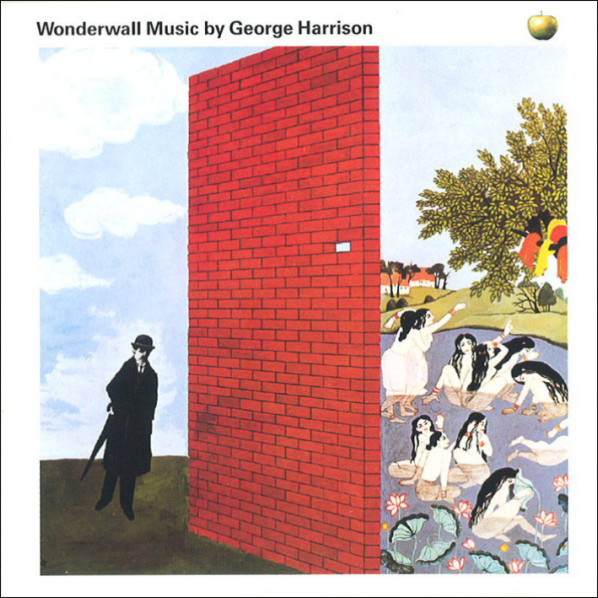
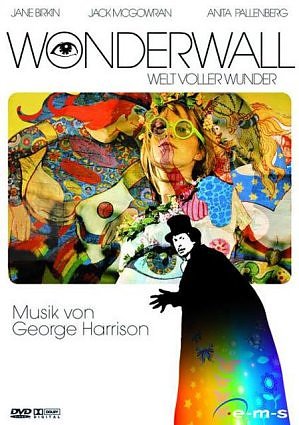
Released in Great Britain on November 1, 2018, George Harrison’s soundtrack to the mod, psychedelic film about a late middle-aged lab scientist that expands his professional interest in watching the domestic life of microbes under a microscope to watching his neighbors through a hole in the wall. Wonderwall Music is both the first solo Beatles album (if one doesn’t count George Martin/Paul McCartney’s The Family Way soundtrack which is basically various Martin arrangements of a single McCartney tune, “Love in the Open Air’) and the very first Apples-label album.
Harrison had no experience, of course, composing soundtracks, but with guidance from director Joe Massot and assistance from classical trained pianist and Ravi Shankar composition pupil, John Barham , Harrison produces an effective soundtrack that works quite well as standalone music encompassing multiple styles from classical Indian music to English Music Hall pseudo-ragtime to contemporary rock. With limited dialogue and a strong focus on visuals over story, there is plenty of opportunity in the movie for musical passages, so much so, that the album doesn’t contain all the musical material present in the film.
In terms of sales, this soundtrack album was not very successful in the UK, but it did much better in the U.S. peaking at 49 on the Billboard album chart. Critical review has been mixed during both initial evaluations and re-evaluations of the album, but the music is generally strong with some notable tracks and the general critical trend has been towards greater appreciation as time has gone by.
The music was recorded in sessions in London and Bombay, Harrison having determined from the watching the assigned sections of film, stopwatch in hand, the exact length required for the music and working with the musicians to create appropriate material to match the assigned scenes. The titles are appropriately named so that it is fairly easy to remember which part of the movie each particular track was for.
The first track, “Microbes” is used at the start of the film as background to the routine activity of microorganisms being observed under microscope and showcases the shenai, a double-reed instrument, similar to the oboe. The second track, “Red Lady Too” is particular notable for its progressive-rock-like arpeggios, suspensions and chord changes and provides a representative example of how each track in the album is a miniature musical movement in a larger suite. The short length of the compositions require a brevity of expression, so instead of having 35 minute ragas, we get short Indian classical compositions, like the one-minute third track, “Tabla and Pakajav” and the four-minute fourth track, “In the Park.”
“Drilling a Home” shows Harrison’s sense of humor, and is very much like the music used for British pantomime television comedy sketches. This is followed by another dualing-shenai composition, “Guru Vandana”, followed by a particular impressive Mellotron and Harmonium duet, showing off Harrison’s sensitivity for the subtle. Next we have Eric Claption featured on guitar in “Ski-ing”, then “Gat Kirwani” featuring sarod, sitar and tabla, followed by one of the best compositions on the album, the final track of side one, the thoughtfully crafted ambient/Hindi/instrumental/musique-concrete collage, “Dream Scene”, preceding Lennon’s Revolution and saying so much more in so much less time.
Side Two opens up with the strumming of Harrison’s acoustic guitar on a composition reminiscent of The Beatles’ instrumental, “Flying” on Magical Mystery Tour, followed by a sarod love duet, “Love Scene” and a lamenting shenai on “Crying. “Cowboy Music” was written for the scene of the neighbor’s boyfriend on rocking horse”, and is followed by another composition featuring shenai, “Fantasy Sequins.” “On the Bed”, like a rock fanfare for the opening credits of a movie or a leading-edge BBC TV show, is followed by the masterfully brief, yet totally complete, “Glass Box” featuring sitar and tabla. The album closes with the reflective, “Wonderwall to Be Here”, a short instrumental that any prog-band would be proud of, and the mystical “Singing Om” with harmonium and Hindustani bamboo flute.
At this time in the late sixties, there were more and more rock albums out that included lengthened tracks, with repeated verses and choruses that added little except to extend the length of an inherently two or three minute song to five or six minutes. In contrast, what we have here with Wonderwall Music is an album mostly of miniature-length compositions, with even the few longer ones, being skillfully compacted musical poems. Much better than allmusic.com’s and the Rolling Stones Album Guide ratings of 2 1/2 stars, this is why one should only rely on their own sensibilities in determining the merit of the great music of the late sixties.
“The whole record, in fact, is one of the most startling achievements of the recording industry in this generation and certainly one of the great feats in the history of ‘keyboard’ performance” Glenn Gould
This is the album that endeared myriad music lovers to the sound of the Moog synthesizer. Young college radicals and middle-aged classical music aficionados, alike, found a place for this album among their dearest music treasures of Zappa, Hendrix and early heavy metal on the one hand and Beethoven, Mozart, Bach, and newly-released Baroque music offerings on the other.
Staying atop the classical music Billboard charts for three years, this album had a lasting impact on many musicians including the Grateful Dead, Pink Floyd, Stevie Wonder, Keith Emerson and Don Dorsey (Bachbusters) and was the vehicle that gave Carlos the opportunity to provide film scores for two of Stanley Kubrick most successful movies: A Clockwork Orange in 1972 and The Shining in 1980.
Though not all of the album is consistently off-the-charts excellent, particularly by today’s standards of electronic-music production, there is much of great merit here. Side one particularly deserves high praise for the realization of the individual contrapuntal lines that are so much of Bach’s late Baroque compositional palette. It is the magic inherent in these Bach compositions that are so carefully and thoughtfully highlighted. This is all the more amazing, considering the technical limitations of the 1964 version of the Moog Synthesizer used — it could only play one note at a time, with the previous note having to be released before pressing the next, and it did not stay in tune for more than a few phrases. No surprise, then, that the album tallied up more than one thousand hours of production time over a five month period.
One of those landmark albums that is better appreciated in the context of the fifty years of music that followed its October 1968 release, David’s Axelrod’s first release, Song of Innocence, is an ambitious and visionary work performed by 33 top L.A. Session musicians. A mixture of jazz, rock, world (middle-eastern), and movie-music elements, incorporating strings, horns, vibes, electric organ, drums, ear-catching electric guitar work and thick, palpable electric bass, drawing upon some of the premises of third-stream jazz, and coming only months after his earlier barrier-busting Mass in F minor (covered here in an earlier post), Axelrod anticipates both some of the common aspects of fusion-jazz and an entire approach of music composition that was to appear so prevalently in some of the more ambitious and creative New Age albums that would appear in the 1980s. Per the liner notes of the latest release of Songs of Innocence, Miles Davis played the album before conceiving his own fusion of jazz and rock for Bitches Brew (1970).
Axelerod draws upon Blake’s illustrated 1789 collection of poems Songs of Innocence, for several of the tracks on the album. Axelrod originally intended to set the text to music with a choir taking on the lyrics, but instead produced a instrumental album covering additional Blake material including his extended writings on the demiurge-like “Urizen” and his four-line “Merlin’s Prophecy” from Gnomic Verses.
As one might expect from something this boldly different, the album received mostly negative reviews, with categorizations of pretentious and indulgent, and rock critics taking issues with the orchestral aspects and classical music critics taking issue with the electric guitar passages. “Holy Thursday”, the most jazz-fusion-like track on the album, received some airplay, but overall the album sold poorly and was generally forgotten until the 1990’s when the digital era brought out reassessments of almost all music material from the sixties and early seventies, with Songs of Innocence now receiving significant praise from websites like allmusic.com and tinymixtapes.com. Additionally, in the 1990’s, the album attracted the attention of multiple hip-hop artists that sampled content, particularly “Holy Thursday.”
Deep Purple’s second album, released in October 1968, takes the group one step closer to establishing an identifiable sound despite the general ecelecticism of the whole which unrestrainedly, though not recklessly, tackles hard rock, early heavy metal, psychedelic rock, and early prog.
The album starts of with the quirky homage to the Welsh 14th Century “Llyfr Taliesin” (Book of Taliesin), mixing hard rock and sixties psychedelia to support respectably decent lyrics, followed by the bluesy instrumental “Wring Thy Neck” (retitled “Hard Road” in the US. release as an act of “corporate wisdom” censorship) including solid organ work and an indulgent, though somewhat tame, guitar solo. Other notable tracks include the remaining original numbers, “Shield” and “Anthem” with the effective mix of hard rock and progressive elements. The remaining tracks include a cover of a Neil Diamond song that actually got some airplay in the U.S., the Ike and Tina Turner “River Deep – Mountain High”, and the last track on the first side which covers Beethoven, Tchaikovsky and the Beatles with the treatment of the two 19th century composers faring musically better than the Lennon/McCartney interpretation. All in all, an enjoyable album with substantial organ and guitar passages, strong vocals by Rod Evans and an effective balance between hard rock and early progressive rock, getting closer to the classic “progressive rock” sound than any album up to that point in time.
Though my primary source of exposure to music was, first, my dad, then my sister, then my friends, particularly the three brothers in the corner house next to ours, it was during the summer after eighth grade (1969) that I discovered the availability of albums at the local public library. One of the first albums I checked out, was Steve Miller’s Sailor. Fascinated by the dramatic fog-horn opening and the conscientiously paced, slightly suspenseful, early space-rock music of that first track, and further pulled in by the general accessibility and variety of the remaining tracks, I realized the value of exploring groups that were far off the radar screens of my circle of friends.
Besides the well-known “Living in the USA”, the album contains the superb ballad, “Dear Mary”, with it’s Beatlesque opening and the seven-count lengthy first note on “Dear”, the leisurely yet evocative “Quicksilver Girl” (“A lover of the world, she’s seen every branch on the tree”), and Boz Scaggs’ “Overdrive” with its Dylanesque verses and its earthy chorus anticipating early seventies rock.
Though not as strong as the other albums covered in this post, Steppenwolf’s second album has its moments, particularly on side two which opens with the Rolling Stone influenced “28” with its Nicky Hopkins-like piano work. Next is Steppenwolf’s classic “Magic Carpet Ride”, not about sex or drugs as some may infer from a casual listen to the lyrics, but about John Kay’s recently-purchased, expensive stereo system. Seriously!
“I like to dream, yes, yes,
Right between the sound machine.
On a cloud of sound I drift in the night;
Any place it goes is right —
Goes far, flies near
To the stars away from here.”
This is relevant, in the context of side two, as it opens a tribute to the blues and to blues-rock, which I suspect John Kay listened to frequently, with the opening track an authentic blues number followed by three of Kay’s compositions.
Track listing [From Wikipedia]
All music composed by John Kay, except where indicated.