Zumwalt Poems Online

Archive for the ‘Fifty Year Friday’ Category

Fifty Year Friday: Overcast, With a Chance of Showers

oc2covervfinal

Overcast: With A Chance of Showers

Trevor Stuart arrived in the United States at the age of fifteen in 1965 when his mother,  accepted a teaching post at Pierce College — Dr. Catherine Stuart becoming only the third female mathematics professor at a California college.  Trevor’s father, an electrical engineer and sometimes studio pianist, stayed in London, for several months, eventually joining Trevor and Catherine after getting landing a job as production engineer at Capitol records.

Like his mother and father, Trevor had received classical piano lessons starting at an early age, and around the middle of 1968, started getting uncredited work on an occasional rock or pop album as well as providing piano and electric organ for small ensembles recorded by Jazzco, a Muzak-like provider of  commercial background music. It was late 1968 when Trevor Stuart and Overcast singer and guitarist Bill Fortney first met while standing in line at the Troubadour club, when Fortney bemoaned the lack of success in finding a suitable replacement for guitarist Greg Paulson, who, convinced that Overcast best days were behind them, had taken a full time position at the Orange County Kimberly-Clark paper products plant.

Stuart asked a few questions about this band he had never heard of and then gave it no more thought until January 1969 when he noticed an entry for Overcast in the recording schedule at the La Brea Recording Studios immediately after a session he was sitting in on.  He stayed around to say hello to Fortney; the Overcast leader had arrived with Douglas Brandt and David Amato and it was clear that Fortney was a bit distracted.  It turned out that David Amato had broken up with Claire Stanston who, along with tenor saxophonist Rick Stephenson, would help fill in the void for guitarist Greg Paulson.  It was bad enough that Stanston didn’t want any thing whatsoever to do with Amato, but this was compounded with Rick Stephenson immediately taking an interest in Claire and determining that time spent with Overcast could hardly compare to any anticipated time spent with Claire.

It was at this point that Stuart allegedly said he would have a go at it, informing a surprised Overcast that he could play keyboards and could quickly pick up tunes, particularly if Overcast would call out the chords if the music got tricky.

Fortunately, there wasn’t anything particularly tricky in Overcast’s current set of tunes and within the next three sessions,  Overcast had laid down their second album, recorded on January 11, 17 and 18, 1969 and released on the first of April of that year.

David Amato, once again suggested the title for the album, and this time Elektra acquiesced.  However, they weren’t too keen on Amato’s suggestion for the cover of “With a Chance of Showers” — a photo of a bikini-clad model in the shower.  Neither did they go for Amato’s suggestion of a photo shoot of the band in bathing suits in the Fullerton Junior College Locker Room showers — with or without accompanying bikini-clad models.  Brandt suggested reusing the same album cover used for the first album, but with the new title added, and though this was also rejected by Elektra, a similarly looking cover, but of a somewhat lower quality, was quickly created at the last moment.

Also occurring at the last moment was Elektra’s decision to not include the song, “Better Yet”, later released on their third album, due to its lyrics which included lines like “Is there anything you’d rather get than your sugar daddy’s red corvette’ and “Am I better, better, better yet, am I better than a cigarette?” causing the band to quickly come up with “Huntington Beach Baby Blues.”  Notably, also added in that January 18th recording session, was Stuart’s psychedelic-rock version of the chord progression of Irving Berlin’s Blue Skies, with title based on Thelonious Monk’s own version of that same tune titled “In Walked Bud.”  Not censored, were any of the lyrics in “The Hallway Episode”, which included in the chorus,  “I can see, you and me, doing what we want in the hallway.”  The ideas of photo shoots with scantily clad models, as well as the lyrics in “Better Yet” and “The Hallway Episode”, all same quite tame by today’s standards,  would soon become commonplace starting in the 1970s — but for now, Frank Zappa and the Mothers of Invention excepted, this was still 1969 and Overcast was just another local band trying to make the big time by any means available, quietly giving in to the judgment of a randomly assigned Elektra representative regarding what was appropriate and what was not.  That would soon change with the poor sales of this second album and Elektra’s lack of interest in funding a third album.

all tracks written by Bill Fortney and Douglas Brandt except where noted.

Side A

No.

Title

Length

1.

“Sand, Wind, Water and You”

5:10

2.

“Chemistry with Kimberly”

3:22

3.

“Choice Decisions Left Alone”

3:50

4.

“Huntington Beach Baby Blues” (Fortney, Brandt, Amato, Stuart)

3:43

5.

“Pancake Breakfast”

4:47

Side B

No.

Title

Length

6.

“Another message for the masses”

7:02

7.

“The Hallway Episode”

3:15

8.

“Sheila Said”

4:50

9.

“Twentieth Century Overload”

3:43

10.

“In Walked Mud” (Trevor Stuart)

3:03

Personnel

Overcast

  • Bill Fortney – guitar, lead vocals
  • Douglas Brandt – bass guitar, vocals
  • Trevor Stuart, hammond organ, electric piano
  • David Amato, drums
Fifty Year Friday: Aretha Franklin, Soul ’69; Neil Young; The Beatles

arertha69

Aretha Franklin: Soul ’69

Some albums showcase great songs or excellent compositions, some great arrangements and some showcase great talent. The title is misleading, as this is more of a jazz and blues album than a soul album, and a much more appropriate title would have been “Aretha 1969.”

This excellent album, released January 17, 1969, showcases one of the great vocal instrumentalists of the last hundred years at her best.  In general, the arrangements set up Aretha Franlin to effectively display her incredible musicality.  On this album, Aretha is not song-interpreter in the manner of Billie Holiday, Mildred Bailey, Johnny Hartman, or Chet Baker, but is an expressive instrumentalist like John Coltrane, Charlie Parker, or Eric Dolphy.   For anyone wishing to explore what made Aretha so great, this is a perfect album to start with.

We also get a myriad of skilled jazz musicians backing her up.

Track listing (from Wikipedia)

Side one

Writers(s)

1.

“Ramblin'”
Big Maybelle

2.

Today I Sing the Blues
Curtis Reginald Lewis

3.

“River’s Invitation” Percy Mayfield

4.

“Pitiful” Rosie Marie McCoy, Charlie Singleton

5.

Crazy He Calls Me
Bob RussellCarl Sigman

6.

Bring It On Home to Me
Sam Cooke

Side two

7.

Tracks of My Tears
Smokey RobinsonPete MooreMarv Tarplin

8.

“If You Gotta Make a Fool of Somebody”
Rudy Clark

9.

Gentle on My Mind
John Hartford

10.

So Long
Russ Morgan, Remus Harris, Irving Melsher

11.

I’ll Never Be Free
Bennie BenjaminGeorge David Weiss

12.

Elusive Butterfly
Bob Lind

Personnel 

neil-young-debut

Neil Young: Neil Young

I’m a pushover for early Neil Young, whether it’s his simple, uncomplicated songs (uncomplicated harmonically and lyrically) like “The Loner” or his repetitive, extended songs with unfathomable lyrics like “The Last Trip to Tulsa.”  Nothing here on this album to get a Pulitzer Prize for music or a Nobel Prize for poetry, but how can you not love how Neil cuts to the core of what the singer songwriter experience is all about and provides the equivalent warmth and informalness of those Saturday lunches at a friend’s house?  It’s always a pleasure to take this timeless debut album, released January 22, 1969, for a spin — a classic album which winningly captures and represents Neil Young being Neil Young.

yellowsubR-4497960-1366572256-6586.jpeg.jpg

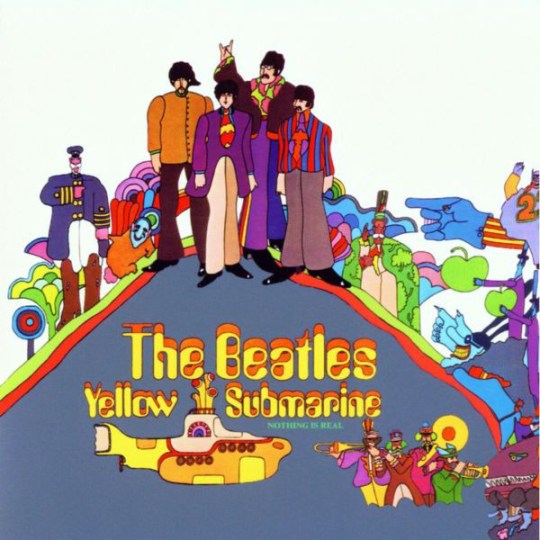
The Beatles: Yellow Submarine

And of course, I have to mention the Yellow Submarine “soundtrack” album, released January 13, 1969, which importantly contains one masterpiece, John Lennon’s 1968 blues-based “Hey Bulldog” with its opening, addictive riff emphasizing the melodic dissonance of the tritone and McCartney’s solid and sometimes improvisitory bass work, and one other very strong composition, George Harrison’s 1967 “Only a Northern Song.”  Also included is the 1967 early psychedelic, “It’s All Too Much.”

Fifty Year Friday: The Pretty Things, S.F. Sorrow; Led Zeppelin

s.f.-sorrow-front

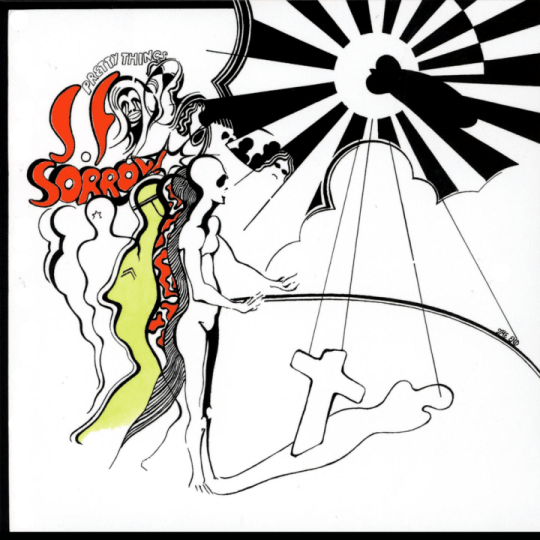
Pretty Things: S.F. Sorrow

Recorded from November 1967 to September 1968 in Abbey Road Studios, The Pretty Thing’s S.F. Sorrow, initially largely ignored but now generally considered a classic, was released in the UK in December 1968, and then not released in the U.S. until the middle of 1969.  Panned by the Rolling Stone’s Lester Bangs as an “ultra-pretentious” concept album, the album received limited attention for years. Its poor reception and lack of sales precipitated founder and lead guitarist into leaving the band for a period of nearly a decade.

There seems to be many contributing factors to the album’s commercial failure: the lack of promotion, the late release of the album in the States (coming out after, rather than before, The Who’s superior, more opera-like concept album, Tommy), bad reviews, and the dark, despondent subject matter, allegorical and tragic, with its primary character named Sebastian Sorrow.  Also, heavily influenced by the Beatles’ Sgt. Peppers and “Fool on the Hill”,  its musical language is that of the psychedelic rock of late 1967 and 1968, now losing much of its mass popularity.  By the time of the album’s release, the major proponents, adherents, and imitators of psychedelic rock were moving on to hard rock, progressive rock, or heavy metal.  These and other reasons caused the album to be pretty much ignored until reissued by Edsel records in the late 1980s on vinyl and then on CD in the early 1990s.

I purchased a S.F. Sorrow CD around 1992 and set it aside for some time, coming back to it recently, taking the time to appreciate what it had to offer and its historical significance — not so important as an early concept album — remember Nirvana’s 1967 album as well as other concept albums, including Sgt. Peppers, Days of Future Passed, and The Who Sell Out preceding it — but as one of the last carefully-crafted psychedelic albums of the sixties — and one that looks forward towards hard rock, progressive rock, and heavy metal — three of the most prevailing, and commercially viable, offshoots of the psychedelic rock era.

The Beatles’ influence, particularly from Sgt Peppers and singles like “Fool on the Hill”, is strong — the second track borrows elements from “Norwegian Wood” through “For the Benefit of Mr. Kite”, and the third track, “I am the Walrus” and “Good Morning” — yet, this is an album that incorporates and absorbs those influences more than mimics.

More to the point, is the quality of the album which starts out strong and builds to the end without weakness or filler; even the somewhat musique-concrete “Well of Destiny” (possibly influenced by the transitional section of “Day in the Life” ) serving its purpose in the musical narrative.  The arrangements, variety, and appropriateness of instrumentation further elevates the quality of the album, and in fact are usually of greater interest than the melodic/harmonic content of the songs themselves. (Perhaps the best song on the album, is the most simply arranged one, the poignant, “Loneliest Person”)

Though this album is very much a product of  1967 and 1968 sensibilities and styles, there are passages and techniques that anticipate other works of 1969 and the early seventies.  One can hear hints at later music from the Beatles-influenced Electric Light Orchestra (especially in “Trust”) and Badfinger to Benefit-era Jethro Tull (“Private Sorrow”) to the Who’s Tommy (“The Journey” and the intro to “Old Man Going”) to Queen.  The most remarkable similarity is to the heavy metal, bass-dominated style of Black Sabbath in “Old Man Going”  which also includes a short hard-rock electric guitar.

The CD release includes some notable bonus tracks, including “Defecting Grey” , a commercially unsuccessful single from this time period.

Track listing [from Wikipedia]

Side One

1. “S.F. Sorrow Is Born” Phil May, Dick Taylor, Wally Waller 3:12
2. “Bracelets of Fingers” May, Taylor, Waller 3:41
3. “She Says Good Morning” May, Taylor, Waller, Twink 3:23
4. “Private Sorrow” May, Taylor, Waller, Jon Povey 3:51
5. “Balloon Burning” May, Taylor, Waller, Povey 3:51
6. “Death” May, Taylor, Waller, Povey, Twink 3:05

Side Two

7. “Baron Saturday” May, Taylor, Waller 4:01
8. “The Journey” May, Taylor, Waller, Twink 2:46
9. “I See You” May, Taylor, Waller 3:56
10. “Well of Destiny” May, Taylor, Waller, Povey, Twink, Norman Smith 1:46
11. “Trust” May, Taylor, Waller 2:49
12. “Old Man Going” May, Taylor, Waller, Povey, Twink 3:09
13. “Loneliest Person” May, Taylor, Waller, Twink 1:29
Bonus tracks

14. “Defecting Grey” May, Taylor, Waller 4:27
15. “Mr. Evasion” May, Taylor, Waller, Twink 3:26
16. “Talkin’ About the Good Times” May, Taylor, Waller 3:41
17. “Walking Through My Dreams” May, Taylor, Waller, Povey 3:35
18. “Private Sorrow” (Single version) May, Taylor, Waller, Povey 3:50
19. “Balloon Burning” (Single version) May, Taylor, Waller, Povey 3:45
20. “Defecting Grey” (Acetate recording) May, Taylor, Waller 5:10

Personnel

The Pretty Things

  • Phil May – vocals
  • Dick Taylor – lead guitar, vocals
  • Wally Waller – bass, guitar, vocals, wind instruments, piano
  • Jon Povey – organ, sitar, Mellotron, percussion, vocals
  • Skip Alan – drums (on some tracks, quit during recording)
  • Twink – drums (on some tracks, replaced Alan), vocals

CFP National Championship - Alabama v Clemson

Led Zeppelin: Led Zeppelin

With the semantic essence of heavy metal captured in the group’s name, its hard to dispute that Led Zeppelin forged a new path down the nascent arena of hard rock and heavy metal. With a name remarkably similar to Iron Butterfly, and a similar, but more promising, blues-based musical DNA, we have the beginnings of what would soon be the quintessential hard rock group influencing predecessors like Free to countless successors like Aerosmith, Metallica, Queen, Alice Kooper, Guns N’ Roses and countless emulators that never landed a major recording contract.

From the opening guitar and drums in the opening track, “Good Times, Bad Times”, there is a focus, crispness and intensity not present in many of the blues-based rock albums immediately preceding this one.  My first experience with this album was when my next door neighbor brought it over for me to capture on my reel-to-reel tape deck for my own, limited music library.  Based on my friend’s direction, I recorded the tracks he thought worth putting on tape, securing the more accessible tracks, like”Good Times, Bad Times”,  “Babe I’m Going to Leave You” and “Communication Breakdown” but leaving out a couple I would not listen to again for decades — the last two tracks of side two.  Fortunately, since my friend had fairly good taste, we recorded all of side one, including the mysteriously dark and heavy, “Dazed and Confused”, a well-written composition, starting with, and repeating, a chromatically-descending chord sequence. Though credited to Jimmy Page on the album, the work is mostly based on a song by the same name on a 1967 album by Jake Holmes, which the Yardbirds (a group that included Jimmy Page for a while) had originally “borrowed.”  If you haven’t heard the Jake Holmes version, do yourself a favor and take the time to listen to it below.

Side Two of Led Zeppelin starts with a majestic organ solo by John Paul Jones as part of the captivating beginning of “Your Time Is Gonna  Time.” Unfortunately, the verse is much stronger than a weak, almost annoying, chorus that detracts from the rest of the work.

The next track, one which we also recorded for my repeated listening pleasure was “Black Mountain Side” based on an arrangement of the Irish folk song “Down by Blackwaterside” taught to Jimmy Page by Al Stewart.  This is followed by “Communication Breakdown”, later to become an AM radio hit.  For me, this title always brings to mind that famous phase in Cool Hand Luke — “What we’ve got here is a failure to communicate.”

The last two tracks are probably what my friend would have referred to as the band just jamming, but listening to these again, I appreciate the quality musicianship and the  overall mood.  That said, I can’t particularly bemoan not having grown up with these two tracks as part of the musical soundtrack of my high school years (1969-1973.)

Though I have mixed feelings about this album, which has many strong points, but is certainly guilty of not properly crediting others, a common enough practice in the Renaissance and Baroque days of music, but not so acceptable in the late 1960s,  I would pick this in an instant over contemporary albums by Steppenwolf and Iron Butterfly.  Do I regularly, or, on average, once-a-decade listen to this? Not really; I find the later Led Zeppelin albums more appealing — and I pretty much don’t listen to those due to all the more interesting jazz, rock and classical music that contends for my limited listening time.  However, that said, prior to posting this Fifty Year Friday entry, I did truly enjoy listening to this first “L-Zep” (modern transformation of their name) once again (and then a second time), forty-nine and a half years later after first hearing all of it, and  making a copy of it for my own use, just as Jimmy Page had made a copy of both “Dazed and Confused” and “Down by Blackwaterside” for Led Zeppelin’s own use on their very first album.

No. Title Writer(s) Length
1. Good Times Bad Times 2:46
2. Babe I’m Gonna Leave You


6:42
3. You Shook Me 6:28
4. Dazed and Confused Page, inspired by Jake Holmes[c] 6:28
 

Side two

No. Title Writer(s) Length
5. “Your Time Is Gonna Come”
  • Page
  • Jones
4:34
6. Black Mountain Side” (instrumental) Page 2:12
7. Communication Breakdown
  • Page
  • Jones
  • Bonham
2:30
8. I Can’t Quit You Baby Dixon 4:42
9. How Many More Times
  • Page
  • Jones
  • Bonham
8:27


Led Zeppelin

Additional personnel


Fifty Year Friday: The Canterbury Scene: Soft Machine and Caravan first albums

Establishing the starting point of progressive rock is a hopeless cause since elements of progressive rock appear in bits in pieces long before a general progressive rock style.  The best one can do is try establish the earliest date of the first progressive rock group. Some might argue that such an “earliest date” is established by the formation of the Wilde Flowers, a group of jazz-leaning musicians that took a crack at British Rock and Roll in 1964 and developed a more-or-less accessible, and even partly danceable style of music that foreshadows the music of the Canterbury scene — easily enough explained by the members of the Wilde Flowers all taking prominent roles in these later groups. Though no albums were recorded, we have a set of demos that have been released on CD and are currently available on You Tube.  Keep in mind that these were demos and not particularly representative of Wilde Flower live performances, which included some jazz-based improvisation.

Though I prefer to keep my distance from the term “progressive rock” as a label for a style of music, I support a concept of progressive rock representing the pushing of boundaries of status-quo music and breaking free of the constraints of commercial expectations, particularly when commercially successful as in the case of songs like the Queen’s “Bohemian Rhapsody.”  This means that any rock music, whether by the Beach Boys, the Beatles, Jefferson Airplane, The Doors, The Zombies or some other group from the mid or late sixties that goes past the minimal expectations of pop/rock to explore the passageways that naturally and unnaturally twist and spiral out into Robert Frost’s road not taken.  This is also why I am hesitant to consider some of the “neo-progressive” rock bands as notably progressive — such a use of the “progressive” label creates the ironic condition when applied to today’s musicians, of being indicative of a lack of progressiveness as they are trying to recreate an older style as opposed to pushing out to new territories. However, that said, quality and excellence is a more welcome and appealing feature in any music over progressiveness for the sake of sounding or being progressive. I will more readily listen to the post-romantic British symphony composers of the early twentieth century over many of their contemporary atonal composers.

The Wilde Flowers

Band members included, at various times:

softm1MI0001896961

The Soft Machine: The Soft Machine

The Soft Machine, named after the 1961 novel by William S. Burroughs (titled based on the nature of the human body) started as a quartet in 1966 that included Robert Wyatt and Kevin Ayers from the Wilde Flowers, and classically-trained keyboardist Mike Ratledge and guitarist Daevid Allen from the free-jazz group Daevid Allen Trio. Following a European tour in August 1967, Allen, an Australian, was refused re-entry into Britain due to a previous overstay on an earlier visit.  Allen returned to Paris, to later form the group Gong, leaving Soft Machine a trio. On the first Soft Machine album we also have  Brian Hopper and Hugh Hopper, prior members of The Wilde Flowers, appearing in the writing credits.

This first Soft Machine album is a mixture of psychedelic rock and jazz elements as in tracks like “Joy of a Toy”, based on “Joy to The World” and sounding more like early space rock than Christmas music. Robert Wyatt makes up for any shortcomings as a vocalist with his contributions on drums.

Interestingly, the post of this first Soft Machine album on YouTube (link) has a Dislike to Like ratio of .0257 in the same ballpark of the Beatles’ Sgt. Peppers (link) ratio of .0254 — compare that to the Beatles’ Abbey Road ratio of .15 (link) or Gentle Giant’s Free Hand of .030 (link)

Track listing [from Wikipedia]

Side one
No. Title Writer(s) Length
1. “Hope for Happiness” Kevin AyersMike RatledgeBrian Hopper 4:21
2. Joy of a Toy Ayers, Ratledge 2:49
3. “Hope for Happiness (Reprise)” Ayers, Ratledge, B. Hopper 1:38
4. “Why Am I So Short?” Ratledge, Ayers, Hugh Hopper 1:39
5. “So Boot If At All” Ayers, Ratledge, Robert Wyatt 7:25
6. “A Certain Kind” H. Hopper 4:11
Side two
No. Title Writer(s) Length
7. “Save Yourself” Wyatt 2:26
8. “Priscilla” Ayers, Ratledge, Wyatt 1:03
9. “Lullabye Letter” Ayers 4:32
10. “We Did It Again” Ayers 3:46
11. “Plus Belle qu’une Poubelle” Ayers 1:03
12. “Why Are We Sleeping?” Ayers, Ratledge, Wyatt 5:30
13. “Box 25/4 Lid” Ratledge, H. Hopper 0:49

The Soft Machine

Additional personnel

caravan R-11701362-1520895436-5771.jpeg

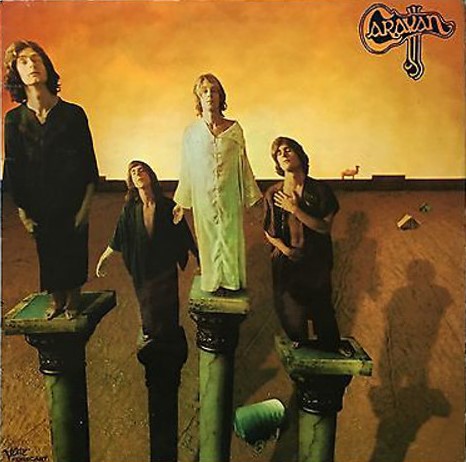
Caravan: Caravan

Also made up of band members from The Wilde Flower (Pye Hastings, David and Richard Sinclair, and drummer Richard Coughlan), Caravan started up in 1968 and released their first album about the same time as Soft Machine’s first album.  This would be the first British group signed to Verve records, the famed American Jazz label founded in 1956 by Norman Granz that not only carried the most jazz titles in their catalog of any label, but also was home to Frank Zappa and The Velvet Underground.

Even if one is able to somehow dismiss the first first two Nice albums or the first Soft Machine album as qualifying as fitting into the progressive rock genre classification (once again, I am making a distinction between between being considered progressive rock music and being classified under the prog-rock label), it is much more difficult to dismiss this first Caravan album. It is unfortunate that the balance and mixing of this album is dodgy at best, but the music more than compensates for this otherwise serious failing.

“Place of My Own” with its alternation between the dreaminess of impressionism and the insistent forward progress of a march creates a whole organic work of four minutes that is comparable in substance to a similar length classical or jazz track. With liberal use of keyboard arpeggios and emphasis on the instrumental section over the lyrics, Caravan creates an overall mood and character to the entire work giving it is own identity as effectively as bands like Yes and Genesis would do to many of their songs on their early albums.  This is followed by the Indian-influenced instrumental, “Ride”, the effective forward-moving and sometimes beautiful “Love Song with Flute”, and the quirky, mostly psychedelic Cecil Rons. ” However, the most notable piece is the nine-minute “Where but for Caravan Would I” which is co-written by Caravan and Brian Hopper (who also co-authored some of the tracks on the first Soft Machine album.)  It is epic in nature,  starting off with a relatively simple section, repeated, that modulates to a short contrasting section that quickly returns to the original section again before breaking out into a furious instrumental section dominated by organ that again returns to the original key and the altered and more intense original theme, which is followed by a more complex rhythmical section that nicely functions as the coda to bring the work to a satisfying and complete conclusion.  This is a template for the prototypical prog-rock track, laid bare without any unnecessary frills or complications, something easily grasped and enjoyed, and available to be copied with endless variation and development.  Yes, later groups would move well beyond this, but Caravan provides the necessary starting point — and though it may not so much have influenced other groups as much as it was just an instance of the parallel development of the post-psychedelic rock groups that got their start at the end of the late sixties, it is as an impressive example of the relentless nature of this new music to carve out its own language and means of expression from the available languages and expressions readily available in the diverse music of that time.

Track listing [from Wikipedia]

All tracks credited to Sinclair, Hastings, Coughlan & Sinclair except “Where but for Caravan Would I?” which is written by Sinclair, Hastings, Coughlan, Sinclair and Brian Hopper.

Side One

#

Title

Length

1.

“Place of My Own”

4:00

2.

“Ride”

3:41

3.

“Policeman”

2:45

4.

“Love Song with Flute”

4:09

5.

“Cecil Rons”

4:05

Side Two

#

Title

Length

1.

“Magic Man”

4:01

2.

“Grandma’s Lawn”

3:23

3.

“Where but for Caravan Would I?”

9:01

Caravan

  • Pye Hastings – lead vocals (side 1: 1-2, 4), co-lead vocals (side 1: 5 & side 2: 1, 3), guitars, bass guitar
  • Richard Sinclair – lead vocals (side 1: 3 & side 2: 2), co-lead vocals (side 1: 5 & side 2: 1, 3), bass guitar, guitar
  • Dave Sinclair – organ, piano
  • Richard Coughlan – drums


Side Note:

Interestingly, the post of this first Soft Machine album on YouTube (link) has a Dislike to Like ratio of .0257 in the same ballpark of the Beatles’ Sgt. Peppers (link) ratio of .0254 — compare that to the Beatles’ Abbey Road ratio of .15 (link) or Gentle Giant’s Free Hand of .030 (link)  

Caravan’s first album Dislike to Like Ratio on Youtube (https://www.youtube.com/watch?v=Bt1inf8CRnE&list=PLALZtwXPtUFKvbI7h8Fc5CdqRYoI_qyyd) is .0028 — or 356 likes to only one Dislike — rather unheard of in youtube land.

Fifty Year Friday: Rolling Stones, Stevie Wonder, James Taylor, and Blood Sweat & Tears

BeggarsBanquetLP

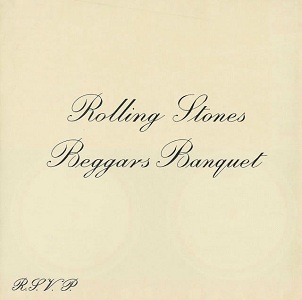
Rolling Stones: Beggars Banquet

Though not one of my favorite albums, one has to give credit where credit due and there are a number of reasons to recommend this often blues-based, somewhat historic album.

The first is the earthy and relatively respectful rendition of Robert Wilkins”Prodigal Son.” Is that Mick Jagger on vocals?  Hard to believe…

The second is Nicki Hopkins on piano.

The third is the mournful “No Expectations.”

The fourth is the bluegrass/country-blues “Dear Doctor.”

The fifth is the anthem-like “Salt of the Earth” replete with a chorus.

The sixth is the Keith Richards application of his chance-discovery of the already existing technique of five-string “open G” tuning, basically removing or avoiding the low sixth string, with the five strings tuned G-D-G-B-D (aligning with the overtone series of G-G-D-G-B-D) and in the case of Richards, and others to follow, using a sliding three-fingered guitar technique.

The sixth is the stretching of the then-current record-industry norms with songs with lyrics like “Sympathy for the Devil”, “Parachute Woman”. and “Stray Cat Blues”, the last two, perhaps even more offensive now in the context of political correctness than in 1968.

The seventh is the historical impact of this record, setting the tone, whether we like it or not, for how future bands would approach traditional blues and country music (like the music found on pre-WWII 78s)  and songs about Satan and groupies.

This work veers away from the accelerating trend of greater complexity and sophistication, taking a U-turn towards simplification.  It really is a collection of the basics of music, some as simple and crude as the album cover the Stones had originally intended for the album.  My apologies if I offend anyone by using the original LP cover that I associate with this album instead of the one prevalent on the CD reissues.

Track listing [from Wikipedia]

All songs written by Mick Jagger and Keith Richards, except “Prodigal Son” by Robert Wilkins.

Side one
No.TitleLength
1.Sympathy for the Devil6:18
2.No Expectations3:56
3.Dear Doctor3:28
4.Parachute Woman2:20
5.Jigsaw Puzzle6:06
Total length:22:08
Side two
No.TitleLength
6.Street Fighting Man3:16
7.“Prodigal Son”2:51
8.Stray Cat Blues4:38
9.Factory Girl2:09
10.Salt of the Earth4:48
Total length:17:42

Personnel

The Rolling Stones

Additional personnel

wonder_stev_foroncein_102b.jpg

Stevie Wonder: For Once in My Life

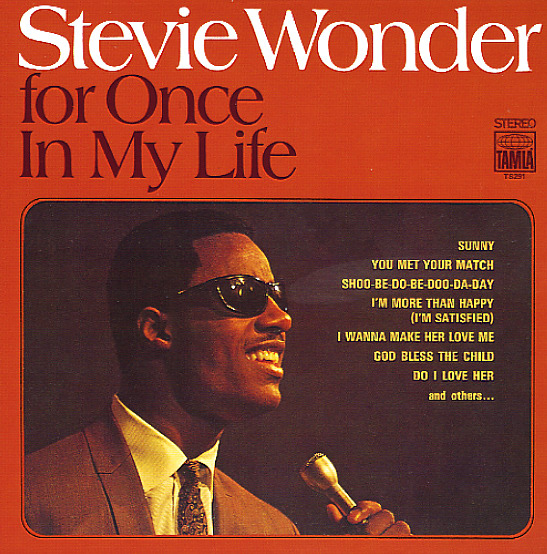
Recorded in 1967, while Stevie Wonder was still 17, this ninth studio album, released December 8, 1968, after Wonder was eighteen years old, is really the work of a mature adult artist.  Though Wonder only is credited as a co-author for the eight selections that lists his name, one can distinctly hear the composer of the early seventies albums. Besides the developing compositional skills, we have strong vocals and quality harmonica and keyboard work .

Track listing [from Wikipedia]

Side One

  1. For Once in My Life” (Ron Miller, Orlando Murden) 2:48
  2. Shoo-Be-Doo-Be-Doo-Da-Day” (Henry CosbySylvia Moy, Stevie Wonder) 2:45
  3. “You Met Your Match” (Lula Mae Hardaway, Don Hunter, Wonder) 2:37
  4. “I Wanna Make Her Love Me” (Henry Cosby, Hardaway, Moy, Wonder) 2:52
  5. “I’m More Than Happy (I’m Satisfied)” (Henry Cosby, Cameron Grant, Moy, Wonder) 2:56
  6. I Don’t Know Why” (Hardaway, Hunter, Paul Riser, Stevie Wonder) 2:46

Side Two

  1. Sunny” (Bobby Hebb) 4:00
  2. “I’d Be a Fool Right Now” (Cosby, Moy, Wonder) 2:54
  3. “Ain’t No Lovin'” (Hardaway, Hunter, Riser, Wonder) 2:36
  4. God Bless the Child” (Arthur Herzog Jr.Billie Holiday) 3:27
  5. “Do I Love Her” (Moy, Wonder) 2:58
  6. “The House on the Hill” (Lawrence Brown, Berry Gordy, Allen Story) 2:36

JT217202967_af8f2120a8_b

James Taylor: James Taylor

There is always something reassuringly soothing in James Taylor’s voice. Like so many baby boomers, my first exposure to Taylor was his second album, Sweet Baby James, which my next door neighbor loaned my in 1970.

This first album, released December 6, 1968, and on the new, but short-lived, Beatles’ Apple label, which signed Taylor after Apple label A&R director Peter Asher (friend of Paul McCartney, brother of Paul’s girlfriend from 1963 to 1968, and member of the British group Peter and Gordon, which had recorded several of McCartney’s songs including their #1 hit, “A World Without Love“) had heard a forty-five minute demo tape Taylor had sent into to the new label. 

Overall this is an amazingly strong debut, and rivals or surpasses the quality of later Taylor albums, with the exception of the second one, which has the wonderfully transcendent “Fire and Rain.  Beatles fans should note that George Harrison and Paul McCartney make guest appearances on “Carolina on My Mind” and jazz fans should note Freddie Redd’s keyboard contributions. 

Besides James Taylor’s simple, home-spun, relaxed vocals, and his quality song-writing, there are some sophisticated instrumental introductions written by arranger Richard Anthony Hewson that are worth mentioning, whether they are an integral part of the track, as with “Sunshine Sunshine” or seem more like they were added after the final take of the song.  Yes, they don’t effectively assist in creating a single artistic identity to the album, or even bring out the best in the inherent nature of these James Taylor compositions, but both the handful of introductions and the arrangements have merit and add interest to the album, bringing an additional dimension to the final work.

If you have not heard this album, its worth the effort to check it out, particularly with the number of strong songs, the fine acoustic guitar work and other instrumentation, the quality of the arrangements and production, and the sterling sound quality (for 1968), partly as a result of the entire album having been recorded at Trident studio in England, at that time a state-of-the-art studio, using some of the session time that was previously booked by the Beatles.

Track listing [from Wikipedia]

All songs written by James Taylor unless otherwise noted. Times are from the original Apple LP vinyl label.

Side one
  1. “Don’t Talk Now” – 2:36
  2. “Something’s Wrong” – 3:00
  3. Knocking ‘Round the Zoo” – 3:26
  4. “Sunshine Sunshine” – 3:30
  5. “Taking It In” – 3:01
  6. Something in the Way She Moves” – 2:26
Side two
  1. Carolina in My Mind” – 3:36
  2. “Brighten Your Night With My Day” – 3:05
  3. Night Owl” – 3:38
  4. “Rainy Day Man” (Taylor, Zach Wiesner) – 3:00
  5. Circle Round the Sun” (Traditional; arranged by Taylor) – 3:24
  6. “Blues Is Just a Bad Dream” – 3:42
CD bonus tracks (2010 remaster)
  1. Sunny Skies” (Demo) – 2:12
  2. “Let Me Ride” – 3:57
  3. “Sunshine Sunshine” (Demo) – 2:51
  4. “Carolina in My Mind” (Demo) – 3:06

Personnel

bst-63504-blood-sweat-tears-front


Blood Sweat & Tears: Blood, Sweat & Tears

Though the first BS&T album, a work of love from Al Kooper, includes jazz instruments, this second album really begins the era of what is commonly called “jazz-rock”, a genre  quite different than jazz fusion or rock-influenced jazz. Later adherents to this style, more or less, included American groups like Chicago and Chase, the Canadian band Lighthouse, and the British group If.

This second album (produced by  James William Guercio at the same time he was producing the Chicago Transit Authority album) left the generally more critically admired, Al Kooper first BS&T album in the dust, commercially,selling millions of copies and by March of 1969 taking the top US album chart spot away from Glen Campbell, twice until the Hair soundtrack displaced both for a bit, with the BS&T album again rising to the #1 spot for four more weeks in late July and August. 

The album provided three top five singles, Laura Nyro’s “When I Die”, Fred Lispius’s arrangement of fellow-BS&T-band member and lead singer David Clayton Thomas’s “Spinning Wheel” and the Al Kooper’s arrangement of Brenda Halloway’s modestly successful single, “You Made Me So Very Happy”.

The album is yet another 1968 that includes music by a classical composer.  In this case, this album starts out with an abridged, but tasteful arrangement of two of the three pieces of Eric Satie’s “Gymnopédies.” For many listeners, including myself, this was one of the highlights of the album, and was my first introduction to Eric Satie.

This is followed by BS&T’s extended version of Traffic’s “Smiling Phases”, with its traditional jazz piano trio middle section and then the evocative Dick Halligan arrangement of Steve Katz tune “Sometime in Winter.”  Next is “More and More”, which, as a thirteen-year old, was my favorite track on the album, with its fierce brass and drums.

Also, leaving an impression on me was the last track of the first side, Billie Holiday’s “God Bless the Child.”  As I had not heard the original version, or any Billie Holiday recordings, I made the mistake of considering this the reference version of the song.  (What kind of society would make it possible for the vast majority of Baby Boomers to have no knowledge of Billie Holiday until the release of the 1972 film “Lady Sings the Blues”?)

Blues — Part II has an interesting, progressive rock opening with Dick Halligan on organ, which is followed by a short brass outburst and then electric bass and drum solos as well as some flugelhorn, sax, electric guitar, and reflective, bluesy vocals. The album ends with a short reprise of Satie’s first “Gymnopédie“, providing a complete, fulfilling and distinct listening for anyone in 1968 and 1969 that had only a smattering exposure to real jazz.  Just as seventh grade Physical Education introduced me to basketball, which led to my watching John Wooden’s UCLA Bruins and then in 1969 West, Baylor and Wilt Chamberlain’s  Los Angeles Lakers, groups like BS&T and Chicago help lead my way towards the many jazz classics recorded prior to 1968.

Track listing [from Wikipedia]

Side 1

  1. “Variations on a Theme By Erik Satie” (1st and 2nd Movements) – 2:35
  2. Smiling Phases” (Steve WinwoodJim CapaldiChris Wood) – 5:11
    • Recorded October 15, 1968
  3. “Sometimes in Winter” (Steve Katz) – 3:09
    • Recorded October 8, 1968
  4. “More and More” (Vee Pee Smith, Don Juan) – 3:04
    • Recorded October 15, 1968
  5. And When I Die” (Laura Nyro) – 4:06
    • Recorded October 22, 1968
  6. God Bless the Child” (Billie HolidayArthur Herzog Jr.) – 5:55
    • Recorded October 7, 1968

Side 2

  1. Spinning Wheel” (David Clayton-Thomas) – 4:08
    • Recorded October 9, 1968
  2. You’ve Made Me So Very Happy (Berry Gordy Jr.Brenda HollowayPatrice HollowayFrank Wilson) – 4:19
    • Recorded October 16, 1968
  3. “Blues – Part II” (Blood, Sweat & Tears) – 11:44
  4. “Variations on a Theme By Erik Satie” (1st Movement) – 1:49
    • Recorded October 9, 1968

Personnel

Fifty Year Friday: Nico, The Marble Index; Frank Zappa & The Mothers of Invention, Cruising with Ruben and the Jets

nicomain_1358103311_crop_640x480

Nico: The Marble Index

Quite a contrast to her first album, The Marble Index is a true art-rock album, sounding more like a collection of twentieth century classical leider than a follow-up to her relatively accessible first album.  Her intonation and singing is also better as she navigates nicely against her harmonium accompaniment and John Cale’s detailed arrangements.

Track listing [From discogs.org]

All tracks written by Nico.

Personnel 

  • Words and music – Nico
  • Arrangements – John Cale
  • Producer – Frazier Mohawk
  • Production supervisor – Jac Holzman
  • Engineer – John Haeny
  • Photography – Guy Webster
  • Design – Robert L. Heimall
  • Art direction – William S. Harvey

FZCS633669-01A-BIG

Frank Zappa & The Mothers of Invention: Cruising With Ruben & The Jets

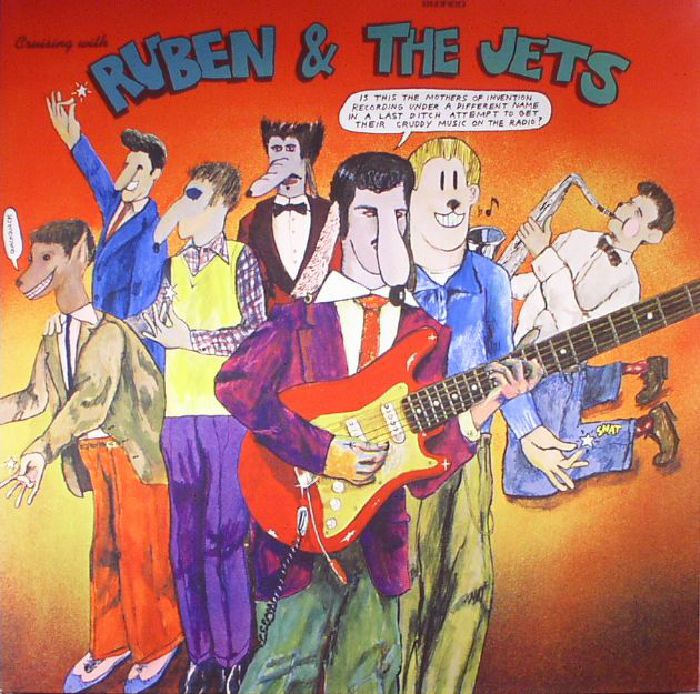
I heard this album in the summer of 1969, and honestly didn’t know what to make of it: was it a satire of fifties music or an homage? I had several 45 singles from the late fifties that I received as gifts from my grandfather whose worked at Firestone Tire and Rubber Company, a forty acre complex in South Gate, California.  I don’t know how he got all these free 45s, but figured it had something to do with his work at Firestone;  many were marked as “Promotional” or “Promo”, and these various 45s, on a wide array of different record labels, provided me with an rudimentary education of fifties hits (and I believe misses, for most of this music I have never heard again since I listened to it as a child) that I am thankful for today.

So listening to this Cruising With Ruben & The Jets album for the first time at my cousin’s shared college-vicinity apartment in Sonoma County, having taken in the earlier Zappa albums there, this was a very confusing contrast to their other material.

Listening to it again, for the first time in forty-nine years, and fifty years after its initial release on November 2, 1969, I better appreciate the songwriting and solid musicianship.

And I am not so puzzled, I think.

This concept album about a fictitious band from Chino, California that eschews the modern rock of 1968 to play fifties music is both a tribute to fifties music and a satire of fifties music.  This well-balanced mixture of reverence and parody is not a characteristic of all satires.  Some satirical representations or portrayals are just totally fine with mocking, ridiculing, and belittling, and the worst examples do so with little regard towards faithfulness or accuracy.  But it seems the best satirical music, from PDQ Bach to The Ruttles to Cruising With Ruben and the Jets, are works of love, celebrating the artistic strengths as well as the individual idiosyncrasies of their target and touching our hearts as well as bringing a smile to our faces.

cropped back out.png

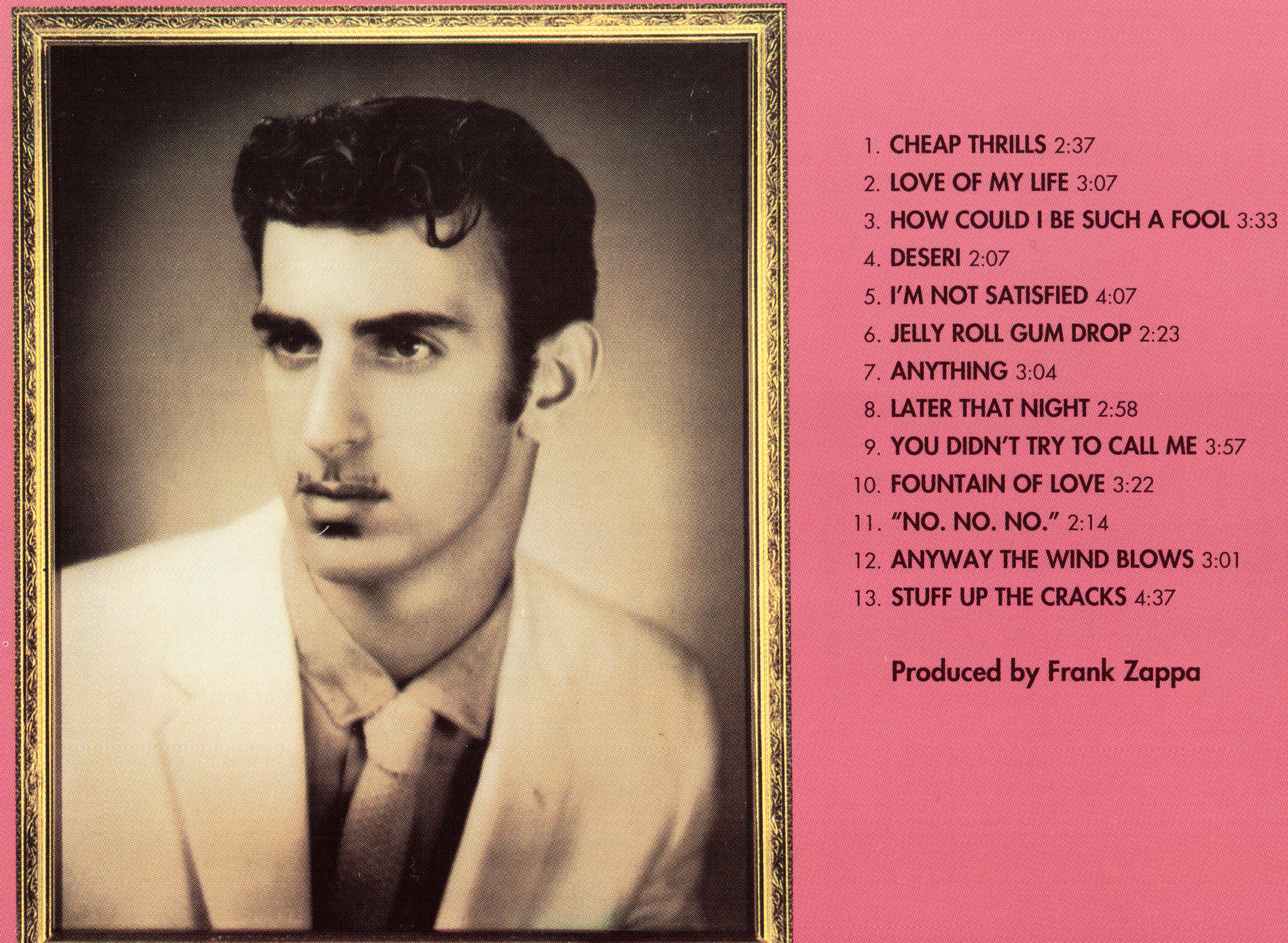
Track listing [From Wikipedia]

All tracks written by Frank Zappa except as noted.

Side one
No. Title Writer(s) Length
1. “Cheap Thrills” 2:23
2. “Love of My Life” 3:10
3. “How Could I Be Such a Fool” 3:35
4. “Deseri” Collins, Paul Buff 2:07
5. “I’m Not Satisfied” 4:03
6. “Jelly Roll Gum Drop” 2:20
7. “Anything” Collins 3:04
Side two
No. Title Writer(s) Length
8. “Later That Night” 3:06
9. “You Didn’t Try to Call Me” 3:57
10. “Fountain of Love” Zappa, Collins 3:01
11. “No. No. No.” 2:29
12. “Any Way the Wind Blows” 2:58
13. “Stuff Up the Cracks 4:35
Total length: 40:34

Personnel

Musicians
Production
  • Producer: Frank Zappa
  • Engineer: Dick Kunc
  • Cover Art: Cal Schenkel
  • Cover Design: Cal Schenkel
  • Artwork: Cal Schenkel

Fifty Year Friday: The Beatles, The Kinks

beatlesoriginal_442

Recorded mostly at Abbey Road Studios during May through October 1968, the band took a freer,  less methodical, less collaborative approach to recording this album than with the incomparable Sgt. Peppers Lonely Hearts Club Band.  George Martin had less involvement, and in July, audio engineer Geogg Emerick refused to continue to work with the group.  Ringo also got frustrated with his role and treatment, leaving in August,  with the other Beatles replacing him on at least two tracks until he was successfully coaxed back from aboard Peter Seller’s borrowed yacht in Sardinia via telegram.  Yet, this album is a classic, rich with a wide variety of excellent compositions.

It was on one of my nearly-daily visits to my next-door neighbors after Christmas of 1968 that I first heard this album, and that very day they willingly loaned it to me to record on my tape deck.  Needless to say, I was impressed by this being a double album, but I was warned about the presence of a track called “Revolution 9” on side four.

I was totally unprepared for the number of instantly likable tracks, and soon realized I made the right decision to record this on a higher quality tape at a higher speed set on the tape deck.  Impressed by almost each and every track, and feeling correctly warned about “Revolution 9” which I didn’t record, this was a tape I played in the presence of my dad, who I noticed also took a liking to the music — solid confirmation of the exceptional nature of this album.  And how could he not like tracks like “Dear Prudence”, “Blackbird”,  “Julia”,  “I Will”, “Mother Nature’s Son” and “Honey Pie.” And, to my surprise, there was not a word of criticism of songs like “Everybody’s Got Something to Hide Except Me and My Monkey” and “Helter Skelter”

I still love this album. It’s far from perfect, and I am just as annoyed today at the tapping sound on “Dear Prudence” as I was the first time I heard it (perhaps more annoyed as my audio system exposes it better.)  I do wish that George Martin had been more engaged, but on the other hand, I am also thankful for the inclusion of Nicki Hopkins and Eric Clapton.

Now having listened to the entire set of studio Beatles albums as well as most of the solo albums, and so much other music, I am more knowledgeable about the group today. At the age of 13, I thought of this group and listened to this group  as the collective “Beatles”, today I hear individual contributors, voices and instruments. I can easily pick out the individual band members’ vocals, figure out who wrote which songs (even if I didn’t know about the rule that the lead singer is generally the composer except if Ringo is the lead), and identify Yoko Ono’s voice in the chorus of “Bungalow Bill” as well as speculate on the degree of influence the album had on contemporaneous late sixties bands as well as bands of the 1980s and later.

A few years later after the release of this album, when I was a music composition major in the 1970’s, I often thought about what composers and what bands would still be listened to a hundred years later.  We are now approaching the halfway point of that hundred years, and with each passing year, it become increasingly clearer to me that Beatles will be much more popular at the end of that hundred years than the handful of mid-twentieth century composers that were listed in our 1970’s music history textbooks: textbooks which extolled the inventiveness and importance of composers like George Crumb, Milton Babbitt, Pierre Boulez, Elliot Carter, and Karlheinz Stockhausen but omitted any mention of Paul McCartney, John Lennon or George Harrison.

Link to Track Listing and musicians

The_Kinks_The_Village_Green

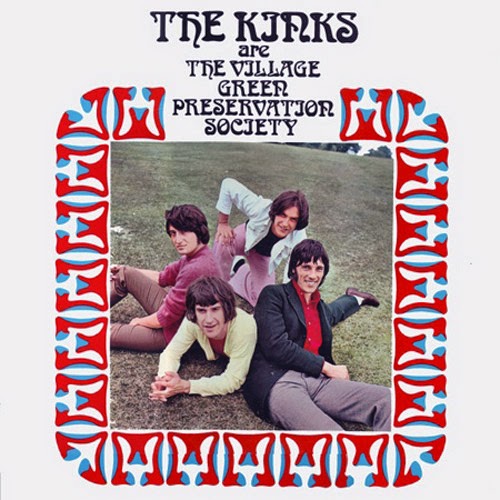
The Kinks: The Kinks Are the Village Green Preservation Society

Released on November 22, 1968, the same date that the Beatles released the White AlbumThe Kinks Are the Village Green Preservation Society is a concept album about preserving those elements and memories of a better world.  Due to the nature of the topic (and possibly, with the Kinks still under a ban to tour the U.S., due to not getting the erosive exposure to American culture that so many of the other top British bands were experiencing) the lyrics cover, very effectively, material directly related to English cultures and values. All compositions are by Ray Davies, and showcase the very best of his musical and lyrical abilities.

Though far from successful upon its release (the album failed to chart in either the US or the UK),  The Village Green Preservation Society has slowly been embraced over time, by both musicians and critics, and appreciated not only for the courage to break away completely from the commercial interests of its time, but for the general quality of each and every track.  Now predominately considered the best Kinks album of all time, this is a must-listen album for anyone interested in the Kinks, The British Invasion or pop-music song craftsmanship — or for anyone just looking to hear a wonderful collection of songs.

Oh, yes, like the Beatles’ White Album, we are treated to Nikki Hopkins on piano for some of the tracks.

Link to Track Listing and musicians

Fifty Year Friday: The Nice

The Nice ALVB.jpeg

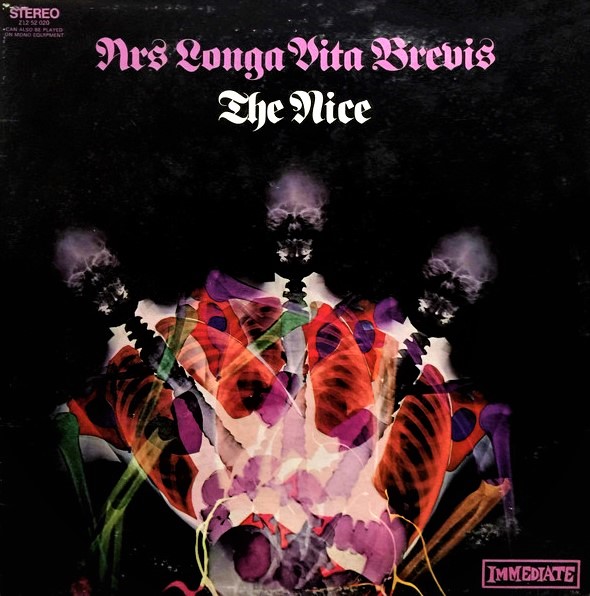
The Nice: Ars Longa Vita Brevis

In November of 1968, The Nice release their second album, furthering their advance into progressive rock as initiated in their first album.

With the guitarist, David O’List, no longer part of the group (either dropped from the group or left on his own depending on whose side of the story is being represented), The Nice auditioned replacement guitarists, including Steve Howe.  Evidently this would have worked out, except for Howe having second thoughts a week later.  And so, the band moved on without a replacement guitarist, with a line up more like a traditional piano jazz trio (piano, bass and drums), then a rock group, providing the blueprint for the keyboard-dominated progressive rock group (with occasional augmentation by orchestra as in the case with this second Nice album.)

The first track, “Daddy, Where Did I Come From”,  seems like a throwaway novelty number, but much like the ensuing second and third tracks, has a distinct charm and quirkiness that elevates it above the commonplace. Note the peppy piano intro by Keith Emerson as well as the brief baroque-like organ passage, the ensuing unbridled electric organ accompaniment, and the spoken dialogue as the dad.

The second track, “Little Arabella” includes vocals from Keith Emerson at around the 1:37 mark. The third track, the fanfare-like”Happy Freuds”, has Keith on lead vocals and though mostly a simple upbeat pop number, has both charm and substance.

Keith Emerson’s dominance continues with the keyboard-dominated realization of Sibelius’s Intermezzo from the Karelia Suite.  The main theme works better in its original version, but Emerson’s improvisation and development of the theme — and short detour from the theme — provide the essence of this interpretation.

The title track takes up the length of the second side, including orchestra backup — at least at points.  It is not so much a coherent whole as a stitchwork that includes a dramatic Keith Emerson prelude orchestrated by Robert Stewart, a four minute drum solo, the main “Ars Longa Vita Brevis” theme with Jackson on vocals,  followed by a jazzy instrumental diversion, a third section with an Emerson intro that dives into the first movement of Bach’s Brandenburg, pitting Emerson’s more excursive inclinations against the orchestra’s more faithful script,  followed by a restatement of the “Ars Longa Vita Brevis” theme with more jazz-like trio work and the prelude material serving as a coda.

All in all a pretty good album that delivers quality, variety and some impressive trio passages.

Track listing [From Wikipedia]

All songs written by Keith Emerson and Lee Jackson, except where noted.

Side one

  1. “Daddy, Where Did I Come From” – 3:44
  2. “Little Arabella” – 4:18
  3. “Happy Freuds” – 3:25
  4. “Intermezzo from the Karelia Suite” (Sibelius) – 8:57
  5. “Don Edito el Gruva” (Emerson, Jackson, Brian Davison) – 0:13

Side two

  1. “Ars Longa Vita Brevis” – 19:20
  • “Prelude” (Emerson) – 1:49
  • “1st Movement – Awakening” (Davison) – 4:01
  • “2nd Movement – Realisation” (Jackson, David O’List, Emerson) – 4:54
  • “3rd Movement – Acceptance “Brandenburger”” (J.S.Bach, Davison, Emerson, Jackson) – 4:23
  • “4th Movement – Denial” (Davison, Emerson, Jackson) – 3:23
  • “Coda – Extension to the Big Note” (Emerson) – 0:46
The Nice


Fifty Year Friday: George Harrison, Wonderwall Music


WWmusic.jpeg

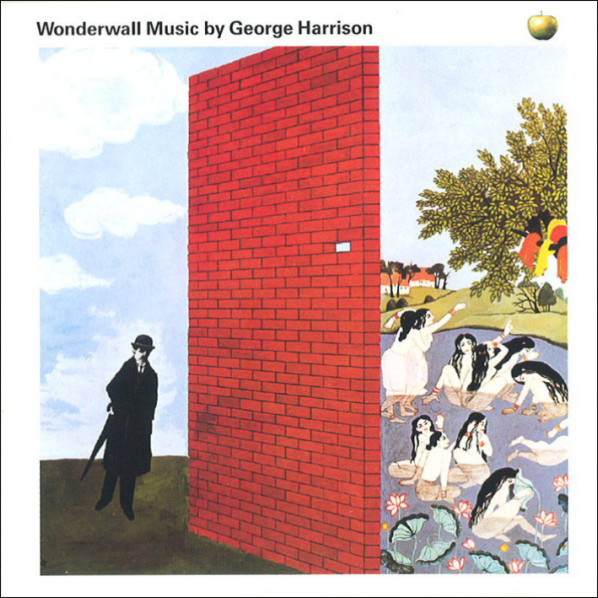
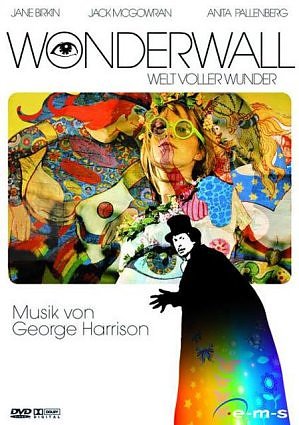
Released in Great Britain on November 1, 2018, George Harrison’s soundtrack to the mod, psychedelic film about a late middle-aged lab scientist that expands his professional interest in watching the domestic life of microbes under a microscope to watching his neighbors through a hole in the wall. Wonderwall Music is both the first solo Beatles album (if one doesn’t count George Martin/Paul McCartney’s The Family Way soundtrack which is basically various Martin arrangements of a single McCartney tune, “Love in the Open Air’) and the very first Apples-label album.

WonderW5

Harrison had no experience, of course, composing soundtracks, but with guidance from director Joe Massot and assistance from classical trained pianist and Ravi Shankar composition pupil,  John Barham , Harrison produces an effective soundtrack that works quite well as standalone music encompassing multiple styles from classical Indian music to English Music Hall pseudo-ragtime to contemporary rock.  With limited dialogue and a strong focus on visuals over story, there is plenty of opportunity in the movie for musical passages, so much so, that the album doesn’t contain all the musical material present in the film.

In terms of sales, this soundtrack album was not very successful in the UK, but it did much better in the U.S. peaking at 49 on the Billboard album chart.  Critical review has been mixed during both initial evaluations and re-evaluations of the album, but the music is generally strong with some notable tracks and the general critical trend has been towards greater appreciation as time has gone by.

The music was recorded in sessions in London and Bombay, Harrison having determined from the watching the assigned sections of film, stopwatch in hand, the exact length required for the music and working with the musicians to create appropriate material to match the assigned scenes.  The titles are appropriately named so that it is fairly easy to remember which part of the movie each particular track was for.

The first track, “Microbes” is used at the start of the film as background to the routine activity of microorganisms being observed under microscope and showcases the shenai, a double-reed instrument, similar to the oboe.  The second track, “Red Lady Too” is particular notable for its progressive-rock-like arpeggios, suspensions and chord changes and provides a representative example of how each track in the album is a miniature musical movement in a larger suite. The short length of the compositions require a brevity of expression, so instead of having 35 minute ragas, we get short Indian classical compositions, like the one-minute third track, “Tabla and Pakajav” and the four-minute fourth track, “In the Park.”

“Drilling a Home” shows Harrison’s sense of humor, and is very much like the music used for British pantomime television comedy sketches. This is followed by another dualing-shenai composition, “Guru Vandana”, followed by a particular impressive Mellotron and Harmonium duet, showing off Harrison’s sensitivity for the subtle. Next we have Eric Claption featured on guitar in “Ski-ing”, then “Gat Kirwani” featuring sarod, sitar and tabla, followed by one of the best compositions on the album,  the final track of side one, the thoughtfully crafted ambient/Hindi/instrumental/musique-concrete collage, “Dream Scene”, preceding Lennon’s Revolution and saying so much more in so much less time.

Side Two opens up with the strumming of Harrison’s acoustic guitar on a composition reminiscent of The Beatles’ instrumental, “Flying” on Magical Mystery Tour, followed by a sarod love duet, “Love Scene” and a lamenting shenai on “Crying. “Cowboy Music” was written for the scene of the neighbor’s boyfriend on rocking horse”, and is followed by another composition featuring shenai, “Fantasy Sequins.”  “On the Bed”, like a rock fanfare for the opening credits of a movie or a leading-edge BBC TV show, is followed by the masterfully brief, yet totally complete, “Glass Box” featuring sitar and tabla. The album closes with the reflective, “Wonderwall to Be Here”,  a short instrumental that any prog-band would be proud of, and the mystical “Singing Om” with harmonium and Hindustani bamboo flute.

At this time in the late sixties, there were more and more rock albums out that included lengthened tracks, with repeated verses and choruses that added little except to extend the length of an inherently two or three minute song to five or six minutes. In contrast, what we have here with Wonderwall Music is an album mostly of miniature-length compositions, with even the few longer ones, being skillfully compacted musical poems.  Much better than allmusic.com’s and the Rolling Stones Album Guide ratings of 2 1/2 stars, this is why one should only rely on their own sensibilities in determining the merit of the great music of the late sixties.

All selections written by George Harrison.

Side one

  1. “Microbes” – 3:42
  2. “Red Lady Too” – 1:56
  3. “Tabla and Pakavaj” – 1:05
  4. “In the Park” – 4:08
  5. “Drilling a Home” – 3:08
  6. “Guru Vandana” – 1:05
  7. “Greasy Legs” – 1:28
  8. “Ski-ing” – 1:50
  9. “Gat Kirwani” – 1:15
  10. Dream Scene” – 5:26

Side two

  1. “Party Seacombe” – 4:34
  2. “Love Scene” – 4:17
  3. “Crying” – 1:15
  4. “Cowboy Music” – 1:29
  5. “Fantasy Sequins” – 1:50
  6. “On the Bed” – 2:22
  7. “Glass Box” – 1:05
  8. “Wonderwall to Be Here” – 1:25
  9. “Singing Om” – 1:54


For those interested in the movie, it can currently be viewed on at youtube: https://www.youtube.com/watch?v=P2e3HeBgHKE


Fifty Year Friday: Jethro Tull, This Was; Traffic, Traffic

TW JT

Jethro Tull: This Was

Though basically a blues album with some elements of jazz and classical, this first album by Jethro Tull is one of the very best of the many late 1960’s rock-blues album from either Britain or North America.  Though not rated highly by progressive rock fans or more traditional media reviewers like allmusic.com or Record Collector and panned as “aimless and disorganized” by Rolling Stone, the music is of high quality, generally timeless, and always brings pleasure to me though I may one listen to it once or twice in any given decade.

Titled “This Was” as if it was a retrospective evaluation of a group that had already made a name for themselves as opposed to one just starting out, it’s eerily ironic to look back and how appropriate the title has become.  In a span of a few years, Jethro Tull went from a ad-hoc, little-known group that had produced this low-budget album (estimated as costing about 1200 British pounds or under $3000) to one of the more commercially popular groups of the 1970s.  Looking back at a point in time in the mid 1970’s, the music on this first album contrasts very sharply with the Jethro Tull that was then getting solid airplay on AM and FM radio and had  a 1974 gold album (“War Child) that made it to number two on the pop album charts. Interestingly, during this time, Rolling Stone remained consistently negative in their reviews of the band, admonishing potential album buyers: “Remember: Tull rhymes with dull.” 

And though I find their 1974 commercially-successful single “Bungle in the Jungle” as awkwardly embarrassing as the first time I heard it on the airwaves, the music on this earlier, first album demonstrates consistent good taste and makes one proud to be a Jethro Tull and Ian Anderson fan.  Enjoy this moment fixed in time, for this was Jethro Tull in 1968!

Track Listing from Wikipedia

Jethro Tull

Additional musicians


Traffic_(album)


Traffic: Traffic

Though not at the overall level of excellence and creativity as their first album, this self-titled second album has its share of moments drawing upon a variety of influences including country, jazz, and soul. Notable is Winwood’s piano, Wood’s flute and sax passages and Mason’s guitar as well as the general quality of the arrangements. Mason’s  “Feelin’ Alright?” is provided with a thoughtful, well-crafted arrangement that brings out the inherent poignancy in the lyrics.  Side two of the album is the strongest with the second, third and fourth tracks the highlight of the album.

Track listing from Wikipedia

Traffic

with: