Zumwalt Poems Online

Posts tagged ‘Fifty Year Friday’

Fifty Year Friday: The Zombies, Odessey and Oracle

The-Zombies-Odessey-Oracle-770In early 1967, battling against the challenges of generating a stream of steady income, and considering splitting up due to lack of continued success and assorted frustrations, the UK pop-group, The Zombies, once heralded as one of the leading musical forces of the British Invasion, reluctantly accepted an offer to play a series of ten concerts in the large Araneta Coliseum in Quezon City, Philippines. Much to their surprise, they were greeted by two thousand fans at the Metro Manila airport, and found their music played repeatedly on Philippines pop radio, with five of their older songs currently in the top ten.  On the first night, March 3rd, 1967, the Zombies played to a total of 45,000 appreciative fans, with continuing large crowds through March 11th.
Such a reception should have encouraged the band, but as the pay amounted to only a paltry 380 British Pounds split between the band, the result was more that of discouragement.

So when it came time to record an album in June of 1967, thoughts of a break-up were already present with that actually disbandment happening before the album was released on April 19, 1968.  The Zombies had a limited budget and limited time, but they were intent on producing something lasting and of quality.  Fortunately the songs provided by band members Rod Argent and Chris White were exceptional.

One’s first impression is that this album, Odessey and Oracle, (the mispelling, though claimed by Argent to be intentional for many years, was an error on the part of the graphic designer) is heavily indebted to the Beach Boy’s Pet Sounds and the Beatles’ Sgt Pepper’s, though it’s important to note that most of the songs on the album were written before Sgt. Pepper’s was released in May 1967. It’s also worth noting that nine of the twelve songs on Odessey and Oracle were recorded at  EMI‘s Abbey Road Studios using the same engineers that had contributed to Sgt. Pepper’s, the same eight-track technology and the very same Mellotron the Beatles had left behind, but with remarkably less studio time and no additional musicians employed.  Rod Argent: This “was the first time we were recording with more than four tracks, and we were like kids in a candy store, overdubbing Mellotron parts and vocal harmonies.”

The album opens with its strongest track, “Care of Cell 44”, one of Rod Argent masterpieces. This would of been the perfect single and was released as such, but it completely fizzled. With McCartney-like bass, a sprightly piano part, Beach Boys-like harmonies and overdubbed Mellotron, this upbeat song anticipates a style used years later by groups like SuperTramp and Kayak, chamber pop groups like Fugu, and Indie Pop groups like Beulah and Apples in Stereo.

If the music of “Care of Cell 44” is ahead of its time, so are the lyrics, which are also more like the Indie Pop of the 1990’s than anything of 1968:

“Good morning to you, I hope your feeling better, baby,
Thinking of me while you are far away
Counting the days until they set you free again.
Writing this letter, hoping you’re okay;
Sent to the room you used to stay in every Sunday —
The one that is warmed by sunshine everyday.
And we’ll get to know each other for a second time
Then you can tell me about your prison stay.”

The second song, “A Rose for Emily” starts with simple piano accompaniment against a clear unadorned vocal line followed by charming harmonies in the chorus.  The influence of Brian Wilson is clear, but the originality of this song, written by Argent in a single morning, is also clear.

The distinction in musical writing styles between Argent and Chris White is apparent with the next song, “Maybe After He’s Gone” which opens with acoustic guitar, but just as Argent’s lyrics pushed into darker and less traveled roads, the same with White’s songs — this one about the possibly remote prospect that the former love will return after the other guy has moved on.  The sense of sadness and loneliness conveyed effectively by the lyrics is underscored rather than obscured by the irony of relatively upbeat music.

In “Beechwood Park”, the next track,  Chris White takes an opposite approach of combining lyrics that when read might seem like pleasant reminiscing but when set with decidedly gloomy music becomes melancholic with a clear sense that this is a love that has been lost and never to be recovered.  It pairs well with the previous song, both effectively covering the same topic of guy loses girl, and perhaps even being about the same loss.

“Brief Candles” combines the sensitive ballad with the classic sixties psychedelic chorus. This time the verse is melancholic, the chorus uplifting, and the result, like the previous two tracks, is reflective and wistful.

The last track of side one, “Hung Up on a Dream” is another Rod Argent composition with lyrics very reminiscent of the Beatles’ “Day in the Life”, though probably written before Argent heard that song:

“Well, I remember yesterday
Just drifting slowly through a crowded street
With neon darkness shimmering through the haze
A sea of faces rippling in the heat

“And from that nameless changing crowd
A sweet vibration seemed to fill the air
I stood astounded staring hard
At men with flowers resting in their hair

“A sweet confusion filled my mind
Until I woke up only finding everything was just a dream
A dream unusual of its kind
That gave me peace and blew my mind.”

The music is not the standard verse-chorus-verse structure.  The first section is three instances of the verse followed by an instrumental bridge-like passage with the most sparkling chord changes, followed by another vocal section in the original key of G Major which them modulates for the return of the verse, now in F major, followed by an instrumental coda over the chords of the verse.

The second side is not as strong as the first side, but even a track like “I Want Her, She Wants Me”, which Argent has indicated he threw together quickly for the B side of a single, is catchy, well arranged, and well performed.

The two best tracks on side two are Chris White songs, the first of which is the anti-war song, “Butcher’s Tale”, the tale of a disillusioned, frightened British World War One soldier.

Chris White: “I wanted Colin to sing it but they got me to sing because they said ‘Your weak trembley little voice suits the song.’ We used this old American pedal organ that I’d bought in a junk store, and if you listen closely you can hear Rod’s fingernails, because it’s all miked up. We also had some musique concrète, which I actually nicked off a Pierre Boulez record, reversed the tape and sped it up. We ‘adapted’ it. One of the influences on that was ‘1941 New York Mining Disaster’ by the Bee Gees, which I thought was a great way of telling a story — very evocative.”

Surprisingly, this was released as a single, but failed perhaps due to is odd, eerie, though effectively evocative, content.

Also notable is the next Chris White composition on the album, “Friends of Mine”, with its upbeat, overall basic, but catchy music, covering a topic perhaps rarely (if ever) previously covered in recorded pop music:

“When we’re all in a crowd
And you catch her eye
And then you both smile
I feel so good inside
And when I’m with her
She talks about you
The things that you say
The things that you do

And when I feel bad
When people disappoint me
That’s when I need you two
To help me believe”

Background chorus included couples that were friends of the band and whose actual names are included in the song.  Ironically, per Rod Argent, despite being immortalized as being loving pairs on the album, none of these couples stayed together.

The last track, “Time of the Season”,  was also written last.  Composed in a single morning by Rod Argent, it is the least interesting song in terms of chord changes, but is notable for its unusually limited use of chorus and the two Argent’s era-appropriate jazz-psychedelia electronic organ solos.  Argent felt that this song had hit-potential but this view wasn’t particularly shared by others. Nonetheless, the song was eventually released as a single and, though the band was now no longer together, in 1969, “Time of the Season” rose to the number 3 spot on Billboard, rose to #1 on the Cash Box Top 100, and peaked at number 1 in Canada.  This was, by far, the Zombies biggest hit, but the Zombies were no more.

The single would have never been released if it wasn’t for Al Kooper (see earlier blog post here) who was now with Columbia in the A&R department (the Artists and Repertoire division, responsible for talent recognition and development.) More importantly, this album, Odessey and Oracle, would probably have never been released either, if it wasn’t for Al Kooper’s insistence.  As it was, Columbia released it on one of their small sub-labels, Date Records, which was dissolved by 1970.

Rod Argent: “In the States, the album was not going to be released until Al Kooper found it. He was the hot new A&R man that Clive Davis had employed, and he went rushing back from England to the US. He went into Clive Davis’ office and said, ‘I’ve listened to hundreds of albums and there’s one album that stands above the rest and I don’t care who owns this album, you’ve got to buy it from them. It doesn’t matter how much it costs.’ And Clive said, ‘Well, we own it, and we passed on it.’ Al said, ‘You can’t pass on it, you must release it.’

“He said OK and then they put out “Butcher’s Tale,” which is still one of my favorite tracks on the album, that Chris wrote. It still gives me chills when I hear it, but it was never a single. Al was aghast that they put that out as a single. Then they put out “Friends of Mine,” and as I remember, “Care of Cell 44.” Nothing happened. And then they put out “Time of the Season.”

Though there are significant differences in Argent’s and White’s writing for both music and lyrics, the album is filled with some of the most bubbly and sparkling pop chord changes ever, and holds together as a unified whole, with only the last track not quite fitting in.  For an album that was almost never released in the States, this is one of the more musical, influential, and important albums of 1968.

Track listing [from Wikipedia]

Side A

#

Title

Writer

Length

1

Care of Cell 44 Rod Argent

3:57

2.

“A Rose for Emily” Argent

2:19

3.

“Maybe After He’s Gone” Chris White

2:34

4.

“Beechwood Park” White

2:44

5.

“Brief Candles” White

3:30

6.

“Hung Up on a Dream” Argent

3:02

Side B

#

Title

Writer

Length

7.

“Changes” White

3:20

8.

“I Want Her, She Wants Me” Argent

2:53

9.

“This Will Be Our Year” White

2:08

10.

Butcher’s Tale (Western Front 1914) White

2:48

11.

“Friends of Mine” White

2:18

12.

Time of the Season Argent

3:34

Total length:

35:18

Personnel

The Zombies

  • Colin Blunstone – lead vocals
  • Rod Argent – keyboards, backing vocals, lead vocals on “I Want Her, She Wants Me”, co-lead vocals on “Brief Candles”
  • Paul Atkinson – guitar, backing vocals on “Changes”
  • Chris White – bass, backing vocals, lead vocals on “Butcher’s Tale (Western Front 1914)”, co-lead vocals on “Brief Candles”
  • Hugh Grundy – drums, backing vocals on “Changes”

Production[

rearA

Original Liner Notes: 

Shakespeare said: 

“Be not afraid; 
The isle is full of noise 
Sounds, and sweet airs that give delight and hurt not.
Sometimes a thousand twanging instruments 
Will hum about mine years; and sometimes voices” 

Really, music is a very personal thing; it’s the product of a person’s experiences. Since no two people have been exactly alike, each writer has something unique to say.  That makes anything which is not just a copy of something else worth listening to. Believing this, and laden with gifts of fruit and nuts from the Orient, we descended upon CBS chieftain Derek, and with smarm and charm extracted, astonished, the finance necessary to compose, arrange and perform, produce and cover an LP ourselves, with no outside help or interference. 

This is the result:

Thanks to Terry Quick, artist flatmate of Chris, for the cover. Thanks to Will Shakespeare, not a flatmate of Chris, for his contribution to the sleeve notes.

ROD ARGENT, 1968
__________________________________________________

A few years ago we all fell under the spell of ‘She’s Not There’ and ‘Tell Her No’. Well, they are back again with the same spells and a few new ones. 

With this album, The Zombies establish themselves alongside the royalty of rock. The songs are so original in thought – a girl soon to come home to you (from prison), the horror of the First World War, with melodies incorporating well-timed diminished chords leaping through warm melodic tapestries. The musicianship level set on ‘She’s Not There’ is not betrayed, and The Zombies have indeed benefited from the time since then. 

While in London recently, I acquired forty British LPs. Once home, I began to listen to all forty. This record stuck out like a rose in a garden of weeds. It is for you now to enjoy this experience as I have, and I know once you have, you will continue to play some cuts from this album every day for a long time. The Zombies who are – very much alive. 

AL KOOPER, 1968


__________________________________________________

Additional notes


Fifty Year Friday: Tony Scott – Music for Yoga Meditations and Other Joys; Al Kooper, Blood, Sweat & Tears – Child Is Father to the Man

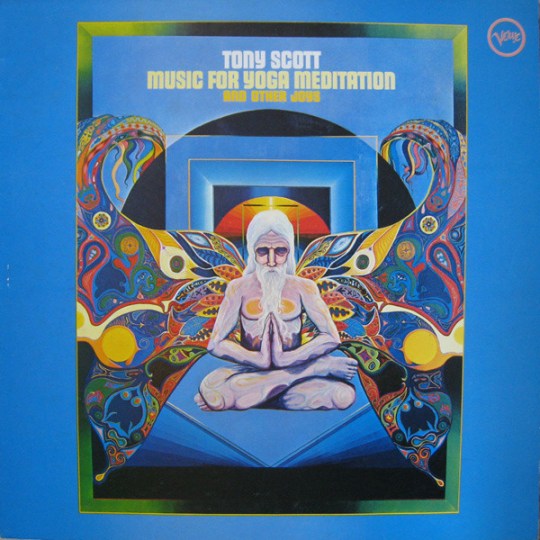
Tony Scott Yoga

As a jazz instrument, the clarinet can excel from the hottest of jazz styles to the coolest and laid back genres of jazz, but there is something inherently cool, soft and tender in the lower and mid range of the clarinet that lends itself particularly well to more impressionistic. more reflective, and more introspective music.   As bebop extended into various flavors of cool jazz, Tony Scott first appeared on the jazz scene recording with Miles Davis and other jazz musicians on three tracks for “Sassy” Sarah Vaughan’s 1950 album, Sarah Vaughan In Hi-Fi. In 1953, he recorded a 10 inch album for Brunswick, “Music After Midnight”, with the music including elements bebop, cool and swing, showcasing the clarinet as well as the talents of now well-known jazz greats, bassist Milt Hinton and drummer Philly Joe Jones, as well as the versatile and gifted pianist Dick Katz.

In December 1959 , Tony Scott visited Japan and recorded some music for a radio program with Yasko Nakashima.  When Tony asked Yasko if she would like to do some improvisation around the scale (set of notes) of the previous piece they had played, she deferred, not having a background in improvising: improvisation not being a component of traditional Japanese classical music.  He then turned to the conductor of the ensemble, Shinichi Yuize, a koto player, who, though, had not previously improvised publicly, was willing to give it a go.  Four years later, in early 1964, during Tony’s last visit to Japan, Shinichi Yuize, shakuhachi artist, Hozan Yamamoto and Tony recorded what many consider the first New Age album, Music for Zen Meditation.

No additional albums appeared to have been recorded or released by Tony Scott, until February 1968, when Music for Yoga Meditation and Other Joys was recorded. American Collin Walcott, student of Ravi Shankar, and later Paul Horn associate and then member of Oregon  plays sitar pairing up with Tony Scott who is on clarinet. This album, with its wide stereo separation and forwardness of the clarinet and sitar,  comes more closely to being New Age material then the 1964 “Zen” album which is more a blend of jazz and true classical Japanese music.

For whatever reason, Verve waited until 1972 to release Music for Yoga Meditation and Other Joys.

Track listing [from Wikipedia]

  1. “Prahna (Life Force)” – 4:15
  2. “Shiva (The Third Eye)” – 5:06
  3. “Samadhi (Ultimate Bliss)” – 4:49
  4. “Hare Krishna (Hail Krishna)” – 6:15
  5. “Hatha (Sun and Moon)” – 3:40
  6. “Kundalina (Serpent Power)” – 4:42
  7. “Sahasrara (Highest Chakra)” – 3:10
  8. “Triveni (Sacred Knot)” – 3:20
  9. “Shanti (Peace)” – 2:48
  10. “Homage to Lord Krishna” – 5:04
  • All music composed by Tony Scott

Personnel

Production

Blood,Sweat&TearsChildIsFathertotheMan

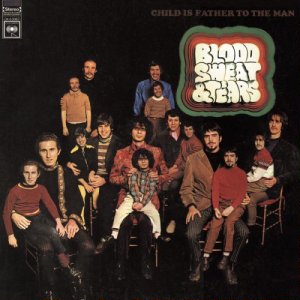
Musician, Producer and songwriter, Al Kooper, put together the first jazz-rock group, Blood, Sweat and Tears, recording Child is the Father to Man in late 1967, with Columbia releasing the album on February 21, 1968.  Though this album is far more pop and rock than jazz, there are some jazz elements, including Randy Brecker on trumpet and flugelhorn supplemented with  saxophone, trombone and an additional trumpet.  Kooper provides the starting point from which the later versions of BS&T evolve, and paves the way for other jazz-rock ensembles like Chicago, Chase and Lighthouse.

Al Kooper departed from BS&T shorted after the release of this album, apparently due to creative differences, with his next project the bluesy jam album Super Session with Mike Bloomfield and Stephen Stills.

Personnel [from Wikipedia]

Blood, Sweat & Tears

  • Randy Brecker – trumpet, flugelhorn
  • Bobby Colomby – drums, percussion; backing vocals (tracks 4, 10)
  • Jim Fielder – bass guitar, fretless bass guitar
  • Dick Halligan – trombone
  • Steve Katz – guitars; lead vocals (tracks 3, 8); backing vocals (tracks 3); lute (track 6)
  • Al Kooper – organ, piano; lead vocals (tracks 2, 4-7, 9-12); ondioline (track 8)
  • Fred Lipsius – piano, alto saxophone
  • Jerry Weiss – trumpet, flugelhorn; backing vocals (track 4)

Additional musicians

  • Anahid Ajemian – violin
  • Fred Catero – sound effects
  • Harold Coletta – viola
  • Paul Gershman – violin
  • Al Gorgoni – organ, guitar, vocals
  • Manny Green – violin
  • Julie Held – violin
  • Doug James – shaker
  • Harry Katzman – violin
  • Leo Kruczek – violin
  • Harry Lookofsky – violin
  • Charles McCracken – cello
  • Melba Moorman – choir, chorus
  • Gene Orloff – violin
  • Valerie Simpson – choir, chorus
  • Alan Schulman – cello
  • John Simon – organ, piano, conductor, cowbell
  • The Manny Vardi Strings

Production

  • Producers: Bob Irwin, John Simon
  • Engineer: Fred Catero
  • Mixing: John Simon
  • Mastering: Vic Anesini
  • Arrangers: Fred Catero, Al Gorgoni, Fred Lipsius, Alan Schulman, John Simon
  • Art direction: Howard Fritzson
  • Photography: Bob Cato, Don Hunstein
  • Packaging: Michael Cimicata

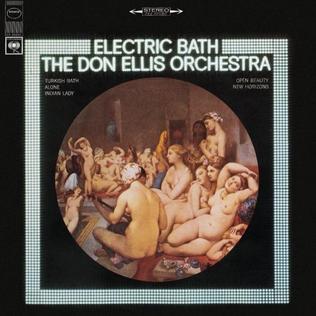
Fifty Year Friday: The Don Ellis Orchestra “Electric Bath”

electric_bath

Is it possible that the first truly progressive rock album was not a rock album, but a jazz album?  For those that adamantly insist that the most adventurous and exploratory rock music of 1967 and early 1968 is really not progressive rock but “proto-prog, such prog fundamentalists often require that any music to be considered true progressive rock must display a relatively high level of musicianship and deploy mixed meter or unusual time signatures, 20th century instruments, a wide range of dynamics and instrumental combinations, effects such as tape loops or use of quarter tones, and extended length tracks painting a colorful, sonically rich landscape.  If we buy into such requirements, then perhaps we should consider this modern big-band jazz album recorded in September 1967 and released either in late 1967 or early 1968, to validly qualify as the first progressive rock album.

In terms of quality and excitement, The Don Ellis Orchestra’s “Electric Bath” should please any “Close to the Edge”, “In the Court of the Crimson King”, “Thick as A Brick”, “Selling England By the Pound”,  “Brain Salad Surgery”. or “Power and the Glory” fan.

A progressive rock album has to start with a fervently vigorous or otherwise bigger-than-life immersive track such as King Crimson’s “21st Century Schizoid Man”, Genesis’s “Watcher of the Skies”, or the opening to ELP’s Tarkus.  “Indian Lady” is just that with its fanfare opening, a meter of alternating 3 and 2,  and a strong distinct theme running relentlessly forward, swinging ferociously with a indisputably bluesy orientation.  We also have sitar, electric piano, and most notably, Don Ellis on a four-valve quarter-tone enabled trumpet.

The second track, “Alone”, by far the shortest at less than six minutes, is a basically a samba, a musical form from Brazil that became so popular in the mid sixties, but in 5/4 time without any sense of awkwardness, but just the opposite, fully liberated and unconstrained.

Ending the first side is the brilliant “Turkish Bath” with sitar and a exotically distorted reeds sounding not so much like instruments from Turkey, but from an even more exotic location, probably from another planet in some remote solar system. Sitar and quarter-tones contribute to the appropriate balance of spices.

“Open Beauty” open side two of the original LP, and provides appropriate contrast and musical reflection.  Elegantly executed by the band, this composition is haunting, surreal and evocative, with ebbs and flows of intensity until a little over two-thirds of the way in when we get a tape-delay Don Ellis solo  which initially echoes with layered fifths and then more adventurously explores into more expressive and polyphonically combative territory.

The last track, “New Horizons” is the strongest, longest and most remarkably inventive of the album with relentless energy driven by a 17/8 5-5-7 pattern with amazing ensemble and solo trumpet passages.  The work unfolds like a story with contrast and subplots ending with explosive energy winding down into an emphatic, punctuated coda.

This album should appeal to anyone that loves adventurous and well-written, arranged and performed music whether their preference is classical, progressive rock, progressive heavy metal, be-bop or big band jazz.

Track listing [from Wikipedia]

All compositions by Don Ellis except as indicated

  1. “Indian Lady” – 8:06
  2. “Alone” (Hank Levy) – 5:32
  3. “Turkish Bath” (Ron Myers) – 10:16
  4. “Open Beauty” – 8:29
  5. “New Horizons” – 12:20
  6. “Turkish Bath” [Single] (Myers) – 2:52 Bonus track on CD reissue
  7. “Indian Lady” [Single] – 2:58 Bonus track on CD reissue

Personnel

Fifty Year Friday: Singer/Songwriters; Additional Groups and Artists

mi0001915547


Singer/Songwriters

2017 is soon coming to a close, and so must our fifty year anniversary reflection on 1967.  If we had started these posts earlier in 1967, instead of starting mid-year, we could have highlighted many more albums.  Those we chose were personal favorites. Some of those not included are also worth noting.

1967 provide of wealth of albums by singer songwriters from Arlo Guthrie and his  captivating “Alice’s Restaurant” album to Van Dyke Parks first album, “Song Cycle.”

Warner Brothers Records hired Van Dyke Parks with high hopes based on his previous work with Harper’s Bizarre, The Byrds, Tim Buckley, and Paul Revere & the Raiders, and then spared no costs for Parks to record his album — racking up session hours and using a full orchestra.  When “Song Cycle” was played for the president of Warner Bros. Records, his reaction was apparent confusion: “Song Cycle?  Okay — where are the songs, then?” The label didn’t release the album until December 1967, a year after it was recorded, until, as the story goes, Jac Holzman of Elektra records offered to buy if from Warner Bros.   Once released, it’s sales where less than expected, and prompted Warner Bros.  to run full page newspaper and magazine advertisements that said they “lost $35,509 on ‘the album of the year’ (dammit)” and offered owners of the album the chance to send in their worn-out LPs of “Song Cycle” in exchange for two new copies, so one could be passed on to a friend.

Harry Nilsson authors his second album, Pandemonium Shadow Show, originally intended to be titled after Ray Bradbury’s “Something Wicked This Way Comes”, which is a mix of Nilsson songs and several covers including two Lennon/McCartney songs. Nilsson’s droll lyrics and musical arrangements provide character to a well-executed and produced album.  The album includes the definitive version of Nilsson’s “Without Her”, sparsely arranged with flute, electric bass, strummed guitar and cello. The album fared better in Canada then in the US, eventually catching the attention of  Beatles publicist Derek Taylor who sent copies to the Beatles.  Purportedly, John Lennon listened to the album over and over again, playing it back to back for a total of 36 consecutive hours.

1967 provided the release of two Bob Dylan albums, Dylan’s eighth studio album “John Wesley Harding”, an album filled with songs that appear were written first as poetry and then Dylan added music to them, and a greatest hits album compiling classic Dylan songs from his first seven albums.  For many of us, born between 1954 and 1960  this was our first exposure to Dylan besides what was played on AM radio.

Also for many of us born in that mid to late fifties time frame, the great North American singer songwriter of our time was not American Bob Dylan, but Canadian Roberta Joan “Joni” Mitchell.  At this time, Joni had not recorded an album but, after moving to the U.S. and performing in various clubs, was gaining attention from these performances and in several of her songs that more established artists recorded.

The most notable 1967 Joni Mitchell song, was recorded by Judy Collins on her 1967 album Wildflowers album (released in 1968.)  This song, “Both Sides Now”, would reach #8 on the U.S. pop singles, making it Judy Collins biggest hit and being the most contributing fact to the Wildflowers album peaking at the number 5 best selling album on December 1968.

Laura Nyro  released her debut album,  More Than a New Discovery Recorded in 1966, initially released in 1967, and then reissued in 1969 and again in 1973, this album showcases Nyro’s songwriting skill and versatility with many of the songs being covered by other artists, including “And When I Die” (Blood Sweat and Tears), Wedding Bell Blues” and “Blowin’ Away” (The Fifth Dimension), and “Stoney End” (Barbara Streisand.)

Recorded in 1966 and early 1967 the Deram label releases Cat Stevens’ first album,  Matthew and Son The album makes the UK Top 10, and has several successful singles. Later that year,  Stevens records New Masters which is released in December 1967, and sells significantly less copies than the first album.

Also in 1967, Tim Buckley released his second album, his most popular and generally most acclaimed album, Goodbye and Hello.   Tim Hardin released his second album,  simply titled Tim Hardin 2.  Leonard Cohen’s releases his first album, the captivating and engaging Songs of Leonard Cohen, after Judy Collins’ recording of his song “Suzanne” brought Cohen to the attention of legendary record producer  John Hammond. Cohen’s debut album begins with “Suzanne” and includes several fairly profound songs like “The Stranger Song”, “Sisters of Mercy”, and “Stories of the Street” as well as the well known “So Long, Marianne” referencing his close companion, Marianne Ihlen.

leonard_cohen_-_1967_songs_of_leonard_cohen

Additional Notable Albums of 1967

The Beach Boys release two excellent albums, Smiley Smile and Wild Honey.  

Pretty Things releases their distinctly interesting, and accessible “Emotions” album, full of life and musical vibrancy with brass instruments adding further energy. Recorded in late 1966, and early 1967, it did not sell well, perhaps this was a result of ineffective distribution or marketing or perhaps the album was a bit ahead of its time, sounding more like it was recorded in 1968 or early 1969.

The first album of what many consider the first rock supergroup, Cream, sets the stage for later heavy rock bands (and by extension, heavy metal bands) with their second album, Disraeli Gears. Though there were many influences that spawned hard rock and heavy metal, Cream had a significant impact on many such younger rock musicians.

r-1358659-1496055161-7572-jpeg

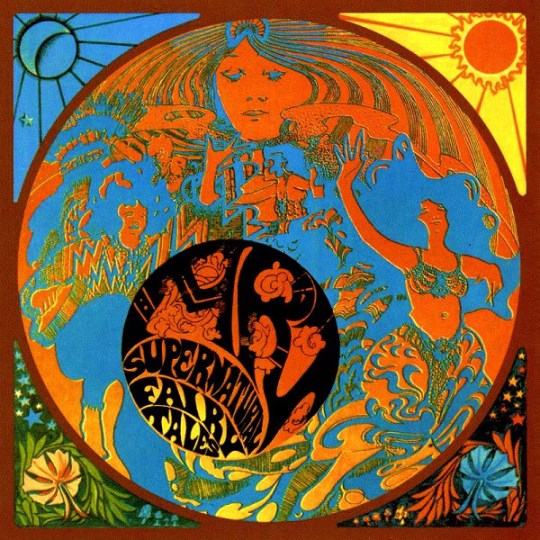
Art (Art essential being an earlier formation of the group, Spooky Tooth), infuses rivulets of blues and wisps of psychedelia into their only album, Supernatural Fairy Tales  creating a thick-textured album, perfumed with an aroma of cannabis. Earlier to the recording of this album, several of the same musicians under the name “Hapshash and the Coloured Coat”  recorded an album earlier in 1967, titled “Featuring The Human Host And The Heavy Metal Kids” — this being, as far as I can tell, the first reference to “heavy metal.”

Other notable albums, many heavily psychedelic (and some incorporating elements of free jazz) were released by groups such as 13th Floor Elevators, The Aggregation, Ten Years After, AMM, Chocolate Watchband, Clear Light, Country Joe and the Fish, The Grateful Dead, Kaleidoscope, Mesmerizing Eye, Moby Grape, Orbital, Pearls Before Swine, Red Krayola (The Parable of Arable Land), Rupert’s People, Sagittarius, The Seeds, Sly and the Family Stone, Sopwith Camel, Spontaneous Music Ensemble, Steppeulvene, Strawberry Alarm Clock, The Animals, The Beethoven Soul, The Box, The Ceyleib People, The Easybeats, The Factory, The Fire Escape, The Freak Scene, The Incredible String Band, The Lefte Bank, The Motions, The Serpent Power, The Smoke, Smoky Robinson and the Miracles, The Turtles (Happy Together), The West Coast Pop Art Experimental Band, The Yardbirds, Thomas Edisun’s Electric Light Bulb Band, Vanilla Fudge, and various more accessible or highly commercial groups like The Association, The Grass Roots, The Ventures, The Monkees (put together for a U.S. television series), and The Young Rascals.

This only scratches the surface.  I have not mentioned artists like Albert King (Born Under a Bad Sign), Nina Simone, Miles Davis, John Coltrane (Expression), Sam Rivers, Charles Tyler (Eastern Man Alone), Bill Dixon, Blue Mitchell, Freddie Hubbard, Gary Burton, Graham Collier, Herbie Mann, Roland Kirk, Marvin Gaye, Magic Sam, Otis Spann,  John Mayall, Miriam Makeba, Van Morrison, Stevie Wonder, Buddy Tate, and many others, some of which I have covered in previous “Fifty Year Friday” posts: there are a number of incredible jazz albums as well as blues, rhythm and blues, and soul music albums.

Though the term progressive rock is more formerly applied to many of the more adventurous and classically influenced bands of the early 1970s, for my money 1967 was the childhood of progressive rock with the birth perhaps occurring in 1966 with Beach Boys Pet Sounds, the Beatles’ Revolver and many psychedelia-tinged albums released in 1967, but recorded at the end of 1966. I challenge anyone to deny the progressiveness of Jimi Hendrix, The Beatles, Procol Harum, Van Dyke Parks, or even groups like The Who, The Beach Boys, or The Doors.

This was a vital period in the expansion and diversification of rock music, the like of which has not been seen since.  Fortunately for us, even albums that were nearly impossible to get a hold of in 1967 are now relatively readily available, not only on CD, or in some cases freshly, pressed LPs, but also available through streaming services or on Youtube.

Most importantly, have a happy and fulfilling 2018, and don’t neglect to broadly explore the immensity of great music available to those of us alive today.

r-1380897-1388699693-7737-jpeg


Previous Fifty Year Friday Posts for the year 1967:

The Beatles: Sgt Peppers

The Beatles: Magical Mystery Tour

Jimi Hendrix: Are you Experienced

Jimi Hendrix: Axis: Bold as Love

The Who: The Who Sell Out

Moody Blues: Days of  Future Passed

Byrds, Hollies and Buffalo Springfield

Love “Forever Changes”

Far Out 1967, Part One

Far Out 1967, Part Two

Nirvana “The Story of Simon Simopath; The Kinks “Something Else”

Dizzy Gillespie in 1967

Larry Young “Contrasts”; Joe Zawinul, “The Rise and Fall of the Third Stream”

Procol Harum “Procol Harum and The Doors “Strange Days”

Billy Strayhorn and Duke Ellington

Arthur Rubinstein, Pink Floyd

Marta Argerich and Carlos Paredes

David Bowie, Marc Bolan, John’s Children

John Coltrane, Jefferson Airplane

Thelonious Monk, McCoy Tyner

Hindustani Classical Music

The Doors: The Doors

The Velvet Underground

Aretha Franklin, Simon Dupree and the Big Sound

Mahler recordings

Rolling Stones: Between The Buttons

Jobim, Zappa, Beefheart

Fifty Year Friday: The Who Sell Out

blog_the-who-sell-out-lp

“Power pop is what we play—what the Small Faces used to play, and the kind of pop the Beach Boys played in the days of ‘Fun, Fun, Fun‘ which I preferred.” Pete Townshend (1967)

Somewhere in the mid sixties, rock and roll was replaced with rock.  The rock and roll music of the fifties, primarily based on blues and variations of blues chord sequences, slowly was overshadowed by music that was more message and substance oriented. The Beach Boys classic “Fun, Fun, Fun”, and the 1967 masterwork “Good Vibrations” is clearly Rock and Roll. The Beatles’ “Lucy in the Sky With Diamonds” is clearly rock.  I don’t recall the year, but sometime in the late sixties, I started correcting my dad when he referred to rock music as “rock ‘n roll” — I disdained Rock and Roll as a relic and lower form of music,  and loved Rock for its broad musical diversity and, for the best of it, it’s reach beyond dance music to serious listening music.

The Who, part of the British Invasion, deviated from what was pretty much a rock and roll group in 1965, opening their first album “My Generation” with “Out in the Street” immediately followed with James Brown’s “I Dont’ Mind” and songs like “The Good’s Gone”,  “La-L-La Lies”, “Please, Please, Please”, “It’s Not True”,  and Bo Diddley’s “I’m A Man. ” However, like the Beatles, there were significant forays into a newer musical expression as hinted in “A Legal Matter” and in the instrumental “Ox.” By their second album, we get true rock pieces like John Entwistle’s classic “Boris the Spider.  By the third album, “The Who Sell Out”, an imaginative concept album that includes commercials interspersed throughout, mocking the format of commercial radio stations, The Who are a seasoned rock group writing and performing rock compositions, making use of such “power pop” chord progressions, modulations, and power chords (chords structures found in earlier Who songs such as”My Generation” and “Boris the Spider” — chords that just have the root and fifth — this not only omits the note that provides the major or minor quality of a traditional triad, but produces a simpler harmonic footprint producing an especially powerful effect when played loudly) that create a sound that is easily identifiable as the sound of The Who.  This is not the power pop of rock and roll, but power pop that is part of the new rock music movement.

The album opens strikingly, and aligning with it’s wanton-commercialism concept, with a jingle followed by John “Speedy” Keen’s (a friend of Who main songwriter and guitarist Pete Townshend) “Armenia, City in the Sky” — starting out much like a radio ad, lyrically, with “If you’re troubled and you can’t relax” but soon followed with more mind-altering-like lyrics and with a 1967 psychedelic and imaginatively crafted arrangement including backwards french horn bursts and various guitar effects.

“Mary Anne with the Shaky Hand” is both melodically appealing and lyrically bold (“Mary-Anne with the shaky hands — what they’ve done to a man, those shaky hands.”) Musically, “Odorono” is even more notable, forging towards the musical style perfected on their next album and yet done as a deodorant jingle.  If one doubts the genius of Pete Townshend to align music and lyrics without compromising either, this is prima facie evidence of his capabilities, as is the track that follows: “Tattoo” a tune that could work very well as jingle for the Tattoo industry.

“Our Love Was” is an ethereal gem, maintaining energy and vibrancy to the end, with Entwistle’s French Horn providing just one of many elements that make this arrangement special.

The Who’s 1967 hit, and arguably the best song of the album, if not of Townshend’s career, is “I Can See for Miles”, punctuated perfectly by Keith Moon’s drums and cymbals.

The second side, is also excellent and includes  “I Can’t Reach You”, “Relax”,  Entwistle’s chromatically-flavored, organ-accompanied “Silas Stingy”,  the beautiful “Sunrise” and the Who’s second miniature rock opera, “”Rael (1 and 2)”, even shorter than their first mini-rock opera, “”A Quick One, While He’s Away” on their previous album.

Released in the UK in December 1967 and the US on Jan 7th, 1968, some of the musical techniques employed in “The Who Sell Out” will be more fully explored in their 1969 full-length rock opera,  “Tommy”, which also further develops  musical material in the songs “Sunrise” and “Rael.”  Though this album was only marginally successful in the US when first released, climbing no higher than the 48th spot on the Billboard album chart, perhaps due to its unusual jingle-based concept, it is one of the best albums of 1967, music that should be explored by those looking to better understand the history of rock (as opposed to  rock and roll) or just looking for some well written, enjoyable power pop music.

Track listing and song credits

Last week’s Fifty Year Friday


Fifty Year Friday: Far Out 1967, Part One

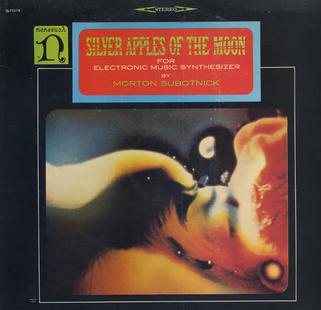
Silver Apples of the Moon.jpg

Morton Subotnick, “Silver Apples of the Moon”

Morton Subotnick, one of the founders of California Institute of the Arts, co-founded San Francisco Tape Music Center in 1962 , left his teaching post a Mills College and moved to New York City  and accepted an artist-in-residence position at the newly formed Tisch School of the Arts at NYU.  His previous works and performances attracted the attention of the New York City based Nonesuch  label, which provided Subotnick the opportunity to compose the very first electronic work commissioned by a record company.  “Silver Apples of the Moon” was the result and quickly became a best selling “classical music” album and a staple of most university music libraries.

Classical music of that time, and electronic music in particular, generally was inaccessible and avoided traditional use of melody, harmony and rhythms to produce works that seemed more composed by chance, process or mathematical rules than to be products of the heart and soul.  Subotnick breaks with this general trend, balancing the non-traditional sounds with an overall lightheartedness and whimsy, with the first side being more varied and the second side simpler, and somewhat less captivating, with use of rhythmic motifs and a less complex, varied texture and range of sound elements.

Track listing[from Wikipedia]

  1. “Part A” – 16:33
  2. “Part B” – 14:52

Personnel

  • Morton Subotnick – Buchla synthesizer, Liner Notes, Primary Artist
  • Bradford Ellis – Digital Restoration, Mastering, Remixing
  • Michael Hoenig – Mastering, Remixing
  • H.J. Kropp – Cover Design
  • Tony Martin – Illustrations


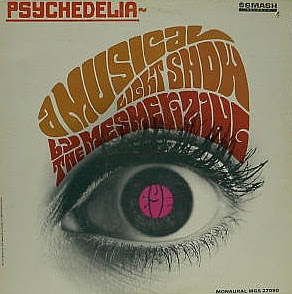
Mesmerizing-Eye_Psychedelia-A-Musical-Lightshow

The Mesmerizing Eye,  “Psychedelia, a Musical Light Show”

As often the case in the sixties (1960’s rather than a reference to my age), the music produced by the “established” academic artists was often less compelling and relevant than than what was being done elsewhere.   Here we have an album by the obscure band, The Mesmerizing Eye, that in my view has much more to say to the listener than Subotnick’s “Silver Apples of the Moon.”  This is the only album released by The Mesmerizing Eye, and not clear to me if this was really a band, or if this album was a work of one or two people.

Musique concrète is a classification applied to music constructed by mixing various recorded sounds, sometimes environmental and urban sounds, sometimes such sounds with instruments added, but generally with the intent of creating an auditory experience that is produced from a mixture of disparate sounds, that have disparate associations, and that we traditionally hear in various and disparate contexts.   This album draws heavily on that tradition, relying on the medium of tape for the assembly of the final product, yet unlike so many of these type of excursions layered onto tape, there is a general sense of order, meaning, and intent. The album is not only interesting and engaging, but the titles and back-cover liner notes provide additional context and clarity into the music’s relevance and purpose.  For example, from the notes for the third track on side two, “The War for My Mind”: “Too many commercials on TV, too much telling us what to do — go to school, wear a tie, cut our hair.  They want to control our mind.” Right on! This is classic 1967 anti-establishment philosophy!  And, in terms of too many commercials and conformity to the onslaught of commercial messages, more relevant to us today than ever.

The tracks dissolve into each other, with a variety of instruments that varies from track to track.  Instruments include church choir, church organ, church bells, piano, acoustic and electric guitar, trumpet, flute, bagpipes, calliope and additional instruments mixed with various background sounds (including the mandatory crying baby) on other tracks. Under twenty-five minutes, always moving forward with a sense of purpose, and making good use of it’s stereophonic capabilities, this little album leaves many of the works by established academia-blessed composers of the 1950’s and 1960’s in its dust. Difficult to find on LP, impossible to find on CD, this  album is available on YouTube for those that don’t require lossless audio quality:


Tracklist (from discogs.com)

A1 Birth Of A Nation 2:42
A2 Rain Of Terror 2:26
A3 Tempus Fugit 2:09
A4 Opus 71 2:24
A5 Twenty-First Century Express 2:32
B1 May The Bird Of Paradise Fly Up Your Flute 2:10
B2 Requiem For Suzy Creamcheese 2:15
B3 The War For My Mind 1:54
B4 Dear Mom, Send Money 2:08
B5 Exercise In Frustration 2:07

Companies, etc.

Credits


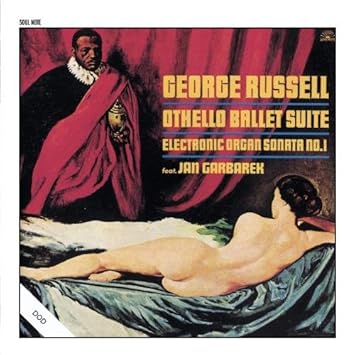
George Russell’s Othello Ballet Suite was recorded in Stockholm in one of the Radio Sweden studios on November 3rd and 4th 1967.  At a little under 30 minutes, this work for orchestra and jazz musicians is performed by 23 musicians including several noteworthy Swedish jazz musicians and the Norwegians Jon Christensen on drums and Jan Garbarek on tenor sax.  Sometimes majestic and beautiful, sometimes wild and exuberantly chaotic, sometimes showcasing individual soloing brilliance, sometimes a collective of orchestral anonymity, this work is adventurous, forward, and bordering on uncivilized, yet alluringly riveting, and mostly coherent.

Even further out is the companion work, “Electronic Organ Sonata No. 1” which was recorded in 1968.  The piece is full of interesting textures and includes many interesting moments, but for me, falls short of the appeal of the ballet suite.

A digital version of the material on this LP is available as part of a 9 CD set, “George Russell ‎– The Complete Remastered Recordings On Black Saint & Soul Note.”

Tracklist (from www.discogs.com)

1 Othello Ballet Suite (Part I)
2 Othello Ballet Suite (Part II)
3 Electronic Organ Sonata No. 1

Credits

Fifty Year Friday: Nirvana “The Story of Simon Simopath; The Kinks “Something Else”

SimonSimopath.jpg

Recorded in July 1967 and released in October, before The Who’s “The Who Sell Out”, Van Park’s “Song Cycle”, or The Moody Blues “Days of Future Passed”, this album is more than just a collection of songs around a theme or concept; unlike many concept albums of 1967, this is a musical story — really the first such rock album to do this.

This is a story that mixes fantasy, allegory and science fiction.  It takes place in a psychedelic future, a six-dimensional city where Simon Simopath is a discontented little “citizen-boy” who more than anything wants to grow wings and fly.   Set before the turn of the 20th Century, his parents, like many parents of millennials, encourage Simon, telling him he can do anything he wants to do.  As one might guess, and as said to be the case with many millennials, Simon, on leaving school drifts from job to job, “unable to derive fulfillment from his work”, depressed for not having wings.  This results in a breakdown and Simon is hospitalized.  Unfortunately, mental therapy is not any more advanced in 1999 than it was in 1967, and Simon is released without results after six days.

Fortunately for Simon, he writes the Ministry of Dreams for the chance to take a supersonic space jockey test and passes, thus winning his wings, so to speak.  But note, we are still on side one with six more songs to go in this relatively short, approximately 25 1/2 minute album.

Not counting the studio musicians and the orchestra, Nirvana (this is the original group called Nirvana — not  Kurt Cobain‘s Nirvana that later settled out of court to pay for also using this name) is basically a singer-songwriter team of Irish musician Patrick Campbell-Lyons and Greek composer Alex Spyropoulos, who share vocal duties on this album. Campbell-Lyons also plays guitar and Spyropoulos is on keyboards.  Simon Simopath, overall, looks past the style typical the rock groups of 1967 towards that sparkling, creatively arranged pop-rock blend that George Martin and the Beatles perfected with Sgt. Pepper and that continues into the seventies with groups like Supertramp and XTC.  It shares qualities that one finds two years later in late 1969 in the Who’s Tommy (for example, the song “We Can Help You”) and even later in 1972 in the musical “Pippin.”

Track listing[from Wikipedia]

  • All songs written by Patrick Campbell-Lyons and Alex Spyropolous
  1. “Wings of Love” – 3:20
  2. “Lonely Boy” – 2:31
  3. “We Can Help You” – 1:57
  4. “Satellite Jockey” – 2:35
  5. “In the Courtyard of the Stars” – 2:36
  6. “You Are Just the One” – 2:07
  7. “Pentecost Hotel” – 3:06
  8. “I Never Found a Love Like This” – 2:50
  9. “Take This Hand” – 2:17
  10. “1999” – 2:09

The 2003 Universal Island Remasters collection includes both stereo and mono versions of the album on one disc. This release contains several bonus tracks:

  • 11. “I Believe in Magic” (b-side to “Tiny Goddess”)
  • 12. “Life Ain’t Easy” (previously unreleased version)
  • 13. “Feelin’ Shattered” (b-side to “Pentecost Hotel”)
  • 14. “Requiem to John Coltrane” (b-side to “Wings of Love”)

All songs composed by Patrick Campbell-Lyons and Alex Spyropoulos

Personnel

  • Patrick Campbell-Lyons – guitar and vocals
  • Ray Singer – guitar
  • Alex Spyropoulos – piano, keyboards and vocals
  • Michael Coe – French horn and viola
  • Brian Henderson – bass
  • Peter Kester – drums
  • David Preston – drums
  • Patrick Shanahan – drums
  • Sylvia A. Schuster – cello

Production notes

  • Chris Blackwell – executive producer
  • Brian Humphries – engineer
  • Syd Dale – conductor

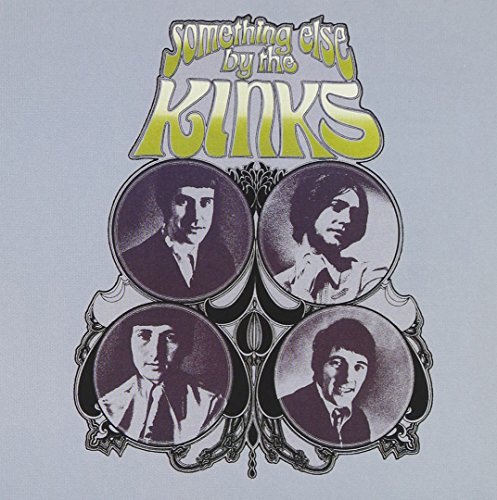
About halfway through their four year ban from performing in the U.S., something that deprived the group of significant financial opportunities during their prime years, the Kinks released their fifth studio album around September 1967.

The music is immediately accessible and Ray Davies’ clever lyrics reflect upon English social situations, characters, and topics with a particularly English point of view.   Top tracks include “David Watts”, “Death of a Clown”, “Two Sisters” and “Waterloo Sunset.”

Nicki Hopkins, who adds vitality to the 1967 Rolling Stones’ “Between the Buttons” with his lively piano contributions, also takes this Kink’s album to another level starting with the opening seconds of “David Watts” and continuing with piano-infused improvements on several other tracks including the second track,  “Death of a Clown.”

“Two Sisters” includes harpsichord (not sure if this is Ray Davies or Nicki) and strings. “No Return” successfully incorporates elements of Bossa Nova with appropriate melody chord changes and nylon stringed acoustic guitar. “Situation Vacant” includes more Nicki Hopkin’s piano, some Ray Davies’ organ, and Dave Davies’ guitar, but it is the lyrics that most diverge from typical pop fare capturing the dynamics between husband, position, and an “ambitious” mother-in-law.”

Side two begins with the simple but catchy Dave Davies’ “Love me till (sic) the Sun Shines”, followed by a partly-psychedelic “Lazy Old Sun.” Dave Davies’ “Funny Face” is well arranged and includes an effective contrasting bridge-like section, similar to something Brian Wilson might compose.

“Waterloo Sunset” is one of Ray Davies’ best compositions ever, lyrically and musically, and brings a praiseworthy album to an effective close.

Track listing[Wikipedia]

All tracks written by Ray Davies, unless otherwise noted.

Side one
No. Title Writer(s) Length
1. David Watts 2:32
2. Death of a Clown Dave Davies, R. Davies 3:04
3. Two Sisters 2:01
4. “No Return” 2:03
5. “Harry Rag” 2:16
6. “Tin Soldier Man” 2:49
7. “Situation Vacant” 3:16
Side two
No. Title Writer(s) Length
1. “Love Me till the Sun Shines” D. Davies 3:16
2. “Lazy Old Sun” 2:48
3. “Afternoon Tea” 3:27
4. “Funny Face” D. Davies 2:17
5. “End of the Season” 2:57
6. Waterloo Sunset 3:15

Personnel


Fifty Year Friday: Larry Young “Contrasts”; Joe Zawinul, “The Rise and Fall of the Third Stream”

Front Larry Young Contrasts

Trained in classical and jazz piano, playing as a teenager in R&B bands, then recording soulful jazz for the Prestige label as a leader, then switching to the Blue Note label, Larry Young records one strong album after another, including the innovative 1965 Unity album with Woody Shaw, Joe Henderson and Elvin Jones which includes a progressive jazz version of the exuberant victory march from Zoltan’s Kodaly’s opera, Háry János.

Young’s 1967 release, “Contrasts”, may not have the stellar personnel of Unity (Larry picks fellow Newark musicians that he knew or played with previously), but the musicianship and chemistry is excellent, and though “Contrasts” is not the classic that “Unity” is, it provides a magnetically engaging first side, and a diverse second side that includes a particularly evocative vocal sung by Althea Young (his wife, which as far as I know appears only one one other album, Young’s next Blue Note album), and ends with a free jazz track, “Means Happiness”.  Per the liner notes, Young was particularly fond of this last track, which is based on the word “Hogogugliang.” Unfortunately, an internet search on this term returns no matches, and I can find nothing that elaborates on the purpose or meaning of this track, except for the liner notes, which simply just indicates that “Hogogugliang” means happiness and is derived from Eastern thought.

Fans of modern jazz will not want to miss hearing the first side of this album, or the very tender and beautifully soulful version of Tiomkin’s “Wild is the Wind.”

Track listing[from Wikipedia]

All compositions by Larry Young except as indicated.
  1. “Majestic Soul” – 11:58
  2. “Evening” – 7:12
  3. “Major Affair” – 3:50
  4. Wild Is the Wind” (Dimitri TiomkinNed Washington) – 4:31
  5. “Tender Feelings” (Tyrone Washington) – 6:51
  6. “Means Happiness” – 4:47

Personnel

William Fischer  and Joe Zawinul were first introduced to each other in New Orleans, then, by chance, met a second time in Vienna (Zawinul judging an Austrian sponsored International Jazz Festival and Fischer working on an opera sponsored with a State Department grant),  and then once again by chance, met a third time at the Apollo Theater in New York where the got to know each other a little bit.  After some musical exploration together, in 1967, they recorded the music on “The Rise and Fall of the Third Stream” — the music composed and notated by William Fisher with one additional title composed by Austrian pianist and composer Friedrich Gulda. (Gulda also composed an interesting theme and variations on the Door’s “Light My Fire” and a Prelude and (jazzy) Fugue performed both by Gulda, and in an altered form during live concerts in the 1970’s, by Keith Emerson.)

Recorded in the latter part of 1967, beginning on October 16th, the “Rise and Fall of the Third Stream” is a thoughtfully composed and arranged album with a non-traditional string quartet (one bass, one cello and two violas), Joe Zawinul on piano, prepared piano, and electric piano, the composer, William Fischer on tenor sax, Jimmy Owens on trumpet, two hard bop jazz drummers, and classically trained Warren Smith on percussion.

Third Stream is the term composer  Gunther Schuller coined for music that blends elements of jazz and classical together, or in Schuller’s words exists “about halfway between jazz and classical music”, including jazz-like improvisation.  Although the title of this album seems to show a disdain for this term, the music embraces the concept fully, in the very best sense.  This is an excellent album from first track to last.

Track listing[from Wikipedia]

  1. “Baptismal” (William Fischer) – 7:37
  2. “The Soul of a Village – Part I” (William Fischer) – 2:13
  3. “The Soul of a Village – Part II” (William Fischer) – 4:12
  4. “The Fifth Canto” (William Fischer) – 6:55
  5. “From Vienna, With Love” (Friedrich Gulda) – 4:27
  6. “Lord, Lord, Lord” (William Fischer) – 3:55
  7. “A Concerto, Retitled” (William Fischer) – 5:30

Personnel


Fifty Year Friday: Mahler’s Sixth Symphony and “Song of the Earth”

Gustav Mahler’s Sixth Symphony performed by Sir John Barbirolli and the New Philharmonia Orchestra (live recording of August 16, 1967 — Proms performance)

b002hesqnu

Gustav Mahler’s sixth symphony was first performed in May 1906 by the composer. Interestingly, Mahler performed the movements in a different order (Allegro, Andante, Scherzo, Finale) than the order in the version published two months earlier. What apparently occurred was that Mahler, during rehearsals, decided that the symphony worked better if the second and third movements were swapped, placing the scherzo in its historically more traditional place after a slow second movement and before the last movement. Mahler notified his publisher to put out a second edition with the new order of Allegro, Andante, Scherzo and Finale and to include errata additions to unsold copies of the first edition.

For the next few decades, Mahler’s sixth was performed with the Scherzo following that Andante slow movement.  Then in the 1950s the first editor of the Critical Edition of Mahler’s works, Erwin Ratz,  came to the conclusion that Mahler had got it right originally and that despite Mahler always conducting the Sixth with the Scherzo after the Andante, that the correct order should be with the Scherzo before the Andante. Without any solid supporting evidence, Ratz, when finalizing the “authoritative” Critical Edition of the Sixth Symphony in 1963, stated in the preface that Mahler had meant to revert to the original order as represented by the first edition, but did not (as Mahler had died in 1911.)

Turns out we now know that Ratz had falsified evidence to support what probably was a personal conclusion based on his analysis of the score.  The Scherzo shares thematic material with the first movement as well as tonal orientation.  Analysis may support a view that Mahler wrote the piece to be performed in the order Ratz proposes, but composers certainly are allowed to make changes, as Mahler not only did to the order, but to the score itself,  and Mahler, known for revising his published works, probably would have made further changes over time if he had lived longer.

In 1998, the latest Critical Edition of the Sixth was released, with the Ratz error still in place, but then in 2004, The Kaplan Foundation published a paper including an essay by recording engineer Jerry Bruck and an essay by Reinhold Kubik, the new chief editor of the Mahler Critical Edition. overturning the Ratz order of Scherzo before Andante and refuting Ratz’s assertion.

Thus with a few exceptions, all recordings between 1961 and around 2000 or so, have the Scherzo occurring before the Andante.  One notable exception is the live January 1966 Berlin Philharmonic recording conducted by Sir John Barbirolli and the live August 16 1967 and the August 1967 studio recording performed by New Philharmonia Orchestra and also conducted by  Sir John Barbirolli.

Performing a complex work like Mahler’s Sixth demands serious study of the score. It is not a work that easily comes together into a comprehensible whole.  For this work to sound like a single unified piece with an overall logic and message, it requires a major commitment by any conductor.  Barbirolli was indeed very serious in his study of this work.  Perhaps it was through such score analysis that led to Barbirolli’s decision to put the Scherzo after the Andante. Perhaps he realized that the Andante provided the necessary contrast, release of tension, and proper overall flow when coming between the opening movement and the scherzo.

When these recordings where first issued, the two live version had the movements in the order they were performed, but for the August 1967 studio version, EMI reversed the order of the middle movements to place the Scherzo back earlier as was indicated in the erroneous critical edition.  Reportedly, Barbirolli was more disappointed then angry at this, but thankfully, current CDs of this studio version have the Scherzo properly placed as the third movement as performed originally and consistently by both Mahler and Barbirolli.

There are only a few recordings of the sixth undertaken before these three Barbirolli recordings in 1966 and 1967.  Since 1967 there have been several dozen recordings, most of these occurring in the CD era.  For those recordings made in the last forty years of the twentieth century where the Scherzo was performed before the Andante, one might just be tempted to program the CD to play these in the proper order, but this doesn’t quite work so well as each of these conductors crafted an overall performance architecture to work around an earlier placed Scherzo.  In my opinion, switching the order, just makes these performances less logical and cohesive, not more.

Of the two 1967 Barbirolli recordings, both are worth a listen, and the notable differences are as follows:

  1. The 1967 live recording sound is not such a great recording sonically.  The studio recording is much better.  Even the earlier 1966 Berlin live performance is significantly better sounding than the 1967 live recording.
  2. The 1967 live recording is far from a flawless performance with some audible flubs by the orchestra.
  3. The pace of the two recordings are much different. The tempo of the live 1967 recording, like the live 1966 recording, is an appropriate tempo to keep the music moving forward and connect the various ideas.  The tempo of the studio recording is puzzling slow::
    1. First movement: 1967 Studio: 21:20. 1967 Live: 19:08
    2. Second movement: 1967 Studio: 16:03. 1967 Live: 14:00
    3. Third movement: 1967 Studio: 13:59. 1967 Live: 12:08
    4. Fourth movement: 1967 Studio: 32:48. 1967 Live: 29:23
  4. The orchestra sounds more engaged and more focused in the live recording.  Some of this may be due to the faster tempo, but certainly playing live often brings out the best in concert hall performers.
  5. Unfortunately, both these recordings omit the repeat as noted in the score of the first movement, a common practice when recording long works during the LP era.

This 1967 Live recording may suffer slightly in comparison to more recent recordings of Mahler’s Sixth, but historically, one has to love how Sir John Barbirolli not only took on what was then a vastly underappreciated work, but got so much right in performing this work.

Mahler’s “Lied von der Erde” (“Song of the Earth”) performed by Otto Klemperer and Philharmonia Orchestra, New Philharmonia Orchestra, Christa Ludwig mezzo soprano, and Fritz Wunderlich tenor


mlvde7

Recorded in February and Novemeber 1964 at two venues (with the orchestra changing its name from “Philharmonia” to “New Philharmonia” in between) and released in 1967 on a 2 LP set along with five songs from two different Mahler works (two songs from “Des Knaben Wunderhorn” and three of five songs from “Rückert-Lieder”) this was the best recording of Gustav Mahler’s “Das Lied Von Der Erde” found in college music libraries in the 1970s, where music majors like me often went to listen to such works as part of their music history studies. This recording captures the music with detail and beauty, presenting a relatively forward plane of sound such that solos are clear and both singers are placed in front and not lost amidst a large orchestra. It is a real joy to listen to on a good audio system with the clarinet, oboe and flute lines distinct and luminously clear  throughout and the two soloists balanced so well against their orchestral accompaniment.

There is no disputing the importance or quality of what many consider to be Mahler’s greatest work.  Composed in 1908, it was written after 1) Mahler had suffered through the politics of hatred and antisemitism that forced him to resign as director of the Vienna Court Opera, after 2) Mahler learned that he had a fatal heart condition, probably a congenital defect that had claimed the lives of his little brother and later his mother, and, 3) worse than either of these for any parent, the loss of his five-year-old daughter, Maria to scarlet fever and diptheria.

marial “With one stroke,” he wrote to his friend Bruno Walter, “I have lost everything I have gained in terms of who I thought I was, and have to learn my first steps again like a newborn”.

“Das Lied Von Der Erde” is a symphony in six parts written on the text of seven poems from Hans Bethge’s first book of translation of Tang Dynasty poetry, “The Chinese Flute.” Mahler begins “Das Lied Von Der Erde” with these dark words attributed to wandering Chinese poet, Li Bai:

“The wine beckons in golden goblets
but drink not yet; first I’ll sing you a song.
The song of sorrow shall ring laughingly in your soul.
When the sorrow comes, blasted lie the gardens of the soul,
wither and perish joy and singing.
Dark is life, dark is death!”

Mahler’s “Song of the Earth” is a work one can repeatedly listen to,  absorbing the sparkling, transitory joy, the moments of anguish, despair, and bleak, unshakable sorrow, and the spiritual sophistication and beauty of Mahler’s chromatically extended tonality.  Of all the recordings out there, this 1967 classic recording by Klemperer, the Philharmonia Orchestra/New Philharmonia Orchestra, Christa Ludwig, and Fritz Wunderlich is a perfect place to start or return to, depending how many times you have listened to “Das Lied Von Der Erde.”  Otto Klemperer was one of the few conductors who actually knew Gustav Mahler, heard Mahler conduct, and survived into the age of stereo to record him.  Perhaps this is the closest to hearing how Mahler would have recorded this work.

Fifty Year Friday: Jobim “Wave”; Zappa, “Absolutely Free”; Beefheart “Safe as Milk”


wave

Jazz fan’s will likely know of Antonio Carlos Jobim two albums with Stan Getz, particularly the first one, Getz/Gilberto containing “Desafinado” and the classic version of “The Girl from Ipanema” with  Astrud Gilberto‘s seductive vocals.    That first album, added fuel to the already burning fiery desire of Americans to hear and dance to bossa nova, and elevated Jobim to a marketable American music business commodity.

“Wave”, released in 1967, became Jobim’s best selling album, providing smooth, comforting music for middle America and many non-jazz record consumers. The music is well-crafted, well-arranged and well-performed with Jobim playing guitar, piano, celeste and harpsichord, Ron Carter on bass, Urbie Green on trombone, and a small string orchestra with french horn and flute/picolo all providing the most mellow dance music possible.   It is not exactly jazz and, in a sense, sets the tone for a genre of music that would be called smooth jazz,  a style not demanding listener attention or involvement, but played for its soothing, relaxing qualities.  Such smooth or background music became prevalent in shopping centers, in restaurants and in many work places that now added such music or substituted smooth jazz for the previously provided muzak. In 1987, Los Angeles radio stations KMET, once one of the coolest, most progressive album-oriented,  FM radio stations in Southern California, changed its letters to KTWV and called itself “The Wave” playing “adult contemporary jazz” becoming one of the un-coolest, most un-progressive stations in the Greater Los Angeles area ultimately influencing other radio stations to take the same path.

Of course, none of the blame should be attributed to this fine Jobim album; it is just worth noting that soon background music became virulently prevalent, irking many musicians that believed music should be actively listened to and not absorbed.

Track listing[from Wikipedia]

All tracks composed by Antônio Carlos Jobim.

  1. Wave” – 2:56
  2. “The Red Blouse” – 5:09
  3. “Look to the Sky” – 2:20
  4. “Batidinha” – 3:17
  5. Triste” – 2:09
  6. “Mojave” – 2:27
  7. “Diálogo” – 2:55
  8. “Lamento” (lyrics by Vinicius de Moraes) – 2:46
  9. “Antigua” – 3:10
  10. “Captain Bacardi” – 4:29


frankzappa-absolutelyfree

Frank Zappa and his Mothers of Invention did not produce either easy listening music or anything that could be considered conservative.   This is the Mothers of Invention’s second studio album and every bit as adventurous as the first including mixed meter and quotes from Stravinsky’s three most famous ballets, “The Firebird”, “Rite of Spring” (“Le Sacre du printemps”) and Petrushka.  Each side of the original LP can be viewed as a single piece rather than a set of unrelated tracks due to redeployment and relationship of music material.  Humor is a inseparable part of this innovative album that many Zappa fan’s cite as one of their favorites.

Track listing [from Wikipedia]

All tracks written by Frank Zappa.

Side one: “Absolutely Free” (#1 in a Series of Underground Oratorios)
No. Title Length
1. Plastic People 3:40
2. “The Duke of Prunes” 2:12
3. “Amnesia Vivace” 1:01
4. “The Duke Regains His Chops” 1:45
5. “Call Any Vegetable” 2:19
6. “Invocation & Ritual Dance of the Young Pumpkin” 6:57
7. “Soft-Sell Conclusion” 1:40
Side two: “The M.O.I. American Pageant” (#2 in a Series of Underground Oratorios)
No. Title Length
1. “America Drinks” 1:52
2. “Status Back Baby” 2:52
3. “Uncle Bernie’s Farm” 2:09
4. “Son of Suzy Creamcheese” 1:33
5. Brown Shoes Don’t Make It 7:26
6. America Drinks & Goes Home 2:43

Personnel[from Wikipedia]

Note that there are several additional musicians on this album including Don Ellis on trumpet on “Brown Shoes Don’t make it”


safeasmilk-bds1001-covers

Another less-than-easy-listening album is Captain Beefheart and his Magic Band’s “Safe as Milk” which starts from a blues foundation but includes uncommon time signatures and unique instrumental divergences. On one hand, a traditional blues fan might prefer to spend their time listening to a true blues album by someone like Howlin’ Wolf rather than this Don Van Vliet (A.K.A Captain Beefheart) psuedo-blues album. However, despite some superficial similarities in Howlin’ Wolf’s and Beefheart’s voices, and “Safe as Milk’s fairly straightforward first track, there are enough deviations here, musically and lyrically, from other more solid blues albums of the time to take this album on its own terms. Guitarist Ry Cooder, having played with Taj Mahal in the short-lived Rising Sons, makes important arrangement and performance contributions. Historically, this is an important album as it captures a band in transition to a more adventurous style that merges blues, free jazz and art-rock into a genre I could only call head-spinning, head-splitting, free-style post-blues

So even though this is much closer to standard fare than later Captain Beefheart albums, it contains a number of adjustments to standard rock/blues that make this an album worth checking out.  “Yellow Brick Road” borrows the first part of its melody from “Pop Goes the Weasel” but strays off into its own tune with a mix of innocent and suggestive lyrics. “Autumn Child” pushes into both art-rock and progressive rock territory with its Zappa-like opening and changes in meter, texture, tempo and mood.  Electricity” is the stand-out track, with lyrics and music flirting with psychedelia (note the guitar imitating the sitar), blues, bluegrass, and rock, and, once past the brilliant introduction, is very danceable. The rising oscillations of a thermin closes out the song.


Whereas one can put on “Waves” (and even “Absolutely Free” under the right circumstances) and delegate it to the background with little trouble, if one does this with some of the Beefheart “Safe as Milk” tracks like “Electricity”, “Plastic Factory” and “Abba Zaba”, they simply become distracting and annoying; however, play this album on a good audio system that can untangle the aggressive texture into individual and distinctive voices and the music flies by and, if not always pleasant, is unexpectedly absorbing and engaging.

Track listing[from Wikipedia]

All songs written by Herb Bermann and Don Van Vliet except where noted.

Side one
No. Title Length
1. “Sure ‘Nuff ‘n Yes I Do” 2:15
2. “Zig Zag Wanderer” 2:40
3. “Call on Me” (Van Vliet) 2:37
4. “Dropout Boogie” 2:32
5. “I’m Glad” (Van Vliet) 3:31
6. Electricity 3:07
Side two
No. Title Length
7. “Yellow Brick Road” 2:28
8. “Abba Zaba” (Van Vliet) 2:44
9. “Plastic Factory” (Van Vliet, Bermann, Jerry Handley) 3:08
10. “Where There’s Woman” 2:09
11. “Grown So Ugly” (Robert Pete Williams) 2:27
12. “Autumn’s Child” 4:02


Personnel 
[fromWikipedia]

Captain Beefheart and his Magic Band
  • Don Van Vliet – lead vocals, harmonica, marimba, arrangements
  • Alex St. Clair Snouffer – guitar, backing vocals, bass, percussion
  • Ry Cooder – guitar, bass, slide guitar, percussion, arrangements
  • Jerry Handley – bass (except 8, 10), backing vocals
  • John French – drums, backing vocals, percussion
Additional musicians