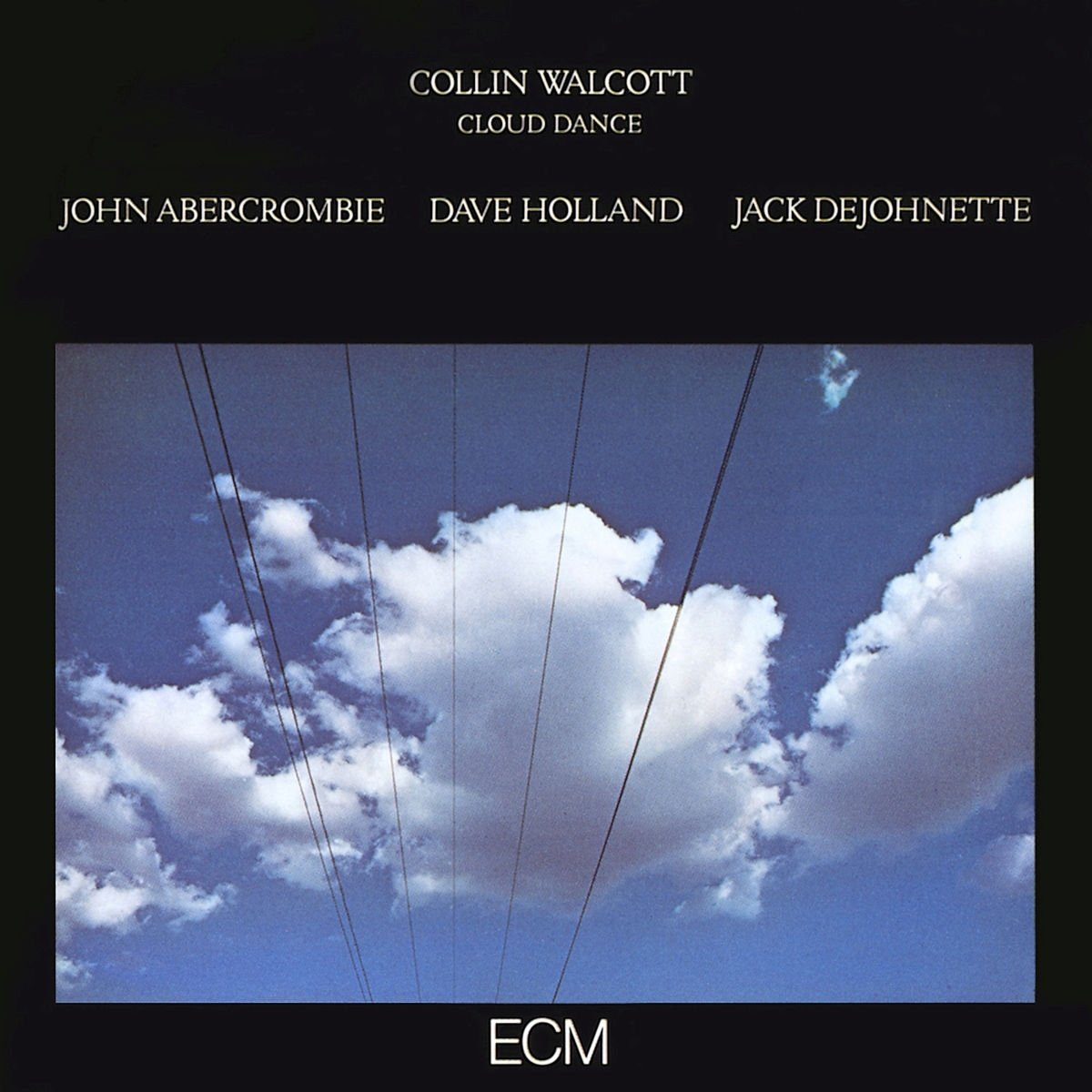
If you are in the market for flashy, aggressive 1976 rock or fusion, then it’s best to search elsewhere. Generally, this is a relaxing, reflective, introspective album. The musicianship is stellar: Collin Walcott on sitar, John Abercrombie on guitar, Dave Holland on bass and Jack DeJohnette on drums — and the music has a high level of intensity. But rather than being compelled to dance on top of the table, I think it is more likely you will find yourself listening to this cross-legged on the floor, immersed in the music as opposed to immersed by the music: one is absorbed with this music and not appropriated by it.
For the most part tracks alternate between contemplative and more extroverted. The first track, “Margueritte,” starts off softly, gathers intensity and then drifts back into a calmer, more exploratory mood, making use of repeated melodic fragments to provide continuity. This is followed by the lively, syncopated “Prancing,” which features Dave Holland, and is likely to be a favorite of listeners more comfortable with hard bop or progressive rock. Night Glider, aptly named, takes us back inward; tracks continue to alternate in this fashion until the final track, “Cloud Dance,” an energetic number that comes closer than any of the preceding tracks to approaching the current fusion aesthetics of its time, providing a strong finish to the album.
The sonic detail makes this perfect for detailed listening — instrument voices are always clear and distinct. This album nicely avoids being an “East meets West” excursion or a trendy passing nod to Indian musical tradition. It is a musical presentation with its own rules and expressive objectives — exploring new soundscapes — breathing, not rushed, with each piece providing a different refreshing and substantial experience.
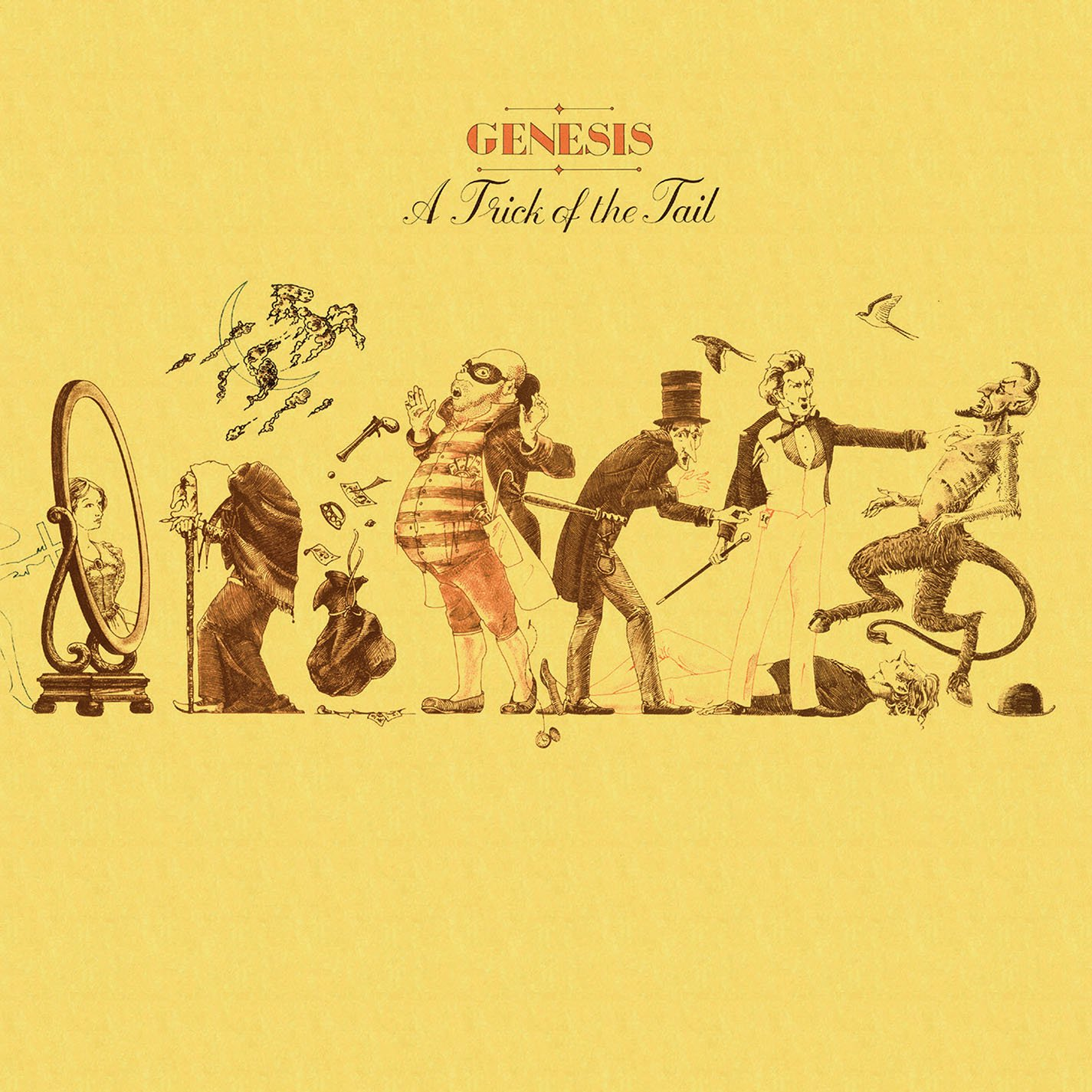
Released on February 13, 1976, A Trick of the Tail was the first Genesis album after Peter Gabriel’s departure. Minus their high-profile frontman, the future of the band was initially in doubt. But soon the remaining members determined to continue with their next album. The search was on for a new vocalist. Wishing to keep this under the radar, the band placed an anonymous advertisement in Melody Maker magazine looking for a “singer for a Genesis-type group.” A deluge of demo tapes followed — over 400, all of which were diligently listened to in order to create an in-person audition list of about 30 candidates.
Like almost all rock bands, Genesis did not work off of sheet music. During the final stages of auditions, it was Phil Collins’ job to work with the remaining candidates to teach them the vocal melodies that went with the written lyrics. With only a few candidates left, Mick Stickland attempted to provide the vocals for “Squonk,” but it became apparent that there was a range mismatch. The backing track had already been recorded, and the band was unable or unwilling to re-record it in a different key to accommodate Stickland’s range. Collins, having taught the song to Stickland and other applicants, reluctantly offered to take his best shot. It was then that the band realized that Collins’ version was the best of all the applicants — not only was his handling of pitch and melodic line more than adequate, his sense of rhythm, musical attack, and dramatic sensibility was notably superior to any of the external candidates. Whether he wanted it or not, the job was now his.
In terms of musical performance, arrangement, and sound engineering, this would be their best album to date. Granted, this is not at the overall musical level of their Foxtrot album, and no tracks compare to “Supper’s Ready,” “Attack of the Giant Hogweed” from Nursery Cryme, or “Firth of Fifth” from Selling England by the Pound, but this is still a must-have work of music, with an incredible variety of compositions.
Tony Banks’ contributions are particularly evident. Following Gabriel’s departure in 1975 with the future of Genesis uncertain, Tony Banks began stockpiling material for a solo album, concerned that there would be no continuation of Genesis. When Banks, Rutherford, Collins, and Hackett came to an agreement to continue as a quartet, Banks made the decision to leverage his solo material for the good of the group: the first post-Gabriel album needed to be undeniably of the highest quality to prove they could survive, so he held nothing back. “A Trick of the Tail” was actually intended for Foxtrot, and then due to its lighter quality, for his solo album. The band worked “A Trick of the Tail” into its final, infectiously swinging character, making it an effective bridge from the heavier Genesis sound of Selling England by the Pound and the more exploratory, less conventional style of The Lamb Lies Down on Broadway to a more accessible, “progressive pop” style that would be the signature sound of the new Genesis for their next few releases.
But the “more accessible” label is misleading. The harmonic depth and harmonic variety of these tracks qualifies Banks for an honorary degree in composition from the most prestigious universities on the planet. And we continue to have that metrical mastery we find in “Firth of Fifth,” most remarkably applied to “Dance on a Volcano,” originally a standard 4/4 number, which was changed to the off-balance 7/8 at Banks’ suggestion, providing an incredible animation and support for Banks’ own lyrics for the song, with its message of moving forward in adversity, perhaps a metaphorical reference to the band needing to step up to the challenge of not just continuing Genesis post-Gabriel, but making it even better.
Also notable is the last track “Los Endos” which develops the thematic material from “Dance on a Volcano” and provides an effective coda to a very strong album.
Starcastle: Starcastle and Gong: Shamal
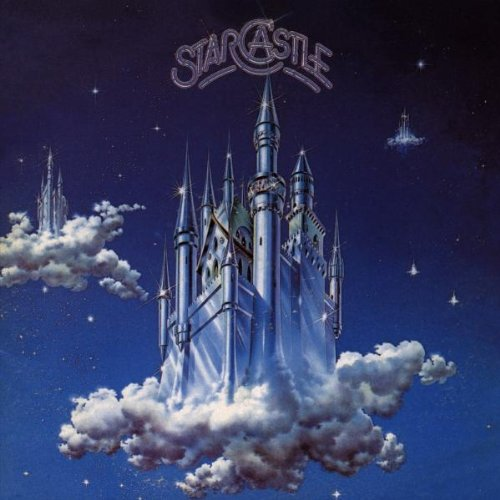
In other February 1976 albums, Starcastle released their debut album proving that American rock bands can make true progressive rock: this one is highly indebted to the Yes sound. It is interesting enough for one or two listenings, and is worth checking out even if it won’t be an album you will come back to. For those familiar with Yes, give this a listen, and let me know your thoughts in the comments. I usually don’t mention albums that I don’t believe are in the upper tier, but this is an interesting artifact from that period when progressive rock was starting its decline, but being adapted by several American bands, many of which never had more than local reach with an equally limited lifespan.
A more distinctive and interesting album from February 1976 is Gong’s Shamal. Produced by Nick Mason (yes, of Pink Floyd), Shamal is a transitional album in Gong’s discography, a bridge between the more adventurous, chaotic Daevid Allen era and the percussion-driven jazz-fusion of the Pierre Moerlen era. For those wishing for more structure than earlier Gong albums, this nicely meets that requirement. Steve Hillage is still present, but as a guest artist, and Didier Malherbe’s sax and flute contributions make this a wonderful, engaging album. Well worth checking out.
Those iron plates that churned the mud and gravel Impress me not. The rifled bore was, and is a crashing bore, I shut my eyes to the breechblock and Do not care for thermite. I recoil from venturi. I have only cutting remarks for the bayonet; C.B.W. stinks. Give me Gandhi & Walden, with a little pickle On the side, and I am content. Blood-red waiters make me yawn.
Released in November of 1975, Night at the Opera starts with the excitement of an ocean voyage — we hear arpeggiated waves from the piano, whale rumblings from the bass, bird cries and seagull squawks from multitracked guitar breaking into soft strains of a tango quickly turning into heavy metal. This is Freddie Mercury the composer at the height of his craft.
After having purchased three Queen albums already, the first thing I did when I brought this album home in December of 1975 was note which tracks were attributed to Mercury — this served as indicators to what tracks would impress me the most. That turned out to be an effective predictor, but, importantly, the rest of the band’s contributions were some of their very best songs, making this album packed with classic material from start to the pinnacle of the album, the penultimate track, “Bohemian Rhapsody” — one of those rare instances in rock since the Beatles had disbanded where a truly great work of music made its way from legendary status with serious listeners, musicians, and dedicated fans to legendary status with the general public, even though, perhaps as expected, it took some time to do so.
And just as the Beatles elevated their work with multi-track musical enhancements, so too did Queen elevate Night at the Opera to a precisely rendered set of cohesive numbers that deservedly live up to the album’s title. Now, don’t get me wrong — we have an amazing musical diversity on this album — with such diversity in just Mercury’s compositions — but we add to that “I’m in Love with My Car”, “You’re My Best Friend,” the vaudevillian “Good Company” with ukulele and outstanding guitar accompaniment, and “The Prophet’s Song” with its brilliant use of deceptively simple imitative counterpoint, and it’s pretty easy to understand how Night at the Opera more than holds its own today as a timeless classic.
Keith Jarrett : The Köln Concert
One of my favorite possessions was the triple LP Keith Jarrett Solo Concerts: Bremen/Lausanne which I had purchased with Christmas money in 1973. It was just incredible to have a three LP set of piano improvisation of such high quality. Given that, I am puzzled why I never bought The Köln Concert until the complete version made its way on to CD around 1984.
Recorded live in January of 1975, The Köln Concert was released in late November of 1975, the album starts off plaintively in the style of the quiet Americana reflectiveness so well done by classical composers like Aaron Copland and Roy Harris. For the first improvisation, Jarrett leans heavily on repetitive phrases and ostinato-like patterns to continue to move the music forward, flowing as if driven by stream of consciousness, yet always compelling and logical, deftly avoiding lingering too long in any single style, texture, or mode of emotional expression as the music logically unfolds.
The second piece, broken up onto three sides of the double LP album, is dramatically different in tone and character. Like the first improvisation, it evades any simple stylistic labels sometimes flirting into rock piano improvisation. Where the first improvisation was reflective, the second is inexhaustibly joyous and intensely rhythmically as Jarrett turns the piano into a percussive engine, hammering out a powerful, trance-like groove with his left hand that is pure, ecstatic energy. This propulsive marathon of invention continues through Part IIb, before finally dissolving and making way for the famous encore, “Part IIc.” After all the complex fireworks, this final piece is a moment of breathtaking, lyrical grace — a simple, hymn-like melody that releases all the tension and remains one of the most beautiful themes Jarrett ever played.
The music makes this performance legendary, but like the most interesting legends, it has an almost mythical backstory. Jarrett had specifically requested a Bösendorfer 290 Imperial concert grand. Unfortunately, what was made available on the stage was a baby grand rehearsal piano in such bad condition that Jarrett had initially refused to play on it. The requested piano was in storage and due to horrid weather was not able to safely replace the inferior piano. So Jarrett was forced to confront the rehearsal piano, an unsuitable, tinny, and out-of-tune practice piano he tested during the afternoon of the concert and was so dissatisfied with it he almost threw the towel in performing that evening. The promoter finally convinced him that he had a responsibility to play as best as he could for a sell-out crowd and somehow do his best to deal with the inadequacies of the inferior rehearsal piano. Jarrett went forward with the performance and it was this limitation, this ‘bad instrument,’ that forced Jarrett to navigate that evening’s improvisations into new territory, compelling him to avoid the shrill upper register notes and the weak lower bass notes, replacing the harmonic function of the latter with lower middle register accompaniment patterns and repetitive ostinatos — thus creating the distinctive style that unifies the music of this remarkable performance.
Joni Mitchell: The Hissing of Summer Lawns
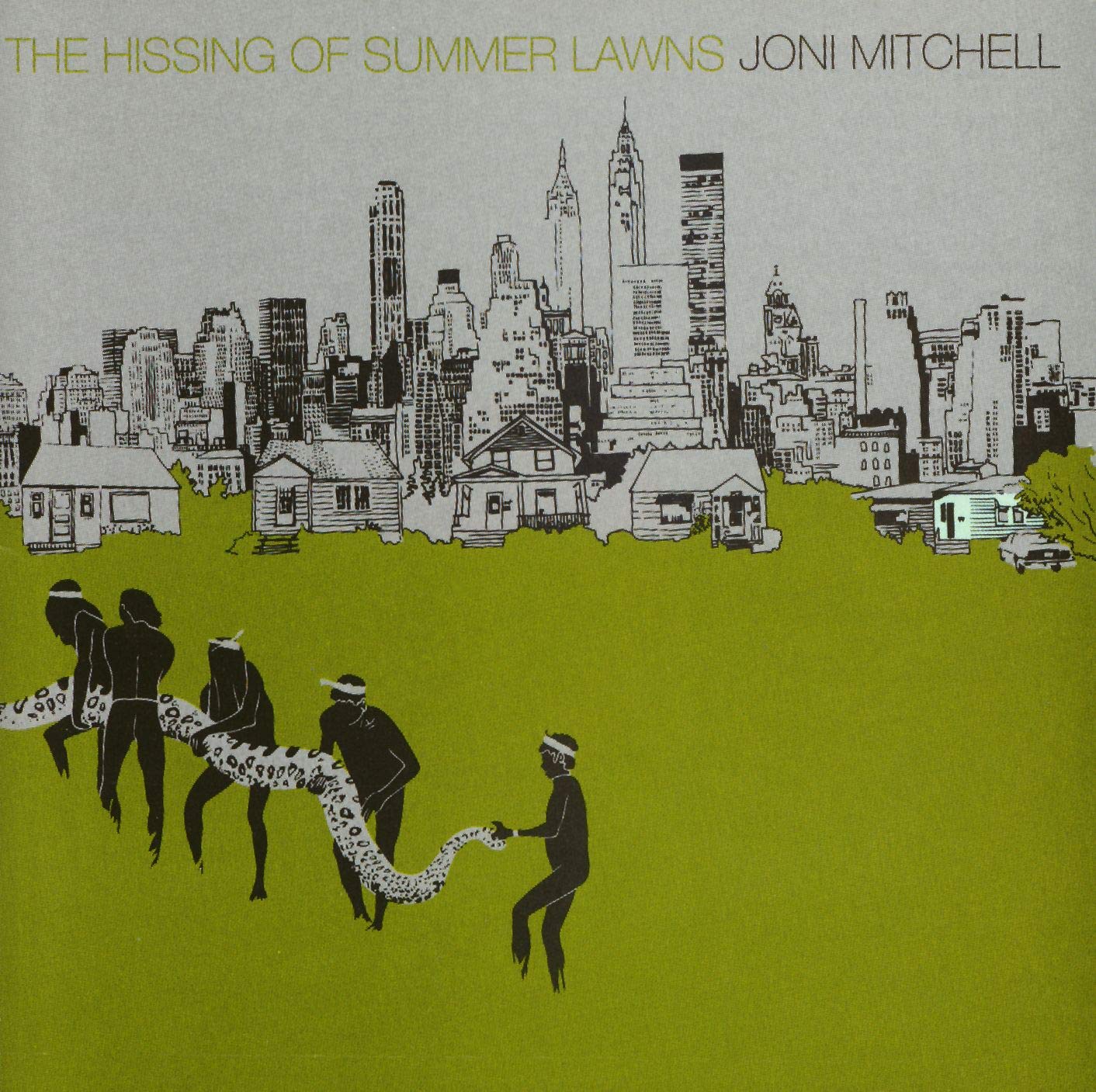
Released in November of 1975, The Hissing of Summer Lawns finds Joni Mitchell presiding over one of the most seamless marriages of lyrics and music of the 1970s. The poetry here is evocative and ironic, crafting memorable metaphors and unforgettable images. It’s often said that when constraints are placed on artists, they often produce their best work. For an artist who had previously written music around pre-existing lyrics to then make that shift over to the craft of fitting words into already composed music, one might expect a change in character — or at least in lyrical texture. Beginning around 1973 or 1974, Mitchell’s lyrics indeed became more fluid, impressionistic, and engaged, so that by the time of this album, she had achieved a near-perfect fusion of music and poetry, with the music among her finest creations.
And how does one classify the sound? One cannot. It draws on pop, rock, folk, and jazz, yet it belongs to none of them. The album charts its own course, allowing space for stellar contributors like Bud Shank and Joe Sample to leave their imprint without overshadowing Mitchell’s vision. The closing track, “Shadows and Light,” brings the album to a transcendent conclusion: a multi-tracked a cappella choir of Mitchell’s voice against a contrasting, processed drone from a Farfisa organ. The result is a kind of sonic cathedral, where light and sound filter through like stained glas — ever shifting, quietly monumental, and filled with a sense of cosmic design.
The entire album is a showcase of extracting equilibrium from motion. The music is built on a strong foundation yet exploratory and liberating. Here we have an artist of the highest level in full command of her gifts, unafraid to blur the lines between song and painting, intellect and intuition. The Hissing of Summer Lawns continues to be an album worth returning to: we achieve familiarity with repeated listenings but never is the magic lessened.
Chris Squire: Fish Out of Water
Another November 1975 release was Chris Squire’s highly accessible, melodic Fish Out of Water. For those like me who couldn’t get enough of the brilliance of Yes’s Fragile, this album was filled with the musical inventiveness and wonderful bass lines that dominated that Yes album. Musicians include Bill Bruford on drums and percussion, with saxophonist Mel Collins on two tracks and Patrick Moraz on bass synthesizer and organ on one track . Squire handles all the vocals, bass guitar, some acoustic twelve-string guitar and electric bass. Special compliments go Andrew Pryce Jackman who provides acoustic and electric piano keyboards and seamlessly integrated orchestration providing the album with additional depth and further contributing to its ebullient vitality. Fish Out of Water is a must-have album for all Yes fans surpassing most of their catalog released after 1975.
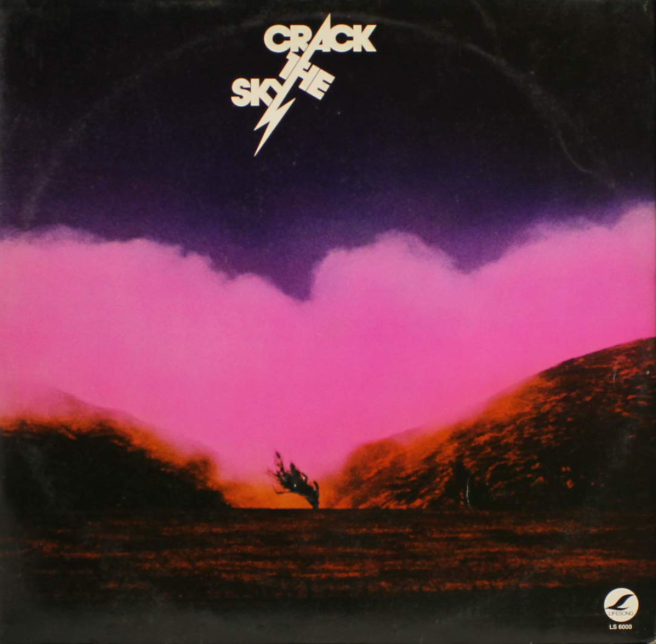
Crack the Sky: Crack the Sky
Crack the Sky’s debut was released in limited quantities in November 1975 by the independent label, Lifesong. Is this the biggest accomplishment by this label? Depends on your perspective — Lifesong posthumously re-released several greatest hits albums of Jim Croce material starting in 1976 as well as being responsible for “The Biggest Rock Event of the Decade” — that’s right — the rock opera Spider-Man: Rock Reflections of a Superhero — an album of such popularity that I cannot find any entry for it on Wikipedia, though in fairness, the title was released again twenty-five years later on CD and is currently available on eBay for $49.
Putting Spider-Man historical considerations aside, the Crack in the Sky album, despite its limited distribution, eventually climbed up to spot 161 on the Billboard Charts in February 1976 aided by some airplay in the Baltimore area and more importantly being identified by the Rolling Stone magazine as the debut album of 1975.
Keyboard player and lead vocalist John Palumbo wrote all the music and lyrics showcasing an eclectic range of styles incorporating sixties pop elements and contemporary progressive rock elements. Both the music and lyrics are generally quirky, with a tongue-in-cheek, often ironic, humor deeply embedded in the lyrics and the music rich with accessible melody. There are musical moments that recall surf music, the Beatles, Procol Harum, early Genesis, and even Gentle Giant. It’s not a particularly well-produced album but it is a lot of fun, and an album that anyone who considers themselves well-versed in the history of rock music should have heard at least once.
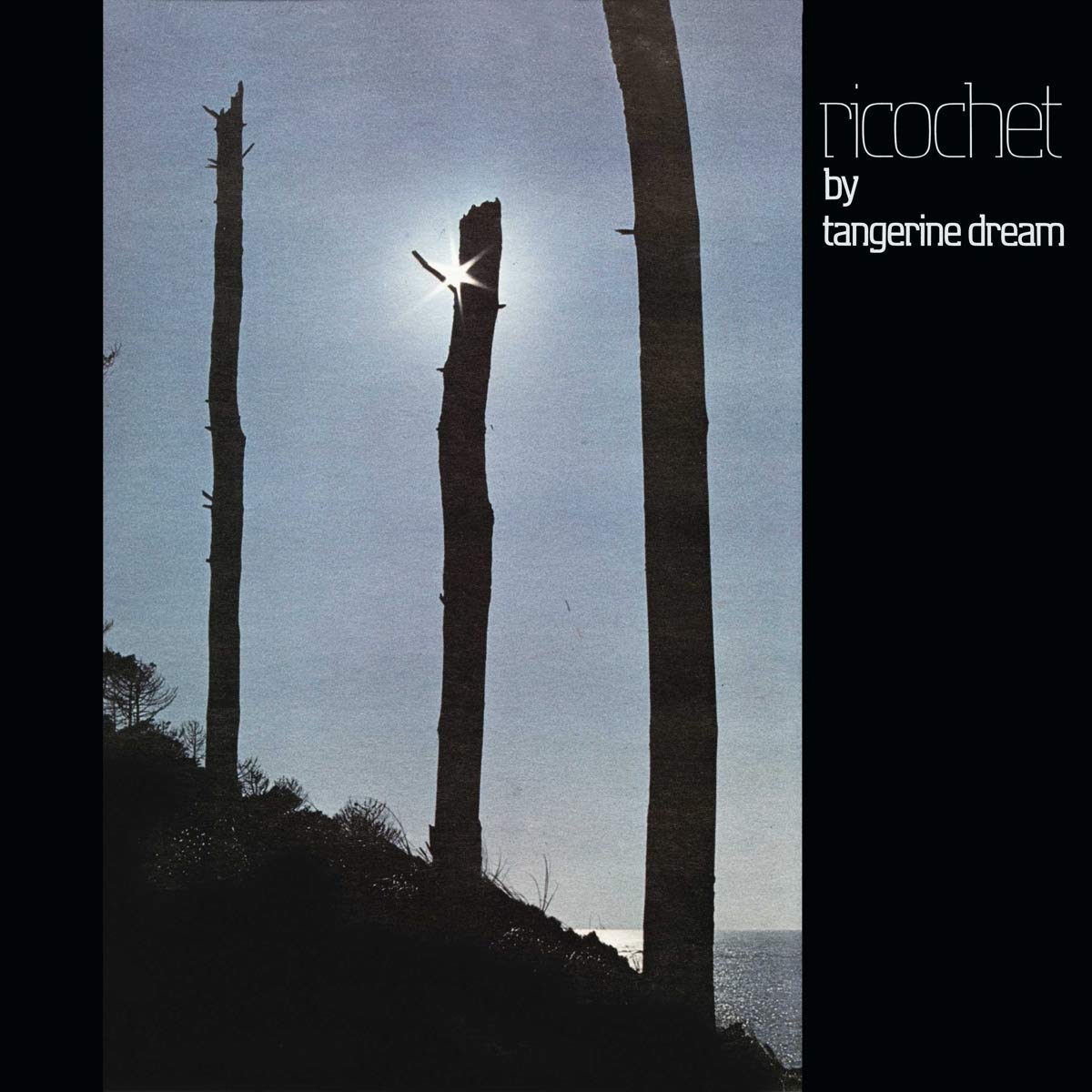
Tangerine Dream: Ricochet
Recorded in late October and early November of 1975 in England, partly live at Fairfields Hall in Croydon and partly in the studio, Ricochet was released in December of 1975. It continues that rhythmically intense sequencer-driven signature sound from Rubycon, delivering it with sparkling clarity and focus. The music unfolds logically with a strong sense of overall meaning and purpose, effectively locking in one’s attention and never letting it go. Side One, “Ricochet, Part One” contains studio improvisations and recreations of live performances with side two, “Ricochet, Part Two” being predominantly live.
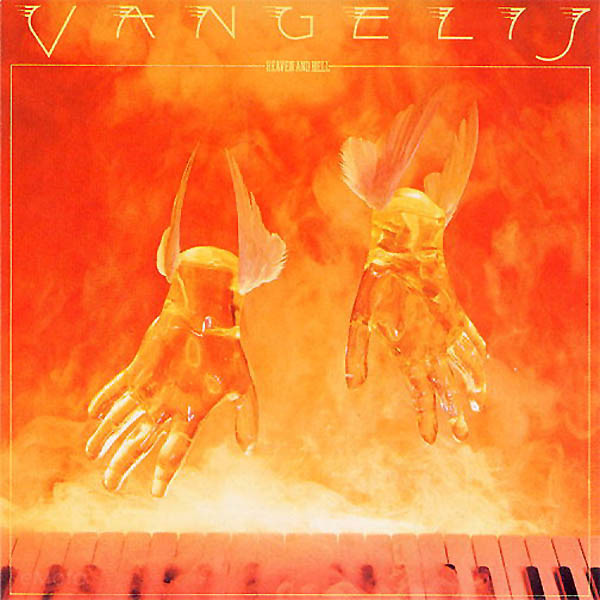
Vangelis: Heaven and Hell
Released in November of 1975, Heaven and Hell is a mixture of the cinematic, early and modern “classical” music, Greek folk and some elements of progressive rock. The album effectively combines Vangelis’s mastery of synthesizer with orchestra to create a richly themed concept album about the duality of human interaction with good and evil, the light and the darkness of existence. Side One, “Heaven and Hell, Part I”, opens furiously with synthesizer and chorus setting a strong symphonic tone and concludes with vocals by Jon Anderson of Yes segmented with a glorious orchestral and synthesizer interlude. Side Two, “Heaven and Hell, Part II” opens up, contrastingly, darkly and ominously, generally maintaining that mood with the notable interspersion of an exuberant, infectious Greek-influenced folk-dance-like section and its more reflective ending. The musical tone-painting is particularly impressive, effectively supporting side two’s darker thematic premise.
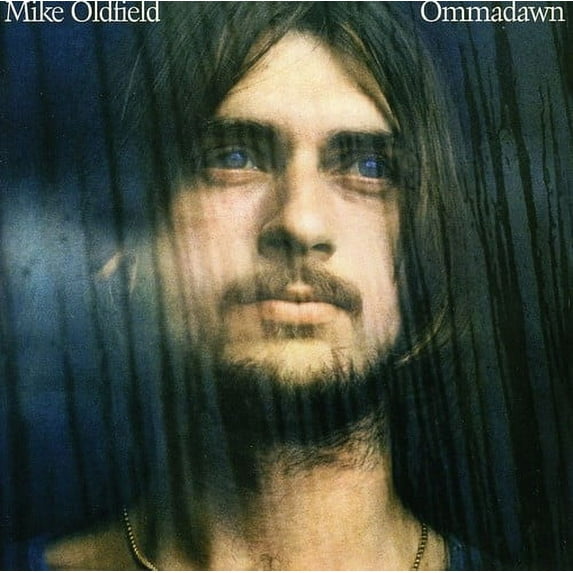
Mike Oldfield: Ommadawn
Released in November of 1975, Ommadawn is Mike Oldfield’s third major symphonic work, following the partly Exorcist-driven phenomenon of Tubular Bells and the expansive, pastoral landscapes of Hergest Ridge. Ommadawn mostly consists of one long work, the title track, divided between the two sides of the original LP with a short additional work at the end. It is this title track that is the gem and centerpiece of the album, excelling in compositional presentation and development of thematic material with the first theme deftly varied, followed by an abruptly effective intrusion of the second theme around the 4:15 mark, which is also skillfully varied. After this exposition of fundamental material, both themes are further developed and extended with a richness of instrumental variety and occasional vocals (using a cleverly altered Irish translation of some simple English words) invoking a tribal sense of community.
The second half of “Ommadawn” is more dramatic with greater musical weight and contrast, further exploring a wondrous world-fusion sound that would soon become a whole sub-genre of music. The highlights here include Paddy Moloney on the Irish equivalent of bagpipes, more properly known as Uilleann pipes, and an uplifting blend of vocals and glockenspiel followed by an Irish-like dance section that brings the work to a close.
For those looking to check this album out, avoid the original mix and go for the sonically spectacular 2010 remix which provides significant clarification and enhancement of individual instruments and provides rich, immersive stereo.
Magma: Live/Hhaï
Released in December of 1975, I bought this album in Germany in 1978, and I was not surprised in the least to find this live album of the French progressive rock group in Germany. Unlike Ange, which had a distinct French coloration to their albums, Magma had a Germanic sound and eschewed the French language to adapt a language more suitable to their music — not German, but — okay let’s break this down.
Christian Vander, son of French jazz pianist Maurice Vander, was born in Paris in 1948. Exposed to both jazz and classical music, he grew up listening to Wagner, Bach and Stravinsky and met several great jazz artists including Chet Baker, who gifted Christian Vander his first drum kit and Elvin Jones who shared his musical expertise. Vander brought all these influences as well as his intense admiration for a number of jazz giants, most particularly John Coltrane, as well as drummers like Art Blakey, Max Roach, Kenny Clarke and Tony Williams. Vander brought all such influences with him, including Coltrane’s searching musical intensity, when he founded Magma in 1969 as Magma’s leader, primary composer, drummer and an important contributing vocalist.
With the formation of Magma, Vander begin the creation of the mythology of Magma concept albums and the appropriate language — Kobaïan, the language of the fictional world of Kobaïa — a distant planet colonized by a group of humans fleeing earth’s moral and ecological collapse. The language’s main function was to provide the appropriate musical sound for Magma’s music and to represent a sacred language of renewal. Its sonic characteristics are starkly different than French, coming closer to Slavic and Germanic patterns, but intrinsically supportive of Vander’s musical ideas, which slowly coalesced into a dark, more teutonic, primitively spiritual style, with texture and timbral/orchestral characteristics eventually significantly influenced by Carl Orff’s Carmina Burana, which Vander first heard in 1972.
This 1975 Live/Hhaï album includes material as early as 1973, all of which represents the mature, dramatic Magma sound prevalent from 1973 on. The original album was a two LP set that could still fit on a standard single CD, but is currently sold as a two CD set. It is available for streaming on the usual sources for anyone wanted to sample this unique music, a music that will retain its excitement, mystery and appeal for centuries to come.
Brian Eno: Another Green World and Discreet Music; Fripp & Eno: Evening Star
In November of 1975, Brian Eno released his third solo studio album, the remarkable Another Green World which, while not as ambient as his upcoming work, is certainly an unconventional pop album full of highly accessible music surrounded with imaginatively unusual context. Eno provides a mix of catchy songs with him on vocals, some amazing guitar work from Robert Fripp, but mostly a level of exotic, quirky arrangements that elevate each and every track. Highly recommend!
In December of 1975, Eno’s fourth studio album is released, Discreet Music, and it is a boldly innovative ambient album. The first side, the title track, is a work of beauty and can be listened to directly or used as effective background music for a range of activities including writing, reading and napping off. The second side is more challenging: three “elastic” arrangements of Pachelbel’s well-known canon where the parts move at different paces — not by chance or performer’s whim but intentionally arranged to distort the relationship of the individual parts and the overall musical experience. One can still hear traces of the original canon — yet each of the three very different arrangements alters the original musical architecture with time-based abstractions that are roughly parallel to distortion concepts in cubism, futurism and surrealism and also seem related to rules-driven processes that are found in works by artists like Paul Klee, Bridget Riley, Sol LeWitt and even those famous rectangle paintings of Piet Mondrian. One also has to give credit to John Cage’s influence which opened up this whole realm of unexpected alterations whether aleatoric or rules-driven.
The most challenging of these three albums, Fripp & Eno’s Evening Star, released also in December of 1975, is another tale of two sides. The first side of four tracks, each with new standard ambient titles, is by far the most accessible and functions very effectively as truly ambient music or even meditative, reflective music, particularly the first, third tracks and fourth tracks “Wind on Water,” “Evensong,” and “Wind on Wind.”
The second side is devoted to a single piece “An Index of Metals” divided up into six tracks. I doubt there are many people that can turn it on in the background and experience a calming or relaxing effect from it. It is filled with tension and not smooth or flowing. I suspect many will just find it plain irritating if using it to relax, read, or write by as it has a somewhat intrusive and ominous character. It is more listening music and needs the attention of an active listener to properly navigate the tension, suspense, and forward progress of the music. The last of the six tracks is the most gritty of all and it ends with the tension decaying as opposed to any resolution. This sets up a nice contrast to some more relaxing ambient music, which would become more and more common and commercially viable thanks to this early work by pioneers like Eno and Fripp.
Welcome back to Fifty Year Friday! It is my great pleasure to announce that our first entry is by an esteemed and respected writer who, for reasons we won’t question, has graciously agreed to provide material for us under the nom de guerre of Leo The Deacon. If you can navigate a substantial drop in quality, a few of my own Fifty Year Friday entries follow. Enjoy!
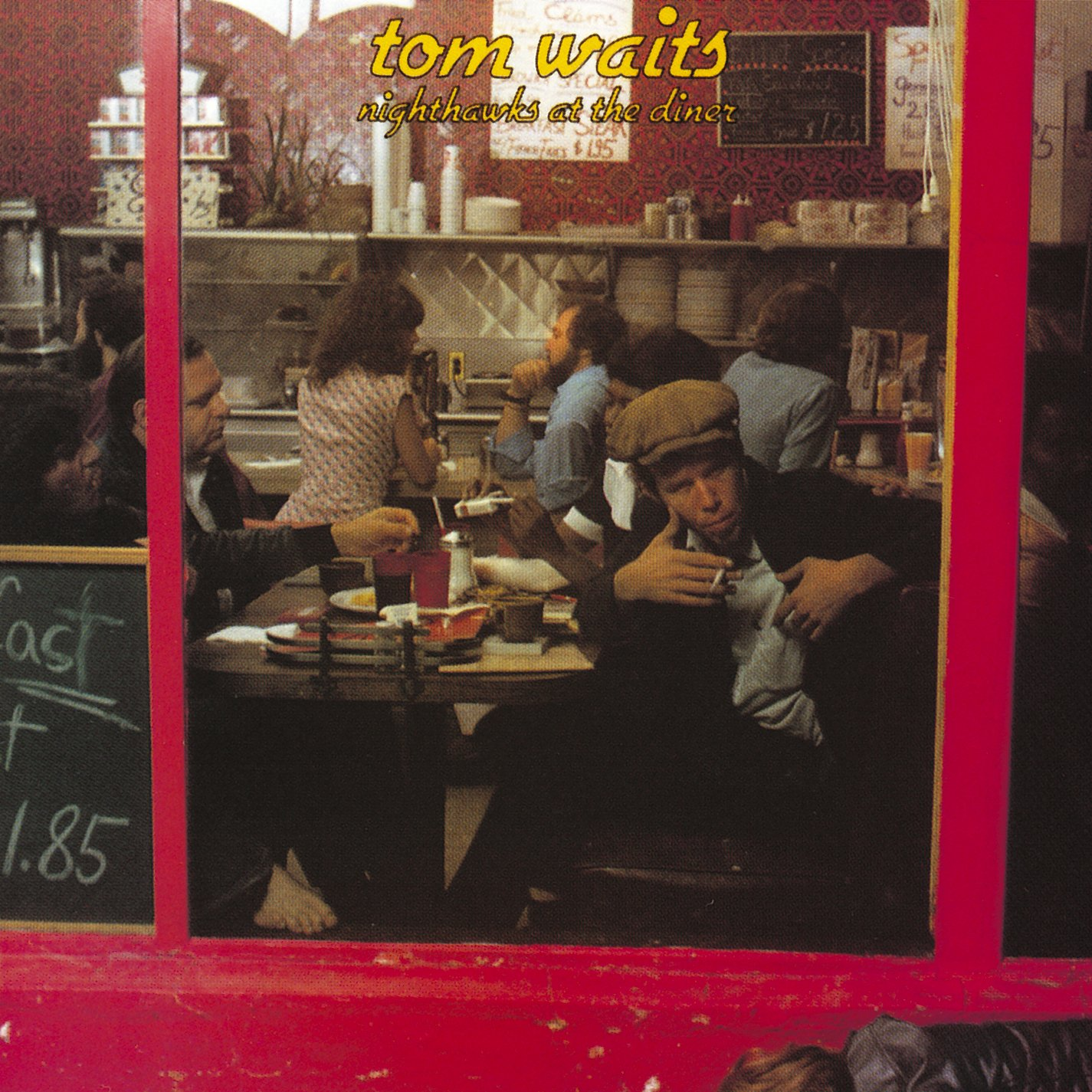
Tom Waits: Nighthawks at the Diner
If ever there was an artist and an album deserving of the rubric sui generis, it is Tom Waits and this, his third album Nighthawks at the Diner. At a time—October 1975—when progressive rock was on the cusp of going to seed, disco was poised to go mainstream, and Wayne Shorter and Chick Corea had set aside post-bop to explore jazz-rock fusion, Waits came out with a two-disc album in which he performs mostly original songs, backed up by a quartet of first-rate Los Angeles jazz sidemen, in front of a small live audience. As a bookish 20-year-old who never quite embraced rock music—despite the earnest and occasionally successful efforts of the curator of this blog to interest me in such groups as Emerson, Lake, and Palmer, King Crimson, and Gentle Giant—I found Waits’ wry, atmospheric, jazz-inflected compositions a subversive challenge to the hegemony of rock and roll. Nighthawks appealed not just to the emotions, but to the head. It did not hurt that his profane, salacious, and very funny banter between songs was well calculated to engage the sensibilities of college guys whose weekends, more often than not, were spent in the company of other dateless young men.
So is Nighthawks a jazz production, or a singer/songwriter presentation? Yes. Here’s where it gets interesting, because throughout the performance Waits meanders about the intersection of several genres: jazz, singer/songwriter compositions, spoken word, a bit of stand-up comedy. Hell, in the cut “Big Joe and Phantom 309” Waits even covers a country-music song by Red Sovine about a ghostly trucker. The entire album is a musical Venn diagram of multiple converging circles. One can’t even call it a “live” album, exactly, because it was recorded in a studio, but in front of an audience hand-picked by the producer to convey the feel of a live performance. It’s not quite authentic but it works, especially as it allows the listener to experience the entire Waits shtick: the guttural banter, the jokes, the wordplay, and the music.
The mood is set from the get-go in the opening intro, with the quartet playing a bluesy vamp featuring Jim Hughart’s walking bass and short, honking arabesques by Pete Christlieb on the sax. The sound is that of a cool, if jaded, house band at a burlesque club and Waits reinforces the conceit by welcoming the audience to the fictitious “Rafael’s Silver Cloud Lounge,” and thanking the stripper who ostensibly warmed up the audience and put a charge into Waits’ libido. He continues with some introductory jokes about late nights and coming home after three months to find everything in his refrigerator has “turned into a science project.” As he talks, Waits elegantly elides into the first song, “Emotional Weather Report,” which is more rhythmic spoken word recitation than it is singing. He bemoans the “tornado watches…in the western region of my mental health” and declares that “It’s cold out there—colder than the ticket-taker’s smile at the Ivar Theater on a Saturday night.” Jilted by his lover, Waits’ forecast is for more precipitation.
The rest of the album more or less follows the same pattern, with Waits sustaining a twisted down-and-out persona as he leads into another song or spoken word performance, backed by the jazzmen and revolving around themes of loneliness, lost love, late nights, and life at the margins. For my money, the best cut on the album is the third, “Eggs and Sausage (In a Cadillac with Susan Michelson)” in which Waits precisely captures the milieu of an all-night coffee shop. In this song, (this time he is singing rather than reciting), Waits displays his artistry in clever turns of phrase and the ability to evoke the bittersweet mood of a lonely late night out after a break-up. Atmospherics and the skilled deployment of similes and metaphors are Waits’ stock in trade and he’s at his best in “Eggs and Sausage.”
Waits is often compared to the Beat poets, but that’s not quite right. His music at this stage of his career, and particularly on this album, is reminiscent of the Beats, with its jazz and spoken word poetry, and its exploration of loneliness and alienation. But unlike the Beats, Waits isn’t concerned with philosophy or spirituality, or even drug-induced altered states of consciousness. For the most part, alcohol is Waits’ drug of choice and that and his focus on the working class and marginalized perhaps slides him closer to the Beats-adjacent Charles Bukowski. Both Bukowski and the Beats expressed profound alienation, however, with the Beats setting themselves in opposition to the 1950s military-industrial complex and Bukowski challenging the smug conventionality and moral sensibilities of bourgeois America. Waits isn’t overtly political, like the Beats could be, and he certainly doesn’t indulge in the blunt rage and belligerence of Bukowski. Rather, despite the crusty delivery, he is sentimental. In the end, Nighthawks, as well as Waits’ other music of the mid-1970s, is not concerned so much with alienation as with hard luck, loneliness, and the struggle to carve a little dignity out of an uncaring universe. On Nighthawks, the world is what it is, and Waits knows it is a mug’s game to try to change it.
Tom Waits, at any point in his long musical career, is an acquired taste. Those fans, likely younger ones who are more familiar with the growling, iconoclastic, and experimental performer Waits morphed into starting with 1983’s Swordfishtrombones, may find the younger Waits of Nighthawks in the Diner more conventional—dare we say “quaint”?—than the older artist they are familiar with. But in 1975, Waits’ retro-beatnik hipster persona, jazzy music, and well-crafted noirish lyrics was something different from the dominant electronic-heavy compositions of rock and fusion. From the perspective of fifty years, it holds up well, although younger listeners may find themselves bemused by Waits’ frequent references on this album to LA “landmarks” that have passed into history—The Copper Penny restaurants, the seedy Ivar Theater, the Ziedler & Ziedler clothing store on Sunset, and KABC weatherman Dr. George Fischbeck, to name a few.
If there is a flaw in Nighthawks, it is that the persona Waits adopts narrows the variety of the songs. To be sure, on a few tracks—“Warm Beer and Cold Women,” “Nobody,” and the country-ish “Putnam County”—Waits veers into his singer/songwriter roots, dials back the jazz, and sings accompanied by himself on piano. By and large, though, the album is a series of Waits’ compositions backed up by well-executed jazz incidental music. The jazz frames the mood, but the fun is in skillful lyrics, the repartee and wry observations, and the dark, at times cynical, yet not despairing atmosphere that Waits conjures up. It is an eccentric artifact of its time, but it still rewards the listener and reminds us that the 1970s weren’t all bell-bottoms, platform shoes, and leisure suits.
—Leo the Deacon
Van Der Graaf Generator: Godbluff
Released in October 1975 in the UK, this album was only available as an import. It wasn’t until I made a trip to Europe in 1978 that I purchased it in Amsterdam and had it and several other albums shipped from a post office near the record store back to the States. That particular parcel of LPs arrived home earlier than I, and so once I was home, I put it on my beloved turntable. Wow!
As a great admirer of their previous album, Pawn Hearts, which I had bought as a cut-out in the US for less than three dollars, I had high expectations for this. Fortunately, the quality of the lyrics and music did not disappoint.
After a four-year gap between Godbluff and Pawn Hearts, Peter Hammill, Hugh Banton, Guy Evans, and David Jackson roar back more powerfully than ever with less psychedelic and excursionary elements and an apparent singular focus on drama and controlled handling of musical tension and release. Hammill displays his range of skills on vocals, superior in dramatic and expressive impact to more famous contemporary singers/songwriters like David Bowie, and even contending with the otherworldly emotional delivery of Demetrio Stratos of Area and Francesco Di Giacomo of Banco del Mutuo Soccorso. Hugh Banton and Guy Evans are in great form on keyboards and percussion; and we have David Jackson on double saxophones, à la Rahsaan Roland Kirk, creating musical textures that elevate the music experience to breathtaking intensity.
Side One opens with “The Undercover Man”, which starts softly, creating musical and dramatic suspense. Once the tension is established, it methodically builds in intensity, layer by layer, gradually crescendoing, leading to some colorful organ, sax and the further unfolding of the brilliant expression and pacing of Hammill’s staggered and passionate vocals.
“Scorched Earth”, the second of two tracks on the first side, maintains intensity, opening up quietly and building in dynamics with repetitive motives weaving through Hugh Banton’s organ part and David Jackson’s deftly engineered sax parts supported by Guy Evans’s relentlessly polyrhythmic drum work. The forward momentum cools, with an initially echoey middle section, crafted out of preceding musical material that explodes into an unpredictable flurry of syncopated melodic material and violent skirmishes of accelerating ostinatos and motivic interchanges. Two dominant mixed meters alternate. Dynamic and rhythmic shifts continue to propel the music forward to an abrupt climax ending with a brief musical exhale.
Side two opens up reflectively with “Arrow”, with a meandering and introspective introduction ferociously interrupted with Hammill’s vocals which commence to entwine and shape the course of the music leading into an instrumental of repeated sax permutations on the primitive four-note saxophone motive heard earlier but not put through a series of repeated modifications. Hammill’s vocals return with full intensity and anguish:
How long the time seems How dark the shadow How straight the eagle flies How straight towards his arrow
How long the night is Why is this passage so narrow? How strange my body feels Impaled upon the arrow
This is followed by more sax-dominated instrumental and intensive, unrestrained percussion eventually trailing off into a sustained whimper.
The last track, “Sleepwalker”, described by Hammill as portraying “life in death, death in life” begins boldly with a brilliant 9/8-based mixed-meter motif, syncopated and off-kilter, creating a lurching, stumbling feel, realized flawlessly by sax, organ and percussion. Once the pattern is established for the listener, it moves into an accompaniment foundation for Hammill’s vocals:
At night, this mindless army, ranks unbroken by dissent Is moved into action and their pace does not relent In step, with great precision, these dancers of the night Advance against the darkness – how implacable their might!
The second section starts off as a tango with güiro, organ, clavinet and then sax on melody– but it is a 3/4 tango! It then contorts itself evolving into the opening motif for brief return of theme A, but these expectations are quickly tossed aside with an intro into a completely new section in a relentless, undeniable 4/4, the sax and rhythm hinting at a brief funky disco feel before the band shuts down that possibility completely with aggressive prog-rock percussion, sax and Hammill’s searing vocals.
A necessary aside on the artistic nature of David Jackson’s approach to the saxophone: dubbed “the Van Gogh of the saxophone” by a critic of the British New Musical Express, Jackson was described as a “renegade impressionist, dispensing distorted visions of the world outside from his private asylum window”. Following in the footsteps of jazz artists like John Coltrane, Rahsaan Roland Kirk, and Albert Ayler, Jackson focused on fully leveraging timbral and tonal qualities of his instrument to deliver a wider range of emotional experiences.
Two key elements defined his style. The first was his signature use of double horn — playing two saxophones (typically alto and tenor) simultaneously, creating dense harmonies and powerful, layered riffs. The second, and more crucial for “The Sleepwalkers,” was his pioneering use of electronics using customized pickups, octave dividers, wah-wah pedals, and powerful amplification, transforming the saxophone from a purely acoustic instrument into a versatile prog-rock sound source, capable of generating textures and timbres far beyond its natural range, allowing him to sonically manifest the fragmentation, distortion, and psychological turmoil central to VDGG’s music — and provide a fully-effective soundscape for Hammill’s autonomically engaging, intensely visceral vocal delivery.
The synthesis of those two saxophones, the bass pedals and organ work of Banton, Evans’s driving polyrhythmically-paced percussion, always at the service of the music and text propels us into the psychedelic-flavored coda which slowly evaporates into nothingness, leaving the lingering essence in the listener’s mind, eventually compelling a repeat playing of one of the finest albums
Steve Hackett: Voyage of the Acolyte
Released in October 1975, I never had enough money to buy this in my college days — such a shame, as this is a wonderful album and provides insight into how much Steve Hackett contributed compositionally to the many of the passages within Genesis’s Nursery Cryme and Supper’s Ready. Excellent, evocative and reflective music that sparkles as wondrously as ever.
Pink Floyd: Wish You Were Here
Pink Floyd released their ninth studio album in September of 1975. Fifty years later their The Dark Side of Moon boost has maintained their popularity enough so that there are multiple sets out this month celebrating the fiftieth anniversary. If you haven’t heard this album yet, you probably weren’t listening to music fifty years ago!
Can: Landed; Jethro Tull: Minstrel In the Gallery; Electric Light Orchestra: Face the Music
All released in September of 1975, all three of these albums have their strong moments and are worth checking out. Can’s Landed starts off with grungy rock badly recorded, but ends strongly with the musique concrète of “Unfinished” with much of interest in between.
Jethro Tull’s Minstrel In the Gallery is more reflective than his previous three albums and seemingly more personal. Thematically, the album lyrics cover the introspective and the cynical, with Ian Anderson’s lyrics exploring the isolation and pressures of being a public performer — Anderson being that Minstrel in the Gallery. Throughout a good deal of the album Martin Barre’s electric guitar is in the forefront and borders on a jazz-fusion ethos contrasted in other sections with delicate acoustic guitar. The album’s highlight is the musically and metrically complex, multi-part “Baker Street Muse” on side two, lasting over sixteen minutes with sharp contrasts and sharp lyrics.
ELO’s Face the Music opens up with an orchestral intro and explodes with their signature blend of strings, Jeff Lynne’s guitar, drums, and keyboards. The excellent opening instrumental, which highlights Mik Kaminski on violin, is followed by a classic-sounding ELO track, “Waterfall, reminiscent of Eldorado material. As mentioned earlier by Leo the Deacon, September 1975 ushers us into the mainstream days of disco fever and ELO made good money with an edited single version of the third track “Evil Woman.” I had stopped listening to AM radio long before 1975, but somehow I was still exposed to it enough in various public venues that I developed a rather strong aversion to its annoyingly commercially cloying sound. The remaining album has its ups and downs, and includes a number sounding much like the pre-disco Bee-Gees (“Strange Magic”) and Lynn’s excursion into country music, “Down Home Town.”
Besides these albums we have a wealth of other releases, not at the level of Godbluff by any means but much more commercially successful including albums by George Harrison, John Lennon, Elton John, Paul Simon, his former singing mate, Art Garfunkel, Rush, Herbie Mann, Linda Ronstadt, Roxy Music, Sparks, Steeleye Span, Aretha Franklin, Barbra Streisand, Frank Zappa, Hall & Oates, Crosby and Nash without Stills, and though I haven’t a clue what it sounds like, and am totally fine with that, Kiss’s Live Album, which apparently is the first album released by any American hard rock band, for if memory serves me correctly Spinal Tap had not released any live albums by that date — or to be factually correct, now that I check Wikipedia, still has not.
Released in December of 1974, Gryphon’s instrumental concept album, “Red Queen to Gryphon Three” masterfully blends progressive rock, folk rock, and renaissance musical elements into diligently crafted, richly-textured, exciting and sonically colorful musical experience.
As there are not lyrics, and limited discussion by bandmembers on the intent of the album and its underlying concept, it seems that the game of chess functions as a metaphor — whether this metaphor is representative of human conflict, interaction, some life event or simply the traditional four movement classical symphony where there is an opening movement, a second movement, a more reflective movement (often the second movement but also sometimes the third movement) and a finale (the checkmate), is left for the listener to consider. What is beyond dispute is the music is the propulsive, dramatic nature of the music and the meticulous arrangements with its balanced instrumental layering.
The first track, “Opening Move” begins with a fanfare flourish, followed by a contemplative piano solo revealing the main theme, offset and contrasted by the use of a wealth of exploratory and developmental musical material. The movement gathers intensity appearing to push for a grand finish, but instead dissolves into a more thoughtful coda-like section that serves as reflective musical commentary.
The second track, “Second Spasm” is jaunty, filled with the spirit of English folk and renaissance with a sequence of interesting themes, including a second theme based on material from the first movement, a subsequent section that showcases the distinctive sounds of crumhorn and bassoon, and a march-like fourth section. The original them returns, altered instrumentation and character, developing a bit before followed by the second theme which with at full force concludes the first side of the original LP.
The third track, is the more reflective “Lament” with a contrasting, mostly upbeat section, and the return of the opening theme which ultimately smoothly transitions into an effective coda for the section.
The fourth track, “Checkmate” is an upbeat, energetic finale teaming with energy and colorful creativity. New musical material dominates, but, somehow, it all seems related to what has occurred earlier even without any discernable restatement of earlier material. The track and album conclude with a flourish similar to the material prior to the coda of the first track, which effectively wraps up a wonderful and memorably distinctive musical experience.
On June 6, Soft Machine released their third album, a two-LP set recorded in April and June of that year — one of the best early progressive rock albums — with each side containing a single selection, and each selection distinct in approach and content. This is not music for the casual listener — it requires attentive listening to fully reveal the variety of musical wealth contained on each side. Though heavily influenced by jazz, free-jazz, and contemporary electronic classical music, its foundation is solidly Canterbury-scene progressive rock, even if that scene was still being defined at that time, with a large contribution of that definition from this album.
The first side is a mix of mostly live material and some studio content with some creative mixing and overlaying, particularly at the end of the track, which effectively brings the colorful musical narrative to a close. Side two is more along the lines of Frank Zappa’s style of progressive jazz-rock and though less introspective and intriguing then side one, is very accessible and animated, providing that cathartic surge when gets from an invigorating progressive rock instrumental.
Side three is a typical Robert Wyatt brimming over with his atypical songwriting. The work is filled with an assortment of Wyatt melodies artfully reduced to a unified whole that narrates what may be real-life-based reflections on a recent “convenient” relationship while conveniently staying in New York state. Side four is another adventurous instrumental with a dramatic synthesizer introduction that perhaps had an influence on the introduction to Yes’s Close to The Edge.
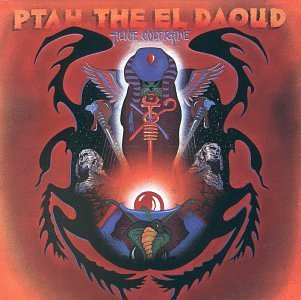
Alice Coltrane: Ptah, the El Daoud
Alice Coltrane provides a brilliant album of post-bop modern structured jazz that includes some free jazz elements, leaning overall towards a more traditional post-bop experience, with each track having a distinct character and style.
The title track, “Ptah, the El Daoud” (Ptah, the beloved) is named after the Egyptian god that existed at the very beginning of existence (way before the internet) and created the universe, also, it seems, on the hook to ensure that universe’s ongoing maintenance. Ptah was particularly associated with craftsmen, architects, and other creative types. As Alice states in the liner notes, her intent with this track was to express the concept of spiritual purification. Ron Carter opens up the work, followed by Alice on piano and drummer Ben Riley, immediately joined by a pair of saxophones: Joe Henderson playing on the left side of the stereo field and Pharoah Sanders on the right. The music is march-like, representing the quest for purification — in the words of Alice Coltrane, “the march on to purgatory, rather than a series of changes a person might go through.” Henderson and Sanders provide somewhat free, exploratory soloing, but the music is kept on its given path primarily through Coltrane’s piano work supported by allied bass and drums.
“Turiya and Ramakrishna”, is a soulful bluesy piano-led work accompanied by bass and drums. The Turiya in the title is a Sanskrit word that in Hindu philosophy represents pure consciousness — the consciousness that occurs whether sleeping soundly, dreaming or waking. Ramakrishna was a nineteenth-century Hindu mystic revered for his spiritual ecstasies, and his message of love and individual religious devotion. Though the inspiration for the work originates from India, the music is solidly American jazz, intimate in nature and scope as if spontaneously created during the last set inside a dark, intimate nightclub with just a few devoted and spellbound listeners left to enjoy the final music of the last hour of the extended evening.
On the third track, Alice switches to harp, and Henderson and Sanders are on flutes for an evocative work titled “Blue Nile”, a magical seven minutes of ethereal, impressionistic jazz. The final track, “Mantra” at sixteen and a half minutes ends side two providing an uplifting and exploratory listening experience that comes closer to free jazz than the first track, but yet with a strong sense of structure and purpose culminating in a rich musical encounter true to the overall spiritual tone of the entire album.
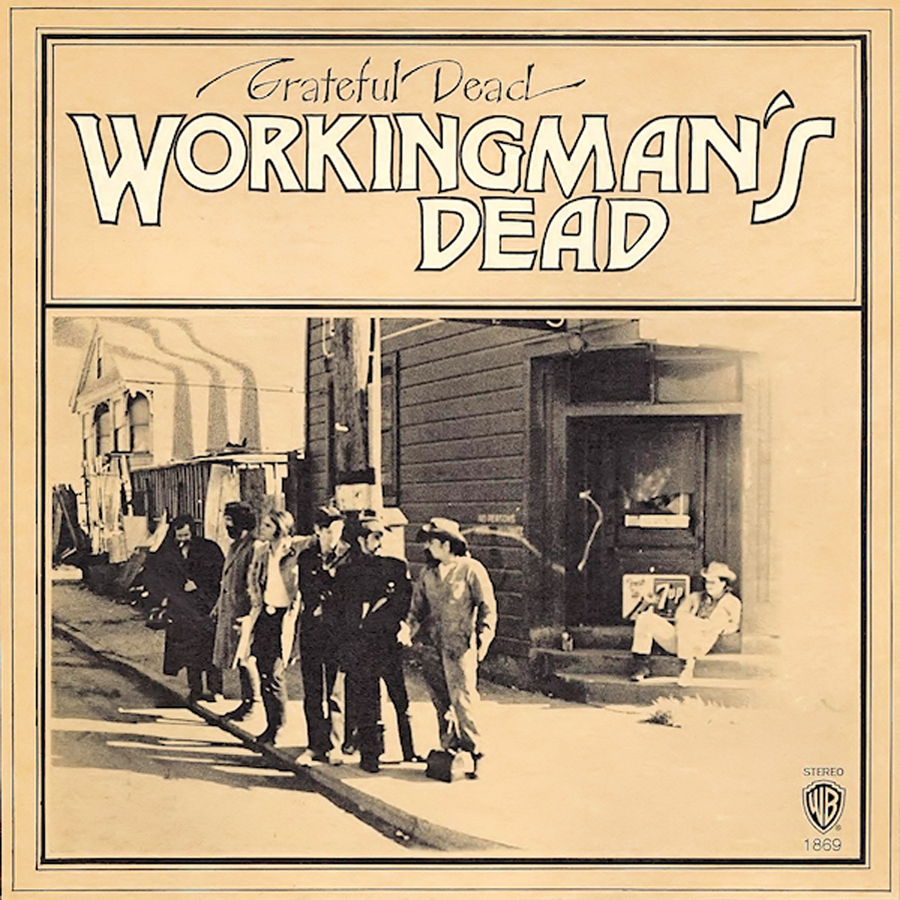
Grateful Dead: Workingman’s Dead
Grateful Dead releases the classic Workingman’s Dead, an album more representative of Kentucky than northern California, with the music being a mostly acoustic mix of bluegrass, country-ragtime, blues, and country-rock, performed lovingly and with sparkling energy.
Bob Dylan: Self Portrait
Bob Dylan released Self Portrait, a two-LP album, an album I noticed over and over in people’s record collections at the various parties I attended. It sold pretty well, reaching number 4 on the Billboard album chart at going gold. I, myself, was tempted to buy it on a number of occasions, as I really liked the cover. For whatever reason, I never did, and to this day, have not yet heard it in its entirety. I guess it’s clear I am not a big Dylan fan. To each their own, I suppose.
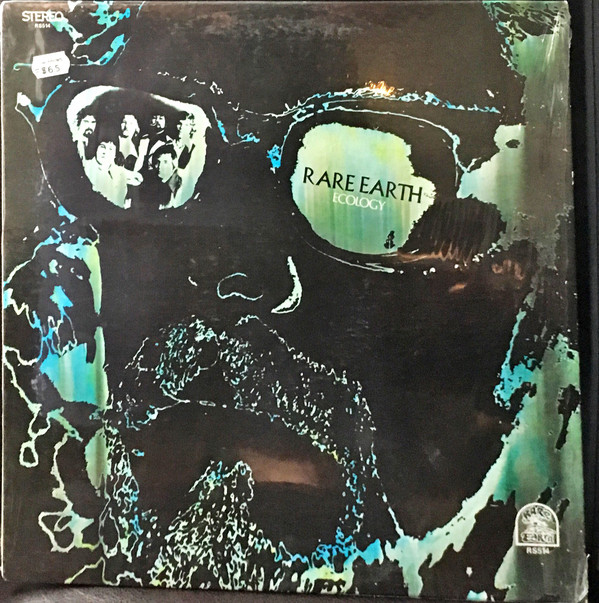
Rare Earth: Ecology
The same might be said about the Rare Earth laudably-titled Ecology album, also released in June 1970. Although I don’t think I ever saw this album in anyone’s record collection (as the case with the Dylan Self Portrait album), there was a high likelihood that I probably would have never ever listened to it — and from 1970 to a few days ago, never did. The difference in me making the extra effort to stream it and listen carefully to it was that I got to see Rare Earth live. They were the opening act for the 1974 California Jam, but their performance was disregarded by many in the audience and those still arriving — if there were any still arriving — my friend and I were so close to the front we paid little attention to what was behind us. For my own part, I sat and attentively listened to and watched Rare Earth, contently enjoying the performance despite distractions. So, I thought it appropriate to make the effort to stream the Ecology album and see what I thought of it fifty years after it had been released. And just as I was pleasantly surprised with Rare Earth’s performance at the California Jam, I find Ecology to be better than expected. Though rated only three stars by allmusic.com, it is a well-produced album by a talented group of musicians. Highlights are mostly the Tom Baird songs plus the interesting lyrics to John Persh’s “Nice Place to Visit” (“but you wouldn’t want to live here”) — a lament about the narrator’s habit of visiting brothels — the lyrics available here: https://www.azlyrics.com/lyrics/rareearth/niceplacetovisit.html.
Rod Stewart: Gasoline Alley
If you are Rod Stewart fan, you may wish to celebrate the fifty-year anniversary of Gasoline Alley, released today, June 12, 1970. Despite Rod’s limited vocal range, and rough voice, and his habit or limitation of usually singing with limited tonal variety, there is something appealing about his song delivery. In this album, he is supported by most of the Faces band members and some additional musicians. This is mostly an acoustic album, and the playing and production are top-notch.
In part three for June 1970 (hopefully, next Friday) I will cover some additional albums, including some fine folk-rock albums, and any others I might have missed. Who knows, maybe I will take the time to stream the Bob Dylan album!
Somos seres humanos
Sin saber lo que es hoy un ser humano
(We are human beings, without knowing today what a human being is.)
— Almendra
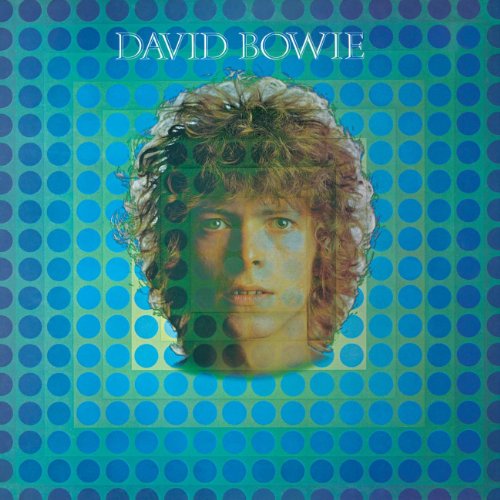
On Nov 14, 1969, Philips released David Bowie’s second album in the UK, originally titled “David Bowie.” Mercury released the album in the US as “Man of Words/Man of Music” which was re-released by RCA in 1972 as “Space Oddity” after the success of the Ziggy Stardust album. Whereas Bowie’s very first album sounds like he is intentionally imitating Anthony Newley and includes mostly songs of limited musical and lyrical depth, this second album raises the level of artistry considerably, bringing together a few easily accessible songs with several more carefully crafted, more reflective numbers. Perhaps Bowie’s break up with his deeply-loved girlfriend, Hermione Farthingale contributed toward a decided shift to a more personal artistry. Bowie thought of her as a soulmate and suffered deeply from the end of their relationship — two songs on this album are clearly about her: “An Occasional Dream” and “Letter to Hermione” — both providing an insight into the impact of the loss.
With the exception of the second track, “Unwashed and Somewhat Slightly Dazed”, a clear homage to Bob Dylan, Bowie is mostly his own artist on this album, produced mainly by Tony Visconti, who also plays bass. One track, the single “Space Oddity”, which Bowie wrote after seeing Kubrick’s “2001, A Space Oddity”, was produced by Gus Dudgeon and climbed up to the number 5 position on UK charts, though in the U.S. it did not fare any better than the 124th spot. The general US AM listener would not be exposed to it until 1973 when it reached the 5th position and then again, in 1975 when it made the #1 spot and seemed to be played unceasingly.
The album includes Rick Wakeman on mellotron and harpsichord and Gus Dudgeon on cello. It will be another year before Bowie works with Mick Ronson and Mick Woodmansey and another year after that until Trevor Bolder is added on bass. Though there are many better albums to follow, this may be the most personal and the one closest to reflecting the native-state David Bowie as opposed to Bowie the mastery of multiple external personnas and styles.
In November of 1969, Colosseum release their second album, Valentyne Suite, which did fairly well in the UK, reaching number 15 on the UK album charts. The highlight of the album is Dave Greenslade’s contributions, both as a performer on keyboards and as a composer on the first two sections of the three movement Valentyne Suite. Interestingly the original version of the suite was included in the 1969 US release of Colosseum’s previous album “Those Who Are About to Die Salute You”, which is a combination of the first and second UK albums. For the UK version of the second album, the original third part of the suite, “Theme Three, Beware the Ides of March”, co-written by Greenslade, Dick Heckstall-Smith, Jon Hiseman and Tony Reeves is replaced by “The Grass is Always Greener” co-written by Heckstall-Smith and Hiseman, since “Beware the Ides of March” had previously appeared on the first album. The suite works in either configuration and provides a strong ending to both the UK version of the second album and the US version of “Those Who Are About to Die Salute You, which is a mix of tracks from both the first and second UK albums.
Other November 1969 albums include Steve Miller’s Your Saving Grace and Jefferson Airplane’s Volunteers, both albums including Nicky Hopkins on keyboards. Volunteers is the more significant album historically and musically, containing both strong language and strong political content.
Steppenwolf’s Monster, also released in November 1969, starts with a similarly strong political message. recounting how “Like good Christians some would burn the witches;
later some got slaves to gather riches.” and “While we bullied, stole and bought a homeland, we began the slaughter of the red man”, and warning of the inevitable transformation into a monstrous beast with cities turned into jungles, strangling corruption, and the costly Vietnam war.
Moody Blues released To Our Children’s Children’s Children on November 21, 1969 with the first track “Higher and Higher” and the general thematic direction of the album inspired by the Moon Landing. The album continues to distill the Moody Blues identifiable sound with tracks melting into each other. The album reached number #2 in the UK and #14 in the US.
Amidst a number of other November 1969 albums, many of them debut studio albums like those by the Allman Brothers and Mott the Hoople, Rod Stewart releases his first album, around 32 minutes of music including Ronnie Wood on guitar and Keith Emerson on organ on “I Wouldn’t Ever Change a Thing”
Humble Pie’s second album, the appropriately named Town and Country, released November 1969, provides an attractive balance of acoustic and electric guitar work with some Wurlitzer piano. The album contains a good measure of country-rock, two strong Peter Frampton songs, and Steve Marriot’s particularly evocative, mood-setting, “Silver Tongue.”
Kevin Ayers released his debut album, “Joy of a Toy”, in November of 1969 — a slightly tongue in cheek, intentionally laid back and understated set of songs that look forward to indie rock of the 1980s as much as an distillation of Soft Machine, sixties rock, show tunes, pop and early progressive rock. Even though the lyrics range in quality, the nature of the music and Ayers delivery always make the words work well with the music. The opening instrumental sets the appropriate mood, followed by the wry “Town Feeling” with effective oboe and then “Clarietta Rag” which sounds a bit too much like “For the Benefit of Mr. Kite”; a variety of songs follow, some having that identifiable “Canterbury” sound, some like “Religious Experience” which seems more spur of the moment composition and performance, and includes an appearance from Syd Barrett. Perhaps the best tune is “Lady Rachel” with a mysterious oboe introduction nicely setting the mood as well as the the colorful orchestration and the judicious use of a chromatically-raised augmented chord in the chorus. Musicians include Robert Wyatt, Michael Ratledge and Hugh Hopper from Soft Machine as well as David Bedford on piano and mellotron and Paul Buckmaster on cello. All in all an under-the-radar album (at that time and now), that had better material and more an influence on music than generally given credit for.
Argentina bands, as with bands from other Latin American countries, mostly were imitative or cover bands for most of the sixties. This “Nueva Ola” style, represented by local bands (having English names), though popular enough and providing live music, couldn’t compete in terms of record sales with new music from U.S. and Britain, and eventually the “Rock en Español” musical movement produced bands like Los Gatos and Almendra.
Led by songwriter, guitarist and vocalist, Luis Alberto Spinetta, Almendra released their first album, the self-titled Almendra, on November 29, 1969. How much this influenced future progressive rock bands in South America, Spain and Italy is not clear, but the album, like Spanish and Italian music to follow, incorporated folk music together with jazz, pop and rock elements.
The album opens with their earlier released, and successful single (in Argentina), “Muchacha (ojos de papel)”, a modern art song with beautiful melody and lyrics over Spinetta’s acoustic guitar. Another highlight on the album is Spinetta’s “Figuración” which alternates between a gorgeous folk-like melody and a rock section anticipating future Italian prog-rock groups like PFM. This is followed by the upbeat and partly Beatles-like “Ana no Duerme.”
Side two opens up with reflective, acoustic folk-like “Fermin”, followed by the equally graceful “Plegaria para un niño dormido” and the multi-thematic “A estos hombres tristes.” Bass guitarist contributes the jazzy, almost Brazilian-like “Que el viento borró tus manos.” The poignant and elegant “Laura Va”, with harps, strings and woodwinds provides a graceful and satisfying end to one of the best albums of 1969.
Launching the genre of progressive rock that is sometimes called Krautrock, German Space Rock, or perhaps most appropriately Kosmische Musik, Monster Movie was recorded in July 1969 and released one month later in August of 1969. It’s Kosmische Musik rhythmic drive is present on the very first track which opens up with a high pitch space age electronic lead-in (an effect later more prevalent after the introduction of electronic sequencers), followed by driving drums, and repetitive bass and electric guitar riffs — all elements refined further by later German “cosmic music” bands. The seemingly anomalous vocalist, is American Malcom Mooney, who lends a ranting, free-spirt to the otherwise organized and precise forward driving sound of the band.
Keyboardist Irmin Schmidt and Danzig/Gdańsk-born bassist Holger Czukay studied composition with Karlheinz Stockhausen. Drummer Jaki Liebezeit played with European Free Jazz proponent, Manfred Schoof and guitarist Michael Karoli had both classical (violin, cello) and jazz backgrounds. Vocalist and sculptor, Malcom Mooney, became friends with Irmin Schmidt and Holger Czukay shortly after he moved to Germany and joined the first iteration of the band named “Inner Space.” It was Mooney who suggested a new name, “The Can”, which was later shortened to just “Can.” At some point later, an English newspaper article incorrectly suggested that “CAN” stood for “Communism, Anarchism and Nihilism” and this was soon adopted by drummer Liebezeit.
There is certainly a sense of Anarchism and Nihilism in this first album, as well as a communal performance mindset. There is also some great music, making this one of the classic rock albums of 1969. The first track, “Father Cannot Yell”, not only has historic importance as early space rock, but exemplifies the cosmic, time-stretching intersection between space rock, free-jazz, and 1950 and 1960’s “experimental/avant/garde” “classical” music . The second track, “Mary, Mary So Contrary”, is pure West Coast psychedelia, sounding more Haight Ashbury than Köln, Germany. The third track breaks into punk territory and flirts with New Wave elements with Mooney as effective as any punk vocalist. The fourth track, “Yoo Doo Right” takes up the entire side two at a little over twenty minutes melding blues-rock with Stockhausen at the Kosmische Rock level with a little extra musical nihilism and proto-punk thrown in for good measure. All in all we have a very different album than the usual recorded fare of the time — music that is influenced by early Pink Floyd and Velvet Underground but also unquestionably provides its own influences for upcoming bands.
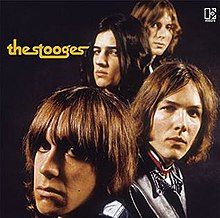
Those following this column may have noted my omission of MC5’s first released album, their live album, Kick Out the Jams. I bought Kick Out the Jams as a used album around 1971 for about 50 cents but never took a liking to it. I never much listened to another Michigan-based group, The Stooges. I have to say in all honesty, I particularly made an effort to stay clear of them when Robert Hillburn, lead rock music critic for the Los Angeles Times, started to gush and effuse about them. Though there were many things Mr. Hilburn got right about music, he had an egregious blind spot, or deaf ear, when it came to progressive rock. Born in 1939, and enamored with the American Rock and Roll stars of the mid 1950s and seemingly more comfortable with the basics of rock and I-IV-V chord progressions than the more exploratory side of music, he absolutely hated progressive rock, and that was enough for me to discount his reviews from that point on. When, in the 1970s, he unabashedly praised Iggy Pop and the Stooges for their primitive approach, while also trashing albums by Jethro Tull and Yes, that was enough for me to stop reading Hilburn’s reviews and lose any interest in ever listening to Iggy Pop or his “Stooges.”
However, this July, when looking over the calendar of albums released in August of 1969, I noticed that August 5, 1969, was the release of the first Stooges album. I had listened once again to MC5’s “Kick Out the Jams” earlier this year in trying to decide if I would include that album in a February post for Fifty Year Friday, but it just didn’t spark my interest. The music didn’t impress me and I didn’t even see more than a marginal connection between MC5 and later punk bands, a connection often emphasized by those examining the history of punk rock. For me, the most evident connection was a lack of instrumental skill.
So when I gave the first “The Stooges” album a spin, I expected little of interest. And though the music didn’t send me into fits of musical pleasure, it had its moments.
The Stooges had basically five songs when Elektra (looking to expand their currently small cache of non-folk rock groups) signed The Stooges — partly based on input from MC5 regarding how loud The Stooges played. For live performance, the group basically filled in extra time by jamming, but as this wouldn’t work for the album. Iggy and the Stooges assured Elektra they had more material, and then quickly, perhaps in a few hours, came up with four more numbers, three of which where included in the album on side two: “Real Cool Time”, “Not Right” and “Little Doll.”
The Stooges first album was generally panned by a wide range of critics. Interestingly Robert Hilburn, avoided reviewing this first album. Another L.A. Times contributor, John Mendelssohn, did, and wrote the following: “Had I not the unpleasant experience of bearing [sic] The MC5’s “Kick Out the James” [sic] several months ago, I could say “The Stooges” was the worst rock album of the year. It’s unquestionably the second worst, featuring as it does several whiny, adolescently repulsive and barely distinguishable street-punk anthems and hypnotically boring 10 minute chant “We Will Fall.” (Sunday L.A. Times, December 7, 1969)
Note that Mendelssohn prophetically uses “punk” in his review, a term that would soon be applied to marginally talented garage rock bands, and then later used for a specific style of music as performed by groups like the Sex Pistols and The Ramones. One could make the case that the Stooges are truly a punk rock group, the first, as opposed to just being a loud, erratic, three-chord garage rock band like the MC5. Not considering the Stooges lead singer’s live performance presence and antics, there are elements in this first album that reflect the ethos of punk rock as exemplified by tracks like “1969” and “I Wanna Be Your Dog”, a punk rock song title if there every was one. Add to this that guitar work of Ron Asheton and a couple of actually interesting songs on the album (“Anne” and to a lesser degree “We Will Fall”) and we have something more here than an album that deserved to be widely dismissed by the rock critics of the time. Supporting this contention is all the praise heaped upon this album in later years including the inclusion of this is the 185th best album of all time on the 2003 Rolling Stones “Greatest 500 Albums of All time.” I won’t rate this as being one of the top 500 or even top 5000 albums of all time, but I wouldn’t say this is the second worst album of 1969 either.
The Stooges
Iggy Pop (credited as “Iggy Stooge”) – vocals, handclaps
Dave Alexander – bass guitar, handclaps
Ron Asheton – guitar, backing vocals, handclaps
Scott Asheton – drums, handclaps
Additional personnel
John Cale – piano, sleigh bell on “I Wanna Be Your Dog”, viola on “We Will Fall”, production
Jethro Tull: Stand Up
Released on 25 July 1969 in the U.K. and in late September in the U.S., Stand Up is more than just an interesting document of the Jethro Tull transitioning from blues-rock to a folk-rock/hard-rock/progressive rock band, it is one of the finest gems of 1969 rock music.
I am generally not enthusiastic about the blues-rock genre, but this album starts off with one of the most exquisitely rendered blues-rock numbers of all time, “A New Day Yesterday”. compellingly mixing harmonica, electric bass, electric guitar, percussion, and Ian Anderson’s vocals into fresh, vital, bass-punctuated pre-progressive rock music with a brief yet naturally placed flute solo in the middle — all of this in an under-three-minute track.
“Jeffrey Goes To Leicester Square” takes us into early folk-prog territory, simple chords with a colorful arrangement creating interest; this is followed by Anderson’s arrangement of Bach’s Bourrée from the E minor Lute suite, a track that got some air play on the then cutting-edge FM album oriented radio stations that were became more prominent with the early seventies.
There’s really not one weak track on this album. More importantly, there are some real classics here, like “Look Into The Sun, ” “Reasons for Waiting” and “We Used to Know.” Primary credit must be given to the song writing skills and arranging skills of Ian Anderson. Bassist Glen Cornick also contributed to the arrangements, as did guitarist Martin Barre, and more notably keyboardist, David/Dee Palmer (a student of Richard Rodney Bennett when at the Royal Academy of Music) who provided the evocative string arrangement for “Reasons for Waiting.”