Recorded in one session on Feb 18, 1969 as three performances, “Shhh/Peaceful”, “In A Silent Way”, “It’s About That Time”, then edited by Ted Macero (with apparently minimal input from Miles Davis) into two compositions in ABA form, one for each side, In A Silent Way, was released on July 30, 1969, peaking at number 134 on Billboard’s Top LPs chart. The music is available today in both the edited form, which for a long time was all that listeners were familiar with, and in its original form.
What is striking about either the edited or original form, is the original style of both the music and the musical approach to structure and form that was deployed. The album version differs considerably than the original takes. For “Shhh”/”Peaceful” the original starts off with a whole-tone sort of motif (with traces of the flat-second Dorian mode) on which the entire work unfolds. There is this amazing guitar work from McLaughlin and a brief but luxuriantly melodic Davis/Shorter passage. All of this is dropped from the album version, which begins with the initial statement of another theme from the original take (about ninety seconds) followed with the restatement of this theme that occurs during the last four and a half minutes of the original, then followed with earlier material. Whereas the original is multi-thematic and provides more contrast, the album version is more mono-thematic and ambient in nature. It is basically in A B A form, resembling the Sonata form found in Mozart, Haydn and Beethoven era music, with the middle section analogous to a development section.
On the second side of the album, Teo Maceo continues to aggressively edit the original music, once again creating an ABA structure by taking the group’s performance of Davis’s simplified version of Zawinul’s “In A Silent Way” for the A section and using Davis and Zawinul’s collaborative “It’s about That Time” as the B section. The results provides us with an impressionistic A section, and a quasi-bluesy, slightly funky B section, with a perfect repeat (as it is just a copy) of the original A section.
Though a transitional style for Davis, this landmark ambient jazz album would have considerable influence on many styles of music in the next few years ranging from other jazz or jazz-ambient artists to a subset of progressive rock groups, particularly several of the so-called Kraut-rock bands including Can, Cluster, Tangerine Dream, Amon Duul II, to Brian Eno to a number of New Age artists to even several modern “classical music” composers. It’s tempting to debate the artistic pros and cons and the artistic merit of the original music versus the final edited album, but it was that final edited album that was the sole source of this music for musicians and music lovers during the last five months of 1969, all of the seventies, the eighties and the nineties. Commercial music is often notable for its externally enforced limitations, but in 1969 in particular, music markedly stood out for its bold exploration outside of established boundaries, with In A Silent Way being one of the best examples of music liberated and unencumbered from the realm of retail-driven mechanical patterns and formulas, purposefully, yet seemingly spontaneously, creating a new and unconfined expanse of musical expression.
Side One
“Shhh”/”Peaceful” (Miles Davis) 18:16
Side Two
“In A Silent Way/It’s About That Time” (Joe Zawinul, Miles Davis) 19:52
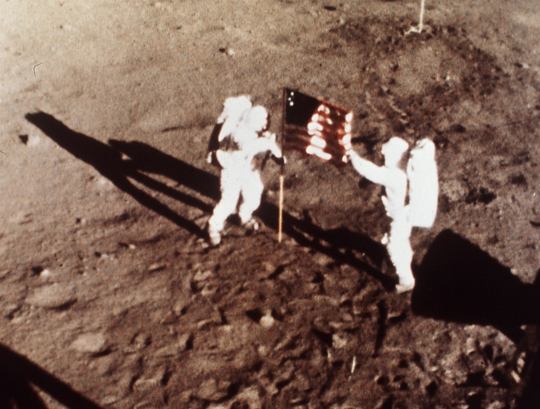
“That’s one small step for man. One giant leap for mankind.” Neil Armstrong
Fifty years ago, on July 20, 1969, television gave us nearly front row seats as Neil Armstrong and Buzz Aldrin each made an appearance on what is still today, the most distant theatrical stage ever occupied by human performers, while above, circling around 60 miles above them, was their ride home. It was such an extraordinary event that there are individuals and semi-organized clusters of people that deny that this amazing technical performance, this greatest non-musical show of all time, ever even happened. Did Keith Emerson’s piano rotate around at the California Jam in 1974? Could one see some of the jazz greats of all time at the Hermosa Beach Lighthouse Café throughout the early and mid seventies? Did Elton John dress up in something akin to a large sequined chicken suit as part of his performance at the Fabulous Forum in 1974? Could one, without more than an hour in line, get an up close seat in 1978 to see Peter Hammill at the Trouboudor perform “A Plague Of Lighthouse Keepers” or a seat in the front three rows to see Gentle Giant perform their very last U.S. concert at the Roxy in 1980? All these things, as unbelievable as they may seem, actually happened!
And rock was reaching new heights, proving its relevance beyond dance music, beyond catchy three minute pop songs tailored for car radios.
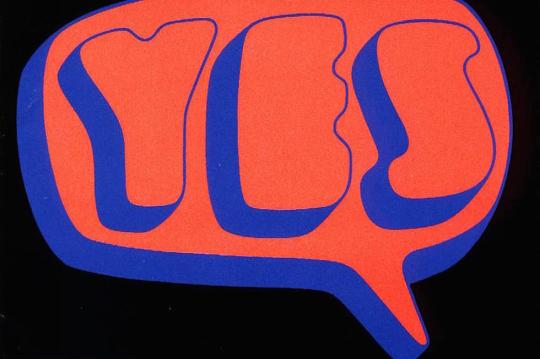
Yes: Yes
Recorded in Spring of 1969 and released on July 25, 1969, the world heard the very first Yes album. Their first studio effort is indeed impressive and immediately identifiable by its sound as both progressive rock and, more relevantly and significantly, a Yes album! Authored primarily by Jon Anderson and Chris Squire, we already have that recognizable, identifiable Yes style from their compositions and collaborations, Peter Banks pre-Howe guitar work, Tony Kaye’s keyboards, and Bill Bruford’s percussion work, influenced by such cosmic musical giants as Art Blakey and Max Roach.
Most of us baby boomer progressive rock fans, first heard Yes in the 1970s, initially from either their third album, The Yes Album, or their fourth album, Fragile. The reality was that most of us music lovers usually started with the third or fourth album of a number of the so-called progressive rock groups — and as we had some spending money, we invariably went back and purchased earlier albums of groups like Jethro Tull, Gentle Giant, Genesis or Yes — even after knowing (after the first back catalog purchase or two) that the albums would not be as good as the later albums. The fact was that even those earlier albums were still good enough and provided further insight and material from some of the finest bands outside of the jazz universe — but maybe not so completely outside of jazz as one might think: the jazz influences were indeed there for many of these musicians in these bands. And worth noting, so was the classical music influence.
So even though this first Yes album isn’t up to the standards of their third album, The Yes Album or Fragile, it still is Yes, and the music is captivating and engaging. It’s way too easy for those of us used to the later Yes to find fault with this album, but if we just listen to this in the context of it’s own time, when jazz, rock, and classical styles were first intermingling, its remarkable nature reveals itself.
The album opens up with “Beyond and Before” from Squires, Banks and Anderson’s previous band, Mabel Greer’s Toyshop. Even at this early point in time the music sounds clearly the work of Chris Squire with co-authoring credits (perhaps the words) for Clive Bailey, the guitarist and vocalist of Mabel Greer’s Toyshop. The bass/drums pairing of Squire and Bill Bruford and vocal combination of Squire and Jon Anderson establishes the framework of a style that would become unmistakably a feature of the Yes sound. The music is not as polished as later Yes, but is clearly a different sound distinct from anything else being released, and Peter Bank’s guitar work is representative in both it’s uniqueness and its sometimes rough edges.
There are two covers on this album: the second track on side one is of the Byrds “I See You” and the second track on side two is of the Beatles “Every Little Thing”, both absorbed and incorporated into Yes’s own sound.
The other five tracks are Yes originals, ranging from good to borderline excellent. Also recorded during these sessions is the amazing cover of “Something’s Coming” from West Side Story, which is included as a bonus track on some CD reissues, or in most of the many Yes anthology albums.
One of the earliest, if not the earliest true jazz-fusion albums, Lady Coryell features the complex, multi-track layers of Larry Coryell’s jazz and rock guitar polyphony. Joined by drummer Bob Moses from Coryell’s earlier psychedelic, rough-edged jazz-rock group, “The Free Spirits”, the album moves away from the more British-rock influenced style of the earlier Free Spirits’ Out of Sight and Sound into a more convincing blend of rock and jazz. Coryell sings, less than exquisitely, on most of the tracks, but his guitar and bass guitar work is beyond reproach. Jimmy Garrison provides acoustic bass on track seven, and Elvin Jones provides drumming on tracks 7 and 9.
Released on July 3, 1969, Unhalfbricking is Fairport Convention’s third album, continuing their evolution towards a mostly English Folk music style despite inclusion of three unreleased Dylan songs. Elements of progressive rock abound, due to the acoustic guitar work of Richard Thompson and use of organ, harpsichord, electric dulcimers, violin and the eleven minute “A Sailor’s Life” with it’s instrumental second half. Sandy Denny’s expansively liberated vocals, her deft handling of the melodic line, and the subtleties in the arranging contribute to a finely finished aura that envelops the album.
The album includes two Sandy Denny compositions, including the deeply insightful “Autopsy”, and the widely praised “Who Knows Where the Time Goes?“, previously recorded two years earlier with the Strawbs, and performed with a more relaxed pace, greater freedom, and more maturity on Unhalfbricking,
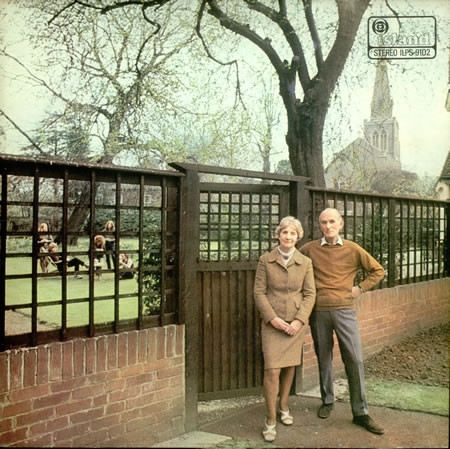
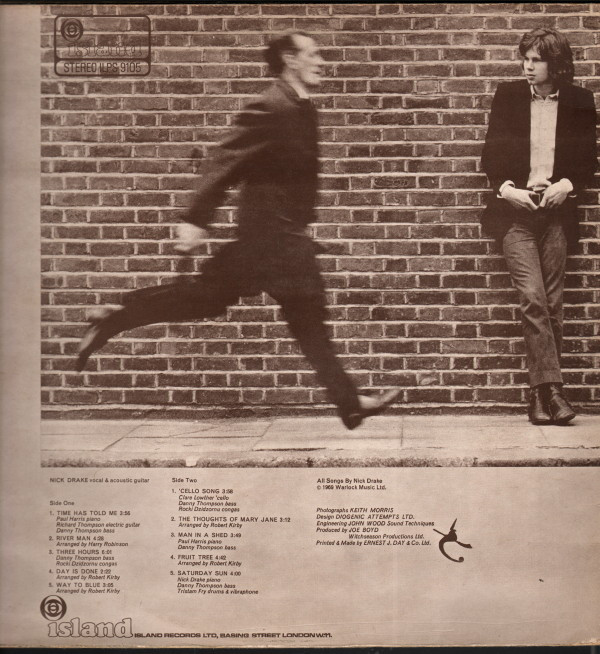
Nick Drake: Five Leaves Free
Fifty years later, it seems natural to look back and feel some level of loss for the music that never was — the music that never was because of the tragic and premature loss of such resonant artists as Sandy Denny and Nick Drake. It’s doesn’t help to reflect that general lack of commercial attention probably contributed to the depression that brought about Denny’s and Drake’s deaths. However, such speculation is called into question upon consideration of artists whose stardom-level status similarly contributed to their shortened lives.
Whereas Sandy Denny at least got attention and opportunities from other, more prominent artists, Nick Drake was pretty much ignored not only up until 1974 when he died of an overdose of his anti-depressant medicine, possibly intentional, but also pretty much until the late 1980s.
Though barely twenty years old when he started to record Five Leaves Free in July of 1968, and though excited at the prospect of having an album, Drake’s life was already full of darkness and depression, as clear from the lyrics of the songs. His level of musicianship was impressive: he effortlessly sings and plays complex guitar passages artfully and effectively in real time with strings or other musicians as opposed to coming back later to dub the guitar work. Though the recording sessions were rushed (using downtime available courtesy of Fairport Convention) and the production and arrangements were not to Drake’s liking, by June of 1969, one of the finest singer-songwriter albums of the sixties was completed and released to the public on July 3, 1969. Unfortunately, the critics generally cared little for the album, and very few purchased it. People like myself would never hear of Nick Drake until many years later.
It seems unimaginable today that this album was ignored for so long. The quality of the music and the lyrics are undeniable, and the production is generally quite good. Joe Boyd, a George Martin fan and the producer of this album, had a vision of leveraging all studio resources to provide a integral sound, whereas Drake wanted a simpler, more organic approach. Boyd wanted an established arranger, Richard Anthony Hewson to provide the orchestration. However, upon hearing Hewson’s attempts with Drake’s music, neither Boyd or Drake felt that such arrangements were suitable. Drake suggested they go with one of his friends at Cambridge University, music student Robert Kirby, who had previously arranged some of Drake’s music. Though Boyd was initially reluctant to go with someone so unknown, lacking in credentials, and so inexperienced, after getting Kirby in the studio and hearing what he could do, Boyd settled upon Kirby for all the arrangements except one, “River Man” which, for whatever reason, was arranged by professional music director, arranger and composer, Harry Robertson. Oddly, though Robertson is a skilled arranger, this is the weakest arrangement on the album. Perhaps it was just that Robertson didn’t have the personal familiarity with either Drake or his music that Kirby did. Perhaps it was a matter of lack of attention to the depth of the lyrics and music. Perhaps even Kirby would not have done the song justice. It’s not that this is one of those rare songs that works best left in bleakest, most natural state of single guitar and voice, the inclusion of the strings is a workable idea, its just that the particularly arrangement deployed lacks a true connection to Drake’s message. Nonetheless the song still works well, even if not as well as if it had been recorded with just Drake’s guitar and voice. The composition is in 5/4 time — five beats to the measure, creating a slightly surreal effect. It’s not a jazzy 5/4 like Dave Brubeck’s “Take Five” or Lalo Schifrin’s “Mission: Impossible” theme song, but a flowing, natural 5/4 composition further enhanced by the relationship between the minor and major chord choices.
It’s fair to say that as particularly special as “River Man” is as a song, all the songs on this album are finely crafted compositions. How this album was initially overlooked by critics but now fully embraced by them is just one of those recurring oddities in the music world — and often later attributed to the music being ahead of its time. Yet, this doesn’t seem to be the case here. Yes, the music is timeless and seemingly perfectly suited to the Shoegaze era of the late 1980s and 1990s, but it also fits in nicely with contemporary work of many of the other singer songwriters of 1969. And there is nothing difficult or elusive in either the relatively simple lyrics, or Drake’s personal and distinctive, yet easily accessible songs.
Accessible and personal does not exclude universal as in the case of “Day is Done” with its poetic representation of the inevitable finality of any given life. Here, as in all the Kirby arrangements, the strings appropriately support the essence and character of the song amplifying its impact and effect. “Fruit Tree” also addresses the nature of life but focuses on fame and the underappreciated artist, eerily predictive of Drake’s own life and legacy:
“Safe in your place deep in the earth, that’s when they’ll know what you were really worth.”
“I don’t know anything about music.” Don Glen Vliet (aka Captain Beefheart)
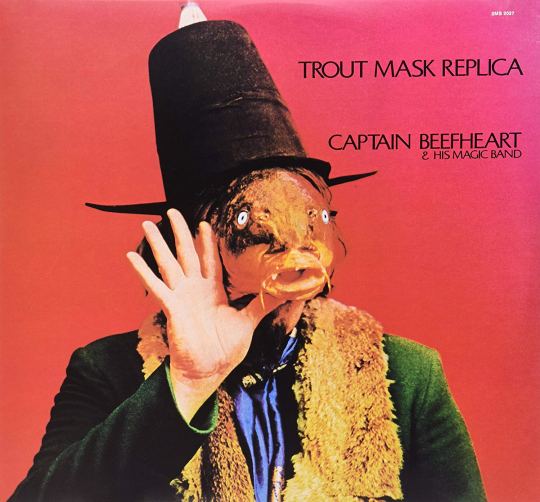
Captain Beefheart & His Magic Band: Trout Mask Replica
Recorded from August 1968 to March 1969 and released on June 16. 1969, Trout Mask Replica is a double album for the ages whether you might love it or hate it — and for most people, it’s rather easy to hate. Far different from Captain Beefheart’s previous album, Safe As Milk (which though partly confined within a traditional blues framework and ethos, provides many imaginative moments and approaches), Trout Mask Replica breaks into territory no artist has yet covered on record: it’s been called out as the musical equivalent of rusty barbwire, and it certainly is as about as far away from easy listening as music gets. But careful, focused, not-so-easy listening reveals the complexity in a large portion of music on the album which includes complex polyrhythms and polytonality.
Yes, there is a lot of non-musical content on the album — Frank Zappa produced this gem and granted total artistic freedom to Captain Beefheart and his band, so one doesn’t get continuous, highly refined music. Instead one gets pockets — and the treasures here are in the instrumental accompaniment and interludes. It’s been said that Captain Beefheart’s voice makes Tom Waits sound like Julie Andrews, that’s true, and the engineering of the album emphasizes these vocals as does their general lack of alignment with the backing instrumentation. It has been alleged that the lack of synchronization was due to Beefheart’s not wanting to wear headphones during recording, which resulted in him becoming hopelessly dependent on his own sense of time and on the immediate sonic reverberations of the studio.
Though there are people that will swear that the main value of this album is to drive away unwanted visitors, its influence on many musicians is indisputable. Bands or individuals reportedly influenced include Henry Cow, The Residents (clearly), The Clash, Tom Waits, The Sex Pistols, Velvet Underground, The Little Feat and myriad others. For me, the repeated polyrhythmic motifs anticipate Gentle Giant, King Crimson and some of the more aggressive math rock bands. If you don’t like this album immediately, try it again, clearing away any possibility of distractions, as well as any expectations, taking the music and non-musical elements for what they are — rejoicing in the unusual, and what most would consider weird, amalgam of musical freedom and musical discipline.
Drumbo (John French) – drums, percussion, engineer (uncredited on the original release), arrangement (uncredited)
Antennae Jimmy Semens (Jeff Cotton) – guitar, “steel appendage guitar” (slide guitar using a metal slide), lead vocals on “Pena” and “The Blimp”, “flesh horn” (vocal with hand cupped over mouth) on “Ella Guru”, speaking voice on “Old Fart at Play”
Zoot Horn Rollo (Bill Harkleroad) – guitar, “glass finger guitar” (slide guitar using a glass slide), flute on “Hobo Chang Ba”
Rockette Morton (Mark Boston) – bass guitar, narration on “Dachau Blues” and “Fallin’ Ditch”
The Mascara Snake (Victor Hayden) – bass clarinet, backing vocals on “Ella Guru”, speaking voice on “Pena”
Buzz Gardner – trumpet on “The Blimp” (uncredited/inaudible)
Frank Zappa – speaking voice on “Pena” and “The Blimp” (uncredited); engineer (uncredited); producer
Richard “Dick” Kunc – speaking voice on “She’s Too Much for My Mirror” (uncredited); engineer
Steve Miller Band: Brave New World
Also released on June 16, Steve Miller and his band’s Brave New World and Captain Beefheart and His Magic Band’s Trout Mask Replica are as far apart musically as composers such as Muzio Clementi and Harry Partch. Brave New World may display less overt, convention-defying courage than Trout Mask Replica, but the musicianship is solid and Steve Miller’s vocals flexibly fit the songs whether those vocals are reassuring and comforting as with the dreamy evocative “Seasons” or appropriately bluesy as on the Hendrix-like “Got Love “Cause You Need It.” Of course, the hit of this album, is “Space Cowboy” which borrows the ostinato-like chromatic blues riff from Lady Madonna, possibly with Paul McCartney’s blessing who jams (under the psuedonym, “Paul Ramon”,) with Steve Miller on another track on this album, “My Dark Hour.”
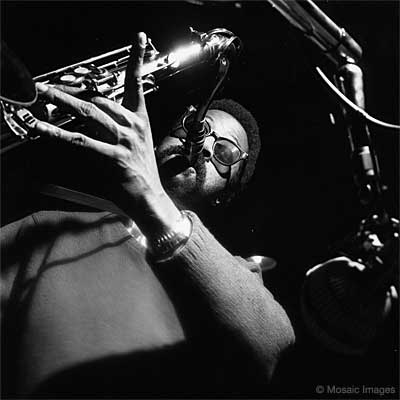
Recorded in late May of 1969, Power the Power stands out distinctly from both those late-sixties partly-commercially friendly hard bop albums and the bevy of free-jazz albums being recorded in 1968 and 1969. It opens with one of the most sensually gorgeous jazz ballads of the era, the beautifully lush Black Narcissus with Herbie Hancock’s Fender Rhodes electric piano providing the appropriate ambient backdrop. Henderson’s tenor work here is stunningly elegant as he shapes his lines with a rare level of delicate control. And though “Black Narcissus” is the highlight here for me, Ron Carter’s “Opus One-Point-Five” is also particularly beautiful with Henderson’s tone capable of the most nuanced reflection and introspection. Hancock is on acoustic piano, and Jack DeJohnette’s percussion fits in perfectly.
Despite all this beauty, on cannot overlook the other tracks including an updated version of Henderson’s Monk-influenced “Isotope” that Henderson and Hancock had previously recorded in 1964 for the “Inner Urge” album. As a Thelonious Monk fan, this resonates with my personal music sensibilities, and so very glad to have both the longer 1964 version and this version. “Lazy Afternoon” swings effortlessly, “Afro-Centric” is hard-edged, modally adventurous hard bop, and “Foresight and Afternoon” omits keyboards with the trio charging into the realm of free jazz territory. The title track, “Power to the People”, is also adventurous, with a modern hard-bop theme, aggressively inventive improvisations, and sparking electric piano work by Hancock. Now if I had to change one thing about this album, I would have liked to have a second version of “Power to the People” included with Mr. Hancock on acoustic piano. That would be one way to make an amazing album even more incredible!
Track listing [from Wikipedia]
All compositions by Joe Henderson, except where noted.
Recorded on the first three days of April 1969, released later that year to negligible sales and then not reissued until 2015, The Giant is Awakened is Horace Tapscott’s first album as a leader, with not another album in his name until 1978, by Tapscott’s choice, as he was reportedly disappointed in being excluded from the mixing process of this album despite assurances to the contrary. Reportedly, Tapscott was particularly dissatisfied with the over-emphasis on the piano, which aggressively stands out whether soloing or providing accompaniment. The two basses could have been brought out more, particularly in passages where one is bowing and the other is being plucked.
The album finds middle ground between standard hard bop and extreme free jazz as nicely exemplified in highly structure and rhythmically-driven “The Giant is Awakened.” This is also Arthur’s Blythe’s first recording, but his distinct alto playing is evident even at this point in his career as he provides an orchestra’s worth of tension and forward momentum in the first track, preceding Tapscott’s unrestrained and exploratory solo. Blythe also contributes the composition “For Fat’s” with its Monk-like opening theme and its freer contrasting section — the two themes rotating in a straightforward ABABA form. The third track, the relentlessly rhythmic “The Dark Tree” is particularly appropriate for showcasing Tapscott fearless piano technique. The final track, “Niger’s Theme” begins with a distinct, angular melody that then gives way to Blythe’s almost chaotic, but brilliant, free improvisation, followed by some pungent and highly accentuated piano. This returns to an extended restatement of the main theme, with a suitable diminuendo bringing an accessible, engaging, and adventurous album to a pleasant but decisive close.
Track listing [From Wikipedia]
All compositions by Horace Tapscott except as indicated
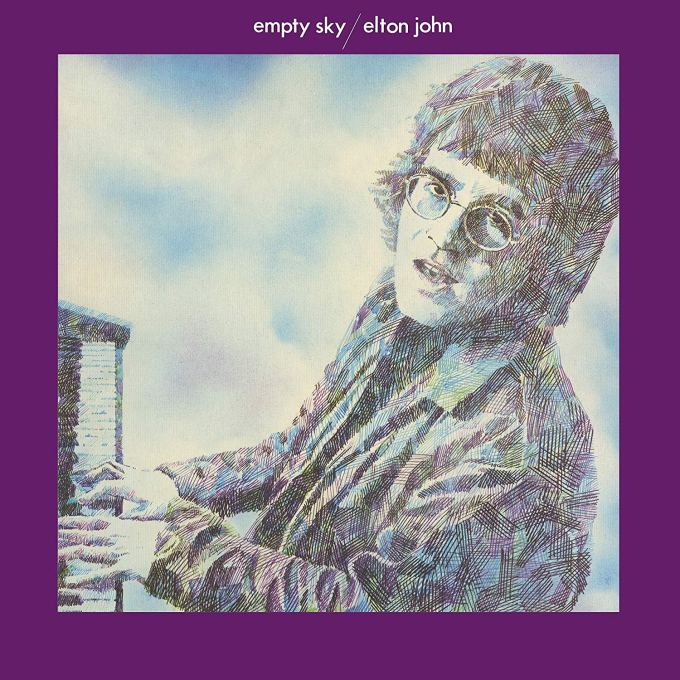
Recorded in December of 1968 through April 1969, Elton John’s first album was released in the UK on June 6th 1969. Like many baby boomers in the States, my first exposure to Elton John was his self-titled second album, which at the time I purchased it, I believed to be his first. It wasn’t until a few months after I had purchased Tumbleweed Connection, that I saw Empty Sky in the import section, and as it was at a reasonable price for an import album, $3.99, I bought it. I listened to it once, put it aside, listened to it again, but never took a strong liking to it as I had with those second and third albums, which, along with Yellow Brick Road, are what I consider to be the best of his long, productive career.
That said, Empty Sky is still a good album, with well-written lyrics by Bernie Taupin, skillfully set to music by Elton John. Yes, the second and third albums have stronger songs, and also benefit from the wealth of quality musicians that contribute as well as Gus Dudgeon’s accomplished production — Empty Sky lacks anything approaching “Your Song”, “Take Me To the Pilot”, or “Burn Down the Mission”, does not have the same production values or range of contributing musicians — and appears to be constrained by a lower budget.
My favorite songs are the opening (and title) track, “Empty Sky,” “Western Ford Gateway,” which sounds similar to content from Tumbleweed Connection, and “Hymn 2000,” which would fit in nicely on the second album. The last track has a jazz-blues section, which would provide a nice ending to the album, except for the intrusion of a collage of snippets from each track that provides a musical flashback — a puzzling approach, but something repeated by both Gentle Giant (“In a Glass House”) and Queen (“Jazz”), with Gentle Giant keeping their snippets to a little under two seconds each, for a total length of nine seconds (not counting the few seconds of shattering glass) compared to the nearly two-minute recap on Empty Sky. (In regards to Gentle Giant and Elton John, Elton, when still Reginald Dwight, played with Simon Dupree and the Big Sound for a couple of months when their regular keyboard player, Eric Hine, was ill. The Shulman brothers and Reggie got along great, and recorded Elton and Bernie Taupin’s “I’m Going Home” as mentioned here.)
Elton John – vocals, piano, organ, Fender Rhodes, harpsichord
Caleb Quaye – electric guitar, acoustic guitar, congas
Tony Murray – bass guitar
Roger Pope – drums, percussion
Nigel Olsson – drums on “Lady What’s Tomorrow”
Don Fay – saxophone, flute
Graham Vickery – harmonica
Johnny Cash At San Quentin
Whereas Elton John was just getting to his first album, Johnny Cash was tackling his thirty-first. If you had any relatives in 1969 or the early seventies that were partial to country music, there’s a good chance that this album would be in their collection, and for good reason: it is an exceptionally engaging live album, recorded on February 24, 1969, just two days before Cash’s 47th birthday, and released on June 4, 1969. Those of us with any memory of 1969, will recall the repeated playing on the airwaves of this live concert’s version of Shel Silverstein’s cleverly-written “A Boy Named Sue”, and the bleeping out of “son of a *****” — how quaint censorship was back then.
Track Listing [From Wikipedia]
Side one
1. “Wanted Man” (Bob Dylan) 3:24
2. “Wreck of the Old 97” (arranged by Cash, Bob Johnston, Norman Blake) 2:17
3. “I Walk the Line” (Johnny Cash) 3:13
4. “Darling Companion” (John Sebastian) 6:10
5. “Starkville City Jail” (Johnny Cash) 2:01
Side two
1. “San Quentin” (Johnny Cash) 4:07
2. “San Quentin” (performed a second time at the audience’s request) (Johnny Cash) 3:13
3. “A Boy Named Sue” (Shel Silverstein) 3:53
4. “(There’ll Be) Peace in the Valley” (Thomas A. Dorsey) 2:37
5. “Folsom Prison Blues” (Johnny Cash) 1:29
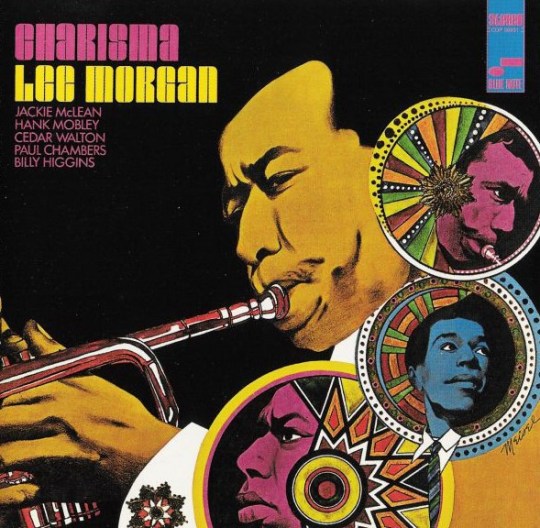
With a lineup that immediately ensures a high level of quality, Charisma was recorded in 1966, but not released until May 1969. Compared to the plethora of free jazz albums being released in 1969, this may seem embarrassingly accessible to more sophisticated jazz listeners, but there is nothing embarrassing about the quality of the musicianship and the level of improvisation. One can scarcely go wrong with any Lee Morgan Blue Note album, so given that everyone must own a copy of his 1963 Sidewinder album with Joe Henderson as well as the 1964 Search for the New Land with Wayne Shorter, Grant Green and Herbie Hancock, it seems reasonable one would be able to find a place in their music collection for an album where Lee Morgan teams up with Jackie McLean, Hank Mobley, Cedar Walton, Paul Chambers and Billy Higgins, particularly when it is also on Blue Note and is this good!
The album starts with “Hey Chico”, one of those mid-sixties blues-based jazzed numbers tailored for AM radio, though it never got such exposure, followed by, what for me, is the gem on the album, “Somethin’ Cute”, rich in great solos, particularly the alto solo from Jackie Mac. Walton is exemplary on the lovely ballad, “Rainy Night”, and the fourth track, is another of those relatively simple, commercially friendly tunes, upbeat and perfect for the excellent soloing after the initial statement — particularly impressive is Lee Morgan’s trumpet solo. This is followed by another Duke Pearson tune, with particularly notable solos by Morgan and Walton. The last track, “The Double Up”, provides a nice symmetry against the opening track, and includes strong solos by Morgan and Mobley and a notable solo by Walton against the horns. Chambers and Higgins are excellent, with Higgins flavoring these performances with unobtrusive ranges of shading and percussive hues and tints that lie almost below the range of general perception yet significantly contributes to the overall impact.
The first generally-recognized rock “supergroup” was the blues-leaning Cream with Eric Clapton, Jack Bruce and Ginger Baker. Prior to that, Eric Clapton, Jack Bruce, and Stevie Winwood had formed Powerhouse, originally to have included Ginger Baker, but with only an output of three songs, and with two lesser-known members, Powerhouse could hardly have been considered the first supergroup. When Cream formed, Eric Clapton was already considered an established guitarist, Jack Bruce had survived the Graham Bond Organisation and made a name for himself in Manfred Mann, and Ginger Baker had established his credentials as a skilled drummer in the Graham Bond Organisation before founding Cream in 1966.
The second rock supergroup was formed during the initial stages of the inevitable rise of country-rock and country-folk-rock by three talented and recently “released” artists: David Crosby, was given the boot by the Byrds, mainly due to Crosby’s vision of the direction the Byrds should take not aligning with Roger McGuinn’s and Chris Hillman’s views, Stephen Stills was now free with the break-up of the Buffalo Springfield, and Graham Nash was now seeking new opportunities — Nash, the effective leader of the Hollies, had grown dissatisfied with the Hollie’s aggressive touring schedule and was also no longer interested in having to navigate the gap between Nash’s more creative and musically adventurous aspirations and the other Hollies’ members tendency towards more traditionally pop-oriented music.
Story goes that at a party in July 1968, either at Mama Cass’s or Judy Collin’s home, Nash had asked Stills and Crosby to sing Stills’ “You Don’t Have To Cry” and at some point Nash joined in, harmonizing on the spot. The three then realized that had something, and soon determined to form a group — but not a group that would continue without any of them — and so they determined the best way to equate the group with the founding members was to name that group after those founding members: “Crosby, Stills and Nash.”
The trio reached out to the management team of Elliot Roberts and David Geffen who signed them with Atlantic, which then had to basically work out a trade for Graham Nash, sending Richie Furay and his new band Poco to Epic. (Note that Poco fit nicely into the rising popularity of country rock, releasing their first album, Pickin’ Up the Pieces, on May 19, 1968, only ten days before the release of Crosby, Stills and Nash. I ran out of time last week to review, but for those that like country-rock, this is a very solid country-rock album.)
Recorded in February and March of 1969, and released on May 29, 1969, Crosby, Stills and Nash album became almost instantly popular, with “Marrakesh Express”, a song Nash originally intended for the Hollies, getting airplay on AM radios in the middle of July, eventually reaching number 28 spot, soon followed by Suite Judy Blue Eyes peaking at number 21. FM radio stations embraced the entire album, playing a number of the other fine tracks.
Excellency is really the hallmark of this album. Even if someone is not a fan of folk-rock, the effervescent and transparent blend of vocals and acoustic guitar work has to resonate with even the most selective of listeners. If somehow you missed growing up with this classic album, or have otherwise not heard it, seek it out, for it is one of the most enjoyable country-folk rock albums ever recorded, so much so that I include this as another valid entry in my list of non-progressive-rock progressive rock albums!
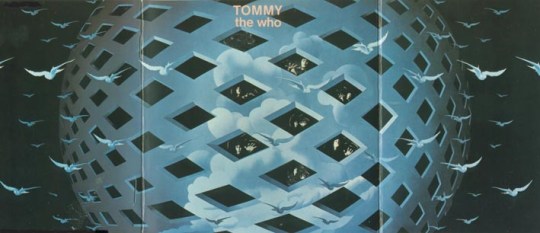
Though not the first rock opera, The Who’s Tommy, released on May 23, 1969, due to its length, two long playing records, the inclusion of an opening instrumental track titled “Overture”, the prominence of Entwistle on french horn, its greater commercial success and overall quality, and the deployment of three recognizably distinct vocalists, surpasses earlier, less operatic, generally more narrative albums by the Pretty Things (SF Sorrow) and Nirvana (The Story of Simon Simopath.)
It wasn’t until Christmas of 1970 that I got this album. After hearing “See Me, Feel Me” on the radio when visiting Oregon in the summer of 1970, I determined that this was a must-have album and put it on my Christmas wish list.
And from the start, this album lived up to its promise. The overture, is a true rock overture, magnificent, dramatic, spacious, and expectant. Much to my delight (at that time of first listening) the opening of the overture is a simple display of the chord sequence of the chorus of “See, Me, Feel Me” morphing into a true fanfare section with french horn, coming back to the “See Me, Feel Me” theme, moving away into new material, coming back once again and then touching on material from “Pinball Wizard”, which soon meanders into a brief explanatory vocal, “Captain Walker didn’t come home: His unborn child will never know him. Believe him missing with a number of men, don’t expect to see him again”, and then meanders back out into a guitar passage that, without any break, becomes the next track, “It’s a Boy.” So much going on in this overture to absorb in the first listening! Astonished and delighted to hear three alternate references to that “See Me, Feel Me” theme, I had heard in Oregon! It wasn’t until hearing the album all the way through and starting again, that I could notice that the overture was more Broadway-like than classical, incorporating music from the entire album similar to a Broadway musical overture. And yet, this doesn’t detract from the integrity of this overture, which is one of the finest examples of an instrumental (excepting the short expository-like Townshend vocal) opening to a single-topic rock album.
After less than two years since McCartney fought to get the lyrics included in the Sgt. Pepper’s album, accompanying lyrics were now, in 1969, becoming commonplace — particularly important for an opera. At this point in my life I had started to check out full opera albums from the library and the inclusion of lyrics with Tommy made listening to the music while following the lyrics a similar experience to listening to those opera albums — except instead of having to track the original language at the same time following the translation, Tommy was in English! That Christmas I had also received Andrew Lloyd Webber’s Jesus Christ, Superstar (lyrics by Tim Rice) and had just purchased a low-cost four LP box set of Handel’s Messiah (lyrics by Charles Jennens) — this was my first experience in following libretti booklets that required no cross referencing from the original language to the translation. It made me wonder why the classic operas weren’t recorded in English so they would have wider appeal and be to be more competitive with contemporary albums sold in English speaking countries. It certainly would make following the text much easier.
Looking back, Tommy is certainly not produced like a real opera, as Daltry, Townshend and Entwistle handle all the vocals. Clearly the 1975 movie soundtrack provides distinct parts, underscoring the inherent operatic nature of the work. This original, though, is the true reference, a musical work of art as good as any album of the 1960s.
Its worth noting that this work incorporated some previously written songs, including “Sensation”, “Sally Simpson” and “I’m Free”, the latter an expression of the spiritual peace Townshend achieved from association with Meher Baba, the Irani-Indian self-proclaimed Avatar and spiritual master.
We also have a blues number based on Sonny Boy Williamson’s “Eyesight to the Blind”, re-titled, “The Hawker” as well as two John Entwistle tunes, written on request from Townshend to cover the heinous actions of Cousin Kevin and Uncle Ernie. Not surprisingly, given the nature of his earlier compositions, Entwistle makes use of chromatic passages in both songs, creating a darker, perverse mood that contrasts sharply with the usually brighter Entwistle compositions.
In short, this is a classic rock album, and though Who fans may freely dispute if this is better than the preceding Who Sell Out or the two subsequent albums, “Who’s Next”, and Quadrophenia, one point is indisputable: this album has stood the test of time for the last fifty years and will stand up just as nicely for the next fifty years. It is my favorite Who album, filled with musical color and magic, and it continues to sound fresh, alive and vital to me — even though I listened to it this time around at much lower volume levels!
What is your favorite The Who album and why?
Track listing [from Wikipedia]
All tracks written by Pete Townshend, except where noted.
Some albums showcase great songs or excellent compositions, some great arrangements and some showcase great talent. The title is misleading, as this is more of a jazz and blues album than a soul album, and a much more appropriate title would have been “Aretha 1969.”
This excellent album, released January 17, 1969, showcases one of the great vocal instrumentalists of the last hundred years at her best. In general, the arrangements set up Aretha Franlin to effectively display her incredible musicality. On this album, Aretha is not song-interpreter in the manner of Billie Holiday, Mildred Bailey, Johnny Hartman, or Chet Baker, but is an expressive instrumentalist like John Coltrane, Charlie Parker, or Eric Dolphy. For anyone wishing to explore what made Aretha so great, this is a perfect album to start with.
We also get a myriad of skilled jazz musicians backing her up.
I’m a pushover for early Neil Young, whether it’s his simple, uncomplicated songs (uncomplicated harmonically and lyrically) like “The Loner” or his repetitive, extended songs with unfathomable lyrics like “The Last Trip to Tulsa.” Nothing here on this album to get a Pulitzer Prize for music or a Nobel Prize for poetry, but how can you not love how Neil cuts to the core of what the singer songwriter experience is all about and provides the equivalent warmth and informalness of those Saturday lunches at a friend’s house? It’s always a pleasure to take this timeless debut album, released January 22, 1969, for a spin — a classic album which winningly captures and represents Neil Young being Neil Young.
The Beatles: Yellow Submarine
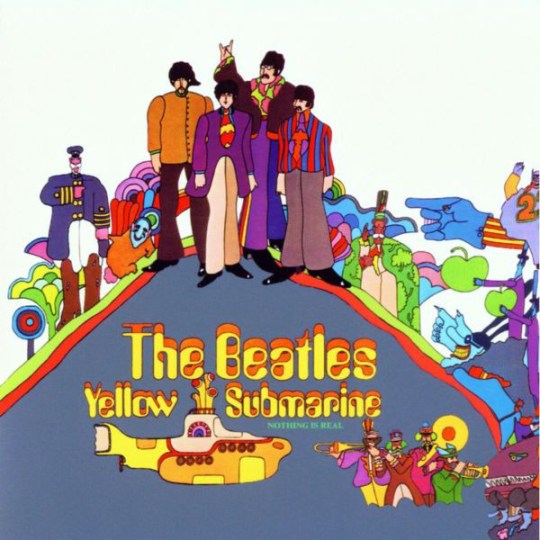
And of course, I have to mention the Yellow Submarine “soundtrack” album, released January 13, 1969, which importantly contains one masterpiece, John Lennon’s 1968 blues-based “Hey Bulldog” with its opening, addictive riff emphasizing the melodic dissonance of the tritone and McCartney’s solid and sometimes improvisitory bass work, and one other very strong composition, George Harrison’s 1967 “Only a Northern Song.” Also included is the 1967 early psychedelic, “It’s All Too Much.”
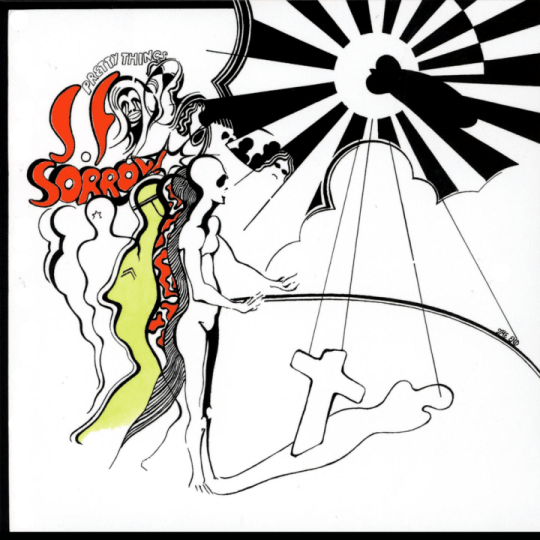
Recorded from November 1967 to September 1968 in Abbey Road Studios, The Pretty Thing’s S.F. Sorrow, initially largely ignored but now generally considered a classic, was released in the UK in December 1968, and then not released in the U.S. until the middle of 1969. Panned by the Rolling Stone’s Lester Bangs as an “ultra-pretentious” concept album, the album received limited attention for years. Its poor reception and lack of sales precipitated founder and lead guitarist into leaving the band for a period of nearly a decade.
There seems to be many contributing factors to the album’s commercial failure: the lack of promotion, the late release of the album in the States (coming out after, rather than before, The Who’s superior, more opera-like concept album, Tommy), bad reviews, and the dark, despondent subject matter, allegorical and tragic, with its primary character named Sebastian Sorrow. Also, heavily influenced by the Beatles’ Sgt. Peppers and “Fool on the Hill”, its musical language is that of the psychedelic rock of late 1967 and 1968, now losing much of its mass popularity. By the time of the album’s release, the major proponents, adherents, and imitators of psychedelic rock were moving on to hard rock, progressive rock, or heavy metal. These and other reasons caused the album to be pretty much ignored until reissued by Edsel records in the late 1980s on vinyl and then on CD in the early 1990s.
I purchased a S.F. Sorrow CD around 1992 and set it aside for some time, coming back to it recently, taking the time to appreciate what it had to offer and its historical significance — not so important as an early concept album — remember Nirvana’s 1967 album as well as other concept albums, including Sgt. Peppers, Days of Future Passed, and The Who Sell Out preceding it — but as one of the last carefully-crafted psychedelic albums of the sixties — and one that looks forward towards hard rock, progressive rock, and heavy metal — three of the most prevailing, and commercially viable, offshoots of the psychedelic rock era.
The Beatles’ influence, particularly from Sgt Peppers and singles like “Fool on the Hill”, is strong — the second track borrows elements from “Norwegian Wood” through “For the Benefit of Mr. Kite”, and the third track, “I am the Walrus” and “Good Morning” — yet, this is an album that incorporates and absorbs those influences more than mimics.
More to the point, is the quality of the album which starts out strong and builds to the end without weakness or filler; even the somewhat musique-concrete “Well of Destiny” (possibly influenced by the transitional section of “Day in the Life” ) serving its purpose in the musical narrative. The arrangements, variety, and appropriateness of instrumentation further elevates the quality of the album, and in fact are usually of greater interest than the melodic/harmonic content of the songs themselves. (Perhaps the best song on the album, is the most simply arranged one, the poignant, “Loneliest Person”)
Though this album is very much a product of 1967 and 1968 sensibilities and styles, there are passages and techniques that anticipate other works of 1969 and the early seventies. One can hear hints at later music from the Beatles-influenced Electric Light Orchestra (especially in “Trust”) and Badfinger to Benefit-era Jethro Tull (“Private Sorrow”) to the Who’s Tommy (“The Journey” and the intro to “Old Man Going”) to Queen. The most remarkable similarity is to the heavy metal, bass-dominated style of Black Sabbath in “Old Man Going” which also includes a short hard-rock electric guitar.
The CD release includes some notable bonus tracks, including “Defecting Grey” , a commercially unsuccessful single from this time period.
Track listing [from Wikipedia]
Side One
1. “S.F. Sorrow Is Born” Phil May, Dick Taylor, Wally Waller 3:12
2. “Bracelets of Fingers” May, Taylor, Waller 3:41
3. “She Says Good Morning” May, Taylor, Waller, Twink 3:23
4. “Private Sorrow” May, Taylor, Waller, Jon Povey 3:51
5. “Balloon Burning” May, Taylor, Waller, Povey 3:51
6. “Death” May, Taylor, Waller, Povey, Twink 3:05
Side Two
7. “Baron Saturday” May, Taylor, Waller 4:01
8. “The Journey” May, Taylor, Waller, Twink 2:46
9. “I See You” May, Taylor, Waller 3:56
10. “Well of Destiny” May, Taylor, Waller, Povey, Twink, Norman Smith 1:46
11. “Trust” May, Taylor, Waller 2:49
12. “Old Man Going” May, Taylor, Waller, Povey, Twink 3:09
13. “Loneliest Person” May, Taylor, Waller, Twink 1:29 Bonus tracks
14. “Defecting Grey” May, Taylor, Waller 4:27
15. “Mr. Evasion” May, Taylor, Waller, Twink 3:26
16. “Talkin’ About the Good Times” May, Taylor, Waller 3:41
17. “Walking Through My Dreams” May, Taylor, Waller, Povey 3:35
18. “Private Sorrow” (Single version) May, Taylor, Waller, Povey 3:50
19. “Balloon Burning” (Single version) May, Taylor, Waller, Povey 3:45
20. “Defecting Grey” (Acetate recording) May, Taylor, Waller 5:10
Wally Waller – bass, guitar, vocals, wind instruments, piano
Jon Povey – organ, sitar, Mellotron, percussion, vocals
Skip Alan – drums (on some tracks, quit during recording)
Twink – drums (on some tracks, replaced Alan), vocals
Led Zeppelin: Led Zeppelin
With the semantic essence of heavy metal captured in the group’s name, its hard to dispute that Led Zeppelin forged a new path down the nascent arena of hard rock and heavy metal. With a name remarkably similar to Iron Butterfly, and a similar, but more promising, blues-based musical DNA, we have the beginnings of what would soon be the quintessential hard rock group influencing predecessors like Free to countless successors like Aerosmith, Metallica, Queen, Alice Kooper, Guns N’ Roses and countless emulators that never landed a major recording contract.
From the opening guitar and drums in the opening track, “Good Times, Bad Times”, there is a focus, crispness and intensity not present in many of the blues-based rock albums immediately preceding this one. My first experience with this album was when my next door neighbor brought it over for me to capture on my reel-to-reel tape deck for my own, limited music library. Based on my friend’s direction, I recorded the tracks he thought worth putting on tape, securing the more accessible tracks, like”Good Times, Bad Times”, “Babe I’m Going to Leave You” and “Communication Breakdown” but leaving out a couple I would not listen to again for decades — the last two tracks of side two. Fortunately, since my friend had fairly good taste, we recorded all of side one, including the mysteriously dark and heavy, “Dazed and Confused”, a well-written composition, starting with, and repeating, a chromatically-descending chord sequence. Though credited to Jimmy Page on the album, the work is mostly based on a song by the same name on a 1967 album by Jake Holmes, which the Yardbirds (a group that included Jimmy Page for a while) had originally “borrowed.” If you haven’t heard the Jake Holmes version, do yourself a favor and take the time to listen to it below.
Side Two of Led Zeppelin starts with a majestic organ solo by John Paul Jones as part of the captivating beginning of “Your Time Is Gonna Time.” Unfortunately, the verse is much stronger than a weak, almost annoying, chorus that detracts from the rest of the work.
The next track, one which we also recorded for my repeated listening pleasure was “Black Mountain Side” based on an arrangement of the Irish folk song “Down by Blackwaterside” taught to Jimmy Page by Al Stewart. This is followed by “Communication Breakdown”, later to become an AM radio hit. For me, this title always brings to mind that famous phase in Cool Hand Luke — “What we’ve got here is a failure to communicate.”
The last two tracks are probably what my friend would have referred to as the band just jamming, but listening to these again, I appreciate the quality musicianship and the overall mood. That said, I can’t particularly bemoan not having grown up with these two tracks as part of the musical soundtrack of my high school years (1969-1973.)
Though I have mixed feelings about this album, which has many strong points, but is certainly guilty of not properly crediting others, a common enough practice in the Renaissance and Baroque days of music, but not so acceptable in the late 1960s, I would pick this in an instant over contemporary albums by Steppenwolf and Iron Butterfly. Do I regularly, or, on average, once-a-decade listen to this? Not really; I find the later Led Zeppelin albums more appealing — and I pretty much don’t listen to those due to all the more interesting jazz, rock and classical music that contends for my limited listening time. However, that said, prior to posting this Fifty Year Friday entry, I did truly enjoy listening to this first “L-Zep” (modern transformation of their name) once again (and then a second time), forty-nine and a half years later after first hearing all of it, and making a copy of it for my own use, just as Jimmy Page had made a copy of both “Dazed and Confused” and “Down by Blackwaterside” for Led Zeppelin’s own use on their very first album.
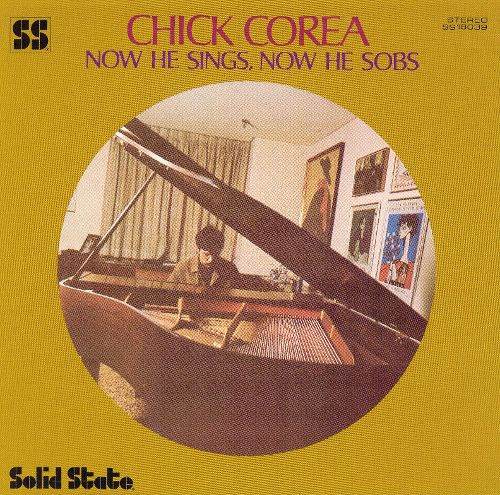
At age twenty-eight, Chick Corea had already made serious contributions on studio dates with Herbie Mann, Hubert Laws, Cal Tjader, Dave Pike, Donald Byrd, and Stan Getz often contributing arrangements as well as playing piano. He had also recorded his first solo album in 1966, Tones for Joan’s Bones, with Woody Shaw on trumpet, which was released in April 1968.
Corea started playing piano at age four, developing not only impressive piano skills, but a passionate love for both classical and jazz music. This mastery of the two genres is apparent in this album, the format of jazz trio working well in terms of emphasizing the piano part and facilitating optimal engagement between a small set of artists.
“Steps – What Was” starts with piano solo soon joined by veteran Roy Haynes on drums and twenty-year old Czech classically-trained Miroslav Vitouš on acoustic bass. The work brims with enthusiasm and freshness and, after a brief drum solo by Haynes and before a bass solo by Vitouš, is a wonderful piano-led passage that reveals an early version of Corea’s “Spain” theme.
“Matrix’ includes a brief statement of the theme and a wild ride of head-spinning improvisation, again including room for statements by Vitouš and Haynes.
The next two tracks take their title from the explanation of the third line of the Kung Fú (Inmost Sincerity) hexagram in the ancient Chinese Book of Changes, The I Ching, roughly translated as “Now he beats his drum, and now he leaves off. Now he weeps, and now he sings.” These two works are very different with “Now He Sings, Now He Sobs”, being generally forward-looking, energetic and optimistic and “Now He Beats The Drum, Now He Stops” being more of a two-part composition, with the first section, a piano solo, full of reflection and inner-doubt, and the second section surging with revitalization and purpose.
The last track, “The Law Of Falling And Catching Up” is a free-jazz excursion with Corea directly accessing the strings of the grand piano. Somewhat pointillistic and Webern-like, the piece is sweeping in texture and content yet, at under two and half minutes, compact and focused.
Though sometimes Masekala’s work gets categorized as “Easy Listening”, this album contains some fine jazz and early world-fusion with Masekala providing quality trumpet with fine supporting musicians including uncredited folk-revival guitarist Bruce Langhorne. Baby Boomers will recognize the instrumental “Grazing in the Grass”, which went to the top of the charts, and was later revisited by The Friends of Distinction with added vocals. Also notable is the reflective, meditative rendition of Traffic’s “No Face, No Name And No Number”, Miriam Makeba’s “Bajabule Bonke” and Masekala’s own “Almost Seedless.”











 in the ancient Chinese Book of Changes, The I Ching, roughly translated as “Now he beats his drum, and now he leaves off. Now he weeps, and now he sings.” These two works are very different with “Now He Sings, Now He Sobs”, being generally forward-looking, energetic and optimistic and “Now He Beats The Drum, Now He Stops” being more of a two-part composition, with the first section, a piano solo, full of reflection and inner-doubt, and the second section surging with revitalization and purpose.