Zumwalt Poems Online

Archive for the ‘jazz’ Category

Fifty Year Friday: McCoy Tyner, Time for Tyner and Quicksilver Messenger Service

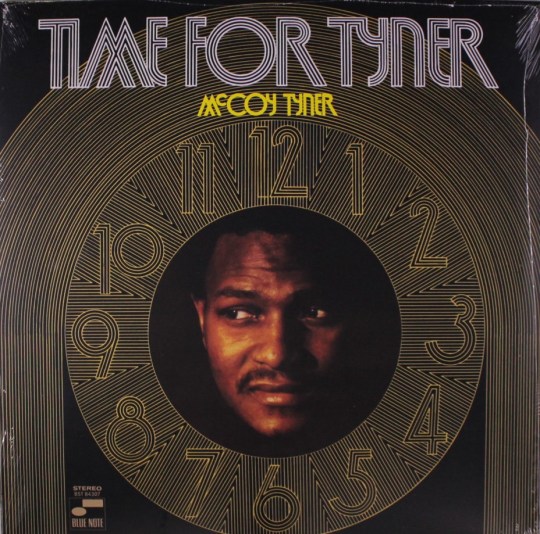
TforT517910Recorded on May 17, 1968, and released in August of 1968,  McCoy’s Tyner sixth albums feature the trio of Tyner, Herbie Lewis on bass and Freddie Waits on drums with the addition of Bobby Hutcherson on vibes for the first side of the two lengthier Tyner compositions and the the first two tracks on side two, Tyner’s “May Street” and Richard Rodger’s “I Didn’t Know What Time It Was” from the 1939 Musical, “Too Many Girls.”

Tyner is in excellent form here, with every note contributing, even the rapid Art Tatum like scales.  The three musical show tunes are all given special treatment, with “I’ve Grown Accustomed to Her Face” performed as a captivating piano solo, and the three Tyner compositions are all excellent, with African Village recalling Mongo Santamaria’s  Afro Blue from the amazing “must have” 1963 recording, “Live at Birdland” with Tyner, Coltrane, Jimmy Garrison and Elvin Jones.

Track listing

  1. “African Village” (McCoy Tyner)- 12:11
  2. “Little Madimba” (Tyner)- 8:34
  3. “May Street” (Tyner)- 5:22
  4. “I Didn’t Know What Time It Was” (HartRodgers) – 7:10
  5. “The Surrey with the Fringe on Top” (Hammerstein, Rodgers) – 5:12
  6. “I’ve Grown Accustomed to Her Face” (LernerLoewe) – 4:27

Musicians

qsms1a_5042021

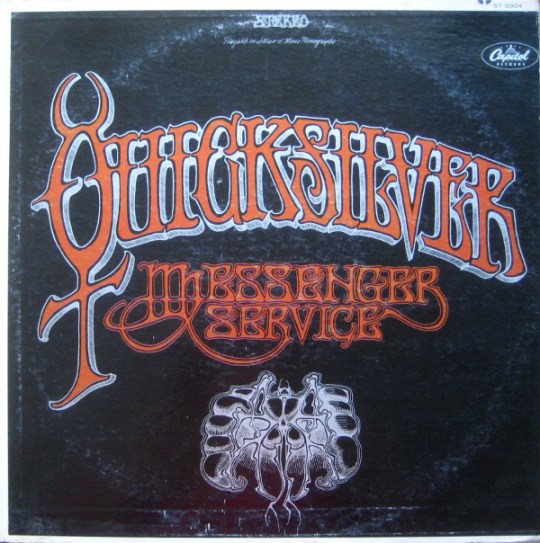
Not just another San Franciscan psychedelic rock band, but a particularly talented set of musicians that were part of the new direction of album-oriented rock.  There are jazz and even traces of classical music influences in the structure, group work, and solos on this album.  This, their very first album, is relatively short in length and not exactly a coherent work as it includes recordings spanning two years of musical development with tracks from 1966, 1967 and 1968.  “Gold and Silver” is the strongest track, with the first half of “The Fool”, being also quite good.   Album was released in May of 1968.

Track listing [from Wikipedia]

Side one

  1. Pride of Man” – 4:08 (Hamilton Camp)
  2. “Light Your Windows” – 2:38 (Gary DuncanDavid Freiberg)
  3. “Dino’s Song”[4] – 3:08 (Dino Valenti)
  4. “Gold and Silver” – 6:43 (Gary Duncan, Steve Schuster)

Side two

  1. “It’s Been Too Long” – 3:01 (Ron Polte)
  2. “The Fool” – 12:07 (Gary Duncan, David Freiberg)

Musicians

Fifty Year Friday: 1968 Jazz-Rock and Fusion

lc 1968 MI0002859895

In the late 1960s, rock music’s commercial value to the record companies far exceeded that of their jazz and classical products.  This led to many dismal outcomes, including two particularly appalling trends.  One was to try to commercialize and update jazz, with the record companies convincing (and in many cases failing to convince) reluctant jazz musicians to include rock tunes in their albums, often resulting in half-hearted attempts that included some token improvisation between the initial statement of one or more verses and the chorus and their return.  The other was to try to elevate rock music, or provide a more palatable version of it to older consumers, by saccharine orchestral or quasi-big band arrangements.  The cultural impact and commercial success of such attempts were thankfully very limited.

At the same time, a diverse range of rock groups were incorporating jazz elements into their music, and, musicians with varying degrees of jazz experience or jazz exposure were being included in some bands. Soon Miles Davis and John McLaughlin would make jazz fusion history and reap wide commercial recognition and compensation.  But prior to that, the talented and innovative vibraphonist Gary Burton, looking to make the move away from straight-ahead jazz and appeal to younger audiences drew upon his own love of popular music and started to blend jazz and rock elements in a series of four notable albums in 1967 and 1968.

Gary Burton worked with Stan Getz from 1964-1966,  during the period of Getz’s continuing ascendancy into fame from his successful merging of samba, bossa nova and jazz — Getz achieving significant recognition and acclaim from the 1963 Getz/Gilbert album that included the incredibly commercially popular “Girl From Ipanema.”  Perhaps Burton learned invaluable lessons of the breadth and flexibility of jazz, and that when it honestly and sincerely embraced and fully incorporated other elements, how it could extend its capabilities and capacity to appeal and captivate to a wide range of listeners.  Or perhaps Burton just followed his instinct of embracing the music he loved and creating music that, most of all, appealed to himself.

free spirits115892241

During this period that Gary was working with Stan Getz, the first historically significant jazz-rock group, The Free Spirits, formed in 1965.  Playing in New York as opening acts or at very small venues, their music ranged from rock and roll to psychedelic rock,  similar to other rock bands — with the exception of the jazz background of four of their five members.  For the most part, the jazz element present was similar to the jazz element in contemporaneous rhythm and blues.  The songs on their 1967 Out of Sight and Sound album are appealing and accessible, with solid, often frenetic and dynamic drumming from Bob Moses, soulful, bluesy saxophone from Jim Pepper (no relation to Art Pepper),  and catchy compositions and expressive guitar work from Larry Coryell.  Additional band members were rhythm guitarist Columbus “Chip” Baker and bassist and vocalist Chris Hills.

After the Out of Sight and Sound album, Larry Coryell, and then later,  Bob Moses, joined up with Gary Burton.  Just as Larry Coryell significantly influenced the sound of the Free Spirits towards a contemporary rock sound, Larry Coryell would have a significant impact on the sound of the four Gary Burton albums he was a part of.

The first of these four important Gary Burton quartet albums, Duster, recorded in April 1967, and sometimes referred to as the very first fusion recording, includes guitarist Larry Coryell, talented bassist Steve Swallow and drummer Roy Haynes.  Larry Coryell had further sharpened his skills as can be heard on this indisputable example of early jazz fusion, “One, Two, 1-2-3-4” available on Youtube here.

Lofty_Fake_Anagram

The second album, Lofty Fake Anagram, with Bob Moses now on drums,  was recorded in August 1967, and is a little more mellow, with continuing impressive interplay between Burton and Coryell and impressive bass work from Steve Swallow.

gtf

The third album, recorded a month earlier in July 1967 and released in 1968, is the dramatic concept album, Genuine Tong Funeral, written by composer and pianist Carla Bley and subtitled “A Dark Opera without Words.”   Focused on the topic of death and mourning, this mixture of third-stream and avant-garde composition covers a wide range of emotion and even includes passages of irony or dry humor reminiscent of Kurt Weill.  Besides some amazing, prodigious vibraphone work by Gary Burton, using his usual four mallets and to fine effect,  there is some outstanding, pushing-the-envelope soprano sax from Steve Lacy, some nicely-miked acoustic bass work from Steve Swallow, and some welcome tuba passages performed  by Howard Johnson. The album’s last track, with a chaotic free jazz section breaking from the confines of the suite’s structural boundaries, perhaps indicating some level of relief or release from grief is followed by a return of the “Survivors” theme, providing an appropriate and proper closure to the suite.

Track listing [from Wikipedia]

All compositions by Carla Bley
  1. “The Opening / Interlude : Shovels / The Survivors / Grave Train” – 6:37
  2. “Death Rolls” – 1:36
  3. “Morning (Part 1)” – 1:43
  4. “Interlude : Lament / Intermission Music” – 4:28
  5. “Silent Spring” – 7:58
  6. “Fanfare / Mother of the Dead Man” – 2:51
  7. “Some Dirge” – 7:47
  8. “Morning (Part 2)” – 1:17
  9. “The New Funeral March” – 2:40
  10. “The New National Anthem / The Survivors” – 6:34
  • Recorded in New York City in July 1967.

Personnel

The fourth of these four Burton/Coryell albums, recorded live at Carnegie Hall on February 23, 1968, is simply titled “Gary Burton Quartet in Concert.”  Of particularly note is the amazing contrapuntal duet between Burton and Coryell in the recording of “Lines” and the overall excellence of the group’s performance of “Walter L.”  The album ends with an avant garde treatment of “One, Two, 1-2-3-4”, notably different than the original performance on Duster.

Track listing

All compositions by Gary Burton except where indicated
  1. “Blue Comedy” (Mike Gibbs) – 9:02
  2. “The Sunset Bell” – 5:17
  3. “Lines” (Larry Coryell) – 3:06
  4. “Walter L.” – 6:36
  5. “Wrong Is Right” (Coryell) – 6:14
  6. “Dreams” – 5:49
  7. I Want You” (Bob Dylan) – 3:06
  8. “One, Two, 1–2–3–4” (Burton, Coryell) – 10:45

Personnel

 tnksm

In early 1968,  former Stan Kenton big band saxophonist, Steve Marcus, New Zealand born jazz keyboardist, Mick Nock,  and three former members of The Free Spirits,  guitarist Larry Coryell, bassist Chris Hills, and drummer Bob Moses,  recorded two jazz-rock albums, produced by jazz flutist Herbie Mann under Steve Marcus’s name.

The first album, Tomorrow Never Knows, appropriates five well known rock tunes and either imposes jazz commentary on them (“Mellow Yellow”) or develops and transforms them (“Tomorrow Never Knows”).  Added at the end, as a sixth tune, is Gary Burton’s “Half a Heart.”  This is one of those albums that may sound initially bizarre, with the band still wrestling to establish an overall sound and approach, but becomes more sensible and coherent after repeated listenings.

Track listing

  1. Eight Miles High” (David CrosbyHarold E. ClarkJames McGuinn) – 4:44
  2. Mellow Yellow” (Donovan Leitch) – 4:50
  3. Listen People” (Graham Gouldman) – 2:25
  4. Rain” (John Lennon, Paul Mc Cartney) – 7:02
  5. Tomorrow Never Knows” (John Lennon, Paul Mc Cartney) – 11:07
  6. Half A Heart” (Gary Burton– 5:21

Personnel

crbsm 281p2h3Iw+ML

The second album, though, Count’s Rock Band, (“Count” referring to Steve Marcus’s nickname and not that of William James Basie) is more organic, polished, and finely finished. There are only two rock covers here,  “Scarborough Fair” which is a straightforward rendition, based on Simon and Garfunkel’s version, arranged exquisitely with single focus, not straying a single step outside of its intended character, and Mick Jagger and Keith Richard’s Backstreet Girl; this modest tune is placed in an finely-crafted French cabaret-like setting with accordion  accompaniment, followed by an spellbinding jazzy middle section that evolves from straight-ahead, highly accessible jazz to wildly aggressive free jazz, followed by the return of the calm and tender original section.  The album also includes two compositions by bassist Chris Hills, which both work convincingly as final, unified outcomes of blending blues, rock and jazz.

If none of these musicians had ever recorded a note, jazz and rock would inevitably come together, just like twins separated in later years through pursuing different careers and interests, but meeting again in their more mature years.  In the case of rock, though, it’s relation to other music is more complex than simple siblinghood.  The young rock and roll looked very much, and acted very much like a young, somewhat clueless child of blues and jazz (and the baby sibling of the more capable rhythm and blues) but as rock and roll matured into rock, it developed its own identity, eventually accepting not only the best of what it’s parents could offer, but exploring all other available musical influences, examining and absorbing recorded and written music of all accessible areas of the globe and all accessible time periods.

Track listing

  1. Theresa’s Blues” (Chris Hills) – 12;19
  2. Scarborough Fair (Traditional,  Paul Simon, Art Garfunkel)” – 2:39
  3. “Drum Solo” – 3:55
  4. Ooh Baby” ( Chris Hills) – 12:14
  5.  “C’est Ca” ( Chris Swansen) – 0:19
  6. Back Street Girl” (Mick Jagger, Keith Richards) – 5:46
  7. “Piano Solo”  – 0:51

Personnel

Fifty Year Friday: Anthony Braxton, 3 Compositions of New Jazz

MI0001912318

Though generally not a fan of free jazz, I do enjoy the music I have purchased and heard from Cecil Taylor, Ornette Coleman, Don Cherry and Sam Rivers.  I also find John Coltrane’s forays into free jazz particularly appealing, but let’s face it, John Coltrane could have made interesting music just playing rising and falling whole tone scales.

There is also a spectrum of free jazz from semi-structured to complete chaos.  Eric Dolphy’s Out to Lunch album is the kind of free jazz that I love the most — it has much in common with traditional jazz and it doesn’t sound chaotic or random, but unfolds logically and musically.  I am generally a fan of Sun Ra and have no challenges setting aside time to listen to his explorations into free jazz.

As I music major, I listened to hours of the so-called avant-garde including Boulez, Stockhausen, Crumb, Xenakis, and many others. Truthfully, I like this type of music better than much of what is played today on the top 40 radio stations, but not by a lot.  My interest in second-half twentieth century classical music gravitated towards composers like Oliver Messiaen or the minimalists, like Philip Glass.

However, listening to a wide range of music expands one’s appreciation for music in general and listening to the so-called avant-garde, aleatoric (music based on chance), or free-jazz expands one’s ability to listen fully and comprehensively.  I once spent a little bit of time around John Cage in Europe, attending concerts and talking with him, and I learned much about how to listen to and appreciate music, organized sounds, random sounds, and the wide array of sensory input available to us.   I do enjoy hearing the rain against the house, or the sounds of wind in a forest or the music of the ocean when out on the deck of a ship.  And the beauty of music is not only determined from the labor and skill of the composer, but from the skill of each and every once of us to organize the sounds we perceive into a meaningful experience.

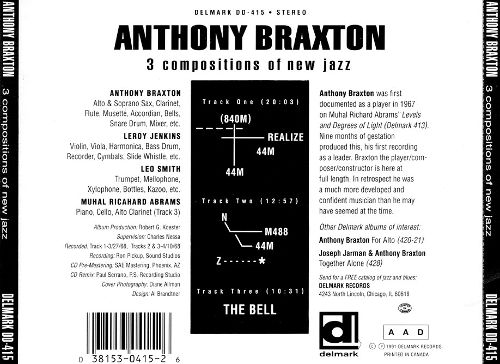
And so, though I prefer Anthony Braxton’s occasional excursions into standard jazz over his completely free jazz recordings, I still respect the talent and the skills he applies to free jazz, starting with his very first album as a leader,  3 Compositions of New Jazz, recorded in March and April 1968.  And I still value the part I personally play in making a coherent, and hopefully, enjoyable or even uplifting experience,  when listening to this or any other work of music.

And there is a lot of talent and skill that has gone into the three tracks on 3 Compositions of New Jazz. The variety (wide arrange of sounds, textures, and instruments employed by the four musicians) and the thoughtful quality of the music, makes this worthy of an initial listening, even if you then set it aside for a decade or more — or never pick it up again.  What works best for me, is the second track on side two, Ishmael Wadada Leo Smith’s “The Bell”, which I find attractive for its purity and beauty.  And in general, I particularly like Leroy Jenkins violin and viola playing throughout this album.

Am I impressed by how Braxton and team abandon conventionality and move forward with bold freedom?  Not so.  Braxton was twenty-three when this was recorded, and such youthful musical courage is not unexpected.  What is unexpected is the amount of variety, artfulness, and ability to make such unstructured music work and hold one’s attention.

Do I recommend this?  Not necessarily.  There are plenty of other jazz and even free-jazz albums I find more appealing.  Is this of historic importance?  Perhaps.   It is noteworth for its place in the musical landscape of 1968 and its blend of what is very much a John Cage approach with jazz music, but I suspect the history of free jazz would have been much the same if Delmark had shelved this album and failed to release it until forty years later.

Music is never completely driven by chance, unless it is generated by chance and performed by a computer, and this music, even with the following of the simple diagrams provided to the musicians for the first two tracks, is less about chance and more about musical and spiritual expression without the confinements of a set sequences of chord changes, a verse and chorus or other melodic framework, or recurring rhythmic patterns.  What is of interest here is just as engaging and potentially captivating as sitting outside of Penn Station in New York and watching hundreds of people a minute go on their way to work, listening to the birds sing in the forest, or listening to strangers’ conversations  on a bus, subway, or in a restaurant. It’s certainly better than listening to most radio talk shows, watching most youtube videos, or being bombarded repeatedly by some of the popular music of today or even some of the lower-quality popular music played on AM radios fifty years ago.

MI0002708545

Track listing [from Wikipedia]

All tracks written by Anthony Braxton, except where noted.

# Title Length
1 “(840m)-Realize-44M-44M (Composition 6 E)” 20:03*
2 “N-M488-44M-Z (Composition 6 D)” 12:57*
3 “The Bell” (Leo Smith) 10:31

*These first two tracks are graphically titled. This is an attempt to translate the title.

  • Recorded at Sound Studios, Chicago, IL on March 27 (track 1) and April 10 (tracks 2 & 3), 1968

Personnel


Fifty Year Friday: Miles Davis Quintet “Nefertiti”


0000765885

Recorded in June and July of 1967 and released, as best as I can determine, around February 1968, give or  take a month, Nefertiti is the ever-exploring, adventurous Miles Davis’s last all-acoustic instrument album. I also consider this one of the first albums to take significant steps into both Fusion and New Age territory.

Miles Davis time at Julliard is partially evident here (just as Tony Scott’s time at Julliard is partially evident in what some consider the very first New Age record, the 1964 album, Music for Zen Meditation.)  Miles seems to infuse Bartok and Satie, whose music he admired, into some of this work,  as well as possibly (this is maybe a reach on my part, based only on the nature of some of the rhythmic and melodic patterns) Olivier Messiaen.  Miles also drives his fellow musicians to further reaches of creativity producing a work like no other work recorded in 1967 or released in 1968.  Some call this free-bop, and there are elements of free jazz present, but overall this is generally an accessible album, very much a predecessor to the fusion jazz and progressive-jazz psychedelic/rock-impressionism that will soon follow in so many albums of the 1970s.

The title track, “Nefertiti”, recorded on June 7, 1967 as a single take, is named after the Egyptian queen, Neferneferuaten Nefertiti who, with her Pharoah husband, brought about a religious revolution in Egypt by narrowing religious worship from many gods to only one. And with this first track, “Nefertiti”, there is a singularity of focus.  Missing are solos from the trumpet and saxophone.  Instead, the two instruments blend into an ambient, cleverly crafted circular sonic stream (well done, Wayne Shorter!), much as when drifting into alternative realms of consciousness prior to sleep.  The piano, bass and drums provides the greater variety and commentary here, the entire work thoroughly and unapologetically breaking from the traditional be-bop approach to ensemble sections and solos.  We have a strong case for this being jazz minimalism despite the richness of material provided by Herbie Hancock, Ron Carter and Tony Williams, based on the foundational, hardly perceptible variations provided by Miles and Wayne Shorter.

“Fall”, “Pinocchio” (two takes) and “Riot” were recorded on July 19, 1967, two days after John Coltrane’s death.  This tragic and monumental event shapes the nature of the performances of these works, particularly Miles’ solos.  The other tracks on the Nefertiti album,”Hand Jive” and “Madness”, are more extroverted and were recorded on June 22 and June 23, respectively.  Though this album may not have been conceived as a whole work (the amazing “Water Babies”, the sharp-edged”Capricorn” and the reflective, surreal “Sweet Pea” [this last a perfect fit for the Nefertiti album] were also recorded during these sessions and released years later, in 1976),  it comes together nicely and provides a general mood of near-mystical introspection.  The performances by all members of the quartet border on mythical, with Miles inspiring and encouraging his fellow musicians in reaching further levels of excellence.

This a particularly subtle, perhaps initially elusive, album — one that many will not fall in love with on the first listening.  Not as accessible as the previous album, the 1967 Sorcerer, it is often considered to be more substantial: pushing jazz into an unexplored territory that soon becomes part of the language of not only jazz, but rock, fusion, progressive rock, new age, and late twentieth century classical music.   Darken the room and give Nefertiti your undivided attention when listening, if not already a devoted fan.

Side One:
 “Nefertiti”  — Wayne Shorter  (7:52)
“Fall” —  Wayne Shorter (6:39) 
“Hand Jive” — Tony Williams (8:54)
Side Two:
“Madness” —  Herbie Hancock  (7:31)
“Riot” —  Herbie Hancock (3:04)
“Pinocchio” — Wayne Shorter (5:08)

miles 2Capture


Fifty Year Friday: The Don Ellis Orchestra “Electric Bath”

electric_bath

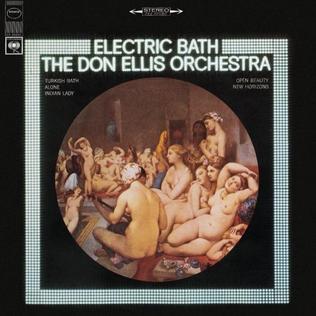
Is it possible that the first truly progressive rock album was not a rock album, but a jazz album?  For those that adamantly insist that the most adventurous and exploratory rock music of 1967 and early 1968 is really not progressive rock but “proto-prog, such prog fundamentalists often require that any music to be considered true progressive rock must display a relatively high level of musicianship and deploy mixed meter or unusual time signatures, 20th century instruments, a wide range of dynamics and instrumental combinations, effects such as tape loops or use of quarter tones, and extended length tracks painting a colorful, sonically rich landscape.  If we buy into such requirements, then perhaps we should consider this modern big-band jazz album recorded in September 1967 and released either in late 1967 or early 1968, to validly qualify as the first progressive rock album.

In terms of quality and excitement, The Don Ellis Orchestra’s “Electric Bath” should please any “Close to the Edge”, “In the Court of the Crimson King”, “Thick as A Brick”, “Selling England By the Pound”,  “Brain Salad Surgery”. or “Power and the Glory” fan.

A progressive rock album has to start with a fervently vigorous or otherwise bigger-than-life immersive track such as King Crimson’s “21st Century Schizoid Man”, Genesis’s “Watcher of the Skies”, or the opening to ELP’s Tarkus.  “Indian Lady” is just that with its fanfare opening, a meter of alternating 3 and 2,  and a strong distinct theme running relentlessly forward, swinging ferociously with a indisputably bluesy orientation.  We also have sitar, electric piano, and most notably, Don Ellis on a four-valve quarter-tone enabled trumpet.

The second track, “Alone”, by far the shortest at less than six minutes, is a basically a samba, a musical form from Brazil that became so popular in the mid sixties, but in 5/4 time without any sense of awkwardness, but just the opposite, fully liberated and unconstrained.

Ending the first side is the brilliant “Turkish Bath” with sitar and a exotically distorted reeds sounding not so much like instruments from Turkey, but from an even more exotic location, probably from another planet in some remote solar system. Sitar and quarter-tones contribute to the appropriate balance of spices.

“Open Beauty” open side two of the original LP, and provides appropriate contrast and musical reflection.  Elegantly executed by the band, this composition is haunting, surreal and evocative, with ebbs and flows of intensity until a little over two-thirds of the way in when we get a tape-delay Don Ellis solo  which initially echoes with layered fifths and then more adventurously explores into more expressive and polyphonically combative territory.

The last track, “New Horizons” is the strongest, longest and most remarkably inventive of the album with relentless energy driven by a 17/8 5-5-7 pattern with amazing ensemble and solo trumpet passages.  The work unfolds like a story with contrast and subplots ending with explosive energy winding down into an emphatic, punctuated coda.

This album should appeal to anyone that loves adventurous and well-written, arranged and performed music whether their preference is classical, progressive rock, progressive heavy metal, be-bop or big band jazz.

Track listing [from Wikipedia]

All compositions by Don Ellis except as indicated

  1. “Indian Lady” – 8:06
  2. “Alone” (Hank Levy) – 5:32
  3. “Turkish Bath” (Ron Myers) – 10:16
  4. “Open Beauty” – 8:29
  5. “New Horizons” – 12:20
  6. “Turkish Bath” [Single] (Myers) – 2:52 Bonus track on CD reissue
  7. “Indian Lady” [Single] – 2:58 Bonus track on CD reissue

Personnel

Fifty Year Friday: Jackie McLean “Demon’s Dance”

mi0002405685

Unlike most rock albums of 1967 and 1968, in which there is a focused effort to release the material fairly soon, perhaps partly due to the quickly changing musical landscape in pop, many jazz recording sessions of 1967, did not get released until some time later, partially due to the lack of commercial interest in jazz music at that time: the six tracks that make up Demon’s Dance was recorded in a single session on Dec. 22, 1967 and not released until October of 1970.

One can readily notice a similarity between the Demon’s Dance album cover and Miles Davis’s Bitches Brew cover.  Bitches Brew was released by Columbia records on March 30, 1970, and reached the number one spot on Billboard’s best selling jazz albums  by July 18, holding that position, on and off, for the rest of 1970.  Blue Note engaged the Bitches Brew album cover artist, Marty Klarwein to provide the artwork for the album cover of Demon’s Dance,  with the eye-catching result as shown above.  (Note that this is just a portion of the original painting — shown fully below at the end of this post.)

The music here is particularly ear-catching, with Jackie Mac taking a step back from his more adventurous free-jazz persona, playing modern, sometimes modal, bebop partnered with a twenty-three year old Woody Shaw providing intense, focused, clear, and often beautifully lyrical trumpet and flugelhorn and a twenty-five year old Jack DeJohnette providing dynamic, propulsive percussion with support from LaMont Johnson on piano and Scott Holt on bass.

The three hard bop uptempo tracks, “Demon’s Dance”, full of energy and intensity and enriched with variety by McLean, Shaw and DeJohnette, “Boo Ann’s Grand”, an excellent composition by Shaw, and “Floogeh” are certainly solid, top-notch performances, but the other three tracks are exceptional.

Woody Shaw provides a cheerfully, affirmative bossa-nova-based composition, “Sweet Love of Mine” that sparkles and includes riveting soloing by McLean and Shaw.  Cal Masey, provides the one ballad of the session, “Toyland” which showcases McLean at his reflective, thoughtful best, providing warmth and tender musicality with an appropriate introspective solo by LaMont Johnson.  The album closes with Cal Masey’s particularly intriguing “Message From Trane”, a modal composition with surface similarities to John Coltrane’s “Giant Steps.”

Both McLean and Shaw are in top form throughout the album, providing engaging solos that can be enjoyed over and again. Shaw is particularly inventive with his well-controlled, crisp, clear, solid tone that makes him one of the great jazz trumpeters of all time.  This was the last of Jackie’s twenty-one albums for Blue Note (wow!!!) and the second-to-last U.S session prior to McLean’s four year break from recording and his departure to Europe.  As far as I can tell, the next session after this, again pairing Jackie and Woody, has never been released — which, making an evaluation based on the merits of the Demon’s Dance album, is a notable loss to the music world.

Track listing [from Wikipedia]

All compositions by Jackie McLean except as indicated
  1. “Demon’s Dance” – 7:09
  2. “Toyland” (Cal Massey) – 5:24
  3. “Boo Ann’s Grand” (Woody Shaw) – 6:57
  4. “Sweet Love of Mine” (Shaw) – 6:04
  5. “Floogeh” – 5:23
  6. “Message From Trane” (Massey) – 5:29

Personnel

Century Sunday: 1917 Part 2

scottjoplin_orig

First off, HAPPY NEW YEAR, everyone. Hope your 2018 is filled with discovery and joy!

Going back 100 years, 1917 approximately marks the end of the ragtime era and the beginning of the jazz era.  On April, 1, 1917, Scott Joplin, the “King of Ragtime”, died at the age of 48, having written dozens of published ragtime piano pieces, a ragtime ballet, and two operas, “A Guest of Honor”, confiscated in 1903 as collateral for non-payment of bills and lost forever, and “Treemonisha”, praised as, “…an entirely new form of operatic art” by  American Musician and Art Journal in 1911, then neglected for decades, and then finally receiving a posthumous Pulitzer Prize in 1976.

It’s hard to accurately assess Joplin’s influence on music, but one could make the case he was the most influential single composer of the last 150 years.  Stride, Jazz, Swing, Boogie Woogie, Rhythm and Blues, Rock and Roll, Rock, Progressive Rock, and Hip Hop all have the equivalent of genetic markers that go back to ragtime, of which, Joplin was the most important voice.  It’s not clear that without Joplin, serious ragtime composers like James Scott and Joseph Lamb would have ever had a voice, or if ragtime would have achieved enough momentum to have any popularity or influence.

In other classical music, we have new operas from Sergei Prokofiev   (The Gambler) , Giacomo Puccini (La rondine), and Richard Strauss (Die Frau ohne Schatten [Woman Without a Shadow].Carlos Chávez  composes his first Piano Sonata (Sonata fantasia), Claude Debussy his Violin Sonata in G minor, Alexander Glazunov his second Piano Concerto in B, Op. 100, Charles Ives his Three Places in New England , Maurice Ravel  the often played piano work, Le tombeau de CouperinOttorino Respighi his Ancient Airs and Dances Suite No. 1  , Igor Stravinsky his symphonic poem, Le chant du rossignol  and his “etude” for pianola, Karol Szymanowski his third piano sonata and his String Quartet No. 1 in C majorHeitor Villa-Lobos starts on his second symphony and completes his 4th String Quartet,  and Sergei Prokofiev  his Violin Concerto No. 1, Op. 19, Visions fugitives),  two piano sonatas (Piano Sonata No. 3  and Piano Sonata No. 4) and his landmark neo-classical Symphony No. 1

Musicians born in 1917 include:

Ella Fitzgerald, jazz vocalist (d. 1996)

Lou Harrison, composer (d. 2003)

John Lee Hooker, blues singer, songwriter and guitarist (d. 2001)

Buddy Rich, jazz drummer (d. 1987)

Thelonious Monk, composer and jazz pianist (d. 1982)

Dizzy Gillespie, composer and jazz trumpeter (d. 1993)

a1opoufuypl-_sl1000_

Seventy Year Saturday: 1947

With the world recovering from the worst war ever, World War II, and the cold war just starting, 1947 was a year of many musical landmarks.

In classical music, there are new operas by Benjamin Britten (Albert Herring),  Gian Carlo Menotti (The Telephone) Francis Poulenc (Les mamelles de Tiresias), and Virgil Thomson (The Mother of Us All.)  Sergei Prokofiev completes his  6th Symphony (Op. 111) reflecting the tragedies of World War II, and condemned by the Soviet government for its modernism. Arnold Schoenberg completes  A Survivor from Warsawthe grim story of a holocaust survivor during his ordeal in a Nazi concentration camp.  Other notable works composed in 1947 include the following completed compositions:  Samuel Barber – Knoxville: Summer of 1915, Vagn Holmboe – Symphony No. 6, Aram Khachaturian – 3rd SymphonyWitold Lutosławski – Symphony No. 1, Heitor Villa-Lobos – String Quartet No. 11William Walton – String Quartet in A minor —  and  Edgard Varèse – unfinished work, Tuning Up, a parody of the orchestra tuning process before the start of a concert.

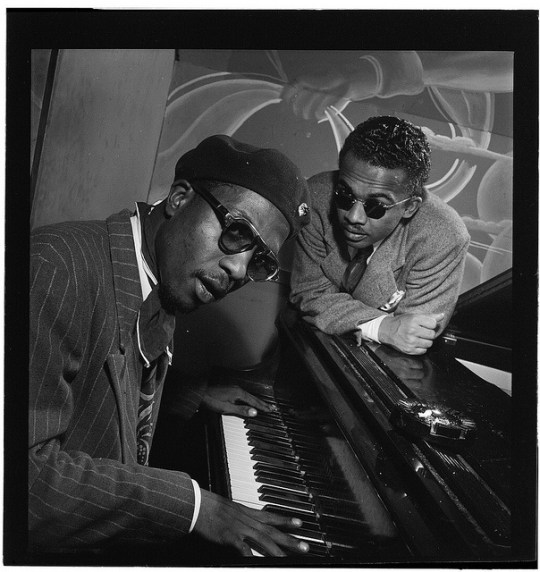
In jazz, bebop artists continue to gain the attention of listeners, Thelonious Monk, at age thirty, records several masterpieces for Blue Note including Ruby My Dear, Off Minor, Well You Needn’t, In Walked Bud (a tribute to Bud Powell, based on the chord progressions of Irving Berlin’s Blue Skies”), and the incredible ‘Round About Midnight.  Wardell Grey and Dexter Gordon record The Chase, and Dexter Gordon and Teddy Edwards record The Duel. Charlie Parker, Max Roach and Miles Davis record several sides together under various names (Charlie Parker All Stars, Miles Davis All Stars, Original Charlie Parker Quintet) in combination with various other musicians such as Bud Powell, Duke Jordan, John Lewis, and J.J. Johnson.  Parker also records tracks with trumpeters Dizzy Gillespie, Fats Navarro,  Howard McGhee, saxophonists Wardell Gray, Shorty Rogers, pianists Erroll Garner, Dodo Marmarosa, Russ Freeman, guitarist Barney Kessel,  bassist Red Callender,  and others, leaving some incredible recordings for future generations to marvel over.

233d036334877bde1789e1f9b396962e-thelonious-monk-jazz-musicians

For those that were around New York City to catch live music, they could see the aforementioned Miles Davis All-Stars at the Savoy, Louis Armstrong at Carnegie Hall with his big band, and The Count Basie Orchestra at the Paradise Club in Atlantic City or at the Strand Theater in Lakewood, New Jersey, supporting Billie Holiday.

For musical theater lovers in London in 1947, Annie Get Your Gun (Irving Berlin) opened at the Coliseum on June 7 and ran for 1304 performances and Oklahoma! (Rodgers & Hammerstein) opened at the Theatre Royal on April 29 and ran for 1543 performances.

Of the many babies born in 1947, notable future rock composers and musicians include David Bowie and folk singer Sandy Denny, born in January, Derek Shulman and John Weathers of Gentle Giant born in February, Elton John in March, Steve Howe and Iggy Pop in April,  Ronnie Wood, Mick Fleetwood and Mickey Finn (T.Rex) in June, Brian May (Queen), Arlo Guthrie, Peter Banks (Yes, Flash), Mitch Mitchell (The Jimi Hendrix Experience) and Carlos Santana in July, Ian Anderson in July, Marc Bolan and Meat Loaf in September,  Bob Weir (Grateful Dead) and Laura Nyro in September, Greg Lake and Joe Walsh in November and Gregg Allman, Jeff Lynne (Electric Light Orchestra) and Burton Cummings in December.

In movies, we have the timeless Christmas movie, Miracle on 34th Street, as well as The Bishop’s Wife with Cary Grant and Loretta Lynn and It Happened on Fifth Avenue.

The next few years would bring major changes all over the world. Fortunately that world as it was in 1947 has been well documented in records, movies and books.


Fifty Year Friday: Singer/Songwriters; Additional Groups and Artists

mi0001915547


Singer/Songwriters

2017 is soon coming to a close, and so must our fifty year anniversary reflection on 1967.  If we had started these posts earlier in 1967, instead of starting mid-year, we could have highlighted many more albums.  Those we chose were personal favorites. Some of those not included are also worth noting.

1967 provide of wealth of albums by singer songwriters from Arlo Guthrie and his  captivating “Alice’s Restaurant” album to Van Dyke Parks first album, “Song Cycle.”

Warner Brothers Records hired Van Dyke Parks with high hopes based on his previous work with Harper’s Bizarre, The Byrds, Tim Buckley, and Paul Revere & the Raiders, and then spared no costs for Parks to record his album — racking up session hours and using a full orchestra.  When “Song Cycle” was played for the president of Warner Bros. Records, his reaction was apparent confusion: “Song Cycle?  Okay — where are the songs, then?” The label didn’t release the album until December 1967, a year after it was recorded, until, as the story goes, Jac Holzman of Elektra records offered to buy if from Warner Bros.   Once released, it’s sales where less than expected, and prompted Warner Bros.  to run full page newspaper and magazine advertisements that said they “lost $35,509 on ‘the album of the year’ (dammit)” and offered owners of the album the chance to send in their worn-out LPs of “Song Cycle” in exchange for two new copies, so one could be passed on to a friend.

Harry Nilsson authors his second album, Pandemonium Shadow Show, originally intended to be titled after Ray Bradbury’s “Something Wicked This Way Comes”, which is a mix of Nilsson songs and several covers including two Lennon/McCartney songs. Nilsson’s droll lyrics and musical arrangements provide character to a well-executed and produced album.  The album includes the definitive version of Nilsson’s “Without Her”, sparsely arranged with flute, electric bass, strummed guitar and cello. The album fared better in Canada then in the US, eventually catching the attention of  Beatles publicist Derek Taylor who sent copies to the Beatles.  Purportedly, John Lennon listened to the album over and over again, playing it back to back for a total of 36 consecutive hours.

1967 provided the release of two Bob Dylan albums, Dylan’s eighth studio album “John Wesley Harding”, an album filled with songs that appear were written first as poetry and then Dylan added music to them, and a greatest hits album compiling classic Dylan songs from his first seven albums.  For many of us, born between 1954 and 1960  this was our first exposure to Dylan besides what was played on AM radio.

Also for many of us born in that mid to late fifties time frame, the great North American singer songwriter of our time was not American Bob Dylan, but Canadian Roberta Joan “Joni” Mitchell.  At this time, Joni had not recorded an album but, after moving to the U.S. and performing in various clubs, was gaining attention from these performances and in several of her songs that more established artists recorded.

The most notable 1967 Joni Mitchell song, was recorded by Judy Collins on her 1967 album Wildflowers album (released in 1968.)  This song, “Both Sides Now”, would reach #8 on the U.S. pop singles, making it Judy Collins biggest hit and being the most contributing fact to the Wildflowers album peaking at the number 5 best selling album on December 1968.

Laura Nyro  released her debut album,  More Than a New Discovery Recorded in 1966, initially released in 1967, and then reissued in 1969 and again in 1973, this album showcases Nyro’s songwriting skill and versatility with many of the songs being covered by other artists, including “And When I Die” (Blood Sweat and Tears), Wedding Bell Blues” and “Blowin’ Away” (The Fifth Dimension), and “Stoney End” (Barbara Streisand.)

Recorded in 1966 and early 1967 the Deram label releases Cat Stevens’ first album,  Matthew and Son The album makes the UK Top 10, and has several successful singles. Later that year,  Stevens records New Masters which is released in December 1967, and sells significantly less copies than the first album.

Also in 1967, Tim Buckley released his second album, his most popular and generally most acclaimed album, Goodbye and Hello.   Tim Hardin released his second album,  simply titled Tim Hardin 2.  Leonard Cohen’s releases his first album, the captivating and engaging Songs of Leonard Cohen, after Judy Collins’ recording of his song “Suzanne” brought Cohen to the attention of legendary record producer  John Hammond. Cohen’s debut album begins with “Suzanne” and includes several fairly profound songs like “The Stranger Song”, “Sisters of Mercy”, and “Stories of the Street” as well as the well known “So Long, Marianne” referencing his close companion, Marianne Ihlen.

leonard_cohen_-_1967_songs_of_leonard_cohen

Additional Notable Albums of 1967

The Beach Boys release two excellent albums, Smiley Smile and Wild Honey.  

Pretty Things releases their distinctly interesting, and accessible “Emotions” album, full of life and musical vibrancy with brass instruments adding further energy. Recorded in late 1966, and early 1967, it did not sell well, perhaps this was a result of ineffective distribution or marketing or perhaps the album was a bit ahead of its time, sounding more like it was recorded in 1968 or early 1969.

The first album of what many consider the first rock supergroup, Cream, sets the stage for later heavy rock bands (and by extension, heavy metal bands) with their second album, Disraeli Gears. Though there were many influences that spawned hard rock and heavy metal, Cream had a significant impact on many such younger rock musicians.

r-1358659-1496055161-7572-jpeg

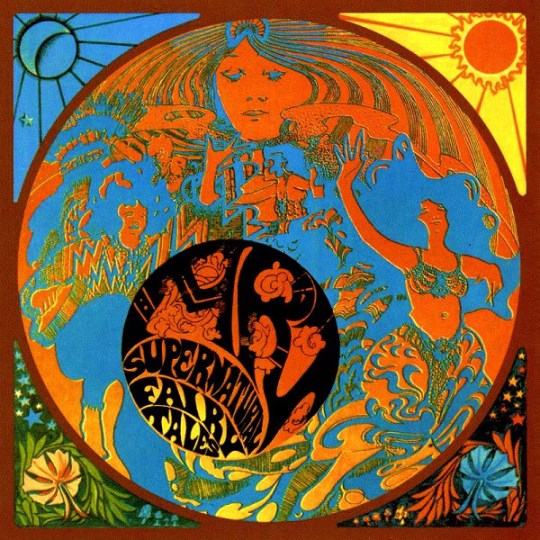
Art (Art essential being an earlier formation of the group, Spooky Tooth), infuses rivulets of blues and wisps of psychedelia into their only album, Supernatural Fairy Tales  creating a thick-textured album, perfumed with an aroma of cannabis. Earlier to the recording of this album, several of the same musicians under the name “Hapshash and the Coloured Coat”  recorded an album earlier in 1967, titled “Featuring The Human Host And The Heavy Metal Kids” — this being, as far as I can tell, the first reference to “heavy metal.”

Other notable albums, many heavily psychedelic (and some incorporating elements of free jazz) were released by groups such as 13th Floor Elevators, The Aggregation, Ten Years After, AMM, Chocolate Watchband, Clear Light, Country Joe and the Fish, The Grateful Dead, Kaleidoscope, Mesmerizing Eye, Moby Grape, Orbital, Pearls Before Swine, Red Krayola (The Parable of Arable Land), Rupert’s People, Sagittarius, The Seeds, Sly and the Family Stone, Sopwith Camel, Spontaneous Music Ensemble, Steppeulvene, Strawberry Alarm Clock, The Animals, The Beethoven Soul, The Box, The Ceyleib People, The Easybeats, The Factory, The Fire Escape, The Freak Scene, The Incredible String Band, The Lefte Bank, The Motions, The Serpent Power, The Smoke, Smoky Robinson and the Miracles, The Turtles (Happy Together), The West Coast Pop Art Experimental Band, The Yardbirds, Thomas Edisun’s Electric Light Bulb Band, Vanilla Fudge, and various more accessible or highly commercial groups like The Association, The Grass Roots, The Ventures, The Monkees (put together for a U.S. television series), and The Young Rascals.

This only scratches the surface.  I have not mentioned artists like Albert King (Born Under a Bad Sign), Nina Simone, Miles Davis, John Coltrane (Expression), Sam Rivers, Charles Tyler (Eastern Man Alone), Bill Dixon, Blue Mitchell, Freddie Hubbard, Gary Burton, Graham Collier, Herbie Mann, Roland Kirk, Marvin Gaye, Magic Sam, Otis Spann,  John Mayall, Miriam Makeba, Van Morrison, Stevie Wonder, Buddy Tate, and many others, some of which I have covered in previous “Fifty Year Friday” posts: there are a number of incredible jazz albums as well as blues, rhythm and blues, and soul music albums.

Though the term progressive rock is more formerly applied to many of the more adventurous and classically influenced bands of the early 1970s, for my money 1967 was the childhood of progressive rock with the birth perhaps occurring in 1966 with Beach Boys Pet Sounds, the Beatles’ Revolver and many psychedelia-tinged albums released in 1967, but recorded at the end of 1966. I challenge anyone to deny the progressiveness of Jimi Hendrix, The Beatles, Procol Harum, Van Dyke Parks, or even groups like The Who, The Beach Boys, or The Doors.

This was a vital period in the expansion and diversification of rock music, the like of which has not been seen since.  Fortunately for us, even albums that were nearly impossible to get a hold of in 1967 are now relatively readily available, not only on CD, or in some cases freshly, pressed LPs, but also available through streaming services or on Youtube.

Most importantly, have a happy and fulfilling 2018, and don’t neglect to broadly explore the immensity of great music available to those of us alive today.
r-1380897-1388699693-7737-jpeg


Previous Fifty Year Friday Posts for the year 1967:

The Beatles: Sgt Peppers

The Beatles: Magical Mystery Tour

Jimi Hendrix: Are you Experienced

Jimi Hendrix: Axis: Bold as Love

The Who: The Who Sell Out

Moody Blues: Days of  Future Passed

Byrds, Hollies and Buffalo Springfield
Love “Forever Changes”

Far Out 1967, Part One

Far Out 1967, Part Two

Nirvana “The Story of Simon Simopath; The Kinks “Something Else”

Dizzy Gillespie in 1967

Larry Young “Contrasts”; Joe Zawinul, “The Rise and Fall of the Third Stream”

Procol Harum “Procol Harum and The Doors “Strange Days”

Billy Strayhorn and Duke Ellington

Arthur Rubinstein, Pink Floyd

Marta Argerich and Carlos Paredes

David Bowie, Marc Bolan, John’s Children

John Coltrane, Jefferson Airplane

Thelonious Monk, McCoy Tyner

Hindustani Classical Music

The Doors: The Doors

The Velvet Underground

Aretha Franklin, Simon Dupree and the Big Sound

Mahler recordings

Rolling Stones: Between The Buttons

Jobim, Zappa, Beefheart

Century Sunday: 1917 Part 1: Sweatman, OJDB, Kreisler, and Heifitz

Sweatman

Son of a barber in Brunswick, Missouri, Wilbur Coleman Sweatman learned piano as a child from his older sister and soon started playing the violin, perhaps having taught himself on the instrument.  Later he also learned clarinet and made this his primary instrument touring with circus bands, eventually leading dance and jazz bands, and developing the unusual skill of playing two, and then later, three clarinets at once.

He recorded several cylinders and records as bandleader, one of the being possibly the very first recording of Scott Joplin’s Maple Leaf Rag.  In 1911, he published “Down Home Rag” a work in 4/4 time (as opposed to the usual 2/4 time of ragtime works) that shares elements of the contemporary fox trots and turkey trots of the time.

In  December 1916, in a New York recording studio, Sweatman recorded two takes of “Down Home Rag”, each with notable melodic variations, arguably establishing him as the first band leader to have recorded jazz and these recordings as the very first recorded jazz records.  This was two months earlier than the Original Dixie Jazz Band recorded “Livery Stable Blues” and “Dixeland Jass Band One Step”, the latter based on Joe Jordon’s “That Teasin’ Rag” and being the first record to ever contain the word “jass”.  Later in 1917, Wilbur Sweatman would record additional tracks, several of which contained the word “jass” or “jazz” in their titles.  For additional information on Wilbur Sweatman, please refer to the excellent and well-researched biography, “That’s Got ’em: The Life and Music of Wilbur C. Sweatman” By Mark Berresford

Though Wilbur Sweatman recorded the first jazz record, the Original Dixieland Jazz Band (ODJB) recorded the first record with the work “jass” or “jazz” in the title, when they recorded “Dixeland Jass Band One Step” in February 1917. More importantly, their record label, Victor, effectively promoted their material, even if as novelty, providing the sound of something akin to jazz to record buyers all over the country.  Already successful as a dance band, first in Chicago, then in New York, the fame brought by these recordings, and their next set on Columbia, further increased not only the popularity of the ODJB, but was a catalyst for jazz in general. Soon bands all over the country included the word “jazz” in their name or the titles of the records and soon true improvisational jazz music was available live and through records to a diverse audience across the United States.

Though jazz predates the recordings of Wilbur Sweatman and the Original Dixieland Jazz band by several years, records and the phonograph were the primary reason for the rapid spread and adoption of jazz as not only trendy, but popular and indispensable music.

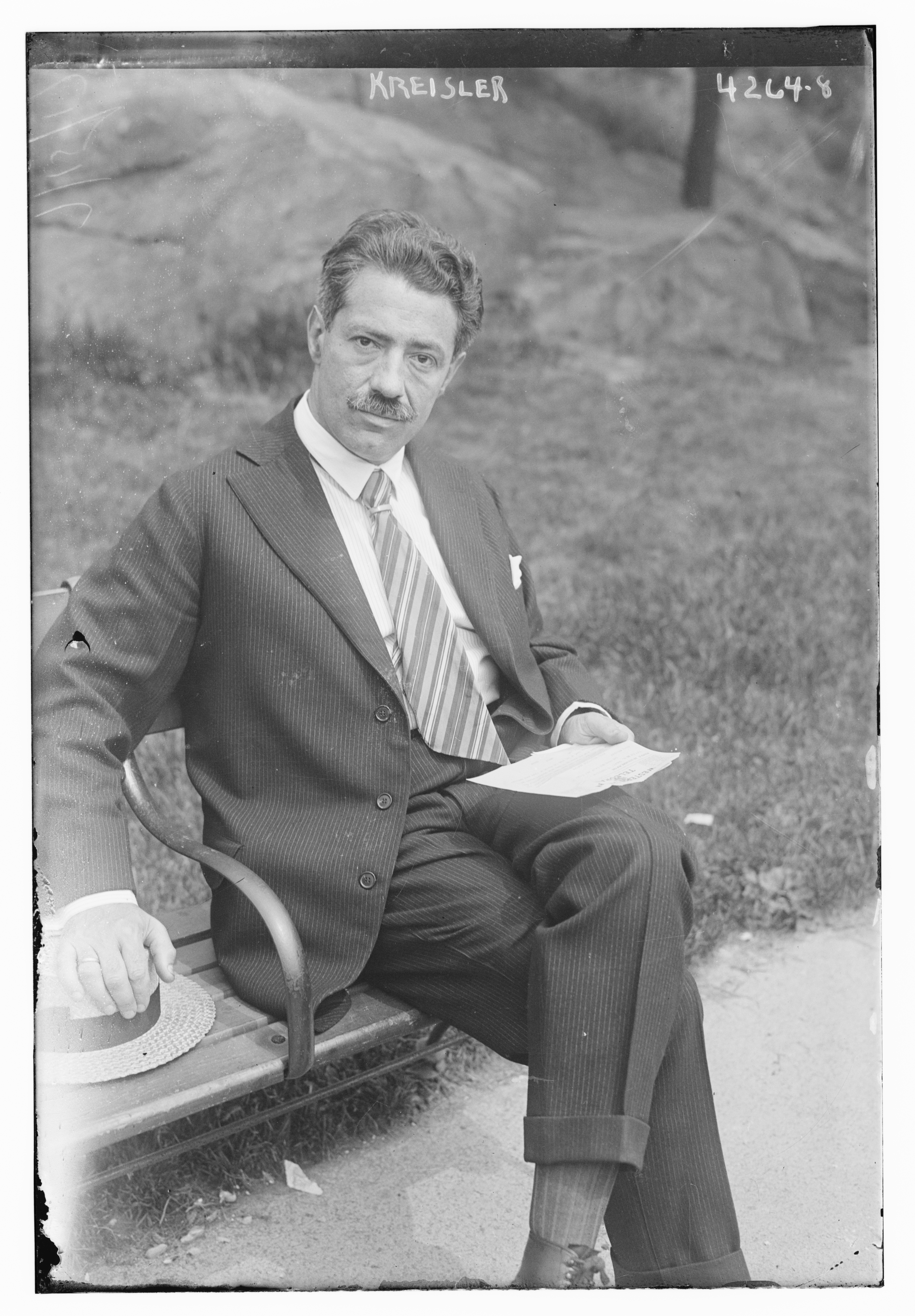
Composer, and the greatest violinist of his generation (born in 1875, died in 1962). Fritz Kreisler recorded several times in 1917 for the Victor label. Taken with earlier recordings on Victor, going back to 1910, we are left with a diverse set of miniatures, some of which are Kreisler’s own compositions, some of which were even credited to other composers, long dead, until Kreisler revealed they were his own compositions in the style of those composers.

These are acoustic recordings, as were all recordings in 1917 and up until about 1925, which means that instead of using microphones to capture sound, large horns were used that generated vibrations to etch the groves in the mastering cylinder (very early on) or platter. In addition, the rotation of the platter was mechanical and not electrical. The performer or performers had to position themselves near the horn and the resulting recording had a limited frequency range between 250 to 2500 Hz (Hertz or cycles per second: vibrations per seconds, known as the frequency, determining musical pitch and the nature of the sound since a given instrument produces a set of vibrations for any given note.)  The human hearing range is around 20 Hz to 2000 Hz and the notes on the piano range from 27.5 Hz to 4186 Hz.  250 Hz is not very low: for example, the highest of the four open strings on the cello sounds at 220 Hz and middle C on the piano is around 262 Hz. The B natural, only a semitone below, is around 247 Hz, meaning that the left hand accompaniment of a piano piece like “Maple Leaf Rag”, disregarding “overtones” or the additional upper frequencies that the piano or any instrument produces for each given note, is almost entirely below the lower limit of the range available to recordings in 1917.  Thus, while one could record piano pieces on this technology, or in the case of many of the Kreisler recordings, violin with piano accompaniment, it sounds very thin and strange.  The amazing thing, psychologically, is how the listener adjusts and soon gets comfortable with the recorded sound, as unfaithful as it is to the original performance.

25608v

Shortly after his Carnegie Hall debut on November 7, 1917 RCA started recording Jascha Heifitz, only a couple of months away from his 17th birthday.  Just as Kreisler was the most notable and celebrated  violinist of his generation, Heifitz (1901-1987) was the most prominent and acclaimed violinist of his generation.

These 1917 recordings of Heifitz available on CD are compelling and vital.  The transfers are good, and once one puts in some time listening to recordings of this era, the significant sonic limitations of the acoustic recording process don’t pose any serious barrier to enjoying the music. We are very fortunate that Thomas Edison invented the phonograph in 1877, allowing it to develop, although slowly from a 21st Century person’s perspective. so that by 1917 we start having some real treasures of music captured forever on these ten and twelve inch shellac disks.