Zumwalt Poems Online

Archive for the ‘jazz’ Category

Fifty Year Friday: Extrapolation, More, Audience


jmclaughlinR-3093046-1315393792.jpeg (2)

John McLaughlin: Extrapolation

Recorded on January 18, 1969 and released later that year, this very well could be the first true fusion album.  The electric guitar of one of the finest electric guitarists in the generation after Grant Green and Jim Hall (how is it John McLaughlin is listed only at 68 on Rolling Stone’s 100 Greatest Guitarists list and Grant Green and Jim Hall are not on the list?) is featured prominently and emphatically throughout along with English sax jazz musician, John Surman, who incorporates his free-jazz experience seamlessly within the scope of the album’s intent.

The first composition is the Thelonious Monk sounding “Extrapolation”, setting the tone for a dynamic, musically extroverted album. Each track runs into the next, except for the side change (originally on LP, of course), creating a greater sense of mood and material continuity. The last track showcases a solo, acoustic McLaughlin, bringing a sometimes wild, but always musically accessible, stellar, and leading-edge jazz album to a thoughtful conclusion.

Album is produced by Georgian/Swiss/Italian/UK producer Giorgio Gomelsky, who also had produced and managed the Yardbirds and later worked with The Soft Machine, Gong, Magma, Bill Laswell and Laswell’s band, Material, and one of my favorite groups, Henry Cow. Album is engineered by Eddie Offord who later engineered the first four ELP albums and co-produced and engineered several of the Yes albums.

Track listing [From Wikipedia]

All tracks written by John McLaughlin.

Title Length
1. “Extrapolation” 2:57
2. “It’s Funny” 4:25
3. “Arjen’s Bag” 4:25
4. “Pete the Poet” 5:00
5. “This Is for Us to Share” 3:30
6. “Spectrum” 2:45
7. “Binky’s Beam” 7:05
8. “Really You Know” 4:25
9. “Two for Two” 3:35
10. “Peace Piece” 1:50

Personnel

  • John McLaughlin – guitar
  • John Surman – baritone and soprano saxophones
  • Brian Odgers – double bass
  • Tony Oxley – drums

Pink-Floyd-More

Pink Floyd: Original Motion Picture Soundtrack from the film More

Pink Floyd’s first full album after Syd Barret was a movie soundtrack, More, recorded from January to May 1969, and released in the UK on June 13, 1967, a couple of weeks after the premiere of the movie More.  Though the music is meant to support the movie, and is a collection of basically unrelated tracks with a significant breadth of musical variety, the album holds together nicely, like a well-conceived sampler LP.

The music ranges from the dreamy “Cirrus Minor”, to the eerily pre-grunge-rock track, “The Nile Song”, to the exquisitely harmonically and melodically simple “Crying Song” to music that anticipates space rock and Kraut Rock. This is virtually a catalog of some of the adventurous musical styles that would become popular in the coming years.  Not hard to imagine why this is many listeners favorite Pink Floyd album.  It is hard to imagine why Allmusic.com gives this two and a half stars or Rolling Stone Album Guide gives it two stars.   More is more than just a movie soundtrack, it is an instruction manual of future musical styles.

Track listing [From Wikipedia]

Side one

#

Title

Writer(s)

Length

1.

Cirrus Minor Waters

5:18

2.

The Nile Song Waters

3:26

3.

Crying Song Waters

3:33

4.

Up the Khyber” (instrumental) Mason, Wright

2:12

5.

Green Is the Colour Waters

2:58

6.

Cymbaline Waters

4:50

7.

Party Sequence” (instrumental) Waters, Wright, Gilmour, Mason

1:07

Total length:

23:24

Side two

#

Title

Writer(s)

Length

1.

Main Theme” (instrumental) Waters, Wright, Gilmour, Mason

5:27

2.

Ibiza Bar Waters, Wright, Gilmour, Mason

3:19

3.

More Blues” (instrumental) Waters, Wright, Gilmour, Mason

2:12

4.

Quicksilver” (instrumental) Waters, Wright, Gilmour, Mason

7:13

5.

A Spanish Piece Gilmour

1:05

6.

Dramatic Theme” (instrumental) Waters, Wright, Gilmour, Mason

2:15

Total length:

21:32

Pink Floyd

Additional personnel
  • Lindy Mason – tin whistle (5, 7)


AudienceAudience (2)

Audience: Audience

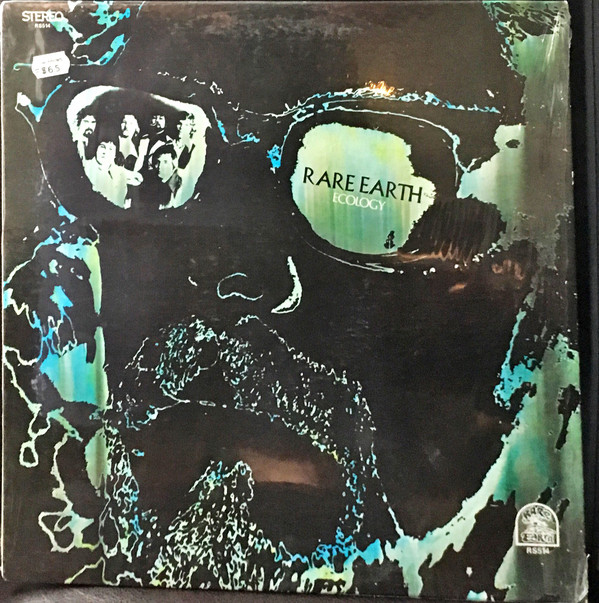
Audience recorded and released their first album in 1969, though it is not easy to find out exactly when. The band formed in 1969 and within weeks after their first rehearsal they had a record deal with Polydor and were playing at the famous Ronnie Scott’s in Soho, London, also site of the 1969 premiere of the Who’s Tommy.  Polydor, though quick to sign the band, was not so efficient at promoting them or their album.  The album had insignificant sales, not helped by the puzzling album cover, a dim negative of the band members, and shortly after its release was discontinued.  Meanwhile during live performances, the band drew critical praise for their performances and material, and soon, while the backup touring band for Led Zeppelin, was signed to the Charisma label.

The first two songs on this album are unquestionably progressive rock.  The tracks that follow, though more traditional rock, are still catchy and showcased the nylon-stringed acoustic-electric (fitted with an electric pickup) classical guitar  of Howard Werth and the sax, clarinet and flute of Keith Gemmel, the latter using echo and wah-wah pedal to fill in some of the role of the traditional rock guitar.  The album is worth listening to more than once, and the musicianship and arrangements are very good.

Track listing [From Wikipedia]

Unless noted, all tracks credited to Werth, Williams.[2]

Side one

  1. “Banquet” – 3:47
  2. “Poet” – 3:05
  3. “Waverley Stage Coach” (Williams) – 2:59
  4. “Riverboat Queen” – 2:57
  5. “Harlequin” – 2:35
  6. “Heaven Was an Island” – 4:18

Side two

  1. “Too Late I’m Gone” – 2:37
  2. “Maidens Cry” (Gemmell, Richardson, Werth, Williams)- 4:47
  3. “Pleasant Convalescence” – (Gemmell, Werth) – 2:30
  4. “Leave It Unsaid”
  5. “Man On Box” (Gemmell, Werth) 
  6. “House On The Hill”

Audience


Fifty Year Friday: Power to the People, The Giant is Awakened, Empty Sky, At San Quentin, and Charisma


joe-henderson3jpg

Joe Henderson: Power to the People

Recorded in late May of 1969, Power the Power stands out distinctly from both those late-sixties partly-commercially friendly hard bop albums and the bevy of free-jazz albums being recorded in 1968 and 1969.  It opens with one of the most sensually gorgeous jazz ballads of the era, the beautifully lush Black Narcissus with Herbie Hancock’s Fender Rhodes electric piano providing the appropriate ambient backdrop. Henderson’s tenor work here is stunningly elegant as he shapes his lines with a rare level of delicate control.  And though “Black Narcissus” is the highlight here for me, Ron Carter’s “Opus One-Point-Five” is also particularly beautiful with Henderson’s tone capable of the most nuanced reflection and introspection.  Hancock is on acoustic piano, and Jack DeJohnette’s percussion fits in perfectly.

Despite all this beauty, on cannot overlook the other tracks including an updated version of Henderson’s Monk-influenced “Isotope” that Henderson and Hancock had previously recorded in 1964 for the “Inner Urge” album.  As a Thelonious Monk fan, this resonates with my personal music sensibilities, and so very glad to have both the longer 1964 version and this version. “Lazy Afternoon” swings effortlessly, “Afro-Centric” is hard-edged, modally adventurous hard bop, and “Foresight and Afternoon” omits keyboards with the trio charging into the realm of free jazz territory.  The title track, “Power to the People”, is also adventurous, with a modern hard-bop theme, aggressively inventive improvisations, and sparking electric piano work by Hancock. Now if I had to change one thing about this album, I would have liked to have a second version of “Power to the People” included with Mr. Hancock on acoustic piano. That would be one way to make an amazing album even more incredible!

Track listing [from Wikipedia]

All compositions by Joe Henderson, except where noted.

  1. “Black Narcissus” – 4:50
  2. “Afro-Centric” – 7:00
  3. “Opus One-Point-Five” (Ron Carter) – 4:56
  4. “Isotope” – 4:53
  5. “Power to the People” – 8:42
  6. “Lazy Afternoon” (MorossLatouche) – 4:33
  7. “Foresight and Afterthought (An Impromptu Suite in Three Movements)” – 7:33

Recorded on May 23 (2, 5) and May 29 (all others), 1969.

Personnel


horacetapscott1802420518horacetapscottB1

Horace Tapscott: The Giant is Awakened

Recorded on the first three days of April 1969, released later that year to negligible sales and then not reissued until 2015, The Giant is Awakened is Horace Tapscott’s first album as a leader, with not another album in his name until 1978, by Tapscott’s choice, as he was reportedly disappointed in being excluded from the mixing process of this album despite assurances to the contrary.  Reportedly, Tapscott was particularly dissatisfied with the over-emphasis on the piano, which aggressively stands out whether soloing or providing accompaniment. The two basses could have been brought out more, particularly in passages where one is bowing and the other is being plucked.

The album finds middle ground between standard hard bop and extreme free jazz as nicely exemplified in highly structure and rhythmically-driven “The Giant is Awakened.”  This is also Arthur’s Blythe’s first recording, but his distinct alto playing is evident even at this point in his career as he provides an orchestra’s worth of tension and forward momentum in the first track, preceding Tapscott’s unrestrained and exploratory solo. Blythe also contributes the composition “For Fat’s” with its Monk-like opening theme and its freer contrasting section —  the two themes rotating in a straightforward ABABA form.  The third track,  the relentlessly rhythmic “The Dark Tree” is particularly appropriate for showcasing Tapscott fearless piano technique. The final track, “Niger’s Theme”  begins with a distinct, angular melody that then gives way to Blythe’s almost chaotic, but brilliant, free improvisation, followed by some pungent and highly accentuated piano.  This returns to an extended restatement of the main theme, with a suitable diminuendo bringing an accessible, engaging, and adventurous album to a pleasant but decisive close.

Tapscott Giant (3)

Track listing [From Wikipedia]

All compositions by Horace Tapscott except as indicated

  1. “The Giant is Awakened” – 17:23
  2. “For Fats” – 2:20
  3. “The Dark Tree” – 7:01
  4. “Niger’s Theme” – 11:55

Personnel


Empty SkyA1ou+ufLWyL._SL1500_

Elton John: Empty Sky

Recorded in December of 1968 through April 1969, Elton John’s first album was released in the UK on June 6th 1969.  Like many baby boomers in the States, my first exposure to Elton John was his self-titled second album, which at the time I purchased it, I believed to be his first.  It wasn’t until a few months after I had purchased Tumbleweed Connection, that I saw Empty Sky in the import section, and as it was at a reasonable price for an import album, $3.99,  I bought it.  I listened to it once, put it aside, listened to it again, but never took a strong liking to it as I had with those second and third albums, which, along with Yellow Brick Road, are what I consider to be the best of his long, productive career.

That said, Empty Sky is still a good album, with well-written lyrics by Bernie Taupin, skillfully set to music by Elton John.  Yes, the second and third albums have stronger songs, and also benefit from the wealth of quality musicians that contribute as well as Gus Dudgeon’s accomplished production — Empty Sky lacks anything approaching “Your Song”, “Take Me To the Pilot”, or “Burn Down the Mission”, does not have the same production values or range of contributing musicians — and appears to be constrained by a lower budget.

My favorite songs are the opening (and title) track, “Empty Sky,” “Western Ford Gateway,” which sounds similar to content from Tumbleweed Connection, and “Hymn 2000,” which would fit in nicely on the second album.  The last track has a jazz-blues section, which would provide a nice ending to the album, except for the intrusion of a collage of snippets from each track that provides a musical flashback — a puzzling approach, but something repeated by both Gentle Giant (“In a Glass House”) and Queen (“Jazz”), with Gentle Giant keeping their snippets to a little under two seconds each, for a total length of nine seconds (not counting the few seconds of shattering glass) compared to the nearly two-minute recap on Empty Sky.  (In regards to Gentle Giant and Elton John, Elton, when still Reginald Dwight, played with Simon Dupree and the Big Sound for a couple of months when their regular keyboard player, Eric Hine, was ill.  The Shulman brothers and Reggie got along great, and recorded Elton and Bernie Taupin’s “I’m Going Home” as mentioned here.)

Track listing [From Wikipedia]

All songs written by Elton John and Bernie Taupin.

Side one

  1. “Empty Sky” – 8:28
  2. “Val-Hala” – 4:12*
  3. “Western Ford Gateway” – 3:16
  4. “Hymn 2000” – 4:29

Side two

  1. “Lady What’s Tomorrow” – 3:10
  2. “Sails” – 3:45
  3. “The Scaffold” – 3:18
  4. Skyline Pigeon” – 3:37
  5. “Gulliver/Hay Chewed/Reprise” – 6:59*

Personnel

  • Elton John – vocals, piano, organ, Fender Rhodes, harpsichord
  • Caleb Quaye – electric guitar, acoustic guitar, congas
  • Tony Murray – bass guitar
  • Roger Pope – drums, percussion
  • Nigel Olsson – drums on “Lady What’s Tomorrow”
  • Don Fay – saxophone, flute
  • Graham Vickery – harmonica


johnny cash sq1.jpeg (2)

Johnny Cash At San Quentin

Whereas Elton John was just getting to his first album, Johnny Cash was tackling his thirty-first. If you had any relatives in 1969 or the early seventies that were partial to country music, there’s a good chance that this album would be in their collection, and for good reason: it is an exceptionally engaging live album, recorded on February 24, 1969, just two days before Cash’s 47th birthday, and released on June 4, 1969.  Those of us with any memory of 1969, will recall the repeated playing on the airwaves of this live concert’s version of Shel Silverstein’s cleverly-written “A Boy Named Sue”, and the bleeping out of “son of a *****” — how quaint censorship was back then.

Track Listing [From Wikipedia]

Side one
1. “Wanted Man” (Bob Dylan) 3:24
2. “Wreck of the Old 97” (arranged by Cash, Bob Johnston, Norman Blake) 2:17
3. “I Walk the Line” (Johnny Cash) 3:13
4. “Darling Companion” (John Sebastian) 6:10
5. “Starkville City Jail” (Johnny Cash) 2:01

Side two
1. “San Quentin” (Johnny Cash) 4:07
2. “San Quentin” (performed a second time at the audience’s request) (Johnny Cash) 3:13
3. “A Boy Named Sue” (Shel Silverstein) 3:53
4. “(There’ll Be) Peace in the Valley” (Thomas A. Dorsey) 2:37
5. “Folsom Prison Blues” (Johnny Cash) 1:29

Personnel

lee morgan (2).jpg

Lee Morgan: Charisma

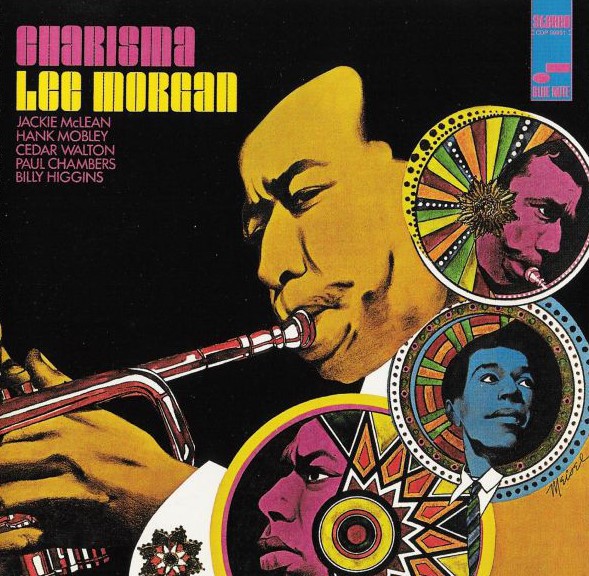
With a lineup that immediately ensures a high level of quality, Charisma was recorded in 1966, but not released until May 1969.  Compared to the plethora of free jazz albums being released in 1969, this may seem embarrassingly accessible to more sophisticated jazz listeners, but there is nothing embarrassing about the quality of the musicianship and the level of improvisation. One can scarcely go wrong with any Lee Morgan Blue Note album, so given that everyone must own a copy of his 1963 Sidewinder album with Joe Henderson as well as the 1964 Search for the New Land with Wayne Shorter, Grant Green and Herbie Hancock, it seems reasonable one would be able to find a place in their music collection for an album where Lee Morgan teams up with Jackie McLean, Hank Mobley, Cedar Walton, Paul Chambers and Billy Higgins, particularly when it is also on Blue Note and is this good!

The album starts with “Hey Chico”, one of those mid-sixties blues-based jazzed numbers tailored for AM radio, though it never got such exposure, followed by, what for me, is the gem on the album, “Somethin’ Cute”,  rich in great solos, particularly the alto solo from Jackie Mac. Walton is exemplary on the lovely ballad, “Rainy Night”, and the fourth track, is another of those relatively simple, commercially friendly tunes, upbeat and perfect for the excellent soloing after the initial statement — particularly impressive is Lee Morgan’s trumpet solo.  This is followed by another Duke Pearson tune, with particularly notable solos by Morgan and Walton.  The last track, “The Double Up”, provides a nice symmetry against the opening track, and includes strong solos by Morgan and Mobley and a notable solo by Walton against the horns.  Chambers and Higgins are excellent, with Higgins flavoring these performances with unobtrusive ranges of shading and percussive hues and tints that lie almost below the range of general perception yet significantly contributes to the overall impact.


Track listing [From Wikipedia]

All compositions by Lee Morgan except where noted

  1. “Hey Chico” – 7:17
  2. “Somethin’ Cute” – 5:39
  3. “Rainy Night” (Walton) – 5:39
  4. “Sweet Honey Bee” (Pearson) – 6:54
  5. “The Murphy Man” (Pearson) – 7:34
  6. “The Double Up” – 6:01

Personnel


Fifty Year Friday: Aretha Franklin, Soul ’69; Neil Young; The Beatles

arertha69

Aretha Franklin: Soul ’69

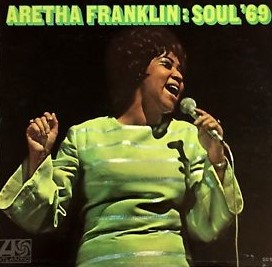
Some albums showcase great songs or excellent compositions, some great arrangements and some showcase great talent. The title is misleading, as this is more of a jazz and blues album than a soul album, and a much more appropriate title would have been “Aretha 1969.”

This excellent album, released January 17, 1969, showcases one of the great vocal instrumentalists of the last hundred years at her best.  In general, the arrangements set up Aretha Franlin to effectively display her incredible musicality.  On this album, Aretha is not song-interpreter in the manner of Billie Holiday, Mildred Bailey, Johnny Hartman, or Chet Baker, but is an expressive instrumentalist like John Coltrane, Charlie Parker, or Eric Dolphy.   For anyone wishing to explore what made Aretha so great, this is a perfect album to start with.

We also get a myriad of skilled jazz musicians backing her up.

Track listing (from Wikipedia)

Side one

Writers(s)

1.

“Ramblin'”
Big Maybelle

2.

Today I Sing the Blues
Curtis Reginald Lewis

3.

“River’s Invitation” Percy Mayfield

4.

“Pitiful” Rosie Marie McCoy, Charlie Singleton

5.

Crazy He Calls Me
Bob RussellCarl Sigman

6.

Bring It On Home to Me
Sam Cooke

Side two

7.

Tracks of My Tears
Smokey RobinsonPete MooreMarv Tarplin

8.

“If You Gotta Make a Fool of Somebody”
Rudy Clark

9.

Gentle on My Mind
John Hartford

10.

So Long
Russ Morgan, Remus Harris, Irving Melsher

11.

I’ll Never Be Free
Bennie BenjaminGeorge David Weiss

12.

Elusive Butterfly
Bob Lind

Personnel 

neil-young-debut

Neil Young: Neil Young

I’m a pushover for early Neil Young, whether it’s his simple, uncomplicated songs (uncomplicated harmonically and lyrically) like “The Loner” or his repetitive, extended songs with unfathomable lyrics like “The Last Trip to Tulsa.”  Nothing here on this album to get a Pulitzer Prize for music or a Nobel Prize for poetry, but how can you not love how Neil cuts to the core of what the singer songwriter experience is all about and provides the equivalent warmth and informalness of those Saturday lunches at a friend’s house?  It’s always a pleasure to take this timeless debut album, released January 22, 1969, for a spin — a classic album which winningly captures and represents Neil Young being Neil Young.

yellowsubR-4497960-1366572256-6586.jpeg.jpg

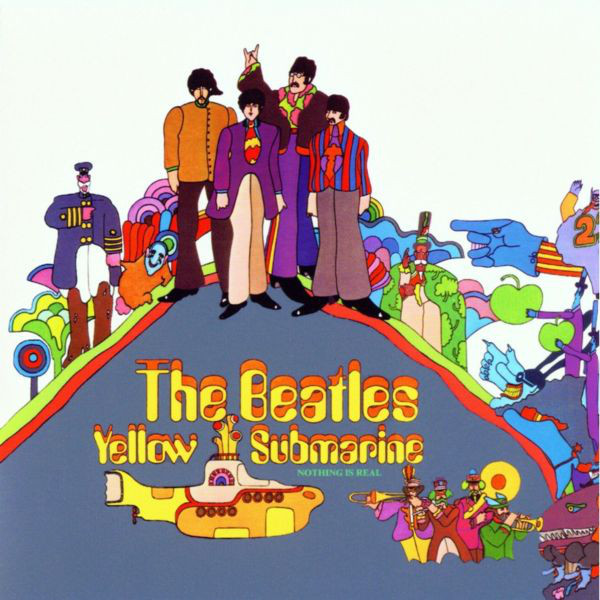
The Beatles: Yellow Submarine

And of course, I have to mention the Yellow Submarine “soundtrack” album, released January 13, 1969, which importantly contains one masterpiece, John Lennon’s 1968 blues-based “Hey Bulldog” with its opening, addictive riff emphasizing the melodic dissonance of the tritone and McCartney’s solid and sometimes improvisitory bass work, and one other very strong composition, George Harrison’s 1967 “Only a Northern Song.”  Also included is the 1967 early psychedelic, “It’s All Too Much.”

Century Sunday: 1918

New Orleans

First of all, wishing everyone a happy, productive and fulfilling 2019!

I was not around one hundred years ago, but my grandparents were.  My mother’s mom was twenty, and she sometimes referenced the terrible flu epidemic of 1918 and the lives it took.  For many, this affected them more directly than World War I.

World War I would end in November of 1918.  For many years, Armistice Day, November 11, was a notable holiday in the U.S. until sometime after World War II, when it was renamed Veteran’s Day, honoring those who served in both world wars. Now Veteran’s day is a tribute to all those that served in the U.S. armed forces, the true great heroes and protectors of our nation.

In movies, Charlie Chaplin, Harold Lloyd and Buster Keaton continued to provide silent comedies.  The big silent movie hit of 1918 was Mickey, starring Norma Mabel, the famous actress, writer, director, and producer of the 1910s and 1920s.

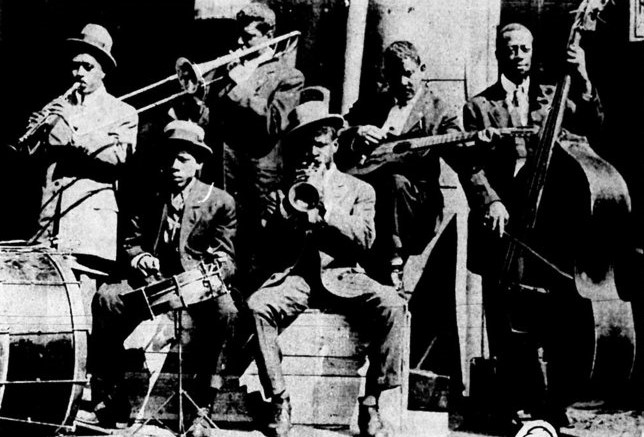
In 1918, the gifted seventeen-year-old Louis Armstrong was playing cornet on Mississippi riverboats.  With prostitution made illegal in New Orleans in November of 1917, not to protect the women involved, but as a step to prevent VD transmission to nearby army and navy camps, Storyville, the red light and entertainment district of New Orleans, and the musicians that made a living in Storyville would take a financial hit: soon Louis’s idol, King Oliver would move to Chicago, and Louis would replace him in Kid Ory’s band.

Original Dixieland Jass Band continued to release recordings including their most famous one, “Tiger Rag.

Pianist, and National Public Radio (NPR) host of “Piano Jazz”, Marian McPartland was born on March 1918, living until 2013. Other jazz musicians born in 1918 include trumpter Howard McGhee, pianist Charles Thompson, pianist Hank Jones, saxophonist Ike Quebec, and trumpet player, composer, arranger and band leader, Gerald Wilson.  King of the Slide Guitar, blues guitarist, composer, singer and bandleader Elmore James was also born in 1918.  Mr. James was one of the first guitarists in the 1950’s to intentionally overdrive the electric guitar’s amplification to produce distortion for musical effect.

Classical violinist, Ruggiero Ricci was born in 1918 and gave lessons to one of my good friends from college who talked about him in utmost awe and respect. Ricci gave performances as a member of the US Army in World War II and then later, in 1947, was the first violinist to record the complete twenty-four Caprices (Opus 1) by Paganini in their original form. Ricci also championed many twentieth century composer’s violin concertos including Ginastera’s.  In total, Ricci made over 500 recordings and performed over 6,000 concerts in sixty-five different countries.

Leoš Janáček composed Taras Bulba, Arnold Bax his first string quartet,  Igor Stravinsky his Histoire du Soldat. Operas first performed in 1918 include Béla Bartók’s dramatic Bluebeard’s Castle and Giacomo Puccini‘s set of three one-act operas, Il trittico.

jazz 1918.jpg

Seventy Year Saturday: 1948


1948 mar 3 deuces

Bebop continues to flourish with live concerts and recordings featuring Charlie Parker, Thelonious Monk and the up and coming Miles Davis. Imagine being able to go back in time to see Charlie Parker, Miles Davis, and Max Roach at the Three Deuces!

Coleman Hawkins continues his legacy, releasing his classic solo saxophone single, “Picasso”, almost as an important musical statement as his more famous swing-era masterpiece. “Body and Soul.”   Are there any other swing giants that were able to  make the transition into Bebop as successfully as the Hawk?  Musically successfully that is, since unfortunately, great artists like Coleman Hawkins received very little financial reward in 1948.

Serge Prokofiev, out of favor with the Soviet cultural authorities, premieres his final opera, The Story of a Real Person on December 3, 1948 at the Kirov Theater, Leningrad (now thankfully called Saint Petersburg again).  Given an unfavorable reception from the “authorities,” further performances were forbidden to the general public until after Prokofiev’s death, The Story of a Real Person not being performed again until October 1960 at the Bolshoi Theater, Moscow.

Oliver Messiaen’s completes his Turangalîla-Symphonie, a large scale orchestra work commissioned by Serge Koussevitzky for the Boston Symphony Orchestra and later premiered in December 1949 with Leonard Bernstein conducting.

Arnold Schoenberg at the age of seventy-five composes his cantata, A Survivor from Warsaw, written in tribute to the Holocaust victims. Richard Strauss at the age of eighty-four composes his “Four Last Songs” for soprano and orchestra.

Hans Werner Henze and Witold Lutoslawski finish their first symphonies, while Walter Piston completes his third, Brian Havergal composes his seventh, and Nikolai Myaskovsky wraps up his first twenty-sixth, his Symphony on Russian Themes.

Samuel Barber composes Knoxville: Summer of 1915, John Cage his Suite for Toy Piano, Howard Hanson his Piano Concerto, Dmitri Kabalevsky his Violin Concerto, Eduard Tubin his Double Bass Concerto, and famous film composer, later to write the scores to the first two Godfather movies, Nino Rota, takes a break from movie music to compose his String Quartet.

Cole Porter’s Kiss Me, Kate Broadway production opened on December 30, 1948 at the New Century Theatre and ran for 1077 performances,

On the extreme, commercial pop-side of music, Kay Kyser with Gloria Wood on vocals score a major hit with a song embedded in my childhood memories, “The Woody Woodpecker Song.”  If only the worst pop songs of today, were this good….


Fifty Year Friday: Chick Corea, Hugh Masekala

chickcorea now heMI0001714558

Chick Corea:  Now He Sings, Now He Sobs

At age twenty-eight, Chick Corea had already made serious contributions on studio dates with Herbie Mann, Hubert Laws, Cal Tjader, Dave Pike, Donald Byrd, and Stan Getz often contributing arrangements as well as playing piano.  He had also recorded his first solo album in 1966, Tones for Joan’s Bones, with Woody Shaw on trumpet, which was released in April 1968.

Corea started playing piano at age four, developing not only impressive piano skills, but a passionate love for both classical and jazz music.  This mastery of the two genres is apparent in this album, the format of jazz trio working well in terms of emphasizing the piano part and facilitating optimal engagement between a small set of artists.

“Steps –  What Was” starts with piano solo soon joined by veteran Roy Haynes on drums and twenty-year old Czech classically-trained Miroslav Vitouš on acoustic bass.  The work brims with enthusiasm and freshness and, after a brief drum solo by Haynes and before a bass solo by Vitouš, is a wonderful piano-led passage that reveals an early version of Corea’s “Spain” theme.

“Matrix’ includes a brief statement of the theme and a wild ride of head-spinning improvisation, again including room for statements by Vitouš and Haynes.

The next two tracks take their title from the explanation of the third line of the  Kung Fú (Inmost Sincerity) hexagram   in the ancient Chinese Book of Changes, The I Ching, roughly translated as “Now he beats his drum, and now he leaves off. Now he weeps, and now he sings.”  These two works are very different with “Now He Sings, Now He Sobs”, being generally forward-looking, energetic and optimistic and “Now He Beats The Drum, Now He Stops” being more of a two-part composition, with the first section, a piano solo, full of reflection and inner-doubt, and the second section surging with revitalization and purpose.

The last track, “The Law Of Falling And Catching Up” is a free-jazz excursion with Corea directly accessing the strings of the grand piano.  Somewhat pointillistic and Webern-like, the piece is sweeping in texture and content yet, at under two and half minutes, compact and focused.

Track listing [from Wikipedia]

  1. “Steps – What Was”
  2. “Matrix”
  3. “Now He Sings, Now He Sobs”
  4. “Now He Beats The Drum, Now He Stops”
  5. “The Law Of Falling And Catching Up”

Personnel


Hugh Masekala: The Promise of the Future

Though sometimes Masekala’s work gets categorized as “Easy Listening”, this album contains some fine jazz and early world-fusion with Masekala providing quality trumpet with fine supporting musicians including uncredited folk-revival guitarist Bruce Langhorne.  Baby Boomers will recognize the instrumental  “Grazing in the Grass”, which went to the top of the charts, and was later revisited by The Friends of Distinction with added vocals.  Also notable is the reflective, meditative rendition of Traffic’s “No Face, No Name And No Number”, Miriam Makeba’s “Bajabule Bonke” and Masekala’s own “Almost Seedless.”

Track listing [From Wikipedia]

No. Title Writer(s) Length
1. Ain’t No Mountain High Enough Nick AshfordValerie Simpson 2:00
2. “Madonna” Al Abreu 3:10
3. “No Face, No Name and No Number” Jim CapaldiSteve Winwood 3:26
4. “Almost Seedless” Hugh Masekela 3:36
5. “Stop” Jerry RagovoyMort Shuman 2:35
6. Grazing in the Grass Harry Elston, Philemon Hou, Hugh Masekela 2:40
7. “Vuca” (Wake Up) Hugh Masekela 3:40
8. “Bajabule Bonke” (The Healing Song) Miriam Makeba 6:25
9. “There Are Seeds To Sow” (Guitar – Bruce Langhorne) Hugh Masekela 2:25

Personnel

Fifty Year Friday: Spirit, Pentangle

spirit fpt f1 R-8849896-1470068818-1009.jpeg (2)

Spirit: The Family That Plays Together

In November 1968, Spirit follows up their impressive first album with an even stronger and more polished second album, again produced by Lou Adler with arrangements by Marty Paich.

The album starts out with Randy California’s rock classic “I Got A Line On You Babe”, first released as a single a couple of months prior to availability of the album, achieving some airplay on FM radio before later becoming a modest hit on AM.  Full of energy and unstoppable enthusiasm with a aggressive, celebratory guitar work, it represents youthful romantic optimism reversing the viewpoint of that classic Kink’s song “You Really Got Me” but sharing many musical and emotional qualities.

“It Shall Be” is evocatively sensual with flute and wordless vocals alternating in A-B-A-B-A form with a more down-to-earth B section. This is followed by a set of three semi-psychedelic songs by Jay Ferguson, and a country-like tune, “Darlin’ If” composed by Randy California

Side two opens up strongly with “It’s All the Same,” a mixture between psychedelic and early seventies rock, including a brief, relatively uninteresting drum solo in the middle.  The second track, is Caifornia’s “Jewish”, a short but expressive modal-melody pre-progressive track with Hebrew lyrics.  The album ends with with three more Jay Ferguson tracks, each with its distinct identity but all three incorporating elements of the psychedelic era of songwriting;  note the intriguing guitar work in the not-always-so-consistently-interesting last track, “Aren’t You Glad.”

Bonus tracks are available on the CD, including the artful, ambient instrumental, “Fog” and two other instrumentals by keyboardist John Locke as well as Ferguson’s sweeping,  gothically dark “Now or Anywhere.” 

Track listing [from Wikipedia]

Side one
No.TitleWriter(s)Length
1.I Got a Line on YouRandy California2:39
2.“It Shall Be”
3:24
3.“Poor Richard”Jay Ferguson2:31
4.“Silky Sam”Ferguson4:57
5.“Drunkard”Ferguson2:27
6.“Darlin’ If”California3:37
Side two
No.TitleWriter(s)Length
7.“It’s All the Same”
4:41
8.“Jewish”California3:23
9.“Dream Within a Dream”Ferguson3:13
10.“She Smiles”Ferguson2:30
11.“Aren’t You Glad”Ferguson5:25

1996 reissue bonus tracks
No.TitleWriter(s)Length
12.“Fog”
  • Locke
  • Cassidy
2:23
13.“So Little to Say”Ferguson2:58
14.“Mellow Fellow”Locke3:46
15.“Now or Anywhere”Ferguson4:20
16.“Space Chile”Locke6:25

Spirit

pentanglesweetchild1.jpg

Pentangle: Sweet Child

This fine double album, one LP from a live concert in June 1968, and the other from 1968 studio recordings, sparkles with precise, consistently clearly articulated acoustic and vocal passages that nicely blend folk, rock, jazz and classical renaissance elements to provide an engaging audio and musical experience.  Highlights of the live LP include Danny Thompson’s rendition of Mingus’s Haitian Fight Song, the group’s interesting take on Mingus’s homage to legendary Lester Young, “Good Bye, Pork Pie”, and the medley of three renaissance dances. Highlights of the studio LP include the immersive contrapuntal “Three Part Thing”, Jaqui McShee’s rendition of “Sovay”, the jazzy Brubeck-like instrumental “In Time”, the bluesy “I’ve Got a Feeling”, the classic folksy “The Trees They Do Grow High” and the final track of side two, “Hole in the Coal.”  Throughout the four sides the interplay between the two guitars and bass is exceptional.  Additional tracks are available on CD that were not on the original two LP Set.

Wikipedia Track Listing


Pentangle

Fifty Year Friday: Switched on Bach, Songs of Innocence, The Book of Taliesyn, Steve Miller Band; Steppenwolf

SwonBach-7858-1327651541.jpeg

Wendy Carlos: Switched on Bach

“The whole record, in fact, is one of the most startling achievements of the recording industry in this generation and certainly one of the great feats in the history of ‘keyboard’ performance” Glenn Gould

This is the album that endeared myriad music lovers to the sound of the Moog synthesizer.   Young college radicals and middle-aged classical music aficionados, alike, found a place for this album among their dearest music treasures of Zappa, Hendrix and early heavy metal on the one hand and Beethoven, Mozart, Bach, and newly-released Baroque music offerings on the other.

Staying atop the classical music Billboard charts for three years, this album had a lasting impact on many musicians including the Grateful Dead, Pink Floyd, Stevie Wonder, Keith Emerson and Don Dorsey (Bachbusters) and was the vehicle that gave Carlos the opportunity to provide film scores for two of Stanley Kubrick most successful movies: A Clockwork Orange in 1972 and The Shining in 1980.

Though not all of the album is consistently off-the-charts excellent, particularly by today’s standards of electronic-music production, there is much of great merit here.  Side one particularly deserves high praise for the realization of the individual contrapuntal lines that are so much of Bach’s late Baroque compositional palette.  It is the magic inherent in these Bach compositions that are so carefully and thoughtfully highlighted. This is all the more amazing, considering the technical limitations of the 1964 version of the Moog Synthesizer used — it could only play one note at a time, with the previous note having to be released before pressing the next, and it did not stay in tune for more than a few phrases. No surprise, then, that the album tallied up more than one thousand hours of production time over a five month period.

Track listing [From Wikipedia]

Side one
  1. “Sinfonia to Cantata No. 29” – 3:20
  2. Air on a G String” – 2:27
  3. Two-Part Invention in F Major” – 0:40
  4. Two-Part Invention in B-Flat Major” – 1:30
  5. Two-Part Invention in D Minor” – 0:55
  6. Jesu, Joy of Man’s Desiring” – 2:56
  7. “Prelude and Fugue No. 7 in E-Flat Major” (From Book I of The Well-Tempered Clavier) – 7:07
Side two
  1. “Prelude and Fugue No. 2 in C Minor” (From Book I of The Well-Tempered Clavier) – 2:43
  2. Chorale Prelude ‘Wachet Auf’” – 3:37
  3. Brandenburg Concerto No. 3 in G Major – First Movement” – 6:35
  4. Brandenburg Concerto No. 3 in G Major – Second Movement” – 2:50
  5. Brandenburg Concerto No. 3 in G Major – Third Movement” – 5:05


David_Axelrod-Songs_of_Innocence-600px

David Axelrod: Song of Innocence

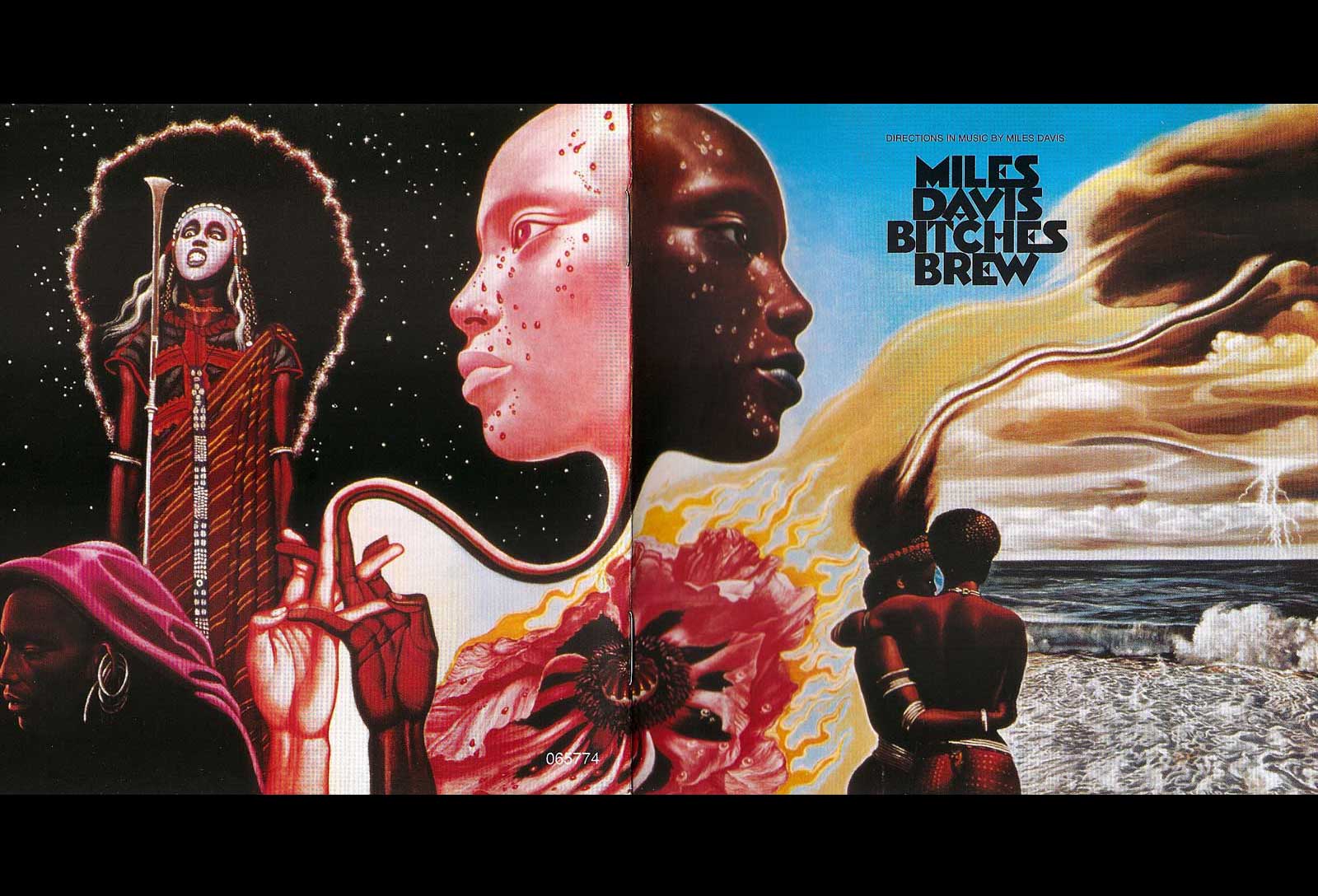
One of those landmark albums that is better appreciated in the context of the fifty years of music that followed its October 1968 release, David’s Axelrod’s first release, Song of Innocence, is an ambitious and visionary work performed by 33 top L.A. Session musicians.  A mixture of jazz, rock, world (middle-eastern), and movie-music elements, incorporating strings, horns, vibes, electric organ, drums, ear-catching electric guitar work and thick, palpable electric bass, drawing upon some of the premises of third-stream jazz, and coming only months after his earlier barrier-busting Mass in  F minor (covered here in an earlier post), Axelrod anticipates both some of the common aspects of fusion-jazz and an entire approach of music composition that was to appear so prevalently in some of the more ambitious and creative New Age albums that would appear in the 1980s.  Per the liner notes of the latest release of Songs of Innocence,  Miles Davis played the album before conceiving his own fusion of jazz and rock for Bitches Brew (1970).

Axelerod draws upon Blake’s illustrated 1789 collection of poems Songs of Innocence, for several of the tracks on the album.  Axelrod originally intended to set the text to music with a choir taking on the lyrics, but instead produced a instrumental album covering additional Blake material including his extended writings on the demiurge-like “Urizen” and his four-line “Merlin’s Prophecy” from Gnomic Verses.

As one might expect from something this boldly different, the album received  mostly negative reviews, with categorizations of pretentious and indulgent, and rock critics taking issues with the orchestral aspects and classical music critics taking issue with the electric guitar passages. “Holy Thursday”, the most jazz-fusion-like track on the album, received some airplay, but overall the album sold poorly and was generally forgotten until the 1990’s when the digital era brought out reassessments of almost all music material from the sixties and early seventies, with Songs of Innocence now receiving significant praise from websites like allmusic.com and tinymixtapes.com.  Additionally, in the 1990’s, the album attracted the attention of multiple hip-hop artists that sampled content, particularly “Holy Thursday.”

Track Listing and Personnel


DP BOT R-4611399-1412929383-2971.jpeg

Deep Purple: The Book of Taliesyn

Deep Purple’s second album, released in October 1968, takes the group one step closer to establishing an identifiable sound despite the general ecelecticism of the whole which unrestrainedly, though not recklessly, tackles hard rock, early heavy metal, psychedelic rock, and early prog.

The album starts of with the quirky homage to the Welsh 14th Century “Llyfr Taliesin” (Book of Taliesin), mixing hard rock and sixties psychedelia to support respectably decent lyrics, followed by the bluesy instrumental “Wring Thy Neck” (retitled “Hard  Road” in the US. release as an act of “corporate wisdom” censorship) including solid organ work and an indulgent, though somewhat tame, guitar solo.  Other notable tracks include the remaining original numbers, “Shield” and “Anthem” with the effective mix of hard rock and progressive elements.  The remaining tracks include a cover of a Neil Diamond song that actually got some airplay in the U.S., the Ike and Tina Turner “River Deep – Mountain High”, and the last track on the first side which covers Beethoven, Tchaikovsky and the Beatles with the treatment of the two 19th century composers faring musically better than the Lennon/McCartney interpretation.  All in all, an enjoyable album with substantial organ and guitar passages, strong vocals by Rod Evans and an effective balance between hard rock and early progressive rock, getting closer to the classic “progressive rock” sound than any album up to that point in time.

Track listing [from Wikipedia]

Side one
No. Title Writer(s) Length
1. “Listen, Learn, Read On” Ritchie BlackmoreRod EvansJon LordIan Paice 4:05
2. “Wring That Neck” (instrumental, titled “Hard Road” in the USA) Blackmore, Nick Simper, Lord, Paice 5:13
3. Kentucky Woman” (Neil Diamond cover) Neil Diamond 4:44
4. “(a) Exposition”
(b) We Can Work It Out” (The Beatles cover)
Blackmore, Simper, Lord, Paice,
John Lennon, Paul McCartney
7:06
Side two
No. Title Writer(s) Length
5. “Shield” Blackmore, Evans, Lord 6:06
6. “Anthem” Lord, Evans 6:31
7. River Deep, Mountain High” (Ike & Tina Turner cover) Jeff BarryEllie GreenwichPhil Spector 10:12


Deep Purple

SMB SailoR-1404794-1344201817-1207.jpeg

Steve Miller Band: Sailor

Though my primary source of exposure to music was, first, my dad, then my sister, then my friends, particularly the three brothers in the corner house next to ours, it was during the summer after eighth grade (1969) that I discovered the availability of albums at the local public library.  One of the first albums I checked out, was Steve Miller’s Sailor.  Fascinated by the dramatic fog-horn opening and the conscientiously paced, slightly suspenseful, early space-rock music of that first track, and further pulled in by the general accessibility and variety of the remaining tracks, I realized the value of exploring groups that were far off the radar screens of my circle of friends.

Besides the well-known “Living in the USA”, the album contains the superb ballad, “Dear Mary”, with it’s Beatlesque opening and the seven-count lengthy first note on “Dear”, the leisurely yet evocative “Quicksilver Girl” (“A lover of the world, she’s seen every branch on the tree”),  and Boz Scaggs’ “Overdrive” with its Dylanesque verses and its earthy chorus anticipating early seventies rock.

Track listing [From Wikipedia]

Side one
No. Title Writer(s) Length
1. “Song for Our Ancestors” Steve Miller 5:57
2. “Dear Mary” Miller 3:35
3. “My Friend” Tim Davis 3:30
4. “Living in the U.S.A.” Miller 4:03
Side two
No. Title Writer(s) Length
5. “Quicksilver Girl” Miller 2:40
6. “Lucky Man” Jim Peterman 3:08
7. Gangster of Love Johnny “Guitar” Watson 1:24
8. “You’re So Fine” Jimmy Reed 2:51
9. “Overdrive” Scaggs 3:54
10. “Dime-a-Dance Romance” Scaggs 3:26
Total length: 34:22

Steve Miller Band

S S 494937656_987296f5a9_b

Steppenwolf: The Second

Though not as strong as the other albums covered in this post, Steppenwolf’s second album has its moments, particularly on side two which opens with the Rolling Stone influenced “28” with its  Nicky Hopkins-like piano work.  Next is Steppenwolf’s classic “Magic Carpet Ride”, not about sex or drugs as some may infer from a casual listen to the lyrics, but about John Kay’s recently-purchased, expensive stereo system. Seriously!

“I like to dream, yes, yes,
Right between the sound machine.
On a cloud of sound I drift in the night;
Any place it goes is right —
Goes far, flies near
To the stars away from here.”

This is relevant, in the context of side two, as it opens a tribute to the blues and to blues-rock, which I suspect John Kay listened to frequently, with the opening track an authentic blues number followed by three of Kay’s compositions.

Track listing [From Wikipedia]

All music composed by John Kay, except where indicated.

Side one
No. Title Writer(s) Length
1. “Faster Than the Speed of Life” Dennis Edmonton 3:10
2. “Tighten Up Your Wig” 3:06
3. “None of Your Doing” Kay, Gabriel Mekler 2:50
4. “Spiritual Fantasy” 3:39
5. “Don’t Step on the Grass, Sam” 5:43
Side two
No. Title Writer(s) Length
6. “28” Mekler 3:12
7. Magic Carpet Ride Kay, Rushton Moreve 4:30
8. “Disappointment Number (Unknown)” 4:52
9. “Lost and Found by Trial and Error” 2:07
10. “Hodge, Podge, Strained Through a Leslie” 2:48
11. “Resurrection” 2:52
12. “Reflections” Kay, Mekler 0:43
Total length: 40:25

Steppenwolf

Fifty Year Friday: Roland Kirk, Fleetwood Mac, Marvin Gaye

Left and Right131487750 (2)

Roland Kirk: left & right

Recorded in  June 1968, left & right, is a work of passion with Roland Kirk embedding both heart and soul into this effort.  Though the title appears to be a reference to left and right political positions, it could very well reflect the impact of the one-two punch: Kirk comes at you from the left with more progressive and radical jazz and from the right with an underlying solid foundation firmly rooted in traditional jazz and blues.  If this music doesn’t knock you out, it will at least knock you off balance — not quite as personal or impressive as Kirk’s previous album, The Inflated Tear, this subsequent album holds its own, filled with moments and passages of almost startling excellence, from the string introduction of the first track, to the lengthy second track that fills up almost twenty minutes of side one, through each and every track on side two, each arranged brilliantly with their own tonal pallet and character.

The second track, “Expansions” is a near masterpiece.  It seems only marred, not so much by the inclusion of McCartney’s “Yesterday” and that haunting opening melody of Stravinsky’s “Rite of Spring”/”Le Sacre du Printemps”, but by how these two references inadvertently call attention to themselves since they are so well known. If one had never heard either of these, it’s likely they would fit into the composition and not draw a disproportionate amount of attention, and the performance would provide an interrupted, unified experience.  The historical importance of “Yesterday” and “Rite of Spring” also make me wonder a little whether these works in the context of “Expansion” and the overall left & right album are traditional, conservative, on-the-right material — or are they radical elements, particularly considering the riot during the premiere of “Rite of Spring” or the paradox of the supposedly discordant, loud and noisy rock and roll British Invaders providing “Yesterday”, one of the most beautifully, poignant ballads of the twentieth century.

The answer seems to be that left and right are at their best when they work in partnership to create something that is as special as this 1968 Roland Kirk album!

Track listing [From Wikipedia]

All compositions by Roland Kirk except as indicated.
  1. “Black Mystery Has Been Revealed” – 1:17
  2. “Expansions: Kirkquest/Kingus Mingus/Celestialness/A Dream of Beauty Reincarnated/Frisco Vibrations/Classical Jazzical/El Kirk” – 19:37
  3. “Lady’s Blues” – 3:46
  4. “IX Love” (Charles Mingus) – 3:40
  5. “Hot Cha” (Willie Woods) – 3:23
  6. “Quintessence” (Quincy Jones) – 4:11
  7. “I Waited for You” (Gil FullerDizzy Gillespie) – 2:54
  8. “A Flower is a Lovesome Thing” (Billy Strayhorn) – 3:55
  • Recorded in NYC on June 17 & 18, 1968

Personnel


Fleetwood Mac: Mr. Wonderful

On August 23, 1968 Fleetwood Mac released their second blues-based album.  Based on authentic, contemporary blues, yet not overly derivative, it’s surprising how listenable this album is.  Boosted by passionate playing and added saxophones, this album is much better than the two-star rating it gets on allmusic.com.  Yes, one’s time is probably better spent listening to the many classic blues albums and singles of the fifties, which offer much sharper musicianship than this British Blues rock band, but this is still a musically rewarding album.

Fleetwood Mac

Additional personnel

mg front R-2062855-1351248963-1394.jpeg

Marvin Gaye: in the Groove (I Heard It Through the Grapevine)

Whereas Fleetwood Mac continue to look back in time with their second album,   Marvin Gaye and team creates modern music moving forward the continuing development of contemporary pop.  Revisiting this music after so many intervening years provides some nostalgic indulgence but that is overshadowed by the musical artistry of Marvin Gaye and the quality of the arrangements and general production.  “I Heard It Through The Grapevine” is the Motown equivalent of an operatic aria with Marvin Gaye at his expressive best, providing a timeless interpretation of this fairly straightforward Strong and Whitfield classic.

mg15699794085_d345e16385_b

Track listing [from Wikipedia]

No. Title Writer(s) Length
1. You Jeffrey Bowen, Jack Coga, Ivy Jo Hunter 2:25
2. “Tear It on Down” Nickolas AshfordValerie Simpson 2:35
3. Chained Frank Wilson 2:38
4. I Heard It Through the Grapevine Barrett StrongNorman Whitfield 3:14
5. “At Last (I Found a Love)” Marvin Gaye, Anna Gordy GayeElgie Stover 2:37
6. Some Kind of Wonderful Gerry GoffinCarole King 2:19
7. Loving You Is Sweeter Than Ever Ivy Jo HunterStevie Wonder 2:43
8. “Change What You Can” Marvin Gaye, Anna Gordy Gaye, Elgie Stover 2:37
9. “It’s Love I Need” Stephen Bowden, Ivy Jo Hunter 2:54
10. “Every Now And Then” Eddie Holland, Frank Wilson 3:06
11. “You’re What’s Happening (In The World Today)” George Gordy, Robert Gordy, Allen Story 2:19
12. There Goes My Baby Benjamin Nelson, Lover Patterson, George Treadwell 2:24

Personnel

Marvin Gaye & Tammi Terrell: You’re All I Need

Marvin Gaye and Tammi Terrell released their album “You’re All I Need” around the same time as the release of Marvin Gaye’s in the Groove.  Not as strong as in the Groove, it does contain the wonderful “You’re All I Need to Get By“, and the combination of the two vocalists throughout the album, even on lesser material, is something special.  Recorded shortly after Tammi Terrell had her first of several surgeries to treat an unyielding brain tumor, this album effectively captures her vocal excellence as she so tragically approaches the end of her career and her irreplaceable, beautiful life.

Track listing [from Wikipedia]

Side one

  1. Ain’t Nothing Like the Real Thing” (Nickolas Ashford, Valerie Simpson)
  2. Keep On Lovin’ Me Honey” (Ashford, Simpson)
  3. You’re All I Need to Get By” (Ashford, Simpson)
  4. “Baby Don’t Cha Worry” (Johnny Bristol, Jackie Beavers)
  5. “You Ain’t Livin’ ‘Til You’re Lovin'” (Ashford, Simpson)
  6. “Give In, You Just Can’t Win” (Harvey Fuqua, Bristol)

Side two

  1. “When Love Comes Knocking At My Heart” (Fuqua, Bristol, Gladys Knight, Vernon Bullock)
  2. “Come On and See Me” (Fuqua, Bristol)
  3. “I Can’t Help But Love You” (Robert Gordy, Thomas Kemp, Marvin Gaye)
  4. “That’s How It Is (Since You’ve Been Gone)” (Fuqua, Bristol, Bullock)
  5. “I’ll Never Stop Loving You Baby” (Fuqua, Bristol, Beatrice Verdi)
  6. “Memory Chest” (Fuqua, Bristol)

Personnel

Fifty Year Friday: Roy Ayers, Stoned Soul Picnic; Eric Burdon & The Animals, Every One of Us

Stoned Soul Picnic.jpeg

About the time that the Fifth Dimension released their single of Laura Nyro’s “Stoned Soul Picnic”, Roy Ayers recorded tracks for his second album on June 20, 1968  that included Nyro’s tune and would be named for that song. The session and the released album also included three originals, Jobim’s “Wave” and Ron Miller and Orlando Murdon’s “For Once in My Life” (previously recorded by Tony Bennett [#91 on the pop singles chart] and several Motown Artists including the Temptations, before Stevie Wonder’s hit version would be released later that year.) Sometimes these jazz covers of pop hits are just a waste of time to listen to, but not here.

Roy Ayer’s opens the album with his own composition, “A Rose for Cindy”, which starts off like free jazz before dissolving into a sensual chromatic passage that precedes the main section of a thoughtful and introspective ballad.  Notable here is the excellent soloing and interplay between the participants. Hubert Laws and Herbie Hancock are both particularly attuned to the character of the piece and provide an appropriate, impressionistic sensibility that make this the most memorable track on the album.

“Stoned Soul Picnic is vibrant and funky with Evan’s mallet work, Law’s flute, Ron Carter’s bass, Hancock’s keyboard work (he plays what sounds like a Hammond B-3) and Charles Tolliver’s trumpet essential to the sense of freedom and exuberance that permeates this version.  This is followed by a surprisingly engaging and inescapably immersive version of  “Wave” with Miroslav Vitouš replacing Ron Carter for the rest of the album, and strong solos from Gary Bartz and, as the case on every track here, Herbie Hancock.

“For Once in My Life” is treated tenderly. but not over-delicately, followed by Tolliver’s upbeat “Lil’s Pardise” highlighted by Ayer’s vibe solo and Hancock’s piano solo.  The album concludes with Edwin’ Birdsong’s evocative “What the People Say” with introspective yet enchanting solos by Ayers and Laws. Overall, an excellent post-bop album characterized by overall beauty and unaffected optimism.

Track listing [from Wikipedia]

  1. “A Rose for Cindy” (Roy Ayers) – 8:56
  2. Stoned Soul Picnic” (Laura Nyro) – 2:50
  3. Wave” (Antônio Carlos Jobim) – 7:59
  4. For Once in My Life” (Ron Miller, Orlando Murden) – 3:50
  5. “Lil’s Paradise” (Charles Tolliver) – 6:33
  6. “What the People Say” (Edwin Birdsong) – 8:09

Personnel

animals eoou.jpeg

This is not a particularly strong album by the Animals. Listening to this today, it seems there is more filler than essential components, though the political statement Burdon makes on side two is pretty remarkable given the inherent expectations by the record label for a high level of commercial appeal from a group as well known as this.  And there is commercial appeal in “White Houses”, which hints at Caribbean rhythmic and melodic influences, and in the group’s initially very dark, then bluesy and rocking rendition of “St. James’ Infirmary”, a follow-up of sorts to the groups’ very successful version of “The House of the Rising Sun.”

The main item of note, particularly for historical interest, is Burdon’s “Year of the Guru” somewhat modeled after Dylan’s  “Subterranean Homesick Blues”, but with more of a rock than folk character — sounding more like rap music than can reasonably be expected for 1968.  Certainly there are other cases for early “proto-rap”, but “Year of the Guru” sounds too much ahead of its time instrumentally and vocally to be categorically overlooked, particularly in light of the social commentary of the lyrics:

“My leader said son you’d better get yourself together
Never mind the fools who know what we’re getting into
But a forty mile walk would do us both a world of good
And he sat down and watched me take off down the road.”

…..

“Now here I sit in a state-run asylum
Limitless, friendless but much more together
I decided to do some good book readin’
About the art of people leadin’
Now I’m the leader and they’re being led
What’s the matter if they’re crazy till you hear what I’ve said
Being the leader is really where its at
But just how long can a good thing last
Oh, oh leader
Oh, oh leader
Now listen to this baby
This is the year of the guru
Now the thing to do is to ask yourself
What can a guru do for me?
Then you say to yourself
I gotta get a guru”


Track listing [from Wikipedia]

All selections written by Eric Burdon except where indicated.

Side 1 

  1. White Houses” (4:43)
  2. “Uppers and Downers” (0:24)
  3. “Serenade to a Sweet Lady” (John Weider) (6:17)
  4. “The Immigrant Lad” (6:15)
  5. “Year of the Guru” (5:25)

Side 2 

  1. St. James Infirmary” (Traditional, arranged by Eric Burdon) (4:15)
  2. “New York 1963-America 1968” (Eric Burdon, Zoot Money) (19:00)

Personnel