Zumwalt Poems Online

Posts tagged ‘History’

Century Sunday: 1925; Louis Armstrong and his Hot Five; Berg: Wozzeck

Louis Armstrong and his Hot Five, Duke Ellington, and a wealth of other great music.

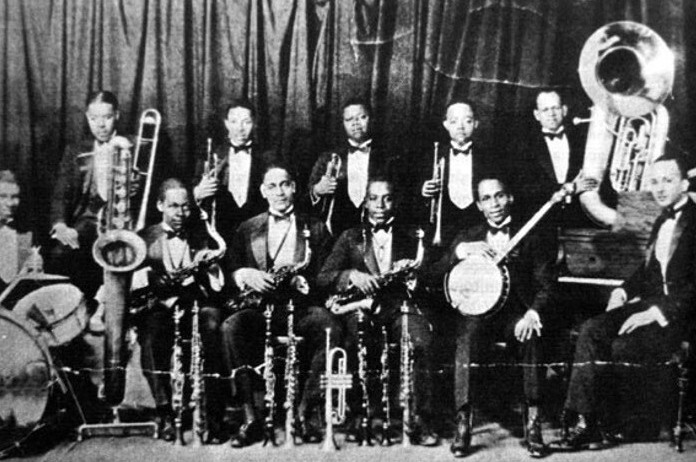
In 1925, recording technology continued to improve with jazz bands across the USA making their first recordings, even if it was only one double-sided 78 record.

1925 was the year Armstrong transitioned from being the greatest 1920s jazz sideman to a leader of his own group. He began the year in New York with Fletcher Henderson and ended it in Chicago recording the first “Hot Five” tracks starting in November — some of my favorite jazz recordings of all time, and generally recognized as highly treasured musical landmarks.

Other notable names made recordings this year: the trumpeter Bix Beiderbecke, Fats Waller, Duke Ellington with his group The Washingtonians, Bessie Smith, and Ethel Waters. The sides they recorded are still musical gems a hundred years later.

Lesser names recorded, of course. Some had big hits, including Ben Bernie and His Hotel Roosevelt Orchestra’s original hit recording of “Sweet Georgia Brown” and Paul Whiteman’s symphonic jazz version of James P. Johnson’s “Charleston,” which became a popular representation of the vitality and character of the “Roaring Twenties.”

There were many lesser names with less known recordings that are worth checking out including the Original Crescent City Jazzers recording “Christine” and The Halfway House Orchestra’s “Pussy Cat Rag.” Yes, we still had rags being featured in both jazz and in written concert hall music, but ragtime was now a historical style, and most pieces titled rags in 1925 were jazz and not ragtime.

1925 was a diverse and productive year for concert hall music including George Gershwin‘s Piano Concerto in F, Edgard Varèse‘s Intégrales ,and Alban Berg‘s masterpiece, the opera Wozzeck.

Even rock fans will find 1925 abundant with gems that they would likely appreciate: “Cow Cow Blues” by Dora Carr and Cow Cow Davenport which is a blues recording enlivened with early elements of boogie woogie as well as Blind Lemon Jeffersons first recordings including “Black Horse Blues.” At the same time, many recordings of “pre-bluegrass” and “pre-country” music were recorded including Charlie Poole’s unrelenting, banjo-driven “Don’t Let Your Deal Go Down Blues” with traditional fiddle and rhythmic acoustic guitar.

All in all, 1925 had a wealth of music that any music lover can spend a few weeks, if not a full year, exploring.

There is no “i” in Phalanx

There is no “i” in Phalanx

Across calescent karstic plains,
attentive, observant, at walking pace,
searching
for a more than suitable place
to play these noble and momentous games,

purposely, resolutely stopping at this very ground
we converge and then assemble in formation
deliberately
aligning and establishing our corresponding location
shields brought up and eyes directed all around.

There is no certified start to victory.
There is no established end to self-defeat.
There is no single push that doesn’t come down to shove,
after which we hold, advance or consider our retreat.

The battle starts and shields meet shields
as outer layer on outer layer peels off and drops;
advancing
forward with counter-jabs and counter-blocks,
the winning forces shed more blood as the losing army yields.

There is no I in Phalanx.
There is no me in attack.
There is no volition in my ammunition
but there is no heading back.

As victor forces scatter defeated ranks
fallen bodies insist on being active players
incidentally
tripping up their remaining slayers
prolonging this conflict with mutilated arms, twisted torsos and lifeless shanks.

There may be stop but there is no end
and some sense of quiet but never peace.
There is some faint attempt to circumvent
but there is no means to cease.

And two thousand years later
archeologists dig for artifacts
and scour the settled ground
in which is conceivably found
the trace of the last impact.

This is what was left behind
and not much more
but then, what will be left again
when two thousand more years occur
and someone else digs around
excavating some hint of a sign
of those that previously searched these dusty mounds?

At some future moment this is all totally untraceable,
the conclusion of which is particularly inescapable:
no matter the plan or materiel,
all efforts are unavoidably replaceable
but much more to the point,
everything,
chalked up or not,
is ultimately and permanently erasable.

— Zumwalt (2011)