Zumwalt Poems Online

Posts tagged ‘Fifty Year Friday’

Fifty Year Friday: Uncle Meat, With a Little Help from My Friends, On the Threshold of a Dream

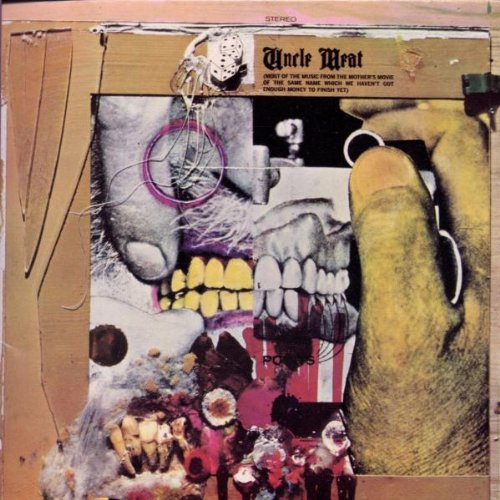
uncle meat

The Mothers of Invention: Uncle Meat

Frank Zappa continues to challenge the boundaries of commercial music, producing an audio collage of breathtakingly fresh music, snippets of musique concrète, and dialogue from his unfunded movie.

Recorded from September 1967 to September 1968 and released on April, 21, 1969, Uncle Meat is a particularly colorful album on a number of levels besides just the colorful dialogue included.  Zappa aggressively and artfully deploys twelve-track recording and speed alterations to affect the timbre and character of voices and instruments, creating a clearly contemporary work not possible just a few years earlier.

This is album is a barrel-full-of-monkeys fun to listen to with the highlights including the title theme, Ian Underwood’s keyboards and sax contributions, “Mr. Green Genes”, and the King Kong tracks on side four of the original LP.


Joe_Cocker-With_a_Little_Help_from_My_Friends_(album_cover)

Joe Cocker: With a Little Help from My Friends

In 1969 and in the early seventies, I not only unsympathetically and almost unequivocally dismissed any version of a Beatles song not performed by the Beatles, but its accurate to say that I generally formed a dim view of any performer making such an attempt.  And so my first impression of Joe Cocker was particularly negative when I heard his version of “With a Little Help From My Friends” on AM radio and later saw Cocker perform on television.

Wisdom and time has helped me overcome this teenage bias, and as a musically mature adult, I actually respect anyone with enough nerve (or even recklessness) to do a cover of one of the Beatles classics.  If they do it well, that is, they deserve my respect; looking back on Cocker’s rendition of one of the last of McCartney and Lennon’s true collaboration’s, “With A Little Help From My Friends”, and comparing it against Ringo’s vocals, I must admit that Cocker and his backing musicians pull this off pretty nicely.

In fact, the whole album is pretty good, with some original tracks along with a diverse set of covers including the well-known and often recorded 1926 composition, “Bye, Bye Blackbird” as well as a couple of Dylan covers.  Cocker and back-up singers team up with musicians as capable and as well respected as Albert Lee, Jimmy Page and Stevie Winwood, taking Cocker’s debut album as high as the thirty-fifth spot on the billboard chart.


threshold of a dream.jpeg

The Moody Blues continue with their signature style of music crafting an album that encompasses elements of the past, present and future:  “To Share Our Love” harkens back to 1966 British Beat music, “Send Me No Wine” is country rock with an English accent, and “The Voyage” is an exploration into the territory of progressive rock.

Recorded in the first two months of 1969, and released in the UK in April of 1969  and in the US in May of 1969, On the Threshold of a Dream quickly reached the number one spot on the UK album charts by May 4, 1969, staying there for a couple of weeks.  There are some that would profess this to be the first progressive rock album to claim the number one spot, but to my mind that distinction either belongs to the Beatles’ 1967 Sgt Pepper’s album or ELP’s 1971 Tarkus, depending on how stringently one defines progressive rock.  That said, it is a tribute to British taste how well this album did, particularly since its best mark on the US charts was the twentieth spot occurring the week of July 26, 1969.

Though the Moody Blues is not one of my favorite bands, and one that I rarely listen to today, I am always impressed by their dreamy, evocative artistry that unfailingly creates a consistent, though often varied, mood — an enveloping, trademark mood providing a generally calming, mystical musical palette distinct from that of other bands of that era.  Pay particular attention to the ethereal flute and oboe provided by Ray Thomas and the cello and mellotron contributions from Pinder, Hayward and Lodge.

Track listing  [From Wikipedia]

Side A

#

Title

Writer(s)

Lead vocals

Length

1.

In the Beginning Graeme Edge Hayward, Pinder, Edge (narration)

2:08

2.

Lovely to See You Justin Hayward Hayward

2:35

3.

Dear Diary Ray Thomas Thomas

3:56

4.

Send Me No Wine John Lodge Hayward, Lodge, Thomas, Pinder

2:20

5.

To Share Our Love Lodge Pinder

2:54

6.

So Deep Within You Mike Pinder Pinder

3:07

Side B

 #

Title

Writer(s)

Lead vocals

Length

1.

Never Comes the Day Hayward Hayward

4:43

2.

Lazy Day Thomas Thomas

2:43

3.

Are You Sitting Comfortably? Hayward, Thomas Hayward

3:29

4.

The Dream Edge Pinder (narration)

0:57

5.

Have You Heard (Part 1) Pinder Pinder

1:30

6.

“The Voyage” Pinder  

3:58

7.

Have You Heard (Part 2) Pinder Pinder

2:32

The Moody Blues Personnel

Justin Hayward – vocals, guitars, cello, mellotron on “Never Comes the Day”
John Lodge – vocals, bass guitar, cello, double bass
Ray Thomas – vocals, harmonica, flute, tambourine, oboe, piccolo
Graeme Edge – rums, percussion, vocals, EMS VCS 3
Mike Pinder – vocals, mellotron, Hammond organ, piano, cello

Fifty Year Friday: Overcast, With a Chance of Showers

oc2covervfinal

Overcast: With A Chance of Showers

Trevor Stuart arrived in the United States at the age of fifteen in 1965 when his mother,  accepted a teaching post at Pierce College — Dr. Catherine Stuart becoming only the third female mathematics professor at a California college.  Trevor’s father, an electrical engineer and sometimes studio pianist, stayed in London, for several months, eventually joining Trevor and Catherine after getting landing a job as production engineer at Capitol records.

Like his mother and father, Trevor had received classical piano lessons starting at an early age, and around the middle of 1968, started getting uncredited work on an occasional rock or pop album as well as providing piano and electric organ for small ensembles recorded by Jazzco, a Muzak-like provider of  commercial background music. It was late 1968 when Trevor Stuart and Overcast singer and guitarist Bill Fortney first met while standing in line at the Troubadour club, when Fortney bemoaned the lack of success in finding a suitable replacement for guitarist Greg Paulson, who, convinced that Overcast best days were behind them, had taken a full time position at the Orange County Kimberly-Clark paper products plant.

Stuart asked a few questions about this band he had never heard of and then gave it no more thought until January 1969 when he noticed an entry for Overcast in the recording schedule at the La Brea Recording Studios immediately after a session he was sitting in on.  He stayed around to say hello to Fortney; the Overcast leader had arrived with Douglas Brandt and David Amato and it was clear that Fortney was a bit distracted.  It turned out that David Amato had broken up with Claire Stanston who, along with tenor saxophonist Rick Stephenson, would help fill in the void for guitarist Greg Paulson.  It was bad enough that Stanston didn’t want any thing whatsoever to do with Amato, but this was compounded with Rick Stephenson immediately taking an interest in Claire and determining that time spent with Overcast could hardly compare to any anticipated time spent with Claire.

It was at this point that Stuart allegedly said he would have a go at it, informing a surprised Overcast that he could play keyboards and could quickly pick up tunes, particularly if Overcast would call out the chords if the music got tricky.

Fortunately, there wasn’t anything particularly tricky in Overcast’s current set of tunes and within the next three sessions,  Overcast had laid down their second album, recorded on January 11, 17 and 18, 1969 and released on the first of April of that year.

David Amato, once again suggested the title for the album, and this time Elektra acquiesced.  However, they weren’t too keen on Amato’s suggestion for the cover of “With a Chance of Showers” — a photo of a bikini-clad model in the shower.  Neither did they go for Amato’s suggestion of a photo shoot of the band in bathing suits in the Fullerton Junior College Locker Room showers — with or without accompanying bikini-clad models.  Brandt suggested reusing the same album cover used for the first album, but with the new title added, and though this was also rejected by Elektra, a similarly looking cover, but of a somewhat lower quality, was quickly created at the last moment.

Also occurring at the last moment was Elektra’s decision to not include the song, “Better Yet”, later released on their third album, due to its lyrics which included lines like “Is there anything you’d rather get than your sugar daddy’s red corvette’ and “Am I better, better, better yet, am I better than a cigarette?” causing the band to quickly come up with “Huntington Beach Baby Blues.”  Notably, also added in that January 18th recording session, was Stuart’s psychedelic-rock version of the chord progression of Irving Berlin’s Blue Skies, with title based on Thelonious Monk’s own version of that same tune titled “In Walked Bud.”  Not censored, were any of the lyrics in “The Hallway Episode”, which included in the chorus,  “I can see, you and me, doing what we want in the hallway.”  The ideas of photo shoots with scantily clad models, as well as the lyrics in “Better Yet” and “The Hallway Episode”, all same quite tame by today’s standards,  would soon become commonplace starting in the 1970s — but for now, Frank Zappa and the Mothers of Invention excepted, this was still 1969 and Overcast was just another local band trying to make the big time by any means available, quietly giving in to the judgment of a randomly assigned Elektra representative regarding what was appropriate and what was not.  That would soon change with the poor sales of this second album and Elektra’s lack of interest in funding a third album.

all tracks written by Bill Fortney and Douglas Brandt except where noted.

Side A

No.

Title

Length

1.

“Sand, Wind, Water and You”

5:10

2.

“Chemistry with Kimberly”

3:22

3.

“Choice Decisions Left Alone”

3:50

4.

“Huntington Beach Baby Blues” (Fortney, Brandt, Amato, Stuart)

3:43

5.

“Pancake Breakfast”

4:47

Side B

No.

Title

Length

6.

“Another message for the masses”

7:02

7.

“The Hallway Episode”

3:15

8.

“Sheila Said”

4:50

9.

“Twentieth Century Overload”

3:43

10.

“In Walked Mud” (Trevor Stuart)

3:03

Personnel

Overcast

  • Bill Fortney – guitar, lead vocals
  • Douglas Brandt – bass guitar, vocals
  • Trevor Stuart, hammond organ, electric piano
  • David Amato, drums

Fifty Year Friday: The Canterbury Scene: Soft Machine and Caravan first albums

Establishing the starting point of progressive rock is a hopeless cause since elements of progressive rock appear in bits in pieces long before a general progressive rock style.  The best one can do is try establish the earliest date of the first progressive rock group. Some might argue that such an “earliest date” is established by the formation of the Wilde Flowers, a group of jazz-leaning musicians that took a crack at British Rock and Roll in 1964 and developed a more-or-less accessible, and even partly danceable style of music that foreshadows the music of the Canterbury scene — easily enough explained by the members of the Wilde Flowers all taking prominent roles in these later groups. Though no albums were recorded, we have a set of demos that have been released on CD and are currently available on You Tube.  Keep in mind that these were demos and not particularly representative of Wilde Flower live performances, which included some jazz-based improvisation.

Though I prefer to keep my distance from the term “progressive rock” as a label for a style of music, I support a concept of progressive rock representing the pushing of boundaries of status-quo music and breaking free of the constraints of commercial expectations, particularly when commercially successful as in the case of songs like the Queen’s “Bohemian Rhapsody.”  This means that any rock music, whether by the Beach Boys, the Beatles, Jefferson Airplane, The Doors, The Zombies or some other group from the mid or late sixties that goes past the minimal expectations of pop/rock to explore the passageways that naturally and unnaturally twist and spiral out into Robert Frost’s road not taken.  This is also why I am hesitant to consider some of the “neo-progressive” rock bands as notably progressive — such a use of the “progressive” label creates the ironic condition when applied to today’s musicians, of being indicative of a lack of progressiveness as they are trying to recreate an older style as opposed to pushing out to new territories. However, that said, quality and excellence is a more welcome and appealing feature in any music over progressiveness for the sake of sounding or being progressive. I will more readily listen to the post-romantic British symphony composers of the early twentieth century over many of their contemporary atonal composers.

The Wilde Flowers

Band members included, at various times:

softm1MI0001896961

The Soft Machine: The Soft Machine

The Soft Machine, named after the 1961 novel by William S. Burroughs (titled based on the nature of the human body) started as a quartet in 1966 that included Robert Wyatt and Kevin Ayers from the Wilde Flowers, and classically-trained keyboardist Mike Ratledge and guitarist Daevid Allen from the free-jazz group Daevid Allen Trio. Following a European tour in August 1967, Allen, an Australian, was refused re-entry into Britain due to a previous overstay on an earlier visit.  Allen returned to Paris, to later form the group Gong, leaving Soft Machine a trio. On the first Soft Machine album we also have  Brian Hopper and Hugh Hopper, prior members of The Wilde Flowers, appearing in the writing credits.

This first Soft Machine album is a mixture of psychedelic rock and jazz elements as in tracks like “Joy of a Toy”, based on “Joy to The World” and sounding more like early space rock than Christmas music. Robert Wyatt makes up for any shortcomings as a vocalist with his contributions on drums.

Interestingly, the post of this first Soft Machine album on YouTube (link) has a Dislike to Like ratio of .0257 in the same ballpark of the Beatles’ Sgt. Peppers (link) ratio of .0254 — compare that to the Beatles’ Abbey Road ratio of .15 (link) or Gentle Giant’s Free Hand of .030 (link)

Track listing [from Wikipedia]

Side one
No. Title Writer(s) Length
1. “Hope for Happiness” Kevin AyersMike RatledgeBrian Hopper 4:21
2. Joy of a Toy Ayers, Ratledge 2:49
3. “Hope for Happiness (Reprise)” Ayers, Ratledge, B. Hopper 1:38
4. “Why Am I So Short?” Ratledge, Ayers, Hugh Hopper 1:39
5. “So Boot If At All” Ayers, Ratledge, Robert Wyatt 7:25
6. “A Certain Kind” H. Hopper 4:11
Side two
No. Title Writer(s) Length
7. “Save Yourself” Wyatt 2:26
8. “Priscilla” Ayers, Ratledge, Wyatt 1:03
9. “Lullabye Letter” Ayers 4:32
10. “We Did It Again” Ayers 3:46
11. “Plus Belle qu’une Poubelle” Ayers 1:03
12. “Why Are We Sleeping?” Ayers, Ratledge, Wyatt 5:30
13. “Box 25/4 Lid” Ratledge, H. Hopper 0:49

The Soft Machine

Additional personnel

caravan R-11701362-1520895436-5771.jpeg

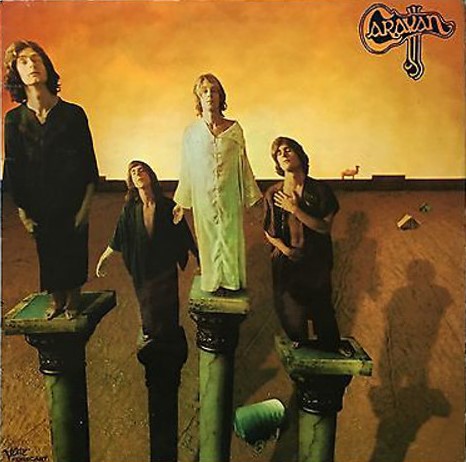
Caravan: Caravan

Also made up of band members from The Wilde Flower (Pye Hastings, David and Richard Sinclair, and drummer Richard Coughlan), Caravan started up in 1968 and released their first album about the same time as Soft Machine’s first album.  This would be the first British group signed to Verve records, the famed American Jazz label founded in 1956 by Norman Granz that not only carried the most jazz titles in their catalog of any label, but also was home to Frank Zappa and The Velvet Underground.

Even if one is able to somehow dismiss the first first two Nice albums or the first Soft Machine album as qualifying as fitting into the progressive rock genre classification (once again, I am making a distinction between between being considered progressive rock music and being classified under the prog-rock label), it is much more difficult to dismiss this first Caravan album. It is unfortunate that the balance and mixing of this album is dodgy at best, but the music more than compensates for this otherwise serious failing.

“Place of My Own” with its alternation between the dreaminess of impressionism and the insistent forward progress of a march creates a whole organic work of four minutes that is comparable in substance to a similar length classical or jazz track. With liberal use of keyboard arpeggios and emphasis on the instrumental section over the lyrics, Caravan creates an overall mood and character to the entire work giving it is own identity as effectively as bands like Yes and Genesis would do to many of their songs on their early albums.  This is followed by the Indian-influenced instrumental, “Ride”, the effective forward-moving and sometimes beautiful “Love Song with Flute”, and the quirky, mostly psychedelic Cecil Rons. ” However, the most notable piece is the nine-minute “Where but for Caravan Would I” which is co-written by Caravan and Brian Hopper (who also co-authored some of the tracks on the first Soft Machine album.)  It is epic in nature,  starting off with a relatively simple section, repeated, that modulates to a short contrasting section that quickly returns to the original section again before breaking out into a furious instrumental section dominated by organ that again returns to the original key and the altered and more intense original theme, which is followed by a more complex rhythmical section that nicely functions as the coda to bring the work to a satisfying and complete conclusion.  This is a template for the prototypical prog-rock track, laid bare without any unnecessary frills or complications, something easily grasped and enjoyed, and available to be copied with endless variation and development.  Yes, later groups would move well beyond this, but Caravan provides the necessary starting point — and though it may not so much have influenced other groups as much as it was just an instance of the parallel development of the post-psychedelic rock groups that got their start at the end of the late sixties, it is as an impressive example of the relentless nature of this new music to carve out its own language and means of expression from the available languages and expressions readily available in the diverse music of that time.

Track listing [from Wikipedia]

All tracks credited to Sinclair, Hastings, Coughlan & Sinclair except “Where but for Caravan Would I?” which is written by Sinclair, Hastings, Coughlan, Sinclair and Brian Hopper.

Side One

#

Title

Length

1.

“Place of My Own”

4:00

2.

“Ride”

3:41

3.

“Policeman”

2:45

4.

“Love Song with Flute”

4:09

5.

“Cecil Rons”

4:05

Side Two

#

Title

Length

1.

“Magic Man”

4:01

2.

“Grandma’s Lawn”

3:23

3.

“Where but for Caravan Would I?”

9:01

Caravan

  • Pye Hastings – lead vocals (side 1: 1-2, 4), co-lead vocals (side 1: 5 & side 2: 1, 3), guitars, bass guitar
  • Richard Sinclair – lead vocals (side 1: 3 & side 2: 2), co-lead vocals (side 1: 5 & side 2: 1, 3), bass guitar, guitar
  • Dave Sinclair – organ, piano
  • Richard Coughlan – drums


Side Note:

Interestingly, the post of this first Soft Machine album on YouTube (link) has a Dislike to Like ratio of .0257 in the same ballpark of the Beatles’ Sgt. Peppers (link) ratio of .0254 — compare that to the Beatles’ Abbey Road ratio of .15 (link) or Gentle Giant’s Free Hand of .030 (link)  

Caravan’s first album Dislike to Like Ratio on Youtube (https://www.youtube.com/watch?v=Bt1inf8CRnE&list=PLALZtwXPtUFKvbI7h8Fc5CdqRYoI_qyyd) is .0028 — or 356 likes to only one Dislike — rather unheard of in youtube land.

Fifty Year Friday: Chick Corea, Hugh Masekala

chickcorea now heMI0001714558

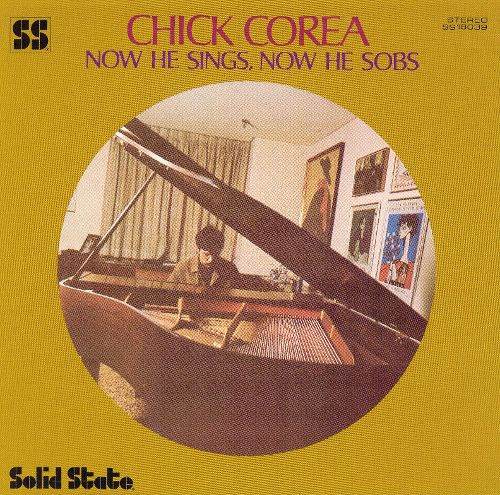
Chick Corea:  Now He Sings, Now He Sobs

At age twenty-eight, Chick Corea had already made serious contributions on studio dates with Herbie Mann, Hubert Laws, Cal Tjader, Dave Pike, Donald Byrd, and Stan Getz often contributing arrangements as well as playing piano.  He had also recorded his first solo album in 1966, Tones for Joan’s Bones, with Woody Shaw on trumpet, which was released in April 1968.

Corea started playing piano at age four, developing not only impressive piano skills, but a passionate love for both classical and jazz music.  This mastery of the two genres is apparent in this album, the format of jazz trio working well in terms of emphasizing the piano part and facilitating optimal engagement between a small set of artists.

“Steps –  What Was” starts with piano solo soon joined by veteran Roy Haynes on drums and twenty-year old Czech classically-trained Miroslav Vitouš on acoustic bass.  The work brims with enthusiasm and freshness and, after a brief drum solo by Haynes and before a bass solo by Vitouš, is a wonderful piano-led passage that reveals an early version of Corea’s “Spain” theme.

“Matrix’ includes a brief statement of the theme and a wild ride of head-spinning improvisation, again including room for statements by Vitouš and Haynes.

The next two tracks take their title from the explanation of the third line of the  Kung Fú (Inmost Sincerity) hexagram   in the ancient Chinese Book of Changes, The I Ching, roughly translated as “Now he beats his drum, and now he leaves off. Now he weeps, and now he sings.”  These two works are very different with “Now He Sings, Now He Sobs”, being generally forward-looking, energetic and optimistic and “Now He Beats The Drum, Now He Stops” being more of a two-part composition, with the first section, a piano solo, full of reflection and inner-doubt, and the second section surging with revitalization and purpose.
The last track, “The Law Of Falling And Catching Up” is a free-jazz excursion with Corea directly accessing the strings of the grand piano.  Somewhat pointillistic and Webern-like, the piece is sweeping in texture and content yet, at under two and half minutes, compact and focused.

Track listing [from Wikipedia]

  1. “Steps – What Was”
  2. “Matrix”
  3. “Now He Sings, Now He Sobs”
  4. “Now He Beats The Drum, Now He Stops”
  5. “The Law Of Falling And Catching Up”

Personnel


Hugh Masekala: The Promise of the Future

Though sometimes Masekala’s work gets categorized as “Easy Listening”, this album contains some fine jazz and early world-fusion with Masekala providing quality trumpet with fine supporting musicians including uncredited folk-revival guitarist Bruce Langhorne.  Baby Boomers will recognize the instrumental  “Grazing in the Grass”, which went to the top of the charts, and was later revisited by The Friends of Distinction with added vocals.  Also notable is the reflective, meditative rendition of Traffic’s “No Face, No Name And No Number”, Miriam Makeba’s “Bajabule Bonke” and Masekala’s own “Almost Seedless.”

Track listing [From Wikipedia]

No. Title Writer(s) Length
1. Ain’t No Mountain High Enough Nick AshfordValerie Simpson 2:00
2. “Madonna” Al Abreu 3:10
3. “No Face, No Name and No Number” Jim CapaldiSteve Winwood 3:26
4. “Almost Seedless” Hugh Masekela 3:36
5. “Stop” Jerry RagovoyMort Shuman 2:35
6. Grazing in the Grass Harry Elston, Philemon Hou, Hugh Masekela 2:40
7. “Vuca” (Wake Up) Hugh Masekela 3:40
8. “Bajabule Bonke” (The Healing Song) Miriam Makeba 6:25
9. “There Are Seeds To Sow” (Guitar – Bruce Langhorne) Hugh Masekela 2:25

Personnel

Fifty Year Friday: Nico, The Marble Index; Frank Zappa & The Mothers of Invention, Cruising with Ruben and the Jets

nicomain_1358103311_crop_640x480

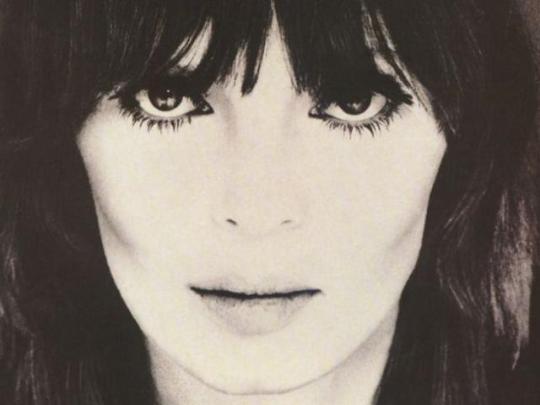
Nico: The Marble Index

Quite a contrast to her first album, The Marble Index is a true art-rock album, sounding more like a collection of twentieth century classical leider than a follow-up to her relatively accessible first album.  Her intonation and singing is also better as she navigates nicely against her harmonium accompaniment and John Cale’s detailed arrangements.

Track listing [From discogs.org]

All tracks written by Nico.

Personnel 

  • Words and music – Nico
  • Arrangements – John Cale
  • Producer – Frazier Mohawk
  • Production supervisor – Jac Holzman
  • Engineer – John Haeny
  • Photography – Guy Webster
  • Design – Robert L. Heimall
  • Art direction – William S. Harvey

FZCS633669-01A-BIG

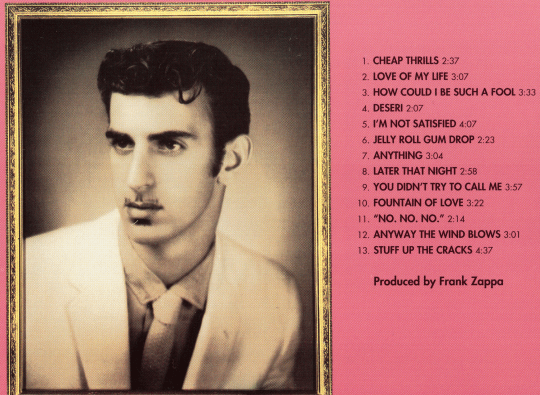
Frank Zappa & The Mothers of Invention: Cruising With Ruben & The Jets

I heard this album in the summer of 1969, and honestly didn’t know what to make of it: was it a satire of fifties music or an homage? I had several 45 singles from the late fifties that I received as gifts from my grandfather whose worked at Firestone Tire and Rubber Company, a forty acre complex in South Gate, California.  I don’t know how he got all these free 45s, but figured it had something to do with his work at Firestone;  many were marked as “Promotional” or “Promo”, and these various 45s, on a wide array of different record labels, provided me with an rudimentary education of fifties hits (and I believe misses, for most of this music I have never heard again since I listened to it as a child) that I am thankful for today.

So listening to this Cruising With Ruben & The Jets album for the first time at my cousin’s shared college-vicinity apartment in Sonoma County, having taken in the earlier Zappa albums there, this was a very confusing contrast to their other material.

Listening to it again, for the first time in forty-nine years, and fifty years after its initial release on November 2, 1969, I better appreciate the songwriting and solid musicianship.

And I am not so puzzled, I think.

This concept album about a fictitious band from Chino, California that eschews the modern rock of 1968 to play fifties music is both a tribute to fifties music and a satire of fifties music.  This well-balanced mixture of reverence and parody is not a characteristic of all satires.  Some satirical representations or portrayals are just totally fine with mocking, ridiculing, and belittling, and the worst examples do so with little regard towards faithfulness or accuracy.  But it seems the best satirical music, from PDQ Bach to The Ruttles to Cruising With Ruben and the Jets, are works of love, celebrating the artistic strengths as well as the individual idiosyncrasies of their target and touching our hearts as well as bringing a smile to our faces.

cropped back out.png

Track listing [From Wikipedia]

All tracks written by Frank Zappa except as noted.

Side one
No. Title Writer(s) Length
1. “Cheap Thrills” 2:23
2. “Love of My Life” 3:10
3. “How Could I Be Such a Fool” 3:35
4. “Deseri” Collins, Paul Buff 2:07
5. “I’m Not Satisfied” 4:03
6. “Jelly Roll Gum Drop” 2:20
7. “Anything” Collins 3:04
Side two
No. Title Writer(s) Length
8. “Later That Night” 3:06
9. “You Didn’t Try to Call Me” 3:57
10. “Fountain of Love” Zappa, Collins 3:01
11. “No. No. No.” 2:29
12. “Any Way the Wind Blows” 2:58
13. “Stuff Up the Cracks 4:35
Total length: 40:34

Personnel

Musicians
Production
  • Producer: Frank Zappa
  • Engineer: Dick Kunc
  • Cover Art: Cal Schenkel
  • Cover Design: Cal Schenkel
  • Artwork: Cal Schenkel

Fifty Year Friday: The Beatles, The Kinks

beatlesoriginal_442

Recorded mostly at Abbey Road Studios during May through October 1968, the band took a freer,  less methodical, less collaborative approach to recording this album than with the incomparable Sgt. Peppers Lonely Hearts Club Band.  George Martin had less involvement, and in July, audio engineer Geogg Emerick refused to continue to work with the group.  Ringo also got frustrated with his role and treatment, leaving in August,  with the other Beatles replacing him on at least two tracks until he was successfully coaxed back from aboard Peter Seller’s borrowed yacht in Sardinia via telegram.  Yet, this album is a classic, rich with a wide variety of excellent compositions.

It was on one of my nearly-daily visits to my next-door neighbors after Christmas of 1968 that I first heard this album, and that very day they willingly loaned it to me to record on my tape deck.  Needless to say, I was impressed by this being a double album, but I was warned about the presence of a track called “Revolution 9” on side four.

I was totally unprepared for the number of instantly likable tracks, and soon realized I made the right decision to record this on a higher quality tape at a higher speed set on the tape deck.  Impressed by almost each and every track, and feeling correctly warned about “Revolution 9” which I didn’t record, this was a tape I played in the presence of my dad, who I noticed also took a liking to the music — solid confirmation of the exceptional nature of this album.  And how could he not like tracks like “Dear Prudence”, “Blackbird”,  “Julia”,  “I Will”, “Mother Nature’s Son” and “Honey Pie.” And, to my surprise, there was not a word of criticism of songs like “Everybody’s Got Something to Hide Except Me and My Monkey” and “Helter Skelter”

I still love this album. It’s far from perfect, and I am just as annoyed today at the tapping sound on “Dear Prudence” as I was the first time I heard it (perhaps more annoyed as my audio system exposes it better.)  I do wish that George Martin had been more engaged, but on the other hand, I am also thankful for the inclusion of Nicki Hopkins and Eric Clapton.

Now having listened to the entire set of studio Beatles albums as well as most of the solo albums, and so much other music, I am more knowledgeable about the group today. At the age of 13, I thought of this group and listened to this group  as the collective “Beatles”, today I hear individual contributors, voices and instruments. I can easily pick out the individual band members’ vocals, figure out who wrote which songs (even if I didn’t know about the rule that the lead singer is generally the composer except if Ringo is the lead), and identify Yoko Ono’s voice in the chorus of “Bungalow Bill” as well as speculate on the degree of influence the album had on contemporaneous late sixties bands as well as bands of the 1980s and later.

A few years later after the release of this album, when I was a music composition major in the 1970’s, I often thought about what composers and what bands would still be listened to a hundred years later.  We are now approaching the halfway point of that hundred years, and with each passing year, it become increasingly clearer to me that Beatles will be much more popular at the end of that hundred years than the handful of mid-twentieth century composers that were listed in our 1970’s music history textbooks: textbooks which extolled the inventiveness and importance of composers like George Crumb, Milton Babbitt, Pierre Boulez, Elliot Carter, and Karlheinz Stockhausen but omitted any mention of Paul McCartney, John Lennon or George Harrison.

Link to Track Listing and musicians

The_Kinks_The_Village_Green

The Kinks: The Kinks Are the Village Green Preservation Society

Released on November 22, 1968, the same date that the Beatles released the White AlbumThe Kinks Are the Village Green Preservation Society is a concept album about preserving those elements and memories of a better world.  Due to the nature of the topic (and possibly, with the Kinks still under a ban to tour the U.S., due to not getting the erosive exposure to American culture that so many of the other top British bands were experiencing) the lyrics cover, very effectively, material directly related to English cultures and values. All compositions are by Ray Davies, and showcase the very best of his musical and lyrical abilities.

Though far from successful upon its release (the album failed to chart in either the US or the UK),  The Village Green Preservation Society has slowly been embraced over time, by both musicians and critics, and appreciated not only for the courage to break away completely from the commercial interests of its time, but for the general quality of each and every track.  Now predominately considered the best Kinks album of all time, this is a must-listen album for anyone interested in the Kinks, The British Invasion or pop-music song craftsmanship — or for anyone just looking to hear a wonderful collection of songs.

Oh, yes, like the Beatles’ White Album, we are treated to Nikki Hopkins on piano for some of the tracks.

Link to Track Listing and musicians

Fifty Year Friday: The Nice

The Nice ALVB.jpeg

The Nice: Ars Longa Vita Brevis

In November of 1968, The Nice release their second album, furthering their advance into progressive rock as initiated in their first album.

With the guitarist, David O’List, no longer part of the group (either dropped from the group or left on his own depending on whose side of the story is being represented), The Nice auditioned replacement guitarists, including Steve Howe.  Evidently this would have worked out, except for Howe having second thoughts a week later.  And so, the band moved on without a replacement guitarist, with a line up more like a traditional piano jazz trio (piano, bass and drums), then a rock group, providing the blueprint for the keyboard-dominated progressive rock group (with occasional augmentation by orchestra as in the case with this second Nice album.)

The first track, “Daddy, Where Did I Come From”,  seems like a throwaway novelty number, but much like the ensuing second and third tracks, has a distinct charm and quirkiness that elevates it above the commonplace. Note the peppy piano intro by Keith Emerson as well as the brief baroque-like organ passage, the ensuing unbridled electric organ accompaniment, and the spoken dialogue as the dad.

The second track, “Little Arabella” includes vocals from Keith Emerson at around the 1:37 mark. The third track, the fanfare-like”Happy Freuds”, has Keith on lead vocals and though mostly a simple upbeat pop number, has both charm and substance.

Keith Emerson’s dominance continues with the keyboard-dominated realization of Sibelius’s Intermezzo from the Karelia Suite.  The main theme works better in its original version, but Emerson’s improvisation and development of the theme — and short detour from the theme — provide the essence of this interpretation.

The title track takes up the length of the second side, including orchestra backup — at least at points.  It is not so much a coherent whole as a stitchwork that includes a dramatic Keith Emerson prelude orchestrated by Robert Stewart, a four minute drum solo, the main “Ars Longa Vita Brevis” theme with Jackson on vocals,  followed by a jazzy instrumental diversion, a third section with an Emerson intro that dives into the first movement of Bach’s Brandenburg, pitting Emerson’s more excursive inclinations against the orchestra’s more faithful script,  followed by a restatement of the “Ars Longa Vita Brevis” theme with more jazz-like trio work and the prelude material serving as a coda.

All in all a pretty good album that delivers quality, variety and some impressive trio passages.

Track listing [From Wikipedia]

All songs written by Keith Emerson and Lee Jackson, except where noted.

Side one

  1. “Daddy, Where Did I Come From” – 3:44
  2. “Little Arabella” – 4:18
  3. “Happy Freuds” – 3:25
  4. “Intermezzo from the Karelia Suite” (Sibelius) – 8:57
  5. “Don Edito el Gruva” (Emerson, Jackson, Brian Davison) – 0:13

Side two

  1. “Ars Longa Vita Brevis” – 19:20
  • “Prelude” (Emerson) – 1:49
  • “1st Movement – Awakening” (Davison) – 4:01
  • “2nd Movement – Realisation” (Jackson, David O’List, Emerson) – 4:54
  • “3rd Movement – Acceptance “Brandenburger”” (J.S.Bach, Davison, Emerson, Jackson) – 4:23
  • “4th Movement – Denial” (Davison, Emerson, Jackson) – 3:23
  • “Coda – Extension to the Big Note” (Emerson) – 0:46
The Nice


Fifty Year Friday: George Harrison, Wonderwall Music


WWmusic.jpeg

Released in Great Britain on November 1, 2018, George Harrison’s soundtrack to the mod, psychedelic film about a late middle-aged lab scientist that expands his professional interest in watching the domestic life of microbes under a microscope to watching his neighbors through a hole in the wall. Wonderwall Music is both the first solo Beatles album (if one doesn’t count George Martin/Paul McCartney’s The Family Way soundtrack which is basically various Martin arrangements of a single McCartney tune, “Love in the Open Air’) and the very first Apples-label album.

WonderW5

Harrison had no experience, of course, composing soundtracks, but with guidance from director Joe Massot and assistance from classical trained pianist and Ravi Shankar composition pupil,  John Barham , Harrison produces an effective soundtrack that works quite well as standalone music encompassing multiple styles from classical Indian music to English Music Hall pseudo-ragtime to contemporary rock.  With limited dialogue and a strong focus on visuals over story, there is plenty of opportunity in the movie for musical passages, so much so, that the album doesn’t contain all the musical material present in the film.

In terms of sales, this soundtrack album was not very successful in the UK, but it did much better in the U.S. peaking at 49 on the Billboard album chart.  Critical review has been mixed during both initial evaluations and re-evaluations of the album, but the music is generally strong with some notable tracks and the general critical trend has been towards greater appreciation as time has gone by.

The music was recorded in sessions in London and Bombay, Harrison having determined from the watching the assigned sections of film, stopwatch in hand, the exact length required for the music and working with the musicians to create appropriate material to match the assigned scenes.  The titles are appropriately named so that it is fairly easy to remember which part of the movie each particular track was for.

The first track, “Microbes” is used at the start of the film as background to the routine activity of microorganisms being observed under microscope and showcases the shenai, a double-reed instrument, similar to the oboe.  The second track, “Red Lady Too” is particular notable for its progressive-rock-like arpeggios, suspensions and chord changes and provides a representative example of how each track in the album is a miniature musical movement in a larger suite. The short length of the compositions require a brevity of expression, so instead of having 35 minute ragas, we get short Indian classical compositions, like the one-minute third track, “Tabla and Pakajav” and the four-minute fourth track, “In the Park.”

“Drilling a Home” shows Harrison’s sense of humor, and is very much like the music used for British pantomime television comedy sketches. This is followed by another dualing-shenai composition, “Guru Vandana”, followed by a particular impressive Mellotron and Harmonium duet, showing off Harrison’s sensitivity for the subtle. Next we have Eric Claption featured on guitar in “Ski-ing”, then “Gat Kirwani” featuring sarod, sitar and tabla, followed by one of the best compositions on the album,  the final track of side one, the thoughtfully crafted ambient/Hindi/instrumental/musique-concrete collage, “Dream Scene”, preceding Lennon’s Revolution and saying so much more in so much less time.

Side Two opens up with the strumming of Harrison’s acoustic guitar on a composition reminiscent of The Beatles’ instrumental, “Flying” on Magical Mystery Tour, followed by a sarod love duet, “Love Scene” and a lamenting shenai on “Crying. “Cowboy Music” was written for the scene of the neighbor’s boyfriend on rocking horse”, and is followed by another composition featuring shenai, “Fantasy Sequins.”  “On the Bed”, like a rock fanfare for the opening credits of a movie or a leading-edge BBC TV show, is followed by the masterfully brief, yet totally complete, “Glass Box” featuring sitar and tabla. The album closes with the reflective, “Wonderwall to Be Here”,  a short instrumental that any prog-band would be proud of, and the mystical “Singing Om” with harmonium and Hindustani bamboo flute.

At this time in the late sixties, there were more and more rock albums out that included lengthened tracks, with repeated verses and choruses that added little except to extend the length of an inherently two or three minute song to five or six minutes. In contrast, what we have here with Wonderwall Music is an album mostly of miniature-length compositions, with even the few longer ones, being skillfully compacted musical poems.  Much better than allmusic.com’s and the Rolling Stones Album Guide ratings of 2 1/2 stars, this is why one should only rely on their own sensibilities in determining the merit of the great music of the late sixties.

All selections written by George Harrison.

Side one

  1. “Microbes” – 3:42
  2. “Red Lady Too” – 1:56
  3. “Tabla and Pakavaj” – 1:05
  4. “In the Park” – 4:08
  5. “Drilling a Home” – 3:08
  6. “Guru Vandana” – 1:05
  7. “Greasy Legs” – 1:28
  8. “Ski-ing” – 1:50
  9. “Gat Kirwani” – 1:15
  10. Dream Scene” – 5:26

Side two

  1. “Party Seacombe” – 4:34
  2. “Love Scene” – 4:17
  3. “Crying” – 1:15
  4. “Cowboy Music” – 1:29
  5. “Fantasy Sequins” – 1:50
  6. “On the Bed” – 2:22
  7. “Glass Box” – 1:05
  8. “Wonderwall to Be Here” – 1:25
  9. “Singing Om” – 1:54


For those interested in the movie, it can currently be viewed on at youtube: https://www.youtube.com/watch?v=P2e3HeBgHKE


https://www.youtube.com/watch?v=P2e3HeBgHKE


Fifty Year Friday: Jethro Tull, This Was; Traffic, Traffic

TW JT

Jethro Tull: This Was

Though basically a blues album with some elements of jazz and classical, this first album by Jethro Tull is one of the very best of the many late 1960’s rock-blues album from either Britain or North America.  Though not rated highly by progressive rock fans or more traditional media reviewers like allmusic.com or Record Collector and panned as “aimless and disorganized” by Rolling Stone, the music is of high quality, generally timeless, and always brings pleasure to me though I may one listen to it once or twice in any given decade.

Titled “This Was” as if it was a retrospective evaluation of a group that had already made a name for themselves as opposed to one just starting out, it’s eerily ironic to look back and how appropriate the title has become.  In a span of a few years, Jethro Tull went from a ad-hoc, little-known group that had produced this low-budget album (estimated as costing about 1200 British pounds or under $3000) to one of the more commercially popular groups of the 1970s.  Looking back at a point in time in the mid 1970’s, the music on this first album contrasts very sharply with the Jethro Tull that was then getting solid airplay on AM and FM radio and had  a 1974 gold album (“War Child) that made it to number two on the pop album charts. Interestingly, during this time, Rolling Stone remained consistently negative in their reviews of the band, admonishing potential album buyers: “Remember: Tull rhymes with dull.” 

And though I find their 1974 commercially-successful single “Bungle in the Jungle” as awkwardly embarrassing as the first time I heard it on the airwaves, the music on this earlier, first album demonstrates consistent good taste and makes one proud to be a Jethro Tull and Ian Anderson fan.  Enjoy this moment fixed in time, for this was Jethro Tull in 1968!

Track Listing from Wikipedia

Jethro Tull

Additional musicians


Traffic_(album)


Traffic: Traffic

Though not at the overall level of excellence and creativity as their first album, this self-titled second album has its share of moments drawing upon a variety of influences including country, jazz, and soul. Notable is Winwood’s piano, Wood’s flute and sax passages and Mason’s guitar as well as the general quality of the arrangements. Mason’s  “Feelin’ Alright?” is provided with a thoughtful, well-crafted arrangement that brings out the inherent poignancy in the lyrics.  Side two of the album is the strongest with the second, third and fourth tracks the highlight of the album.

Track listing from Wikipedia

Traffic

with:

Fifty Year Friday: Donovan, Todd Rundgren and Nazz

Donovan_-_The_Hurdy_Gurdy_Man

Released in October 1968, with material from late 1967 and April 1968, Hurdy Gurdy Man is the most substantial Donovan album of his many releases,  artfully capturing the spirit of musical adventure and diversity so prevalent at the time.

My sister, up until the release of this album, had mostly purchased singles and albums of musicals, so it was a treat when she bought this in late 1968 and allowed me to play this on our parents’ “Hi-Fi” system.   I had already heard “Jennifer, Juniper” and the more serious and dramatic title track, “Hurdy Gurdy Man” earlier in 1968, so I was curiously anticipating what else the album contained.

Lifting up the heavy wooden cover of the Hi-Fi,  taking out the record from its cover, and setting the music into motion by turning on the electronics and initiating the spinning of the platter and the tone arm’s slow and steady take-off, soon I was hearing a improved version of that first track, “Hurdy Gurdy Man” sounding much better than what I had heard on any car or transistor or even the Hi-Fi AM radio.  The composition’s dark, mysterious mood was now more evident along with a general sense of deep, perhaps profound, mysticism.   And as the album played on past that first track, into “Peregrine” with its even more suspenseful drone-based eastern sound, then into the quietly reflective third track, “The Entertaining of a Shy Girl”, and through the neo-vaudevillian, “As I Recall it”, and then into the creamy saxophone-dominated “Get Thy Bearings”, the variety and quality of the music gained my increasing respect and interest.  I was not musically sophisticated enough to consider that most of the tracks were just a sequence of verses, to appreciate the thoughtfully scored string, flute, oboe, and trumpet lines or the contrapuntal fragments in “Hi, It’s Been a Long Time”, or deconstruct the contributions of melody, harmony and arrangement to the final essence of each song, I just found the album full of character and boldly and creatively different than most of the current AM radio fare; just as Donovan stood apart from the more commercial tunes of the time with songs like “Sunshine Superman”, “Mellow Yellow” and the more recent “Hurdy Gurdy Man”,  so did each track of this album create its very own mood, and even if I couldn’t do credible or meaningful musical analysis at age thirteen of the content, it was clear that significant care had been taken to produce a quality and coherent presentation of the music.

Donovan had originally wanted Jimi Hendrix to play electric guitar on “Hurdy Gurdy Man.”  Hendrix, unfortunately wasn’t available.  There is some contention on who the guitarist on the recording actually is —  with Donovan crediting Jimmy Page and also Allan Holdsworth, but others indicating Jeff Beck or Alan Parker.  Page has indicated it wasn’t him and Holdsworth’s wife has stated that Holdsworth had indicated that the guitarist was Ollie Halsell (guitarist and vibraphone player for the group Timebox, later Platto.)

Years later, listening to this album, I can confirm that my original instincts in liking this music is far from unfounded.  The two songs with the most traditional verse and chorus structures provide an effective start and end to the album, and the contrast between the mood and instrumentation of the songs contained within provide an experience similar to contemporary releases by The Beatles or the Kinks. Donovan has a knack for simple, yet effective melodies and his work is supplemented by David Mills who provides music for three of the tracks. On top of this, the arrangement work is excellent as are the contributions by Harold McNair on flute and his sax soloing on “Get Thy Bearings.”

Tracks [from Wikipedia]

All tracks credited to Donovan Leitch. According to BMI, “A Sunny Day” and “The River Song” were collaborations with David J. Mills, but “Tangier” was written solely by Mills under its original title of “In Tangier Down a Windy Street”.

Side one

  1. Hurdy Gurdy Man” – 3:13
  2. “Peregrine” – 3:34
  3. “The Entertaining of a Shy Girl” – 1:39
  4. “As I Recall It” – 2:06
  5. “Get Thy Bearings” – 2:47
  6. “Hi It’s Been a Long Time” – 2:32
  7. “West Indian Lady” – 2:15

Side two

  1. Jennifer Juniper” – 2:40
  2. “The River Song” – 2:14
  3. “Tangier” – 4:10
  4. “A Sunny Day” – 1:52
  5. “The Sun is a Very Magic Fellow” – 3:31
  6. “Teas” – 2:29

Musicians:

Donovan: vocals, acoustic guitar, tambura, harmonium
Alan Parker?: lead electric guitar on “Hurdy Gurdy Man”
John Paul Jones: bass, arrangement and musical direction on “Hurdy Gurdy Man”
Clem Cattini: drums on “Hurdy Gurdy Man”
Danny Thompson: bass
Tony Carr: drums and percussion
John ‘Candy’ Carr: bongos and percussion
Harold McNair: flute and saxophone
David Snell: harp
Deirdre Dodds: oboe
John Cameron: arrangement and piano


NAzz160870588164

Also recorded in April 1968 and released in October 1968, is one of the best commercially unsuccessful albums of 1968.  Nineteen year-old Todd Rundgren combines influences from The Beatles, The Who (“Open My Eyes”), Jimi Hendrix (some of Rundgren’s guitar work and the opening of “She’s Goin’ Down”) , Burt Bacharach (parts of “Hello It’s Me”), Jimmy Webb (the first section of “If That’s the Way You Feel”), and The Beach Boys (“When I Get My Plane”) with his own musical style, clearly identifiable on this first commercial recording of his and the band that he and later Disney legend, bassist Carson Van Osten  formed in Philadelphia.

Very few first albums are as good as this one, and its more accurate to consider this the first Todd Rundgren album (even with bandmate Stewkey on vocals)  as opposed to the first album of a group that Rundgren happened to be a part of.   All compositions are by Rundgren except “Crowded” and the blues-jam group-effort spectacular that ends side one.  Rundgren’s signature ballad, “Hello It’s Me” appears the first time, lacking the more sophisticated arrangement given to it in the classic 1972 Something/Anything?  The other ballad here is “If That’s the Way You Feel”, arranged by jazz-great Shorty Rogers with a beyond beautiful first section and a sequence of overly-enthusiastic modulations in the second section.

Track listing [From Wikipedia]

All songs written by Todd Rundgren, except where noted.

Side one

  1. “Open My Eyes” – 2:48
  2. “Back of Your Mind” – 3:48
  3. “See What You Can Be” – 3:00
  4. Hello It’s Me” – 3:57
  5. “Wildwood Blues” (Rundgren, Thom Mooney, Robert “Stewkey” Antoni, Carson Van Osten) – 4:39

Side two

  1. “If That’s the Way You Feel” – 4:49
  2. “When I Get My Plane” – 3:08
  3. “Lemming Song” – 4:26
  4. “Crowded” (Mooney, Stewkey) – 2:20
  5. “She’s Goin’ Down” – 4:58

Nazz

  • Robert “Stewkey” Antoni – Keyboards, lead vocals
  • Todd Rundgren – guitar, vocals, string arrangements, mixing
  • Carson Van Osten – bass, vocals
  • Thom Mooney – drums