Zumwalt Poems Online

Archive for the ‘Fifty Year Friday’ Category

Fifty Year Friday: Aretha In Paris; Prophets, Seers & Sages: The Angels of the Ages; Electric Ladyland

aip R-5092264-1391425129-2205.jpeg

The producer of this album, Jerry Wexler, once said that Aretha in Paris was an embarrassment to him.  Yet, fifty years later after its release on October 1968 (of a concert earlier that year in May recorded at the Olympia Theatre in Paris), we have to be thankful for such a wonderful document of the greatest soul singer in her prime. The band could be better, Wexler’s primary complaint, and the arrangements are less than stellar, but the band is engaged and energetic and, within the given arrangements, provides the suitable canvass for Franklin to project her magic.

Track listing [from,Wikipedia]

  1. (I Can’t Get No) Satisfaction” (Mick JaggerKeith Richards)
  2. “Don’t Let Me Lose This Dream” (Franklin, Teddy White)
  3. “Soul Serenade” (Luther DixonCurtis Ousley)
  4. “Night Life” (Willie Nelson, Walt Breeland, Paul Buskirk)
  5. Baby, I Love You” (Jimmy Holiday, Ronnie Shannon)
  6. Groovin’” (Eddie BrigatiFelix Cavaliere)
  7. (You Make Me Feel Like) A Natural Woman” (Carole KingGerry GoffinJerry Wexler)
  8. Come Back Baby” (Ray Charles)
  9. “Dr. Feelgood (Love Is a Serious Business)” (Franklin, Teddy White)
  10. (Sweet Sweet Baby) Since You’ve Been Gone” (Franklin, Teddy White)
  11. I Never Loved a Man (The Way I Love You)” (Ronnie Shannon)
  12. Chain Of Fools” (Don Covay)
  13. Respect” (Otis Redding)

TRex prophets-2415220-1336512047-3039.jpeg

An improvement from the first album, there are a number of strong tracks sandwiched between what are arguably the weakest two tracks which start and end the album, “Deboraarobed”,  a quasi blues-based number with a second half that is the recorded tape of the first half played backwards (Debora — arobeD) thus flipping the extended opening on the tonic major chord to also serve as its coda , and the a capella  “Scenescof Dynasty” which goes nowhere repeating nearly endlessly, aided in its absence of interest by handclaps and difficult to suss out lyrics, until it ceases abruptly as if the vinyl real estate had run out.

Track listing [from Wikipedia]

All tracks written by Marc Bolan.

Side A
No. Title Length
1. “Deboraarobed” 3:33
2. “Stacey Grove” 1:59
3. “Wind Quartets” 2:57
4. “Conesuala” 2:25
5. “Trelawny Lawn” 1:46
6. “Aznageel the Mage” 1:59
7. “The Friends” 1:19
Side B
No. Title Length
1. “Salamanda Palaganda” 2:15
2. “Our Wonderful Brownskin Man” 0:51
3. “Oh Harley (The Saltimbanques)” 2:19
4. “Eastern Spell” 1:41
5. “The Travelling Tragition” 1:48
6. “Juniper Suction” 1:13
7. “Scenescof Dynasty” 4:07

ELadyLand

Though more a testament to Jimi Hendrix’s remarkable performing, improvisational and leadership skills than his considerable songwriting abilities, this two LP set, Electric Ladyland, provides an impressive example of 1968 rock music at its very best. The album is stylistic next-to-impossible to define, ranging from psychedelic to blues-rock to jam-rock with notable post-bop and early prog-rock qualities, but at the end of it all it holds together as a finished work of art.  Yet still, amazingly, this album just about has something for everyone, from the highly accessible “Cross Town Traffic” to the epic, brilliantly crafted “1983… (A Merman I Should Turn to Be)”.  If there is just one Hendrix studio album to have in one’s collection, this may be yet, but the truth is, one should have every Hendrix album in their collection.

For those looking to purchase this, a fiftieth anniversary edition box set will be available in early November on digital and vinyl formats that includes the original studio tracks plus additional material.

Track listing [from Wikipedia]

All tracks written by Jimi Hendrix, except where noted.

Side one
No. Title Length
1. “And the Gods Made Love” 1:21
2. Have You Ever Been (To Electric Ladyland) 2:11
3. Crosstown Traffic 2:25
4. Voodoo Chile 15:00
Total length: 20:57
Side two
No. Title Length
5. “Little Miss Strange” (Noel Redding) 2:52
6. “Long Hot Summer Night” 3:27
7. Come On (Part I)” (Earl King; originally titled “Come On” on UK Track release) 4:09
8. Gypsy Eyes” (Originally titled “Gipsy Eyes” on UK Track release) 3:43
9. Burning of the Midnight Lamp 3:39
Total length: 17:50
Side three
No. Title Length
10. “Rainy Day, Dream Away” 3:42
11. 1983… (A Merman I Should Turn to Be) 13:39
12. “Moon, Turn the Tides…Gently Gently Away” 1:02
Total length: 18:23
Side four
No. Title Length
13. “Still Raining, Still Dreaming” 4:25
14. “House Burning Down” 4:33
15. All Along the Watchtower” (Bob Dylan) 4:01
16. Voodoo Chile (Slight Return) 5:12
Total length: 18:11

The Jimi Hendrix Experience

  • Jimi Hendrix – lead vocals, guitar, piano, percussion, comb and tissue paper kazooelectric harpsichord, bass on “Have You Ever Been (To Electric Ladyland)”, “Long Hot Summer Night”, “Gypsy Eyes”, “1983”, “House Burning Down”, and “All Along the Watchtower”
  • Noel Redding – backing vocals, bass on “Crosstown Traffic”, “Little Miss Strange”, “Come On (Let the Good Times Roll)”, “Burning of the Midnight Lamp”, and “Voodoo Child (Slight Return)”, acoustic guitar and lead vocals on “Little Miss Strange”
  • Mitch Mitchell – backing vocals, drums (except on “Rainy Day Dream Away” and “Still Raining, Still Dreaming”), percussion, lead vocals on “Little Miss Strange”

Additional personnel

Fifty Year Friday: Donovan, Todd Rundgren and Nazz

Donovan_-_The_Hurdy_Gurdy_Man

Released in October 1968, with material from late 1967 and April 1968, Hurdy Gurdy Man is the most substantial Donovan album of his many releases,  artfully capturing the spirit of musical adventure and diversity so prevalent at the time.

My sister, up until the release of this album, had mostly purchased singles and albums of musicals, so it was a treat when she bought this in late 1968 and allowed me to play this on our parents’ “Hi-Fi” system.   I had already heard “Jennifer, Juniper” and the more serious and dramatic title track, “Hurdy Gurdy Man” earlier in 1968, so I was curiously anticipating what else the album contained.

Lifting up the heavy wooden cover of the Hi-Fi,  taking out the record from its cover, and setting the music into motion by turning on the electronics and initiating the spinning of the platter and the tone arm’s slow and steady take-off, soon I was hearing a improved version of that first track, “Hurdy Gurdy Man” sounding much better than what I had heard on any car or transistor or even the Hi-Fi AM radio.  The composition’s dark, mysterious mood was now more evident along with a general sense of deep, perhaps profound, mysticism.   And as the album played on past that first track, into “Peregrine” with its even more suspenseful drone-based eastern sound, then into the quietly reflective third track, “The Entertaining of a Shy Girl”, and through the neo-vaudevillian, “As I Recall it”, and then into the creamy saxophone-dominated “Get Thy Bearings”, the variety and quality of the music gained my increasing respect and interest.  I was not musically sophisticated enough to consider that most of the tracks were just a sequence of verses, to appreciate the thoughtfully scored string, flute, oboe, and trumpet lines or the contrapuntal fragments in “Hi, It’s Been a Long Time”, or deconstruct the contributions of melody, harmony and arrangement to the final essence of each song, I just found the album full of character and boldly and creatively different than most of the current AM radio fare; just as Donovan stood apart from the more commercial tunes of the time with songs like “Sunshine Superman”, “Mellow Yellow” and the more recent “Hurdy Gurdy Man”,  so did each track of this album create its very own mood, and even if I couldn’t do credible or meaningful musical analysis at age thirteen of the content, it was clear that significant care had been taken to produce a quality and coherent presentation of the music.

Donovan had originally wanted Jimi Hendrix to play electric guitar on “Hurdy Gurdy Man.”  Hendrix, unfortunately wasn’t available.  There is some contention on who the guitarist on the recording actually is —  with Donovan crediting Jimmy Page and also Allan Holdsworth, but others indicating Jeff Beck or Alan Parker.  Page has indicated it wasn’t him and Holdsworth’s wife has stated that Holdsworth had indicated that the guitarist was Ollie Halsell (guitarist and vibraphone player for the group Timebox, later Platto.)

Years later, listening to this album, I can confirm that my original instincts in liking this music is far from unfounded.  The two songs with the most traditional verse and chorus structures provide an effective start and end to the album, and the contrast between the mood and instrumentation of the songs contained within provide an experience similar to contemporary releases by The Beatles or the Kinks. Donovan has a knack for simple, yet effective melodies and his work is supplemented by David Mills who provides music for three of the tracks. On top of this, the arrangement work is excellent as are the contributions by Harold McNair on flute and his sax soloing on “Get Thy Bearings.”

Tracks [from Wikipedia]

All tracks credited to Donovan Leitch. According to BMI, “A Sunny Day” and “The River Song” were collaborations with David J. Mills, but “Tangier” was written solely by Mills under its original title of “In Tangier Down a Windy Street”.

Side one

  1. Hurdy Gurdy Man” – 3:13
  2. “Peregrine” – 3:34
  3. “The Entertaining of a Shy Girl” – 1:39
  4. “As I Recall It” – 2:06
  5. “Get Thy Bearings” – 2:47
  6. “Hi It’s Been a Long Time” – 2:32
  7. “West Indian Lady” – 2:15

Side two

  1. Jennifer Juniper” – 2:40
  2. “The River Song” – 2:14
  3. “Tangier” – 4:10
  4. “A Sunny Day” – 1:52
  5. “The Sun is a Very Magic Fellow” – 3:31
  6. “Teas” – 2:29

Musicians:

Donovan: vocals, acoustic guitar, tambura, harmonium
Alan Parker?: lead electric guitar on “Hurdy Gurdy Man”
John Paul Jones: bass, arrangement and musical direction on “Hurdy Gurdy Man”
Clem Cattini: drums on “Hurdy Gurdy Man”
Danny Thompson: bass
Tony Carr: drums and percussion
John ‘Candy’ Carr: bongos and percussion
Harold McNair: flute and saxophone
David Snell: harp
Deirdre Dodds: oboe
John Cameron: arrangement and piano


NAzz160870588164

Also recorded in April 1968 and released in October 1968, is one of the best commercially unsuccessful albums of 1968.  Nineteen year-old Todd Rundgren combines influences from The Beatles, The Who (“Open My Eyes”), Jimi Hendrix (some of Rundgren’s guitar work and the opening of “She’s Goin’ Down”) , Burt Bacharach (parts of “Hello It’s Me”), Jimmy Webb (the first section of “If That’s the Way You Feel”), and The Beach Boys (“When I Get My Plane”) with his own musical style, clearly identifiable on this first commercial recording of his and the band that he and later Disney legend, bassist Carson Van Osten  formed in Philadelphia.

Very few first albums are as good as this one, and its more accurate to consider this the first Todd Rundgren album (even with bandmate Stewkey on vocals)  as opposed to the first album of a group that Rundgren happened to be a part of.   All compositions are by Rundgren except “Crowded” and the blues-jam group-effort spectacular that ends side one.  Rundgren’s signature ballad, “Hello It’s Me” appears the first time, lacking the more sophisticated arrangement given to it in the classic 1972 Something/Anything?  The other ballad here is “If That’s the Way You Feel”, arranged by jazz-great Shorty Rogers with a beyond beautiful first section and a sequence of overly-enthusiastic modulations in the second section.

Track listing [From Wikipedia]

All songs written by Todd Rundgren, except where noted.

Side one

  1. “Open My Eyes” – 2:48
  2. “Back of Your Mind” – 3:48
  3. “See What You Can Be” – 3:00
  4. Hello It’s Me” – 3:57
  5. “Wildwood Blues” (Rundgren, Thom Mooney, Robert “Stewkey” Antoni, Carson Van Osten) – 4:39

Side two

  1. “If That’s the Way You Feel” – 4:49
  2. “When I Get My Plane” – 3:08
  3. “Lemming Song” – 4:26
  4. “Crowded” (Mooney, Stewkey) – 2:20
  5. “She’s Goin’ Down” – 4:58

Nazz

  • Robert “Stewkey” Antoni – Keyboards, lead vocals
  • Todd Rundgren – guitar, vocals, string arrangements, mixing
  • Carson Van Osten – bass, vocals
  • Thom Mooney – drums

Fifty Year Friday: John Martyn, The Beau Brummels

Though 1968 was the era of electronic music, there are many fine acoustic or mostly acoustic albums that were released in October 1968 including John Martyn’s second album, and The Beau Brummels’ fifth album.

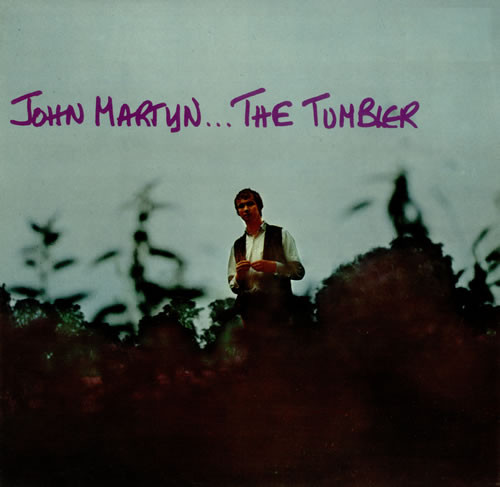
martyn tumbler.jpeg

Approximately a year after the release of John Martyn’s first album, London Conversation, a relaxed, leisurely studio rendition of mostly original British folk material he was performing for small venue audiences in 1967, Martyn released a more upbeat, energetic and stronger album. The Tumbler, that better showcased his musical skills with the music incorporating rock and jazz elements.

On The Tumbler, Martyn adds additional musicians for a fuller sound and to support the greater musical variety of the compositions.  In London Conversation, we get a sampling of flute from Martyn himself, but on this second album we get Jamaican-born jazz flautist, Harold McNair, who played and recorded with Charles Mingus, Quincy Jones, as well as appeared on a number of Donovan albums and on tenor sax on the James Bond Dr. No theme.  The quality of production handled by twenty-two year-old Al Stewart is quite good, with a more forward, active sound, spotlighting individual instruments.  All instruments are acoustic, with no drums on any track. The album closes with the guitar-dominated instrumental “Seven Black Roses”, the highlight of the album.

Track listing [from Wikipedia]

All tracks composed by John Martyn except where indicated.

  1. “Sing A Song of Summer” – 2:22
  2. “The River” – 2:59
  3. “Goin’ Down to Memphis” – 3:12
  4. “The Gardeners” (Bill Lyons) – 3:15
  5. “A Day at the Sea” – 2:35
  6. “Fishin’ Blues” (Henry Thomas) – 2:37
  7. “Dusty” – 3:07
  8. “Hello Train” – 2:36
  9. “Winding Boy” (Jelly Roll Morton) – 2:22
  10. “Fly on Home” (Martyn, Paul Wheeler) – 2:33
  11. “Knuckledy Crunch and Slippledee-slee Song” – 2:55
  12. “Seven Black Roses” – 4:02

Personnel

  • John Martyn – vocals, guitar, harmonica, keyboards
  • Harold McNair – flute
  • David Moses – double bass
  • Paul Wheeler – guitar


B4.jpeg

As noted in earlier posts, the latter half of 1968 introduced several albums that blended  rock and country music, albums often authored by Canadian-born or Californian-based musicians.  One notable such album was The Beau Brummels’ Bradley’s Barn.

The Beau Brummels hailed from San Francisco, forming in 1964 and releasing their first two albums in 1965, incorporating folk and British-invasion elements. Though later denied by band members, legend has it that they chose the name, “Beau Brummels” for its English sound and so their albums would be shelved in records store bins immediately after the best-selling Beatles.

Their first album, heavily influenced by the British Invasion sound, peaked at number 24 on the Billboard album chart and included ten of twelve original songs, all written by lead guitarist, Ron Elliott, or in one case by Elliot and sometimes collaborator, Bob Durand. Sal Valentino was the lead vocalist, and its interesting to follow his development as a singer and his greater, often extreme use, of vibrato as well as Elliot’s and Valentino’s shift to more of a country sounds in their subsequent albums.

in 1966, with their label, Autumn, verging on collapse, the band starting recording their third album.  Warner Brothers purchased the group from Autumn, but the transaction didn’t cover publishing rights.  So despite a number of already recorded original songs planned for this third album, Warner Brothers directed the group to record an album of covers,  The album was a commercial flop.

In 1967, the group released a concept-inspired album of mostly original music, Triangle, considered by many a pre-country rock classic mixing folk, rock, country and hints of psychedelic and progressive elements.  Outstanding tracks include”Magic Hollow”, “Triangle” and the excellent “The Wolf of Velvet Fortune.”

In 1968, The Beau Brummels, down to just two members, Sal Valentino and Ron Elliot,  after losing their bass player to the draft, recorded their fifth album at Bradley’s Barn, a studio a few miles from Nashville.  Joined by studio musicians like guitarist Jerry Reed and drummer Kenny Buttrey , this album named after the recording site, is perhaps the most authentic and highest quality of the handful of early country-rock albums recorded in 1968.  I say, “perhaps”, as I am not really a country music fan.  I love bluegrass, particularly live, and can listen intently to the country music recorded on 78s in the twenties and thirties, but generally not much attracted to the commercial country music or country rock of the last sixty years.  Yet, this album of all but one original song holds my attention and gets my respect. Valentino continues to evolve his use of vocal vibrato, incorporating an authentic country twang, some Bob Dylan influence, and extending his own range of effective emotional delivery.

With this level of excellence, the group was set up nicely for greater artistic and commercial success, but shortly after the release of Bradley’s Barn, Valentino and Elliot went their separate ways, Valentino soon starting up a new band,  Stoneground, and Eliot releasing a solo album and producing or playing guitar on various albums. The band temporarily reformed in 1974, and at various times later, with their most recent album, Continuum, released in March 2013.


Track listing [from Wikipedia]

1 “Turn Around” Bob Durand, Elliott 3:03
2. “An Added Attraction (Come and See Me)” Valentino 3:03
3. “Deep Water” Elliott, Valentino 2:33
4. “Long Walking Down to Misery” Elliott 3:16
5. “Little Bird” Elliott 2:42
6. “Cherokee Girl” Durand, Elliott 3:36
7. “I’m a Sleeper” Elliott, Valentino 3:20
8. “Loneliest Man in Town” Elliott 1:54
9. “Love Can Fall a Long Way Down” Durand, Elliott 4:16
10. “Jessica” Elliott, Valentino 2:22
11. “Bless You California” Randy Newman 2:16

Personnel

Fifty Year Friday: Jefferson Airplane and HP Lovecraft

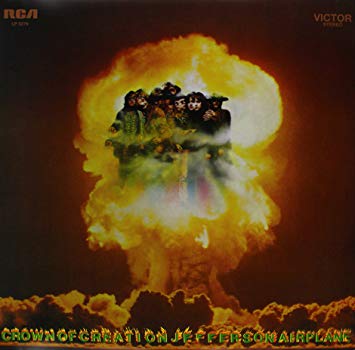
crownof creation81NdZctnSEL._SX355_

Jefferson’s Airplane Fourth studio album, released sometime in September of 1968, continues their expansion of San Francisco folk-flavored psychedelic rock, with a mostly denser, darker and more spontaneous, jam-rock-enriched sound.

Grace Slick scores big again, starting from the instant the needle hits the vinyl with her composition “Lather”, which though inspired by her fellow bandmate, and bedmate, drummer Spencer Dryden, turning thirty, also has been crafted to have a more poignant message about an intellectually disabled adult named Lather:

“Lather was thirty years old today,
They took away all of his toys…

“He looked at me eyes wide and plainly said,
Is it true that I’m no longer young?
And the children call him famous,
what the old men call insane,
And sometimes he’s so nameless,
That he hardly knows which game to play…
Which words to say…
And I should have told him, “No, you’re not old.”
And I should have let him go on…smiling…babywide.”

Another impressive track on this first side is Slick’s rendition of David Crosby’s “Triad” with Crosby on guitar.  The Byrds had recorded the work for inclusion on the final Byrds album with Crosby, The Notorious Byrd Brothers,  and for whatever reasons (conjectured explanations range from the nature of the lyrics to the quality of the song to internal band politics and ego-clashes), the Byrds dropped it’s inclusion.  Perhaps this was for the best, as not only was their no hesitation on the Airplane’s part to record this, but Slick on an album of material otherwise written by the band, but the change of the gender of the personna makes the lyrics work out even better.

The rest of the album is generally heavier, rockier and with a more complex sound with the final song covering the nuclear demise of the earth — the Jefferson Airplane are still producing commercially-in-demand and modern, cutting-edge material, with this album having made it as high as the sixth spot on the Billboard album chart.

Jefferson Airplane {from Wikipedia}

Additional musicians

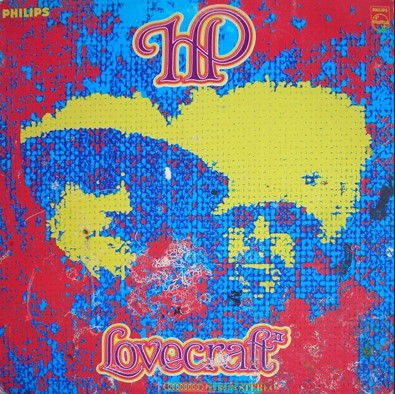
hplovecraft-2

With a very promising well crafted first album, featuring haunting, distinct, yet harmonious vocals between co-founders George Edwards and classically-trained Dave Michaels, thoughtfully arranged compositions and a sophisticated approach to psychedelic folk-rock that included timpani, harpsichord, piccolo, renaissance recorder, saxophones, clarinet, french horn, tuba, trombone and vibes, H. P. Lovecraft, named after the American horror-fiction writer, recorded their second album in the summer of 1968, releasing it in September of 1968 with no special title, simply called “H P Lovecraft II” with  a small “II”as seen in the album cover above.

This second album is more progressive, but due to a demanding concert schedule, the band had little time to prepare, with the result being a less disciplined effort than the first album, but a step forward musically.  Like their namesake, the author, H. P. Lovecraft, fortune, or even decent wages, were not to be theirs. The group disbanded in 1969, with a subsequent reformation as simply “Lovecraft” and then again as “Love Craft”, but without the leadership and musical skills of George Edwards and Dave Michaels, the band had a much different sound,  lacking that other-worldly, psychedelic, borderline progressive quality of this second album.

H. P. Lovecraft {from Wikipedia}

Fifty Year Friday: Roland Kirk, Fleetwood Mac, Marvin Gaye

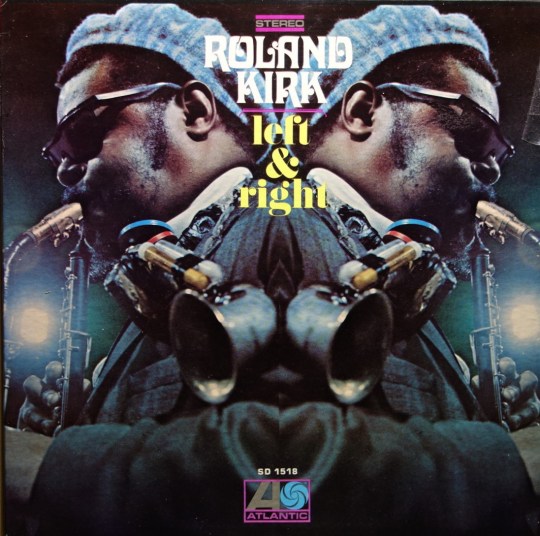
Left and Right131487750 (2)

Roland Kirk: left & right

Recorded in  June 1968, left & right, is a work of passion with Roland Kirk embedding both heart and soul into this effort.  Though the title appears to be a reference to left and right political positions, it could very well reflect the impact of the one-two punch: Kirk comes at you from the left with more progressive and radical jazz and from the right with an underlying solid foundation firmly rooted in traditional jazz and blues.  If this music doesn’t knock you out, it will at least knock you off balance — not quite as personal or impressive as Kirk’s previous album, The Inflated Tear, this subsequent album holds its own, filled with moments and passages of almost startling excellence, from the string introduction of the first track, to the lengthy second track that fills up almost twenty minutes of side one, through each and every track on side two, each arranged brilliantly with their own tonal pallet and character.

The second track, “Expansions” is a near masterpiece.  It seems only marred, not so much by the inclusion of McCartney’s “Yesterday” and that haunting opening melody of Stravinsky’s “Rite of Spring”/”Le Sacre du Printemps”, but by how these two references inadvertently call attention to themselves since they are so well known. If one had never heard either of these, it’s likely they would fit into the composition and not draw a disproportionate amount of attention, and the performance would provide an interrupted, unified experience.  The historical importance of “Yesterday” and “Rite of Spring” also make me wonder a little whether these works in the context of “Expansion” and the overall left & right album are traditional, conservative, on-the-right material — or are they radical elements, particularly considering the riot during the premiere of “Rite of Spring” or the paradox of the supposedly discordant, loud and noisy rock and roll British Invaders providing “Yesterday”, one of the most beautifully, poignant ballads of the twentieth century.

The answer seems to be that left and right are at their best when they work in partnership to create something that is as special as this 1968 Roland Kirk album!

Track listing [From Wikipedia]

All compositions by Roland Kirk except as indicated.
  1. “Black Mystery Has Been Revealed” – 1:17
  2. “Expansions: Kirkquest/Kingus Mingus/Celestialness/A Dream of Beauty Reincarnated/Frisco Vibrations/Classical Jazzical/El Kirk” – 19:37
  3. “Lady’s Blues” – 3:46
  4. “IX Love” (Charles Mingus) – 3:40
  5. “Hot Cha” (Willie Woods) – 3:23
  6. “Quintessence” (Quincy Jones) – 4:11
  7. “I Waited for You” (Gil FullerDizzy Gillespie) – 2:54
  8. “A Flower is a Lovesome Thing” (Billy Strayhorn) – 3:55
  • Recorded in NYC on June 17 & 18, 1968

Personnel


Fleetwood Mac: Mr. Wonderful

On August 23, 1968 Fleetwood Mac released their second blues-based album.  Based on authentic, contemporary blues, yet not overly derivative, it’s surprising how listenable this album is.  Boosted by passionate playing and added saxophones, this album is much better than the two-star rating it gets on allmusic.com.  Yes, one’s time is probably better spent listening to the many classic blues albums and singles of the fifties, which offer much sharper musicianship than this British Blues rock band, but this is still a musically rewarding album.

Fleetwood Mac

Additional personnel

mg front R-2062855-1351248963-1394.jpeg

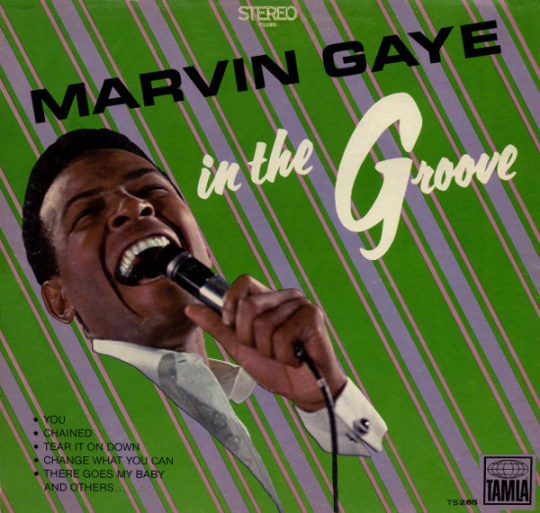
Marvin Gaye: in the Groove (I Heard It Through the Grapevine)

Whereas Fleetwood Mac continue to look back in time with their second album,   Marvin Gaye and team creates modern music moving forward the continuing development of contemporary pop.  Revisiting this music after so many intervening years provides some nostalgic indulgence but that is overshadowed by the musical artistry of Marvin Gaye and the quality of the arrangements and general production.  “I Heard It Through The Grapevine” is the Motown equivalent of an operatic aria with Marvin Gaye at his expressive best, providing a timeless interpretation of this fairly straightforward Strong and Whitfield classic.

mg15699794085_d345e16385_b

Track listing [from Wikipedia]

No. Title Writer(s) Length
1. You Jeffrey Bowen, Jack Coga, Ivy Jo Hunter 2:25
2. “Tear It on Down” Nickolas AshfordValerie Simpson 2:35
3. Chained Frank Wilson 2:38
4. I Heard It Through the Grapevine Barrett StrongNorman Whitfield 3:14
5. “At Last (I Found a Love)” Marvin Gaye, Anna Gordy GayeElgie Stover 2:37
6. Some Kind of Wonderful Gerry GoffinCarole King 2:19
7. Loving You Is Sweeter Than Ever Ivy Jo HunterStevie Wonder 2:43
8. “Change What You Can” Marvin Gaye, Anna Gordy Gaye, Elgie Stover 2:37
9. “It’s Love I Need” Stephen Bowden, Ivy Jo Hunter 2:54
10. “Every Now And Then” Eddie Holland, Frank Wilson 3:06
11. “You’re What’s Happening (In The World Today)” George Gordy, Robert Gordy, Allen Story 2:19
12. There Goes My Baby Benjamin Nelson, Lover Patterson, George Treadwell 2:24

Personnel

Marvin Gaye & Tammi Terrell: You’re All I Need

Marvin Gaye and Tammi Terrell released their album “You’re All I Need” around the same time as the release of Marvin Gaye’s in the Groove.  Not as strong as in the Groove, it does contain the wonderful “You’re All I Need to Get By“, and the combination of the two vocalists throughout the album, even on lesser material, is something special.  Recorded shortly after Tammi Terrell had her first of several surgeries to treat an unyielding brain tumor, this album effectively captures her vocal excellence as she so tragically approaches the end of her career and her irreplaceable, beautiful life.

Track listing [from Wikipedia]

Side one

  1. Ain’t Nothing Like the Real Thing” (Nickolas Ashford, Valerie Simpson)
  2. Keep On Lovin’ Me Honey” (Ashford, Simpson)
  3. You’re All I Need to Get By” (Ashford, Simpson)
  4. “Baby Don’t Cha Worry” (Johnny Bristol, Jackie Beavers)
  5. “You Ain’t Livin’ ‘Til You’re Lovin'” (Ashford, Simpson)
  6. “Give In, You Just Can’t Win” (Harvey Fuqua, Bristol)

Side two

  1. “When Love Comes Knocking At My Heart” (Fuqua, Bristol, Gladys Knight, Vernon Bullock)
  2. “Come On and See Me” (Fuqua, Bristol)
  3. “I Can’t Help But Love You” (Robert Gordy, Thomas Kemp, Marvin Gaye)
  4. “That’s How It Is (Since You’ve Been Gone)” (Fuqua, Bristol, Bullock)
  5. “I’ll Never Stop Loving You Baby” (Fuqua, Bristol, Beatrice Verdi)
  6. “Memory Chest” (Fuqua, Bristol)

Personnel

Fifty Year Friday: Roy Ayers, Stoned Soul Picnic; Eric Burdon & The Animals, Every One of Us

Stoned Soul Picnic.jpeg

About the time that the Fifth Dimension released their single of Laura Nyro’s “Stoned Soul Picnic”, Roy Ayers recorded tracks for his second album on June 20, 1968  that included Nyro’s tune and would be named for that song. The session and the released album also included three originals, Jobim’s “Wave” and Ron Miller and Orlando Murdon’s “For Once in My Life” (previously recorded by Tony Bennett [#91 on the pop singles chart] and several Motown Artists including the Temptations, before Stevie Wonder’s hit version would be released later that year.) Sometimes these jazz covers of pop hits are just a waste of time to listen to, but not here.

Roy Ayer’s opens the album with his own composition, “A Rose for Cindy”, which starts off like free jazz before dissolving into a sensual chromatic passage that precedes the main section of a thoughtful and introspective ballad.  Notable here is the excellent soloing and interplay between the participants. Hubert Laws and Herbie Hancock are both particularly attuned to the character of the piece and provide an appropriate, impressionistic sensibility that make this the most memorable track on the album.

“Stoned Soul Picnic is vibrant and funky with Evan’s mallet work, Law’s flute, Ron Carter’s bass, Hancock’s keyboard work (he plays what sounds like a Hammond B-3) and Charles Tolliver’s trumpet essential to the sense of freedom and exuberance that permeates this version.  This is followed by a surprisingly engaging and inescapably immersive version of  “Wave” with Miroslav Vitouš replacing Ron Carter for the rest of the album, and strong solos from Gary Bartz and, as the case on every track here, Herbie Hancock.

“For Once in My Life” is treated tenderly. but not over-delicately, followed by Tolliver’s upbeat “Lil’s Pardise” highlighted by Ayer’s vibe solo and Hancock’s piano solo.  The album concludes with Edwin’ Birdsong’s evocative “What the People Say” with introspective yet enchanting solos by Ayers and Laws. Overall, an excellent post-bop album characterized by overall beauty and unaffected optimism.

Track listing [from Wikipedia]

  1. “A Rose for Cindy” (Roy Ayers) – 8:56
  2. Stoned Soul Picnic” (Laura Nyro) – 2:50
  3. Wave” (Antônio Carlos Jobim) – 7:59
  4. For Once in My Life” (Ron Miller, Orlando Murden) – 3:50
  5. “Lil’s Paradise” (Charles Tolliver) – 6:33
  6. “What the People Say” (Edwin Birdsong) – 8:09

Personnel

animals eoou.jpeg

This is not a particularly strong album by the Animals. Listening to this today, it seems there is more filler than essential components, though the political statement Burdon makes on side two is pretty remarkable given the inherent expectations by the record label for a high level of commercial appeal from a group as well known as this.  And there is commercial appeal in “White Houses”, which hints at Caribbean rhythmic and melodic influences, and in the group’s initially very dark, then bluesy and rocking rendition of “St. James’ Infirmary”, a follow-up of sorts to the groups’ very successful version of “The House of the Rising Sun.”

The main item of note, particularly for historical interest, is Burdon’s “Year of the Guru” somewhat modeled after Dylan’s  “Subterranean Homesick Blues”, but with more of a rock than folk character — sounding more like rap music than can reasonably be expected for 1968.  Certainly there are other cases for early “proto-rap”, but “Year of the Guru” sounds too much ahead of its time instrumentally and vocally to be categorically overlooked, particularly in light of the social commentary of the lyrics:

“My leader said son you’d better get yourself together
Never mind the fools who know what we’re getting into
But a forty mile walk would do us both a world of good
And he sat down and watched me take off down the road.”

…..

“Now here I sit in a state-run asylum
Limitless, friendless but much more together
I decided to do some good book readin’
About the art of people leadin’
Now I’m the leader and they’re being led
What’s the matter if they’re crazy till you hear what I’ve said
Being the leader is really where its at
But just how long can a good thing last
Oh, oh leader
Oh, oh leader
Now listen to this baby
This is the year of the guru
Now the thing to do is to ask yourself
What can a guru do for me?
Then you say to yourself
I gotta get a guru”


Track listing [from Wikipedia]

All selections written by Eric Burdon except where indicated.

Side 1 

  1. White Houses” (4:43)
  2. “Uppers and Downers” (0:24)
  3. “Serenade to a Sweet Lady” (John Weider) (6:17)
  4. “The Immigrant Lad” (6:15)
  5. “Year of the Guru” (5:25)

Side 2 

  1. St. James Infirmary” (Traditional, arranged by Eric Burdon) (4:15)
  2. “New York 1963-America 1968” (Eric Burdon, Zoot Money) (19:00)

Personnel 


Fifty Year Friday: Ultimate Spinach

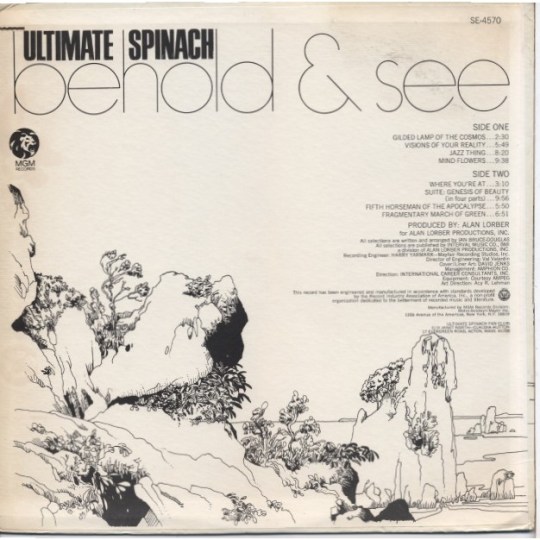
Ultimate Spinach - Behold and See002

There are those that believe that everything is determined, and that no matter how many times something is played out, the same result will occur.  Such a belief may be based on fatalism, or the predictability of Newtonian physics, or the belief that there is no self-determinism and that people are stimulus-response machines and that once set in motion, all resultant activity can theoretically be modeled, given all the initial data points.

There are those that believe that every moment holds countless possibilities, some vastly different, some imperceptibly so, with any given result leading to another countless set of possibilities each leading to their own potential result leading to more possibilities.  Some believe there is self-determinism and that our choices are not predicted solely on past events and current physical and mental factors.  Some believe that we ourselves are not part of the universe we appear to be in, and so can effectively can cause changes to that universe through the exercise of free choice. Some reach out to their understanding of quantum physics to support a belief in uncertainty and unpredictability.  Some go as far as to speculate that there are infinite or nearly infinite universes with each universe having been the result of the cumulative consequences of each and every outcome from each and every previously emergent outcome prior to that.

If we go with this last worldview, or rather universe-view, there are no doubt trillions upon trillions upon trillions of universes similar to ours where the first Ultimate Spinach album sold well, benefiting from the Newsweek January 1968 article that was part of the full-out publicity assault by MGM’s Alan Lorber to establish an identity for Boston-based psychedelic bands like Ultimate Spinach, Eden’s Children, Beacon Street Union, Puff, Quill, and Orpheus.  Though this attempt at creating an identity similar to that of the bands associated to the “San Francisco Sound” worked initially as evidenced by the considerable attention resulting from the Newsweek article, which certainly fueled sales of the first Ultimate Spinach album, there was the inevitable backlash by a handful of music critics, including a prominent Boston rock critic, whose general claim was this was a blatant establishment-based marketing ploy and that there was no characteristic sound of these Boston bands and that the informed consumer should completely discount such commercially motivated hype.  Wall Street Journal joined in the pile-up chiding the publicity effort in their arcticle “The Selling Of A New Sound”, followed by Rolling Stone which stereotyped this purportedly non-existent Boss Town Sound as ” “pretentious,” “derivative,” and “boring’ — terms that would also later be used in the arsenal of the “informed” and elite “anti-elite” music critics against progressive rock.

UltimateS1

Other media outlets weighed in on the topic of the legitimacy of the claim of a Boss Town Sound including Crawdaddy and Playboy. In Alan Lober’s words in an article published in Goldmine in 1992 “the snowball became an avalanche. It was now more trendy to talk “Boston Sound” than to hear it. In retrospect, it was hard to believe that something which had received so much media coverage could fail to become a commercial success.”

Yet, amidst all of this, that first Ultimate Spinach album was relatively successful commercially, staying on the Billboard album chart for 36 weeks and peaking at position 34.  It was also quite good, being easily accessible, fresh, upbeat and generally adventurous incorporating elements of jazz, classical, psychedelia, and world music into a primarily contemporary rock style.

So, successfully swimming against the current of some not so-well meaning rock critics, providing an accessible, contemporary sound with plenty of potential for further development and exploration, and then, in August 1968, releasing a second album, Behold & See, more mature, better constructed, and stronger than the first, there was no real reason for Ultimate Spinach not to remain in the spotlight and have ever increasing album sales.

Except that Ian Bruce-Douglas got fed up.  He got fed up with the mechanics of the record industry and the resulting loss of his musical independence and authority, he got fed up with producer Alan Lorber, and he got fed up with the various personal conflicts occurring within the band. Then frustrated to the extreme, he simply walked away from his own band.  With no group to tour in order to promote the new album, and without marketing or live shows, the second album stalled at number 198 on the Billboard top 200 album chart.  Without their leader and composer, the remaining band attempted a third album, which had a different sound and sold even more poorly than the second album.

UltimateS2a

Now if you buy into the multi-universe concept, and concede that there are easily quadrillion to the quintillionth universes that all have this same second Ultimate Spinach album, “Behold & See”, then it is conceivable, that in at least one, or perhaps even two, universes, the Boston music scene was allowed to more naturally flourish, that Ian Bruce-Douglas was able to overcome his initial disgust and dissatisfaction with the immense personal and individual ego challenges, the insensitivity of his record company, and the conflicts between he and his producer — and thus successfully promote through live concerts the second album, continue with the creation of a third and then have that fourth break-out album.  However, this may be pushing the envelop of the possible just a bit too much.  Perhaps there is limited upside to any group named “Ultimate Spinach.”  Or perhaps the personality that provided the music and lyrics for these first two albums, inherently would inevitably be constrained by the idiosyncratic demands of the music industry.   One hesitates to speculate about how much great music was lost because talents like Ian Bruce-Douglas were not able to cope with the realities and frustrations of the commercial music industry.

So even if there are not universes in which there are additional albums by the Bruce-Douglas led Ultimate Spinach, one can at least enjoy these two that are available. For those looking for early progressive rock, they will find many items that they can check off their list of prog characteristics: exotic or non-traditional rock instruments (theremin, acoustic sitar, electric sitar, vibraphone, recorder), angular rhythms and syncopation, an overall conceptual unity present in the two albums,  (anti-war, anti-conformist with references to Sartre in the first, and the theme of achieving transcendent awareness and freedom of thought in the second), imitative counterpoint, classical music reference (J.S. Bach incorporated into the final track of the first album), layered production techniques, interesting instrumental passages or completely instrumental tracks, and for bonus points, a single, visionary leader, who in this case was Ian Bruce-Douglas, who wrote the music and lyrics for the entirety of those first two albums.  Also, as noted earlier, the musical press referred to Ultimate Spinach as “pretentious” — an epithet worn as a badge of honor by many of the progressive groups of the early seventies. (Remember Gentle Giant’s compilation album, “Pretentious for the Sake of it?”)

And if you don’t much care for progressive rock, but like the more melodic psychedelic music of the late 1960’s, or just interested in hearing a bit of the “Boss Town Sound”, these two albums are available on CD, on vinyl, through streaming services, or even youtube as if they are deserving of more respect today than ever before.

And one last note directed at those musical critics that said there was no actual “Boss Town Sound”– history now seems to say otherwise with even once-antagonistic magazines like Rolling Stone conceding in 1988, in its “Rock of Ages” encyclopedia, the existence of such a musical movement.  Unfortunately, the time frame of that movement was ridiculously short, with the lack of commercial success causing most of these Boston-based psychedelic bands to break up by 1969 — yet I have to believe that, in this universe at least, if not in countless other universes, these Boston bands left something of lasting value, both in terms of influencing other, sometimes younger, musicians at the time that carried on, and in the case of the most popular of these bands, The Ultimate Spinach, left us music we can still listen to and enjoy today.

Track listing of Behold & See [from Wikipedia]

Side one

  1. “Gilded Lamp of the Cosmos” – 2:30
  2. “Visions of Your Reality” – 5:49
  3. “Jazz Thing” – 8:20
  4. “Mind Flowers” – 9:38

Side two

  1. “Where You’re At” – 3:10
  2. “Suite: Genesis of Beauty (In Four Parts)” – 9:56
  3. “Fifth Horseman of the Apocalypse” – 5:50
  4. “Fragmentary March of Green” – 6:51

Personnel

UltimateS2b

Fifty Year Friday: Cream, Wheels of Fire; Al Kooper, Super Session

creamwheelsCream: Wheels of Fire

I seems a bit odd that the rock “super group” is a rarity.  One would think that the very best musicians getting together to reach the highest levels of musical creation and performance would be a common event.  But music is not a competitive experience like basketball which has provided us the Olympics basketball Dream Team, or the 2010 Miami Heat with LeBron James, Dwayne Wade and Chris Bosh, or the Los Angeles Lakers with West, Baylor and Chamberlain — where such assembling of talent is done for the purpose of winning a championship or to secure a gold medal against an already competitive field.

Often a given musician’s artistic vision is quite different than another’s and assembling a group of highly talented musicians usually only produces successful results when their individual musical visions align.  Furthermore, assembling a group that lasts for multiple years is very different than a few of the best musicians getting together for after-hours jam sessions or (more formally) for a single recording session.

One-time or even sporadic, repeated formations of super groups does occur more frequently in jazz,  as occurred on June 6, 1950 when Charlie Parker, Dizzy Gillespie, Thelonious Monk, and Buddy Rich were brought together to record a handful of tracks or for a single or a short series of radio broadcasts as the May 15 & 16, 1950 broadcasts from Birdland which featured Charlie Parker, Fats Navarro, Bud Powell, Curly Russell and Art Blakey  — or in 1947 where there were multiple sessions which provided short-lived combinations of Parker, Gillespie, Max Roach, Ray Brown and Lennie Tristano.   In 1945, a young, and initially less than all-star version of Miles Davis teamed up with Charlie Parker, and the two played on and off together, sometimes with other all-star level musicians like with the two tracks recorded at Birdland on May 23, 1953 where Parker and a now truly stellar Miles Davis played with Dizzy Gillespie.  But this can be put in better context by noting that for one evening, that night before, on May 22, 1953, Charlie Parker, Bud Powell, Charles Mingus and Art Taylor had played together at Birdland with three tracks broadcasted on radio. The uniting of such talent was much like the uniting of all-stars for a professional sports all-star game — it was not the same as assembling a team of players that would play together night after night and record together session after session. Later, starting in the late sixties, there would be more monetary incentive for supergroups to come and stay together — but for jazz players of the first half of the twentieth century, making a living was tough, and this financial challenge played a part in players staying with a band or group as long as they were being paid, signing whatever contract was offered, or in players looking for any gig they could get that would provide extra income.

However, as musicians started to earn more money, and as the long playing record served as means of moving beyond the three-minute single,  there was also more opportunity for visionaries like Charles Mingus or Miles Davis to break away from providing the public a collection of unrelated tunes to providing a substantial unified product: a work of art.  This often meant that there was one visionary driving their own inspirations forward by partnering with others that had bought into that vision. Sometimes that was simply the producer bringing in talented musicians to back a Billie Holiday or Ellie Fitzgerald, sometimes that meant a strong personality like Charles Mingus acting like a commanding officer or a business manager, encouraging and sometimes demanding, or Ray Davies taking a lead role in the Kinks, or sometimes that meant a group of like-minded individuals, whether led by one member in the group, or a producer, or effectively collectively working together, sometimes with dissension or disputes, cooperating and collaborating just enough to bring out an album that resonated with enough of the public to provide the opportunity to put out another.

So its perhaps understandable why rock super groups are as rare as they are with the first attempts, like Eric Clapton’s Powerhouse, being intentionally short experiments, and the first true super group, Cream, formed in 1966, being the only such super group brought together in the 1960s that lasted more than a single album until David Crosby, Stephen Stills and Graham Nash formed Crosby, Stills and Nash in 1969.

By their second album, Cream was in full stride; their third album, “Wheels of Fire”,  a double LP released on Aug 9, 1968, offers additional enduring studio tracks on the first LP, and live performances on the second.

The album starts of with “White Room”, which at the time, was the coolest song any band had come up with since “Strawberry Fields.”  It combines elements of psychedelic and early heavy metal, with an overall middle-eastern, exotic character assisted by the 5/4 introduction, the generally modal melody and supporting harmonies, and the added violas and overdubbed guitar-work.

Though the album has its weak points (“Pressed Rat and Warthog” and a marginally interesting second side of live material), its strengths are far more abundant.  On the first side of the live LP,  Cream’s simplified, yet totally transformed version of Robert Johnson’s “Cross Road Blues”, drives forward with relentless energy and primal appeal and the second track, Cream’s innovative re-sculpting of Willie Dixon’s “Spoonful” foreshadows some of the elements found in Black Sabbath’s very first album, recorded a year after “Wheel’s of Fire” had reached the number 3 position on the UK album chart and the number 1 position on the US album chart.

Ginger Baker is an unstoppable force on drums and percussion, providing moments of classical-influenced composition, Jack Bruce continues to establish the foundation for future progressive rock and heavy metal bass players, also providing the strongest compositions on the album, and Eric Clapton’s guitar work continues to be inventive and, on the first side of the live LP,  narcotically spellbinding.  This was the first super rock trio, establishing the high level of compositional and instrumental quality that would be expected for upcoming prog and heavy metal trios, quartets, and quintets, providing  considerable evidence that these three artists were truly the first major rock group for both of those genres.

Tracks and personnel from Wikipedia

R-8910143-1471361083-3526.jpeg

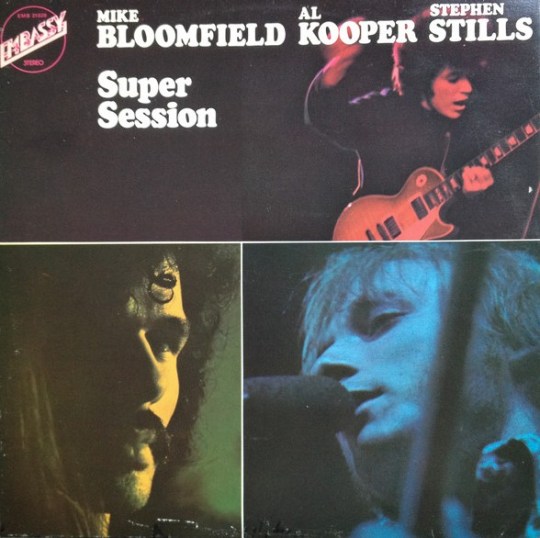
Bloomfield, Kooper, Stills: Super Session

One of the unexpected success stories of 1968  was Al Kooper’s project to record a jam-session album with Electric Flag guitarist Mike Bloomfield who Kooper had previously partnered with on Dylan’s Highway 61 Revisited.  Kooper booked studio time in Los Angeles for two consecutive days in May 1968 adding  keyboardist Barry Goldberg and bassist Harvey Brooks, also members of the Electric Flag.  All was set and the first session went well, with basic jam material on which participants performed as expected and Al Kooper taking on vocal responsibilities. At the end of the day, with just enough material for the first side of the planned album, the participants crashed at the house Kooper had rented, but when Kooper got up that morning, he found a note from Bloomfield indicating he had not slept well that night and had gone home.  The departure, and the corresponding reality, was soon confirmed when Kooper received a call from a female friend of Bloomfield that inquired if Mike had made his plane and if she should pick him up at the San Francisco Airport. Kooper than made phone calls to any California area guitarist he could think of including Jerry Garcia of the Grateful Dead, Randy California of Spirit and Stephen Stills, who had just left Buffalo Springfield. Fortunately,  Kooper eventually received a return call from Stills, who was able to join for that second session.

There was a problem, still. Stephen Stills was still under contract to Atlantic and, though it was very likely that Atlantic would grant permission for Stills to be just another instrumentalist in a jam album,  this approval would be much less likely if Stills was the lead singer.   Despite Kooper preferring to have Stills singing lead, he could not risk the opportunity of completing his envisioned project that evening, so as with the day before, Kooper again was the featured vocalist.

When Stills arrived the musicians huddled to identify what songs they all knew, ran through them briefly and then recorded what would become the second side of the album, finishing at two in the morning. Kooper flew back to New York City the next day, and began final editing, including splicing together parts of two takes of Donovan’s “Season of the Witch” (note the tempo changes in the consolidated final version.)  While back in L.A., during additional engineering and dubbing horn parts into the original recordings,  Kooper was asked for his input in naming the album.  Since he had no particular title in mind for the finished LP, it was christened “Super Sessions” by Bruce Lundvall, one of Columbia marketing executives. With total production costs of less than $20,000, the album was released to a receptive public on July 22, 1968, who sent the album climbing up the charts, peaking at the number twelve spot.

Kooper was amazed at the commercial success of his project.  From the very first  day, the album was popular, soon reaching the number 12 position on the U.S. album charts. And though credit needs to go to Mike Bloomfield for providing some of his highly quality studio work in his tragically short career,  to Stills, to the other musicians, this is primarily Kooper’s album, including his quality editing and mixing and his partnership with arranger Joe Scott on the added horns, which add appropriate variety and substance into the original recordings.  Kooper then remixed the sessions around 2002 or 2003, using the current 24 bit technology, providing better clarity and separation of the individual musicians,  further enhancing  Kooper’s original effort of creating an album similar to the jazz albums he grew up listening to, where talented musicians together to create improvised music much like they would perform for their own pleasure when they were by themselves in an empty studio or someone’s den, living room or garage.

Some point to this as being the first super group, but Stills and Bloomfield recorded separately, and there was no intent for these three to ever be together (Stills was a fortuitous replacement for an AWOL Bloomfield) — and there was no intent for further recordings or any live performances.  Though I would like to say this critical and commercial success resulted in a flurry of other such efforts, this really was not the case.  The very next example of an LP of similar rock improvisation, is the third LP of George Harrison’s “All Things Must Pass”, released in late 1970.  Are there other examples you can think of before that 1970’s “Apple Jam” LP — even before Kooper’s Super Session LP?  Please post your comments and thoughts, as very interested in not only examples from the 1960s, but afterwards.

Tracks and personnel from Wikipedia

Fifty Year Friday: Moody Blues, Buffalo Springfield, Harry Nilsson

MB ISOTLC.jpeg

Moody Blues: In Search of the Lost Chord

With their second album, released July 26, 1968, the Moody Blues solidly establish their own style and identity with recognizable, reverberation-enhanced vocals, use of cross-fade between tracks, and a complex, polished production style as realized by Tony Clarke. In the previous album, Days of Future Past, The Moody Blues were backed up by Decca’s house orchestra, The London Festival Orchestra; in this album, the orchestra is replaced by almost three dozen instruments all played by the band members. Mellotron and sitar fans will enjoy the use of those instruments here, part of achieving an effective album. If you don’t have this on LP, consider the CD version with its bonus tracks, two of which provide a glimpse at how good Moody Blues sounded in live performances in 1968.

Track Listing [From Wikipedia]

1. Departure (0:44)
2. Ride My See-Saw (3:38)
3. Dr. Livingstone, I Presume? (2:58)
4. House of Four Doors (4:12)
5. Legend of a Mind (6:36)
6. House of Four Doors, pt.2 (1:47)
7. Voices in the Sky (3:25)
8. The Best Way to Travel (3:14)
9. Visions of Paradise (4:15)
10. The Actor (4:39)
11. The Word (0:48)
12. Om (5:44)

Total Time: 42:03

Moody Blues

– Justin Hayward / acoustic & electric guitars, mandolin, lead vocals (1,4,6,8)
– Michael Pinder / piano, Mellotron, Moog, acoustic guitar, maracas, lead vocals (2,4,9,10)
– Ray Thomas / flute, tambourine, lead vocals (3,4)
– John Lodge / bass guitar, lead vocals (4,7)
– Graeme Edge / drums, percussion, whispered vocal (4)

Buffalo Springfield Last Time Around R-4322678-1361719240-9392.jpeg

Buffalo Springfield: Last Time Around

Tinged with folk and country elements, Buffalo Springfield’s final studio album, released on July 30, brings to a close an early chapter in folk/country rock.  Though the weakest of their three albums, there is much to like here, particularly the even number tracks on side one and the first three tracks on side two.

Track listing [from Wikipedia]

Side one
  1. “On the Way Home” (Young) – 2:25
    • Recorded November 15-December 13, 1967, Sunset Sound, Los Angeles, California. Vocals: Richie Furay, Neil Young; bass: Bruce Palmer; piano: Neil Young.
  2. “It’s So Hard to Wait” (Furay, Young) – 2:03
    • Recorded March 9, 1968, Sunset Sound, Los Angeles, California. Lead vocals: Richie Furay.
  3. “Pretty Girl Why” (Stills) – 2:24
    • Recorded February 26 & May 1967, Sound Recorders, Hollywood and Atlantic Studios, New York City. Lead vocals: Stephen Stills; bass: Jim Fielder.
  4. “Four Days Gone” (Stills) – 2:53
    • Recorded late 1967-early 1968. Lead vocals and piano: Stephen Stills, lead guitar solo: Neil Young
  5. “Carefree Country Day” (Messina) – 2:35
    • Recorded late 1967-early 1968. Lead vocals: Jim Messina.
  6. “Special Care” (Stills) – 3:30
    • Recorded January 3–20, 1968. Sunset Sound, Hollywood. Lead vocals, pianos, B3, guitars, bass: Stephen Stills; drums: Buddy Miles.
Side two
  1. “The Hour of Not Quite Rain” (Callen, Furay) – 3:45
    • Recorded late 1967-February 1968. Lead vocals: Richie Furay.
  2. “Questions” (Stills) – 2:52
    • Recorded February 16, 1968, Sunset Sound, Los Angeles, California. Vocals, guitars, bass guitar, Hohner clavinet: Stephen Stills; drums: Jimmy Karstein.
  3. “I Am a Child” (Young) – 2:15
    • Recorded February 5, 1968, Sunset Sound, Los Angeles, California. Lead vocals: Neil Young; bass: Gary Marker.
  4. “Merry-Go-Round” (Furay) – 2:02
    • Recorded February 16-March 1968, Sunset Sound, Los Angeles, California. Lead vocals: Richie Furay; bass: drums: Jimmy Karstein. Harpsichord, calliope, bells: Jeremy Stuart.
  5. “Uno Mundo” (Stills) – 2:00
    • Recorded February–March 1968, Sunset Sound, Los Angeles, California. Lead vocals: Stephen Stills.
  6. “Kind Woman” (Furay) – 4:10
    • Recorded February–March 6, 1968, Atlantic Studios, New York City & Sunset Sound, Los Angeles, California. Lead vocals: Richie Furay; pedal steel guitar: Rusty Young; bass: Richard Davis.(not Dickie Davis)

Personnel

Buffalo Springfield
  • Richie Furay – guitar (1,2,3,8,10,11,12), vocals (1,2,3,5,7,10,12)
  • Dewey Martin – drums (1,2,3,9,11)
  • Jim Messina – bass, vocals (5,12)
  • Stephen Stills – guitar (1,2,3,4,6,8,10,11), piano (4,6,8), B3 organ (6,8,11), bass (6,8), clavinet (8), vibes (1), percussion (11), Handclaps (11), background vocals (1,5,8,10), vocals (3,4,6,8,11)
  • Neil Young – guitar (3,4,9,10), harmonica (9), piano (1), background vocals (1), vocals (9), appears in some capacity on (5)
  • Bruce Palmer – bass (1)
Additional personnel
  • Buddy Miles – drums (6)
  • Jimmy Karstein – drums (8,10)
  • Gary Marker : bass (9)
  • Jeremy Stuart – harpsichord, calliope, bells (10)
  • Rusty Young – pedal steel guitar (12)
  • Richard Davis – bass (12)
  • unidentified – horns (1), saxophone, clarinet (2), drums (4), bass, drums, harpsichord, orchestra (7), piano, drums (12)

R-811663-1286710531.jpeg

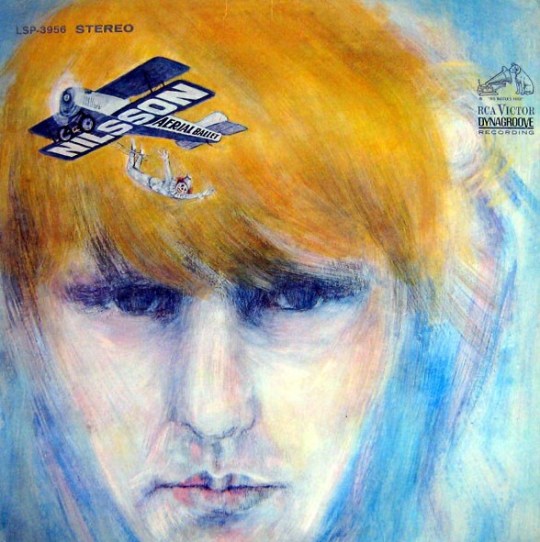
Harry Nilsson: Aerial Ballet

Released sometime in July 1969, Aerial Ballet, provides another set of cleverly crafted pop tunes, very much influenced by Paul McCartney songwriting and the production approach on Beatles and Beach Boys albums.  With his third album, Nilsson provides all original songs with one exception: a song called “Everybody’s Talkin'” written by Fred Neil, who would later drop out of music to focus on an organization he founded, The Dolphin Research Project, dedicated to stopping the mistreatment and exploitation of dolphins around the world.  When Nilsson’s version was released as a single in July 1968, it failed to break into the top 100, but after its inclusion as the theme song in the film Midnight Cowboy in 1969, the song was re-released as a single and became a hit, peaking at No. 6 on the Billboard pop chart and No. 2 on the Easy Listening chart.

The gem of this album is “One”, a song that sounds as unassuming and catchy today  as it did in 1968.  Many will be familiar with the Three Dog Night’s version, but it is this original version that is the definitive, and by far the best, one.

Track listing [from Wikipedia]

All tracks written by Harry Nilsson, except where noted.  Arranged by George Tipton.

Side one
No. Title Length
1. “Daddy’s Song” 2:19
2 “Good Old Desk” 2:22
3. “Don’t Leave Me” 2:18
4. “Mr. Richland’s Favorite Song” 2:12
5. “Little Cowboy” 1:22
6. “Together” 2:08
Side two
No. Title Writer(s) Length
7. Everybody’s Talkin’ Fred Neil 2:41
8. “I Said Goodbye to Me” 2:13
9. “Little Cowboy” 0:52
10. “Mr. Tinker” 2:41
11. One 2:50
12. “The Wailing of the Willow” Nilsson, Ian Freebairn-Smith 1:57
13. “Bath” 1:44

Fifty Year Friday: Herbie Hancock, Speak Like a Child; The Web, Fully Interlocking; Deep Purple, Grateful Dead

web cover_5115101992017_r

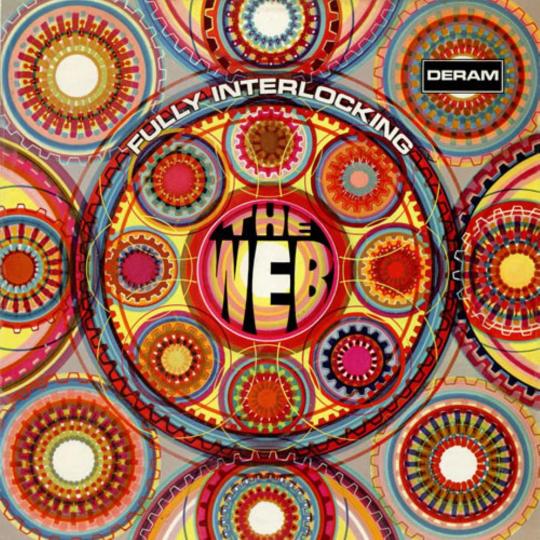
The Web; Fully Interlocking

Released by Deram sometime in 1968, The Web’s debut album, Fully Interlocking, is both an early jazz-rock album and an early progressive rock album. Though no home run is scored under either of these uniforms, credit must be given for the moments of sophistication and the early foray into the two new styles of rock music that would soon surge in popularity. In accordance with the title, the music is interlocking with no silence between tracks.  Track 4, Green Side Up,  is particularly notable as a fully-formed prog rock instrumental, with King Crimson-like rhythmic punctuation (this before King Crimson’s first-ever rehearsal in January 1969), a Robert Wyatt-like second theme, and effective saxophone and bass guitar lines. No progressive rock fan should miss hearing this.

The band included two guitars, two percussionist, an electric bass, and Tom Harris who played sax and flute. There was one American, their dedicated vocalist, John L. Watson, who was quite good, but sounded more like a lounge singer than a rock or progressive rock vocalist. (Later Watson would be replaced by singer and keyboardist Dave Lawson who would eventually join Greenslade.)

Some of the music sounds dated, such as their attempted single, “Wallpaper”, and some doesn’t live up to its conceptual promise such as the “War and Peace” suite, but this generally ignored album contains much of interest, both musically and historically.  Three bonus tracks are available on CD, and the first two of these are not to be missed.  “I’m A Man”, predates Chicago’s version on the first album, and works perfectly for Watson, who provides a strong rhythm-and-blues delivery.  The similarities between this and the later Chicago version, are striking, and one wonders if someone from Chicago or Columbia records had somehow heard The Web’s version first.  The second track, is Billie Holiday’s “God Bless the Child”,  also sounding strikingly similar to the Blood, Sweat and Tears’ version that was recorded in October 1968.

This album, only obtainable as a used LP in previous decades, is available as a CD, mp3s, or from a streaming service. It’s worth checking out for anyone that has an interest in rock, jazz-rock, or progressive rock history.

Tracks Listing [from progarchives.com]

1. City of Darkness (2:55)
2. Harold Dubbleyew (3:10)
3. Hatton Mill Morning (3:37)
4. Green Side Up (2:02)
5. Wallpaper (2:40)
6. Did You Die Four Years Ago Tonight? (2:20)
7. Watcha Kelele (3:57)
8. Reverend J. McKinnon (2:55)
9. Sunday Joint (2:03)
10. War or Peace (9:56) :
– a. Theme 2:11
– b. East Meets West 2:39
– c. Battle Scene 0:38
– d. Conscience 2:00
– e. Epilogue 2:28

Total time 35:35

Bonus tracks on 2008 remaster:
11. I’m A Man (3:33)
12. God Bless The Child (5:00)
13. To Love Somebody (3:29)

Line-up / Musicians from progarchives.com

– John L. Watson / vocals
– John Eaton / guitar
– Tony Edwards / guitar
– Tom Harris / sax, flute
– Dick Lee-Smith / bass, congas
– Kenny Beveridge / drums
– Lennie Wright / vibes, congas, claves

With:
– Terry Noonan / orchestra direction & arrangements


HH1MI0000442216

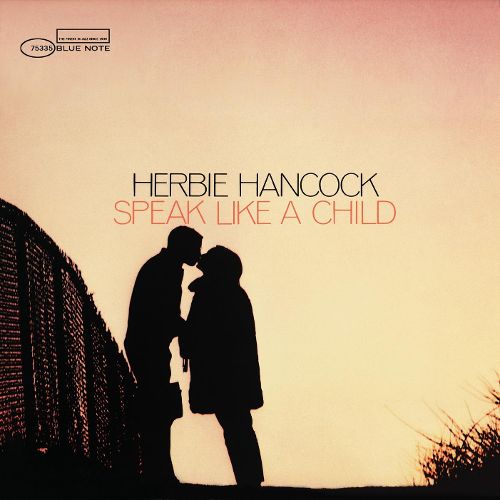
Recorded in March 1968 and released a few months later, this is Herbie Hancock’s first album as a leader since his classic Maiden Voyage, recorded 3 years earlier.  The album starts out with a calmer version of “Riot” than that recorded on Miles Davis;’s Neferiti, and ends with “The Sorcerer”, a composition on Davis’s 1967 “Sorcerer” album.  In between these tracks we have compositions relating to childhood, three by Hancock and one by Ron Carter — the Ron Carter piece being different in character and not including the alto flute, flugelhorn and bass trombone present on the  rest of the album.

Track listing[from Wikipedia]

All compositions by Herbie Hancock, except as indicated.

Side A:

  1. “Riot” – 4:40
  2. “Speak Like a Child” – 7:50
  3. “First Trip” (Ron Carter) – 6:01

Side B:

  1. “Toys” – 5:52
  2. “Goodbye to Childhood” – 7:06
  3. “The Sorcerer” – 5:36


Personnel

herbie-hancock-speak-like-a-child-uk-bn-back-cover-1800-ljc


Shades of Deep Purple


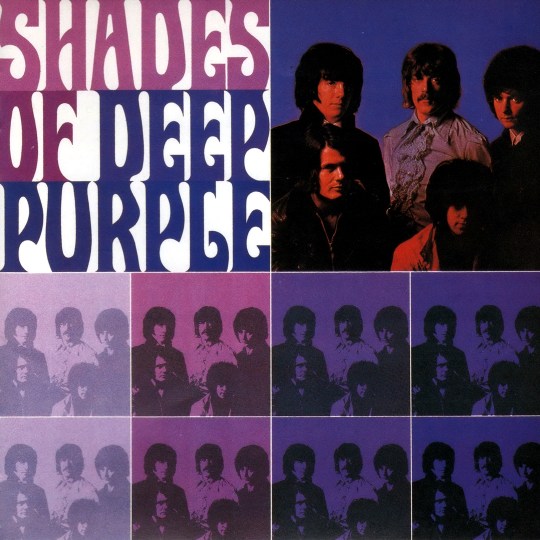
Deep Purple: Shades of Deep Purple

In their debut album, recorded in three days in May of 1968, and released on July 17, 1968, Deep Purple comes out swinging, providing exuberant hard rock with multiple glimpses of early heavy metal and progressive rock.

This album didn’t do well at all in the UK, but due to the single, “Hush”, which received significant airplay in the States, and reached the #4 slot, Shades of Deep Purple sold fairly well in the U.S., staying for 23 weeks on the Billboard top 200 album list and peaking at #24 in November, 1968.

The arpeggiated keyboard-led opening, interlude, and return included amongst the garden- variety chord progressions of “One More Rainy Day” is historically notable as this simple, but effective, compositional technique soon becomes a significant part of the musical vocabulary found in 1970s progressive rock.  Also, common to early progressive rock, is the quoting of classical music — in this case, Rimsky-Korsakov’s  Scheherezade, which provides the material for “Prelude: Happiness”, followed by Deep Purple’s take on Cream’s “I’m So Glad” based on the Skip James 1930’s tune.

Deep Purple would tour the U.S. while their album was climbing the charts, making a name for themselves, and establishing the appeal of this new style of rock music.  Below is a replica (from Dirk Kahler’s Deep Purple Tour Page) of the Oct. 18 ticket for their engagement as an opening act for Cream’s two night appearance at the Fabulous Forum.

deep purple ticket

Tracks Listing [from progarchives.com]

1. And The Address (4:38)
2. Hush (4:24)
3. One More Rainy Day (3:40)
4. Prelude: Happiness / I’m So Glad (7:19)
5. Mandrake Root (6:09)
6. Help (6:01)
7. Love Help Me (3:49)
8. Hey Joe (7:33)

Total time 43:33

Bonus tracks on 2000 remaster:
9. Shadows (Outtake) (3:38)
10. Love help me (Instrumental version) (3:29)
11. Help (Alternate take) (5:23) *
12. Hey Joe (BBC Top Gear session, 14 January 1969) (4:05) *
13. Hush (Live US TV, 1968) (3:53) *

* Previously unreleased

Line-up / Musicians

– Rod Evans / lead vocals
– Ritchie Blackmore / guitars
– Jon Lord / Hammond organ, backing vocals
– Nick Simper /bass, backing vocals
– Ian Paice / drums

0066___grateful_dead___anthem_of_the_sun_by_sunsetcolors-dag1wxs.jpg

Grateful Dead: Anthem of the Sun

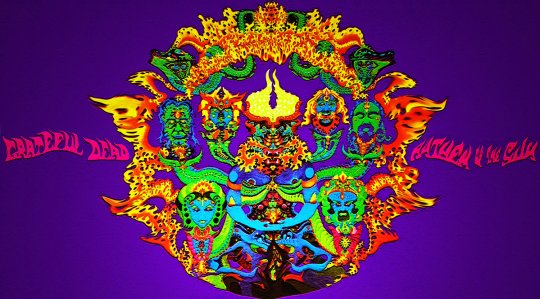
A day after the release of Shades of Deep Purple, Grateful Dead’s second album, Anthem of the Sun, was released on July 18, 1968.  Very different than their first album, which was mostly rock and roll and blues rock, this second album has more folk-rock, bluegrass,  psychedelic and progressive elements including a suite-like first track. Micky Hart’s addition to the band as their new percussionist appears to extend their boundaries as does their bold approach of mixing live and studio versions for the content of each track, focusing on achieving an overall aesthetic product that delineated the separate instruments but also achieved a sense of immediacy and freedom present in live shows. Throughout, there is an interesting mix of studio segments and additions with live material and improvised passages like the quote of Donovan’s “There is a Mountain” on side two’s “Alligator.”  Note that there are two versions of this album: the original mix from 1968 and a 1971 more commercial, and more commonly available, remix.  Released earlier this week, the 50th anniversary edition of Anthem of the Sun includes both the 1968 and 1971 mixes, remastered, on the first CD,  with additional live tracks from a 10/22/1967 concert at Winterland, San Francisco.

Track listing

Side one

#

Title

Length

1.

That’s It for the Other One” (Jerry GarciaBill KreutzmannPhil LeshRon McKernanBob WeirTom Constanten)

  • I. Cryptical Envelopment (Garcia)
  • II. Quadlibet for Tenderfeet (Garcia, Kreutzmann, Lesh, McKernan, Weir)
  • III. The Faster We Go, the Rounder We Get (Kreutzmann, Weir)
  • IV. We Leave the Castle (Constanten)

7:40

2.

“New Potato Caboose” (Lesh, Robert Petersen)

8:26

3.

Born Cross-Eyed” (Weir)

2:04

Side two

#

Title

Length

4.

“Alligator” (Lesh, McKernan, Robert Hunter)

11:20

5.

“Caution (Do Not Stop on Tracks)” (Garcia, Kreutzmann, Lesh, McKernan, Weir)

9:37

Personnel

Grateful Dead

Additional personnel

Production

  • Grateful Dead – producers, arrangers
  • David Hassinger – producer
  • Dan Healy – executive engineer
  • Bob Matthews – assistant engineer