Zumwalt Poems Online

Archive for the ‘Fifty Year Friday’ Category

Queen, Joni Mitchell, Keith Jarrett, Magma, Vangelis, Chris Squire & more; Fifty Year Friday: November and December 1975

Queen: Night at the Opera

Released in November of 1975, Night at the Opera starts with the excitement of an ocean voyage — we hear arpeggiated waves from the piano, whale rumblings from the bass, bird cries and seagull squawks from multitracked guitar breaking into soft strains of a tango quickly turning into heavy metal. This is Freddie Mercury the composer at the height of his craft.

After having purchased three Queen albums already, the first thing I did when I brought this album home in December of 1975 was note which tracks were attributed to Mercury — this served as indicators to what tracks would impress me the most. That turned out to be an effective predictor, but, importantly, the rest of the band’s contributions were some of their very best songs, making this album packed with classic material from start to the pinnacle of the album, the penultimate track, “Bohemian Rhapsody” — one of those rare instances in rock since the Beatles had disbanded where a truly great work of music made its way from legendary status with serious listeners, musicians, and dedicated fans to legendary status with the general public, even though, perhaps as expected, it took some time to do so.

And just as the Beatles elevated their work with multi-track musical enhancements, so too did Queen elevate Night at the Opera to a precisely rendered set of cohesive numbers that deservedly live up to the album’s title. Now, don’t get me wrong — we have an amazing musical diversity on this album — with such diversity in just Mercury’s compositions — but we add to that “I’m in Love with My Car”, “You’re My Best Friend,” the vaudevillian “Good Company” with ukulele and outstanding guitar accompaniment, and “The Prophet’s Song” with its brilliant use of deceptively simple imitative counterpoint, and it’s pretty easy to understand how Night at the Opera more than holds its own today as a timeless classic.

Keith Jarrett : The Köln Concert

One of my favorite possessions was the triple LP Keith Jarrett Solo Concerts: Bremen/Lausanne which I had purchased with Christmas money in 1973. It was just incredible to have a three LP set of piano improvisation of such high quality. Given that, I am puzzled why I never bought The Köln Concert until the complete version made its way on to CD around 1984.

Recorded live in January of 1975, The Köln Concert was released in late November of 1975, the album starts off plaintively in the style of the quiet Americana reflectiveness so well done by classical composers like Aaron Copland and Roy Harris. For the first improvisation, Jarrett leans heavily on repetitive phrases and ostinato-like patterns to continue to move the music forward, flowing as if driven by stream of consciousness, yet always compelling and logical, deftly avoiding lingering too long in any single style, texture, or mode of emotional expression as the music logically unfolds.

The second piece, broken up onto three sides of the double LP album, is dramatically different in tone and character. Like the first improvisation, it evades any simple stylistic labels sometimes flirting into rock piano improvisation. Where the first improvisation was reflective, the second is inexhaustibly joyous and intensely rhythmically as Jarrett turns the piano into a percussive engine, hammering out a powerful, trance-like groove with his left hand that is pure, ecstatic energy. This propulsive marathon of invention continues through Part IIb, before finally dissolving and making way for the famous encore, “Part IIc.” After all the complex fireworks, this final piece is a moment of breathtaking, lyrical grace — a simple, hymn-like melody that releases all the tension and remains one of the most beautiful themes Jarrett ever played.

The music makes this performance legendary, but like the most interesting legends, it has an almost mythical backstory. Jarrett had specifically requested a Bösendorfer 290 Imperial concert grand. Unfortunately, what was made available on the stage was a baby grand rehearsal piano in such bad condition that Jarrett had initially refused to play on it. The requested piano was in storage and due to horrid weather was not able to safely replace the inferior piano. So Jarrett was forced to confront the rehearsal piano, an unsuitable, tinny, and out-of-tune practice piano he tested during the afternoon of the concert and was so dissatisfied with it he almost threw the towel in performing that evening. The promoter finally convinced him that he had a responsibility to play as best as he could for a sell-out crowd and somehow do his best to deal with the inadequacies of the inferior rehearsal piano. Jarrett went forward with the performance and it was this limitation, this ‘bad instrument,’ that forced Jarrett to navigate that evening’s improvisations into new territory, compelling him to avoid the shrill upper register notes and the weak lower bass notes, replacing the harmonic function of the latter with lower middle register accompaniment patterns and repetitive ostinatos — thus creating the distinctive style that unifies the music of this remarkable performance.
Joni Mitchell: The Hissing of Summer Lawns

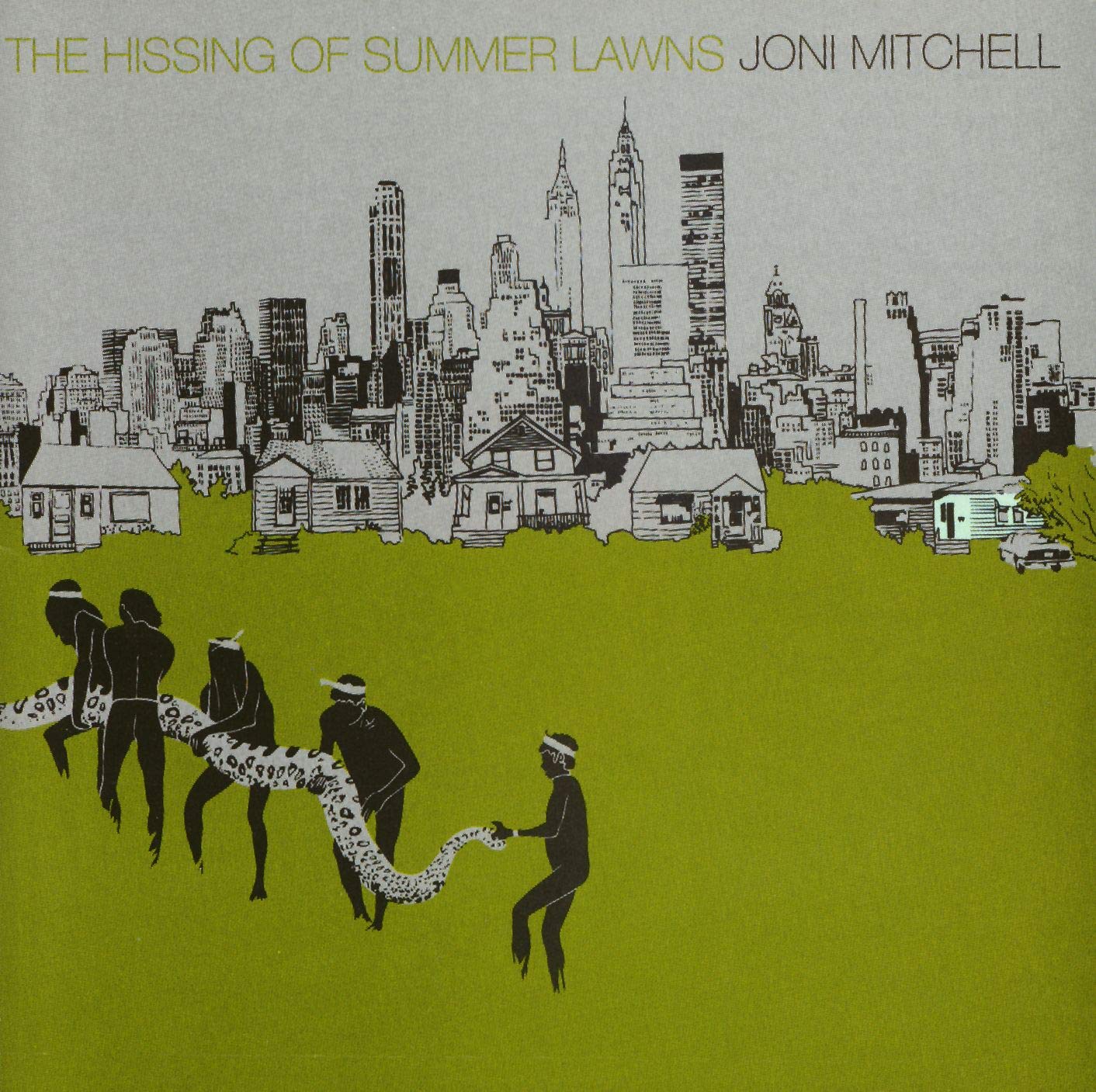
Released in November of 1975, The Hissing of Summer Lawns finds Joni Mitchell presiding over one of the most seamless marriages of lyrics and music of the 1970s. The poetry here is evocative and ironic, crafting memorable metaphors and unforgettable images. It’s often said that when constraints are placed on artists, they often produce their best work. For an artist who had previously written music around pre-existing lyrics to then make that shift over to the craft of fitting words into already composed music, one might expect a change in character — or at least in lyrical texture. Beginning around 1973 or 1974, Mitchell’s lyrics indeed became more fluid, impressionistic, and engaged, so that by the time of this album, she had achieved a near-perfect fusion of music and poetry, with the music among her finest creations.

And how does one classify the sound? One cannot. It draws on pop, rock, folk, and jazz, yet it belongs to none of them. The album charts its own course, allowing space for stellar contributors like Bud Shank and Joe Sample to leave their imprint without overshadowing Mitchell’s vision. The closing track, “Shadows and Light,” brings the album to a transcendent conclusion: a multi-tracked a cappella choir of Mitchell’s voice against a contrasting, processed drone from a Farfisa organ. The result is a kind of sonic cathedral, where light and sound filter through like stained glas — ever shifting, quietly monumental, and filled with a sense of cosmic design.

The entire album is a showcase of extracting equilibrium from motion. The music is built on a strong foundation yet exploratory and liberating. Here we have an artist of the highest level in full command of her gifts, unafraid to blur the lines between song and painting, intellect and intuition. The Hissing of Summer Lawns continues to be an album worth returning to: we achieve familiarity with repeated listenings but never is the magic lessened.

Chris Squire: Fish Out of Water

Another November 1975 release was Chris Squire’s highly accessible, melodic Fish Out of Water. For those like me who couldn’t get enough of the brilliance of Yes’s Fragile, this album was filled with the musical inventiveness and wonderful bass lines that dominated that Yes album. Musicians include Bill Bruford on drums and percussion, with saxophonist Mel Collins on two tracks and Patrick Moraz on bass synthesizer and organ on one track . Squire handles all the vocals, bass guitar, some acoustic twelve-string guitar and electric bass. Special compliments go Andrew Pryce Jackman who provides acoustic and electric piano keyboards and seamlessly integrated orchestration providing the album with additional depth and further contributing to its ebullient vitality. Fish Out of Water is a must-have album for all Yes fans surpassing most of their catalog released after 1975.
Crack the Sky: Crack the Sky

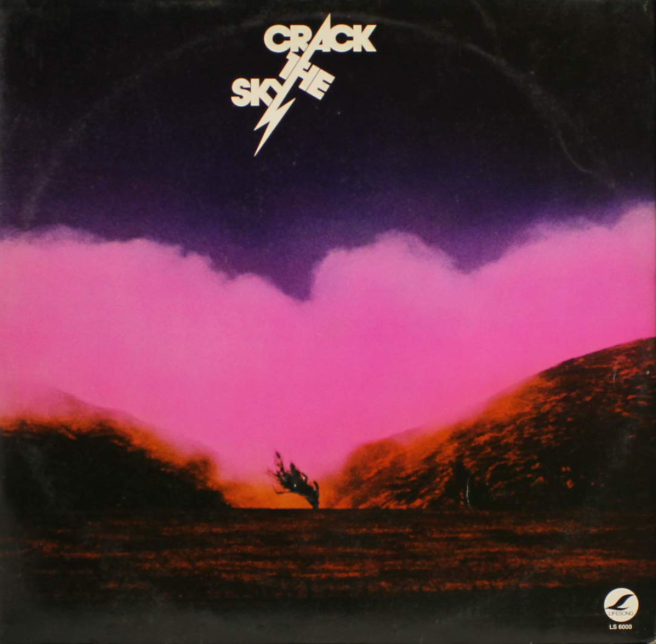
Crack the Sky’s debut was released in limited quantities in November 1975 by the independent label, Lifesong. Is this the biggest accomplishment by this label? Depends on your perspective — Lifesong posthumously re-released several greatest hits albums of Jim Croce material starting in 1976 as well as being responsible for “The Biggest Rock Event of the Decade” — that’s right — the rock opera Spider-Man: Rock Reflections of a Superhero — an album of such popularity that I cannot find any entry for it on Wikipedia, though in fairness, the title was released again twenty-five years later on CD and is currently available on eBay for $49.

Putting Spider-Man historical considerations aside, the Crack in the Sky album, despite its limited distribution, eventually climbed up to spot 161 on the Billboard Charts in February 1976 aided by some airplay in the Baltimore area and more importantly being identified by the Rolling Stone magazine as the debut album of 1975. 

Keyboard player and lead vocalist John Palumbo wrote all the music and lyrics showcasing an eclectic range of styles incorporating sixties pop elements and contemporary progressive rock elements. Both the music and lyrics are generally quirky, with a tongue-in-cheek, often ironic, humor deeply embedded in the lyrics and the music rich with accessible melody. There are musical moments that recall surf music, the Beatles, Procol Harum, early Genesis, and even Gentle Giant. It’s not a particularly well-produced album but it is a lot of fun, and an album that anyone who considers themselves well-versed in the history of rock music should have heard at least once.
Tangerine Dream: Ricochet

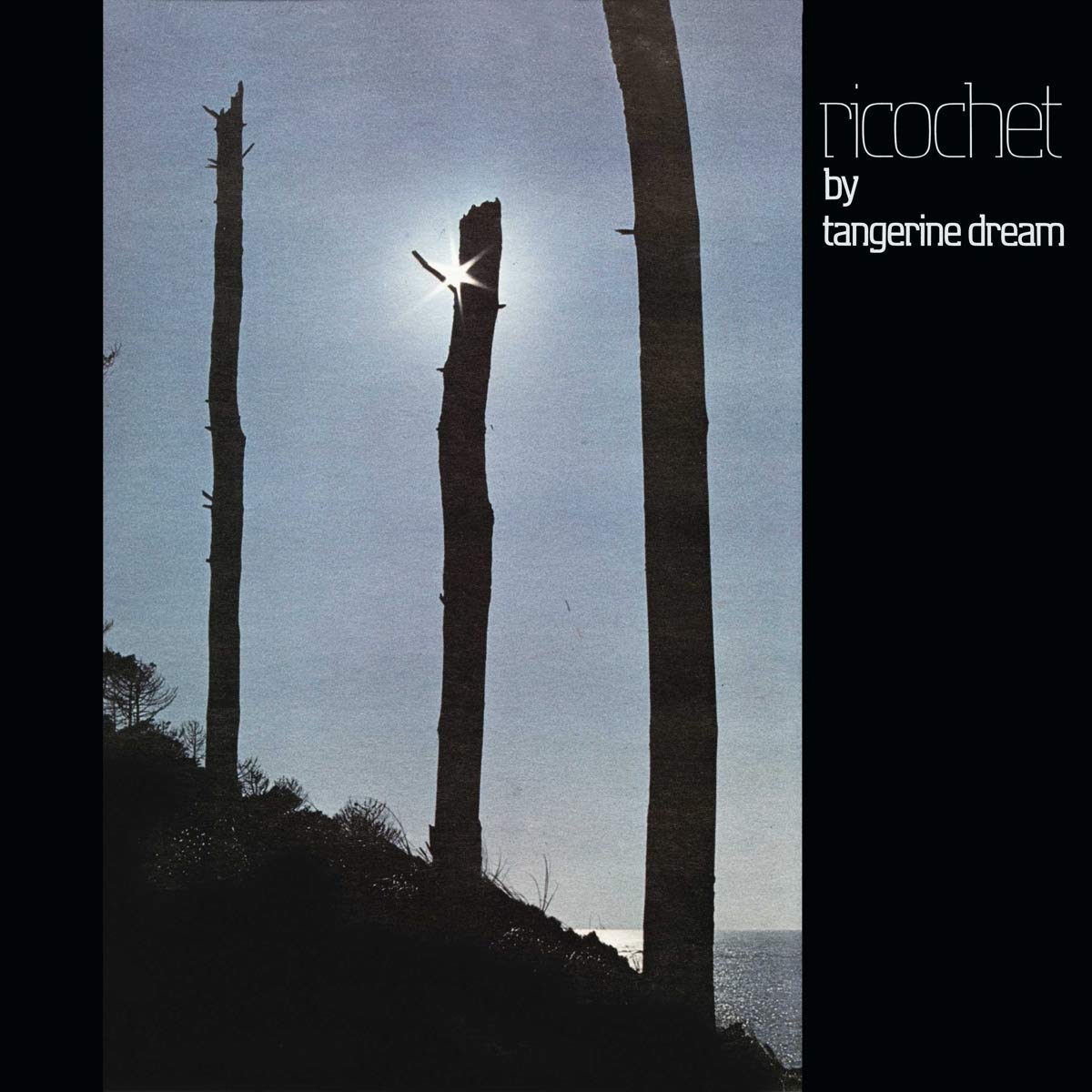
Recorded in late October and early November of 1975 in England, partly live at Fairfields Hall in Croydon and partly in the studio, Ricochet was released in December of 1975. It continues that rhythmically intense sequencer-driven signature sound from Rubycon, delivering it with sparkling clarity and focus. The music unfolds logically with a strong sense of overall meaning and purpose, effectively locking in one’s attention and never letting it go. Side One, “Ricochet, Part One” contains studio improvisations and recreations of live performances with side two, “Ricochet, Part Two” being predominantly live.
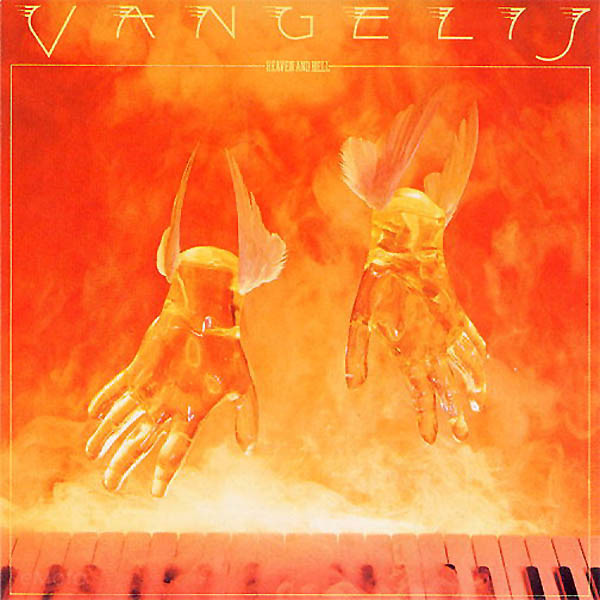
Vangelis: Heaven and Hell

Released in November of 1975, Heaven and Hell is a mixture of the cinematic, early and modern “classical” music, Greek folk and some elements of progressive rock. The album effectively combines Vangelis’s mastery of synthesizer with orchestra to create a richly themed concept album about the duality of human interaction with good and evil, the light and the darkness of existence. Side One, “Heaven and Hell, Part I”, opens furiously with synthesizer and chorus setting a strong symphonic tone and concludes with vocals by Jon Anderson of Yes segmented with a glorious orchestral and synthesizer interlude. Side Two, “Heaven and Hell, Part II” opens up, contrastingly, darkly and ominously, generally maintaining that mood with the notable interspersion of an exuberant, infectious Greek-influenced folk-dance-like section and its more reflective ending. The musical tone-painting is particularly impressive, effectively supporting side two’s darker thematic premise.
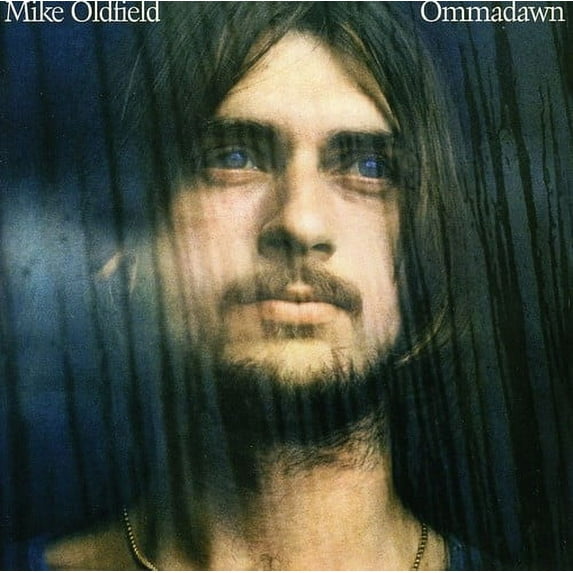
Mike Oldfield: Ommadawn

Released in November of 1975, Ommadawn is Mike Oldfield’s third major symphonic work, following the partly Exorcist-driven phenomenon of Tubular Bells and the expansive, pastoral landscapes of Hergest Ridge. Ommadawn mostly consists of one long work, the title track, divided between the two sides of the original LP with a short additional work at the end. It is this title track that is the gem and centerpiece of the album, excelling in compositional presentation and development of thematic material with the first theme deftly varied, followed by an abruptly effective intrusion of the second theme around the 4:15 mark, which is also skillfully varied. After this exposition of fundamental material, both themes are further developed and extended with a richness of instrumental variety and occasional vocals (using a cleverly altered Irish translation of some simple English words) invoking a tribal sense of community.

The second half of “Ommadawn” is more dramatic with greater musical weight and contrast, further exploring a wondrous world-fusion sound that would soon become a whole sub-genre of music. The highlights here include Paddy Moloney on the Irish equivalent of bagpipes, more properly known as Uilleann pipes, and an uplifting blend of vocals and glockenspiel followed by an Irish-like dance section that brings the work to a close.

For those looking to check this album out, avoid the original mix and go for the sonically spectacular 2010 remix which provides significant clarification and enhancement of individual instruments and provides rich, immersive stereo.

Magma: Live/Hhaï

Released in December of 1975, I bought this album in Germany in 1978, and I was not surprised in the least to find this live album of the French progressive rock group in Germany. Unlike Ange, which had a distinct French coloration to their albums, Magma had a Germanic sound and eschewed the French language to adapt a language more suitable to their music — not German, but — okay let’s break this down.

Christian Vander, son of French jazz pianist Maurice Vander, was born in Paris in 1948. Exposed to both jazz and classical music, he grew up listening to Wagner, Bach and Stravinsky and met several great jazz artists including Chet Baker, who gifted Christian Vander his first drum kit and Elvin Jones who shared his musical expertise. Vander brought all these influences as well as his intense admiration for a number of jazz giants, most particularly John Coltrane, as well as drummers like Art Blakey, Max Roach, Kenny Clarke and Tony Williams. Vander brought all such influences with him, including Coltrane’s searching musical intensity, when he founded Magma in 1969 as Magma’s leader, primary composer, drummer and an important contributing vocalist.

With the formation of Magma, Vander begin the creation of the mythology of Magma concept albums and the appropriate language — Kobaïan, the language of the fictional world of Kobaïa — a distant planet colonized by a group of humans fleeing earth’s moral and ecological collapse. The language’s main function was to provide the appropriate musical sound for Magma’s music and to represent a sacred language of renewal. Its sonic characteristics are starkly different than French, coming closer to Slavic and Germanic patterns, but intrinsically supportive of Vander’s musical ideas, which slowly coalesced into a dark, more teutonic, primitively spiritual style, with texture and timbral/orchestral characteristics eventually significantly influenced by Carl Orff’s Carmina Burana, which Vander first heard in 1972.

This 1975 Live/Hhaï album includes material as early as 1973, all of which represents the mature, dramatic Magma sound prevalent from 1973 on. The original album was a two LP set that could still fit on a standard single CD, but is currently sold as a two CD set. It is available for streaming on the usual sources for anyone wanted to sample this unique music, a music that will retain its excitement, mystery and appeal for centuries to come.

Brian Eno: Another Green World and Discreet Music; Fripp & Eno: Evening Star

In November of 1975, Brian Eno released his third solo studio album, the remarkable Another Green World which, while not as ambient as his upcoming work, is certainly an unconventional pop album full of highly accessible music surrounded with imaginatively unusual context. Eno provides a mix of catchy songs with him on vocals, some amazing guitar work from Robert Fripp, but mostly a level of exotic, quirky arrangements that elevate each and every track. Highly recommend!

In December of 1975, Eno’s fourth studio album is released, Discreet Music, and it is a boldly innovative ambient album. The first side, the title track, is a work of beauty and can be listened to directly or used as effective background music for a range of activities including writing, reading and napping off. The second side is more challenging: three “elastic” arrangements of Pachelbel’s well-known canon where the parts move at different paces — not by chance or performer’s whim but intentionally arranged to distort the relationship of the individual parts and the overall musical experience. One can still hear traces of the original canon — yet each of the three very different arrangements alters the original musical architecture with time-based abstractions that are roughly parallel to distortion concepts in cubism, futurism and surrealism and also seem related to rules-driven processes that are found in works by artists like Paul Klee, Bridget Riley, Sol LeWitt and even those famous rectangle paintings of Piet Mondrian. One also has to give credit to John Cage’s influence which opened up this whole realm of unexpected alterations whether aleatoric or rules-driven.

The most challenging of these three albums, Fripp & Eno’s Evening Star, released also in December of 1975, is another tale of two sides. The first side of four tracks, each with new standard ambient titles, is by far the most accessible and functions very effectively as truly ambient music or even meditative, reflective music, particularly the first, third tracks and fourth tracks “Wind on Water,” “Evensong,” and “Wind on Wind.”

The second side is devoted to a single piece “An Index of Metals” divided up into six tracks. I doubt there are many people that can turn it on in the background and experience a calming or relaxing effect from it. It is filled with tension and not smooth or flowing. I suspect many will just find it plain irritating if using it to relax, read, or write by as it has a somewhat intrusive and ominous character. It is more listening music and needs the attention of an active listener to properly navigate the tension, suspense, and forward progress of the music. The last of the six tracks is the most gritty of all and it ends with the tension decaying as opposed to any resolution. This sets up a nice contrast to some more relaxing ambient music, which would become more and more common and commercially viable thanks to this early work by pioneers like Eno and Fripp.
Tom Waits, Van Der Graaf Generator, Steve Hackett; Fifty Year Friday: September and October 1975

Welcome back to Fifty Year Friday! It is my great pleasure to announce that our first entry is by an esteemed and respected writer who, for reasons we won’t question, has graciously agreed to provide material for us under the nom de guerre of Leo The Deacon. If you can navigate a substantial drop in quality, a few of my own Fifty Year Friday entries follow. Enjoy!

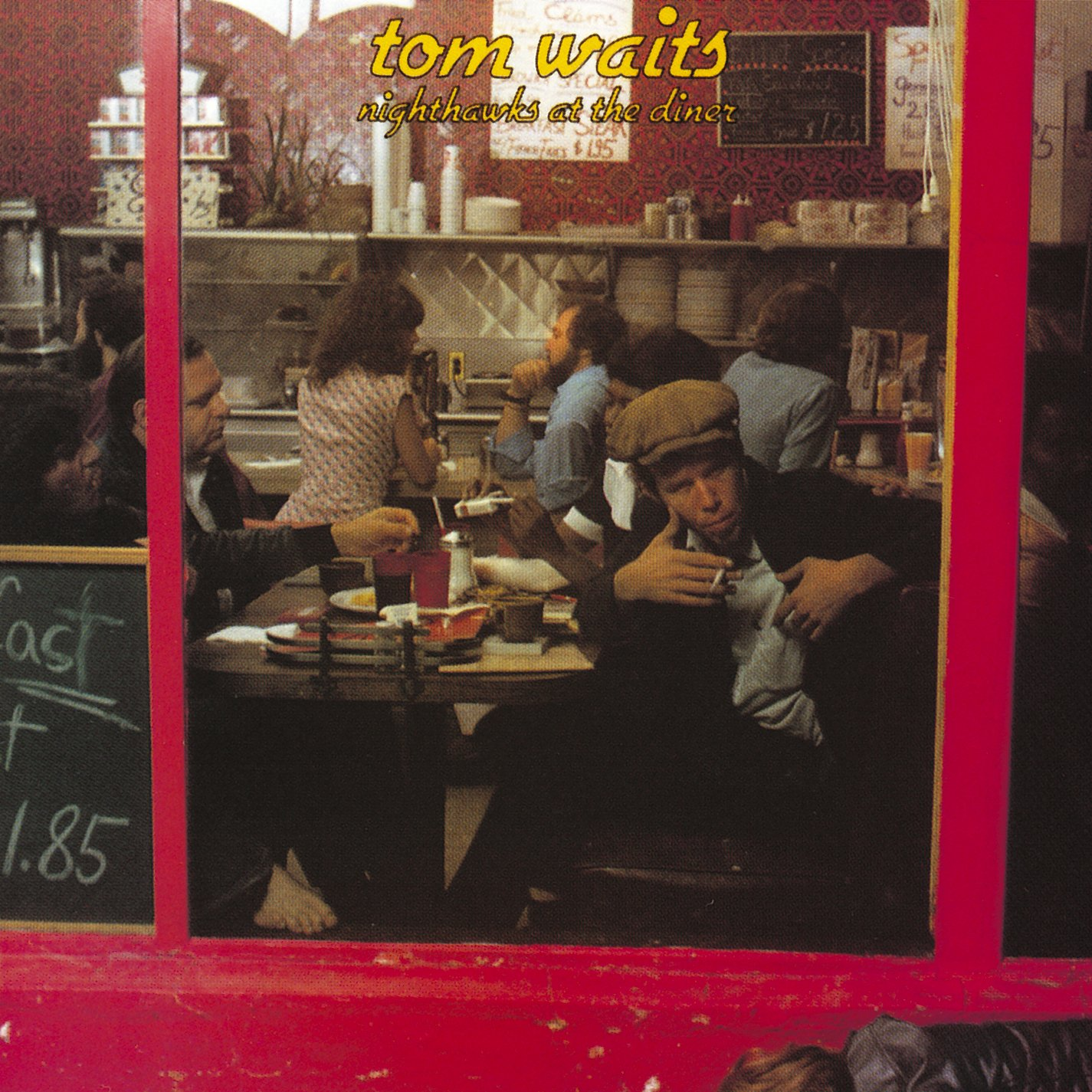
Tom Waits: Nighthawks at the Diner

If ever there was an artist and an album deserving of the rubric sui generis, it is Tom Waits and this, his third album Nighthawks at the Diner. At a time—October 1975—when progressive rock was on the cusp of going to seed, disco was poised to go mainstream, and Wayne Shorter and Chick Corea had set aside post-bop to explore jazz-rock fusion, Waits came out with a two-disc album in which he performs mostly original songs, backed up by a quartet of first-rate Los Angeles jazz sidemen, in front of a small live audience.  As a bookish 20-year-old who never quite embraced rock music—despite the earnest and occasionally successful efforts of the curator of this blog to interest me in such groups as Emerson, Lake, and Palmer, King Crimson, and Gentle Giant—I found Waits’ wry, atmospheric, jazz-inflected compositions  a subversive challenge to the hegemony of rock and roll. Nighthawks appealed not just to the emotions, but to the head. It did not hurt that his profane, salacious, and very funny banter between songs was well calculated to engage the sensibilities of college guys whose weekends, more often than not, were spent in the company of other dateless young men.

So is Nighthawks a jazz production, or a singer/songwriter presentation? Yes. Here’s where it gets interesting, because throughout the performance Waits meanders about the intersection of several genres:  jazz, singer/songwriter compositions, spoken word, a bit of stand-up comedy. Hell, in the cut “Big Joe and Phantom 309” Waits even covers a country-music song by Red Sovine about a ghostly trucker. The entire album is a musical Venn diagram of multiple converging circles. One can’t even call it a “live” album, exactly, because it was recorded in a studio, but in front of an audience hand-picked by the producer to convey the feel of a live performance. It’s not quite authentic but it works, especially as it allows the listener to experience the entire Waits shtick: the guttural banter, the jokes, the wordplay, and the music.

The mood is set from the get-go in the opening intro, with the quartet playing a bluesy vamp featuring Jim Hughart’s walking bass and short, honking arabesques by Pete Christlieb on the sax. The sound is that of a cool, if jaded, house band at a burlesque club and Waits reinforces the conceit by welcoming the audience to the fictitious “Rafael’s Silver Cloud Lounge,” and thanking the stripper who ostensibly warmed up the audience and put a charge into Waits’  libido.  He continues with some introductory jokes about late nights and coming home after three months to find everything in his refrigerator has “turned into a science project.”  As he talks, Waits elegantly elides into the first song, “Emotional Weather Report,” which is more rhythmic spoken word recitation than it is singing. He bemoans the “tornado watches…in the western region of my mental health” and declares that “It’s cold out there—colder than the ticket-taker’s smile at the Ivar Theater on a Saturday night.” Jilted by his lover, Waits’ forecast is for more precipitation.

The rest of the album more or less follows the same pattern, with Waits sustaining a twisted down-and-out persona as he leads into another song or spoken word performance, backed by the jazzmen and revolving around themes of loneliness, lost love, late nights, and life at the margins. For my money, the best cut on the album is the third, “Eggs and Sausage (In a Cadillac with Susan Michelson)” in which Waits precisely captures the milieu of an all-night coffee shop. In this song, (this time he is singing rather than reciting), Waits displays his artistry in clever turns of phrase and the ability to evoke the bittersweet mood of a lonely late night out after a break-up. Atmospherics and the skilled deployment of similes and metaphors are Waits’ stock in trade and he’s at his best in “Eggs and Sausage.”

Waits is often compared to the Beat poets, but that’s not quite right. His music at this stage of his career, and particularly on this album, is reminiscent of the Beats, with its jazz and spoken word poetry, and its exploration of loneliness and alienation. But unlike the Beats, Waits isn’t concerned with philosophy or spirituality, or even drug-induced altered states of consciousness. For the most part, alcohol is Waits’ drug of choice and that and his focus on the working class and marginalized perhaps slides him closer to the Beats-adjacent Charles Bukowski. Both Bukowski and the Beats expressed profound alienation, however, with the Beats setting themselves in opposition to the 1950s military-industrial complex and Bukowski challenging the smug conventionality and moral sensibilities of bourgeois America. Waits isn’t overtly political, like the Beats could be, and he certainly doesn’t indulge in the blunt rage and belligerence of Bukowski. Rather, despite the crusty delivery, he is sentimental. In the end, Nighthawks, as well as Waits’ other music of the mid-1970s, is not concerned so much with alienation as with hard luck, loneliness, and the struggle to carve a little dignity out of an uncaring universe. On Nighthawks, the world is what it is, and Waits knows it is a mug’s game to try to change it.

Tom Waits, at any point in his long musical career, is an acquired taste. Those fans, likely younger ones who are more familiar with the growling, iconoclastic, and experimental performer Waits morphed into starting with 1983’s Swordfishtrombones, may find the younger Waits of Nighthawks in the Diner more conventional—dare we say “quaint”?—than the older artist they are familiar with.  But in 1975, Waits’ retro-beatnik hipster persona, jazzy music, and well-crafted noirish lyrics was something different from the dominant electronic-heavy compositions of rock and fusion. From the perspective of fifty years, it holds up well, although younger listeners may find themselves bemused by Waits’ frequent references on this album to LA “landmarks” that have passed into history—The Copper Penny restaurants, the seedy Ivar Theater, the  Ziedler & Ziedler clothing store on Sunset, and KABC weatherman Dr. George Fischbeck, to name a few.

If there is a flaw in Nighthawks, it is that the persona Waits adopts narrows the variety of the songs. To be sure, on a few tracks—“Warm Beer and Cold Women,” “Nobody,” and the country-ish “Putnam County”—Waits veers into his singer/songwriter roots, dials back the jazz, and sings accompanied by himself on piano. By and large, though, the album is a series of Waits’ compositions backed up by well-executed jazz incidental music. The jazz frames the mood, but the fun is in skillful lyrics, the repartee and wry observations, and the dark, at times cynical, yet not despairing atmosphere that Waits conjures up. It is an eccentric artifact of its time, but it still rewards the listener and reminds us that the 1970s weren’t all bell-bottoms, platform shoes, and leisure suits. 

Leo the Deacon

Van Der Graaf Generator: Godbluff

Released in October 1975 in the UK, this album was only available as an import. It wasn’t until I made a trip to Europe in 1978 that I purchased it in Amsterdam and had it and several other albums shipped from a post office near the record store back to the States. That particular parcel of LPs arrived home earlier than I, and so once I was home, I put it on my beloved turntable. Wow!

As a great admirer of their previous album, Pawn Hearts, which I had bought as a cut-out in the US for less than three dollars, I had high expectations for this. Fortunately, the quality of the lyrics and music did not disappoint.

After a four-year gap between Godbluff and Pawn Hearts, Peter Hammill, Hugh Banton, Guy Evans, and David Jackson roar back more powerfully than ever with less psychedelic and excursionary elements and an apparent singular focus on drama and controlled handling of musical tension and release. Hammill displays his range of skills on vocals, superior in dramatic and expressive impact to more famous contemporary singers/songwriters like David Bowie, and even contending with the otherworldly emotional delivery of Demetrio Stratos of Area and Francesco Di Giacomo of Banco del Mutuo Soccorso. Hugh Banton and Guy Evans are in great form on keyboards and percussion; and we have David Jackson on double saxophones, à la Rahsaan Roland Kirk, creating musical textures that elevate the music experience to breathtaking intensity.

Side One opens with “The Undercover Man”, which starts softly, creating musical and dramatic suspense. Once the tension is established, it methodically builds in intensity, layer by layer, gradually crescendoing, leading to some colorful organ, sax and the further unfolding of the brilliant expression and pacing of Hammill’s staggered and passionate vocals.

“Scorched Earth”, the second of two tracks on the first side, maintains intensity, opening up quietly and building in dynamics with repetitive motives weaving through Hugh Banton’s organ part and David Jackson’s deftly engineered sax parts supported by Guy Evans’s relentlessly polyrhythmic drum work. The forward momentum cools, with an initially echoey middle section, crafted out of preceding musical material that explodes into an unpredictable flurry of syncopated melodic material and violent skirmishes of accelerating ostinatos and motivic interchanges. Two dominant mixed meters alternate. Dynamic and rhythmic shifts continue to propel the music forward to an abrupt climax ending with a brief musical exhale.

Side two opens up reflectively with “Arrow”, with a meandering and introspective introduction ferociously interrupted with Hammill’s vocals which commence to entwine and shape the course of the music leading into an instrumental of repeated sax permutations on the primitive four-note saxophone motive heard earlier but not put through a series of repeated modifications. Hammill’s vocals return with full intensity and anguish:

How long the time seems
How dark the shadow
How straight the eagle flies
How straight towards his arrow

How long the night is
Why is this passage so narrow?
How strange my body feels
Impaled upon the arrow


This is followed by more sax-dominated instrumental and intensive, unrestrained percussion eventually trailing off into a sustained whimper.

The last track, “Sleepwalker”, described by Hammill as portraying “life in death, death in life” begins boldly with a brilliant 9/8-based mixed-meter motif, syncopated and off-kilter, creating a lurching, stumbling feel, realized flawlessly by sax, organ and percussion. Once the pattern is established for the listener, it moves into an accompaniment foundation for Hammill’s vocals:

At night, this mindless army, ranks unbroken by dissent
Is moved into action and their pace does not relent
In step, with great precision, these dancers of the night
Advance against the darkness – how implacable their might!

The second section starts off as a tango with güiro, organ, clavinet and then sax on melody– but it is a 3/4 tango! It then contorts itself evolving into the opening motif for brief return of theme A, but these expectations are quickly tossed aside with an intro into a completely new section in a relentless, undeniable 4/4, the sax and rhythm hinting at a brief funky disco feel before the band shuts down that possibility completely with aggressive prog-rock percussion, sax and Hammill’s searing vocals.

A necessary aside on the artistic nature of David Jackson’s approach to the saxophone: dubbed “the Van Gogh of the saxophone” by a critic of the British New Musical Express, Jackson was described as a “renegade impressionist, dispensing distorted visions of the world outside from his private asylum window”. Following in the footsteps of jazz artists like John Coltrane, Rahsaan Roland Kirk, and Albert Ayler, Jackson focused on fully leveraging timbral and tonal qualities of his instrument to deliver a wider range of emotional experiences.

Two key elements defined his style. The first was his signature use of double horn — playing two saxophones (typically alto and tenor) simultaneously, creating dense harmonies and powerful, layered riffs. The second, and more crucial for “The Sleepwalkers,” was his pioneering use of electronics using customized pickups, octave dividers, wah-wah pedals, and powerful amplification, transforming the saxophone from a purely acoustic instrument into a versatile prog-rock sound source, capable of generating textures and timbres far beyond its natural range, allowing him to sonically manifest the fragmentation, distortion, and psychological turmoil central to VDGG’s music — and provide a fully-effective soundscape for Hammill’s autonomically engaging, intensely visceral vocal delivery.

The synthesis of those two saxophones, the bass pedals and organ work of Banton, Evans’s driving polyrhythmically-paced percussion, always at the service of the music and text propels us into the psychedelic-flavored coda which slowly evaporates into nothingness, leaving the lingering essence in the listener’s mind, eventually compelling a repeat playing of one of the finest albums

Steve Hackett: Voyage of the Acolyte

Released in October 1975, I never had enough money to buy this in my college days — such a shame, as this is a wonderful album and provides insight into how much Steve Hackett contributed compositionally to the many of the passages within Genesis’s Nursery Cryme and Supper’s Ready. Excellent, evocative and reflective music that sparkles as wondrously as ever.

Pink Floyd: Wish You Were Here

Pink Floyd released their ninth studio album in September of 1975. Fifty years later their The Dark Side of Moon boost has maintained their popularity enough so that there are multiple sets out this month celebrating the fiftieth anniversary. If you haven’t heard this album yet, you probably weren’t listening to music fifty years ago!

Can: Landed; Jethro Tull: Minstrel In the Gallery; Electric Light Orchestra: Face the Music

All released in September of 1975, all three of these albums have their strong moments and are worth checking out. Can’s Landed starts off with grungy rock badly recorded, but ends strongly with the musique concrète of “Unfinished” with much of interest in between.

Jethro Tull’s Minstrel In the Gallery is more reflective than his previous three albums and seemingly more personal. Thematically, the album lyrics cover the introspective and the cynical, with Ian Anderson’s lyrics exploring the isolation and pressures of being a public performer — Anderson being that Minstrel in the Gallery. Throughout a good deal of the album Martin Barre’s electric guitar is in the forefront and borders on a jazz-fusion ethos contrasted in other sections with delicate acoustic guitar. The album’s highlight is the musically and metrically complex, multi-part “Baker Street Muse” on side two, lasting over sixteen minutes with sharp contrasts and sharp lyrics.

ELO’s Face the Music opens up with an orchestral intro and explodes with their signature blend of strings, Jeff Lynne’s guitar, drums, and keyboards. The excellent opening instrumental, which highlights Mik Kaminski on violin, is followed by a classic-sounding ELO track, “Waterfall, reminiscent of Eldorado material. As mentioned earlier by Leo the Deacon, September 1975 ushers us into the mainstream days of disco fever and ELO made good money with an edited single version of the third track “Evil Woman.” I had stopped listening to AM radio long before 1975, but somehow I was still exposed to it enough in various public venues that I developed a rather strong aversion to its annoyingly commercially cloying sound. The remaining album has its ups and downs, and includes a number sounding much like the pre-disco Bee-Gees (“Strange Magic”) and Lynn’s excursion into country music, “Down Home Town.”

Besides these albums we have a wealth of other releases, not at the level of Godbluff by any means but much more commercially successful including albums by George Harrison, John Lennon, Elton John, Paul Simon, his former singing mate, Art Garfunkel, Rush, Herbie Mann, Linda Ronstadt, Roxy Music, Sparks, Steeleye Span, Aretha Franklin, Barbra Streisand, Frank Zappa, Hall & Oates, Crosby and Nash without Stills, and though I haven’t a clue what it sounds like, and am totally fine with that, Kiss’s Live Album, which apparently is the first album released by any American hard rock band, for if memory serves me correctly Spinal Tap had not released any live albums by that date — or to be factually correct, now that I check Wikipedia, still has not.

Changes of Note

It is with mixed feelings, and pretty intense regret, that I am aggressively scaling back on the publishing of Zumwalt poems on this site. As Zumwalt’s longtime co-editor, I cannot ignore the minimal traffic on this site and the numerous options available for me to submit some of Zumwalt’s previously unpublished poems to diverse and respected publications which will provide Zumwalt an audience of thousands or even tens of thousands of readers. I owe this to my friend Zumwalt.

When I was a data architect, I was fortunate to have had several of my articles on Data Warehousing published in Data Management Review. I know the personal joy of seeing one’s own work published in a respected periodical. Zumwalt has been deprived of this opportunity since the unfortunate, but predictable, cessation of the GHLM newsletter, which had contracted with him for exclusive publication rights. He insists that publication of his work is not important and even scoffs at its future likelihood. I suspect this is not so on either count.

In order to keep this blog active, I will continue to publish anything Zumwalt sends me exclusively targeted for this blog — provided that I cannot persuade him to allow me to forward such material on to potential publishers. I will also continue to author posts like “Fifty Year Friday”, which showcases a combination of my flawed writing against reminiscences of some of the great music of fifty years ago. I wish I had time to write more — I gave up Century Sunday, Seventy Year Saturday and other features due to time constraints; I wish I could write better — I gave that up a long time ago — I write for the joy of writing and I am fine with one reader or ten, ten being about the maximum audience I have for any given post.

But as typical with my ruminations, I have veered off-track, at the expense at both my message and your patience.

My plan is this: Fill up some of the empty blog-time by engaging a well-respected, now-retired former literary critic (I will say no more out of respect to protect this individual’s identity, which is this person’s wish.) He has indicated he will record a short lecture for each previously published Zumwalt poem on zumpoems.com. I will use a software app I have to transcribe each lecture and post it here. Not sure when he will deliver the first lecture, but he is very knowledgeable on both poetry and all of the Zumwalt poems on this site and all the Zumwalt poems that have been previously published in the GHLM newsletter and the original GHLM (which, acronym, dear reader, simply stands for Good Humor Literary Magazine) — and, I believe, as I finish this long-winded, poorly written sentence, is something he can do easily off-the-cuff, with minimal time and preparation required. I have seen him lecture live on impromptu-requested topics, and it is quite something to have witnessed.

Until then, you continue as my distantly cherished and greatly appreciated friend, so please return so we can meet again.

Gentle Giant: Free Hand, Renaissance, Klaus Schulze. Harmonia; Fifty Year Friday: July and August 1975

Progressive Rock in the Summer of ’75

The summer of 1975 marks the zenith of progressive rock: the moment when the genre reached its cultural and commercial apex. The journey had been remarkable. The late 1960s and early 1970s saw its birth and evolution, a period of explosive creativity as bands honed their technical abilities and expanded their conceptual ambitions. The artistic potential evident in foundational works like Sgt. Pepper’s Lonely Hearts Club Band and Days of Future Passed was fully realized in a wave of masterpieces, each pushing the boundaries further: In the Court of the Crimson King, Fragile, Thick as a Brick, and Brain Salad Surgery.

By 1975, progressive rock was no longer an exceptional burst of creativity; it had become a normal, even dominant, mode of musical expression. The audience for long-form, complex compositions—accommodating multi-part suites, shifting time signatures, and grand conceptual themes—had been built. The music was not only artistically impressive but commercially triumphant, filling the largest concert halls, arenas, and stadiums across America and Europe.

Yet, this peak was also a turning point. Just as any artistic movement has its heyday followed by phases of sustainment, adaptation and imitation, whether finely-crafted Baroque, emotionally-evocative Impressionism, or intoxicating Swing, so too did progressive rock begin its next chapter. Having reached its summit, the genre moved out of the creative spotlight and began to solidify its place in history, setting the stage for new bands to adapt its sounds and for its original architects to navigate the changing tastes of a global audience.

Gentle Giant: Free Hand

Progressive Rock certainly had to be popular for one of the most underpromoted and generally ignored progressive rock groups to have an album climb as high as number 48 on the U.S. Billboard chart. One was still likely to get blank looks when recommending Gentle Giant to friends, but they had made such considerable progress in achieving recognition that they were now more often the main attraction rather than a predominantly supporting act, playing larger and larger venues, getting placed into multi-act festivals and headlining the 7,000-capacity Montreal Forum Concert Bowl and selling out the Centre Municipal des Congrès in Quebec City.

This well-deserved increase in success was crucial, as it helped buffer the band psychologically during a bitter two-year conflict with their UK label, WWA Records. The disputes were numerous and severe: WWA’s US counterpart, Columbia, had refused to release the brilliant but challenging In a Glass House; the band’s management was siphoning off an obscene amount of money; and the label was relentlessly pressuring them to become more commercial and produce a hit single.

After much legal maneuvering (and at what was apparently a significant financial cost), the band finally managed to extricate themselves from their contract. They promptly signed with the more prog-friendly Chrysalis, which had already expressed interest should they become available. This move was not just a business transaction; it was a liberation.

Now on their new label, Gentle Giant could create without constraints. The result was an immediate celebration of this freedom. The first side of their new album, Free Hand, serves as a defiant and musically intricate declaration of independence. Its overarching theme is interwoven with introspective lyrics on a fractured relationship, functioning both as a literal commentary on their breakup with WWA and as commentary on a romantic breakup.

The opening finger-snapping is overlaid with Kerry Minnear’s simple, syncopated piano line, which is quickly joined by Gary Green’s guitar—first with on-beat chords, then with off-beat stabs that accentuate the rhythm. Derek Shulman’s voice enters as another independent line, creating as exhilarating a syncopated opening as has ever been created in rock music.

During the verses, the rhythm section of Ray Shulman on bass and John Weathers on drums lays down a solid six-to-the bar beat. Superimposed over this foundation, the lead vocal and the primary melodic instruments (piano and guitar) operate in a conflicting meter of 7/4. This is not merely a display of technical prowess; it is the lyrical theme made manifest in rhythm. This irrationally persistent dual-meter creates a feeling of daredevil friction — a propulsive yet unsettling groove that is constantly pulling against itself. It musically represents the band’s position: they are intentionally “out of step” with the standard pulse of the industry but are perfectly in sync with their own complex internal logic. The two meters coexist, creating a challenging but ultimately coherent whole — a sonic metaphor for forging one’s own path.  

The track ends with a coda carved from the intro, leading directly into the dramatic fugato opening of “On Reflection.” The texture builds with breathtaking complexity: first a single voice, then a second independent voice, then a third, and a fourth. After a short contrasting section, the four-part vocal polyphony is doubled by instruments. The track then shifts to a new, ballad-like theme, delicately supported by recorders, violin, and vibraphone, before the opening fugato returns on instruments alone, trailing off into silence.

The first side culminates with the title track, “Free Hand”, which serves as the narrative and thematic centerpiece. The swaggering, layered opening provides musical continuity, while the lyrics offer a triumphant and unambiguous celebration of autonomy. The aggressive first section is effectively contrasted by a reflective, free-flowing instrumental interlude. Derived from the opening theme, this section alternates between fluid passages and sharp, staccato outbursts. Exciting, climactic transitional material then builds tension before a final recapitulation of the primary theme. A short coda indulges in a few moments of development and ends with a notable cadential flourish — an in-your-face flip of the heels — a musical “so there!”

With “Killing the Time”, side two unexpectedly and amazingly opens up with the sound of Pong — the unassuming, but highly popular video game once found in pizza parlors, pubs, and hotel arcades throughout the U.S., Canada, the U.K., Japan and much of Europe in 1974 and 1975. The brief sound of Pong is followed by musical tone painting at its finest — the music captures idleness effectively with its representation of the seeds of the rhythm searching for a groove and coalescing into what I call Gentle Giant’s stride style (see Fifty Year Friday: July 1971 with additional examples mentioned in Fifty Year Friday: September 1973, Fifty Year Friday: December 1972Fifty Year Friday: April 1972Fifty Year Friday: November 1970.) 

Functionally, this track extends the album’s concept of new found freedom, portraying the band killing time between concerts. Though primarily minor and minor/modal with its distinctive off-kilter character, once past the opening section, the structural form relies on traditional verse and chorus relationships with a contrasting bridge after the third verse — but with the welcome addition of a sixteen-bar development section after the bridge with a standard repeat of chorus, verse, chorus and fade out. Though the harmony is generally straightforward, using a dominant key and the relative major as contrasting tonal areas, the deployment of chromatic passing chords and controlled dissonance adds to the overall musical interest.

“His Last Voyage” is the most lyrical work on the album, a soft and beautiful Kerry Minnear composition. The form is generally strophic, but constant variation and development provide a sense of passage through tumultuous seas, turning a tragic narrative into a powerful musical metaphor.

This is followed by the penultimate track, “Talybont,” a refreshing neo-Renaissance instrumental that lightens the mood with its cheerful Mixolydian mode and playful counterpoint. Originally composed for a never-released Robin Hood film, its inclusion here provides effective contrast while its melodic contour echoes the album’s opening track, adding to the record’s cohesive feel. It is in rondo form (A B A B A B A) with some musical variation to further increase interest. Interestingly, while the track provides necessary contrast, it also shares the melodic contour of the main theme from “Just the Same.” This subtle connection enhances the album’s sense of unity.

The album ends with “Mobile”, describing life on the road and returning to the album’s general conceptual theme.

“… Moving all around, going everywhere from town to town
All looking the same, changing only in name
Days turn into nights, time is nothing only if it’s right
From where you came, don’t you think it’s a game?
No, no, don’t ask why
Do it as you’re told, you’re the packet, do it as you’re sold…”

The music rocks hard with a solid 4/4 time signature but is enriched with aggressive syncopation, rhythmic displacement, use of synthetic stretto (my term for removing notes in a repeated pattern) for creating momentum and tension, implied metrical shifts (while still in 4/4) and hints of polyrhythm. Add to this effective musical support of the lyrics, and ample musical development, and we have an exhilarating conclusion to one of Gentle Giant’s most unconstrained, most unified albums — an album celebrating, and ultimately documenting, their creative freedom.

Renaissance: Scheherazade and Other Stories

Renaissance’s sixth studio album, Scheherazade and Other Stories, released in July 1975, captures the band operating at the peak of their artistry. Side one starts with John Tout’s piano solo, setting a dramatic tone for the album. Annie Haslam’s ethereal, wide-ranging, and always captivating vocals soar over the first track, “Trip to the Fair,” with its waltz-like foundation reminiscent of a merry-go-round. The 3/4 meter extends into the instrumental middle section, punctuated by snippets of 5/4 that nicely set up the return to the primary theme. This is followed by a short, upbeat, and energetic piece, “The Vultures Fly High,” with its effective modulation in the middle instrumental section. “Ocean Gypsy,” a reflective ballad with subtle musical twists and turns, closes side one.

The highlight of the album is the nearly 25-minute “Song of Scheherazade,” based on the multicultural classic collection of folktales, One Thousand and One Nights. The work is so effectively arranged to incorporate the London Symphony Orchestra that the orchestration seamlessly supports the musical and narrative effort. Annie Haslam is in top form, her voice navigating the epic’s dynamic shifts with grace and power, and John Tout contributes some truly memorable and impressionistic piano interludes that serve as narrative turning points.

Fifty years later, this is an exceptional album to revisit, beautifully showcasing Renaissance’s unique blend of progressive rock and classical influences. This truly effective, enduringly relevant, and genuinely engaging album is one of those artistic excursions that showcase how great music transcends stylistic boundaries to establish its own identity, one ultimately independent of time and genre.

Klaus Schulze: Timewind

Released in August of 1975, Timewind is a turning point for Klaus Schulze, a monolith of sequenced sound that answers the artistic challenge thrown down by Tangerine Dream’s Phaedra. Schulze’s response was to forge his own approach to the analog step sequencer, using its relentless, hypnotic ostinato patterns to create a new musical language that taps into the listener’s subconscious desire for rhythmic order. Time is no longer measured; it is created. This gives Klaus Schulze the freedom to forgo conventional melody, yet provide an accessible, orderly musical landscape: a slow tectonic drift of ambient continents stratified from electronic synthesis.

Even with this new technology, the album demands patience, which in turn allows the listener to fully enter and remain within the two slowly evolving universes that occupy each side of the original LP. This transformation of a mechanical pulse into the catalyst for a new realm of immersive experience now gives talented musicians like Klaus Schulze entirely new architectural tools to build previously undiscovered worlds. For the willing listener, the opportunity is that of complete immersion into the inner dimensions of pioneering soundscapes where time and space are collectively managed by the composer’s creative capabilities and the listener’s personal engagement.

Harmonia: Deluxe

Released in August of 1975, Deluxe, the second album from Harmonia — brimming with sonic colors, warmth and optimism — provides one of the best examples of listener-friendly German “Kosmische Music” (cosmic music). Where some of their contemporaries explored challenging dissonance or more Stockhausen-influenced content, this trio of Neu! guitarist Michael Rother and Hans-Joachim Roedelius and Dieter Moebius from Cluster, supplemented by drummer Mani Neumeier from Guru Guru, successfully crafted a sound that was both innovative and accessible, at least to those more adventurous listeners who explored the alternative avenues of music of the 1970s.

The album unfurls a vibrant, welcoming sonic world, seamlessly blending kaleidoscopic electronics with an insistent, forward-driving momentum that immediately engages the listener. The overall architecture relies on rhythms, ostinatos and the artful use of a drum sequencer. This is not consistently pulse-driven, rigid music, but music that appropriately flows, changes course, provides calm and turbulence, and ultimately invigorates with a sense of exploration, motion and scenic excursions.

The synthesizer work is particularly appealing, controlling the tint, brightness and saturation of the passing soundscape so colorfully it becomes visually evocative. The rich, shimmering textures seem to radiate a sonic equivalent of the visual spectrum allowing one to perceive the music in vibrant, shifting hues. With the addition of Rother’s contrasting guitar lines melodically interacting with the multitracked shimmering keyboards, the composite result creates the necessary wonder and interest to give Deluxe its overflowing positive and enduring energy.

Charles Tolliver, Area, Demetrio Stratos, Zappa, Tubes;Fifty Year Friday: June 1975

Charles Tolliver: Impact

Released sometime in 1975, Charles Tolliver’s Impact is an impressive album from the audacious and creative trumpeter, composer, and bandleader. Big band albums were becoming rarer and rarer, particularly those that were inventive, hard-edged, and more late hard bop or post-bop than nostalgic or easy listening. Impact unfurls a colorful, colossal sonic landscape, brimming with hard bop and post-bop intensity and an unbridled, innovative spirit that pushes the boundaries of large ensemble jazz. Tolliver masterfully constructs compelling compositions and intricate, adventurous arrangements that are both challenging and exhilarating, providing a fertile ground for himself and a handful of formidable soloists to unleash their improvisational prowess.

The album begins with the title track, “Impact,” an explosive opener that immediately grabs the listener’s attention with its dense brass voicings and a driving rhythmic pulse. Charles Tolliver himself steps forward, delivering a blistering trumpet solo that cuts through the dense ensemble with a bright, commanding tone, showcasing his characteristic blend of searing energy and melodic ingenuity. Also shining brightly is James Spaulding, whose alto saxophone work wonderfully weaves angular, serpentine lines, interacting with apparent spontaneity with the structured force of the ensemble.

“Mother Wit” begins with strings, which initially set a delicate mood, but the overall atmosphere soon coalesces, leading into beautifully lengthy solo work from Charles Tolliver. Harold Vick provides soulful tenor work, followed by Stanley Cowell’s angular, unconstrained hard bop piano solo. The strings return, followed by Tolliver, bringing the piece to a balanced close.

“Grand Max” bursts out with tightly wound energy, with Tolliver diving right in and maintaining the initial momentum. Rounding out the soloing is Charles McPherson on alto, George Coleman on tenor, and again Cowell on piano. Side two commences with the quirky and distinctive “Plight,” an energetic track that further highlights the dynamic range of the orchestra. Tolliver initiates the soloing, and is soon followed by Spaulding, then Cowell. This is followed by the reflective “Lynnsome,” featuring Spaulding on flute in the intro, with solos from Tolliver and Cowell that maintain and extend the initial mood.

The album concludes with “Mournin’ Variations,” which opens with strings. A dynamic interplay between the strings and the jazz ensemble then sets the stage for George Coleman’s extended tenor solo. This is followed by concluding piano commentary from Cowell before the re-entry of the strings. The two sections then alternate, shifting between wistful and emphatic passages, bringing one of the most enjoyable jazz albums of 1975 to a powerful conclusion.

Area: Are(A)zione

This is one of the few live albums, official or bootleg, of Area with Demetrio Stratos. This first side is amazing and includes live versions of three classic Area works, showcasing the bands exciting instrumental interplay and the one-of-a-kind, next-to-no-one voice of Stratos. The second side is is primarily a live free jazz/rock track, titled “Are(A)zione” matching the album’s title. “Areazione” is Italian for “evaporation,” but the use of case here provides the true meaning: “Area” is of course the group’s name and “Azione” is Italian for action, so freely translated this can be viewed as Area in action. The album ends with a nod to the group member’s socialist affinities, a rendition of “L’Internazionale.”

Frank Zappa and the Mothers of Invention: One Size Fits All

Released in late June of 1975, One Size Fits All provides more consistency and discipline than most Zappa albums allowing all the brilliance to shine through with only minor extramusical annoyances and distractions to detract from the overall positive musical experience. The jazzy” Inca Roads” is the gem of the album, and like “Peaches En Regalia” from Hot Rats provides enough forward momentum to easily forgive any weaknesses or annoyances from any tracks that follow. If one wants accessible Zappa, this is a good album to start with.

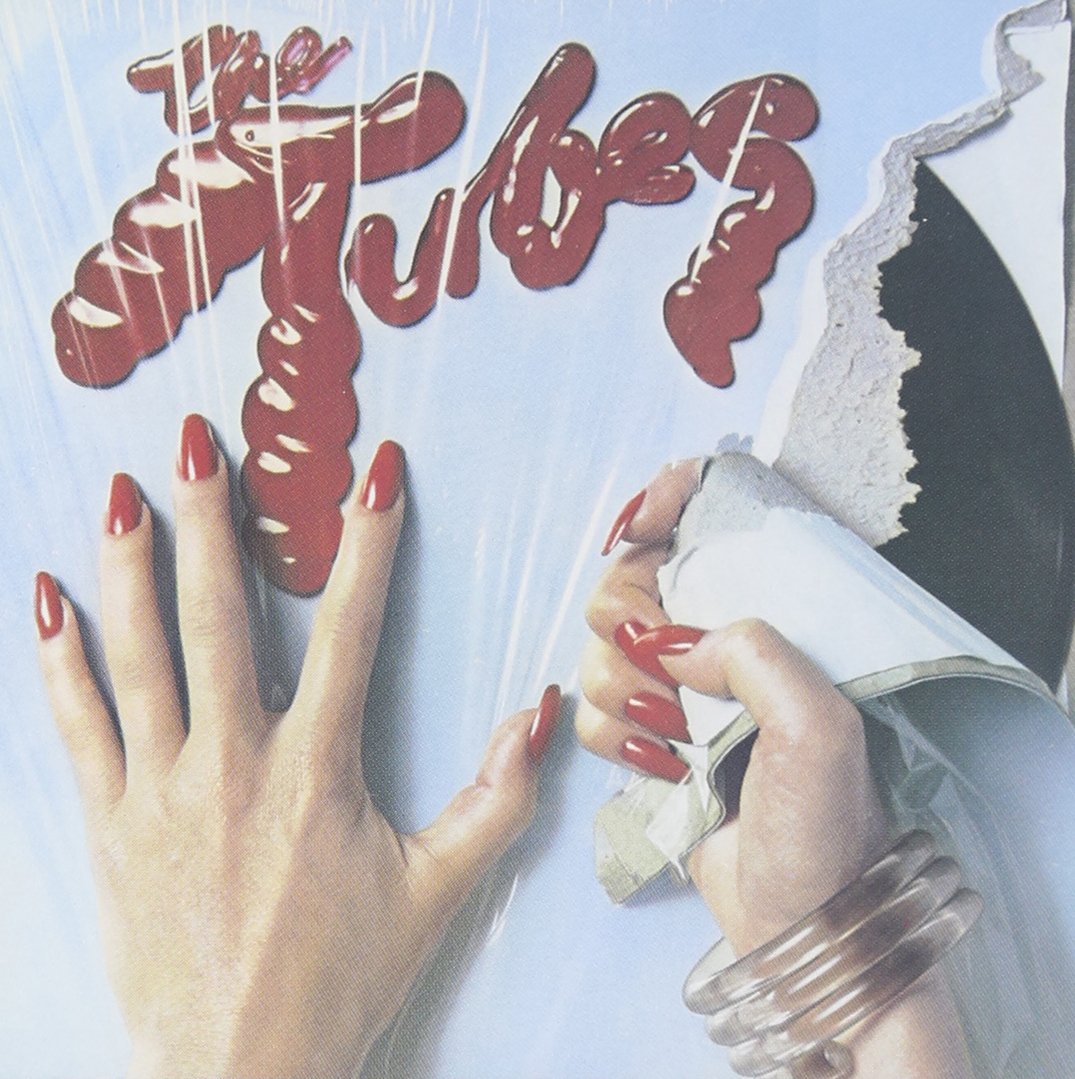
The Tubes: The Tubes

Released with minimal fanfare in June 1975, the album was passed around amongst my friends for its humor and lively use of synthesizer. In contrast to the rougher edges found in the humor seeping from Zappa albums, this was polished with some believable parodies of prevalent styles, primarily glam and punk, mixed with satirical social commentary. The humor enhanced the music, and the music was generally quite impressive itself. “Up from the Deep” kicks off the album with energy, drama and style, warmth and self-deprecating humor. The synthesizer work and keyboard in the instrumental bridge is up to progressive rock standards, and even includes a reference to a prevalent bridge motif in Gentle Giant’s “Knots” from Octopus. This is followed by a mixture of styles, all humorous in their own ways: Space Baby sleekly imitates David Bowie post-Ziggy style of 1973 and 1974, “What Do You Want From Life” drips with dry, razor-edged humor, and “Mondo Bondage” is notable for its relentless striding rhythm which supports the simultaneous metaphorical and literal meanings of the lyrics which are cleverly brought to the forefront. “Mondo Bondage” kicks off side two and is followed by three additionally strong tracks, “What Do You Want from Life?” a dig at materialism and seventies-style consumerism and angst, “Boy Crazy” another glam/Bowie parody that ridicules teenage cluelessness, and the pounding, relentlessly repetitive “White Punk on Dopes” which would eventually get some notable FM airplay in the U.S. and get even wider airplay a couple of years later in the UK. The Tubes went all out when they staged their material live, and though some of the musicality and more subtle aspects of their humor were consequential causalities, they still put on a good show.

Fifty Year Friday: May 1975

Henry Cow: In Praise of Learning

Henry Cow released their second album featuring members of Slapp Happy on May 9, 1975. Fiercely uncompromising, both musically and ideologically, it seamlessly blends rock, Twentieth century classical composition, and radical political commentary with a precision, ambition, and effectiveness as praiseworthy as any work in the 1970s.

Vocalist Dagmar Krause provides a stellar brilliancy the moment she takes over the vocals from Peter Blegard, four seconds into the album on “War,” which at 2:31 in length would have been perfect for radio play in some alternate universe — but alas our universe wasn’t quite up to the challenge of accepting irregularly contoured melodic phrases, asymmetrical time signatures, complex and politically charged lyrics, ominous incursions of harmonic instability, and the interspersion of harnessed chaos between vocal passages.

With the listener’s musical mind properly attuned, Henry Cow unleashes Tim Hodgkinson’s 16-minute “Living in the Heart of the Beast.” Initially, Peter Blegvad was asked to provide the lyrics, but ultimately Hodgkinson took over the task, crafting a set of syllables and meanings that seamlessly support the music. The work avoids any traditional structure, initially navigating shifts between vocal intensity and instrumental reflection until a wonderful organ solo introduces a forceful, uplifting instrumental interlude. This gives way to serious introspection from the organ, which then returns to the insistent, march-like vocal over metrical shifts, now irrevocably increasing in intensity until the coda winds down the work. Perhaps this may musically recall for some listeners the finale of ELP’s Tarkus as the wounded Tarkus retreats from the battlefield; however, in this case, the music is a call to charge into “fight for freedom,” providing a remarkable level of optimism and energy, effectively enveloping the listener in an afterglow as side one comes to a close.

Continuing the topic of marching to fight for freedom, side two opens up with “Beginning: the Long March”, an abstract, avant-garde representation of the march towards battle. It’s unstructured collage of electronic effects and musique concrète sensibilities may not appeal to the casual listener, but for someone focused on the overall flow and intent of the album this is a very appropriate and effective transaction to the next musical milestone, “Beautiful as the Moon; Terrible as an Army with Banners.”

This second track of side two, “Beautiful as the Moon; Terrible as an Army with Banners”, begins with Krause’s finely controlled, expressively nuanced delivery, dominating the first half with the entreaty to “seize the morning.” An instrumental commentary propels the start of the second half, with some excellent pointillistic contrapuntal piano punctuation with authoritative commanding vocals seizing the spotlight again to effectively close the work.

The last track, Morning Star, given its significance by the previous track’s lyrics of “A star mourns souls ungraved – ignored. Slow wheels: Mira. Algol. Maia” and “Rose Dawn Daemon Rise Up and seize the morning” brings the album to an effective close, firmly resolute and transcendent, firmly tying the album’s musical and verbal themes of awake, consider, prepare, engage and, ultimately, arrive and be!

Robert Wyatt: Ruth Is Stranger Than Fiction

Robert Wyatt’s Ruth Is Stranger Than Richard, released in May 1975, is a strikingly unpredictable album, filled with angular compositions that shift direction almost from note to note. Unlike his previous two solo albums, which were composed entirely of his own material, this third album finds Wyatt showcasing the music of others, creatively arranging and in most cases adding lyrics. Most compositions are by Wyatt’s friends and musical associates, but Wyatt also provides a fine treatment of jazz bassist Charlie Haden’s “Song for Che.”

The album’s eclecticism is immediately apparent with a strong focus on jazz. Is this jazz-rock, jazz-prog-rock or mostly jazz? Not sure, but it is wonderful and a non-stop thrill from start to finish! The flow of the album never flirts with predictability, its angularity lending a sharp, dynamic energy that keeps the listener engaged.

With contributions from Brian Eno, trumpeter Mongezi Feza and Fred Frith on piano, Ruth Is Stranger Than Richard thrives on musical interplay and spontaneity. It’s a thrilling listen, bursting with invention, providing a richness of the unexpected without being disjointed or even mildly inaccessible. Wyatt’s vision is as playful as it is sophisticated, making this a truly exciting and engaging listening adventure.

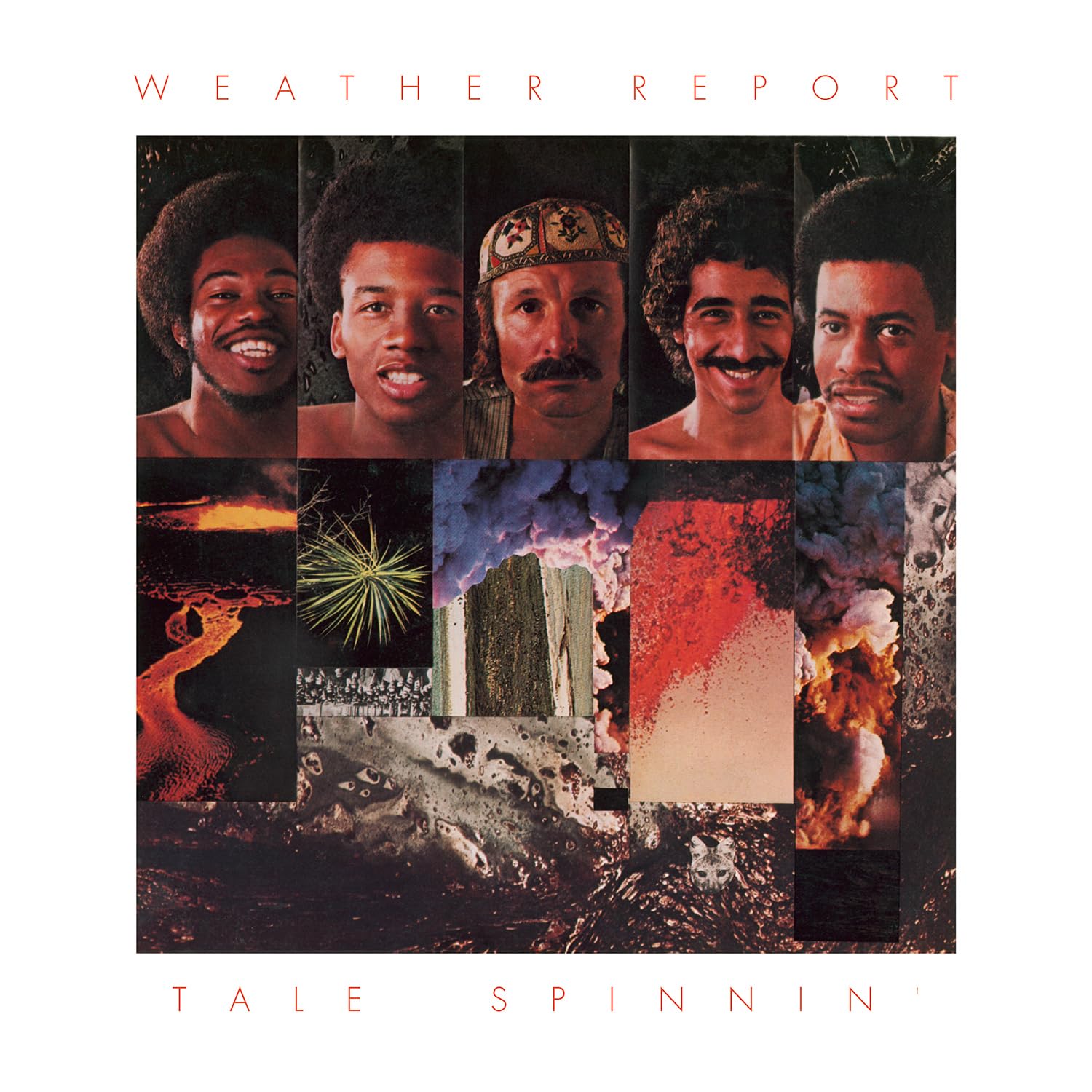
Weather Report: Tale Spinnin

Tales Spinnin’, released in May of 1975, is a vibrant, colorful album that showcases Weather Report at the height of their fusion creativity. The first side of the album is particularly striking, filled with bold, dynamic compositions that blend intricate melodies with rich textures. It is if I can almost hear colors when listening to this first side — it is that visually evocative, aurally. I wish I had some sophisticated color display screens for both the left and right channels that would translate the music into various bursts and evolving strands of colors, but lacking that, I can luxuriate in the radiant waves of Zawinul’s lush synthesizers and Wayne Shorter’s fluid, expressive saxophone work. The interplay between all five musicians is electric, creating a vivid musical landscape that’s both sophisticated and exploratory. The rhythms are complex yet accessible, propelling the tracks into lush, otherworldly soundscapes that are full of life and color.

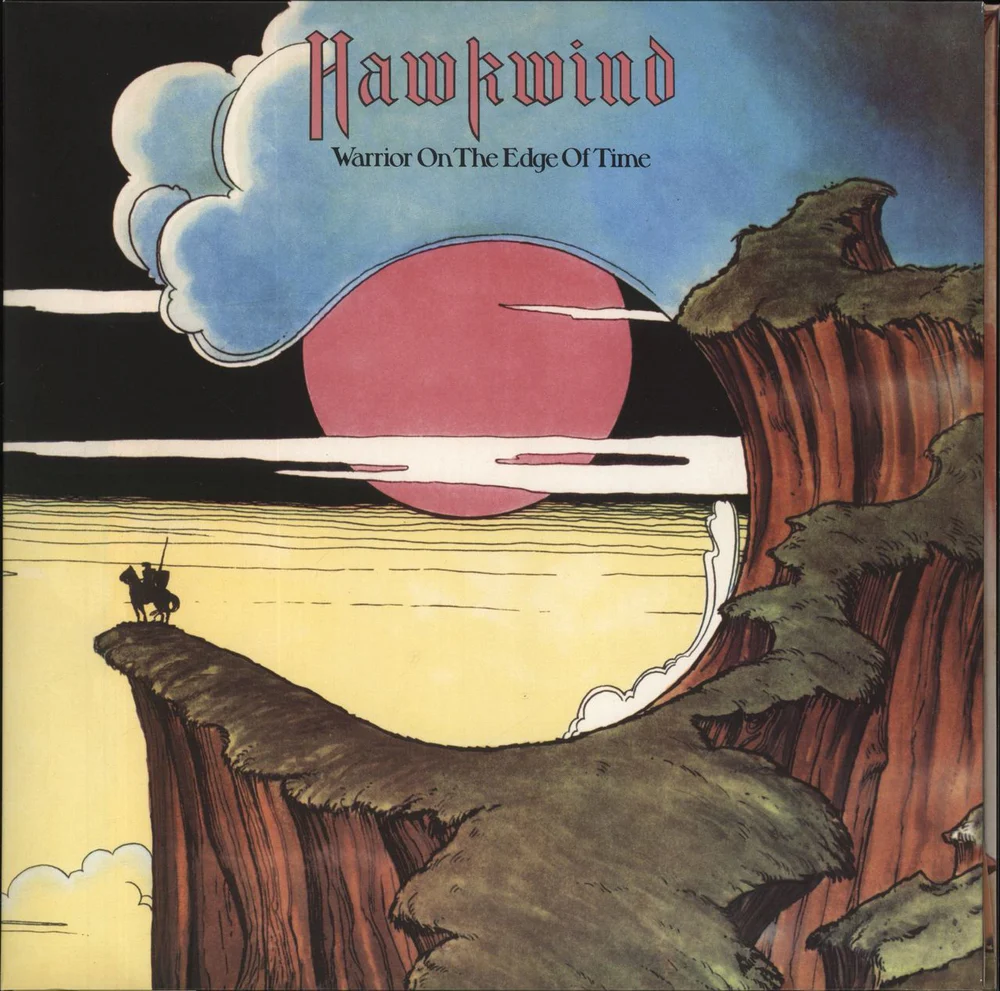
Hawkwind: Warrior On the Edge of Time

Released on May 9. 1975, Hawkwind’s Warrior on the Edge of Time is both engaging and consistently accessible, effectively blending their signature space rock with more traditional prog-rock elements. There is strong emphasis on synthesizers with some effective flute, guitar and even violin to supplement the keyboards, thundering bass, and the often incessant forward-driving percussion. “Assault & Battery” begins the album in grand style, immediately immersing the listener in Hawkwind’s signature Space Rock. This album showcases Hawkwind at their peak, delivering a memorable, mythic sci-fi journey through the fabric of time and space rock.

Fifty Year Friday: April 1975

King Crimson: USA

Recorded from two concerts, one in New Jersey, one in Rhode Island, in late June 1974, and released in April 1975, USA was the first decent live recording from King Crimson — for the previous live album, Earthbound, sound quality was as close to unlistenable as any official concert release since hard wax cylinders had been replaced by shellac discs. (Before my time, but I am still confident in this assertion!)

USA still falls short in terms of sound quality, with Eddie Jobson having to provide overdubs for sections where David Cross’s violin was inadequately captured, but it is still quite an enjoyable document of the group, particularly for those of us that were not able to attend their June 1974 concert performance in our neighborhood (only thirty-five miles away — so close!) The quality of the performance is incredible. The CD reissue contains extra material — and even better, one can get multiple concert recordings for the 1974 tour at https://www.dgmlive.com/tours?year=1974&download=on&liveshow=on — note the audio quality legend before downloading.

Steve Hillage: Fish Rising

Steve Hillage’s Fish Rising, released on April 11, 1975 is a dazzling fusion of psychedelic rock, progressive rock, and ethereal Canterbury-influenced content. This Hillage’s first solo album after his time with Gong, and one can hear echoes of that band’s cosmic sensibility that provide a solid foundation allowing Hillage’s distinctive guitar work and creative compositional skills to shine.

The album begins with the “Solar Musick Suite” the highlight work of this album, an expansive, four-part work filled with swirling synths, shimmering guitar delays, and celestial melodies. “The Salmon Song” balances intricate instrumental interplay with a driving rock energy, while the excellent “Aftaglid” closes the album in an ethereal, kaleidoscopic swirl of sound.

Hillage’s guitar work is in top form, the quality of the music is further enhanced with high-quality lyrics and an impressive supporting cast including Didier Malherbe and Pierre Moerlen of Gong, bassoonist Lindsay Cooper of Henry Cow and Dave Stewart of Hatfield and the North.

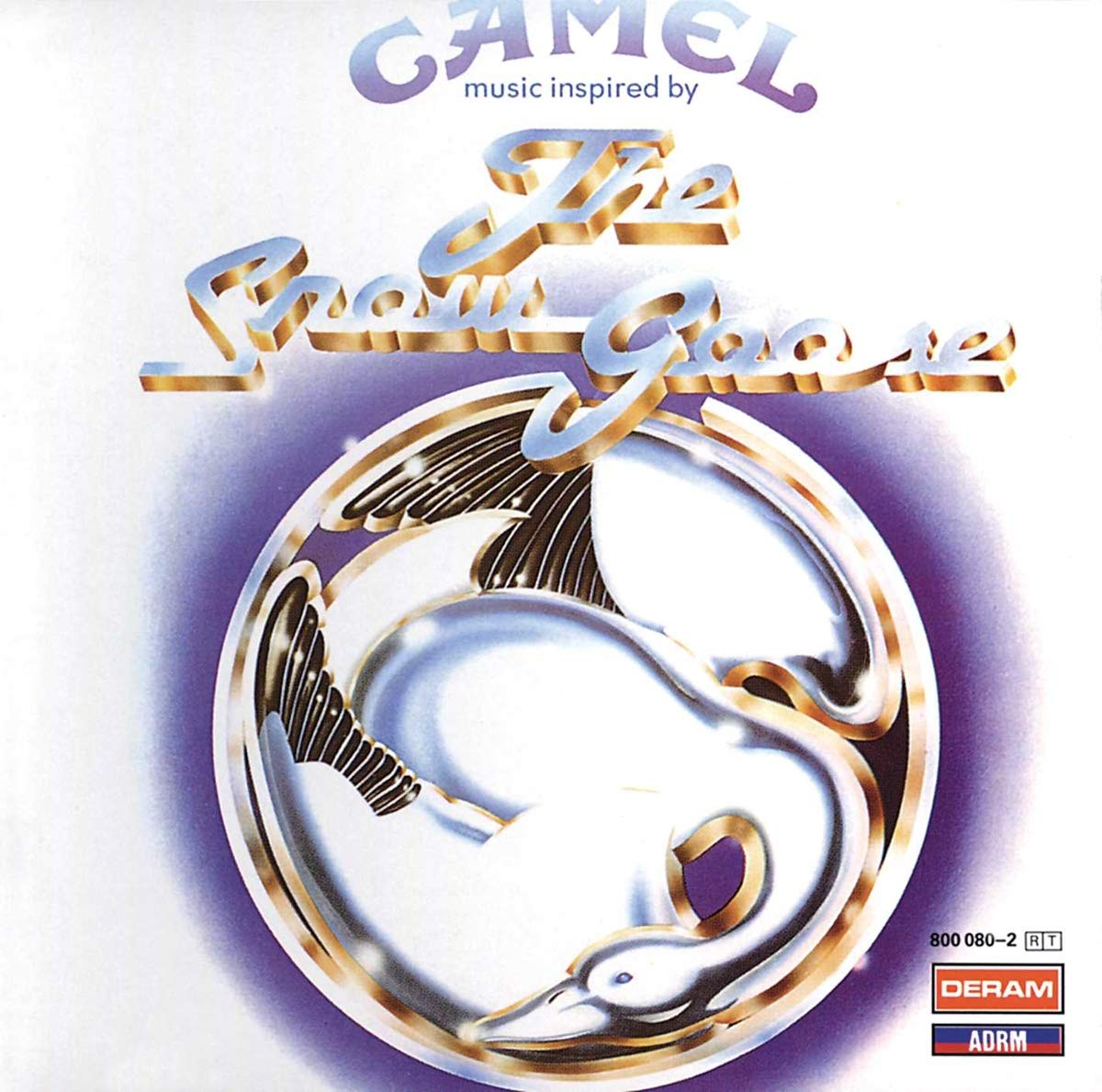
Camel: The Snow Goose

Released in April of 1975, this instrumental concept album is based on Paul Gallico’s novella The Snow Goose, a poignant story of a reclusive man and a young girl who nurse a wounded snow goose back to health — the novella emphasizing themes of love, sacrifice, and healing. Camel masterfully craft a soundtrack that brings the essence of the story to life. Without using any text (originally they had wished to use such text, but it was not allowed by the author) and limiting vocals to vocalese on one track , the album transcendentally communicates a rich, emotional narrative.

Andrew Latimer (guitar, flute) and Peter Bardens (keyboards) are in top form both as composers and musicians, aided by bassist Doug Ferguson and drummer Andy Ward. The seamless integration of their musicianship and composition makes The Snow Goose a timeless listening experience, resonating deeply regardless of how it’s approached. Whether one listens with a knowledge of the story or simply as a stand-alone musical journey, its emotional depth makes this one of the top progressive rock albums of 1975.

Fifty Year Friday: March 1975

Hatfield and the North: The Rotter’s Club

Released on 7 March 1975, The Rotter’s Club is one of the finest progressive rock albums , delivering a rich blend of humor, virtuosity, and intricate composition that captures the essence of the era while being identifiably distinct from any other album of its time. As the second studio album by British avant-garde and progressive rock band Hatfield and the North, it succeeded their self-titled debut (1973), which established them as a prominent figure in the Canterbury scene. But The Rotter’s Club marked a progression, both musically and conceptually, toward an even more refined and ambitious sound. It is a record that not only brings together various aspects of jazz, rock, and classical music but also emphasizes the playful and eccentric side of progressive rock, a nice contrast to the overly serious, often over-reaching and sometimes pretentious reputation ascribed to it by is staunchest critics.

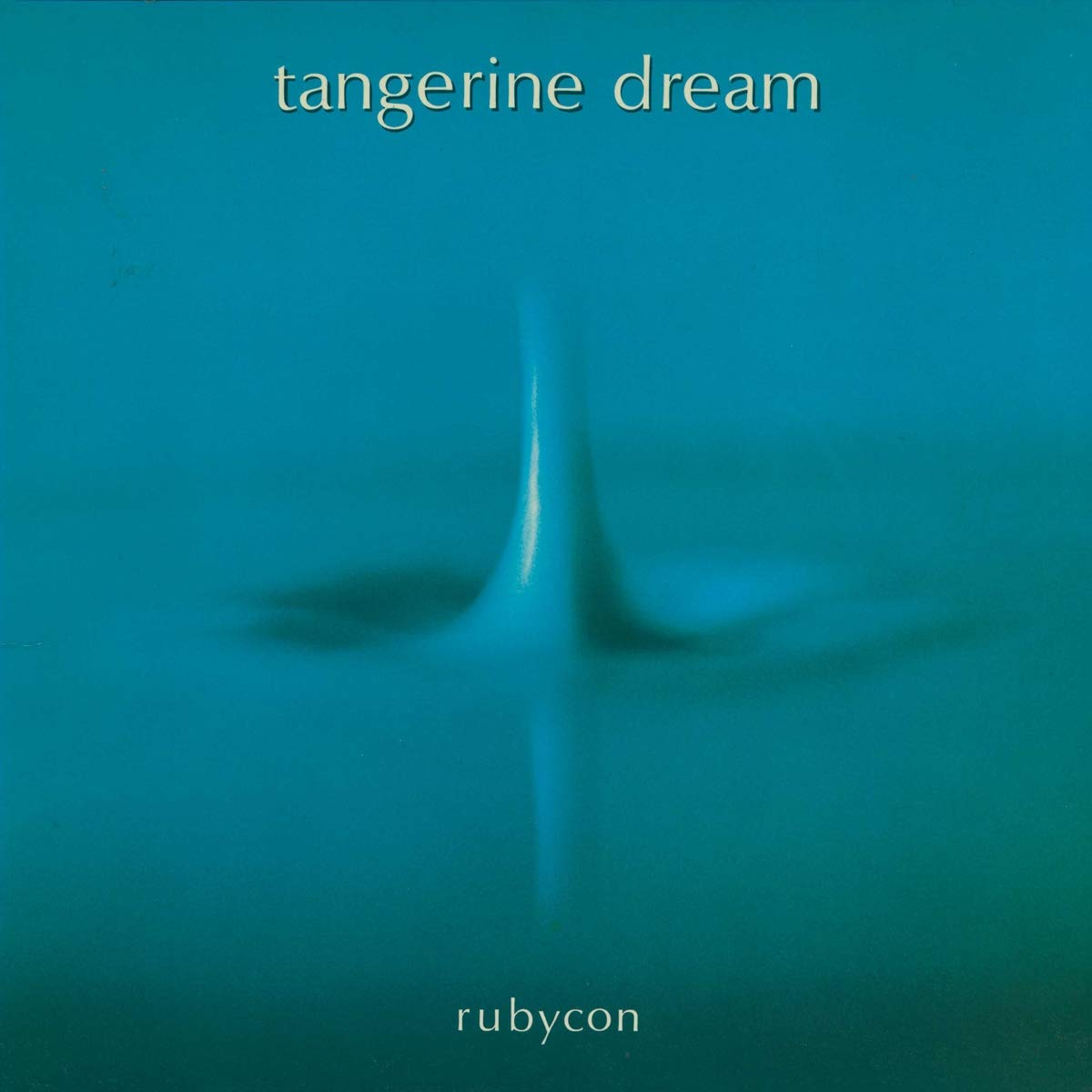
Tangerine Dream: Rubycon

With the release of Rubycon on March 21, 1975, Tangerine Dream delivered their fourth studio album, a fully realized version of their relentlessly driving “Krautrock” industrial, high-tech, space music. While Rubycon clearly evolves from their previous album, Phaedra, it represents a leap forward, much like the internet is to the stone tablet. Whether Tangerine Dream’s change in direction was influenced by considerations about what musical characteristics would work best for film soundtracks and greater audience engagement, or whether it was partly inspired by the success of Kraftwerk, Rubycon marks the undeniable establishment of a new genre of music — one distinct from anything that came before it. Tangerine Dream’s flirtations with Stockhausen and other electronic composers led them in a direction that was as different from the contemporary world of so-called “classical” and “serious” music as that music was from the tonally extended late Romantic music. What emerged was something accessible, mesmerizing, hypnotic, and directly relevant — an exciting departure from the avant-garde style that, for most of the listening public, had become irrelevant.

Rick Wakeman: Myths & Legends Of King Arthur and the Knights of the Round Table

Rick Wakeman’s King Arthur, released March 27, 1975, is filled with interesting keyboard and instrumental passages that should interest most progressive rock fans. Though the vocal sections are not exactly comprised of tunes your likely to sing on your own or even along with — they functionally provide narrative, much like Baroque and Classical Era recitatives and, overall the album works well as a dramatic experience. An alternative to the original, with much better overall sound and additional musical content (which had to be left off the original single LP due to time constraints) is the 2012 two-CD version. If you haven’t hear either, best to go for the updated version with the extra material and superior production.

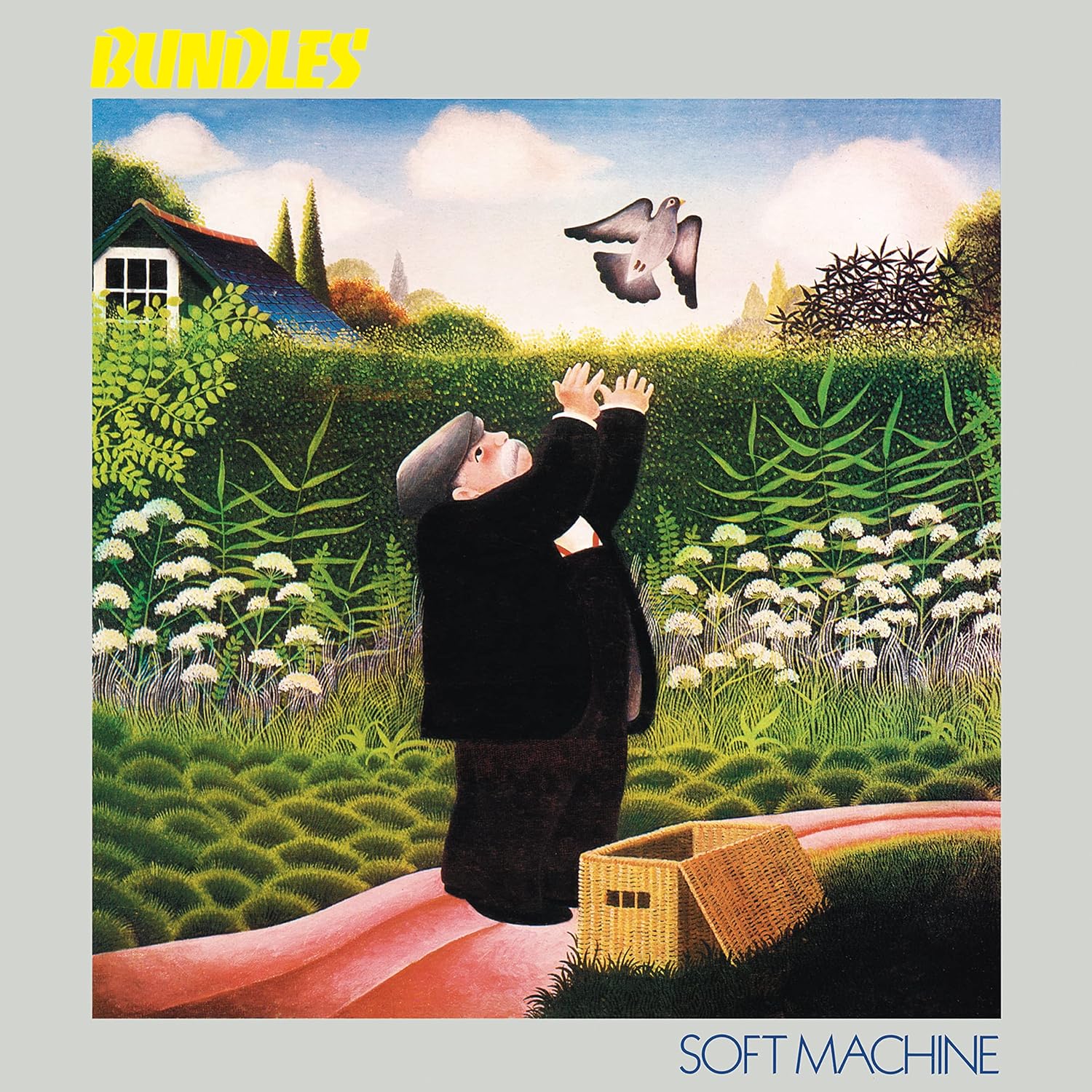
Soft Machine: Bundles

Released in March 1975, Soft Machine’s Bundles is successfully melds an electronic jazz-rock sound with compatible prog-rock elements. The addition of guitarist Allan Holdsworth. known for his fluid, virtuosic playing, injects the album with a fresh intensity, particularly notable in the multi-track Hazard Profile, a nineteen minute five-part suite that showcases Soft Machine’s new direction inclusive of Holdsworth’s soaring guitar work supported by a propulsive, energetic rhythm section. Side one concludes with Holdsworth’s acoustic and beautifully introspective “Gone Sailing.”

Side two is equally compelling with the first four tracks seamlessly blending into a a single experience. The next track, “Four Gongs Two Drums” provides a short percussive intermission, with hints of Indonesian Gamelan followed by the final track, “The Floating World”, a reflective, drifting, neo-Impressionistic composition that gently glides the listener through a bliss-invoking, peaceful and relaxing musical state, providing a fittingly tranquil, dreamlike-end to this excellent album.

Steely Dan: Katy Lied

Donald Fagan and Walter Becker follow up the classic Pretzel Logic album, with another strong album, rich with jazz-flavored chords, Katy Lied, released in March of 1975. Though not strictly a concept album, the album sounds musically unified and could be considered a song cycle of sorts, justifying the term “lied”, a German term applied to art songs, giving us an additional meaning underneath the mysterious reference to the “Katy tried” and “Katy lies” lyrics in the fifth and final track on the first side, “Dr. Wu.”

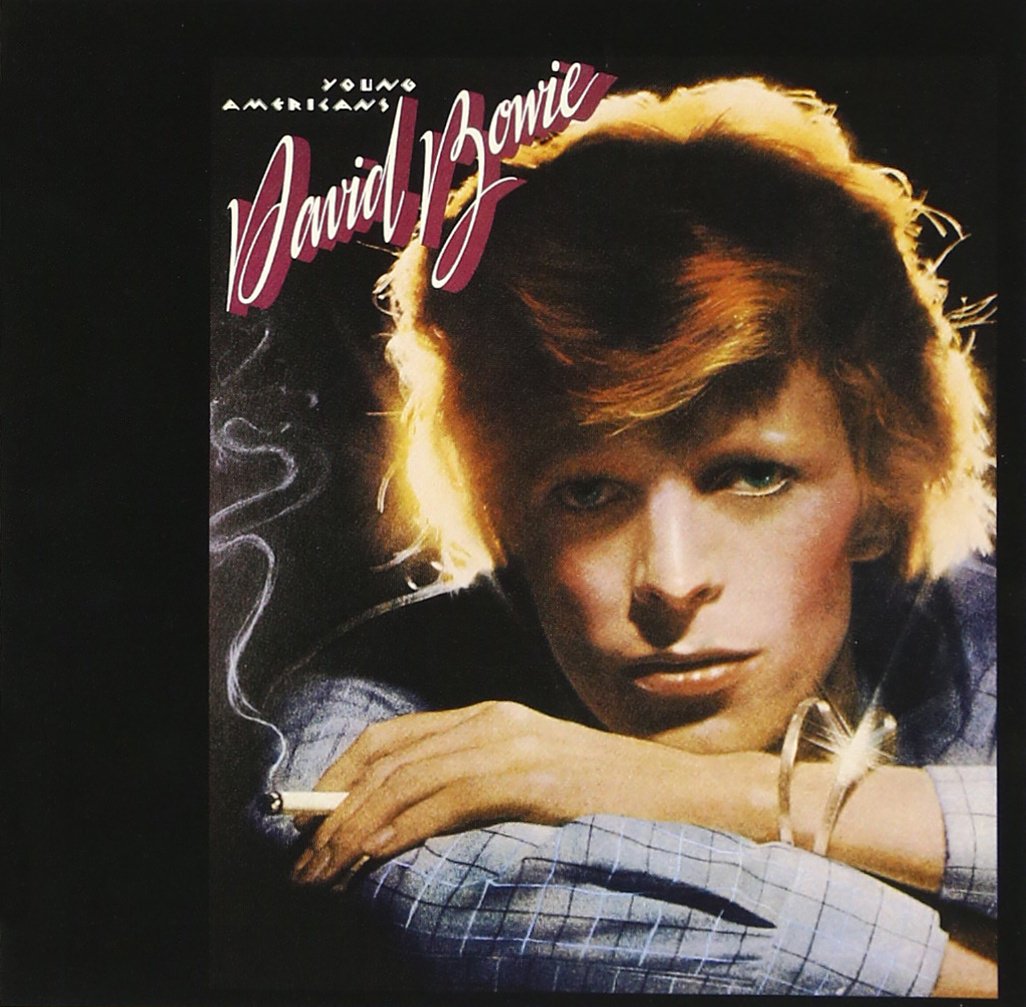
David Bowie: Young Americans

With his ninth studio album, released March 7, 1975, once again, Bowie takes off in another musical direction, extending the elements of soulfulness found in Diamond Dogs and in “Lady Grinning Soul” from the earlier Aladdin Sane, into an all-out exploratory, high-art treatment of American soul music. The arrangements are sophisticated, with Tony Visconti deserving similar praise as Bowie for his musical versatility and with strong contributions from Carlos Alomar and additional input from a twenty-three year-old Luthor Vandross. The strongest track, “Fame,” was initially based on an Alomar guitar riff, with John Lennon, who was visiting the New York Electric Ladyland studios, assisting David Bowie in the authoring of the song by providing his sarcastic, ironic, and pessimistic take on the vagaries of fame.

Fifty Year Friday: January and February 1975

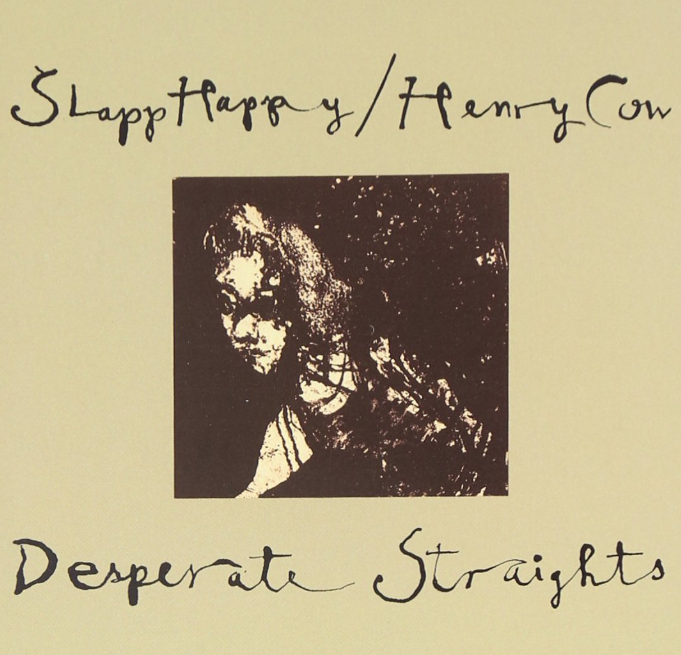
Slapp Happy & Henry Cow: Desperate Straights

Desperate Straights, released on February 21, 1975, is the first of two collaborative studio albums by British avant-rock groups Slapp Happy and Henry Cow. At first glance, these might appear as two rather divergent, though both progressive, ensembles to bring together, but the proof was in the final, vinyl pudding — this worked out nearly perfectly!

From the opening “Some Questions About Hats,” we are placed into a musicscape reminiscent of a German Cabaret with Dagmar Krause executing a delivery appropriate for Brecht/Weill material (think Three Penny Opera). Four more brilliant, short, and pithy songs follow, maintaining a playfully tongue-in-cheek mood. After this, we get the first of two instrumentals, the title track, reflective and a bit out of place with the preceding material. The last song on the first side sets us back on course, with its quirky chord changes and time signatures, upbeat mood, brevity, and general whimsy.

“Apes in Capes,” one of the several gems composed by pianist Anthony Moore, evokes the surreal nature of its title with a circus-waltz atmosphere. The arrangement supports the theatrical mood, as do the rhythmic contours provided for the syllables of the lyrics. The next song, “Strayed,” is reminiscent of Lou Reed and is the sole track delivered by guitarist Peter Blegvad. “Giants” is in reflective waltz-time with its always topical message, “Giants exist to deceive. They retreat if they’re clearly perceived,” and is followed by a quirky arrangement of part of Handel’s “He was Despised” aria from the Messiah, which amazingly fits into the overall mood of the album. The penultimate track is the poignantly haunting “In the Sickbay,” which tapers off, with its dying breaths, into the expressionist “Caucasian Lullaby,” a formidable, generally atonal work that, though not a natural fit for the general tone of the album, is so well composed and performed that we forgive it for any break with the album’s overall mood.

Overall, Desperate Straights endures as a successful exhibition of the creative synergy between Slapp Happy and Henry Cow, blending their unique styles into a cohesive and intriguing musical journey. The masterwork not only showcases their individual talents but also their remarkable ability to forge something truly original and captivating through collaboration.

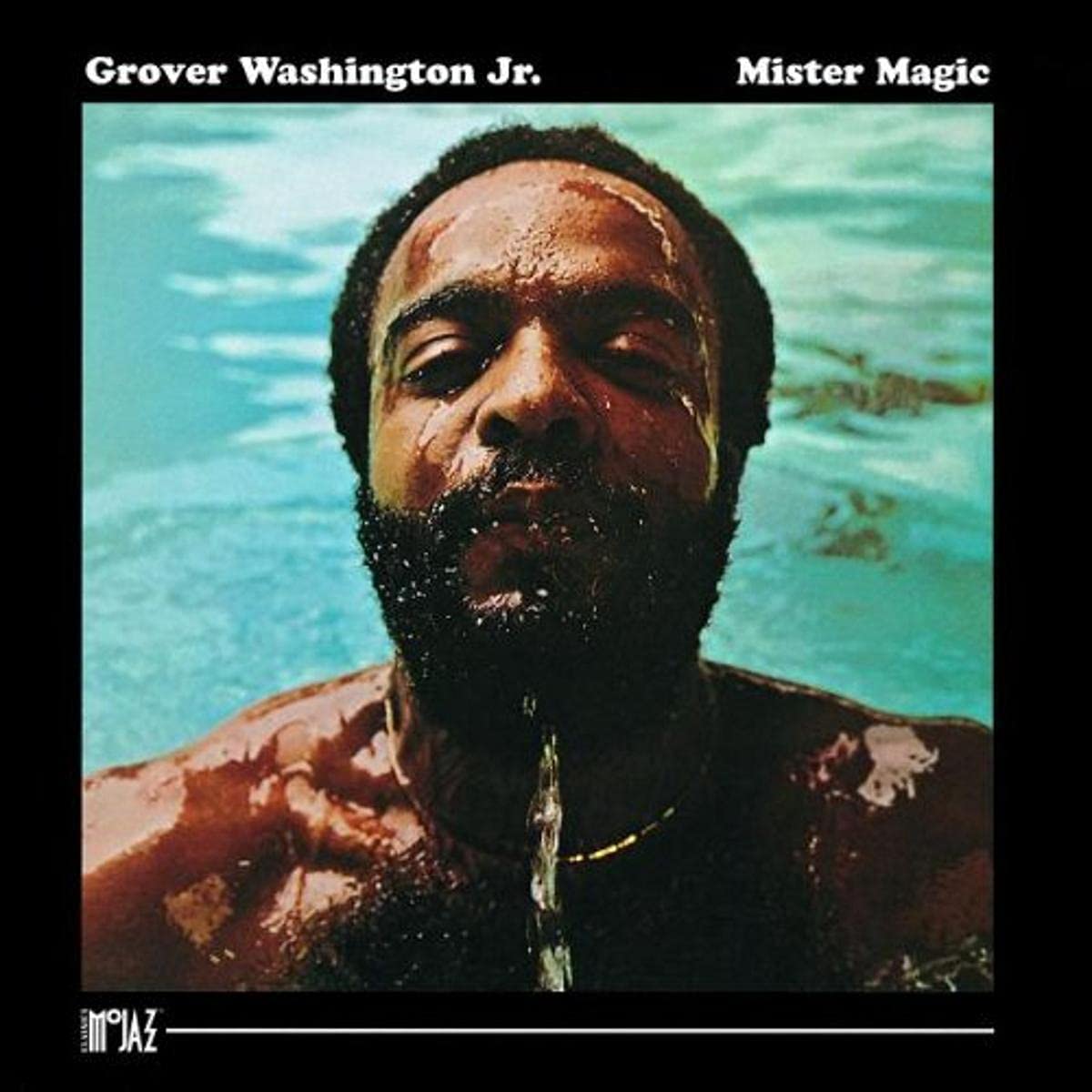
George Washington Jr.: Mister Magic

I love the first track, and in general, like the entire album, which was released February 7th, 1975, ultimately climbing up the jazz charts to #1, the soul charts to #1, and perhaps even more remarkably, rising up to #10 on the po charts.

The main reason for calling out this album, though, is historical. Like it or not, this album is at least partly responsible for the launching of the smooth jazz genre of the 1970s, paving the way for even more popular albums like George Benson’s Breezin’ and Chuck Mangione’s Feels So Good.

Fifty Year Friday: December 1974

Gryphon: Red Queen to Gryphon Three

Released in December of 1974, Gryphon’s instrumental concept album, “Red Queen to Gryphon Three” masterfully blends progressive rock, folk rock, and renaissance musical elements into diligently crafted, richly-textured, exciting and sonically colorful musical experience.

As there are not lyrics, and limited discussion by bandmembers on the intent of the album and its underlying concept, it seems that the game of chess functions as a metaphor — whether this metaphor is representative of human conflict, interaction, some life event or simply the traditional four movement classical symphony where there is an opening movement, a second movement, a more reflective movement (often the second movement but also sometimes the third movement) and a finale (the checkmate), is left for the listener to consider. What is beyond dispute is the music is the propulsive, dramatic nature of the music and the meticulous arrangements with its balanced instrumental layering.

The first track, “Opening Move” begins with a fanfare flourish, followed by a contemplative piano solo revealing the main theme, offset and contrasted by the use of a wealth of exploratory and developmental musical material. The movement gathers intensity appearing to push for a grand finish, but instead dissolves into a more thoughtful coda-like section that serves as reflective musical commentary.

The second track, “Second Spasm” is jaunty, filled with the spirit of English folk and renaissance with a sequence of interesting themes, including a second theme based on material from the first movement, a subsequent section that showcases the distinctive sounds of crumhorn and bassoon, and a march-like fourth section. The original them returns, altered instrumentation and character, developing a bit before followed by the second theme which with at full force concludes the first side of the original LP.

The third track, is the more reflective “Lament” with a contrasting, mostly upbeat section, and the return of the opening theme which ultimately smoothly transitions into an effective coda for the section.

The fourth track, “Checkmate” is an upbeat, energetic finale teaming with energy and colorful creativity. New musical material dominates, but, somehow, it all seems related to what has occurred earlier even without any discernable restatement of earlier material. The track and album conclude with a flourish similar to the material prior to the coda of the first track, which effectively wraps up a wonderful and memorably distinctive musical experience.