Those iron plates that churned the mud and gravel Impress me not. The rifled bore was, and is a crashing bore, I shut my eyes to the breechblock and Do not care for thermite. I recoil from venturi. I have only cutting remarks for the bayonet; C.B.W. stinks. Give me Gandhi & Walden, with a little pickle On the side, and I am content. Blood-red waiters make me yawn.
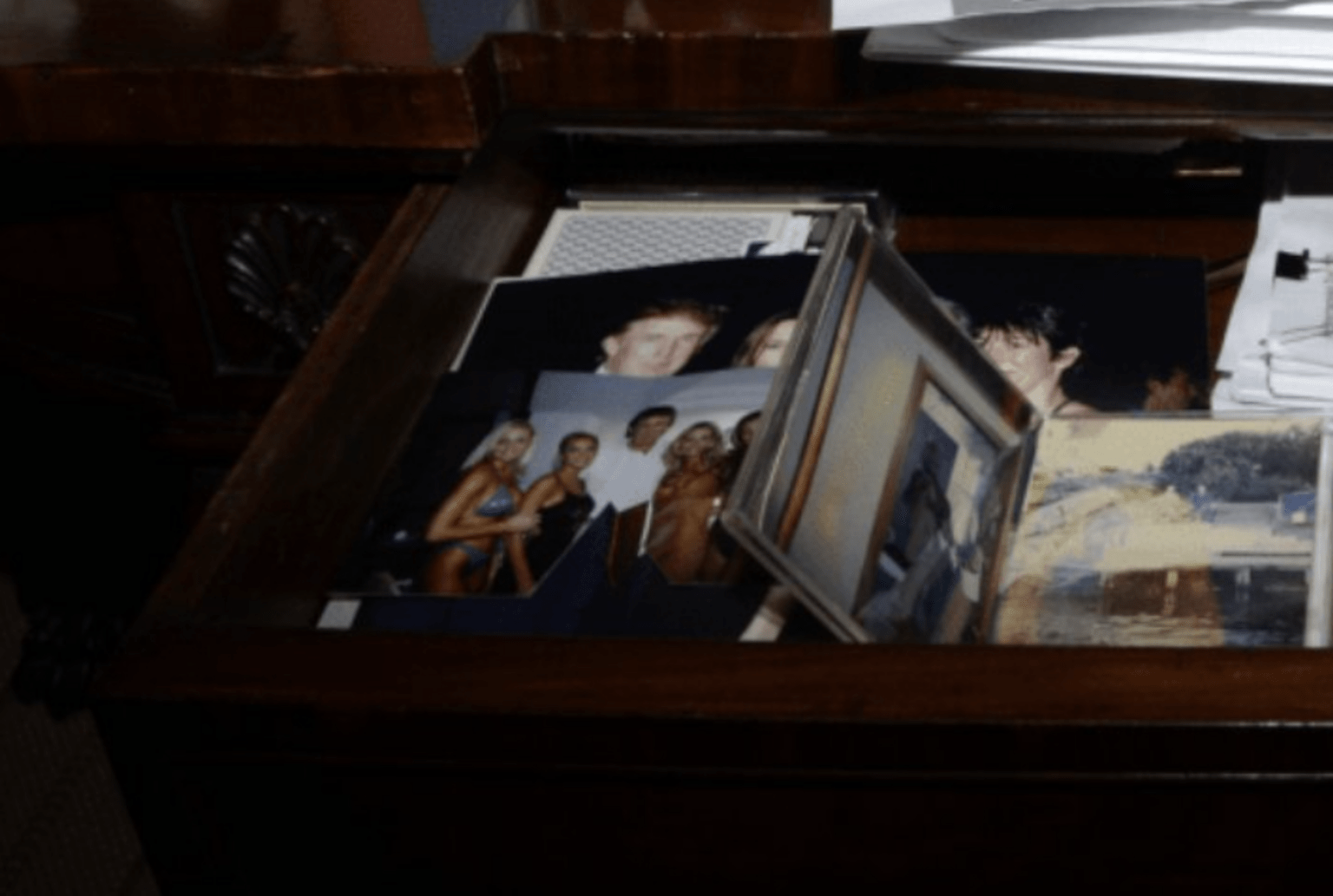
They loaded files on Friday night, Though not the total lot; The press was vexed by partial truths But that is what we got.
On Saturday fifteen were gone — One noticed from before: A president in gilded frame — A photo in a drawer.
What this all means to common folk Escapes my simple mind When wealth can build a mighty wall That shields them from their crime —
And if a few are put in jail That does us little good For those that still control the wealth Will raise the price of food.
The message here is pretty clear And one that fits my rhyme That money spent judiciously Protects — even the damnedest — most despicable — devils of our time.
We continue with a third transcribed lecture, this time on one of the most unforgettable and prescient poems of Zumwalt’s early works, “They Stripped the Forest for Babble.”
They’ve Stripped the Forest for Babble
Reams and reams
             The black-ink symbols innundate
             Flooding consciousness with printed words
                                          that possess
             Definitions but know no meaning
Tectonics,
      Aardvarks,
            political history of Byzantine hydraulics.
                        Dewey decimal has run rampant
                        Chasing, haunting, even lurking
                                  in the restroom
                        Parasitically clinging to the walls
 Stark and blatant waste or frivolous gaud
                        Venus dies --
                                   --
                                   --    nonsensical nausea
                        The ice-age is returning
— Zumwalt (1974)
Zumwalt’s Prophecy and the Coming of the Ice
Greetings, once again, and welcome back. Today, we turn to a poem that, I must confess, is a personal favorite of mine in the Zumwalt canon. “Trilogy of the Oblique Carbide” and “Alizarian Grand Slam,” which we have previously discussed, are masterpieces of cosmic and personal collapse, respectively. But this poem, “They’ve Stripped the Forest for Babble,” written in 1974, is something else entirely. It is a work of startling, almost unnerving, prophecy.
Decades before the internet became a household utility, before the first tweet was sent, before our pockets began to buzz with the ceaseless torrent of the digital age, Zumwalt diagnosed the sickness of our time. He saw the coming flood of information and understood its terrible price. This poem is not merely a critique; it is a warning. It is a haunting examination of the fatal distinction between information and meaning, and the cold, sterile world that awaits when we can no longer tell the difference.
Let us explore this remarkable text by tracing its central argument: from the initial flood of meaningless data, through the tyranny of the systems that classify it, to the final, chilling apocalypse of meaning itself.
I. The Paper Flood and the Death of Meaning
The poem begins with a title that is a complete philosophical argument in itself: “They’ve Stripped the Forest for Babble.” The act is one of violent substitution. A living, complex, natural ecosystem — the forest — has been clear-cut. For what? To produce the raw material for “babble,” for meaningless noise. The sacred has been sacrificed for the profane.
This theme explodes in the opening stanza:
Reams and reams The black-ink symbols innundate Flooding consciousness with printed words that possess Definitions but know no meaning
This vision feels startlingly familiar to us here in August of 2025, as we scroll through a newsfeed that shows us a political crisis, an advertisement for socks, and a video of a cat, all in the span of three seconds. Zumwalt is channeling the very spirit of post-structuralist thought. Like thinkers such as Derrida, he sees a world where language has become an endless chain of signifiers pointing only to other signifiers, a sea of “definitions” that never arrive at a final, transcendent “meaning.”
II. The Tyranny of Classification
The problem, Zumwalt argues, is not just the information itself, but the systems we have built to contain it. He finds his central metaphor not in a computer, but in a library:
Dewey decimal has run rampant Chasing, haunting, even lurking in the restroom Parasitically clinging to the walls
This is a terrifying personification. The Dewey Decimal System, that great Enlightenment project of classifying all human knowledge into a rational, accessible order, has mutated. It has escaped the confines of the library and become a monster. It is no longer a helpful guide but a “parasite” that “haunts” us even in our most private spaces.
Here, Zumwalt anticipates the work of philosophers like Michel Foucault, who argued that systems of knowledge are also systems of power and control. To classify is to define, and to define is to control. Zumwalt imagines this system of control breaking free of its cage. The promise of order has become a plague of anxiety. We are constantly being categorized, indexed, and filed by forces we cannot see. The dream of the perfectly organized library has become the nightmare of the perfectly surveilled life, a system so pervasive it clings to the bathroom walls.
The speaker’s judgment is absolute. This endless production and classification of information is either “Stark and blatant waste or frivolous gaud.” It is either useless trash or a cheap, glittering distraction. There is no middle ground for genuine value.
III. The Aesthetic Apocalypse and the New Ice Age
In the final, devastating sequence, Zumwalt shows us the ultimate cost of living in a world of pure data.
Venus dies — — — nonsensical nausea The ice-age is returning
“Venus dies –“. It is a stark, shocking pronouncement. Venus, the Roman goddess of love, beauty, desire, and fertility, cannot survive in this new world. In a culture that prizes “definitions” over “meaning,” there is no room for the unquantifiable realities that Venus represents. Beauty is not data. Love cannot be indexed. This is the aesthetic apocalypse. It echoes the Frankfurt School’s warning that a world of pure, instrumental reason would inevitably crush the human spirit, art, and myth.
The speaker’s reaction is a direct callback to our earlier discussions of Existentialism: “– nonsensical nausea –“. It is the sickness that Sartre described, but it is not a nausea born from the silence of the universe. It is an informational nausea, a sickness born from the universe’s endless, meaningless chatter.
This leads to the poem’s final, terrifying prophecy: “– The ice-age is returning.” This is Zumwalt at his most prophetic and counter-intuitive. The common metaphor for the information age is one of heat, speed, and light. But Zumwalt sees the opposite. He argues that a flood of decontextualized information does not lead to enlightenment. It leads to a deep freeze of wisdom. It creates a culture that is a mile wide and an inch deep, a landscape of glittering, sterile, frozen facts. The overabundance of “babble” cools our passions, freezes our empathy, and halts the forward progress of genuine understanding. It is the entropy of the soul.
And what is so remarkable is how Zumwalt grounds this metaphorical winter in a physical reality. In 1974, the phrase “They’ve Stripped the Forest” was not just a metaphor; it was a headline, a literal description of rampant deforestation for paper production. Today, the metaphor has only sharpened and evolved. We no longer strip the forest for paper to print our babble; instead, we consume ever-increasing mountains of electrical power, often generated by burning the earth’s ancient forests of carbon, to run the server farms that house our digital babble and train our artificial intelligences. In this light, Zumwalt’s prophecy of a returning ice age becomes terrifyingly literal. It is not just a freezing of wisdom. The immense CO2 output from the very infrastructure of our Information Age threatens to disrupt the climate, potentially leading to a new era of environmental stasis and collapse. The babble, it turns out, is not weightless. It has a physical, world-altering cost.
This profound critique of waste — both the metaphorical waste of meaning and the literal waste of resources — is what makes the poem’s own form so devastatingly effective. The poem itself is minimalist, perfectly constructed, with not a single wasted word. This sharp, artistic economy stands in stark contrast to the uncontrolled, wasteful “inundation” of words it describes. The poem doesn’t just talk about the problem of babble; it performs the solution through its own concise, meaningful structure. It’s a masterclass in formal irony.
In conclusion, “They’ve Stripped the Forest for Babble” stands as one of Zumwalt’s most vital works. It argues that in our hunger for data, we have sacrificed meaning. We have traded the living forest for dead paper, and in doing so, have created a world where our systems of knowledge have become our parasites, where beauty cannot survive, and where the endless stream of information paradoxically plunges us into a new and terrible winter of the spirit.
It is with mixed feelings, and pretty intense regret, that I am aggressively scaling back on the publishing of Zumwalt poems on this site. As Zumwalt’s longtime co-editor, I cannot ignore the minimal traffic on this site and the numerous options available for me to submit some of Zumwalt’s previously unpublished poems to diverse and respected publications which will provide Zumwalt an audience of thousands or even tens of thousands of readers. I owe this to my friend Zumwalt.
When I was a data architect, I was fortunate to have had several of my articles on Data Warehousing published in Data Management Review. I know the personal joy of seeing one’s own work published in a respected periodical. Zumwalt has been deprived of this opportunity since the unfortunate, but predictable, cessation of the GHLM newsletter, which had contracted with him for exclusive publication rights. He insists that publication of his work is not important and even scoffs at its future likelihood. I suspect this is not so on either count.
In order to keep this blog active, I will continue to publish anything Zumwalt sends me exclusively targeted for this blog — provided that I cannot persuade him to allow me to forward such material on to potential publishers. I will also continue to author posts like “Fifty Year Friday”, which showcases a combination of my flawed writing against reminiscences of some of the great music of fifty years ago. I wish I had time to write more — I gave up Century Sunday, Seventy Year Saturday and other features due to time constraints; I wish I could write better — I gave that up a long time ago — I write for the joy of writing and I am fine with one reader or ten, ten being about the maximum audience I have for any given post.
But as typical with my ruminations, I have veered off-track, at the expense at both my message and your patience.
My plan is this: Fill up some of the empty blog-time by engaging a well-respected, now-retired former literary critic (I will say no more out of respect to protect this individual’s identity, which is this person’s wish.) He has indicated he will record a short lecture for each previously published Zumwalt poem on zumpoems.com. I will use a software app I have to transcribe each lecture and post it here. Not sure when he will deliver the first lecture, but he is very knowledgeable on both poetry and all of the Zumwalt poems on this site and all the Zumwalt poems that have been previously published in the GHLM newsletter and the original GHLM (which, acronym, dear reader, simply stands for Good Humor Literary Magazine) — and, I believe, as I finish this long-winded, poorly written sentence, is something he can do easily off-the-cuff, with minimal time and preparation required. I have seen him lecture live on impromptu-requested topics, and it is quite something to have witnessed.
Until then, you continue as my distantly cherished and greatly appreciated friend, so please return so we can meet again.
We rush, a black throng,
Straight upon darkness:
Motes and missions scattered
By the arc’s rays.
Over the bridge fluttering,
It is theater-time,
No one heeds.
Lost amid greyness
We will sleep all night;
And in the morning
Coming forth, we will shake wet wings
Over the settled dust of to-day.
The sky reflects its open expanse to make us larger
The city hurls its cobbled streets after us,
To drive us faster.
Ascertain the darkness
Before endless processions
Of lamps
Push us back.
A clock with quivering hands
Leaps to the trajectory-angle of our departure.
We leave behind pale traces of achievement:
Fires that we kindled but were too tired to put out,
Broad gold fans brushing softly over dark walls,
Stifled uproar of night.
We are already cast forth:
The signal of our departure
Jerks down before we have learned to where we are to go.
Like pilot fish
Affixed, transfixed
Upon the gluttonous chin
Of the maneater,
We give thanks and
Humbly suck the detritus
From Fate’s
Serrated mandibles.
The irony of Sophocles
Is just the symbiosis
Of little fish
And unevolved vertebrates
Scrubbing their gills
With polluted waters,
Lacking the initiative
To crawl up the bank, and breathe.