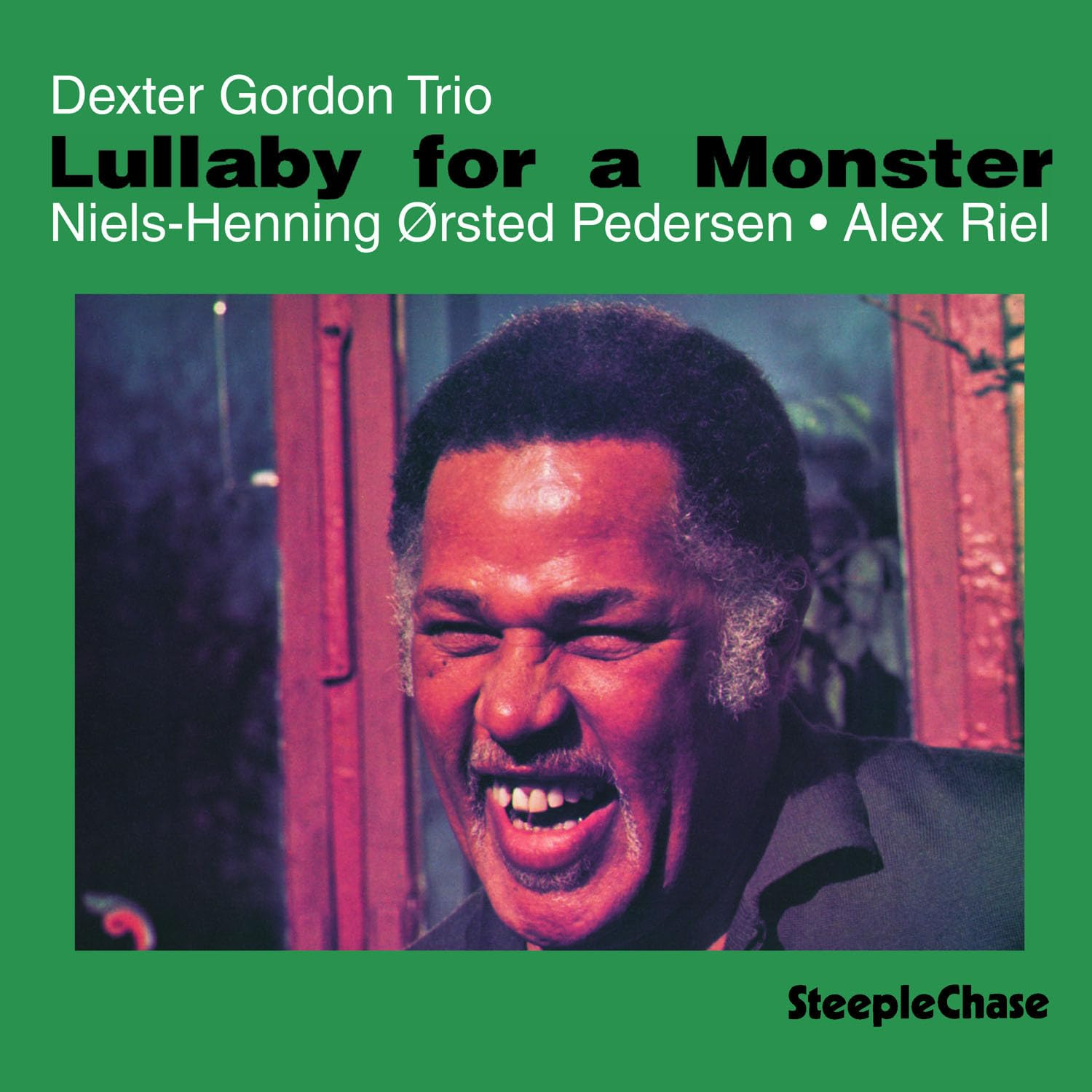
Dexter Gordon: Lullaby for a Monster
Recorded on June 15, 1976 in Copenhagen, Denmark, Lullaby for a Monster provides maximum Gordon Dexter in a trio format with two of Europe’s finest jazz artists: Niels-Henning Ørsted Pedersen on bass and Alex Riel on drums. The album was not released in 1976, or even the 1970s, seeing the light of day for the first time in the early 1980s. I would like to claim I was a Dexter Gordon fan in the 1970s, but my first encounter with either him or his music was in 1986, while I was in England. I wish I could say I saw him in person, but the reality is very different.
I lived in West Sussex and often would catch a movie on Saturday, usually in Brighton, East Grinstead, or Royal Tunbridge Wells. I was a big fan of Thelonious Monk, and was instantly attracted by the title of one particular movie, “Round Midnight” and figuring out from the movie poster that it was indeed a jazz-related story, I eagerly bought a ticket, and entered the modest, but mostly empty theater. Without taking a complete detour from Fifty Year Friday — hopefully I will be around in 2036 to include this in a future post — this was a great movie, and Dexter Gordon’s music making and acting were both of the highest caliber. Two years later, back in America, I purchased an album that contained the famous “The Chase” with Wardell Grey and Dexter Gordon, and I have been a big Dexter Gordon Fan since.
What makes Lullaby for a Monster a perfect starting place for someone wanting to explore one of the greatest tenor saxophonists of all time, is it showcases Gordon’s humor (from the very start with his own composition, a clever bluesy treatment of the nursery song “Ah! vous dirai-je, maman,” also known to us as “Twinkle, Twinkle, Little Star” or “Baa, Baa, Black Sheep), his musical inventiveness and his lyricism.
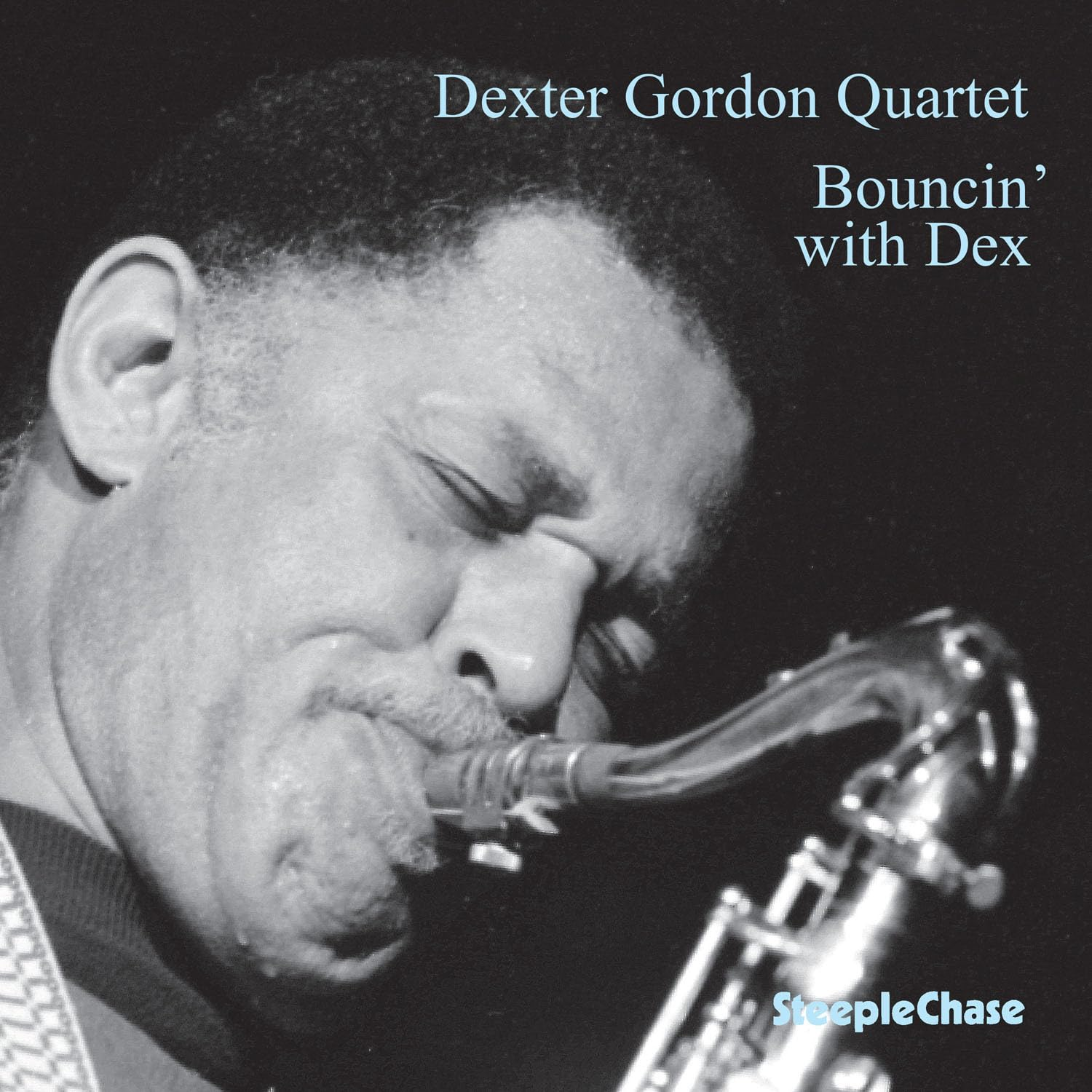
Dexter Gordon: Bouncin’ with Dex
Bouncin’ with Dex, recorded on September 14, 1975, in Copenhagen, Denmark, was likely released in 1976; however, it is worth discussing now within the broader context of Dexter Gordon’s career. The lineup here is top-notch: Dexter Gordon, bassist Niels-Henning Ørsted Pedersen, the virtuosic and rhythmically and harmonically adventurous Barcelonian Tete Montoliu on piano, and one of the most musically responsive drummers on record, American Billy Higgins. Despite Dexter’s extended time in Europe, this remains the only studio recording partnering him and Montoliu. That is just one of many reasons to check out this album; the session represents a pinnacle of Gordon’s mid-1970s SteepleChase output, showcasing the quartet’s seamless interaction on a set of quintessential bebop standards, alongside Gordon’s own “Benji’s Bounce,” a skillfully faithful contrafact based on the harmonic structure of Thelonious Monk’s “Rhythm-a-Ning” showcasing both Gordon’s and Montoliu’s inventiveness and their deep understanding of Monk’s musical essence. The original LP contained an amazingly lyrical rendition of “Easy Living,” with the CD version topping that by including a luxuriously longer alternate take.
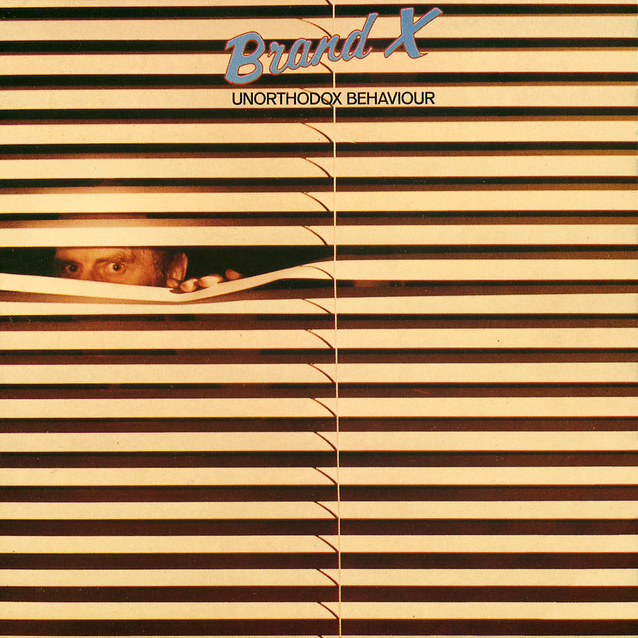
Brand X: Unorthodox Behavior
Released June 18, 1976, Unorthodox Behavior is the first and finest Brand X studio album; tight, cohesive, proficient and musically engaging, this is exemplary English progressive-rock jazz fusion. Phil Collins, John Goodsall, Robin Lumley and Percy Jones blend into one musical force, sounding as if they had played in small venues for many months before recording this debut album. Rock fans, and even some progressive rock fans, may be disappointed in the lack of lyrical or infectious melody, but the energy and creativity are undeniable and make this an important and distinct landmark of the mid-70s fusion movement and an indispensible document of Phil Collins’ impressive technical capabilities on percussion.
For additional posts related to Gentle Giant, please check these out:
https://zumpoems.com/2025/07/25/fifty-year-friday-july-and-august-1975/
https://zumpoems.com/2026/04/17/fifty-year-friday-april-1976/
https://zumpoems.com/2021/07/23/fifty-year-friday-july-1971/
https://zumpoems.com/2023/09/01/fifty-year-friday-september-1973/
https://zumpoems.com/2022/04/01/fifty-year-friday-april-1970-2/
https://zumpoems.com/2022/12/16/fifty-year-friday-december-1972/
https://zumpoems.com/2017/08/25/fifty-year-friday-aretha-franklin-simon-dupree-the-big-sound-and-pink-floyd/
https://zumpoems.com/2020/11/20/fifty-year-friday-november-1970/
For Must Listen To Gentle Giant and Prog Rock albums, please check out:
https://zumpoems.com/must-listen-to-music/
For additional posts that mention Gentle Giant, please check these out:
https://zumpoems.com/2017/12/30/seventy-year-saturday-1947/
https://zumpoems.com/2019/07/19/fifty-year-friday-men-on-the-moon-yes-larry-coryell/
https://zumpoems.com/2022/05/27/fifty-year-friday-may-1972/
https://zumpoems.com/2019/05/31/fifty-year-friday-power-to-the-people-the-giant-awakens-empty-sky-at-san-quentin-and-charisma/
https://zumpoems.com/2024/03/15/fifty-year-friday-march-1974/
https://zumpoems.com/2024/06/07/fifty-year-friday-june-1974/
https://zumpoems.com/2019/01/04/fifty-year-friday-the-canterbury-scene-soft-machine-and-caravan-first-albums/
https://zumpoems.com/2025/06/20/fifty-year-friday-june-1975/
https://zumpoems.com/2019/06/14/fifty-year-friday-trout-mask-replica-brave-new-world/
https://zumpoems.com/2023/08/04/fifty-year-friday-august-1973/
https://zumpoems.com/2020/02/14/fifty-year-friday-february-1970/
https://zumpoems.com/2018/08/10/fifty-year-friday-ultimate-spinach/
https://zumpoems.com/2018/06/22/fifty-year-friday-british-folk-rock/
https://zumpoems.com/2020/09/25/fifty-year-friday-september-1970/
https://zumpoems.com/2025/11/14/fifty-year-friday-november-and-december-1975/
https://zumpoems.com/2020/03/20/fifty-year-friday-march-2020/
https://zumpoems.com/2025/09/26/fifty-year-friday-september-and-october-1975/
https://zumpoems.com/2021/11/26/fifty-year-friday-november-1971/
https://zumpoems.com/2026/06/12/dexter-gordon-lullaby-for-a-monster-bouncin-with-dex-brand-x-unorthodox-behavior-fifty-year-friday-june-1976/
Discover more from zumpoems
Subscribe to get the latest posts sent to your email.

Comments on: "Dexter Gordon: Lullaby for a Monster, Bouncin’ With Dex, Brand X: Unorthodox Behavior; Fifty Year Friday: June 1976" (2)
A Fifty-year Friday feature on Dexter Gordon! Now we’re talkin’! I read this, of course, when it was first posted a couple of weeks ago, and it immediately dredged up some long dormant memories. I should have dashed off some remarks then, while I was transported to my misspent youth by the Curator’s discussion on not one but two Gordon albums from half a century ago. (The 6-foot 6-inch Gordon was sometimes known as the “Sophisticated Giant”—perhaps the Curator misread that and thought they were obscure Gentle Giant records.) Woulda, coulda, shoulda. Life intervened, so here I am writing on this June post as the calendar turns to July. So sue me.
I had encountered Gordon occasionally on the old KBCA FM radio station in LA that played jazz 24/7. (Yes, kiddies, there once was a golden time, long, long ago, when Los Angeles could support a commercial all-jazz radio station. Shortly after I decamped SoCal for grad school on the East Coast, KBCA changed its call letters to KKGO and transitioned to the trendier, presumably more lucrative “smooth jazz” format. It was a slippery slope—last I heard what was once KBCA had become a country-western station, which to a jazz fan is like hearing that an old friend and mentor you looked up to has deteriorated into an alcoholic guttersnipe who frequents the downtown missions for free meals.) But, relocated to Washington, DC, I had a chance to see him live at the venerable Blues Alley jazz club in Georgetown. It was, I think, around November 1979—which would have been the beginning of my second year of grad school—that I saw him in the cozy Blues Alley venue. It may have been my first visit to Blues Alley. Gordon was playing with his quartet, which at that time I think included George Cables, Rufus Reid, and Eddie Gladden. Sadly my all-too-fallible memory can no longer extract from the dim mists of time just what pieces Gordon played that night. (A good guess would be the set included such familiar tunes as “Autumn Leaves,” “Body and Soul,” “’Round Midnight,” and other such standards that were part of his repertoire in the late ‘70s.) Whatever Gordon played, though, I remember I was impressed. And that I remember because after the set let out—it was either a Friday or a Saturday night—I made my way up Wisconsin Avenue to Ollsen’s Records & Books, of which I was most definitely an habitué, and purchased Gordon’s Manhattan Symphonie on cassette tape. I had heard that deep, distinctive Gordon saxophone performance and needed to take some home—a musical doggie bag, as it were.
Manhattan Symphonie had been released the previous year, and featured Gordon’s American quartet at that time, the aforementioned Cables, Reid, and Gladden. If you’re looking for an introduction to Gordon’s music and his style, Manhattan Symphonie is a good place to start. It includes two polished, trademark ballads—“As Time Goes By” and Monk’s classic “Ruby My Dear.” There’s an energetic cover of Coltrane’s “Moment’s Notice” and an extended, somewhat up-tempo version of “Body and Soul.” As excellent as all those are, what stands out as my favorite is Gordon’s cover of the Donald Byrd tune “Tanya.” Shorter than the 18-minute version that takes up all of side one of Gordon’s 1964 LP One Flight Up, this version of Tanya is sultry, smoky, and undulates like an accomplished stripper. Manhattan Symphonie was one of those albums you would put on to try to impress a girl—straight-ahead, melodic, sophisticated without being edgy. She just might get drawn in by the ballads, whereas dropping the needle on Mingus Ah Um, or even Coltrane’s Giant Steps, would have her looking at her watch and remarking on how late it was.
I would be remiss if I did not add my praise to that of the Curator to the movie “’Round Midnight” and Gordon’s performance. Like the Curator, I saw the movie away from home and found it excellent. It mines the biographies of Lester Young and Bud Powell for its plot and themes, and it features a solid soundtrack by Herbie Hancock. It is, I think, a better movie than the latter, and rather depressing Bird, Clint Eastwood’s biopic of Charlie Parker. But, I am rambling now, as old men are wont to do, down mental rabbit holes of interest to no one but themselves. Time to stop—but also to thank the Curator for helping me recall the time I saw Dexter Gordon at Blues Alley. The seventies were an insipid decade—but if you looked hard enough, it had its moments.
— Leo the Deacon
LikeLike
Brilliant comments, Mr. Leo the Deacon! Appreciate you sharing your thoughts!
LikeLike