my table is busted a sore sight to see and the metal-grill chair is as comfortable as a bed of needles. a pretty girl in a blue jacket and in maroon cords reads the school paper; she is in a trance. a small audience is watching a couple of college students playing five-minute chess. a young women on the other side of the room gazes at me over the rim of a white coffee cup.
i burnt myself this morning frying up french toast and the pain mingles with everything else like short-wave radio static. 1.3 GPA yells a figure with sideburns and a number of people in his group laugh until their heads fall off and someone has to come and put them back on.
sitting cross-legged on the carpet and from a distance it all looks like a game of charades, long, long hair and i find myself stare.
i am thinking of leaving PROTECT YOUR LOUNGE ENVIRONMENT TAKE THE TIME TO BUS YOUR OWN TRASH a famous musician enters, but no one recognizes him. a cloud hangs over, but then again maybe it's just the plumbing. my eyesight is shot everything in the distance all looks the same and now it is only my table that is different from the others.
-- zumwalt (1974) [reformatted for WordPress display]
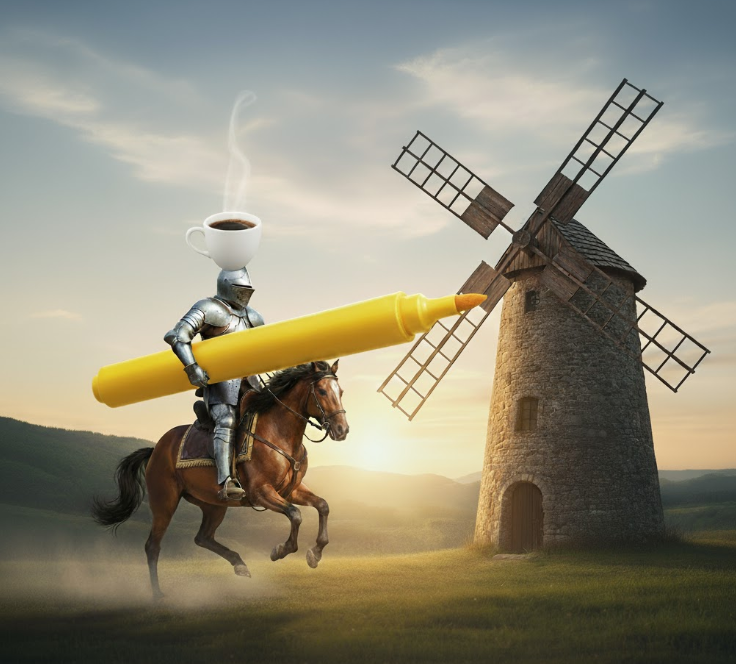
Feckless Degeneracy with some Windmill Jousting – an epic in several belches –
Belch the First – by way of prolegomena
Of arms and the man I sing id est, of a man with arms and hands for that matter and nothing to do with them other than push gliding yellow felt across the faceless fees of contract physicians dealing the new deal daily to the deaf shipbuilders and jet mechanics and the incompetent OSHA oafs of Oshkosh and Oklahoma Sucking the blood of the body politic politely with a yellow felt pen Felt pen is all he’s felt lately so come, muse for someone should and tell of the student-cum-bureaucrat the man with arms and hands with nothing to do but pay bills and perhaps go blind
Belch the Second – in medias res (so what else is new?)
A brown caffeine haze like the stained inversion layer of womb-city L.A. swirled buzzing beneath his 4:30 AM skull like a Santa Ana locked in Aeolus’ cave bleary blurry burned home to Germantown where the rosy-cheeked firm-breasted wives of the power-corridor stalkers make their living doing T.V. ads for Cheer Wisk Breeze and disposable douches Brown and nondescript his mentality and the 2 unkempt letters on his unkempt bed from an unkempt friend a mad composer Beethoven of software UNIVAC of the mad pipes and unorthodox tunes and keeper of a faith in which all have lost faith but a miniscule few
Insanity issues from the violated envelopes rushing leaping prancing like a horde of lusting shoppers at Macy's white sale bringing back the shades, demons, ghosts, apparitions, & specters of times past when mastodons stalked the earth and loons reigned, then, and rationality belonged to serfs and the lords of bats sat wiggo and lecherous in a Coco’s booth sucking the bean and contemplating rape Jolly jester gestures jump from penciled pages and in a laughing gasp grabbed the felt pen pusher by corduroy lapels howling "Write! for the faith is dwindling like a soft candle-stump its fleeting flame flickering faintly from a shriveled wick.
Write! For I am playing pool and snooker with a drunken busboy Lothario the 2 of us Lear and his fool leering and fooling around with a round girl and her quoit-visaged female companion. Write! for the roundtable is broken with the tennis player salesman for Bridgeford talking Tupperware and household appliances as he flies to Dallas. With the great beard Sleaze of times past Falstaff with a joint now playing it cool in high finance at the bastion of upper-middle class white vacuity in Watts. With the genius leader of liberated wit doing a Ulysses gig in Asia beaming knowledge into little brown people and contrition, obscurity for the white man’s burden. Write! for it’s been so long, I find tacos erotic and Don Jose’s threw me out for fondling a quesadilla. Write! Right?”
“Right.” Thus murmured the pen-pusher toddling, tottering off to sleep to wake with the sun and, at the school the afternoon next he gripped his pen violently determined and thought Thank God Freud is dead.
Belch the Third — Arlington National Cemetery is my disco
So the student who feeds himself with a yellow felt pen and writes arcane monographs of the arabesque convolutions of the politics in Riyadh and Jiddah essayed assessed saying sayings not quite sane what he means is what he said Sotos speaks so to speak.
An auspicious year the best of the 20th Sophocles’ 3 Stooges Clotho & her Cronies gave the Greek grief early tried to hand him a couple of brooches to do a number on his bespectacled orbs but he’d seen that one before So they packed up their spinning wheel and headed for Ft. Lauderdale lawn chair lounging but not until his transmission got up and walked away from his Merc 18 miles west of Phoenix to the tune of half a thousand clams If it wasn’t for the pen pusher’s plastic money and smiling despair he’d be flipping burgers on Camelback Avenue Wearing a Marlboro Stetson snakeskin pasture pounders and calling home the T.V. and Gideon Bible at the El Rokay Lodge.
Jojo's has crept like mildew across a map and Visa-financed peasant lunches kept the moustache nourished all across the continent.
Back to the city of marble buildings and minds with few marbles where the town namesake “Father of His Country” has a phallic monument to mock the yellow felt-pen scrivener whose social life is on display next to the stuffed dodo at the Smithsonian and labeled “Extinct.”
Well, can’t complain one supposes, even though the only thing between the student bureaucrat and a morals rap is an iron will and saltpeter for breakfast.
Lots of late nocturnal revelry with Eve’s daughters watching omelets feed a Charybdis appetite, or catching two-dollar talkies at the Circle. Taystee Diner, bean brew, juke box jokes as Hall & Oates, Simon & Garfunkel and Queen eat my quarters Coupla babes a lanky blonde, a petite brunette (I’m a blonde sorta, maybe). [If you’re a blonde I’m Grover Cleveland] But the pen-pusher knows, through the cruel anvil of experience, never argue with a woman Their logic makes minds' Minotaur maze looks like I-10 between Quartzite and Phoenix so peace dictates saying he’s been out late with 2 buxom blondes (and call the pen-pusher Grover Cleveland). Fun ladies and dynamite looks socko boffo knockouts but as for romance my social life is in formaldehyde at D.C. morgue waiting for someone to identify it.
Belch the Fourth — Ambition rides the Metro, but still can’t get a seat.
Thrice has the world spun encompassing ol’ Sol in completed circuits since the Golden Greek marched east like Alexander to conquer Persia-on-the-Potomac Thrice. Most of those who entered grad school with the golden Greek (before he cultivated the yellow felt pen to streak the beige bilious bills at Fran Perkins' Annex (on 14th & NY, NW) Most of those who dared demonic dementia to cut academia’s umbilical with a sheepskin rectangle have and got spewed into limbo
Alexander pushes the yellow felt pen and checks the views on the Strait of Hormuz holding court Doing okay if you are a tortoise All done excepting 100 pages of shoveling so let’s look for birth in May ’82 unless alma mater aborts Meantime there’s always yellow felt pens and green enough money
It all adds up to the bottom line which is the theory of relativity flattened in the templates of grad school to wit master programs stretch like taffy over time the faster you work and time goes gossamer tenuous and ephemeral and e...t...e...r...n...i...t...y is the... last... gasp... of... pondering... postgraduate... programs while your transcript grins and yawns at once
Belch the Fifth — if life gives you meatballs, make albóndigas
Beckoning from beyond the lips of an unborn year are the evergreen plastic vegetables that live only in refrigerators on display at Sears & Montgomery Ward Come come We are the vegetables of legitimacy of actuality and your folks’ approval eat and could we interest you in life insurance?
Rustling from behind in those dim glow worm grottos at the base of your mind are the petrified relics Memories of a golden age long tarnished return return return unused portion of your life for a *full refund* Slapping your back with ghostly hands guffaws Why be a frog when you make one helluva tadpole?
Polystyrene peas aren’t going to make it Julia Child or no Yet you can’t keep the cranium small while the cerebrum expands unless you want to grow lobes out your ears
The abyss between the plastic veggies and petrified pasts is the only place to call home and keep your honor
The bricks and mortar of this balancing house are words the hardshells of deranged thoughts that maintain continuity with the solid past and laugh like a strait-jacket model making time at Camarillo State: the faceless featureless chaos of the unraveling future.
Belch the Last — by way of epilogue
The song is done, Muse, evaporated like Borden’s milk and the balance in my checking account the yellow felt pen pusher pushes on staining audiologist indices and the lives he has touched like a Mexican dinner The time-space continuum has swallowed the Golden Greek yellow felt pen and all and he inches along the cosmic alimentary canal
But soft like that Mexican dinner cheap and satisfying he may return with an acrid burp to remind the party of what once was.
I once loved this world–my world–which danced with emdashes– the best kind– at end of lines– seemed so clean– went directly to the heart –or at start of lines or–in-between
now, it is the mark of the beast, and I accept the notice to cease and desist: doing my best to return to, and better learn, the effective incorporation of proper punctuation.
–zumwalt (October 2025)
And then Zumwalt made a slight revision to align with this news story: It’s been discussed online for some time how ChatGPT’s excessive use of em dashes are more like a bug than a feature. Finally, Sam Altman and team have come to the rescue. As discussed in this November 14th news story, Sam Altman posted on X, a few minutes before midnight on November 13th: “Small-but-happy win: If you tell ChatGPT not to use em-dashes in your custom instructions, it finally does what it’s supposed to do!”
I once loved this world–my world–which danced with em dashes– the best kind– at end of lines– seemed so clean– went directly to the heart –or at start of lines or—in-between.
Now, it is the mark of the beast, and I accept Sam’s notice to cease and desist: doing my best to implement on request the effective incorporation of proper punctuation.
Released in November of 1975, Night at the Opera starts with the excitement of an ocean voyage — we hear arpeggiated waves from the piano, whale rumblings from the bass, bird cries and seagull squawks from multitracked guitar breaking into soft strains of a tango quickly turning into heavy metal. This is Freddie Mercury the composer at the height of his craft.
After having purchased three Queen albums already, the first thing I did when I brought this album home in December of 1975 was note which tracks were attributed to Mercury — this served as indicators to what tracks would impress me the most. That turned out to be an effective predictor, but, importantly, the rest of the band’s contributions were some of their very best songs, making this album packed with classic material from start to the pinnacle of the album, the penultimate track, “Bohemian Rhapsody” — one of those rare instances in rock since the Beatles had disbanded where a truly great work of music made its way from legendary status with serious listeners, musicians, and dedicated fans to legendary status with the general public, even though, perhaps as expected, it took some time to do so.
And just as the Beatles elevated their work with multi-track musical enhancements, so too did Queen elevate Night at the Opera to a precisely rendered set of cohesive numbers that deservedly live up to the album’s title. Now, don’t get me wrong — we have an amazing musical diversity on this album — with such diversity in just Mercury’s compositions — but we add to that “I’m in Love with My Car”, “You’re My Best Friend,” the vaudevillian “Good Company” with ukulele and outstanding guitar accompaniment, and “The Prophet’s Song” with its brilliant use of deceptively simple imitative counterpoint, and it’s pretty easy to understand how Night at the Opera more than holds its own today as a timeless classic.
Keith Jarrett : The Köln Concert
One of my favorite possessions was the triple LP Keith Jarrett Solo Concerts: Bremen/Lausanne which I had purchased with Christmas money in 1973. It was just incredible to have a three LP set of piano improvisation of such high quality. Given that, I am puzzled why I never bought The Köln Concert until the complete version made its way on to CD around 1984.
Recorded live in January of 1975, The Köln Concert was released in late November of 1975, the album starts off plaintively in the style of the quiet Americana reflectiveness so well done by classical composers like Aaron Copland and Roy Harris. For the first improvisation, Jarrett leans heavily on repetitive phrases and ostinato-like patterns to continue to move the music forward, flowing as if driven by stream of consciousness, yet always compelling and logical, deftly avoiding lingering too long in any single style, texture, or mode of emotional expression as the music logically unfolds.
The second piece, broken up onto three sides of the double LP album, is dramatically different in tone and character. Like the first improvisation, it evades any simple stylistic labels sometimes flirting into rock piano improvisation. Where the first improvisation was reflective, the second is inexhaustibly joyous and intensely rhythmically as Jarrett turns the piano into a percussive engine, hammering out a powerful, trance-like groove with his left hand that is pure, ecstatic energy. This propulsive marathon of invention continues through Part IIb, before finally dissolving and making way for the famous encore, “Part IIc.” After all the complex fireworks, this final piece is a moment of breathtaking, lyrical grace — a simple, hymn-like melody that releases all the tension and remains one of the most beautiful themes Jarrett ever played.
The music makes this performance legendary, but like the most interesting legends, it has an almost mythical backstory. Jarrett had specifically requested a Bösendorfer 290 Imperial concert grand. Unfortunately, what was made available on the stage was a baby grand rehearsal piano in such bad condition that Jarrett had initially refused to play on it. The requested piano was in storage and due to horrid weather was not able to safely replace the inferior piano. So Jarrett was forced to confront the rehearsal piano, an unsuitable, tinny, and out-of-tune practice piano he tested during the afternoon of the concert and was so dissatisfied with it he almost threw the towel in performing that evening. The promoter finally convinced him that he had a responsibility to play as best as he could for a sell-out crowd and somehow do his best to deal with the inadequacies of the inferior rehearsal piano. Jarrett went forward with the performance and it was this limitation, this ‘bad instrument,’ that forced Jarrett to navigate that evening’s improvisations into new territory, compelling him to avoid the shrill upper register notes and the weak lower bass notes, replacing the harmonic function of the latter with lower middle register accompaniment patterns and repetitive ostinatos — thus creating the distinctive style that unifies the music of this remarkable performance.
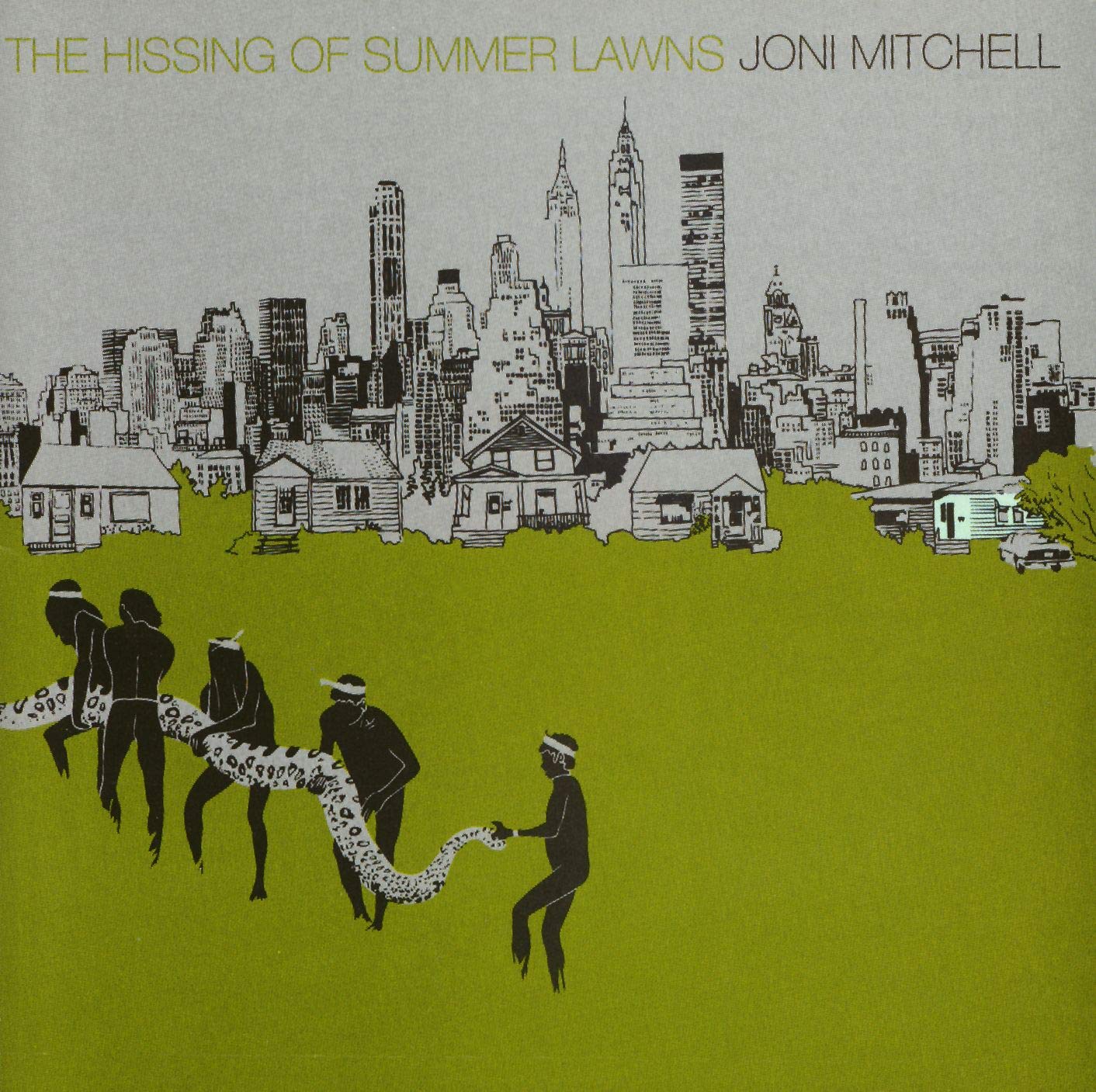
Joni Mitchell: The Hissing of Summer Lawns
Released in November of 1975, The Hissing of Summer Lawns finds Joni Mitchell presiding over one of the most seamless marriages of lyrics and music of the 1970s. The poetry here is evocative and ironic, crafting memorable metaphors and unforgettable images. It’s often said that when constraints are placed on artists, they often produce their best work. For an artist who had previously written music around pre-existing lyrics to then make that shift over to the craft of fitting words into already composed music, one might expect a change in character — or at least in lyrical texture. Beginning around 1973 or 1974, Mitchell’s lyrics indeed became more fluid, impressionistic, and engaged, so that by the time of this album, she had achieved a near-perfect fusion of music and poetry, with the music among her finest creations.
And how does one classify the sound? One cannot. It draws on pop, rock, folk, and jazz, yet it belongs to none of them. The album charts its own course, allowing space for stellar contributors like Bud Shank and Joe Sample to leave their imprint without overshadowing Mitchell’s vision. The closing track, “Shadows and Light,” brings the album to a transcendent conclusion: a multi-tracked a cappella choir of Mitchell’s voice against a contrasting, processed drone from a Farfisa organ. The result is a kind of sonic cathedral, where light and sound filter through like stained glas — ever shifting, quietly monumental, and filled with a sense of cosmic design.
The entire album is a showcase of extracting equilibrium from motion. The music is built on a strong foundation yet exploratory and liberating. Here we have an artist of the highest level in full command of her gifts, unafraid to blur the lines between song and painting, intellect and intuition. The Hissing of Summer Lawns continues to be an album worth returning to: we achieve familiarity with repeated listenings but never is the magic lessened.
Chris Squire: Fish Out of Water
Another November 1975 release was Chris Squire’s highly accessible, melodic Fish Out of Water. For those like me who couldn’t get enough of the brilliance of Yes’s Fragile, this album was filled with the musical inventiveness and wonderful bass lines that dominated that Yes album. Musicians include Bill Bruford on drums and percussion, with saxophonist Mel Collins on two tracks and Patrick Moraz on bass synthesizer and organ on one track . Squire handles all the vocals, bass guitar, some acoustic twelve-string guitar and electric bass. Special compliments go Andrew Pryce Jackman who provides acoustic and electric piano keyboards and seamlessly integrated orchestration providing the album with additional depth and further contributing to its ebullient vitality. Fish Out of Water is a must-have album for all Yes fans surpassing most of their catalog released after 1975.
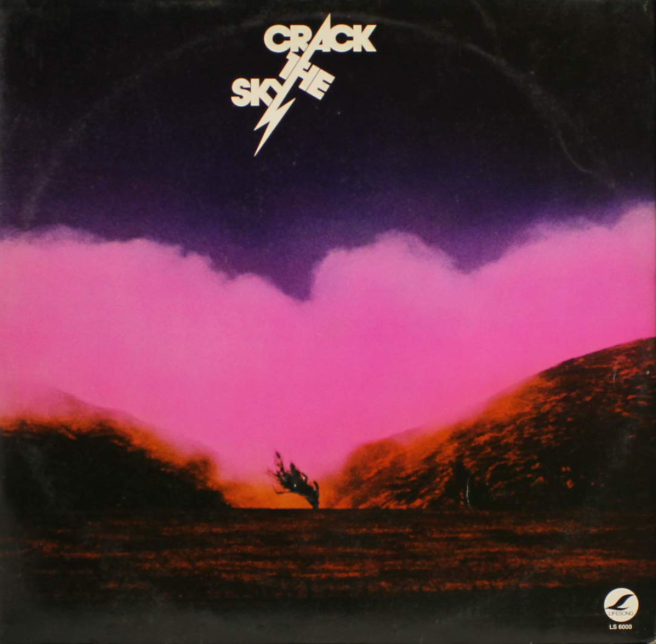
Crack the Sky: Crack the Sky
Crack the Sky’s debut was released in limited quantities in November 1975 by the independent label, Lifesong. Is this the biggest accomplishment by this label? Depends on your perspective — Lifesong posthumously re-released several greatest hits albums of Jim Croce material starting in 1976 as well as being responsible for “The Biggest Rock Event of the Decade” — that’s right — the rock opera Spider-Man: Rock Reflections of a Superhero — an album of such popularity that I cannot find any entry for it on Wikipedia, though in fairness, the title was released again twenty-five years later on CD and is currently available on eBay for $49.
Putting Spider-Man historical considerations aside, the Crack in the Sky album, despite its limited distribution, eventually climbed up to spot 161 on the Billboard Charts in February 1976 aided by some airplay in the Baltimore area and more importantly being identified by the Rolling Stone magazine as the debut album of 1975.
Keyboard player and lead vocalist John Palumbo wrote all the music and lyrics showcasing an eclectic range of styles incorporating sixties pop elements and contemporary progressive rock elements. Both the music and lyrics are generally quirky, with a tongue-in-cheek, often ironic, humor deeply embedded in the lyrics and the music rich with accessible melody. There are musical moments that recall surf music, the Beatles, Procol Harum, early Genesis, and even Gentle Giant. It’s not a particularly well-produced album but it is a lot of fun, and an album that anyone who considers themselves well-versed in the history of rock music should have heard at least once.
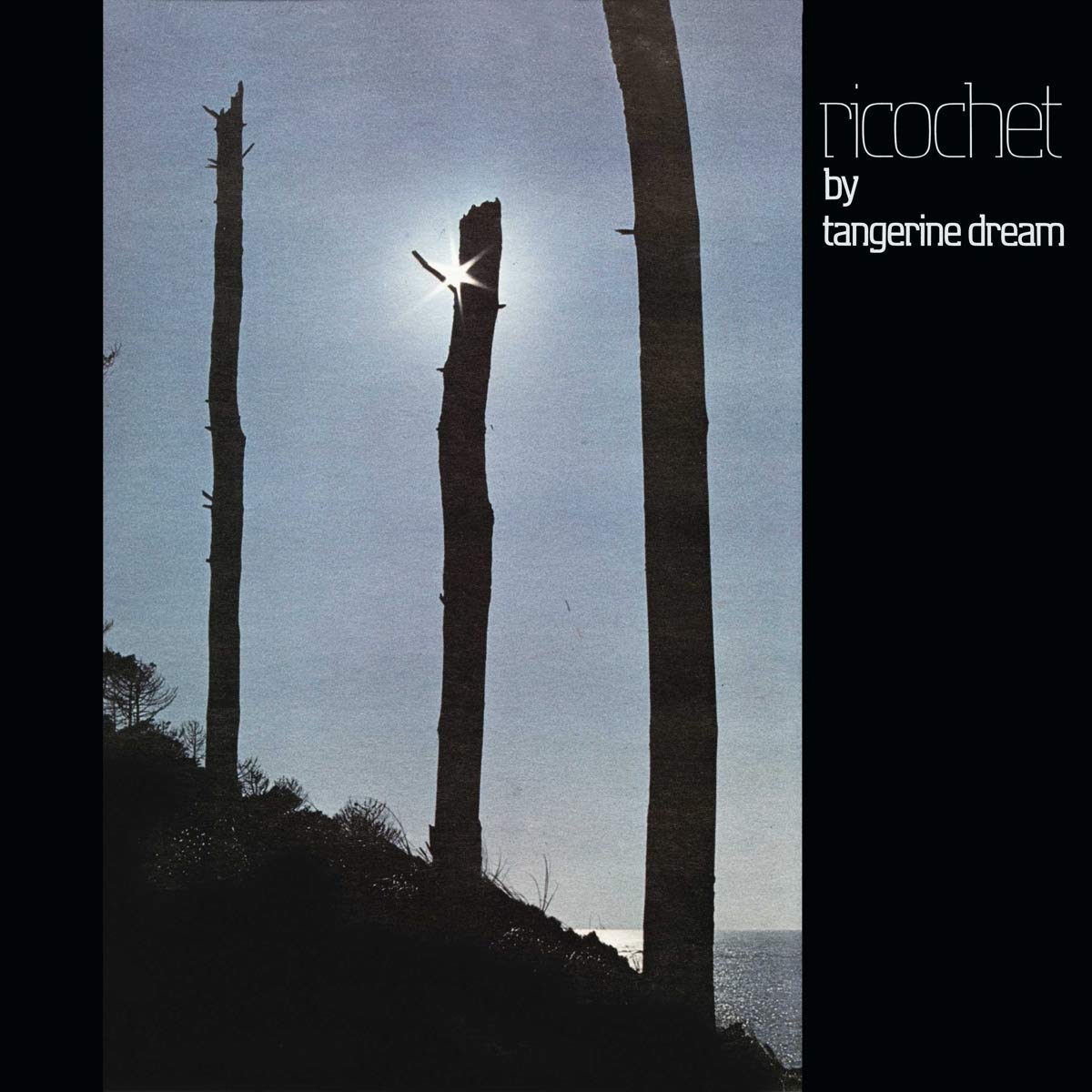
Tangerine Dream: Ricochet
Recorded in late October and early November of 1975 in England, partly live at Fairfields Hall in Croydon and partly in the studio, Ricochet was released in December of 1975. It continues that rhythmically intense sequencer-driven signature sound from Rubycon, delivering it with sparkling clarity and focus. The music unfolds logically with a strong sense of overall meaning and purpose, effectively locking in one’s attention and never letting it go. Side One, “Ricochet, Part One” contains studio improvisations and recreations of live performances with side two, “Ricochet, Part Two” being predominantly live.
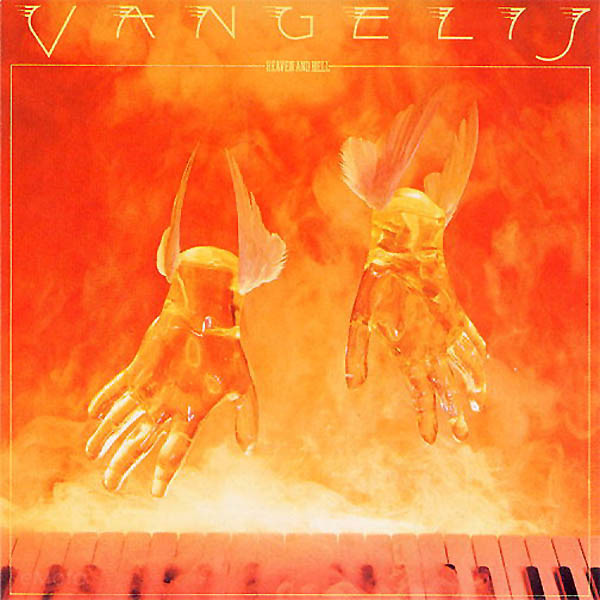
Vangelis: Heaven and Hell
Released in November of 1975, Heaven and Hell is a mixture of the cinematic, early and modern “classical” music, Greek folk and some elements of progressive rock. The album effectively combines Vangelis’s mastery of synthesizer with orchestra to create a richly themed concept album about the duality of human interaction with good and evil, the light and the darkness of existence. Side One, “Heaven and Hell, Part I”, opens furiously with synthesizer and chorus setting a strong symphonic tone and concludes with vocals by Jon Anderson of Yes segmented with a glorious orchestral and synthesizer interlude. Side Two, “Heaven and Hell, Part II” opens up, contrastingly, darkly and ominously, generally maintaining that mood with the notable interspersion of an exuberant, infectious Greek-influenced folk-dance-like section and its more reflective ending. The musical tone-painting is particularly impressive, effectively supporting side two’s darker thematic premise.
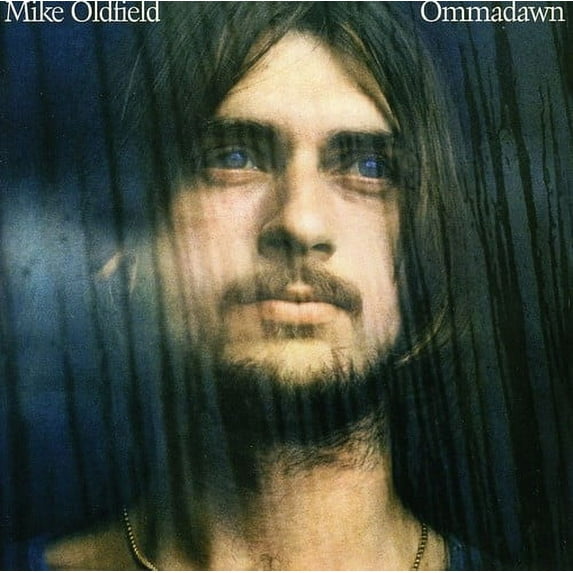
Mike Oldfield: Ommadawn
Released in November of 1975, Ommadawn is Mike Oldfield’s third major symphonic work, following the partly Exorcist-driven phenomenon of Tubular Bells and the expansive, pastoral landscapes of Hergest Ridge. Ommadawn mostly consists of one long work, the title track, divided between the two sides of the original LP with a short additional work at the end. It is this title track that is the gem and centerpiece of the album, excelling in compositional presentation and development of thematic material with the first theme deftly varied, followed by an abruptly effective intrusion of the second theme around the 4:15 mark, which is also skillfully varied. After this exposition of fundamental material, both themes are further developed and extended with a richness of instrumental variety and occasional vocals (using a cleverly altered Irish translation of some simple English words) invoking a tribal sense of community.
The second half of “Ommadawn” is more dramatic with greater musical weight and contrast, further exploring a wondrous world-fusion sound that would soon become a whole sub-genre of music. The highlights here include Paddy Moloney on the Irish equivalent of bagpipes, more properly known as Uilleann pipes, and an uplifting blend of vocals and glockenspiel followed by an Irish-like dance section that brings the work to a close.
For those looking to check this album out, avoid the original mix and go for the sonically spectacular 2010 remix which provides significant clarification and enhancement of individual instruments and provides rich, immersive stereo.
Magma: Live/Hhaï
Released in December of 1975, I bought this album in Germany in 1978, and I was not surprised in the least to find this live album of the French progressive rock group in Germany. Unlike Ange, which had a distinct French coloration to their albums, Magma had a Germanic sound and eschewed the French language to adapt a language more suitable to their music — not German, but — okay let’s break this down.
Christian Vander, son of French jazz pianist Maurice Vander, was born in Paris in 1948. Exposed to both jazz and classical music, he grew up listening to Wagner, Bach and Stravinsky and met several great jazz artists including Chet Baker, who gifted Christian Vander his first drum kit and Elvin Jones who shared his musical expertise. Vander brought all these influences as well as his intense admiration for a number of jazz giants, most particularly John Coltrane, as well as drummers like Art Blakey, Max Roach, Kenny Clarke and Tony Williams. Vander brought all such influences with him, including Coltrane’s searching musical intensity, when he founded Magma in 1969 as Magma’s leader, primary composer, drummer and an important contributing vocalist.
With the formation of Magma, Vander begin the creation of the mythology of Magma concept albums and the appropriate language — Kobaïan, the language of the fictional world of Kobaïa — a distant planet colonized by a group of humans fleeing earth’s moral and ecological collapse. The language’s main function was to provide the appropriate musical sound for Magma’s music and to represent a sacred language of renewal. Its sonic characteristics are starkly different than French, coming closer to Slavic and Germanic patterns, but intrinsically supportive of Vander’s musical ideas, which slowly coalesced into a dark, more teutonic, primitively spiritual style, with texture and timbral/orchestral characteristics eventually significantly influenced by Carl Orff’s Carmina Burana, which Vander first heard in 1972.
This 1975 Live/Hhaï album includes material as early as 1973, all of which represents the mature, dramatic Magma sound prevalent from 1973 on. The original album was a two LP set that could still fit on a standard single CD, but is currently sold as a two CD set. It is available for streaming on the usual sources for anyone wanted to sample this unique music, a music that will retain its excitement, mystery and appeal for centuries to come.
Brian Eno: Another Green World and Discreet Music; Fripp & Eno: Evening Star
In November of 1975, Brian Eno released his third solo studio album, the remarkable Another Green World which, while not as ambient as his upcoming work, is certainly an unconventional pop album full of highly accessible music surrounded with imaginatively unusual context. Eno provides a mix of catchy songs with him on vocals, some amazing guitar work from Robert Fripp, but mostly a level of exotic, quirky arrangements that elevate each and every track. Highly recommend!
In December of 1975, Eno’s fourth studio album is released, Discreet Music, and it is a boldly innovative ambient album. The first side, the title track, is a work of beauty and can be listened to directly or used as effective background music for a range of activities including writing, reading and napping off. The second side is more challenging: three “elastic” arrangements of Pachelbel’s well-known canon where the parts move at different paces — not by chance or performer’s whim but intentionally arranged to distort the relationship of the individual parts and the overall musical experience. One can still hear traces of the original canon — yet each of the three very different arrangements alters the original musical architecture with time-based abstractions that are roughly parallel to distortion concepts in cubism, futurism and surrealism and also seem related to rules-driven processes that are found in works by artists like Paul Klee, Bridget Riley, Sol LeWitt and even those famous rectangle paintings of Piet Mondrian. One also has to give credit to John Cage’s influence which opened up this whole realm of unexpected alterations whether aleatoric or rules-driven.
The most challenging of these three albums, Fripp & Eno’s Evening Star, released also in December of 1975, is another tale of two sides. The first side of four tracks, each with new standard ambient titles, is by far the most accessible and functions very effectively as truly ambient music or even meditative, reflective music, particularly the first, third tracks and fourth tracks “Wind on Water,” “Evensong,” and “Wind on Wind.”
The second side is devoted to a single piece “An Index of Metals” divided up into six tracks. I doubt there are many people that can turn it on in the background and experience a calming or relaxing effect from it. It is filled with tension and not smooth or flowing. I suspect many will just find it plain irritating if using it to relax, read, or write by as it has a somewhat intrusive and ominous character. It is more listening music and needs the attention of an active listener to properly navigate the tension, suspense, and forward progress of the music. The last of the six tracks is the most gritty of all and it ends with the tension decaying as opposed to any resolution. This sets up a nice contrast to some more relaxing ambient music, which would become more and more common and commercially viable thanks to this early work by pioneers like Eno and Fripp.
Yeah, you can make human sacrifice to dialectical history with druids and Marx And you can root for truffles on Wall Street But until you see the fallout on your greasy fork You’re just a vapid bowling alley attendant on graveyard.
creases and wrinkles pouts and interpretations a phone number from Port Said left in a pocket
Oh, how the gin fizzingly stirs swirls of melodies unfurl as veils drip like honeyed falling stars
Ah, how the cover stays low so the currency flows like foot traffic at the dusty bazaar
“I’ll show you Egypt” has been her most memorable reply but I doubt her intentions and so plan another solo excursion hoping that once I return that crumpled, rumpled look will be comfortably cool at work
I never liked them anyways And THEY ALWAYS came with a safety cap for something that’s not now very safe
The bottle always asserted its authority just two wait this long if you really want more
Treated me like a child even though it said “extra strength”
I am not pregnant that’s hard for a man particularly in their sixties but what’s not good for a goose is maybe even worse for a gander.
I live with pain constantly Bad neighbors Bad news and so — pretty bad headaches…
I can easily explore better options no warnings on dosages I well know what works well and even if I have a brutal headache the next morning and mess up the car driving At least I had me some fun.