Zumwalt Poems Online

Archive for the ‘Jazz Rock’ Category

Fifty Year Friday: March 1970

bb 2 b_d_okok

Miles Davis: Bitches Brew

It was sometime around 1971 (and maybe as early as 1970) that I first saw some promotional marketing material for a mail-based membership club called the Seven Arts Society. It wasn’t offering the usual record club membership (where one could buy 10 albums for $1 and then have to buy more albums later),  it was a one time $7 fee to a club that sold mostly books on the seven arts (painting, sculpture, architecture, drama, literature, music and photography) as well as small book-shelf friendly reproductions of sculptures.   I put it aside and didn’t think about it again, until a received another version of their promotional mailing that included a picture of the stunning cover of Miles Davis’s Bitches’ Brew.   At this point, even though I had never knowingly heard a note of Miles Davis, I took the ad very seriously and noticed that for $7 one could get membership into the Seven Arts Society that included a couple of items I wasn’t particularly interested in and two items that did capture my interest: the Miles Davis album and a 10 LP set of classical piano masterpieces.  The first thing I did was to get my father’s take on the overall legitimacy of the membership and his personal verification that there were really no strings attached, and though he advised against my signing up, he did so with limited conviction.  This step completed, I then had to decide  which was the better choice: the Miles Davis two record set or the Piano Masterpiece. I knew nothing about Miles Davis at that time, and wasn’t sure what kind of music I would be getting.  On the other hand I was developing a growing love for classical music, and this 10 LP set had one entire LP of Mozart, two LPs of Beethoven, and half a side of Tchaikovsky — composers of which I had recently been buying recordings of their symphonies.  I also knew a little bit about the other composers included as I had started casually listening to the local commercial classical AM and FM radio station., KFAC-FM. Ultimately I decided that 10 LPs were much better than 2 and figured I could buy the Miles Davis 2 LP album later.

GPM 61kgYr2nkrL._SL1024_

It turned out the 10 LP set was a smart purchase.  The set was in a quality box with the highest quality LPs I had ever seen. Deutsche Grammaphon produced thick, heavy, noiseless LPs.  The sound was clearly superior, even on our modest sound system, which had been very recently upgraded from a mono cabinet to a radio shack stereo turntable, amplifier and a pair (a pair!) of speakers. And even to my rather limited sensibilities, it seemed to me the orchestras and pianists were of the highest possible quality.  I started by listening to the Mozart and Beethoven, working through the 10 LPs in order, and playing the Beethoven LPs several times before getting to what I considered to be the second tier composers of the fourth LP, Schubert and Schumann,  composers I had heard little about and less of their music.   I was pleasantly surprised with Schubert’s Marche Militaire and Opus 103 Fantasy and by the delicateness and clarity of the solo piano sound.  The music sparkled  and sounded so perfect and so, well, pianistic.  Next, I was really impacted by the Schumann piece that started on that same side and continued on the second side.  A piece with both an English name, “Scenes From Childhood”  — and a German name that I couldn’t pronounce,  Kinderszenen, but now knew what it meant.  That first “scene”, “Of Foreign Lands and Peoples” had one of the most haunting, evocative melodies I have ever heard up to that time — the second theme, even further heightened by its harmonic, rhythmic and thematic relationships to the first, simpler, more innocent theme.  That first side of that fourth LP would get played many more times,  more than the Beethoven LPs .  However, it wouldn’t get played the most of those ten LPs.  Soon I came across the famous Chopin A-flat Polonaise (slightly familiar to me from hearing it once on the radio [hadn’t yet realized it was used in the Wizard of Oz] and promising myself that I would one day have a recording of it) on the second side of side six and Prokofiev’s Opus 11 Toccata on the tenth LP both played by Martha Argerich who along with Christoph Eschenbach who was the pianist on the Kinderszenen and Sviatoslav Richter who was the pianist on the Tchaikovsky Piano Concerto became immediate favorites of mine.  By the time I had finished that tenth LP, this was my favorite LP set in my modest collection, at least until I spent $20 to buy a 21 LP set of Alfred Brendel performing Beethoven’s piano works.

Now, please note, that I had expected I would purchase the Bitches Brew LPs when I received the catalog from Seven Arts.  However, much to my surprise, it was priced at twelve dollars, more expensive than what it would be if I had purchased it at one of the newly-being-built discount mega-record stores.  So I told myself that I would purchase it later.  But time went on, and it wasn’t until the end of the 1980’s that I purchased my first Miles Davis album, Amandla and it wasn’t a few days ago that I first heard the entire Bitches Brew album from start to end.

And though it is nowhere close to Kinderszenen, Chopin’s famous A-flat Polonaise, the Prokofiev Toccata or even the Ravel Piano Concerto performed also by Martha Argerich (in that 10 LP Great Piano Masterpieces set I am still in love with), Bitches Brew is a very consequential album that makes use of sound and space much like the Miles album before it, In a Silent Way, but has a greater focus on energy, drama and drive than the more ethereal and beautiful In a Silent Way.  It combines elements of psychedelic rock with jazz and modern classical improvisation.   Along with In a Silent Way, Bitches Brew has had considerable influence on many styles of music in the next few years including rock, funk, jazz and prog-rock.
T REX bos with wS R-1971592-1478905261-2106.jpeg

Tyrannosaurus Rex: A Beard of Stars

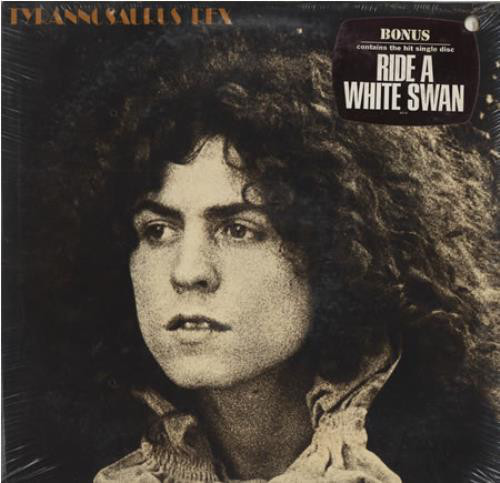
At around the same time I purchased the 10 LP Great Piano Masterpieces, my dad had taken my sister and I to one of the newly opened Wherehouse record stores, the first one opened in Orange County, a car drive of about 20 to 25 minutes.  Not having much money, I bought a bargain-priced ($4.99) three-LP box of Mozart late symphonies, and some “cut out” records — records reduced in price with a corner cut out, or a small notch cut or small whole punched in the in the outer area of the cover.  The records I got were three or four LPs from the Czech Supraphon label of exotic named composers like Jiří Antonín Benda, Vojtěch Matyáš Jírovec, Václav Pichl and Václav Voříšek each priced at $1.99 — and a single cut-out LP priced priced at exactly 99 cents,  an album that did well in the UK and so was released in the US on Blue Thumb, but failed to sell and so ended up in the cut-out bin.  I had never heard of this two-person band (their name was not one to invoke confidence) and the dreary photo of a single, unknown musician on the front cover and another on the back, was not particularly appealing, but there was something appealing about the title of the album, Beard of Stars, and the track names on the jacket, the first of which was title “Prelude” with the ones following seemingly having a connection to folklore or fantasy with titles like “Pavilions of Sun, “Wind Cheetah” and “Dragon’s Ear.” What sealed the deal was a sticker on the LP indicating that there was also included inside (as a bonus!) their hit single, “Ride a White Swan”, which, like the name of the group, I had never heard of before, and, all things considered,  I figured there was no harm in taking a chance at 99 cents — money I could quickly recover working at the school cafeteria before school started and during half of my lunch period each day.

I can’t say how much I was amazed and delighted at all six of the symphonies in the Mozart box set.  Also, my sister had bought a two-record set of Puccini’s La Boheme.  I had never heard an entire opera before, and how very exciting it was to follow the English translation of the Italian as the plot of the opera unfolded accompanied by a continuous stream of drama-steeped melodies and melodic-like fragments.  The Supraphon Czech composer LPs were not as novel as the opera experience, but were quite good in terms of performance and musical content.  Then there was the Tyrannosaurus Rex Beard of Stars album, which I had pretty low expectations and much to my surprise was both intriguing and musically satisfying from the opening prelude.  There is a level of intimacy throughout each track, and I thought of these two musicians performing in a small venue or someone’s den, crosslegged on the floor.  But there is also an intensity, liveliness and forward motion to the album that propels itself through the slower tunes like the simple “Organ Blues” or the dissonant “Wind Cheetah” that ends side one.  Side two opens up with more upbeat energy with the title track, of “A Beard of Stars” which effectively serves as an instrumental prelude for side two.   It is not until the very end,  in the final moments of side two, that the tone and consistency of the album is disrupted with the closing three minutes of the last track inexplicably veering off into an rather unstructured and wild — and seemingly unrelated — electric guitar excursion by Marc Bolan.  And though a better and more cohesive ending would be welcome, all in all this is an excellent fantasy-folk rock album filled with a variety of well-crafted and laudably idiosyncratic tunes that make this my favorite T. Rex album.

RAWS R-1971592-1436474716-6029.jpeg

As mentioned this cut-out version also included a single hurriedly shoved into the interior of the jacket — a single, “Ride A White Swan” that held little interest for me upon first listening and held none of the charm or uniqueness of the album it came with.  “Ride A White Swan” produced by Tony Visconti (earlier Tyrannosaurus Rex including Beard of Stars, later T. Rex, David Bowie and the first Gentle Giant album ) was well received in the UK, where it peaked at the number two spot. Though a simple blues-based tune, “Ride A White Swan” is often credited as the first glam-rock song and with its success was the second step towards fame and fortune for Marc Bolan and his new percussionist, Mickey Finn — the first step towards fame being this Beard of Stars album, recorded in 1969 and released March 13, 1970, which, though it didn’t catch on in the U.S. as mentioned earlier, did pretty well in the UK.

Egg: Egg

Egg 1970 frt

If Bitches Brew or Beard of Stars aren’t usually classified as progressive rock, even though they should be, Egg’s first album, Egg, released the same day as Beard of Stars, on March 13, 1970, clearly has left the late-sixties genre of psychedelic rock behind, incorporating classical and jazz elements into a rock foundation, but very differently, and less organically, than Bitches Brew.  Egg embraces one of the signature elements (excuse the pun since I am indeed referring to odd and sometimes alternating time signatures) of prog-rock to such a degree that the single that preceded the album, their first and only single, starts off with a 4/4 verse with a brief 5/4 part and then with a chorus in 7/8 with the returning verse going from 4/4 to 11/8  — all with matching lyrics that clearly call out what is happening.  The first album is equally adventurous with a progressive rock treatment (percussion and bass added à la Keith Emerson’s Nice) of Bach’s famous D minor organ Fugue as well a complete part original, part classical-based symphony taking up the entire second side.  Well, almost a complete symphony, as the third movement was dropped by the record execs due to it using material so close to the still-under-copyright “dances of the adolescent girls” section of Stravinsky’s Rite of Spring and replaced by an alternate, stand alone composition, fitted in at the spot where the third movement was.  Fortunately, a test pressing was made and saved that included that third movement which is now available on more recent digital versions of the album.  All in all a strong debut by Egg, showcasing Dave Steward on keyboards.
csny R-12488208-1536428960-8285.jpeg

Cosby, Stills, Nash and Young: Déjà Vu

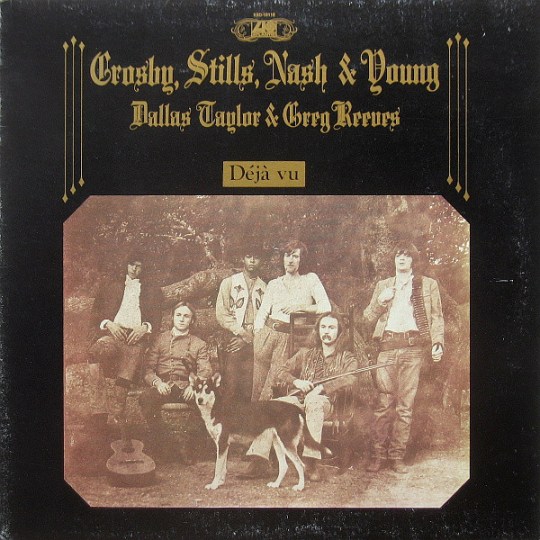
Released on March 11, 1970 Déjà Vu adds Neil Young to the Crosby, Stills and Nash lineup, providing three radio-airplay hits (Joni Mitchell’s “Woodstock” and Graham Nash’s “Teach Your Children Well” and “Our House”) as well as Stephen Stills “Carry On” and Neil Young’s “Helpless” and “Country Girl.”  If you are looking for a post-Beatles example of what is meant by “Classic Rock”, this album fits the bill as well as any with its strong songwriting, tightly executed harmonies, and brilliant arrangements.

Joni-Mitchell

Joni Mitchell: Ladies of the Canyon

This brilliant album, filled with the 20th Century folk-pop equivalent of 19th century art songs, was released on March 2nd 1970.   The lyrics range from personal, philosophic, poignant and playful, with the music always of the highest caliber.  “Free” is one of many examples from this album of how lyrics and music come together perfectly and includes evocative cello and a brief, illustrative clarinet solo by Paul Horn.  By the time I was in college (1973), this was an album that every girlfriend of my close guy friends had in their collection and in the collection of the first young lady I moved in with as well as my close gay friend who always got the best scores on our music theory ear training tests and, then years later, two consecutive English singer-songwriter roommates (one female, one male) when I lived in England.  There is just something special about both Joni Mitchell and this album that everyone who has a more sensitive side to them should find intellectually, emotionally and musically appealing.
watermaxresdefault

Frank Sinatra: Watertown

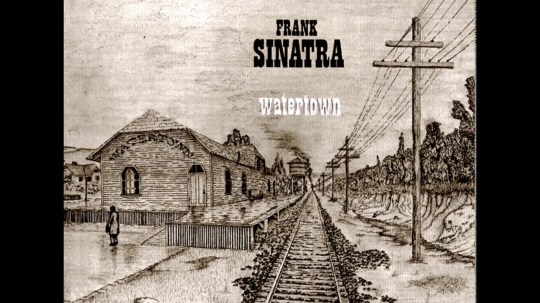
One doesn’t usually think of concept albums and Frank Sinatra, but here we have a true concept album of the early 1970s — not a grand prog sci-fi theme, but an real-life concept with appropriate, corresponding songs about a guy whose wife leaves both him and his children.  This one tears at your heartstrings and the songs are well written and sung simply and without any bravado.  One annoying drawback is that Sinatra is dubbing his voice over the recorded orchestrations — very different than his usual method of operation of recording in real time with the musicians. And although this overdub approach detracts from the album, the album is still worth multiple listenings.
bogypsies

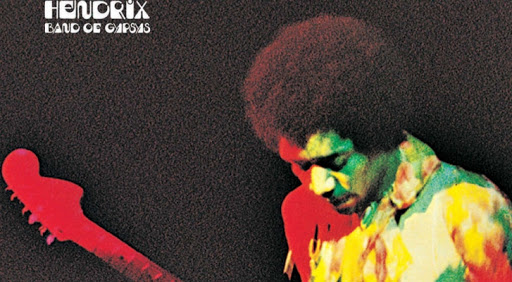
Jimi Hendrix: Band of Gypsies

Whether live or in the studio, it seems that every moment of Jimi Hendrix on tape is priceless!  Released on March 25, 1970, this album is still as fresh as when it was recorded on January 1st, 1970. Yes, it’s far from the best Hendrix album or even the best live Hendrix, and Buddy Miles singing (and even some of his drumming) does get in the way at times.  But we get some amazing — no, some transcendental — guitar work from Hendrix on the longest track, “Machine Gun”, and side two also has its strengths with renditions of “Power of Soul” and “Message to Love.”

Also worthy of mention is Alice Cooper’s weirdly offbeat, partly Zappa-and-Captain-Beefheart influenced album, Easy Action, Rod Stewart and the Faces’ album First Step, The Temptations Psychedelic Shack, the live Delaney and Bonnie with Friends album, On Tour with  Eric Clapton, and Leon Russell’s debut self-titled album, with that classic Leon Russell gem, “A Song For You.’  There is also the live Ginger Baker’s Air Force album that I listened to once when in college and remember little of, but I heartily welcome any comments or reflections about it or any other album from March of 1970.

Which of these many and diverse, distinctive albums of March 1970 do you remember or still listen to (even if only now and then) in the 21st century?
Fifty Year Friday: January 1970

Chc 2

Chicago:  Chicago

For most of us in our teens, 1970 was filled with many memorable and important musical moments.  Out of the hundreds which expanded my musical appreciation greatly, three stand out. The first (the last of these three) occurred in December of 1970: the Beethoven all day, one-dollar, open seating, 10 AM to 10 PM, Bicentennial Beethoven Birthday Concert at the L.A. Music Center. Attending a school Advanced Placement English all-day field trip, I first heard live chamber music, including the Beethoven Octet in E-flat major for pairs of clarinets, oboes, bassoons and french horns  — providing a kaleidoscope of remarkably distinct timbres — interacting yet maintaining separateness and distinctness and as brilliantly clear as the decorative icing on a cake but as substantial as the actual cake ingredients underneath that icing.  When the school bus was ready to leave that afternoon, I unsuccessfully tried to arrange transportation.  I had originally come to the concert that day as one who liked and enjoyed classical music, and left as one who couldn’t be without it.

The second of the three most important musical events of 1970 for me was the acquisition of King Crimson’s first album, In the Court of the Crimson King.  This was the heaviest music I had yet heard and I heartily shared it with my friends that were willing to accept such adventurous and different music.  The album definitely contributed to my developing the preference, tastes, and sensibilities for the numerous progressive rock albums that would late follow and, because the album included Greg Lake, it was ultimately responsible for my purchasing of yet-to-be-in-existence Emerson, Lake and Palmer albums.

The third of these three most important musical memories was initiated by my next door neighbor bringing over his newly purchased “Chicago” double album (nowadays referred to as Chicago II), but really the first Chicago album to us at the time as we were yet unaware of the first Chicago Transit Authority album.)  I recorded that “Chicago” album on my tape deck with a copy of Abbey Road and played those two albums over and over during the summer of 1970 while reading the Hobbit and the Lord of the Rings Trilogy. When I  stayed with my aunt and uncle during part of the summer of 1971, I talked my cousin, a talented snare drummer in a drum and bugle corp, into purchasing the 2 LP album and it soon was the main soundtrack to my multi-week visit there.

I usually avoid ranking albums,  but it would be difficult to not acknowledge that this album is one of the very best pop/rock albums of 1970s as well as the last fifty years.  The entire album is a cohesive work, best listened to attentively from start to finish and comparable to other complete works like novels or symphonies.  Unlike most albums before, during ,and afterwards, there is not one minute of filler material, everything on the album is indispensable and contributes to the remarkably high quality of the completed work.

Tracks

1. Movin’ In (James Pankow) – 4:06 Lead singer: Terry Kath
2. The Road (Terry Kath) – 3:10 Lead singer: Peter Cetera
3. Poem for the People (Robert Lamm) – 5:31 Lead singer: Robert Lamm
4. In the Country (Kath) – 6:34 Lead singers: Terry Kath and Peter Cetera
5. Wake Up Sunshine (Lamm) – 2:29 Lead singers: Robert Lamm and Peter Cetera
6. Make Me Smile – 4:40 Lead singer: Terry Kath
7. So Much to Say, So Much to Give – 1:12 Lead singer: Robert Lamm
8. Anxiety’s Moment – 1:01 Instrumental
9. West Virginia Fantasies – 1:34 Instrumental
10. Colour My World – 3:01 Lead singer: Terry Kath
11. To Be Free – 1:15 Instrumental
12. Now More Than Ever – 1:26 Lead singer: Terry Kath
13. Fancy Colours (Lamm) – 5:10 Lead singer: Peter Cetera
14. 25 or 6 to 4 (Lamm) – 4:50 Lead singer: Peter Cetera
15. Prelude (Kath, Peter Matz) – 1:10 Instrumental
16. A.M. Mourning (Kath, Matz) – 2:05 Instrumental
17. P.M. Mourning (Kath, Matz) – 1:58 Instrumental
18. Memories Of Love (Kath) – 3:59 Lead singer: Terry Kath
19. 1st Movement (Lamm) – 2:33 Lead singer: Terry Kath
20. 2nd Movement (Lamm, Walter Parazaider) – 3:41 Instrumental
21. 3rd Movement (Lamm, Kath) – 3:19 Lead singer: Terry Kath
22. 4th Movement (Lamm) – 0:51 Lead singer: Terry Kath
23. Where Do We Go From Here” (Peter Cetera) – 2:49 Lead singer: Peter Cetera
Chicago

Peter Cetera – Bass, Vocals
Terry Kath – Guitar, Vocals
Robert Lamm – Keyboard, Vocals
Lee Loughnane – Trumpet, Vocals
James Pankow – Trombone
Walter Parazaider – Woodwinds, Vocals
Danny Seraphine – Drums

BOTW

Simon and Garfunkel: Bridge Over Troubled Water

Bridge Over Troubled Water was the first album I bought within a few days after it was released. (A year or two after that, buying albums as soon as they came out would become a common purchasing pattern.)  My sister had previously purchased each and every Simon and Garfunkel album, and probably would have bought this one, but I spotted it at the local K-mart and grabbed it without question.  Taking it home and then playing it attentively, I was a bit disappointed as I was expecting that this would be even better than their previously album, Bookends.  I was still pretty naive, even for a 15-year-old, and I assumed that artists got better with each and ever attempt.  It had seemed that way with Simon and Garfunkel, as Bookends was better than Parsley, Sage, Rosemary and Thyme which was better than the Sounds of Silence album which was definitely better than Wednesday Morning, 3 AM.  Wasn’t it natural that this new album, Bridge Over Troubled Water would be their best so far?  I had a lot to learn, and I would soon learn that pop and rock artists peak — often with their third or fourth album  — sometimes even peaking with their second album. (I learned this indisputably when I bought the Chicago III album, my jaw dropping down close to the floor as I had expected the same improvement from the CTA album [first Chicago album] to the Chicago II album to occur from the Chicago II to the Chicago III — it was very unfitting, and perhaps, in my mind at that time, unethical of them to turn out such an inferior product to Chicago II)

I listened to  Bridge Over Troubled Water a few times, trying to  sort out  what was the best songs — I liked “Frank Lloyd Wright” and “Song for the Asking” the best and considered “Bye Bye Love” and, to a lesser degree, “El Cóndor Pasa” to be filler. (Yes, “El Cóndor Pasa” isn’t that bad, but i would much rather have it replaced with a strong Paul Simon composition — which I was expecting the album to be overflowing with.)

Perhaps a week to ten days after purchasing, I had started to hear the title track on the radio.  Yes, that was reassuring, but it did get a bit trying to hear it over and over.  Then the same occurred with “Cecilia.”  I had already played the album over a dozen times, so didn’t need those songs filling the airwaves, but nonetheless, was happy for Simon and Garfunkel to get all the attention and resulting benefits from the constant exposure for those few months. Overall this album is their most commercial effort, and not surprisingly their most successful.  It is also pretty good — especially “Frank Lloyd Wright” and “Song for the Asking.”

Tracks

Side One
1. Bridge Over Troubled Water (Paul Simon) 4:52
2. El Condor Pasa (If I Could) (Jorge Milchberg / Daniel Alomía Robles / Paul Simon) 3:06
3. Cecilia (Paul Simon) 2:55
4. Keep the Customer Satisfied (Simon) 2:33
5. So Long, Frank Lloyd Wright (Simon) 3:41

Side Two
1. The Boxer (Simon) 5:08
2. Baby Driver (Simon) 3:15
3. The Only Living Boy in New York (Simon)
4. Why Don’t You Write Me (Simon) 2:45
5. Bye Bye Love (Boudleaux Bryant / Felice Bryant)
6. Song for the Asking (Simon) 01:39

Personnel

Paul Simon – lead vocals, acoustic guitar, percussion
Art Garfunkel – lead vocals, percussion
Los Incas – Peruvian instruments
Joe Osborn – bass guitar
Larry Knechtel – piano, organ, Fender Rhodes
Fred Carter Jr. – acoustic guitar, electric guitar
Pete Drake – Dobro, pedal steel guitar[40]
Hal Blaine – drums, percussion
Jimmie Haskell and Ernie Freeman – strings
Jon Faddis, Randy Brecker, Lew Soloff & Alan Rubin – brass
Buddy Harman – percussion
Bob Moore – double bass
Charlie McCoy – bass harmonica
Roy Halee – engineer and co-producer

Fifty Year Friday: September 1969

1969 3 beatles-abbey-road.jpg

On September 20, John Lennon met with Paul McCartney, Ringo Starr, and the Beatles’ business manager to inform them of his intent to leave: “I want a divorce! Like the one I got from [first wife] Cynthia.”

1969-topps-baseball-cards-graded-exmt-1-t9528508-575 (2)

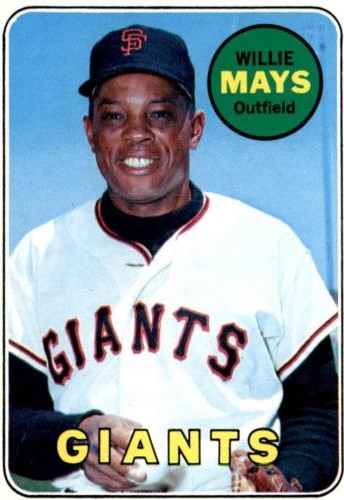
September 1969 was also an eventful month for baseball.  The Mets initiated a serious winning streak while the Chicago Cubs was losing games and overtook the Cubbies, even getting a 4-3 victory against Card’s pitcher Steve Carlson record-breaking 19 strike-outs, nine-inning pitching. On September 22nd, Willie Mays of the San Francisco Giants became the first major league baseball player since Babe Ruth to get his 600th home run; this was in the same game against the Padres that his teammate Bobby Bonds struck out for the 178th time, breaking  an 1963 record previously held by Dave Nicholson of the Chicago White Sox.

On September 26, ABC debuted a seemingly inconsequential situation comedy about six kids, three girls and three boys, merged as a part of a marriage of two divorcees, with a dog and maid thrown for good measure. At fourteen, I avoided watching the show out of principle, but this series was a favorite of the youngest girl next of our closest neighbors, geographically and personally, a family of three older boys, all good friends to me, and three younger girls.

The-Beatles-Abbey-Road-Album-cover-web-optimised-820.jpg

But anything else that happened on September 26, or in the month of September 1969, seems culturally inconsequential to the release of the Beatles final effort before they went their own ways, their last recorded studio album, Abbey Road.  I borrowed this masterwork from one of the three boys next door in the spring of 1970 and recorded it on to my own relatively good quality reel-to-reel tape recorder along with Chicago’s second album, the two of which I listened to over and over and over while reading The Hobbit and The Lord of the Rings series.  Though more of a collection of solo Beatles songs than some of the earlier albums, the assembly and production, along with the high musical quality, made this my favorite Beatles album.

For many years, I was not particularly fond of the first track, John Lennon’s “Come Together”, seemingly a musical throwback to an earlier time.  Harmonically, this was a standard rock-and-roll chord progression, with psychedelic, wildly colorful, but also mostly incomprehensible, lyrics. Not known to me at the time was that it was written as a campaign song for Timothy O’Leary in his averted attempt to run against Ronald Reagan for Governor of California — the campaign terminated by O’Leary being arrested for possession of weed.  Also not known to me at the time, was the similarity of the song to Chuck Berry’s “You Can’t Catch Me.”  These facts though, probably wouldn’t have made much difference to my quickly getting tired of hearing this played every morning on the bus trip to and back from school, five days a week, from the third Monday in October 1969 to the last Friday before Christmas vacation in late December.

During this same three-month window, George Harrison’s “Something”, the second track sequentially on Abbey Road, was also played on that same bus, courtesy of the local station that our bus driver was apparently captivated with or captive to.  Due to the poor audio quality and the noise on the bus, I didn’t get to fully appreciate the nuances of either of these two songs, and so also became slightly tired of “Something” sometime by late November.  However, its important to note, that compared to the other fodder on AM radio, these two tracks were gems.  It’s hard to imagine how I survived, but during these three months, as music was shifting from the diversity of the late sixties to a more homogeneous, more similarly produced approach to singles, there were numerous musically questionable songs being played on that bus radio including Oliver’s “Jean”, the Cuff Links’ “Tracy”, Bob Dylan’s  tortuous, “Lay Lady Lay”, R.B. Greaves “Take A Letter Maria”, Mel and Tim’s “Back Field in Motion”, and worse of all, The Archies’ unimaginably simplistic and simplistically unimaginable “Sugar Sugar”, one of the most blatant and annoying bubble-gum pop songs of the era. Compared to any of these and some of the other tunes being pushed at the time, “Something” was a work of art, and “Come Together”, even for the seventy-eighth time, was a welcome relief.

But back to Abbey Road — by the time I had transferred my friend’s copy of Abbey Road to tape and started playing it over and over,  I viewed “Come Together” and “Something”, (tunes I had already been overexposed to), as a pair of preludes to an extraordinarily, exceedingly, and unexpectedly high-quality, melodically-rich album. I could read over the sound of “Come Together” and even “Something”, but when I got to the rest of the album, I would often stop reading to listen for a while, before getting back to Tolkien’s more narrative story-telling.

Now certainly as my level of musicianship has increased I have come to better appreciate “Something.”  That said, even today, it is the rest of this album, starting with “Maxwell’s Silver Hammer” that really resonates with me.  In the previous two tracks, we have McCartney’s bass work, which is particularly impressive on “Something.”  With this third track, we have his first composition on the album, a delightful upbeat, perfectly crafted (and performed) narrative pop tune with facile, witty lyrics nicely supporting the song.   Lennon dismissed the work as more of McCartney’s “granny” music, but the work, like Ringo’s “Octopus’s Garden” provides the necessary lightness and contrast needed to hold together side one of Abbey Road.  “Oh, Darling” which follows, is a seriously heartfelt, blues-based ballad and  benefits from being preceded and followed by the two lighter tracks.

Whereas Ringo’s earlier composition that appeared on the White Album, “Don’t Pass Me By” was one of the simplest realization of a straightforward blues progression, his second composition, “Octopus’s Garden” is more sophisticated, possibly aided with some direction from George Harrison.   Not only does this work well with “Maxwell’s Silver Hammer” to bookend McCartney’s “Oh! Darling” , but it provides the contrast for the thickness and darkness of Lennon’s “I Want You (She’s So Heavy)” which starts off as plaintive blues-rock before diving into the depths of progressive heavy metal.  It ends suddenly, providing an unambiguous and unbreachable separation between side one and side two.

Side two opens up with Harrison’s masterpiece, “Here Come’s the Sun”, by itself enough to justify having a copy of the Abbey Road album.   This is followed by Lennon’s reworking (reversal and extension) of sequence of chord progressions of Beethoven’s Moonlight Sonata (first movement) as the core of “Because”, providing a level of reflection and sophistication that nicely sets up the unrivaled rock medley that makes the Abbey Road album an unforgettable masterpiece.  One could have taken the numbers in this medley and extended their length, falling into the trap we find on so many rock albums, where tunes are allowed to roam unchecked trespassing their natural boundaries — but by keeping each song to its minimum duration, George Martin and the Beatles maximized the musical impact to make this sixteen-minute medley the shortest sixteen minutes in the history of rock music.  The album ends with “Her Majesty” which was originally meant as part of the medley after “Mean Mr. Mustard”, but disrupted the flow and coherence, and so was intended to be left off the album altogether.  Acting under instruction not to throw anything away, one of the engineers added “Her Majesty” to the end of the master tape, after a generous length of silence.  The Beatles, when listening to the playback lacquer that also included this “added” track, liked the effect and the track ended up included as a final “hidden” track on the album, not listed originally on the LP album cover.   Growing up, I often debated with myself whether the album should have ended, predictably, with “The End”, but today, I have little doubt of the appropriateness of this unrelated coda that adds just one additional element of artistry to this overall timeless, seemingly flawless album.

Though Abbey Road was the best album from September 1969, there are others worth noting.

Laura Nyro’s dramatically intense “New York Tendaberry” was released on September 24, 1969.  Though I never caught Laura Nyro live,  this album provides me some solace as the immediacy comes about as close as a studio album can get to a real live performance.  With one strong track after another, all stylistically and compositionally individual, this is one of the best albums of September 1969.

The Band released their second studio album, self-titled “The Band”, on Sept 22, 1969. Generally country rock, music is accessible and generally good with music mainly written by guitarist Robbie Roberson, who also engineered the album.  For the most part, the lyrics are narrative and provide an historical aspect.  Particularly notable is “The Unfaithful Servant”,  with its art-song qualities.

Fleetwood Mac released their third album, Then Play On on September 19, 1969, the last Fleetwood Mac studio album with Peter Green.  The band takes advantage of the capabilities of studio recording technology for the first time, producing a strong, polished album incorporating blues, blues-based rock,  and contemporary rock numbers including Peter Green’s reflective, leisurely-paced and melancholic “Closing My Eyes”, the understated, simple and nostalgically effective, Pink-Floyd-like “When You Say”, and Peter Green’s “Rattlesnake Shake” which lyrically harkens back to those early blues records that cover taboo topics.  Notable is Peter Green’s guitar work throughout and the overall musical variety provided by contributions from all four band members.  The UK initial release was a relatively lengthy album, and the US version dropped two tracks.  The Rhino Deluxe CD edition includes not only the two omitted tracks, but Peter Green’s 1970 masterpiece, “The Green Manalishi (With the Two Prong Crown)” — which combines elements of psychedelic rock and early progressive rock.

The Guess Who release their fifth studio album, “Canned Wheat” sometime in September 1969. This is their strongest album to date including two radio hits, “Undun” and “Laughing”  and an early, and perhaps superior version, of “No Time” with a ear-awakening microtonal introduction.

Man releases the wittily titled 2 ozs of Plastic with a Hole in the Middle.  The album takes on a distinctly progressive tone with an incredibly strong opening instrumental track, “Prelude/The Storm”, solid evidence at how effective could the band could be at crafting and shaping larger musical statements.   Though the remaining album does not stay at this lofty level (the next track is more standard blues-rock and elements of blues and psychedelic rock dominant side two), it has its moments.

While Fleetwood Mac was able to get away with a suggestive album title and Peter Green’s more overt “Rattlesnake Shake”, an unambiguous song about male self-pleasuring, Man had some corporate censorship imposed.  Their label, perhaps not too unexpectedly for 1969, found some fault with the title of the second track on the first side, “Shit on the World”, forcing the band to rename it to the more innocuous “It Is As It Must Be.”  The title of “Spunk Rock” was also targeted, but due to miscommunication at the record executive level, it was inexplicably changed to the even less inoffensive “Spunk Box.” Re-releases of the album have kept the altered titles of “Spunk Box” and “It Is As it Must Be” thus inadvertently delivering a just and lasting subtle irony.

Al Stewart was able to dodge censorship completely on Love Chronicles with one of the first uses of the present participle form of the f word on a record released by a major label (CBS Producer Clive Davis learned of its inclusion after the release or it would have been not allowed.) Released in September 1969, the album is basically a song-cycle covering male/female relationships, some of which are clearly autobiographical including the eighteen minute title track.  The musicianship is outstanding with the 1969 line-up of Fairport Convention (minus vocalist Sandy Denny) and Jimmy Page and John Paul Jones from Led Zeppelin on the title track, “Love Chronicles.”

The Nice Nice 1969.jpeg

The Nice released their third album, simply titled “Nice”, sometime in September 1969, with the album peaking to third position on the UK album charts.  The liner notes are provided, in handwritten form, by Keith Emerson. The album’s music is filled with classical and jazz references and includes Pepper Adams on baritone sax and Joe Newman on trumpet on the last track of side one, “For Example.” Emerson writes about this session in his autobiography expressing his elation at getting Pepper Adams (who was a musician on what Emerson notes was his favorite album of all time, Thelonious Monk at Town Hall.)  Side two of The Nice was recorded at the Fillmore East on April 9 and 10 of 1969 and these two particularly compelling tracks continue the trend of incorporating jazz and classical components.  The first live track,  “Rondo” is based on Brubeck’s “Rondo Alla Turk” and includes Bach references and a reference to Dukas’ “Sorcerer’s Apprentice.” The second live track is a extended and transformed rendition of Dylan’s blues number “She Belongs to me”, and includes references to Elmer Bernstein’s theme from the Magnificent Seven, Aaron Copland’s Hoedown, and more J.S. Bach.  All the diversity and wide ranging quotations are managed coherently, producing a substantial musical experience.

Fifty Year Friday: Woodstock and August 1969

Wide-angle overall of huge crowd facingWoodstock: Aug 16-18

The history of people gathering together to hear others play music is almost as old as people gathering together to play music — both going back to prehistoric times.

And there were many older people in 1969, those of the “Great” generation and those of the so-called “Silent” generation, that would have identified “Woodstock” as just another prehistoric-type gathering to listen to primitive music.

Woodstock wasn’t the first multi-day music festival.   The Greeks had multi-day festivals where music played an important role.  In the Middle Ages and the Renaissance there were music festival that included a competitive element as portrayed in Richard Wagner’s Die Meistersinger von Nürnberg.

Wagner himself started the famous Bayreuth Festival in 1876, and though the first year was a financial disaster, it was a significant historical achievement with Russian attendee, composer Peter Tchaikovsky, writing “Something has taken place at Bayreuth which our grandchildren and their children will still remember.”

And so we can say the same about Woodstock.

There were many earlier multi-day rock events including the three-day Trips Festival in 1966, the two-day Fantasy Fair and Magic Mountain Music Festival in June 1967, the three-day Monterey Pop Festival from June 16 to June 18 in 1967, the Northern California Folk Rock Festival in May 1968, the two-day Newport Pop Festival in early August 1968, which had over 100,000 paid attendees, the two-day Isle of Wight Festival on August 31 and September 1, 1968, the two-day San Francisco Pop Festival on October 26 and 27, the two-day Los Angeles Pop Festival on December 22 and 23, the three-day Miami Pop Festival on December 28-30, several large, multi-day festivals in the first seven months of 1969 including the July 25-27 Seattle Pop Festival, and the three-day, attended by over 100,000, Atlantic City Pop Festival on August 1-3.

But Woodstock was one of a kind.  It was the peak of such gatherings — both a musical and social event the likes of which had never occurred before and has yet to occur again.

It was further celebrated and immortalized by the Warner Brothers movie, Woodstock, which came out in March 1970 — a important documentary that other studios had no interest in funding, and that, with its box office success, saved Warner Brothers from bankruptcy.

I had not even heard of Woodstock when my father, one evening in April 1970, while my sister and mom were attending some a Job Daughters or Eastern Star related meeting, took me to see a movie about music he personally had no interest in or no particular affection for. At fourteen, I was just along for the ride, so to speak, and would have accompanied my dad to any movie he chose.  Fortunately he chose Woodstock.

And what I saw were the myriad and complex vestiges of sixties mixing with, and more significantly, fueling the new music and culture of the upcoming 1970s — I was watching a document foreshadowing the world I would soon more fully engage and participate in.  Outside of sometimes reminding me of the importance of being considerate of others and sensitive to other people feelings, taking me to movies was the closest my dad ever came to explaining the facts of life or teaching me about what life would be like as an older teenager or young adult.  Woodstock, even in just its movie reincarnation, provided exposure to curse words, skinning dipping, drugs, and most of all some really timeless music.

Today there are various DVDs and on-demand streaming sources of video and audio that cover the music played at Woodstock and capture interviews of musicians and attendees.   I think its appropriate to celebrate this anniversary by watching the original movie or the extended version — or just listening to some of the audio from this landmark event.  Appreciate any comments on this topic!

Albums for the rest of August 1969

For the most part, by August of  1969, the sixties were wrapping up and the seventies were off to the races.

There were a number of musicians and groups that were symbols of the sixties that now had to make the transition to the seventies or fold trying.  Those that more-or-less folded, including Donovan, as mentioned in last week’s post, and groups like the Association, who released their fifth album in August 1969, the first of two Association albums that didn’t have a charting single, would be long remembered for their contributions in the sixties, but not recognized as a part of the seventies.

While other groups were declining, wrapping up, or dissolving, there were many new groups — with three genres becoming more and more prevalent: hard rock groups, which would evolve mainly into metal, progressive rock, and hard rock blues bands; the folk and country rock groups, which would often, in the case of some folk rock bands, get more progressive and complex, or with some country rock bands, develop a harder edge to their music or become more acoustic or folk-oriented; the blues rock bands, which depending on their musical sophistication usually evolved into metal, hard rock, jazz-rock, or more prog rock bands.  On top of this the Motown sound of the sixties was generally replaced with funk, soulful rock with the heart and soul of the Tamla/Motown set of record labels (including Tamla, Motown, Miracle/Gordy, VIP, Soul) shifting from Detroit to Los Angeles.

The shift from the sixties to the seventies was marked by the formation of super groups – — top musicians from different bands getting together as was the case earlier with Crosby, Stills, and Nash which released their album in May of 1969, and Blind Faith and The Hollies, both of which released their albums in August of 1969.

Eric Clapton, Steve Winwood formed Blind Faith with Ginger Baker and Ric Grech. The Blind Faith album, with its controversial original cover, which Eric Clapton fought for by stipulating their would be no album without that cover of the topless prepubescent strawberry blonde suggestively holding a Concord-like aircraft , and which cover was predictably replaced when initially released in the U.S. and Canada, is foundationally a blues rock album, with some particularly engaging writing by Steve Winwood and overall quality playing from Clapton, Winwood, Gretch and Baker.  Half of the album, side two, is an extended jam number which particularly showcases Eric Clapton.

Steve Marriot of the Small Faces and Peter Frampton of the Herd formed the Hollies.  Their first album, As Safe As Yesterday Is, released in early August of 1969, is a mixture of blues rock, jam rock, and some good solid songs. particularly the title song, “As Safe As Yesterday Is”, by Peter Frampton.  This style of British rock-blues looked forward to the blues and guitar oriented rock of the early seventies and contained few vestiges of the original British Invasion sound.

Ten Years After, who also played at Woodstock, was an English blues rock band  releasing their third studio album, Ssssh in August of 1969.  However by this third album Alvin Lee’s impressive guitar style had more of a seventies’ sound and his writing style likewise as was the the general hard-rock rhythmic drive of drummer Ric Lee and bassist Leo Lyons as well as the blues-rock sound of classical trained keyboard player Chick Churchill.  Ssssh, outsold the previous two albums and got as high as the twentieth position on the US Billboard Album Charts.

Mick Abrams, the guitarist on the first Jethro Tull album, leaving apparently from differences with Ian Anderson on the musical direction of Jethro Tull, had formed the band British Blues Band Blodwyn Pig.  Incorporating the reed work of Jack Lancaster and including elements of jazz-rock as exemplified by the track, ““The Modern Alchemist”,  the album reached number 9 on the UK charts. Again we have a solid, British Blues album, very much forging the way into the start of the seventies.

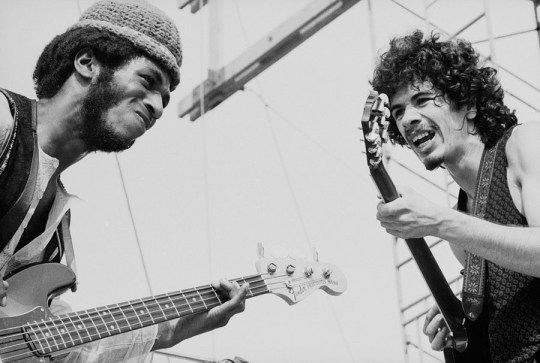
David Brown Plays With Santana At Woodstock

In America, starting in 1966, Carlos Santana led a Bay-Area-based live-concert jam band, Santana. Santana’s first album, recorded in May 1969 and released at the end of August, 1969, incorporated some actual songs in order to be commercially friendly — but as to be expected from this type of jam band, the album is mostly instrumental.  One of songs on the album, “Evil Ways”, caught on in a big way reaching #9 on the charts sometime in March 1970. With the combination of the heavy airplay of “Evil Way” and their appearance at Woodstock and in the film, their first album eventually climbed up to number 4 on the US Billboard Album Charts.  While “Evil Ways” received incessant airplay on AM, FM radio stations played other cuts of the Santana album.

Michigan, which had provided the MC5 and The Stooges, provided yet another hard-edged, blues-based rock band with Grand Funk Railroad. Though the level of musicianship was not at the level of English groups like Blind Faith, The Hollies, Ten Years After, or Blodwyn Pig it was clearly an improvement over MC5.  The first album, On Time, released in August of 1969, was also much better received by rock critics.   Grand Funk was a natural seventies arena rock band, so much so that Rolling Stone writer David Fricke later declared “You cannot talk about rock in the 1970s without talking about Grand Funk Railroad!”  And though an intelligent musically-oriented discussion of seventies rock music certainly wouldn’t suffer from an omission of Grand Funk (as they were more commonly called by fans), they were one of the few early seventies hard rock bands that managed to successfully steer away from what some considered the contaminating influence of progressive rock — staying mostly true to the vision of a generic, relentlessly devoid of any traces of self-awareness, hard rock.

Stevie Wonder, did not play at Woodstock, but continued to mature as a musician and composer, releasing My Cherie Amour on August 29, 1969. Wonder would become one of the most important voices of the 1970s, but for the most part My Cherie Amour is still a sixties album. The biggest hit was the title track, “My Cherie Amour”, a tune originally written by Stevie for his girlfriend as “Oh, My Marsha” when he was a student at the Michigan School for the Blind and then recorded in 1967.  Reaching #4 on the U.S. Billboard Singles chart, the song is relatively simple, instantly accessible and charmingly a product of the sixties.  “Yester-Me, Yester-You, Yesterday”, also recorded back in 1967, reached number #7 in the US and #2 in the UK.

Love also was making the transition from the sixties to the seventies. To start with, Arthur Lee, the primary creative force behind Forever Changes, dismissed all the previous members of Love after the departure talented songwriter, vocalist and guitarist Brian MacLean had left.  The new album, Four Sails, released in either August or September was a disappointment to fans expecting an extension of the melodically-rich, proto-prog sound of Forever ChangesFour Sail starts off promising enough, with the first track “August”, propelling forward with impressive contrapuntal interplay between the two guitars and the bass.  The next track though, pulls the listener back into the sixties as does “I’m With You” with its similarities to the quintessentially sixties “Feeling Groovy” and “Robert Montgomery” with its similarities to “Eleanor Rigby.” Overall, the album is supported by some strong, seventies-style guitar work, but it does not match the quality of the earlier Forever Changes album, and it garnered even less commercial and critical attention.

Another album bypassed by most consumers and critics alike, selling less than a total of 20,000 copies in 1969 and 1970, was Boz Scaggs solo album, simply titled “Boz Scaggs”, recorded after his departure from the Steve Miller Band and released in August 1969. This is mostly a country music album, but it smoothly incorporates elements of blues, folk, soul and gospel. One could make the case that this album is the most seventies album of all the late sixties albums as it effectively incorporates horns, and background singers into a polished presentation that is as much about style and appearance as substance.  Fortunately, there is also real substance to the songs. Scaggs own compositions are generally based on traditional country laments (unrequited love, being taken for granted, unappreciated, leaving because unappreciated, and abandonment.)  The covers Scaggs chooses are wisely selected and fill out the full county/blues spectrum with “Look What I Got” (I found someone else, so there — but it could/should have been you.”) and and “Waiting for a Train” and “Loan Me A Dime” covering down and out territory.  The album ends with a final country song, Scaggs and keyboardist Barry Becket’s “Sweet Release” that balances desolation with the promise of solace.  This strong and powerful ballad is reminiscent of Procol Harum and anticipates the country-rock sound of Elton John’s Tumbleweed Connections.  Overall Scaggs gives us one of the first seventies-style Americana albums, simple, effective, and liberated from the influence of the musical influences of the British Invasion. Once Boz made it big, the album was reissued and belatedly charted in 1976.

August was a busy month for releases, and with albums like Miles  Davis’s In a Silent Way, Nick Drake’s “Five Leave’s Left”, Yes’s first album, Yes, Jethro Tull’s “Stand Up”, Santana’s first album, Santana, and Can’s “Monster Movie”,  now in the hands of many listeners by the end of August, 1969, it seems appropriate to note that this was the beginning of the seventies, calendar mechanics and formalities ignored — and it you were to bring such silly technicalities up, my reply would certainly be typical seventies jargon — “screw that!”


Fifty Year Friday: In A Silent Way


in a silent way-72067-001.jpg (2)

MILES DAVIS: IN A SILENT WAY

Recorded in one session on Feb 18, 1969 as three performances, “Shhh/Peaceful”, “In A Silent Way”, “It’s About That Time”, then edited by Ted Macero (with apparently minimal input from Miles Davis) into two compositions in ABA form, one for each side, In A Silent Way, was released on July 30, 1969, peaking at number 134 on Billboard’s Top LPs chart.  The music is available today in both the edited form, which for a long time was all that listeners were familiar with, and in its original form.

What is striking about either the edited or original form, is the original style of both the music and the musical approach to structure and form that was deployed.  The album version differs considerably than the original takes.  For “Shhh”/”Peaceful” the original starts off with a whole-tone sort of motif (with traces of the flat-second Dorian mode) on which the entire work unfolds.  There is this amazing guitar work from McLaughlin and a brief but luxuriantly melodic Davis/Shorter passage.  All of this is dropped from the album version, which begins with the initial statement of another theme from the original take (about ninety seconds) followed with the restatement of this theme that occurs during the last four and a half minutes of the original, then followed with earlier material.  Whereas the original is multi-thematic and provides more contrast, the album version is more mono-thematic and ambient in nature.  It is basically in A B A form, resembling the Sonata form found in Mozart, Haydn and Beethoven era music, with the middle section analogous to a development section.

On the second side of the album, Teo Maceo continues to aggressively edit the original music, once again creating an ABA structure by taking the group’s performance of Davis’s simplified version of Zawinul’s “In A Silent Way” for the A section and using Davis and Zawinul’s collaborative “It’s about That Time” as the B section.  The results provides us with an impressionistic A section, and a quasi-bluesy, slightly funky B section, with a perfect repeat (as it is just a copy) of the original A section.

Though a transitional style for Davis, this landmark ambient jazz album would have considerable influence on many styles of music in the next few years ranging from other jazz or jazz-ambient artists to a subset of progressive rock groups, particularly several of the so-called Kraut-rock bands including Can, Cluster, Tangerine Dream, Amon Duul II, to Brian Eno to a number of New Age artists to even several modern “classical music” composers.  It’s tempting to debate the artistic pros and cons and the artistic merit of the original music versus the final edited album, but it was that final edited album that was the sole source of this music for musicians and music lovers during the last five months of 1969, all of the seventies, the eighties and the nineties.   Commercial music is often notable for its externally enforced limitations, but in 1969 in particular, music markedly stood out for its bold exploration outside of established boundaries, with In A Silent Way being one of the best examples of music liberated and unencumbered from the realm of retail-driven mechanical patterns and formulas, purposefully, yet seemingly spontaneously, creating a new and unconfined expanse of musical expression.

Side One

“Shhh”/”Peaceful” (Miles Davis)  18:16

Side Two

“In A Silent Way/It’s About That Time” (Joe Zawinul, Miles Davis)  19:52

Musicians


Fifty Year Friday: Men on the Moon, Yes, Larry Coryell

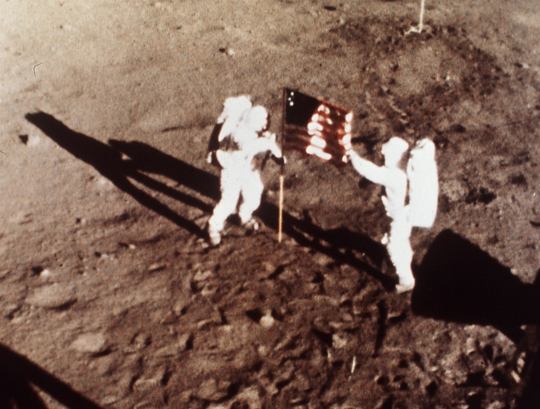
“That’s one small step for man. One giant leap for mankind.” Neil Armstrong

apollo11extra0307-3

Fifty years ago, on July 20, 1969, television gave us nearly front row seats as Neil Armstrong and Buzz Aldrin each made an appearance on what is still today, the most distant theatrical stage ever occupied by human performers, while above, circling around 60 miles above them, was their ride home.  It was such an extraordinary event that there are individuals and semi-organized clusters of people that deny that this amazing technical performance, this greatest non-musical show of all time, ever even happened.  Did Keith Emerson’s piano rotate around at the California Jam in 1974?  Could one see some of the jazz greats of all time at the Hermosa Beach Lighthouse Café throughout the early and mid seventies? Did Elton John dress up in something akin to a large sequined chicken suit as part of his performance at the Fabulous Forum in 1974? Could one, without more than an hour in line, get an up close seat in 1978 to see Peter Hammill at the Trouboudor perform “A Plague Of Lighthouse Keepers” or a seat in the front three rows to see Gentle Giant perform their very last U.S. concert at the Roxy in 1980?  All these things, as unbelievable as they may seem, actually happened!

And rock was reaching new heights, proving its relevance beyond dance music, beyond catchy three minute pop songs tailored for car radios.

yes-1969-debut-album

Yes: Yes

Recorded in Spring of 1969 and released on July 25, 1969, the world heard the very first Yes album.  Their first studio effort is indeed impressive and immediately identifiable by its sound as both progressive rock and, more relevantly and significantly, a Yes album!  Authored primarily by Jon Anderson and Chris Squire, we already have that recognizable, identifiable Yes style from their compositions and collaborations, Peter Banks pre-Howe guitar work, Tony Kaye’s keyboards, and Bill Bruford’s percussion work, influenced by such cosmic musical giants as Art Blakey and Max Roach.

Most of us baby boomer progressive rock fans, first heard Yes in the 1970s, initially from either their third album, The Yes Album, or their fourth album, Fragile.  The reality was that most of us music lovers usually started with the third or fourth album of a number of the so-called progressive rock groups — and as we had some spending money, we invariably went back and purchased earlier albums of groups like Jethro Tull, Gentle Giant, Genesis or Yes — even after knowing (after the first back catalog purchase or two) that the albums would not be as good as the later albums. The fact was that even those earlier albums were still good enough and provided further insight and material from some of the finest bands outside of the jazz universe — but maybe not so completely outside of jazz  as one might think:  the jazz influences were indeed there for many of these musicians in these bands. And worth noting, so was the classical music influence.

So even though this first Yes album isn’t up to the standards of their third album, The Yes Album or Fragile, it still is Yes, and the music is captivating and engaging. It’s way too easy for those of us used to the later Yes to find fault with this album, but if we just listen to this in the context of it’s own time, when jazz, rock, and classical styles were first intermingling, its remarkable nature reveals itself.

The album opens up with “Beyond and Before” from Squires, Banks and Anderson’s previous band, Mabel Greer’s Toyshop.  Even at this early point in time the music sounds clearly the work of Chris Squire with co-authoring credits (perhaps the words) for Clive Bailey, the guitarist and vocalist of Mabel Greer’s Toyshop.    The bass/drums pairing of Squire and Bill Bruford and vocal combination of Squire and Jon Anderson establishes the framework of a style that would become unmistakably a feature of the Yes sound. The music is not as polished as later Yes, but is clearly a different sound distinct from anything else being released, and Peter Bank’s guitar work is representative in both it’s uniqueness and its sometimes rough edges.

There are two covers on this album: the second track on side one is of the Byrds  “I See You” and the second track on side two is of the Beatles “Every Little Thing”, both absorbed and incorporated into Yes’s own sound.

The other five tracks are Yes originals, ranging from good to borderline excellent.  Also recorded during these sessions is the amazing cover of “Something’s Coming” from West Side Story, which is included as a bonus track on some CD reissues, or in most of the many Yes anthology albums.

Yes

lady coryell.jpeg

Larry Coryell: Lady Coryell

One of the earliest, if not the earliest true jazz-fusion albums, Lady Coryell features the complex, multi-track layers of  Larry Coryell’s  jazz and rock guitar polyphony.  Joined by drummer Bob Moses from Coryell’s earlier psychedelic, rough-edged jazz-rock group, “The Free Spirits”, the album moves away from the more British-rock influenced style of the earlier Free Spirits’ Out of Sight and Sound into a more convincing blend of rock and jazz.  Coryell sings, less than exquisitely, on most of the tracks, but his guitar and bass guitar work is beyond reproach.  Jimmy Garrison provides acoustic bass on track seven, and Elvin Jones provides drumming on tracks 7 and 9.

Personnel


Fifty Year Friday: Extrapolation, More, Audience


jmclaughlinR-3093046-1315393792.jpeg (2)

John McLaughlin: Extrapolation

Recorded on January 18, 1969 and released later that year, this very well could be the first true fusion album.  The electric guitar of one of the finest electric guitarists in the generation after Grant Green and Jim Hall (how is it John McLaughlin is listed only at 68 on Rolling Stone’s 100 Greatest Guitarists list and Grant Green and Jim Hall are not on the list?) is featured prominently and emphatically throughout along with English sax jazz musician, John Surman, who incorporates his free-jazz experience seamlessly within the scope of the album’s intent.

The first composition is the Thelonious Monk sounding “Extrapolation”, setting the tone for a dynamic, musically extroverted album. Each track runs into the next, except for the side change (originally on LP, of course), creating a greater sense of mood and material continuity. The last track showcases a solo, acoustic McLaughlin, bringing a sometimes wild, but always musically accessible, stellar, and leading-edge jazz album to a thoughtful conclusion.

Album is produced by Georgian/Swiss/Italian/UK producer Giorgio Gomelsky, who also had produced and managed the Yardbirds and later worked with The Soft Machine, Gong, Magma, Bill Laswell and Laswell’s band, Material, and one of my favorite groups, Henry Cow. Album is engineered by Eddie Offord who later engineered the first four ELP albums and co-produced and engineered several of the Yes albums.

Track listing [From Wikipedia]

All tracks written by John McLaughlin.

Title Length
1. “Extrapolation” 2:57
2. “It’s Funny” 4:25
3. “Arjen’s Bag” 4:25
4. “Pete the Poet” 5:00
5. “This Is for Us to Share” 3:30
6. “Spectrum” 2:45
7. “Binky’s Beam” 7:05
8. “Really You Know” 4:25
9. “Two for Two” 3:35
10. “Peace Piece” 1:50

Personnel

  • John McLaughlin – guitar
  • John Surman – baritone and soprano saxophones
  • Brian Odgers – double bass
  • Tony Oxley – drums

Pink-Floyd-More

Pink Floyd: Original Motion Picture Soundtrack from the film More

Pink Floyd’s first full album after Syd Barret was a movie soundtrack, More, recorded from January to May 1969, and released in the UK on June 13, 1967, a couple of weeks after the premiere of the movie More.  Though the music is meant to support the movie, and is a collection of basically unrelated tracks with a significant breadth of musical variety, the album holds together nicely, like a well-conceived sampler LP.

The music ranges from the dreamy “Cirrus Minor”, to the eerily pre-grunge-rock track, “The Nile Song”, to the exquisitely harmonically and melodically simple “Crying Song” to music that anticipates space rock and Kraut Rock. This is virtually a catalog of some of the adventurous musical styles that would become popular in the coming years.  Not hard to imagine why this is many listeners favorite Pink Floyd album.  It is hard to imagine why Allmusic.com gives this two and a half stars or Rolling Stone Album Guide gives it two stars.   More is more than just a movie soundtrack, it is an instruction manual of future musical styles.

Track listing [From Wikipedia]

Side one

#

Title

Writer(s)

Length

1.

Cirrus Minor Waters

5:18

2.

The Nile Song Waters

3:26

3.

Crying Song Waters

3:33

4.

Up the Khyber” (instrumental) Mason, Wright

2:12

5.

Green Is the Colour Waters

2:58

6.

Cymbaline Waters

4:50

7.

Party Sequence” (instrumental) Waters, Wright, Gilmour, Mason

1:07

Total length:

23:24

Side two

#

Title

Writer(s)

Length

1.

Main Theme” (instrumental) Waters, Wright, Gilmour, Mason

5:27

2.

Ibiza Bar Waters, Wright, Gilmour, Mason

3:19

3.

More Blues” (instrumental) Waters, Wright, Gilmour, Mason

2:12

4.

Quicksilver” (instrumental) Waters, Wright, Gilmour, Mason

7:13

5.

A Spanish Piece Gilmour

1:05

6.

Dramatic Theme” (instrumental) Waters, Wright, Gilmour, Mason

2:15

Total length:

21:32

Pink Floyd

Additional personnel
  • Lindy Mason – tin whistle (5, 7)


AudienceAudience (2)

Audience: Audience

Audience recorded and released their first album in 1969, though it is not easy to find out exactly when. The band formed in 1969 and within weeks after their first rehearsal they had a record deal with Polydor and were playing at the famous Ronnie Scott’s in Soho, London, also site of the 1969 premiere of the Who’s Tommy.  Polydor, though quick to sign the band, was not so efficient at promoting them or their album.  The album had insignificant sales, not helped by the puzzling album cover, a dim negative of the band members, and shortly after its release was discontinued.  Meanwhile during live performances, the band drew critical praise for their performances and material, and soon, while the backup touring band for Led Zeppelin, was signed to the Charisma label.

The first two songs on this album are unquestionably progressive rock.  The tracks that follow, though more traditional rock, are still catchy and showcased the nylon-stringed acoustic-electric (fitted with an electric pickup) classical guitar  of Howard Werth and the sax, clarinet and flute of Keith Gemmel, the latter using echo and wah-wah pedal to fill in some of the role of the traditional rock guitar.  The album is worth listening to more than once, and the musicianship and arrangements are very good.

Track listing [From Wikipedia]

Unless noted, all tracks credited to Werth, Williams.[2]

Side one

  1. “Banquet” – 3:47
  2. “Poet” – 3:05
  3. “Waverley Stage Coach” (Williams) – 2:59
  4. “Riverboat Queen” – 2:57
  5. “Harlequin” – 2:35
  6. “Heaven Was an Island” – 4:18

Side two

  1. “Too Late I’m Gone” – 2:37
  2. “Maidens Cry” (Gemmell, Richardson, Werth, Williams)- 4:47
  3. “Pleasant Convalescence” – (Gemmell, Werth) – 2:30
  4. “Leave It Unsaid”
  5. “Man On Box” (Gemmell, Werth) 
  6. “House On The Hill”

Audience


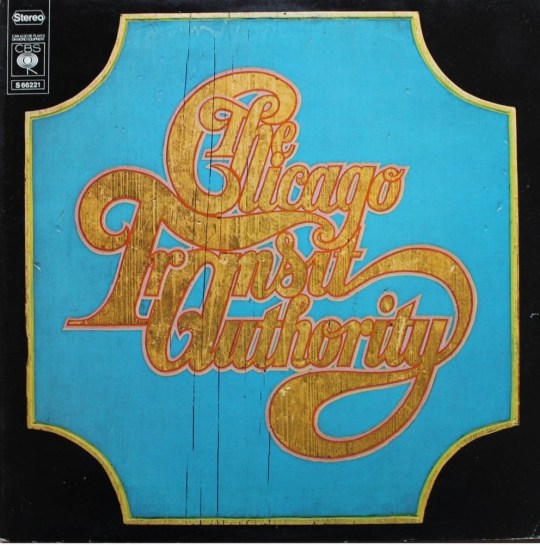
Fifty Year Friday: Chicago Transit Authority

“Only the beginning, only just the start.”  Robert Lamm, from “Beginnings.”

cta (2)

Chicago Transit Authority

Formed in Chicago in 1967, originally named the Big Sound and incorporating three horn players, a drummer, and guitarist Terry Kath, this band of talented individuals was coaxed to pick up and move to L.A. by the independent producer James Williams Guercio in 1968. Guercio provided a new name, “Chicago Transit Authority”, and ensured them of attractive gigs including the opening show at the Whisky A Go Go. Soon the group started recording their first album in January 1969, the self-titled double record set that was released on April 28. 1969.

Like many people, I didn’t hear this album until after hearing their second album.  My next neighbor first bought their second, one of the great masterpieces of 1970’s rock, and then went back and purchased their first, this generally strong eponymous Chicago Transit Authority.  Their first album, then, became a means of being able to hear additional material by the group that had released that classic double Chicago album, the group’s name change prompted by the threat of legal action by the mass transit operator for that extreme northeast section of Illinois bordering Lake Michigan, the original Chicago Transit Authority.

I am sure I would have been much more impressed by this first album, if I had heard it before their second, for it’s a fine album on its own, and the second best album of their entire catalog.  Terry Kath’s guitar work is creative and full of life, and his voice is that of a jazz or R&B singer. Robert Lamm’s  compositions, with the exception of “South California Purples”, which is a spruced up blues number, burst out with energy and sparkle and are as good as anything in rock music at that time.  The performances by the rest of the band are all excellent, and the brass arrangements, primarily by trombonist James Pankow, are effective and focused.

And yet, after Guercio arranged for CBS west coast executives to hear the band at the Whiskey, the execs were not impressed.  A second attempt by Guercio to convince the west coast CBS “brass” to sign Chicago Transit Authority met with similar results: no interest, no deal. Guercio then finally cut a demo at a small independent studio that he circulated around to others outside of CBS, and soon, when CBS Clive Davis found out, he overruled the West Coast and the band signed with CBS’s Columbia label.

With a wealth of material to record, and wishing to create a serious product, the band insisted on making a double album.  When Columbia heard about this, they would only go along on one condition: the band must give up a percentage of their royalties for a double LP.  The band agreed, and the first debut rock double album since Frank Zappa and the Mother of Inventions’ “Freak Out” was released.

Of the four sides of this album, the first two are far the strongest, with the first song composed by Terry Kath and the remaining by Robert Lamm, followed by a more exploratory third side and then a generally strong side four.  “Free Form Guitar” on side three may not be the most accessible track, but it displays Kath’s mastery of the guitar, and help provide a fuller picture of why Hendrix purportedly told Chicago sax player Walter Parazaider, “The horns are like one set of lungs and your guitar player is better than me.” While “Free Form Guitar” provides indisputable evidence of Kath’s, imagination, control, and technique, other tracks on the album, particularly the first and last tracks, convincingly showcase Kath’s musicality and artistry.  Throughout the musicianship is excellence, and the combination of strong material and strong execution makes this one of the best debut rock albums ever.

Up to this point, many would consider the Beatles the most substantial of all the 1960s pop groups, but with 1969 comes a new upsurging of talent: bands that were, to some degree or other, influenced by the Beatles, but also heavily influenced by jazz and classical music — bands that could make music equal to or surpassing the works of the Beatles.  Chicago is one of the first of such rock groups, a progressive jazz-rock group, at least initially, that produced a first and then a second album that will be listened to, like the best of the Beatles’ albums, long into the future not only by music lovers like us but by our children and the generations that follow.


Track listing 

LP 1
1. Introduction (6:35) (Kath)
2. Does Anybody Really Know What Time It Is? (4:35) (Lamm)
3. Beginnings (7:54) (Lamm)
4. Questions 67 and 68 (5:03) (Kath)
5. Listen (3:22) (Lamm)
6. Poem 58 (8:35) (Lamm)

LP 2
7. Free Form Guitar (6:47) (Kath)
8. South California Purples (6:11) (Lamm)
9. I’m A Man (7:43) (Steve WinwoodJimmy Miller)
10. Prologue (August 29, 1968) (0:58) (James William Guercio)
11. Someday (August 29, 1968) (4:11) (Pankow)
12. Liberation (14:38) (Pankow)

Production

Fifty Year Friday: Rolling Stones, Stevie Wonder, James Taylor, and Blood Sweat & Tears

BeggarsBanquetLP

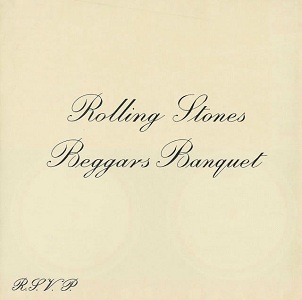
Rolling Stones: Beggars Banquet

Though not one of my favorite albums, one has to give credit where credit due and there are a number of reasons to recommend this often blues-based, somewhat historic album.

The first is the earthy and relatively respectful rendition of Robert Wilkins”Prodigal Son.” Is that Mick Jagger on vocals?  Hard to believe…

The second is Nicki Hopkins on piano.

The third is the mournful “No Expectations.”

The fourth is the bluegrass/country-blues “Dear Doctor.”

The fifth is the anthem-like “Salt of the Earth” replete with a chorus.

The sixth is the Keith Richards application of his chance-discovery of the already existing technique of five-string “open G” tuning, basically removing or avoiding the low sixth string, with the five strings tuned G-D-G-B-D (aligning with the overtone series of G-G-D-G-B-D) and in the case of Richards, and others to follow, using a sliding three-fingered guitar technique.

The sixth is the stretching of the then-current record-industry norms with songs with lyrics like “Sympathy for the Devil”, “Parachute Woman”. and “Stray Cat Blues”, the last two, perhaps even more offensive now in the context of political correctness than in 1968.

The seventh is the historical impact of this record, setting the tone, whether we like it or not, for how future bands would approach traditional blues and country music (like the music found on pre-WWII 78s)  and songs about Satan and groupies.

This work veers away from the accelerating trend of greater complexity and sophistication, taking a U-turn towards simplification.  It really is a collection of the basics of music, some as simple and crude as the album cover the Stones had originally intended for the album.  My apologies if I offend anyone by using the original LP cover that I associate with this album instead of the one prevalent on the CD reissues.

Track listing [from Wikipedia]

All songs written by Mick Jagger and Keith Richards, except “Prodigal Son” by Robert Wilkins.

Side one
No.TitleLength
1.Sympathy for the Devil6:18
2.No Expectations3:56
3.Dear Doctor3:28
4.Parachute Woman2:20
5.Jigsaw Puzzle6:06
Total length:22:08
Side two
No.TitleLength
6.Street Fighting Man3:16
7.“Prodigal Son”2:51
8.Stray Cat Blues4:38
9.Factory Girl2:09
10.Salt of the Earth4:48
Total length:17:42

Personnel

The Rolling Stones

Additional personnel

wonder_stev_foroncein_102b.jpg

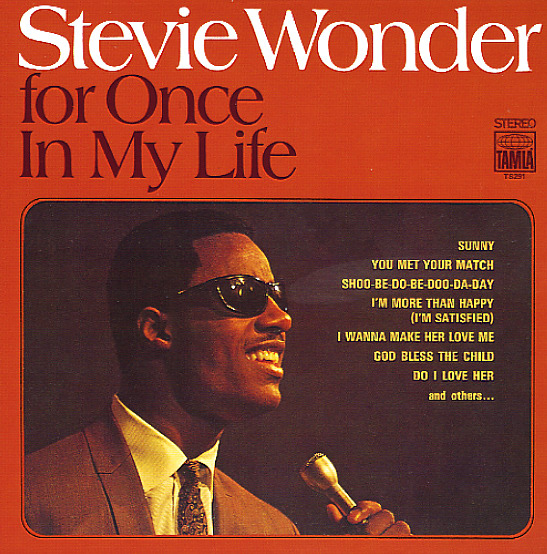
Stevie Wonder: For Once in My Life

Recorded in 1967, while Stevie Wonder was still 17, this ninth studio album, released December 8, 1968, after Wonder was eighteen years old, is really the work of a mature adult artist.  Though Wonder only is credited as a co-author for the eight selections that lists his name, one can distinctly hear the composer of the early seventies albums. Besides the developing compositional skills, we have strong vocals and quality harmonica and keyboard work .

Track listing [from Wikipedia]

Side One

  1. For Once in My Life” (Ron Miller, Orlando Murden) 2:48
  2. Shoo-Be-Doo-Be-Doo-Da-Day” (Henry CosbySylvia Moy, Stevie Wonder) 2:45
  3. “You Met Your Match” (Lula Mae Hardaway, Don Hunter, Wonder) 2:37
  4. “I Wanna Make Her Love Me” (Henry Cosby, Hardaway, Moy, Wonder) 2:52
  5. “I’m More Than Happy (I’m Satisfied)” (Henry Cosby, Cameron Grant, Moy, Wonder) 2:56
  6. I Don’t Know Why” (Hardaway, Hunter, Paul Riser, Stevie Wonder) 2:46

Side Two

  1. Sunny” (Bobby Hebb) 4:00
  2. “I’d Be a Fool Right Now” (Cosby, Moy, Wonder) 2:54
  3. “Ain’t No Lovin'” (Hardaway, Hunter, Riser, Wonder) 2:36
  4. God Bless the Child” (Arthur Herzog Jr.Billie Holiday) 3:27
  5. “Do I Love Her” (Moy, Wonder) 2:58
  6. “The House on the Hill” (Lawrence Brown, Berry Gordy, Allen Story) 2:36

JT217202967_af8f2120a8_b

James Taylor: James Taylor

There is always something reassuringly soothing in James Taylor’s voice. Like so many baby boomers, my first exposure to Taylor was his second album, Sweet Baby James, which my next door neighbor loaned my in 1970.

This first album, released December 6, 1968, and on the new, but short-lived, Beatles’ Apple label, which signed Taylor after Apple label A&R director Peter Asher (friend of Paul McCartney, brother of Paul’s girlfriend from 1963 to 1968, and member of the British group Peter and Gordon, which had recorded several of McCartney’s songs including their #1 hit, “A World Without Love“) had heard a forty-five minute demo tape Taylor had sent into to the new label. 

Overall this is an amazingly strong debut, and rivals or surpasses the quality of later Taylor albums, with the exception of the second one, which has the wonderfully transcendent “Fire and Rain.  Beatles fans should note that George Harrison and Paul McCartney make guest appearances on “Carolina on My Mind” and jazz fans should note Freddie Redd’s keyboard contributions. 

Besides James Taylor’s simple, home-spun, relaxed vocals, and his quality song-writing, there are some sophisticated instrumental introductions written by arranger Richard Anthony Hewson that are worth mentioning, whether they are an integral part of the track, as with “Sunshine Sunshine” or seem more like they were added after the final take of the song.  Yes, they don’t effectively assist in creating a single artistic identity to the album, or even bring out the best in the inherent nature of these James Taylor compositions, but both the handful of introductions and the arrangements have merit and add interest to the album, bringing an additional dimension to the final work.

If you have not heard this album, its worth the effort to check it out, particularly with the number of strong songs, the fine acoustic guitar work and other instrumentation, the quality of the arrangements and production, and the sterling sound quality (for 1968), partly as a result of the entire album having been recorded at Trident studio in England, at that time a state-of-the-art studio, using some of the session time that was previously booked by the Beatles.

Track listing [from Wikipedia]

All songs written by James Taylor unless otherwise noted. Times are from the original Apple LP vinyl label.

Side one
  1. “Don’t Talk Now” – 2:36
  2. “Something’s Wrong” – 3:00
  3. Knocking ‘Round the Zoo” – 3:26
  4. “Sunshine Sunshine” – 3:30
  5. “Taking It In” – 3:01
  6. Something in the Way She Moves” – 2:26
Side two
  1. Carolina in My Mind” – 3:36
  2. “Brighten Your Night With My Day” – 3:05
  3. Night Owl” – 3:38
  4. “Rainy Day Man” (Taylor, Zach Wiesner) – 3:00
  5. Circle Round the Sun” (Traditional; arranged by Taylor) – 3:24
  6. “Blues Is Just a Bad Dream” – 3:42
CD bonus tracks (2010 remaster)
  1. Sunny Skies” (Demo) – 2:12
  2. “Let Me Ride” – 3:57
  3. “Sunshine Sunshine” (Demo) – 2:51
  4. “Carolina in My Mind” (Demo) – 3:06

Personnel

bst-63504-blood-sweat-tears-front


Blood Sweat & Tears: Blood, Sweat & Tears

Though the first BS&T album, a work of love from Al Kooper, includes jazz instruments, this second album really begins the era of what is commonly called “jazz-rock”, a genre  quite different than jazz fusion or rock-influenced jazz. Later adherents to this style, more or less, included American groups like Chicago and Chase, the Canadian band Lighthouse, and the British group If.

This second album (produced by  James William Guercio at the same time he was producing the Chicago Transit Authority album) left the generally more critically admired, Al Kooper first BS&T album in the dust, commercially,selling millions of copies and by March of 1969 taking the top US album chart spot away from Glen Campbell, twice until the Hair soundtrack displaced both for a bit, with the BS&T album again rising to the #1 spot for four more weeks in late July and August. 

The album provided three top five singles, Laura Nyro’s “When I Die”, Fred Lispius’s arrangement of fellow-BS&T-band member and lead singer David Clayton Thomas’s “Spinning Wheel” and the Al Kooper’s arrangement of Brenda Halloway’s modestly successful single, “You Made Me So Very Happy”.

The album is yet another 1968 that includes music by a classical composer.  In this case, this album starts out with an abridged, but tasteful arrangement of two of the three pieces of Eric Satie’s “Gymnopédies.” For many listeners, including myself, this was one of the highlights of the album, and was my first introduction to Eric Satie.

This is followed by BS&T’s extended version of Traffic’s “Smiling Phases”, with its traditional jazz piano trio middle section and then the evocative Dick Halligan arrangement of Steve Katz tune “Sometime in Winter.”  Next is “More and More”, which, as a thirteen-year old, was my favorite track on the album, with its fierce brass and drums.

Also, leaving an impression on me was the last track of the first side, Billie Holiday’s “God Bless the Child.”  As I had not heard the original version, or any Billie Holiday recordings, I made the mistake of considering this the reference version of the song.  (What kind of society would make it possible for the vast majority of Baby Boomers to have no knowledge of Billie Holiday until the release of the 1972 film “Lady Sings the Blues”?)

Blues — Part II has an interesting, progressive rock opening with Dick Halligan on organ, which is followed by a short brass outburst and then electric bass and drum solos as well as some flugelhorn, sax, electric guitar, and reflective, bluesy vocals. The album ends with a short reprise of Satie’s first “Gymnopédie“, providing a complete, fulfilling and distinct listening for anyone in 1968 and 1969 that had only a smattering exposure to real jazz.  Just as seventh grade Physical Education introduced me to basketball, which led to my watching John Wooden’s UCLA Bruins and then in 1969 West, Baylor and Wilt Chamberlain’s  Los Angeles Lakers, groups like BS&T and Chicago help lead my way towards the many jazz classics recorded prior to 1968.

Track listing [from Wikipedia]

Side 1

  1. “Variations on a Theme By Erik Satie” (1st and 2nd Movements) – 2:35
  2. Smiling Phases” (Steve WinwoodJim CapaldiChris Wood) – 5:11
    • Recorded October 15, 1968
  3. “Sometimes in Winter” (Steve Katz) – 3:09
    • Recorded October 8, 1968
  4. “More and More” (Vee Pee Smith, Don Juan) – 3:04
    • Recorded October 15, 1968
  5. And When I Die” (Laura Nyro) – 4:06
    • Recorded October 22, 1968
  6. God Bless the Child” (Billie HolidayArthur Herzog Jr.) – 5:55
    • Recorded October 7, 1968

Side 2

  1. Spinning Wheel” (David Clayton-Thomas) – 4:08
    • Recorded October 9, 1968
  2. You’ve Made Me So Very Happy (Berry Gordy Jr.Brenda HollowayPatrice HollowayFrank Wilson) – 4:19
    • Recorded October 16, 1968
  3. “Blues – Part II” (Blood, Sweat & Tears) – 11:44
  4. “Variations on a Theme By Erik Satie” (1st Movement) – 1:49
    • Recorded October 9, 1968

Personnel

Fifty Year Friday: Switched on Bach, Songs of Innocence, The Book of Taliesyn, Steve Miller Band; Steppenwolf

SwonBach-7858-1327651541.jpeg

Wendy Carlos: Switched on Bach

“The whole record, in fact, is one of the most startling achievements of the recording industry in this generation and certainly one of the great feats in the history of ‘keyboard’ performance” Glenn Gould

This is the album that endeared myriad music lovers to the sound of the Moog synthesizer.   Young college radicals and middle-aged classical music aficionados, alike, found a place for this album among their dearest music treasures of Zappa, Hendrix and early heavy metal on the one hand and Beethoven, Mozart, Bach, and newly-released Baroque music offerings on the other.

Staying atop the classical music Billboard charts for three years, this album had a lasting impact on many musicians including the Grateful Dead, Pink Floyd, Stevie Wonder, Keith Emerson and Don Dorsey (Bachbusters) and was the vehicle that gave Carlos the opportunity to provide film scores for two of Stanley Kubrick most successful movies: A Clockwork Orange in 1972 and The Shining in 1980.

Though not all of the album is consistently off-the-charts excellent, particularly by today’s standards of electronic-music production, there is much of great merit here.  Side one particularly deserves high praise for the realization of the individual contrapuntal lines that are so much of Bach’s late Baroque compositional palette.  It is the magic inherent in these Bach compositions that are so carefully and thoughtfully highlighted. This is all the more amazing, considering the technical limitations of the 1964 version of the Moog Synthesizer used — it could only play one note at a time, with the previous note having to be released before pressing the next, and it did not stay in tune for more than a few phrases. No surprise, then, that the album tallied up more than one thousand hours of production time over a five month period.

Track listing [From Wikipedia]

Side one
  1. “Sinfonia to Cantata No. 29” – 3:20
  2. Air on a G String” – 2:27
  3. Two-Part Invention in F Major” – 0:40
  4. Two-Part Invention in B-Flat Major” – 1:30
  5. Two-Part Invention in D Minor” – 0:55
  6. Jesu, Joy of Man’s Desiring” – 2:56
  7. “Prelude and Fugue No. 7 in E-Flat Major” (From Book I of The Well-Tempered Clavier) – 7:07
Side two
  1. “Prelude and Fugue No. 2 in C Minor” (From Book I of The Well-Tempered Clavier) – 2:43
  2. Chorale Prelude ‘Wachet Auf’” – 3:37
  3. Brandenburg Concerto No. 3 in G Major – First Movement” – 6:35
  4. Brandenburg Concerto No. 3 in G Major – Second Movement” – 2:50
  5. Brandenburg Concerto No. 3 in G Major – Third Movement” – 5:05


David_Axelrod-Songs_of_Innocence-600px

David Axelrod: Song of Innocence

One of those landmark albums that is better appreciated in the context of the fifty years of music that followed its October 1968 release, David’s Axelrod’s first release, Song of Innocence, is an ambitious and visionary work performed by 33 top L.A. Session musicians.  A mixture of jazz, rock, world (middle-eastern), and movie-music elements, incorporating strings, horns, vibes, electric organ, drums, ear-catching electric guitar work and thick, palpable electric bass, drawing upon some of the premises of third-stream jazz, and coming only months after his earlier barrier-busting Mass in  F minor (covered here in an earlier post), Axelrod anticipates both some of the common aspects of fusion-jazz and an entire approach of music composition that was to appear so prevalently in some of the more ambitious and creative New Age albums that would appear in the 1980s.  Per the liner notes of the latest release of Songs of Innocence,  Miles Davis played the album before conceiving his own fusion of jazz and rock for Bitches Brew (1970).

Axelerod draws upon Blake’s illustrated 1789 collection of poems Songs of Innocence, for several of the tracks on the album.  Axelrod originally intended to set the text to music with a choir taking on the lyrics, but instead produced a instrumental album covering additional Blake material including his extended writings on the demiurge-like “Urizen” and his four-line “Merlin’s Prophecy” from Gnomic Verses.

As one might expect from something this boldly different, the album received  mostly negative reviews, with categorizations of pretentious and indulgent, and rock critics taking issues with the orchestral aspects and classical music critics taking issue with the electric guitar passages. “Holy Thursday”, the most jazz-fusion-like track on the album, received some airplay, but overall the album sold poorly and was generally forgotten until the 1990’s when the digital era brought out reassessments of almost all music material from the sixties and early seventies, with Songs of Innocence now receiving significant praise from websites like allmusic.com and tinymixtapes.com.  Additionally, in the 1990’s, the album attracted the attention of multiple hip-hop artists that sampled content, particularly “Holy Thursday.”

Track Listing and Personnel


DP BOT R-4611399-1412929383-2971.jpeg

Deep Purple: The Book of Taliesyn

Deep Purple’s second album, released in October 1968, takes the group one step closer to establishing an identifiable sound despite the general ecelecticism of the whole which unrestrainedly, though not recklessly, tackles hard rock, early heavy metal, psychedelic rock, and early prog.

The album starts of with the quirky homage to the Welsh 14th Century “Llyfr Taliesin” (Book of Taliesin), mixing hard rock and sixties psychedelia to support respectably decent lyrics, followed by the bluesy instrumental “Wring Thy Neck” (retitled “Hard  Road” in the US. release as an act of “corporate wisdom” censorship) including solid organ work and an indulgent, though somewhat tame, guitar solo.  Other notable tracks include the remaining original numbers, “Shield” and “Anthem” with the effective mix of hard rock and progressive elements.  The remaining tracks include a cover of a Neil Diamond song that actually got some airplay in the U.S., the Ike and Tina Turner “River Deep – Mountain High”, and the last track on the first side which covers Beethoven, Tchaikovsky and the Beatles with the treatment of the two 19th century composers faring musically better than the Lennon/McCartney interpretation.  All in all, an enjoyable album with substantial organ and guitar passages, strong vocals by Rod Evans and an effective balance between hard rock and early progressive rock, getting closer to the classic “progressive rock” sound than any album up to that point in time.

Track listing [from Wikipedia]

Side one
No. Title Writer(s) Length
1. “Listen, Learn, Read On” Ritchie BlackmoreRod EvansJon LordIan Paice 4:05
2. “Wring That Neck” (instrumental, titled “Hard Road” in the USA) Blackmore, Nick Simper, Lord, Paice 5:13
3. Kentucky Woman” (Neil Diamond cover) Neil Diamond 4:44
4. “(a) Exposition”
(b) We Can Work It Out” (The Beatles cover)
Blackmore, Simper, Lord, Paice,
John Lennon, Paul McCartney
7:06
Side two
No. Title Writer(s) Length
5. “Shield” Blackmore, Evans, Lord 6:06
6. “Anthem” Lord, Evans 6:31
7. River Deep, Mountain High” (Ike & Tina Turner cover) Jeff BarryEllie GreenwichPhil Spector 10:12


Deep Purple

SMB SailoR-1404794-1344201817-1207.jpeg

Steve Miller Band: Sailor

Though my primary source of exposure to music was, first, my dad, then my sister, then my friends, particularly the three brothers in the corner house next to ours, it was during the summer after eighth grade (1969) that I discovered the availability of albums at the local public library.  One of the first albums I checked out, was Steve Miller’s Sailor.  Fascinated by the dramatic fog-horn opening and the conscientiously paced, slightly suspenseful, early space-rock music of that first track, and further pulled in by the general accessibility and variety of the remaining tracks, I realized the value of exploring groups that were far off the radar screens of my circle of friends.

Besides the well-known “Living in the USA”, the album contains the superb ballad, “Dear Mary”, with it’s Beatlesque opening and the seven-count lengthy first note on “Dear”, the leisurely yet evocative “Quicksilver Girl” (“A lover of the world, she’s seen every branch on the tree”),  and Boz Scaggs’ “Overdrive” with its Dylanesque verses and its earthy chorus anticipating early seventies rock.

Track listing [From Wikipedia]

Side one
No. Title Writer(s) Length
1. “Song for Our Ancestors” Steve Miller 5:57
2. “Dear Mary” Miller 3:35
3. “My Friend” Tim Davis 3:30
4. “Living in the U.S.A.” Miller 4:03
Side two
No. Title Writer(s) Length
5. “Quicksilver Girl” Miller 2:40
6. “Lucky Man” Jim Peterman 3:08
7. Gangster of Love Johnny “Guitar” Watson 1:24
8. “You’re So Fine” Jimmy Reed 2:51
9. “Overdrive” Scaggs 3:54
10. “Dime-a-Dance Romance” Scaggs 3:26
Total length: 34:22

Steve Miller Band

S S 494937656_987296f5a9_b

Steppenwolf: The Second

Though not as strong as the other albums covered in this post, Steppenwolf’s second album has its moments, particularly on side two which opens with the Rolling Stone influenced “28” with its  Nicky Hopkins-like piano work.  Next is Steppenwolf’s classic “Magic Carpet Ride”, not about sex or drugs as some may infer from a casual listen to the lyrics, but about John Kay’s recently-purchased, expensive stereo system. Seriously!

“I like to dream, yes, yes,
Right between the sound machine.
On a cloud of sound I drift in the night;
Any place it goes is right —
Goes far, flies near
To the stars away from here.”

This is relevant, in the context of side two, as it opens a tribute to the blues and to blues-rock, which I suspect John Kay listened to frequently, with the opening track an authentic blues number followed by three of Kay’s compositions.

Track listing [From Wikipedia]

All music composed by John Kay, except where indicated.

Side one
No. Title Writer(s) Length
1. “Faster Than the Speed of Life” Dennis Edmonton 3:10
2. “Tighten Up Your Wig” 3:06
3. “None of Your Doing” Kay, Gabriel Mekler 2:50
4. “Spiritual Fantasy” 3:39
5. “Don’t Step on the Grass, Sam” 5:43
Side two
No. Title Writer(s) Length
6. “28” Mekler 3:12
7. Magic Carpet Ride Kay, Rushton Moreve 4:30
8. “Disappointment Number (Unknown)” 4:52
9. “Lost and Found by Trial and Error” 2:07
10. “Hodge, Podge, Strained Through a Leslie” 2:48
11. “Resurrection” 2:52
12. “Reflections” Kay, Mekler 0:43
Total length: 40:25

Steppenwolf