Zumwalt Poems Online

Archive for the ‘Album review’ Category

Tom Waits, Van Der Graaf Generator, Steve Hackett; Fifty Year Friday: September and October 1975

Welcome back to Fifty Year Friday! It is my great pleasure to announce that our first entry is by an esteemed and respected writer who, for reasons we won’t question, has graciously agreed to provide material for us under the nom de guerre of Leo The Deacon. If you can navigate a substantial drop in quality, a few of my own Fifty Year Friday entries follow. Enjoy!
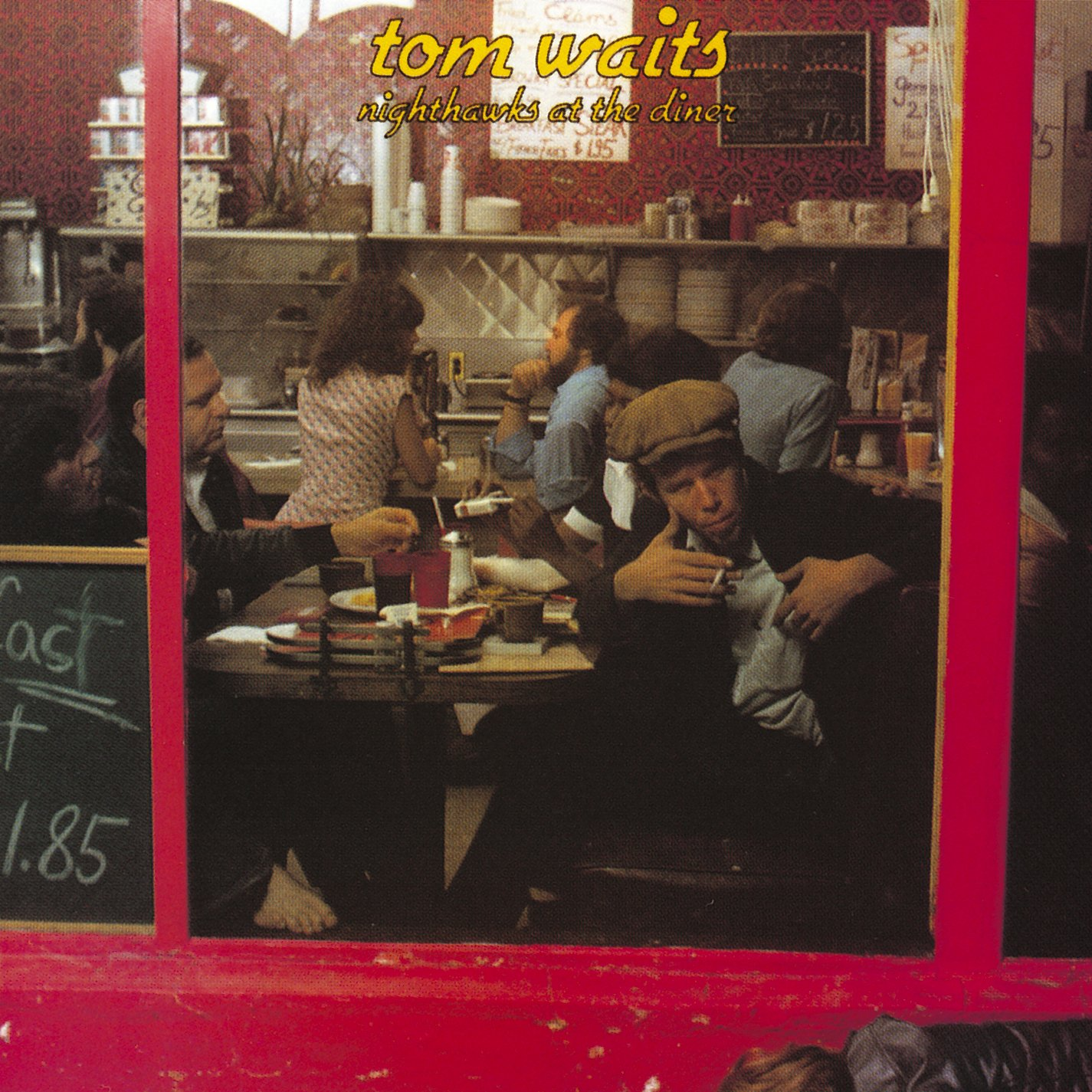
Tom Waits: Nighthawks at the Diner

If ever there was an artist and an album deserving of the rubric sui generis, it is Tom Waits and this, his third album Nighthawks at the Diner. At a time—October 1975—when progressive rock was on the cusp of going to seed, disco was poised to go mainstream, and Wayne Shorter and Chick Corea had set aside post-bop to explore jazz-rock fusion, Waits came out with a two-disc album in which he performs mostly original songs, backed up by a quartet of first-rate Los Angeles jazz sidemen, in front of a small live audience.  As a bookish 20-year-old who never quite embraced rock music—despite the earnest and occasionally successful efforts of the curator of this blog to interest me in such groups as Emerson, Lake, and Palmer, King Crimson, and Gentle Giant—I found Waits’ wry, atmospheric, jazz-inflected compositions  a subversive challenge to the hegemony of rock and roll. Nighthawks appealed not just to the emotions, but to the head. It did not hurt that his profane, salacious, and very funny banter between songs was well calculated to engage the sensibilities of college guys whose weekends, more often than not, were spent in the company of other dateless young men.

So is Nighthawks a jazz production, or a singer/songwriter presentation? Yes. Here’s where it gets interesting, because throughout the performance Waits meanders about the intersection of several genres:  jazz, singer/songwriter compositions, spoken word, a bit of stand-up comedy. Hell, in the cut “Big Joe and Phantom 309” Waits even covers a country-music song by Red Sovine about a ghostly trucker. The entire album is a musical Venn diagram of multiple converging circles. One can’t even call it a “live” album, exactly, because it was recorded in a studio, but in front of an audience hand-picked by the producer to convey the feel of a live performance. It’s not quite authentic but it works, especially as it allows the listener to experience the entire Waits shtick: the guttural banter, the jokes, the wordplay, and the music.

The mood is set from the get-go in the opening intro, with the quartet playing a bluesy vamp featuring Jim Hughart’s walking bass and short, honking arabesques by Pete Christlieb on the sax. The sound is that of a cool, if jaded, house band at a burlesque club and Waits reinforces the conceit by welcoming the audience to the fictitious “Rafael’s Silver Cloud Lounge,” and thanking the stripper who ostensibly warmed up the audience and put a charge into Waits’  libido.  He continues with some introductory jokes about late nights and coming home after three months to find everything in his refrigerator has “turned into a science project.”  As he talks, Waits elegantly elides into the first song, “Emotional Weather Report,” which is more rhythmic spoken word recitation than it is singing. He bemoans the “tornado watches…in the western region of my mental health” and declares that “It’s cold out there—colder than the ticket-taker’s smile at the Ivar Theater on a Saturday night.” Jilted by his lover, Waits’ forecast is for more precipitation.

The rest of the album more or less follows the same pattern, with Waits sustaining a twisted down-and-out persona as he leads into another song or spoken word performance, backed by the jazzmen and revolving around themes of loneliness, lost love, late nights, and life at the margins. For my money, the best cut on the album is the third, “Eggs and Sausage (In a Cadillac with Susan Michelson)” in which Waits precisely captures the milieu of an all-night coffee shop. In this song, (this time he is singing rather than reciting), Waits displays his artistry in clever turns of phrase and the ability to evoke the bittersweet mood of a lonely late night out after a break-up. Atmospherics and the skilled deployment of similes and metaphors are Waits’ stock in trade and he’s at his best in “Eggs and Sausage.”

Waits is often compared to the Beat poets, but that’s not quite right. His music at this stage of his career, and particularly on this album, is reminiscent of the Beats, with its jazz and spoken word poetry, and its exploration of loneliness and alienation. But unlike the Beats, Waits isn’t concerned with philosophy or spirituality, or even drug-induced altered states of consciousness. For the most part, alcohol is Waits’ drug of choice and that and his focus on the working class and marginalized perhaps slides him closer to the Beats-adjacent Charles Bukowski. Both Bukowski and the Beats expressed profound alienation, however, with the Beats setting themselves in opposition to the 1950s military-industrial complex and Bukowski challenging the smug conventionality and moral sensibilities of bourgeois America. Waits isn’t overtly political, like the Beats could be, and he certainly doesn’t indulge in the blunt rage and belligerence of Bukowski. Rather, despite the crusty delivery, he is sentimental. In the end, Nighthawks, as well as Waits’ other music of the mid-1970s, is not concerned so much with alienation as with hard luck, loneliness, and the struggle to carve a little dignity out of an uncaring universe. On Nighthawks, the world is what it is, and Waits knows it is a mug’s game to try to change it.

Tom Waits, at any point in his long musical career, is an acquired taste. Those fans, likely younger ones who are more familiar with the growling, iconoclastic, and experimental performer Waits morphed into starting with 1983’s Swordfishtrombones, may find the younger Waits of Nighthawks in the Diner more conventional—dare we say “quaint”?—than the older artist they are familiar with.  But in 1975, Waits’ retro-beatnik hipster persona, jazzy music, and well-crafted noirish lyrics was something different from the dominant electronic-heavy compositions of rock and fusion. From the perspective of fifty years, it holds up well, although younger listeners may find themselves bemused by Waits’ frequent references on this album to LA “landmarks” that have passed into history—The Copper Penny restaurants, the seedy Ivar Theater, the  Ziedler & Ziedler clothing store on Sunset, and KABC weatherman Dr. George Fischbeck, to name a few.

If there is a flaw in Nighthawks, it is that the persona Waits adopts narrows the variety of the songs. To be sure, on a few tracks—“Warm Beer and Cold Women,” “Nobody,” and the country-ish “Putnam County”—Waits veers into his singer/songwriter roots, dials back the jazz, and sings accompanied by himself on piano. By and large, though, the album is a series of Waits’ compositions backed up by well-executed jazz incidental music. The jazz frames the mood, but the fun is in skillful lyrics, the repartee and wry observations, and the dark, at times cynical, yet not despairing atmosphere that Waits conjures up. It is an eccentric artifact of its time, but it still rewards the listener and reminds us that the 1970s weren’t all bell-bottoms, platform shoes, and leisure suits. 

Leo the Deacon

Van Der Graaf Generator: Godbluff

Released in October 1975 in the UK, this album was only available as an import. It wasn’t until I made a trip to Europe in 1978 that I purchased it in Amsterdam and had it and several other albums shipped from a post office near the record store back to the States. That particular parcel of LPs arrived home earlier than I, and so once I was home, I put it on my beloved turntable. Wow!

As a great admirer of their previous album, Pawn Hearts, which I had bought as a cut-out in the US for less than three dollars, I had high expectations for this. Fortunately, the quality of the lyrics and music did not disappoint.

After a four-year gap between Godbluff and Pawn Hearts, Peter Hammill, Hugh Banton, Guy Evans, and David Jackson roar back more powerfully than ever with less psychedelic and excursionary elements and an apparent singular focus on drama and controlled handling of musical tension and release. Hammill displays his range of skills on vocals, superior in dramatic and expressive impact to more famous contemporary singers/songwriters like David Bowie, and even contending with the otherworldly emotional delivery of Demetrio Stratos of Area and Francesco Di Giacomo of Banco del Mutuo Soccorso. Hugh Banton and Guy Evans are in great form on keyboards and percussion; and we have David Jackson on double saxophones, à la Rahsaan Roland Kirk, creating musical textures that elevate the music experience to breathtaking intensity.

Side One opens with “The Undercover Man”, which starts softly, creating musical and dramatic suspense. Once the tension is established, it methodically builds in intensity, layer by layer, gradually crescendoing, leading to some colorful organ, sax and the further unfolding of the brilliant expression and pacing of Hammill’s staggered and passionate vocals.

“Scorched Earth”, the second of two tracks on the first side, maintains intensity, opening up quietly and building in dynamics with repetitive motives weaving through Hugh Banton’s organ part and David Jackson’s deftly engineered sax parts supported by Guy Evans’s relentlessly polyrhythmic drum work. The forward momentum cools, with an initially echoey middle section, crafted out of preceding musical material that explodes into an unpredictable flurry of syncopated melodic material and violent skirmishes of accelerating ostinatos and motivic interchanges. Two dominant mixed meters alternate. Dynamic and rhythmic shifts continue to propel the music forward to an abrupt climax ending with a brief musical exhale.

Side two opens up reflectively with “Arrow”, with a meandering and introspective introduction ferociously interrupted with Hammill’s vocals which commence to entwine and shape the course of the music leading into an instrumental of repeated sax permutations on the primitive four-note saxophone motive heard earlier but not put through a series of repeated modifications. Hammill’s vocals return with full intensity and anguish:

How long the time seems
How dark the shadow
How straight the eagle flies
How straight towards his arrow

How long the night is
Why is this passage so narrow?
How strange my body feels
Impaled upon the arrow


This is followed by more sax-dominated instrumental and intensive, unrestrained percussion eventually trailing off into a sustained whimper.

The last track, “Sleepwalker”, described by Hammill as portraying “life in death, death in life” begins boldly with a brilliant 9/8-based mixed-meter motif, syncopated and off-kilter, creating a lurching, stumbling feel, realized flawlessly by sax, organ and percussion. Once the pattern is established for the listener, it moves into an accompaniment foundation for Hammill’s vocals:

At night, this mindless army, ranks unbroken by dissent
Is moved into action and their pace does not relent
In step, with great precision, these dancers of the night
Advance against the darkness – how implacable their might!

The second section starts off as a tango with güiro, organ, clavinet and then sax on melody– but it is a 3/4 tango! It then contorts itself evolving into the opening motif for brief return of theme A, but these expectations are quickly tossed aside with an intro into a completely new section in a relentless, undeniable 4/4, the sax and rhythm hinting at a brief funky disco feel before the band shuts down that possibility completely with aggressive prog-rock percussion, sax and Hammill’s searing vocals.

A necessary aside on the artistic nature of David Jackson’s approach to the saxophone: dubbed “the Van Gogh of the saxophone” by a critic of the British New Musical Express, Jackson was described as a “renegade impressionist, dispensing distorted visions of the world outside from his private asylum window”. Following in the footsteps of jazz artists like John Coltrane, Rahsaan Roland Kirk, and Albert Ayler, Jackson focused on fully leveraging timbral and tonal qualities of his instrument to deliver a wider range of emotional experiences.

Two key elements defined his style. The first was his signature use of double horn — playing two saxophones (typically alto and tenor) simultaneously, creating dense harmonies and powerful, layered riffs. The second, and more crucial for “The Sleepwalkers,” was his pioneering use of electronics using customized pickups, octave dividers, wah-wah pedals, and powerful amplification, transforming the saxophone from a purely acoustic instrument into a versatile prog-rock sound source, capable of generating textures and timbres far beyond its natural range, allowing him to sonically manifest the fragmentation, distortion, and psychological turmoil central to VDGG’s music — and provide a fully-effective soundscape for Hammill’s autonomically engaging, intensely visceral vocal delivery.

The synthesis of those two saxophones, the bass pedals and organ work of Banton, Evans’s driving polyrhythmically-paced percussion, always at the service of the music and text propels us into the psychedelic-flavored coda which slowly evaporates into nothingness, leaving the lingering essence in the listener’s mind, eventually compelling a repeat playing of one of the finest albums

Steve Hackett: Voyage of the Acolyte

Released in October 1975, I never had enough money to buy this in my college days — such a shame, as this is a wonderful album and provides insight into how much Steve Hackett contributed compositionally to the many of the passages within Genesis’s Nursery Cryme and Supper’s Ready. Excellent, evocative and reflective music that sparkles as wondrously as ever.

Pink Floyd: Wish You Were Here

Pink Floyd released their ninth studio album in September of 1975. Fifty years later their The Dark Side of Moon boost has maintained their popularity enough so that there are multiple sets out this month celebrating the fiftieth anniversary. If you haven’t heard this album yet, you probably weren’t listening to music fifty years ago!

Can: Landed; Jethro Tull: Minstrel In the Gallery; Electric Light Orchestra: Face the Music

All released in September of 1975, all three of these albums have their strong moments and are worth checking out. Can’s Landed starts off with grungy rock badly recorded, but ends strongly with the musique concrète of “Unfinished” with much of interest in between.

Jethro Tull’s Minstrel In the Gallery is more reflective than his previous three albums and seemingly more personal. Thematically, the album lyrics cover the introspective and the cynical, with Ian Anderson’s lyrics exploring the isolation and pressures of being a public performer — Anderson being that Minstrel in the Gallery. Throughout a good deal of the album Martin Barre’s electric guitar is in the forefront and borders on a jazz-fusion ethos contrasted in other sections with delicate acoustic guitar. The album’s highlight is the musically and metrically complex, multi-part “Baker Street Muse” on side two, lasting over sixteen minutes with sharp contrasts and sharp lyrics.

ELO’s Face the Music opens up with an orchestral intro and explodes with their signature blend of strings, Jeff Lynne’s guitar, drums, and keyboards. The excellent opening instrumental, which highlights Mik Kaminski on violin, is followed by a classic-sounding ELO track, “Waterfall, reminiscent of Eldorado material. As mentioned earlier by Leo the Deacon, September 1975 ushers us into the mainstream days of disco fever and ELO made good money with an edited single version of the third track “Evil Woman.” I had stopped listening to AM radio long before 1975, but somehow I was still exposed to it enough in various public venues that I developed a rather strong aversion to its annoyingly commercially cloying sound. The remaining album has its ups and downs, and includes a number sounding much like the pre-disco Bee-Gees (“Strange Magic”) and Lynn’s excursion into country music, “Down Home Town.”

Besides these albums we have a wealth of other releases, not at the level of Godbluff by any means but much more commercially successful including albums by George Harrison, John Lennon, Elton John, Paul Simon, his former singing mate, Art Garfunkel, Rush, Herbie Mann, Linda Ronstadt, Roxy Music, Sparks, Steeleye Span, Aretha Franklin, Barbra Streisand, Frank Zappa, Hall & Oates, Crosby and Nash without Stills, and though I haven’t a clue what it sounds like, and am totally fine with that, Kiss’s Live Album, which apparently is the first album released by any American hard rock band, for if memory serves me correctly Spinal Tap had not released any live albums by that date — or to be factually correct, now that I check Wikipedia, still has not.

Fifty Year Friday: May 1975

Henry Cow: In Praise of Learning

Henry Cow released their second album featuring members of Slapp Happy on May 9, 1975. Fiercely uncompromising, both musically and ideologically, it seamlessly blends rock, Twentieth century classical composition, and radical political commentary with a precision, ambition, and effectiveness as praiseworthy as any work in the 1970s.

Vocalist Dagmar Krause provides a stellar brilliancy the moment she takes over the vocals from Peter Blegard, four seconds into the album on “War,” which at 2:31 in length would have been perfect for radio play in some alternate universe — but alas our universe wasn’t quite up to the challenge of accepting irregularly contoured melodic phrases, asymmetrical time signatures, complex and politically charged lyrics, ominous incursions of harmonic instability, and the interspersion of harnessed chaos between vocal passages.

With the listener’s musical mind properly attuned, Henry Cow unleashes Tim Hodgkinson’s 16-minute “Living in the Heart of the Beast.” Initially, Peter Blegvad was asked to provide the lyrics, but ultimately Hodgkinson took over the task, crafting a set of syllables and meanings that seamlessly support the music. The work avoids any traditional structure, initially navigating shifts between vocal intensity and instrumental reflection until a wonderful organ solo introduces a forceful, uplifting instrumental interlude. This gives way to serious introspection from the organ, which then returns to the insistent, march-like vocal over metrical shifts, now irrevocably increasing in intensity until the coda winds down the work. Perhaps this may musically recall for some listeners the finale of ELP’s Tarkus as the wounded Tarkus retreats from the battlefield; however, in this case, the music is a call to charge into “fight for freedom,” providing a remarkable level of optimism and energy, effectively enveloping the listener in an afterglow as side one comes to a close.

Continuing the topic of marching to fight for freedom, side two opens up with “Beginning: the Long March”, an abstract, avant-garde representation of the march towards battle. It’s unstructured collage of electronic effects and musique concrète sensibilities may not appeal to the casual listener, but for someone focused on the overall flow and intent of the album this is a very appropriate and effective transaction to the next musical milestone, “Beautiful as the Moon; Terrible as an Army with Banners.”

This second track of side two, “Beautiful as the Moon; Terrible as an Army with Banners”, begins with Krause’s finely controlled, expressively nuanced delivery, dominating the first half with the entreaty to “seize the morning.” An instrumental commentary propels the start of the second half, with some excellent pointillistic contrapuntal piano punctuation with authoritative commanding vocals seizing the spotlight again to effectively close the work.

The last track, Morning Star, given its significance by the previous track’s lyrics of “A star mourns souls ungraved – ignored. Slow wheels: Mira. Algol. Maia” and “Rose Dawn Daemon Rise Up and seize the morning” brings the album to an effective close, firmly resolute and transcendent, firmly tying the album’s musical and verbal themes of awake, consider, prepare, engage and, ultimately, arrive and be!

Robert Wyatt: Ruth Is Stranger Than Fiction

Robert Wyatt’s Ruth Is Stranger Than Richard, released in May 1975, is a strikingly unpredictable album, filled with angular compositions that shift direction almost from note to note. Unlike his previous two solo albums, which were composed entirely of his own material, this third album finds Wyatt showcasing the music of others, creatively arranging and in most cases adding lyrics. Most compositions are by Wyatt’s friends and musical associates, but Wyatt also provides a fine treatment of jazz bassist Charlie Haden’s “Song for Che.”

The album’s eclecticism is immediately apparent with a strong focus on jazz. Is this jazz-rock, jazz-prog-rock or mostly jazz? Not sure, but it is wonderful and a non-stop thrill from start to finish! The flow of the album never flirts with predictability, its angularity lending a sharp, dynamic energy that keeps the listener engaged.

With contributions from Brian Eno, trumpeter Mongezi Feza and Fred Frith on piano, Ruth Is Stranger Than Richard thrives on musical interplay and spontaneity. It’s a thrilling listen, bursting with invention, providing a richness of the unexpected without being disjointed or even mildly inaccessible. Wyatt’s vision is as playful as it is sophisticated, making this a truly exciting and engaging listening adventure.

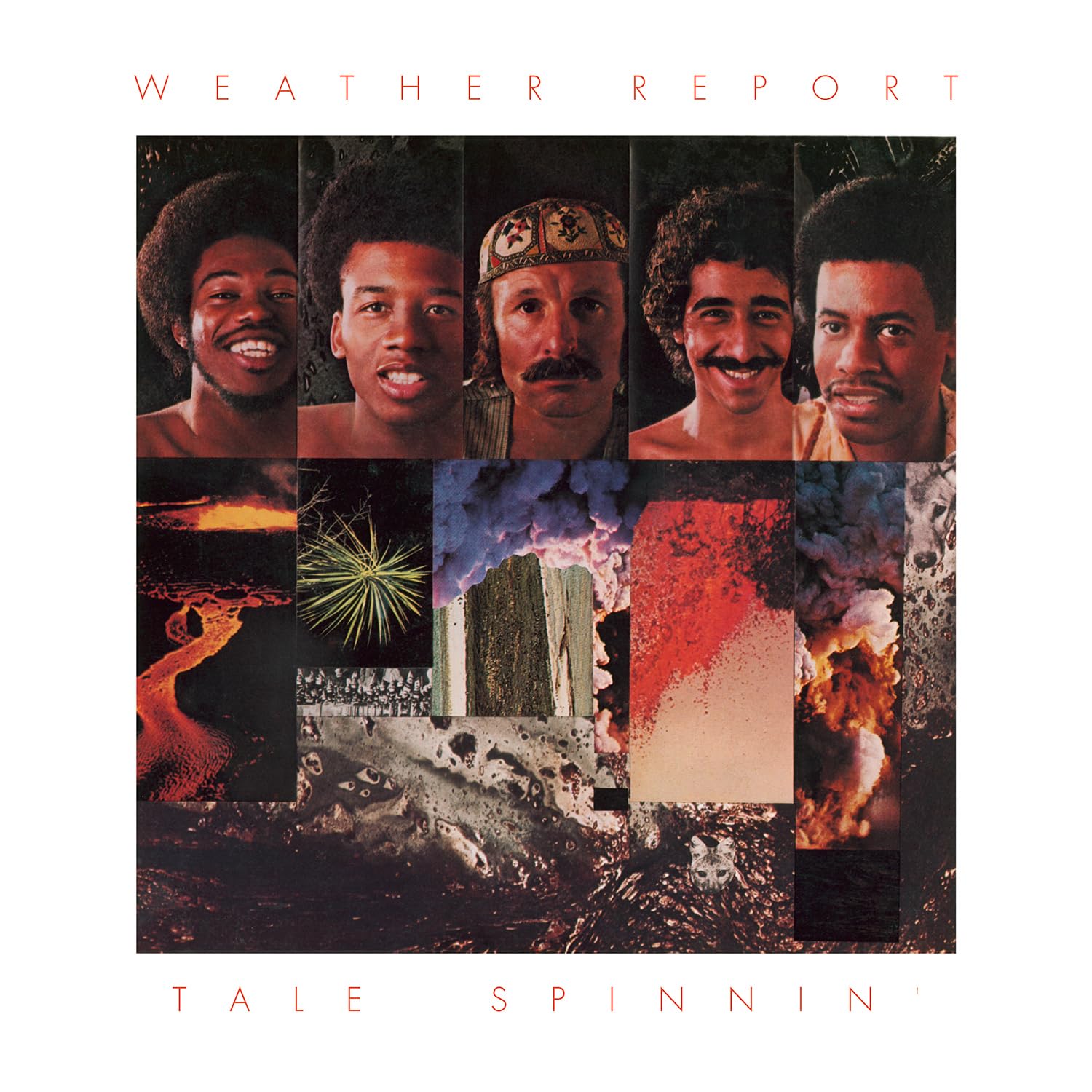
Weather Report: Tale Spinnin

Tales Spinnin’, released in May of 1975, is a vibrant, colorful album that showcases Weather Report at the height of their fusion creativity. The first side of the album is particularly striking, filled with bold, dynamic compositions that blend intricate melodies with rich textures. It is if I can almost hear colors when listening to this first side — it is that visually evocative, aurally. I wish I had some sophisticated color display screens for both the left and right channels that would translate the music into various bursts and evolving strands of colors, but lacking that, I can luxuriate in the radiant waves of Zawinul’s lush synthesizers and Wayne Shorter’s fluid, expressive saxophone work. The interplay between all five musicians is electric, creating a vivid musical landscape that’s both sophisticated and exploratory. The rhythms are complex yet accessible, propelling the tracks into lush, otherworldly soundscapes that are full of life and color.

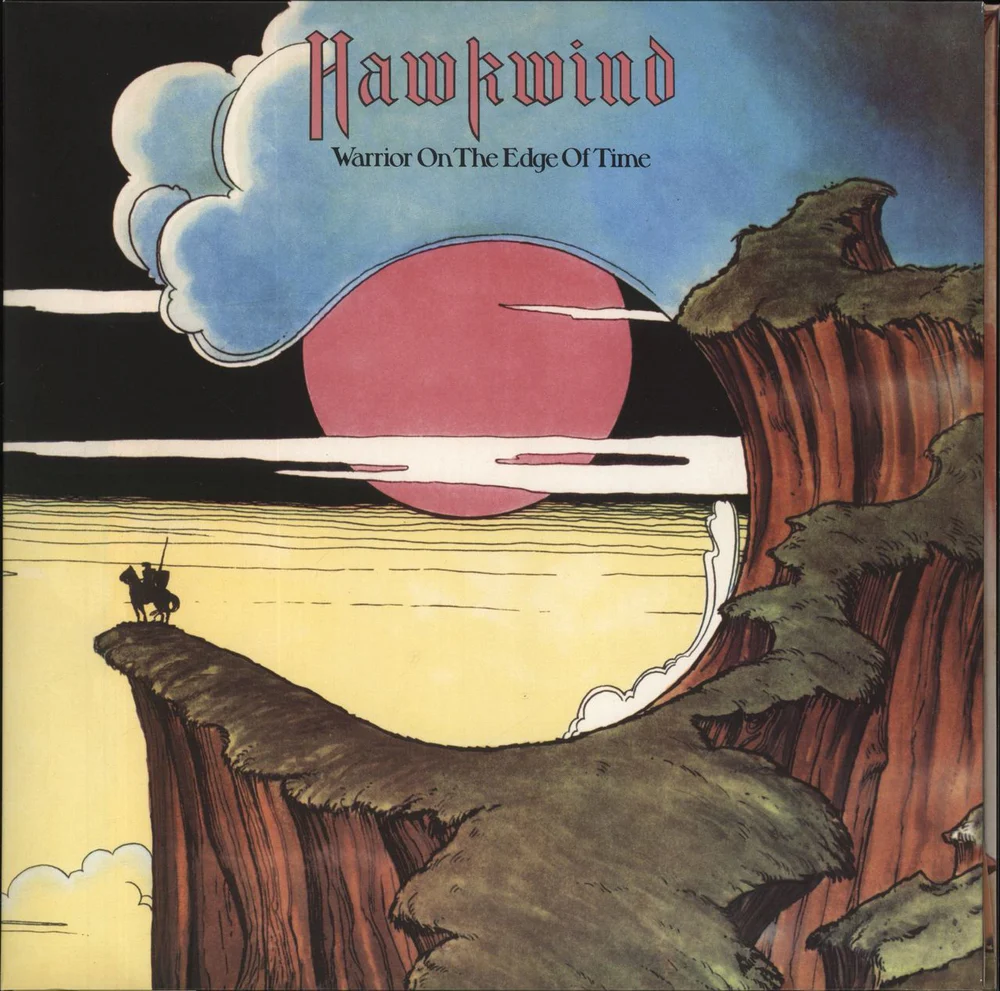
Hawkwind: Warrior On the Edge of Time

Released on May 9. 1975, Hawkwind’s Warrior on the Edge of Time is both engaging and consistently accessible, effectively blending their signature space rock with more traditional prog-rock elements. There is strong emphasis on synthesizers with some effective flute, guitar and even violin to supplement the keyboards, thundering bass, and the often incessant forward-driving percussion. “Assault & Battery” begins the album in grand style, immediately immersing the listener in Hawkwind’s signature Space Rock. This album showcases Hawkwind at their peak, delivering a memorable, mythic sci-fi journey through the fabric of time and space rock.

Fifty Year Friday: April 1975

King Crimson: USA

Recorded from two concerts, one in New Jersey, one in Rhode Island, in late June 1974, and released in April 1975, USA was the first decent live recording from King Crimson — for the previous live album, Earthbound, sound quality was as close to unlistenable as any official concert release since hard wax cylinders had been replaced by shellac discs. (Before my time, but I am still confident in this assertion!)

USA still falls short in terms of sound quality, with Eddie Jobson having to provide overdubs for sections where David Cross’s violin was inadequately captured, but it is still quite an enjoyable document of the group, particularly for those of us that were not able to attend their June 1974 concert performance in our neighborhood (only thirty-five miles away — so close!) The quality of the performance is incredible. The CD reissue contains extra material — and even better, one can get multiple concert recordings for the 1974 tour at https://www.dgmlive.com/tours?year=1974&download=on&liveshow=on — note the audio quality legend before downloading.

Steve Hillage: Fish Rising

Steve Hillage’s Fish Rising, released on April 11, 1975 is a dazzling fusion of psychedelic rock, progressive rock, and ethereal Canterbury-influenced content. This Hillage’s first solo album after his time with Gong, and one can hear echoes of that band’s cosmic sensibility that provide a solid foundation allowing Hillage’s distinctive guitar work and creative compositional skills to shine.

The album begins with the “Solar Musick Suite” the highlight work of this album, an expansive, four-part work filled with swirling synths, shimmering guitar delays, and celestial melodies. “The Salmon Song” balances intricate instrumental interplay with a driving rock energy, while the excellent “Aftaglid” closes the album in an ethereal, kaleidoscopic swirl of sound.

Hillage’s guitar work is in top form, the quality of the music is further enhanced with high-quality lyrics and an impressive supporting cast including Didier Malherbe and Pierre Moerlen of Gong, bassoonist Lindsay Cooper of Henry Cow and Dave Stewart of Hatfield and the North.

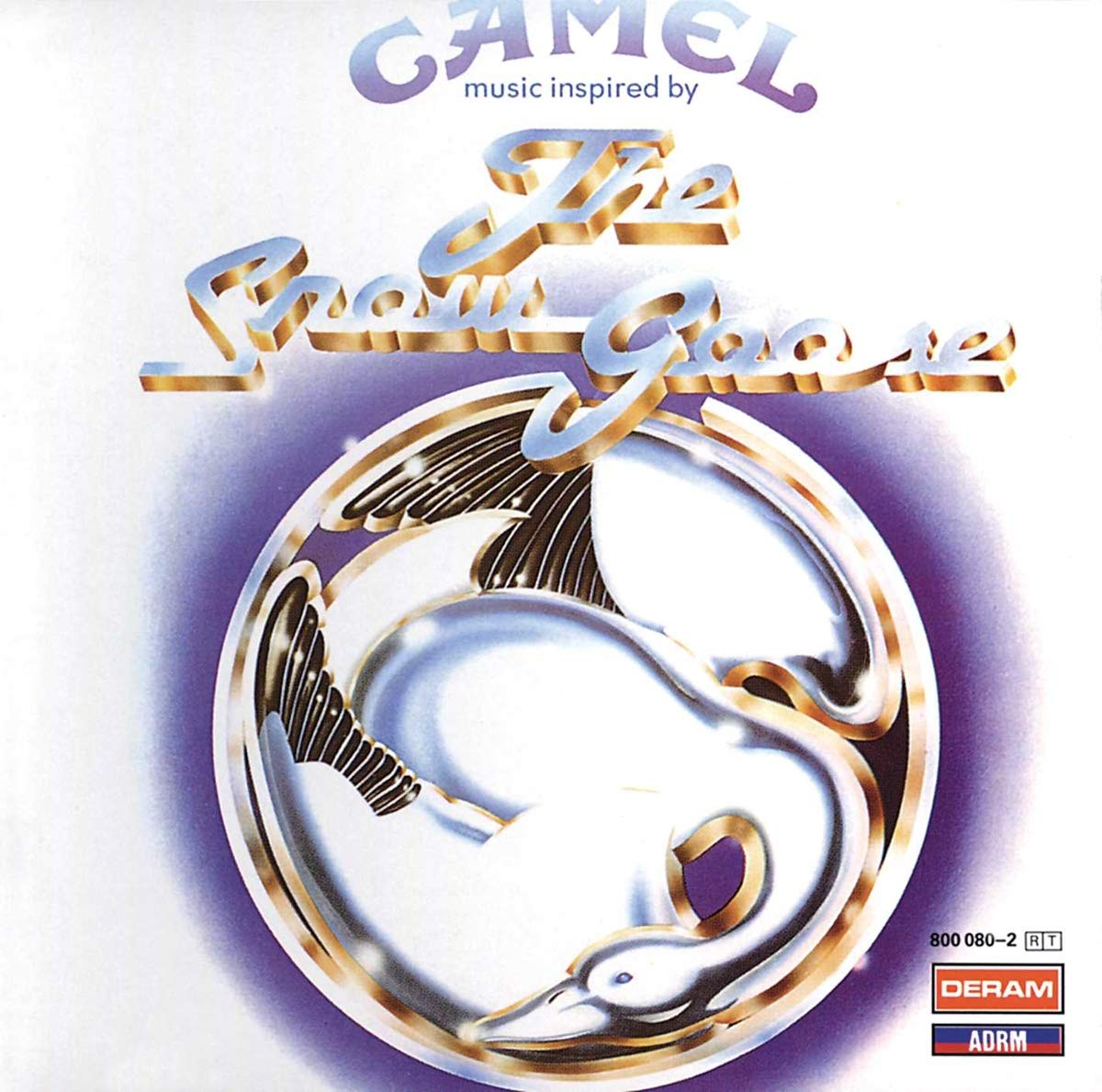
Camel: The Snow Goose

Released in April of 1975, this instrumental concept album is based on Paul Gallico’s novella The Snow Goose, a poignant story of a reclusive man and a young girl who nurse a wounded snow goose back to health — the novella emphasizing themes of love, sacrifice, and healing. Camel masterfully craft a soundtrack that brings the essence of the story to life. Without using any text (originally they had wished to use such text, but it was not allowed by the author) and limiting vocals to vocalese on one track , the album transcendentally communicates a rich, emotional narrative.

Andrew Latimer (guitar, flute) and Peter Bardens (keyboards) are in top form both as composers and musicians, aided by bassist Doug Ferguson and drummer Andy Ward. The seamless integration of their musicianship and composition makes The Snow Goose a timeless listening experience, resonating deeply regardless of how it’s approached. Whether one listens with a knowledge of the story or simply as a stand-alone musical journey, its emotional depth makes this one of the top progressive rock albums of 1975.

Fifty Year Friday: March 1975

Hatfield and the North: The Rotter’s Club

Released on 7 March 1975, The Rotter’s Club is one of the finest progressive rock albums , delivering a rich blend of humor, virtuosity, and intricate composition that captures the essence of the era while being identifiably distinct from any other album of its time. As the second studio album by British avant-garde and progressive rock band Hatfield and the North, it succeeded their self-titled debut (1973), which established them as a prominent figure in the Canterbury scene. But The Rotter’s Club marked a progression, both musically and conceptually, toward an even more refined and ambitious sound. It is a record that not only brings together various aspects of jazz, rock, and classical music but also emphasizes the playful and eccentric side of progressive rock, a nice contrast to the overly serious, often over-reaching and sometimes pretentious reputation ascribed to it by is staunchest critics.

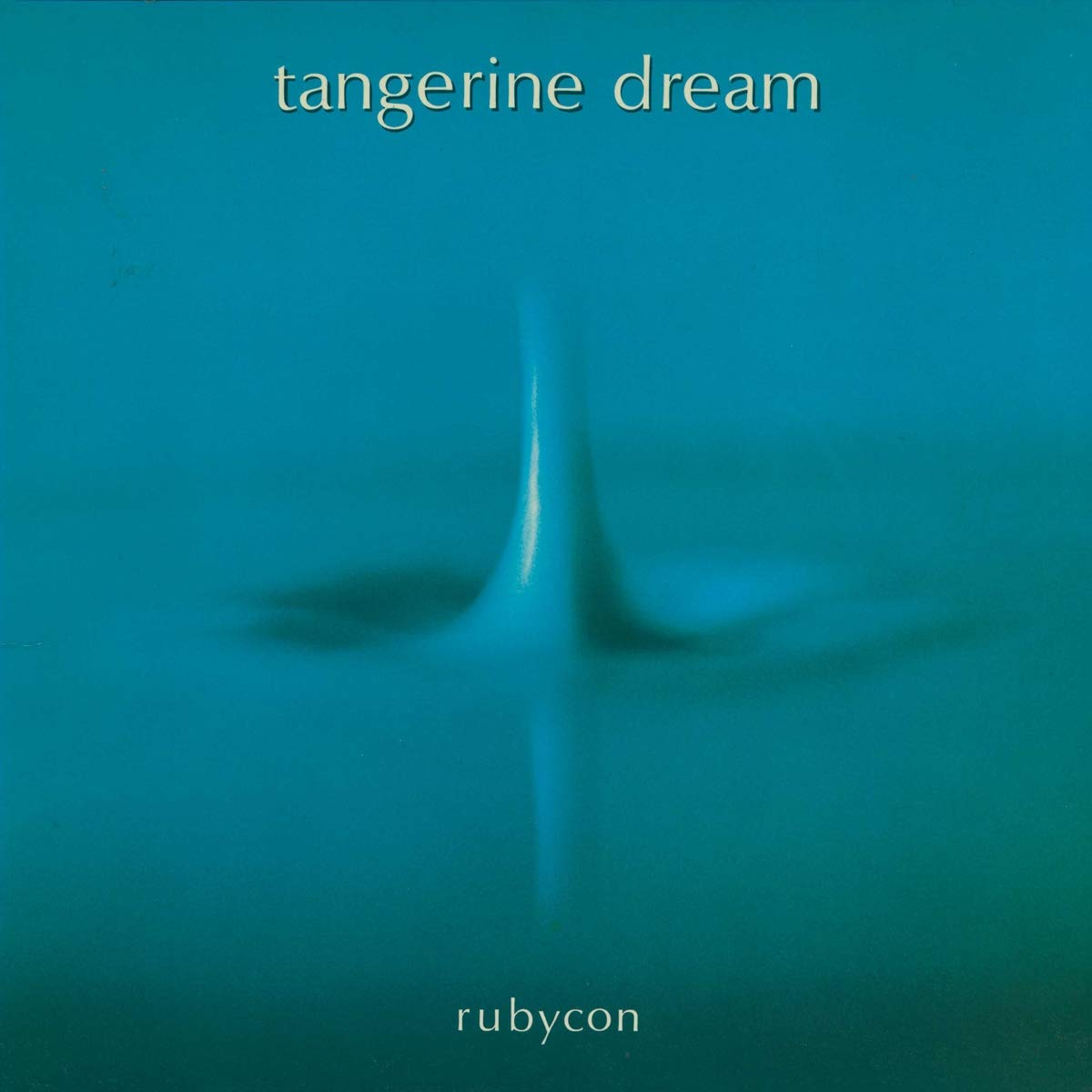
Tangerine Dream: Rubycon

With the release of Rubycon on March 21, 1975, Tangerine Dream delivered their fourth studio album, a fully realized version of their relentlessly driving “Krautrock” industrial, high-tech, space music. While Rubycon clearly evolves from their previous album, Phaedra, it represents a leap forward, much like the internet is to the stone tablet. Whether Tangerine Dream’s change in direction was influenced by considerations about what musical characteristics would work best for film soundtracks and greater audience engagement, or whether it was partly inspired by the success of Kraftwerk, Rubycon marks the undeniable establishment of a new genre of music — one distinct from anything that came before it. Tangerine Dream’s flirtations with Stockhausen and other electronic composers led them in a direction that was as different from the contemporary world of so-called “classical” and “serious” music as that music was from the tonally extended late Romantic music. What emerged was something accessible, mesmerizing, hypnotic, and directly relevant — an exciting departure from the avant-garde style that, for most of the listening public, had become irrelevant.

Rick Wakeman: Myths & Legends Of King Arthur and the Knights of the Round Table

Rick Wakeman’s King Arthur, released March 27, 1975, is filled with interesting keyboard and instrumental passages that should interest most progressive rock fans. Though the vocal sections are not exactly comprised of tunes your likely to sing on your own or even along with — they functionally provide narrative, much like Baroque and Classical Era recitatives and, overall the album works well as a dramatic experience. An alternative to the original, with much better overall sound and additional musical content (which had to be left off the original single LP due to time constraints) is the 2012 two-CD version. If you haven’t hear either, best to go for the updated version with the extra material and superior production.

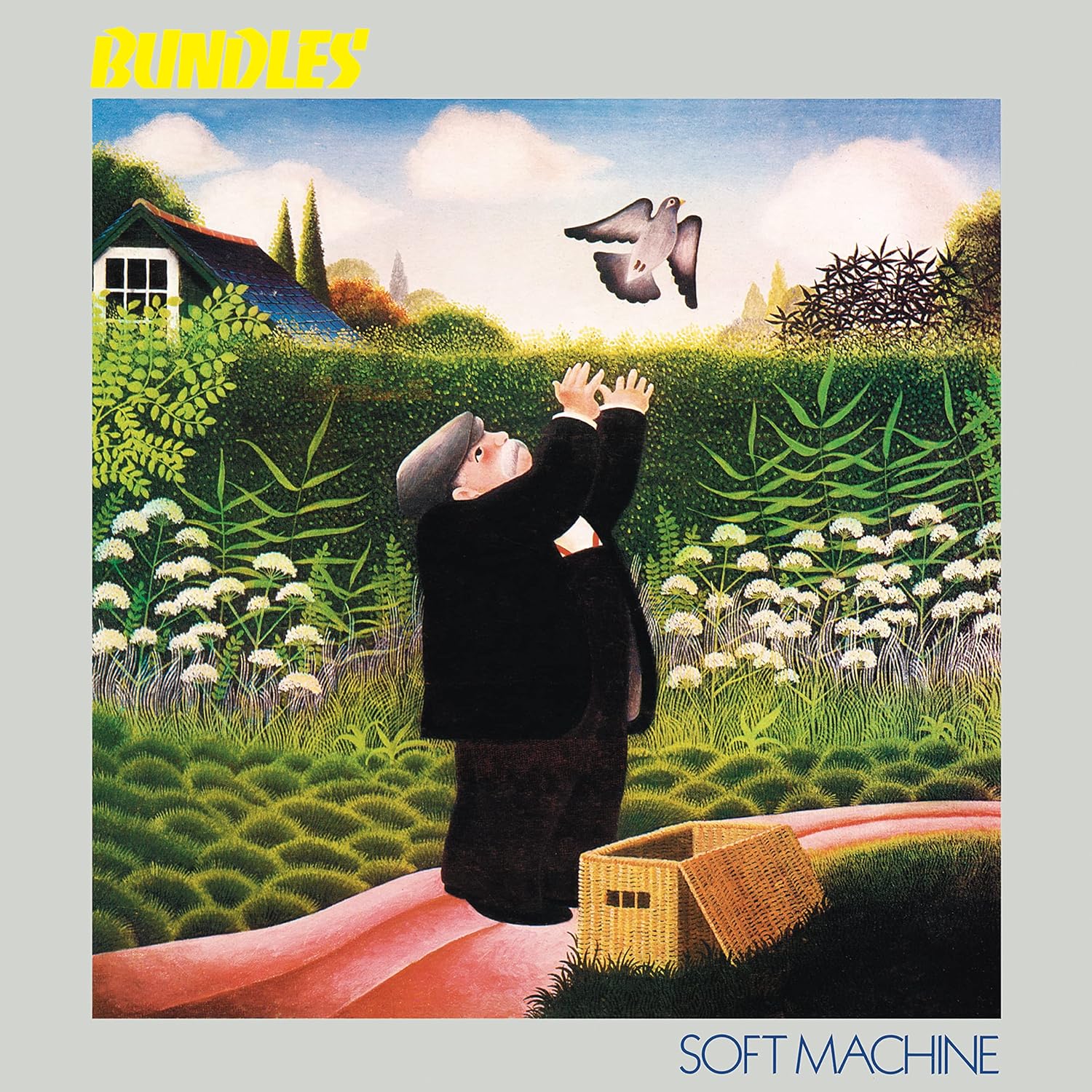
Soft Machine: Bundles

Released in March 1975, Soft Machine’s Bundles is successfully melds an electronic jazz-rock sound with compatible prog-rock elements. The addition of guitarist Allan Holdsworth. known for his fluid, virtuosic playing, injects the album with a fresh intensity, particularly notable in the multi-track Hazard Profile, a nineteen minute five-part suite that showcases Soft Machine’s new direction inclusive of Holdsworth’s soaring guitar work supported by a propulsive, energetic rhythm section. Side one concludes with Holdsworth’s acoustic and beautifully introspective “Gone Sailing.”

Side two is equally compelling with the first four tracks seamlessly blending into a a single experience. The next track, “Four Gongs Two Drums” provides a short percussive intermission, with hints of Indonesian Gamelan followed by the final track, “The Floating World”, a reflective, drifting, neo-Impressionistic composition that gently glides the listener through a bliss-invoking, peaceful and relaxing musical state, providing a fittingly tranquil, dreamlike-end to this excellent album.

Steely Dan: Katy Lied

Donald Fagan and Walter Becker follow up the classic Pretzel Logic album, with another strong album, rich with jazz-flavored chords, Katy Lied, released in March of 1975. Though not strictly a concept album, the album sounds musically unified and could be considered a song cycle of sorts, justifying the term “lied”, a German term applied to art songs, giving us an additional meaning underneath the mysterious reference to the “Katy tried” and “Katy lies” lyrics in the fifth and final track on the first side, “Dr. Wu.”

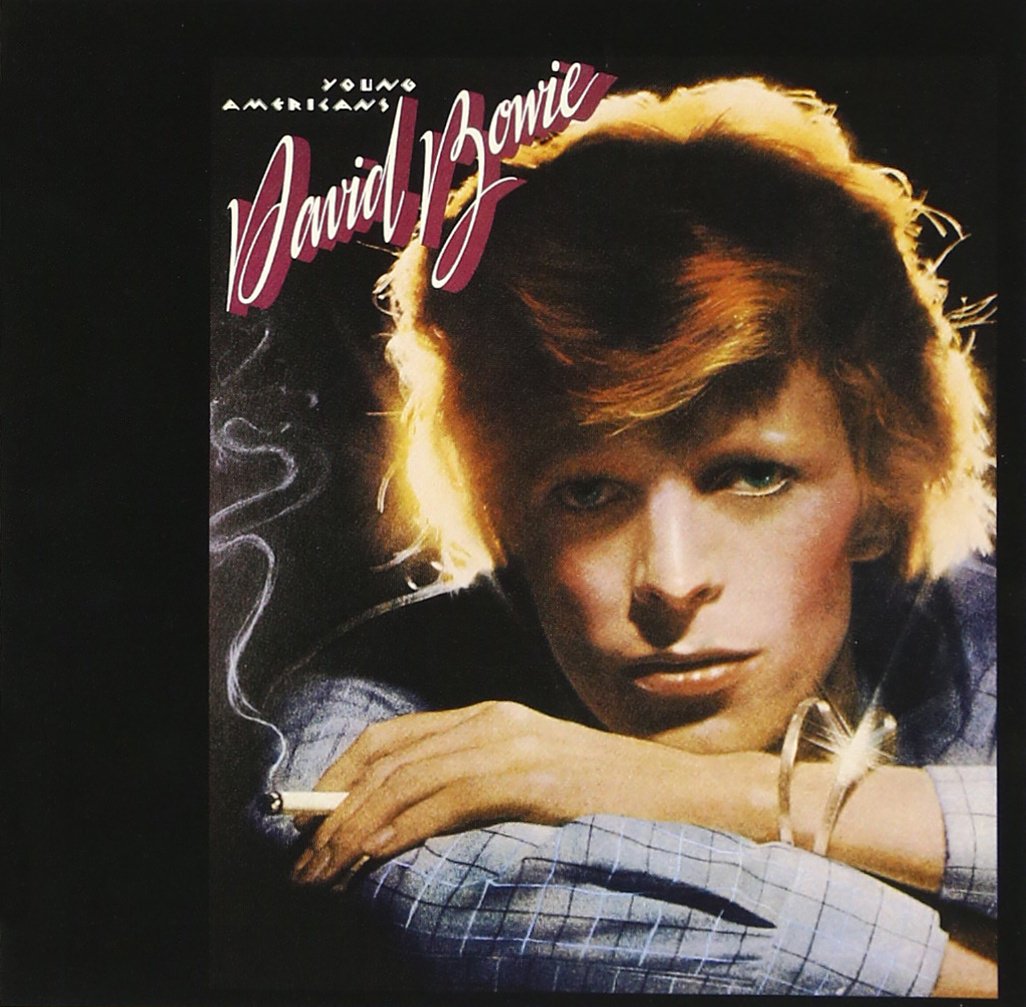
David Bowie: Young Americans

With his ninth studio album, released March 7, 1975, once again, Bowie takes off in another musical direction, extending the elements of soulfulness found in Diamond Dogs and in “Lady Grinning Soul” from the earlier Aladdin Sane, into an all-out exploratory, high-art treatment of American soul music. The arrangements are sophisticated, with Tony Visconti deserving similar praise as Bowie for his musical versatility and with strong contributions from Carlos Alomar and additional input from a twenty-three year-old Luthor Vandross. The strongest track, “Fame,” was initially based on an Alomar guitar riff, with John Lennon, who was visiting the New York Electric Ladyland studios, assisting David Bowie in the authoring of the song by providing his sarcastic, ironic, and pessimistic take on the vagaries of fame.

Fifty Year Friday: August 1974

Emerson, Lake & Palmer: Welcome back, my friends, to the show that never ends ~ Ladies and Gentlemen

Released in August of 1974, this album will always be particularly special to me as it captures ELP at the peak, and possibly from a concert I attended. I say possibly, as my close friend, and continuing great friend (and girlfriend in late 1973 and early 1974) and I attended either the February 1st or February 2nd concert, and the recording was made at one of those two concerts. In August 1974 my sister purchased, from her record club, a pair of cassettes of the concert, which I promptly took possession of when driving in my parents Toyota Corolla. I would later purchase the album, but mostly heard the cassette, played in the care.

I am pretty sure that I haven’t listened to this album since 1974, and, it was with mixed emotions that I put it on my audio system, but once it was playing, I was pulled back into not those moments in the car when I had it played it over and over again, but into the Anaheim Convention Center, back in February 1974, sitting again next to my dear friend, in the lower part of the first of the two levels of balcony almost directly opposite the stage — not close, but not desperately far away, either.

The Anaheim Convention Center was a special venue for me anyway. My dad had taken me to see the Los Angeles Stars there for the ABA finals in 1970. Originally located in Anaheim and called the Anaheim Amigos, the team changed their name after the ABA’s inaugural 1967-1968 season and moved to Los Angeles as the Stars, playing in the L.A. Sports Arena. The first year in L.A., they improved on their previously dismal record of 25 and 53, but still did not qualify for the playoffs with their unremarkable win-loss record of 33-45, For the third year, they hired Bill Sharman as their head coach (who would later be the first coach to lead the Lakers to their first NBA championship since leaving Minneapolis and moving to L.A.), and his presence attracted some additional talent to the roster, most notable of whom was Mack Calvin Calvin was the talented USC guard who helped USC actually beat UCLA at Pauley Pavillion, ending UCLA’s streak of 41 straight wins and 51 consecutive wins at Pauley Pavillion, and USC’s steak of 17 consecutive losses to UCLA. The Los Angeles Lakers selected Calvin as a late round draft pick, but he ultimately chose to go with the L.A. Stars, much to their benefit.

With several new players, including the talented Wayne Hightower who was acquired from Denver Nuggets, the Stars got off to a decent 9-5 start. But by February 22, due partly to injuries, including a back injury to Hightower in January, the Stars record was only 25-34, and apparently no plans were made for a venue for them to play in, in case they did make the playoffs. With a couple of six game win streaks, and a four game win streak in May, the Stars barely qualified for the playoffs with a 43-41 record, and ended up playing their playoff games in the Long Beach Sports Arena and the Anaheim Convention Center. The tickets to see the Stars were more affordable than tickets to the Lakers, and I am very thankful that my dad stretched his very challenged household budget to take me to see the Stars play the Dallas Chaparrals in the first round, the Denver Nuggets in the second round, and then the Indian Pacers in the finals.

The highlight of my Anaheim Convention memories was not those Stars games, as exciting as they were, but the ELP concert. I had looked forward to it for several weeks, and when it finally arrived, it far exceeded my expectations. This recording of the concert we attended (or of one from the adjacent night at the same venue) brings back many memories listening to it for the first time in almost fifty years. I had forgotten that speakers were placed at multiple locations in the Convention Center to provide a novel surround sound effect for certain synthesizer parts during the concert, or that the crowd was so enthusiastic. Also, two of the commercial drawbacks of this live recording — no overdubs added later on or any attempt to improve the sense of distant from the performers, as if one was hearing it from the front of the lower balcony — provide a fairly authentic recreation of how we heard the music at the concert. The musical content captured is nothing short of spectacular. Keith Emerson was indisputably the best keyboard player of any rock group and a high-energy performer, Carl Palmer was one of the best percussionists of any rock group, and Greg Lake, that night, was on top of his game, but on bass and guitar, and vocally. The concert contains some fine solo piano work by Emerson, as well as including a fine rendition of both “Tarkus” and “Karn Evil 9”. That night the group performed a twenty to twenty-five minute encore version of their rendition of Mussorgsky’s Pictures at an Exhibition, which, sadly, is not included in this live album, and as far as I know is not available, and may not have even been recorded.

All in all, a great document of one of the top Progressive Rock groups of all time, at the peak of their creativity and excellence. Later that year, in April of 1974, the group appeared at the California Jam as the closing act. Fortunately, ABC filmed either part or all of ELP’s performance for their “In Concert” program and some of this footage is available for viewing on youtube today: https://www.youtube.com/watch?v=Rqhd8JDThkI

Fifty Year Friday: April 1974

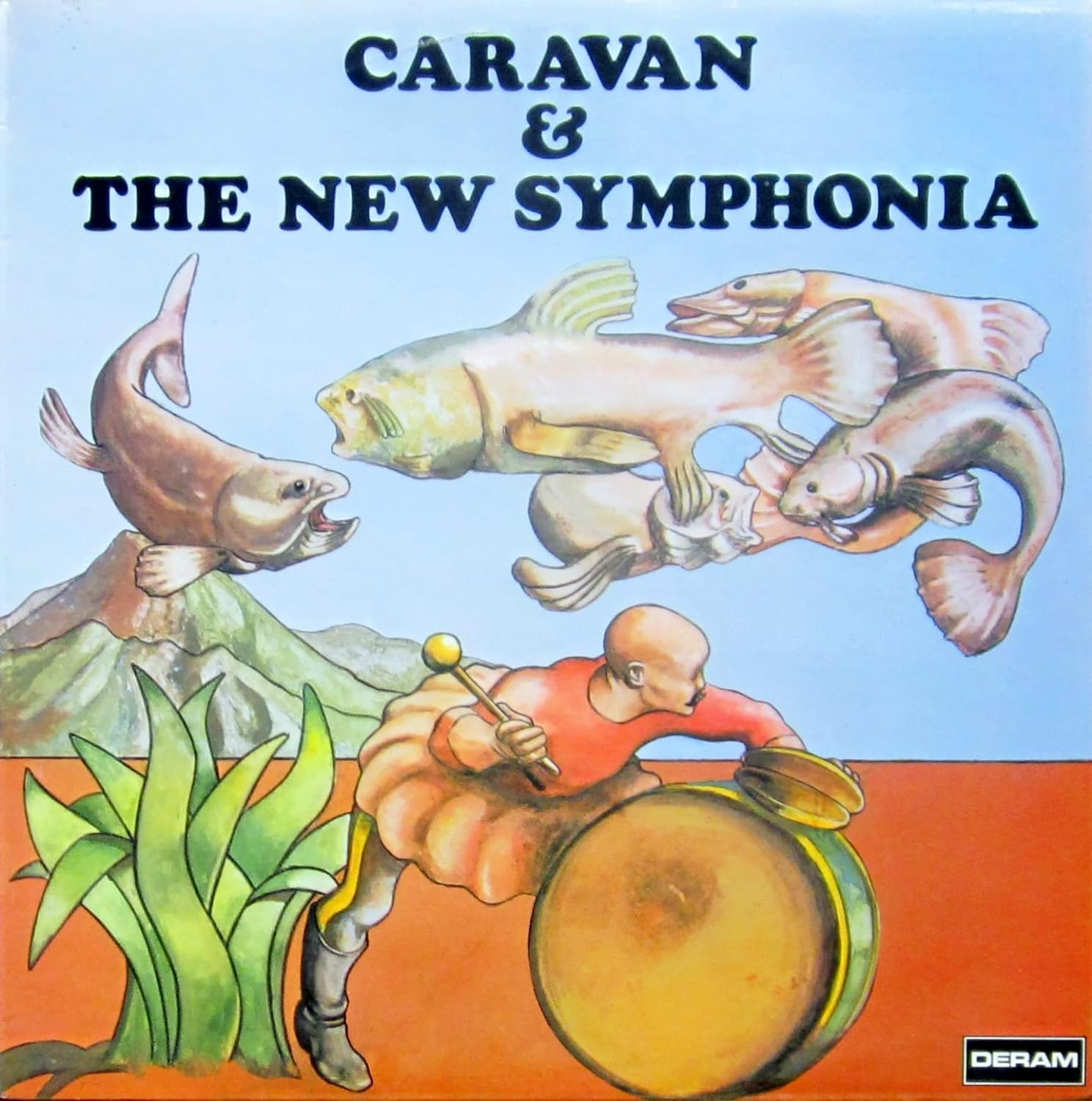
Caravan: Caravan & The New Symphonia

Recorded Live at the Drury Lane Royal Theater on October 28, 1973 and released on April 19, 1974, this live album presented a mix of new material and a composition from their 1970 album and their 1972 Waterloo Lily album arranged and performed with a decently sized orchestra conducted by Martyn Ford. The recording quality is good for that era, and the combined effort between the band and the orchestra works well, providing a new dimension to previous studio work. Fortunately, there is a re-issue of this album that adds additional tracks including a preliminary set without the orchestra of three compositions from their previous album, For Girls That Go Plump in the Night as well as arranging the tracks in the original order from the concert. This reissue also provides an exciting encore with the orchestra: a energetic, well-performed rendition of their instrumental “A Hunting We Should Go” from their previous album. Overall, this live album is a real joy to listen with the orchestra enhancing the colorful nature of Pye Hastings compositions and Caravan’s arrangements.

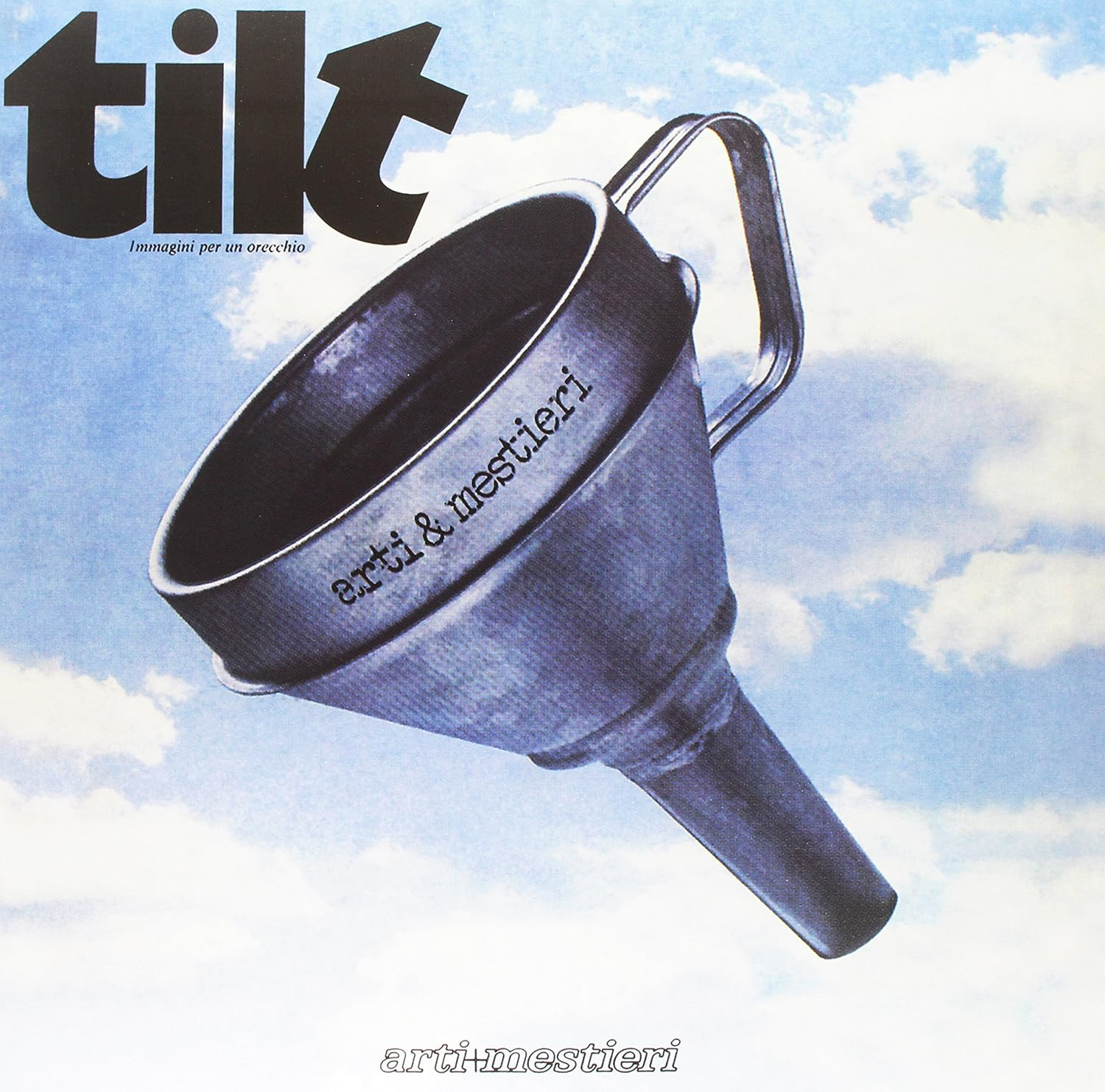
Arti e Mastieri: Tilt (Immagini per un orecchio)

Released in April of 1974, Arti e Mastieri (Arts and Crafts) debut album was indeed “Images for the Ear!” Each composition has its own character and musical path. The album starts off strongly with “Gravità 9,81” which includes sax, mellotron, clarinet and violin, followed by “Strips” with comforting vocals somewhat similar to PFM. The third track, the short energetic “Corrosione,” flows seamlessly into one of my favorite tracks on the album “Positivo/Negativo”, which includes violin, vibes, violin and particularly propulsive percussion from their very talented drummer, Furio Chirico (love that name!) “In Cammino” provides a welcome contrast with its initial mood, and develops into a strong rock fusion piece by its conclusion. This is followed by the brief, beautiful, initially contemplative “Farenheit” which, even within its short timespan of seventy-five seconds, evolves and develops effectively. The most notable piece on the album, is the lengthiest — the dramatic “Articolazioni” — a true prog-rock masterpiece, seemingly greater in both length and scope that its actually timing of “13:24” would indicate. The album ends with the anomalous title track, “Tilt”, which, though interesting and well-done, stands out from the rest of the album, perhaps only to signal an end to the album rather than devised to fit in with the mood of the previous tracks. All and all, an amazing album. Though this is the debut album, it is evident that these are experienced and very knowledgeable musicians, who clearly achieved what they set out to do, and in the process delivered one of the great Italian Progressive Rock albums of all time. Those seeking this out should go with the CD reissue which provides superior sound to the original LP.

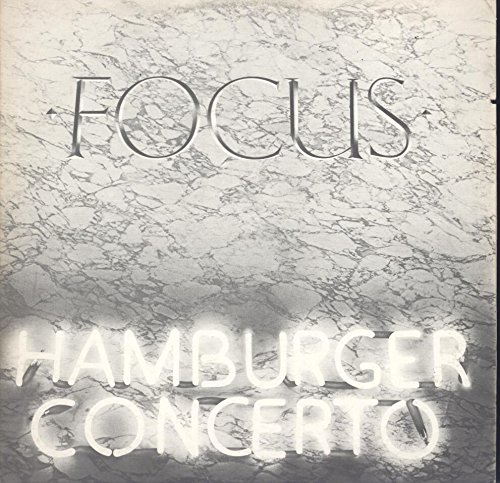
Focus: Hamburger Concerto

Released in April 1974, Focus’s fourth studio album is my personal favorite of the Focus studio albums I am familiar with. The first side starts out with Jan Akkerman’s arrangement of a composition from late renaissance lutenist and lute composer Joachim van den Hove, and is followed by catchy Thijs van Leer composition “Harem Scarem.” The third track is the impressively-wrought “La Cathédrale de Strasbourg” with its strong dramatic first theme and its effective use of pipe organ and acoustic piano, vocals, and contrasting jazz theme. Akkerman’s “Birth”, which ends side one, opens up with harpsichord introducing the theme which is then referenced in the main progressive rock section with Akkerman’s guitar work and van Leer extensively on flute. Quite memorable.

The second side of the album is devoted to Akkerman’s “Hamburger Concerto” which is inspired and based on Brahm’s Variations on a Theme By Haydn, and which effectively becomes a progressive rock theme and variations. The Haydn theme opens up the work with van Leer on organ, Allen on timpani and drums and Akkerman providing a short counter theme on guitar with a third theme introduced on Hammond organ. In general, the Haydn theme provides the thematic foundation but the creativity of Leer and Akkerman (including the incorporation of other themes including a Dutch Christmas Carol) and Van Leers yodel-like vocals (a la their big hit “Hocus Pocus”) take this beyond a straightforward theme and variations exercise with the work effectively and interestingly ranging in moods and blending various musical influences into a cohesive experience making this the highlight of a rather remarkable album by this talented Dutch progressive rock group.

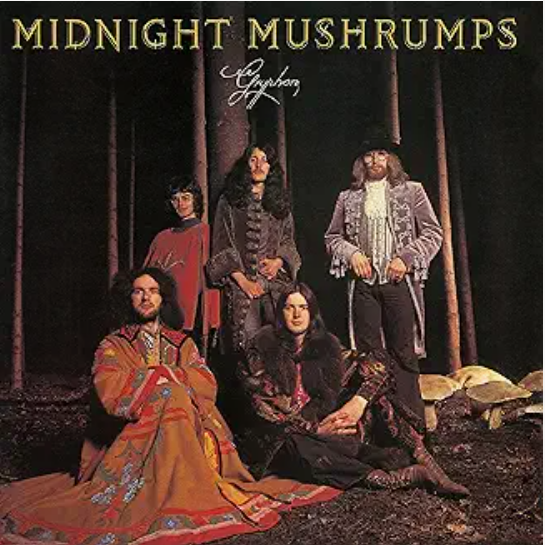
Gryphon: Midnight Mushrumps

Released in April of 1974, Gryphon’s second album merges their medieval and renaissance influences with a modern progressive rock sound, placing them closer to the progressive rock mainstream of 1974. The first track, for example, is a single side composition, the title track of the album, one that pushes them beyond the constraints and expectations governed by shorter pieces. Fortunately, the band handles this nicely, with an surprisingly extensive nine-minute, introduction that effective sets up the main section of the work for the final ten minutes. The second side has shorter pieces, including the notable episodic “Dubbel Dutch” which skips through a range of styles appropriately analogous to the work’s title. The final track, “Ethelion”, takes the elements of an early renaissance dance composition and envelops them into an exhilarating, rhythmically displaced, complex metrical arrangement that transitions to a simpler, emphatically repetitive section that brings the album to a satisfying close.

The Residents: Meet the Residents

This neo-Dadaist musical work was released to minimal fanfare and meager record sales, timed fittingly for April fool’s day, 1974. This is clearly either a labor of love or an extreme instance of obsessive chaotic, disruptive agitation. Either way, it distinguishes itself from the established rock-world non-conformists of the day (Frank Zappa, Captain Beefheart) with its distinctness and eccentricities. Overall the effort is noteworthy for its consistent inconsistency, eclecticism and its overall artistic identity. One particularly noteworthy track is “Rest Aria” which combines a simple beautiful folk-pop melody, 1960s classical minimalism, and a bizarre, westernized deconstruction of Indonesian Gamelan music into a truly effective and interesting result. If you don’t know the Residents, this first album is a great place to start your entry, or attempt at entry, into their world.

Fifty Year Friday: March 1974

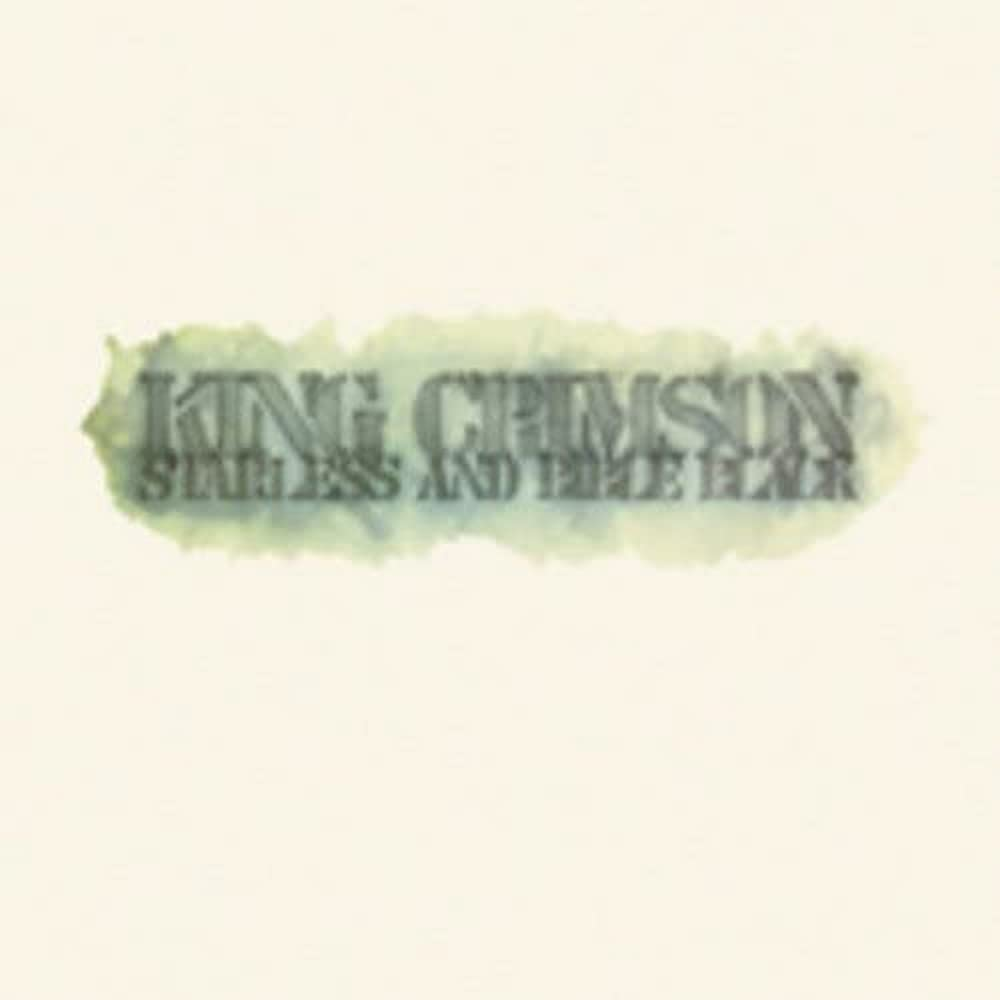
King Crimson: Starless and Bible Black

Released March 1974, Starless and Bible Black drifts further into free improvisation than previous albums, successfully showcasing both the virtuosic skills of the band, particularly those of Robert Fripp, as well as the band’s other-worldly improvisational skills. The first two tracks provide enough accessible progressive rock to make the album an absolute must for the prog-rock fan, and the rest of the album mixes studio and live material to present a less accessible, but highly impactful musical experience. Particularly noteworthy is the live track “Trio”, an improvisation that the always amazing Bill Bruford wisely allows the rest of the band to develop and finish without forcing his own entrance, fully sensitive to the mood and the masterpiece being created. The gem of this collection is “Fracture”, worthy of lengthy musical analysis far beyond my capabilities. It’s intricacy and irregular rhythmic and structural aspects makes this a particularly challenging composition to perform, but the band is unfazed and undaunted, and not only succeeds technically but fully imbues it with the necessary emotion and expression to make this one of the most meaningful listening experiences in the King Crimson catalogue.

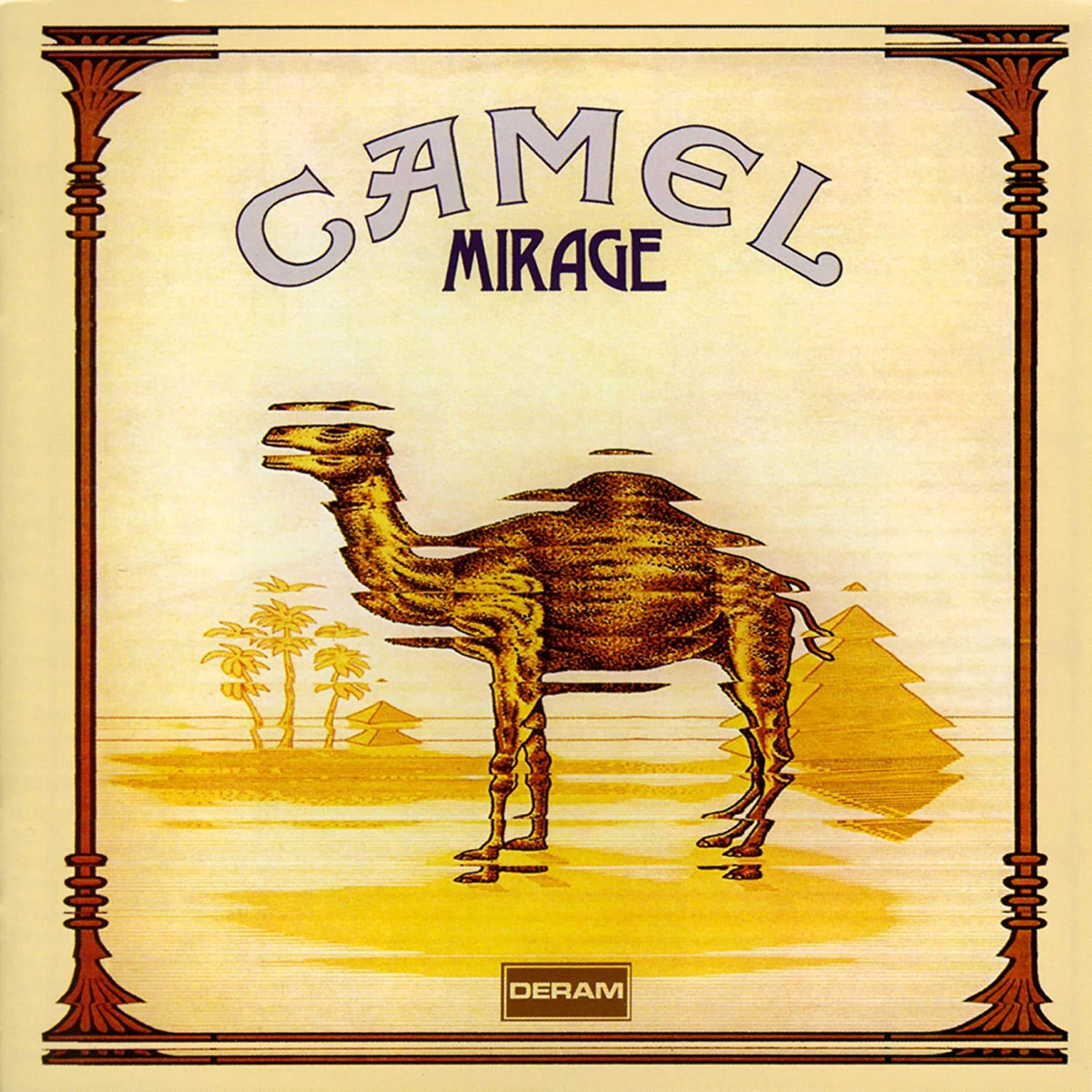
Camel: Mirage

Ethereal and wistful, Camel’s Mirage was released in March of 1974, first with the album cover showed above, and then with replaced (as demanded by the Camel cigarette company) with an alternative cover. Andrew Latimer (guitar, flute, vocals) and Peter Bardens (keyboards, vocals) produce a set of compositions that blend together seamlessly creating a distinctive lush and compelling sound experience.
“Supertwister” is the most dynamic and energetic track of the album, a short instrumental that marks off many traditional prog-rock check-boxes with the rest of the album being more introverted and contemplative.

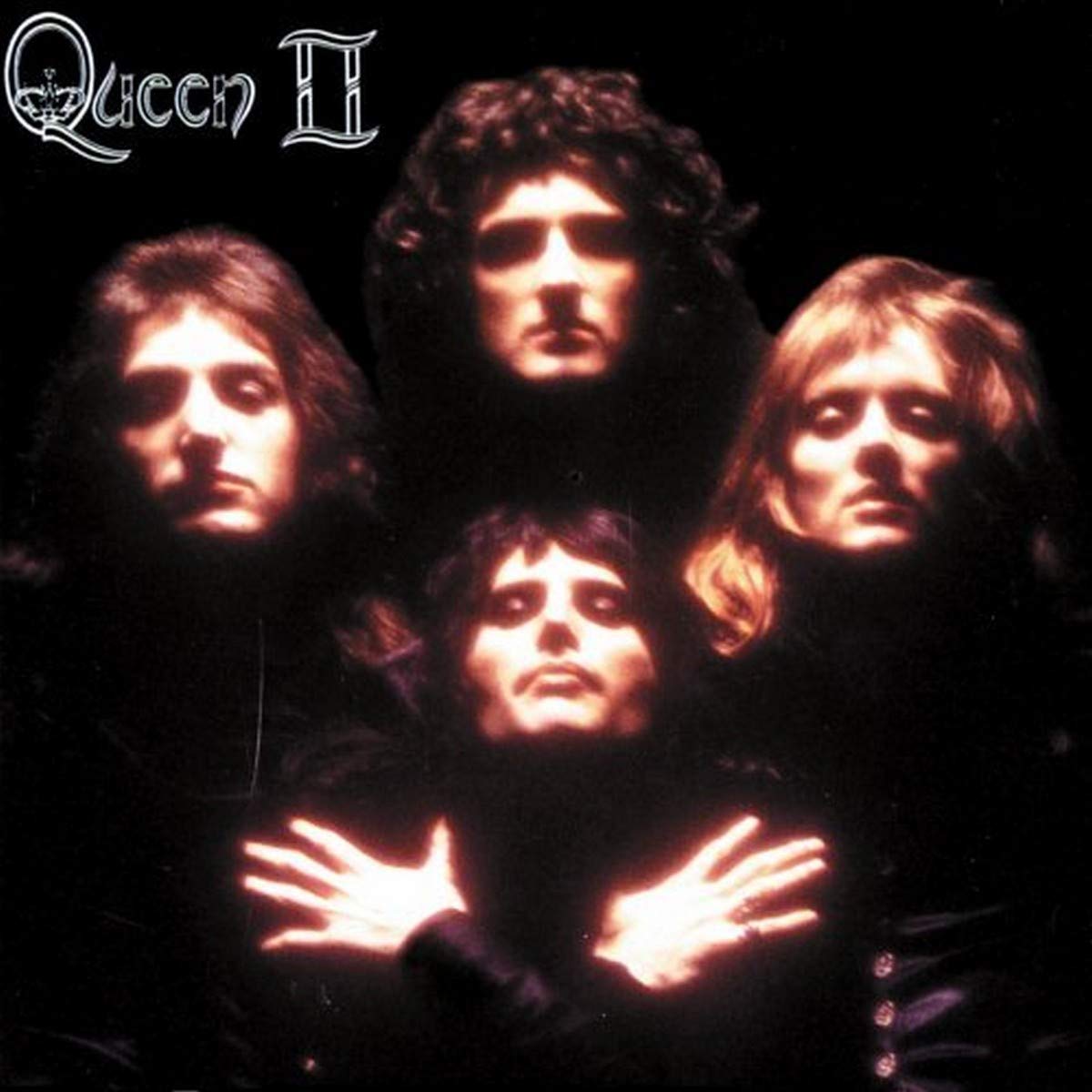
Queen: Queen II

Queen’s second album, released on March 8, 1974, gives us a much more ambitious and artistic effort than the previous, making this their first must-have albums. The production is more polished and the group clearly invested substantial hours in the studio capturing the perfected harmonies and instrumental layering. Side one is mostly Brian May’s compositions, with one work by Roger Taylor, showing off Queen’s own brand of hard rock, while side two, is completely dedicated to Freddie Mercury’s fantastical compositions, with their abrupt musical shifts and endless harmonic energy. Drama and musical theater abound, particularly on the second side, and the musical diversity and level of instrumental excellence have made this an album that never wears out its welcome in the listening room.

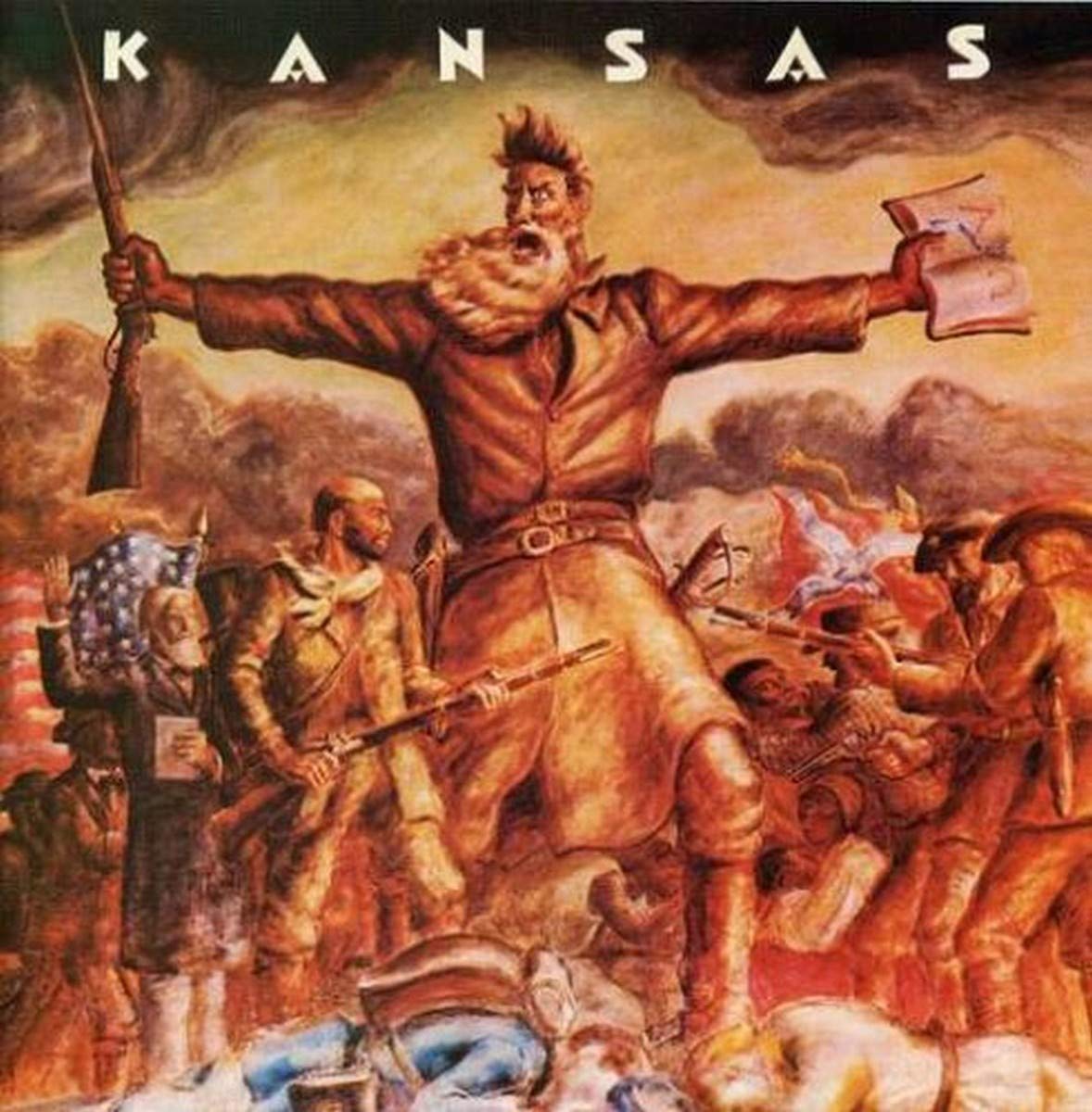
Kansas: Kansas

Kansas released their first album on March 8, 1974, with six musicians from the American Midwest — five of the six born in Kansas or Missouri. The album is particularly American in sound, with hints of boogie rock, country, folk-rock and similar American Rock styles. Notably different than other American Midwest and Southern Rock groups is their facile integration of contemporary prog-rock elements, some of which are very similar to Genesis and Gentle Giant material, though not in the least derivative or perceivably mimicked. Particularly notable is the work of Kerry Livgren on synthesizer and the contributions of violinist Robby Steinhardt. One of the finest debut albums of 1974.

Weather Report: Mysterious Traveller

Weather Report begins to unleash is full range of jazz-fusion capabilities with the release of their fourth studio album on March 24, 1974, climbing to number 2 on the US Jazz Charts, as high as 46 on the US Pop album charts, and up to 31 on the US R&B charts. Additional funk and world music influences are incorporated, possibly leading to creative differences with legendary Miroslav Vitouš, who makes this his last recording with the group, appearing on two of the eight tracks on acoustic bass, replaced by bass guitarist, Alphonso Johnson on the other six tracks.

The album is inventive, innovative and filled to the brim with interesting improvisation — fusing jazz, world music, including Latin influences, funk, rock, and hints of classical. Album not only showcases the creativity and imaginative brilliance of Joe Zawinul and Wayne Shorter, but includes memorable contributions from everyone involved included several guest musicians on percussion instruments, ocarina and woodwinds (on “J0ungle Book”) and vocals (“Nubian Sundance.”)

Fifty Year Friday: January 1974

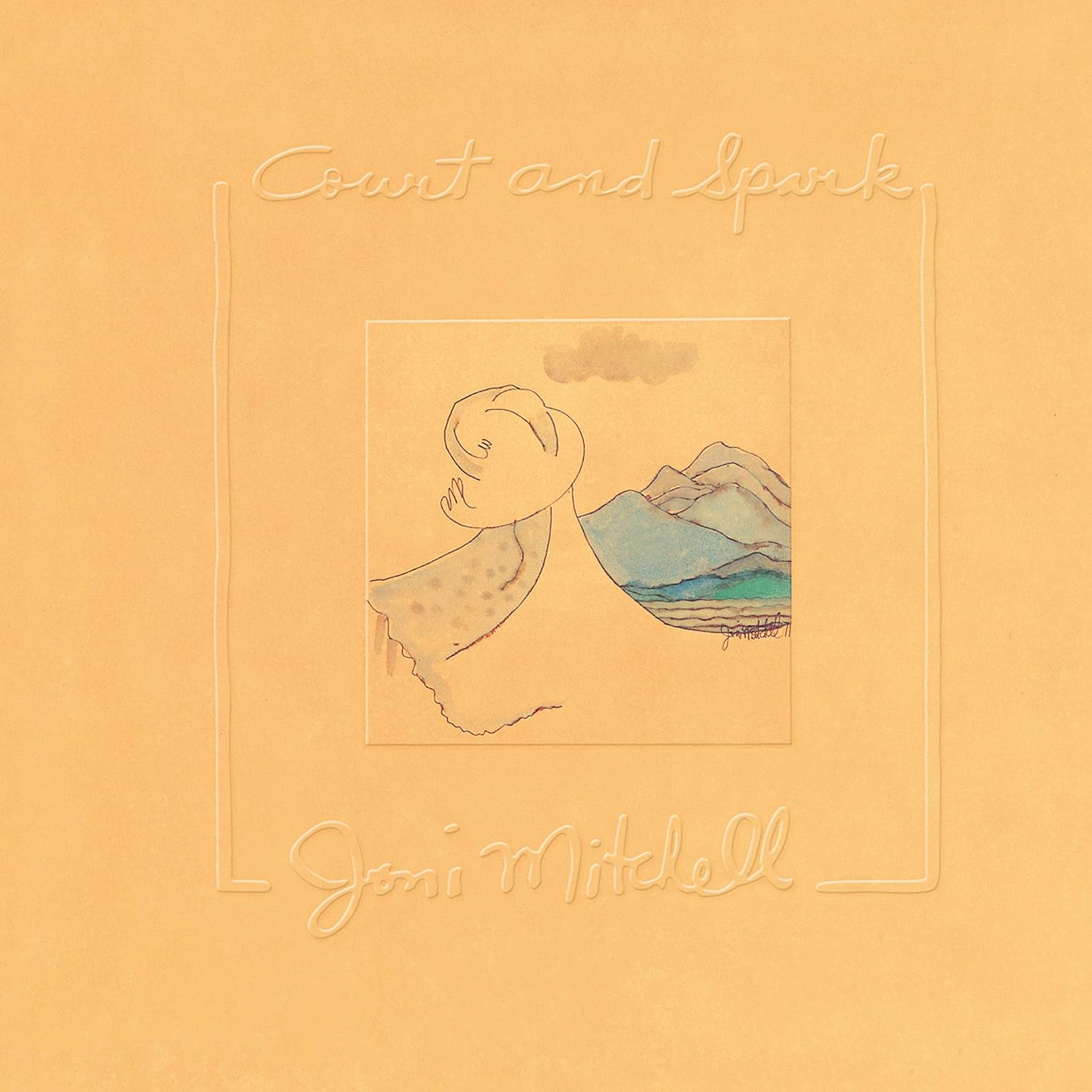
Joni Mitchell: Court and Spark

1974 started with the release of one of the finest singer/songwriter albums of the 1970s, Joni Mitchell’s melodically and harmonically sophisticated, partly jazz-influenced, Court and Spark, an album that ended up in the record collection of most of the young ladies I knew in the 1970s, and deservedly so. As a music lover, it is the quality and distinctiveness of her music that wins me over, and how her music not only supports her nicely crafted set of meaningful lyrics but weaves and seeps into their essence. Ensuring that Mitchell’s vision is fully and artfully realized, and is a masterfully finished product, Tom Scott provides beautiful, engaging orchestral arrangements for some of the tracks and he and other musicians provide remarkable complementary contributions to fully complete Mitchell’s masterpiece. Every track Joni Mitchell has composed is a classic, and she ends the album with “Twisted”, AnnieRoss’s (of Lambert, Hendricks & Ross) clever overlaying of lyrics to Wardell’s Gray’s November 1949 recording of his instrumental composition “Twisted” with its masterful tenor saxophone solo, an appropriate way to end an album which owes part of its magic to Mitchell’s adept incorporation of jazz influences.

Harmonia: Musik von Harmonia

Released in January 1974, Harmonia’s debut album, “Musik von Harmonia” is, in my mind, the debut of German electronic cosmic space music. Many albums released before this have been classified into that umbrella term “Krautrock”, but for that specific flavor of German repetitive, sequence-driven, minimalist-inspired, partly ambient, but mostly hypnotic music that Tangerine Dream perfected and first showcased in their February 1974 release, Phaedra, and which Kraftwerk would popularize later in 1974 with their relatively more pop-oriented Autobahn album, it is this album that provided the prog world its first taste — the amuse-bouche for what is to shortly follow.

Musik von Harmonia is a collaborative masterpiece, uniting the talents of Michael Rother, Hans-Joachim Roedelius, and Dieter Moebius, all of whom were already renowned for their contributions to the German/Swiss avant-garde “rock” music scene. Together, they craft an auditory experience that well exceeds the existing conventional boundaries and expectations of pop music or of the contemporary progressive rock of the time. It works wonderfully as ambient, background music to read or do repetitive tasks during its forty-two minutes of mechanical-like mysteriousness, but it is even better for concentrated listening, as one allows oneself to get pulled into the funneling, black-hole sonics of this trio’s relentless and imaginative industrial-electronic soundscape.

Carly Simon: Hotcakes; Graham Nash: Wild Tales

Released in January 1974, both these albums deserve mention for how they are successfully stamped with the creative musical style of their respective artists. My favorite track on Hotcakes is “Haven’t Got Time for the Pain” written while Simon was with child. While there is no one track that stands out on the Nash album, it bubbles with his captivating, pop-flavored, often country-music tinged musical style. As a bonus we have appearances by David Crosby, Stephen Stills, Neil Young, David Mason and a hint of Joni Mitchell’s vocals.

Yes, Joe Pass, Gong: Fifty Year Friday: December 1973

Yes: Tales From Topographic Oceans

Released on December 7, 1973, Yes’s sixth studio album, is a double LP set containing a single work composed of four sections inspired by a footnote in Paramahansa Yogananda‘s autobiography which discusses the classification content of Hindi scriptural writings into four categories of shastras: śrutismritipuranas, and tantras — or four bodies of knowledge. The album devotes a whole side of each LP to four concepts: 1) The knowledge of God and available truth, 2) Our comprehensive memories, feelings and thoughts — the Topographic Oceans of awareness and being, 3) Ancient, lost knowledge and culture, and 4) The Ritual of Life. The lyrics of the album, perhaps are worthy of study or further understanding, but I accept the words as being beyond my initial or even my likely eventual comprehension, and I am content to value them for their sound characteristics and overall contributions to the musical whole of the album.

That musical whole, is more arguably worthy of study, and provides a wealth of pure auditory enjoyment, and even though there is a fair share of meandering and excessive repetition, and though Bill Bruford has left to join KingCrimson, and Rick Whiteman, contributing to his final Yes album, has less of a compositional and performing role than ideal, there is much to like in the many individual musical episodes and the overall impact of the work. Howe’s guitar work is exceptional, and Wakeman, Alan White and Chris Squire provide an exceptional musical foundation for this immense, though somewhat imbalanced and imperfect, ambitious effort. The production quality is amazing, another fine effort by Eddy Offord, and the sonic brilliancy of the album is a major component of its enduring appeal.

Joe Pass: Virtuoso

Recorded in August of 1973 and released December of that year, Joe Pass’s Virtuoso is one of the best musical treatises on the electric guitar. Pass performs without any supporting musicians, deftly executing one jazz standard after another — as well as performing one original work as if exquisitely improvised on the spot. Providing intimacy and depth for each solo, Pass’s overall musical and technical approach set him apart from even his most notable contemporaries Most importantly, each track is similar to a short story or multi-page poem, with a distinct narrative identity and all the elements that make up a good theatrical piece. Pass’s handling of time is particularly remarkable as he goes beyond the use of traditional rubato into the realms of an elastic stretching of the tempo and beat, further contributing to the sense of someone spinning a good folktale or an off-the-cuff story. For example, on “My Old Flame” it is as if Pass is reflecting leisurely, over shared afternoon coffee or tea, on a past relationship — and ultimately going beyond simple musings by delivering a clear sense of some unspoken message or moral. The recording is amazing, allowing clarity of each individual note and the accompanying acoustics of the guitar and room to be radiantly presented. A must album for anyone that has even a borderline fondness for guitar.

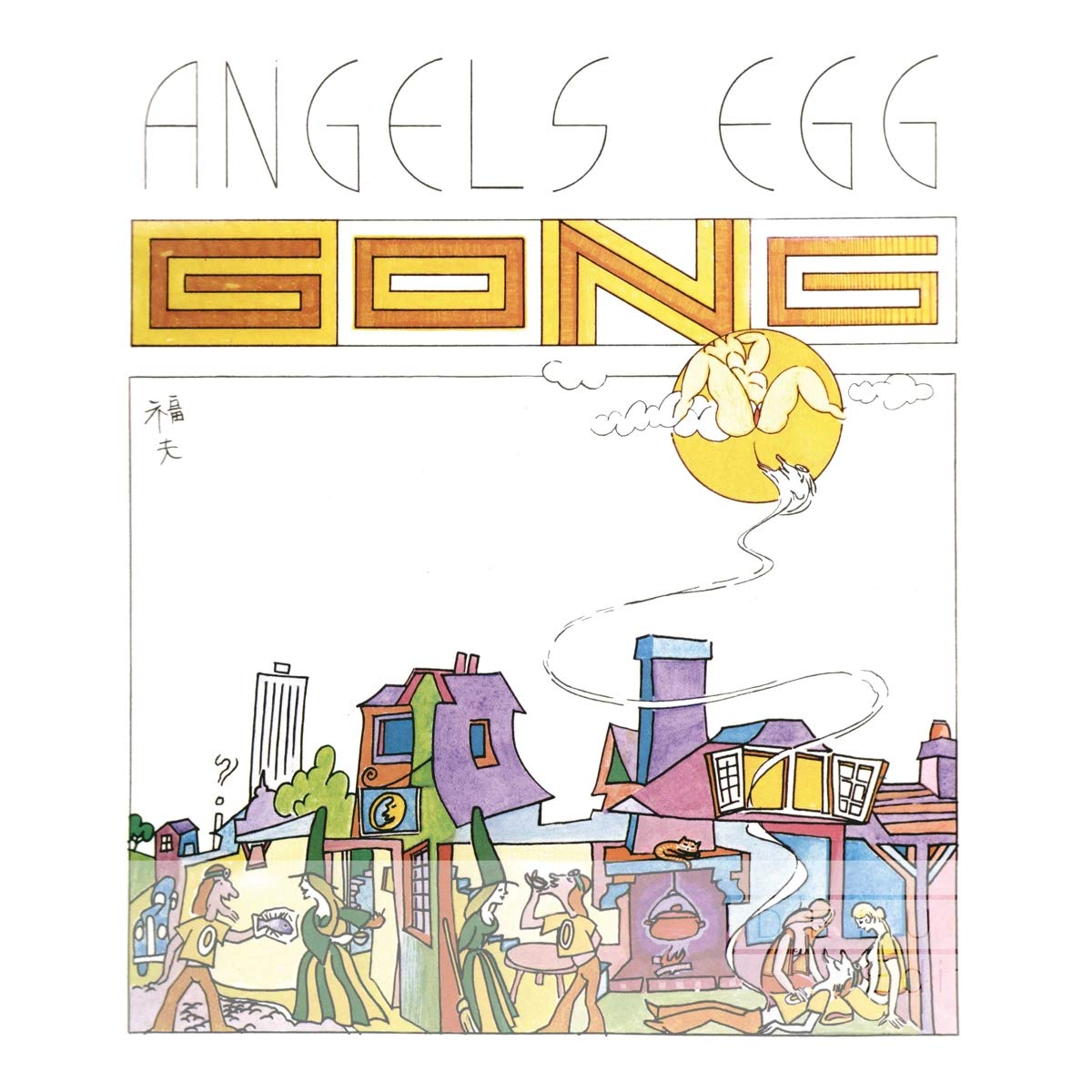
Gong: Angels Egg

Released in early December of 1973, Angels Egg (no apostrophe in the title) is Gong’s fourth studio album and the second in the Radio Gnome Invisible Trilogy, continuing the narrative of the earlier Flying Teapot and adventuring into even greater musical exploration, spiced with an appealing (French and British mix of) whimsy and eccentricity. The album is cosmic and sometimes just plain fun, and shifts moods (as well as rhythms and textures) wildly, unpredictably, yet sensibly and coherently, covering the mundane and the galactic, the profound and the profane, and all with elite, unique musicianship.

Fifty Year Friday: November 1973

This image has an empty alt attribute; its file name is image-7.png

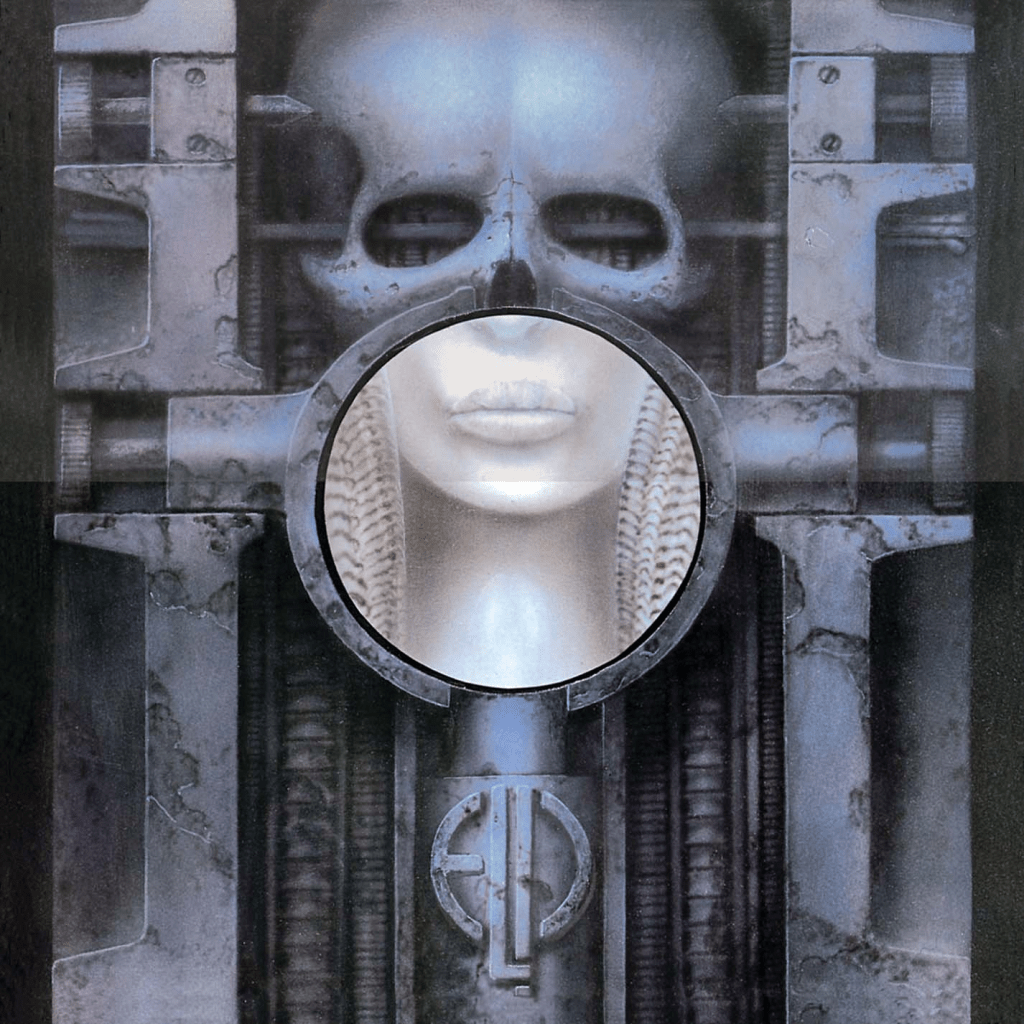
Emerson, Lake and Palmer: Brain Salad Surgery

ELP’s fourth studio album, Brain Salad Surgery, first printing released on November 19, 1973, is the most ambitious of all the ELP albums, and a classic of progressive rock music, providing both moments of dark seriousness, and lighthearted diversion.

ELP’s powerful and dramatic arrangement of Sir Hubert Parry’s “Jerusalem” hymn has a dual function. The first is as an formal opening for the album as a musical event, just as “Jerusalem” might open up a BBC Proms concert at the Royal Albert Hall, or be sung prior to the commencement of the Commonwealth Games or an important soccer match. The second function is to set the musical tone for the album: dense, dark, mysterious, martial and empirical.

This is followed by an amped-up arrangement of the main theme from the presto finale of Alberto Ginastera’s first piano concerto. That arrangement brings out the most thunderous and relentless aspects of the original work. The middle section of original material features an extended drum solo from Carl Palmer on both traditional percussion and a set of percussion synthesizers, which along with additional material provided by Emerson provides a ingeniously compatible “B” section for the piece with the original theme returning to appropriately conclude the work. Worth referencing here is a passage about this track from Mark Powell’s accompanying booklet in the 2008 Sanctuary Records release of the CD:
Soon after the adaptation (of Ginastera’s music) was committed to tape in September, the group became aware that they did not have the rights to release this music. Emerson contacted Ginastera’s publishers who responded that the composer would not allow any adaptation of his works, but they advised him to talk to him personally. So Emerson flew to Geneva to discuss the issue with Ginastera himself. Once Ginastera heard the new arrangement, he gave the authorization to use his piece. To quote Emerson: “He played our recording of “Toccata” on a tape recorder. After a few bars he stopped the tape … and exclaimed ‘Diabolic!’ I thought he said ‘diabolical’ and expected him to show us the door. He had been listening to the tape in mono and our recording was in stereo. I jumped up and switched the machine to stereo hoping he would listen again. It transpired that he wasn’t concerned about that at all. He listened again and declared ‘Terrible!’ which actually was a compliment. ‘You’ve captured the essence of my music like no one else has before’, the great maestro said.”

Greg Lake’s intimately delicate “Still… You Turn Me On” followed by the wildly humorous “Benny the Bouncer” with lyrics provided by Pete Sinfield (lyricist for that legendary first King Crimson album.) provides a sharp relief to the rest of the album and prepares the listener for the musical onslaught to follow. Notable is Emerson’s barroom piano style that adds further lightheartedness and musical interest to “Benny the Bouncer.”

Now the entryway has been opened to the main event: Karn Evil 9 — the title bringing to mind an evil carnival Karn Evil 9 is composed of three sections — the first, second and third “impression” — each symphonic in nature, and though each having its own thematic material, convincingly coalescing into one of the most impressive works in the progressive rock literature.

Karn Evil 9: First Impression brims over with a wealth of music material and alternates vocal sections with remarkable instrumental diversions. There are few if any cases in progressive rock where repeated material holds up so effectively, and part of this is because the group has advantageously leveraged the classical-music theme and variations concept so that verses have varied instrumental support, and part of it is just due to the strength and infectiousness of the thematic material.

The second impression is mostly in acoustic piano trio format, including further display of synthesized percussion nicely support by Emerson on piano and a brief suspenseful middle section that then explodes into unbridled energy with Emerson’s keyboard skills fully on display. Of course, Palmer’s precision percussion work contributes to overall excitement.

The third impression opens with synthesizer fanfare, and the music, in march time, has clear militaristic overtones. Sinfield has again provided lyrics and the sci-fi content is even more topical today with the advanced made in Artificial Intelligence. The unrestrained delivery of the lyrics by Lake, the military Moog fanfares from Emerson, and the relentless percussion contributions from Palmer all over the inexhaustible 2/4 march meter propels us forward into a epic-level instrumental section. The vocals return for the climatic finale with its dramatic end. As a final exclamation point, we get an accelerating, synthesized looped-motif that, on a properly set up audio system, images death-spirals around one’s head.

Back in the last few weeks of 1973, and in the two live concerts I attended in 1974, I found this music exhilarating, impressive, immersive, and magnificent. The same holds today, fifty years later, with the passage of time providing one important alteration to such a summation — the music is also timeless.

This image has an empty alt attribute; its file name is 61QBc9O4KbL.jpg

Greenslade: Bedside Manners are Extra

Greenslade’s second album, though not particularly cohesive as a whole, contains much to engage and nourish the listener. Underrated, both as a group and as individuals, the level of musicianship here is worth remarking on. Dave Greenslade is an accomplished keyboardist and as a composer would later be in high demand for his knack at writing short instrumentals appropriate as themes for television shows. Doug Larson had a unique, emotionally impactful vocal style, a gift at writing subtly ironic lyrics, and excellent keyboard skills, particularly with electronic synthesizers (he plays the Arp 2600 in the memorable Star Wars Tatooine cantina scene.) Tony Reeves had a jazz background and provided unusually interesting bass work with the group. Andrew McCulloch, played on King Crimson’s second album, and was notably referred to in The Guardian as being one of the most skillful and inventive drummers working anywhere in the jazz or rock spectrum.

The album contains three instrumental pieces, all good, but the highlight are the three vocal works, all of which address the subject in the second person. The title track, is a wistful farewell to the narrator’s current love who will soon be separated from him by being sent off to a distant school, with a particularly poignant ending. The other two songs has the singer intimately yet critically addressing the subject with enough of a cynical tone so that the commentary reflects negatively on the character of the speaker, himself, adding a dimension of irony. The music ably supports the qualities of the lyrics, with notable instrumental passages, making these three vocal works particularly memorable.

Le Orme: Felona e Sorona


Le Orme’s fourth studio release serves as a textbook example of Italian symphonic prog-rock. The album takes the form of a concept album revolving around two interdependent neighboring planets: Felona, a prosperous and idyllic world, and Sorona, a blighted and hopeless realm in decline. The interconnected destinies of these planets become evident near the album’s conclusion when attention shifts to the restoration of Sorona, yielding unforeseen and seemingly unavoidable consequences for the state of Felona.

This allegory of the risks of shifting the focus and care of one undertaking to another and the consequences of such a shift is musically narrated in the band’s native language, Italian, perfect for the associated music created for this concept album. As non-English lyrics were a commercial hurdle for European bands, effectively limiting exposure in American and European markets, an English language version of the album, authored by Van Der Graaf Generator’s Peter Hammill was recorded and released by 1974. The new version, though nicely done, has the drawback of altering the details of the original story, though still true to the allegorical message. More importantly, the use of English-language lyrics, does not provide the same musical compatibility with the original material as Italian. Think La Bohème in English or the English version of PFM’s “É Festa” — just not a good match.

The album sound is pretty good for 1973 — the overall production quality enhances the sonic depth, allowing each instrument to properly contribute to the overall soundscape. Though this trio’s makeup of keyboard extraordinaire (Tony Pagliuca), bassist/guitarist responsible for vocals (Aldo Tagliapietra) and skilled percussionist (Michi Dei Rossi) matches that of the German prog-rock group Triumvirat and the better known Emerson, Lake and Palmer, the music is quite different. Yes, the musical arrangements are intricate, there is the artful and judicious deployment of multiple time signatures, and the musical diversity is remarkable, yet the overall sound is more symphonic with less of the trio-based intimacy of the other two groups. The work is polished, logical, and above all, a joy to listen to, rivaling other prog rock music of its time.

Roxy Music: Stranded

Roxy Music’s “Stranded” is a tasteful testament to the band’s art rock ingenuity, offering a lush and immersive experience that adroitly exposes layers of accessible melodic and harmonic material, a range of rhythmic content, a spectrum of suave musical sophistication and even a touch of avant-garde sensibilities. Released sometime in November 1973, this album marks a pivotal shift in the band’s sound with the inclusion of Eddie Jobson, whose contributions add an additional sonic dimension to the overall effort. Historically, this is an important album with influences on later glam, new wave, synth-pop, alternative and indie rock, as well as (even in Brian Eno’s absence) ambient and electronic pop music.

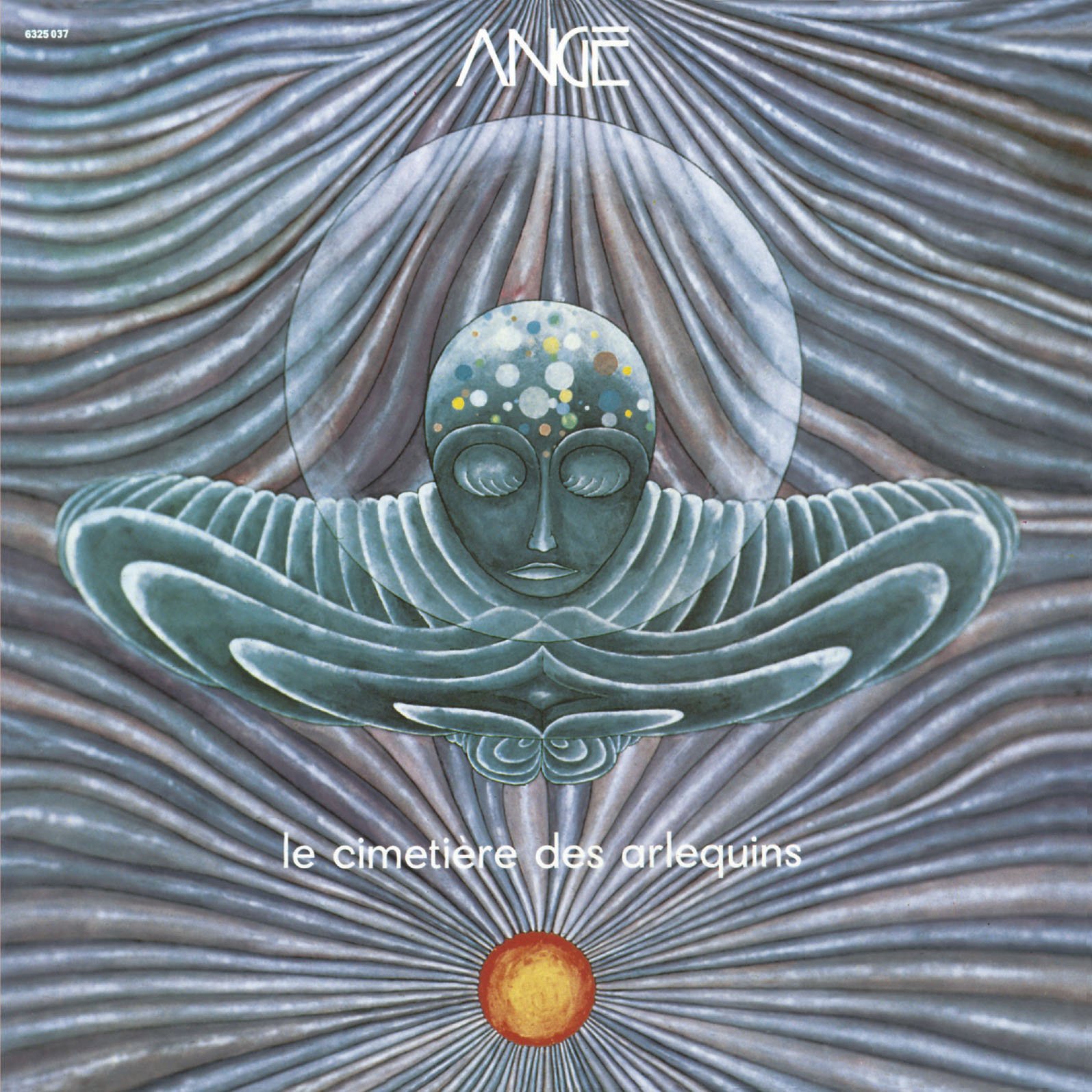
Ange: Le Cimetière Des Arlequins

Ange’s second album, though not as varied and musically complex as their first, has a greater sense of cohesiveness and unity. The lyrics are exceedingly challenging for non-French speakers, but the music is readily accessible and provides an overall musical continuity and art rock sensibility, similar to Roxy Music’s Stranded, even though the styles are very different.

Keith Jarrett: Solo Concerts Bremen/Lausanne

I purchased this three LP set, released in November 1973 at the end of December using some of the Christmas money I had received. I eagerly looked forward to listening to over a couple of hours worth of solo piano. However, there was significant surface noise on the LPs which was particularly audible for solo piano, particularly as the overall sound level on the recording was lower than optimal and there we many quiet passages. I also found it annoying that one of the Bremen pieces was split across sides, and that both the Lausanne pieces were split up.

Fortunately, the CD version of this solves both these issues. The recording still requires setting the volume a bit higher than usual, but there is no disadvantage to this as there is no corresponding surface noise. More importantly one can listen to the improvised pieces as intended and follow the entire flow of the music without interruption — which is a key requirement for this music which beautifully unfolds and evolves, Jarrett being a master musical story-teller.

Throughout the album, Jarrett’s improvisational prowess is on full display. Covering a wide range of emotions and styles, he effortlessly weaves together motifs, melodic fragments, and harmonic progressions, creating intricate and layered compositions on the spot. The way he navigates the keyboard, often employing extended techniques and innovative rhythmic patterns, showcases his mastery of the instrument and his willingness to push its boundaries. His technical skills are incredible, and its a marvel to hear the perfect execution of left-hand ostinatos providing an unfailing foundation for the unbridled excursions for the right hand. The Lausanne improvisations are particularly exciting: Part 1 is a whirlwind of musical innovation, while Part 2 masterfully blends an array of styles and techniques including tapping and knocking against the piano’s wooden exterior with plucking of strings, occasionally punctuated by pressed keys, as well as traditional keyboard performance ranging from a tumultuous free-jazz passage to a number of introspective harmonically-based musings.

Black Sabbath: Sabbath Bloody Sabbath

Black Sabbath’s fifth studio album, Sabbath Bloody Sabbath, is a successful expansion of the band’s musical and technical perimeters, We still have the trademark sinister-sounding ostinato patterns throughout the album, but the band has taken a distinctly progressive turn more with more complex song structures, greater musical variety, effective use of synthesizers, and incorporation of other prog-rock elements including strings on the final track and the participation of Rick Wakeman on piano on the fourth and sixth track.

Santana: Welcome

Santana’s fourth studio album, released on November 9, 1973 marked a continuation of Santana’s fusion of rock, Latin, and jazz influences, while also masterfully exploring additional progressive musical elements. Interestingly, the album as also more accessible and more melodic than their previous efforts.

The album begins with Alice Coltane’s evocative and imaginative arrangement of the “Going Home” theme of the Largo of Dvorak’s New World Symphony. The album is consistently excellent and varied, with Flora Purim on vocals for the gravity-defying “Yours is the Light”, the multi-faceted and percussion-dominated “Mother Africa”, and the final track, an effervescent recasting of John Coltrane’s “Welcome” with Alice Coltrane on piano.