Zumwalt Poems Online

Archive for the ‘1969’ Category

Fifty Year Friday: Trout Mask Replica, Brave New World
Trout Mask Replica

“I don’t know anything about music.”  Don Glen Vliet (aka Captain Beefheart)

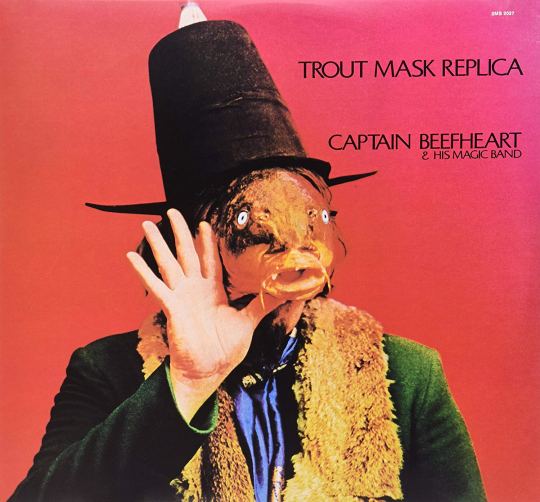
Captain Beefheart & His Magic Band: Trout Mask Replica

Recorded from August 1968 to March 1969 and released on June 16. 1969, Trout Mask Replica is a double album for the ages whether you might love it or hate it — and for most people, it’s rather easy to hate.  Far different from Captain Beefheart’s previous album,  Safe As Milk (which though partly confined within a traditional blues framework and ethos, provides many imaginative moments and approaches), Trout Mask Replica breaks into territory no artist has yet covered on record:  it’s been called out as the musical equivalent of rusty barbwire, and it certainly is as about as far away from easy listening as music gets.  But careful, focused, not-so-easy listening reveals the complexity in a large portion of music on the album which includes complex polyrhythms and polytonality.

Yes, there is a lot of non-musical content on the album — Frank Zappa produced this gem and granted total artistic freedom to Captain Beefheart and his band, so one doesn’t get continuous, highly refined music.  Instead one gets pockets — and the treasures here are in the instrumental accompaniment and interludes.  It’s been said that Captain Beefheart’s voice makes Tom Waits sound like Julie Andrews, that’s true, and the engineering of the album emphasizes these vocals as does their general lack of alignment with the backing instrumentation. It has been alleged that the lack of synchronization was due to Beefheart’s not wanting to wear headphones during recording, which resulted in him becoming hopelessly dependent on his own sense of time and on the immediate sonic reverberations of the studio.

Though there are people that will swear that the main value of this album is to drive away unwanted visitors, its influence on many musicians is indisputable.  Bands or individuals reportedly influenced include Henry Cow, The Residents (clearly), The Clash, Tom Waits, The Sex Pistols, Velvet Underground, The Little Feat and myriad others.  For me, the repeated polyrhythmic motifs anticipate Gentle Giant, King Crimson and some of the more aggressive math rock bands.   If you don’t like this album immediately, try it again, clearing away any possibility of distractions, as well as any expectations, taking the music and non-musical elements for what they are — rejoicing in the unusual, and what most would consider weird, amalgam of musical freedom and musical discipline.

rack listing [from Wikipedia]

All tracks written by Don Van Vliet and arranged by John French.

Side One
 # Title Length
1. “Frownland” 1:41
2. “The Dust Blows Forward ‘n the Dust Blows Back” 1:53
3. “Dachau Blues” 2:21
4. “Ella Guru” 2:26
5. “Hair Pie: Bake 1” 4:58
6. Moonlight on Vermont 3:59
Side Two
# Title Length
7. “Pachuco Cadaver” 4:40
8. “Bill’s Corpse” 1:48
9. “Sweet Sweet Bulbs” 2:21
10. “Neon Meate Dream of a Octafish” 2:25
11. “China Pig” 4:02
12. “My Human Gets Me Blues” 2:46
13. “Dali’s Car” 1:26
Side Three
 # Title Length
14. “Hair Pie: Bake 2” 2:23
15. “Pena” 2:33
16. “Well” 2:07
17. “When Big Joan Sets Up” 5:18
18. “Fallin’ Ditch” 2:08
19. “Sugar ‘n Spikes” 2:30
20. “Ant Man Bee” 3:57
Side Four
 # Title Length
21. “Orange Claw Hammer” 3:34
22. “Wild Life” 3:09
23. “She’s Too Much for My Mirror” 1:40
24. “Hobo Chang Ba” 2:02
25. “The Blimp (Mousetrapreplica)” 2:04
26. “Steal Softly thru Snow” 2:18
27. “Old Fart at Play” 1:51
28. “Veteran’s Day Poppy” 4:31
Total length: 78:51

Personnel

Musicians

Additional personnel

  • Doug Moon – acoustic guitar on “China Pig”
  • Gary “Magic” Marker – bass guitar on “Moonlight on Vermont” and “Veteran’s Day Poppy” (uncredited)
  • Roy Estrada – bass guitar on “The Blimp” (uncredited)
  • Arthur Tripp III – drums and percussion on “The Blimp” (uncredited)
  • Don Preston – piano on “The Blimp” (uncredited)
  • Ian Underwood – alto saxophone on “The Blimp” (uncredited/inaudible)
  • Bunk Gardner – tenor saxophone on “The Blimp” (uncredited/inaudible)
  • Buzz Gardner – trumpet on “The Blimp” (uncredited/inaudible)
  • Frank Zappa – speaking voice on “Pena” and “The Blimp” (uncredited); engineer (uncredited); producer
  • Richard “Dick” Kunc – speaking voice on “She’s Too Much for My Mirror” (uncredited); engineer

Brave New World

Steve Miller Band: Brave New World 

Also released on June 16, Steve Miller and his band’s Brave New World and Captain Beefheart and His Magic Band’s Trout Mask Replica are as far apart musically as composers such as Muzio Clementi and Harry Partch.   Brave New World may display less overt, convention-defying courage than Trout Mask Replica, but the musicianship is solid and Steve Miller’s vocals flexibly fit the songs whether those vocals are reassuring and comforting as with the dreamy evocative “Seasons” or appropriately bluesy as on the Hendrix-like “Got Love “Cause You Need It.” Of course, the hit of this album, is “Space Cowboy” which borrows the ostinato-like chromatic blues riff from Lady Madonna, possibly with Paul McCartney’s blessing who jams (under the psuedonym, “Paul Ramon”,) with Steve Miller on another track on this album, “My Dark Hour.”

Track listing [from Wikipedia]

Side one

#

Title

Writer(s)

Length

1.

“Brave New World” Steve Miller

3:27

2.

“Celebration Song” Miller, Ben Sidran

2:33

3.

“Can’t You Hear Your Daddy’s Heartbeat” Tim Davis

2:30

4.

“Got Love ‘Cause You Need It” Miller, Sidran

2:28

5.

“Kow Kow” Miller

4:28

Side two

#

Title

Writer(s)

Length

6.

“Seasons” Miller, Sidran

3:50

7.

“Space Cowboy” Miller, Sidran

4:55

8.

“LT’s Midnight Dream” Lonnie Turner

2:33

9.

“My Dark Hour” Miller

3:07

Total length:

29:52

Personnel

Additional personnel


Fifty Year Friday: Extrapolation, More, Audience


jmclaughlinR-3093046-1315393792.jpeg (2)

John McLaughlin: Extrapolation

Recorded on January 18, 1969 and released later that year, this very well could be the first true fusion album.  The electric guitar of one of the finest electric guitarists in the generation after Grant Green and Jim Hall (how is it John McLaughlin is listed only at 68 on Rolling Stone’s 100 Greatest Guitarists list and Grant Green and Jim Hall are not on the list?) is featured prominently and emphatically throughout along with English sax jazz musician, John Surman, who incorporates his free-jazz experience seamlessly within the scope of the album’s intent.

The first composition is the Thelonious Monk sounding “Extrapolation”, setting the tone for a dynamic, musically extroverted album. Each track runs into the next, except for the side change (originally on LP, of course), creating a greater sense of mood and material continuity. The last track showcases a solo, acoustic McLaughlin, bringing a sometimes wild, but always musically accessible, stellar, and leading-edge jazz album to a thoughtful conclusion.

Album is produced by Georgian/Swiss/Italian/UK producer Giorgio Gomelsky, who also had produced and managed the Yardbirds and later worked with The Soft Machine, Gong, Magma, Bill Laswell and Laswell’s band, Material, and one of my favorite groups, Henry Cow. Album is engineered by Eddie Offord who later engineered the first four ELP albums and co-produced and engineered several of the Yes albums.

Track listing [From Wikipedia]

All tracks written by John McLaughlin.

Title Length
1. “Extrapolation” 2:57
2. “It’s Funny” 4:25
3. “Arjen’s Bag” 4:25
4. “Pete the Poet” 5:00
5. “This Is for Us to Share” 3:30
6. “Spectrum” 2:45
7. “Binky’s Beam” 7:05
8. “Really You Know” 4:25
9. “Two for Two” 3:35
10. “Peace Piece” 1:50

Personnel

  • John McLaughlin – guitar
  • John Surman – baritone and soprano saxophones
  • Brian Odgers – double bass
  • Tony Oxley – drums

Pink-Floyd-More

Pink Floyd: Original Motion Picture Soundtrack from the film More

Pink Floyd’s first full album after Syd Barret was a movie soundtrack, More, recorded from January to May 1969, and released in the UK on June 13, 1967, a couple of weeks after the premiere of the movie More.  Though the music is meant to support the movie, and is a collection of basically unrelated tracks with a significant breadth of musical variety, the album holds together nicely, like a well-conceived sampler LP.

The music ranges from the dreamy “Cirrus Minor”, to the eerily pre-grunge-rock track, “The Nile Song”, to the exquisitely harmonically and melodically simple “Crying Song” to music that anticipates space rock and Kraut Rock. This is virtually a catalog of some of the adventurous musical styles that would become popular in the coming years.  Not hard to imagine why this is many listeners favorite Pink Floyd album.  It is hard to imagine why Allmusic.com gives this two and a half stars or Rolling Stone Album Guide gives it two stars.   More is more than just a movie soundtrack, it is an instruction manual of future musical styles.

Track listing [From Wikipedia]

Side one

#

Title

Writer(s)

Length

1.

Cirrus Minor Waters

5:18

2.

The Nile Song Waters

3:26

3.

Crying Song Waters

3:33

4.

Up the Khyber” (instrumental) Mason, Wright

2:12

5.

Green Is the Colour Waters

2:58

6.

Cymbaline Waters

4:50

7.

Party Sequence” (instrumental) Waters, Wright, Gilmour, Mason

1:07

Total length:

23:24

Side two

#

Title

Writer(s)

Length

1.

Main Theme” (instrumental) Waters, Wright, Gilmour, Mason

5:27

2.

Ibiza Bar Waters, Wright, Gilmour, Mason

3:19

3.

More Blues” (instrumental) Waters, Wright, Gilmour, Mason

2:12

4.

Quicksilver” (instrumental) Waters, Wright, Gilmour, Mason

7:13

5.

A Spanish Piece Gilmour

1:05

6.

Dramatic Theme” (instrumental) Waters, Wright, Gilmour, Mason

2:15

Total length:

21:32

Pink Floyd

Additional personnel
  • Lindy Mason – tin whistle (5, 7)


AudienceAudience (2)

Audience: Audience

Audience recorded and released their first album in 1969, though it is not easy to find out exactly when. The band formed in 1969 and within weeks after their first rehearsal they had a record deal with Polydor and were playing at the famous Ronnie Scott’s in Soho, London, also site of the 1969 premiere of the Who’s Tommy.  Polydor, though quick to sign the band, was not so efficient at promoting them or their album.  The album had insignificant sales, not helped by the puzzling album cover, a dim negative of the band members, and shortly after its release was discontinued.  Meanwhile during live performances, the band drew critical praise for their performances and material, and soon, while the backup touring band for Led Zeppelin, was signed to the Charisma label.

The first two songs on this album are unquestionably progressive rock.  The tracks that follow, though more traditional rock, are still catchy and showcased the nylon-stringed acoustic-electric (fitted with an electric pickup) classical guitar  of Howard Werth and the sax, clarinet and flute of Keith Gemmel, the latter using echo and wah-wah pedal to fill in some of the role of the traditional rock guitar.  The album is worth listening to more than once, and the musicianship and arrangements are very good.

Track listing [From Wikipedia]

Unless noted, all tracks credited to Werth, Williams.[2]

Side one

  1. “Banquet” – 3:47
  2. “Poet” – 3:05
  3. “Waverley Stage Coach” (Williams) – 2:59
  4. “Riverboat Queen” – 2:57
  5. “Harlequin” – 2:35
  6. “Heaven Was an Island” – 4:18

Side two

  1. “Too Late I’m Gone” – 2:37
  2. “Maidens Cry” (Gemmell, Richardson, Werth, Williams)- 4:47
  3. “Pleasant Convalescence” – (Gemmell, Werth) – 2:30
  4. “Leave It Unsaid”
  5. “Man On Box” (Gemmell, Werth) 
  6. “House On The Hill”

Audience


Fifty Year Friday: Power to the People, The Giant is Awakened, Empty Sky, At San Quentin, and Charisma


joe-henderson3jpg

Joe Henderson: Power to the People

Recorded in late May of 1969, Power the Power stands out distinctly from both those late-sixties partly-commercially friendly hard bop albums and the bevy of free-jazz albums being recorded in 1968 and 1969.  It opens with one of the most sensually gorgeous jazz ballads of the era, the beautifully lush Black Narcissus with Herbie Hancock’s Fender Rhodes electric piano providing the appropriate ambient backdrop. Henderson’s tenor work here is stunningly elegant as he shapes his lines with a rare level of delicate control.  And though “Black Narcissus” is the highlight here for me, Ron Carter’s “Opus One-Point-Five” is also particularly beautiful with Henderson’s tone capable of the most nuanced reflection and introspection.  Hancock is on acoustic piano, and Jack DeJohnette’s percussion fits in perfectly.

Despite all this beauty, on cannot overlook the other tracks including an updated version of Henderson’s Monk-influenced “Isotope” that Henderson and Hancock had previously recorded in 1964 for the “Inner Urge” album.  As a Thelonious Monk fan, this resonates with my personal music sensibilities, and so very glad to have both the longer 1964 version and this version. “Lazy Afternoon” swings effortlessly, “Afro-Centric” is hard-edged, modally adventurous hard bop, and “Foresight and Afternoon” omits keyboards with the trio charging into the realm of free jazz territory.  The title track, “Power to the People”, is also adventurous, with a modern hard-bop theme, aggressively inventive improvisations, and sparking electric piano work by Hancock. Now if I had to change one thing about this album, I would have liked to have a second version of “Power to the People” included with Mr. Hancock on acoustic piano. That would be one way to make an amazing album even more incredible!

Track listing [from Wikipedia]

All compositions by Joe Henderson, except where noted.

  1. “Black Narcissus” – 4:50
  2. “Afro-Centric” – 7:00
  3. “Opus One-Point-Five” (Ron Carter) – 4:56
  4. “Isotope” – 4:53
  5. “Power to the People” – 8:42
  6. “Lazy Afternoon” (MorossLatouche) – 4:33
  7. “Foresight and Afterthought (An Impromptu Suite in Three Movements)” – 7:33

Recorded on May 23 (2, 5) and May 29 (all others), 1969.

Personnel


horacetapscott1802420518horacetapscottB1

Horace Tapscott: The Giant is Awakened

Recorded on the first three days of April 1969, released later that year to negligible sales and then not reissued until 2015, The Giant is Awakened is Horace Tapscott’s first album as a leader, with not another album in his name until 1978, by Tapscott’s choice, as he was reportedly disappointed in being excluded from the mixing process of this album despite assurances to the contrary.  Reportedly, Tapscott was particularly dissatisfied with the over-emphasis on the piano, which aggressively stands out whether soloing or providing accompaniment. The two basses could have been brought out more, particularly in passages where one is bowing and the other is being plucked.

The album finds middle ground between standard hard bop and extreme free jazz as nicely exemplified in highly structure and rhythmically-driven “The Giant is Awakened.”  This is also Arthur’s Blythe’s first recording, but his distinct alto playing is evident even at this point in his career as he provides an orchestra’s worth of tension and forward momentum in the first track, preceding Tapscott’s unrestrained and exploratory solo. Blythe also contributes the composition “For Fat’s” with its Monk-like opening theme and its freer contrasting section —  the two themes rotating in a straightforward ABABA form.  The third track,  the relentlessly rhythmic “The Dark Tree” is particularly appropriate for showcasing Tapscott fearless piano technique. The final track, “Niger’s Theme”  begins with a distinct, angular melody that then gives way to Blythe’s almost chaotic, but brilliant, free improvisation, followed by some pungent and highly accentuated piano.  This returns to an extended restatement of the main theme, with a suitable diminuendo bringing an accessible, engaging, and adventurous album to a pleasant but decisive close.

Tapscott Giant (3)

Track listing [From Wikipedia]

All compositions by Horace Tapscott except as indicated

  1. “The Giant is Awakened” – 17:23
  2. “For Fats” – 2:20
  3. “The Dark Tree” – 7:01
  4. “Niger’s Theme” – 11:55

Personnel


Empty SkyA1ou+ufLWyL._SL1500_

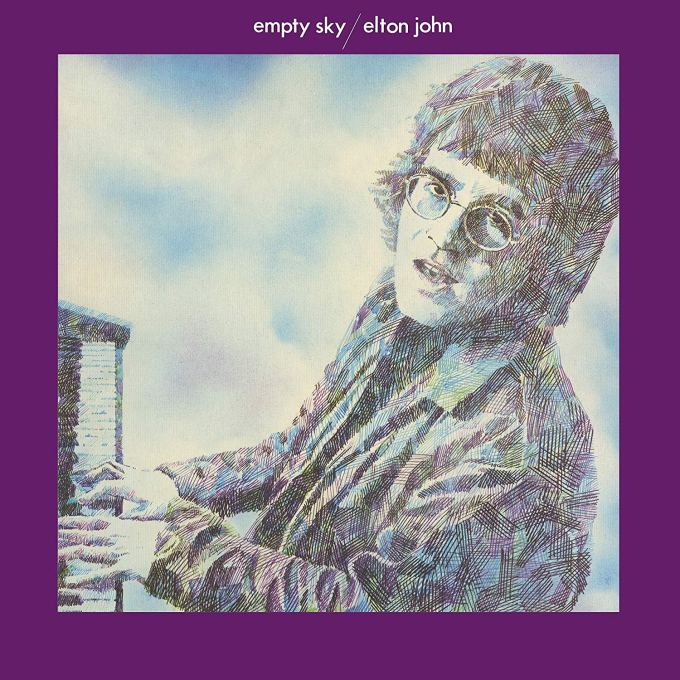
Elton John: Empty Sky

Recorded in December of 1968 through April 1969, Elton John’s first album was released in the UK on June 6th 1969.  Like many baby boomers in the States, my first exposure to Elton John was his self-titled second album, which at the time I purchased it, I believed to be his first.  It wasn’t until a few months after I had purchased Tumbleweed Connection, that I saw Empty Sky in the import section, and as it was at a reasonable price for an import album, $3.99,  I bought it.  I listened to it once, put it aside, listened to it again, but never took a strong liking to it as I had with those second and third albums, which, along with Yellow Brick Road, are what I consider to be the best of his long, productive career.

That said, Empty Sky is still a good album, with well-written lyrics by Bernie Taupin, skillfully set to music by Elton John.  Yes, the second and third albums have stronger songs, and also benefit from the wealth of quality musicians that contribute as well as Gus Dudgeon’s accomplished production — Empty Sky lacks anything approaching “Your Song”, “Take Me To the Pilot”, or “Burn Down the Mission”, does not have the same production values or range of contributing musicians — and appears to be constrained by a lower budget.

My favorite songs are the opening (and title) track, “Empty Sky,” “Western Ford Gateway,” which sounds similar to content from Tumbleweed Connection, and “Hymn 2000,” which would fit in nicely on the second album.  The last track has a jazz-blues section, which would provide a nice ending to the album, except for the intrusion of a collage of snippets from each track that provides a musical flashback — a puzzling approach, but something repeated by both Gentle Giant (“In a Glass House”) and Queen (“Jazz”), with Gentle Giant keeping their snippets to a little under two seconds each, for a total length of nine seconds (not counting the few seconds of shattering glass) compared to the nearly two-minute recap on Empty Sky.  (In regards to Gentle Giant and Elton John, Elton, when still Reginald Dwight, played with Simon Dupree and the Big Sound for a couple of months when their regular keyboard player, Eric Hine, was ill.  The Shulman brothers and Reggie got along great, and recorded Elton and Bernie Taupin’s “I’m Going Home” as mentioned here.)

Track listing [From Wikipedia]

All songs written by Elton John and Bernie Taupin.

Side one

  1. “Empty Sky” – 8:28
  2. “Val-Hala” – 4:12*
  3. “Western Ford Gateway” – 3:16
  4. “Hymn 2000” – 4:29

Side two

  1. “Lady What’s Tomorrow” – 3:10
  2. “Sails” – 3:45
  3. “The Scaffold” – 3:18
  4. Skyline Pigeon” – 3:37
  5. “Gulliver/Hay Chewed/Reprise” – 6:59*

Personnel

  • Elton John – vocals, piano, organ, Fender Rhodes, harpsichord
  • Caleb Quaye – electric guitar, acoustic guitar, congas
  • Tony Murray – bass guitar
  • Roger Pope – drums, percussion
  • Nigel Olsson – drums on “Lady What’s Tomorrow”
  • Don Fay – saxophone, flute
  • Graham Vickery – harmonica


johnny cash sq1.jpeg (2)

Johnny Cash At San Quentin

Whereas Elton John was just getting to his first album, Johnny Cash was tackling his thirty-first. If you had any relatives in 1969 or the early seventies that were partial to country music, there’s a good chance that this album would be in their collection, and for good reason: it is an exceptionally engaging live album, recorded on February 24, 1969, just two days before Cash’s 47th birthday, and released on June 4, 1969.  Those of us with any memory of 1969, will recall the repeated playing on the airwaves of this live concert’s version of Shel Silverstein’s cleverly-written “A Boy Named Sue”, and the bleeping out of “son of a *****” — how quaint censorship was back then.

Track Listing [From Wikipedia]

Side one
1. “Wanted Man” (Bob Dylan) 3:24
2. “Wreck of the Old 97” (arranged by Cash, Bob Johnston, Norman Blake) 2:17
3. “I Walk the Line” (Johnny Cash) 3:13
4. “Darling Companion” (John Sebastian) 6:10
5. “Starkville City Jail” (Johnny Cash) 2:01

Side two
1. “San Quentin” (Johnny Cash) 4:07
2. “San Quentin” (performed a second time at the audience’s request) (Johnny Cash) 3:13
3. “A Boy Named Sue” (Shel Silverstein) 3:53
4. “(There’ll Be) Peace in the Valley” (Thomas A. Dorsey) 2:37
5. “Folsom Prison Blues” (Johnny Cash) 1:29

Personnel

lee morgan (2).jpg

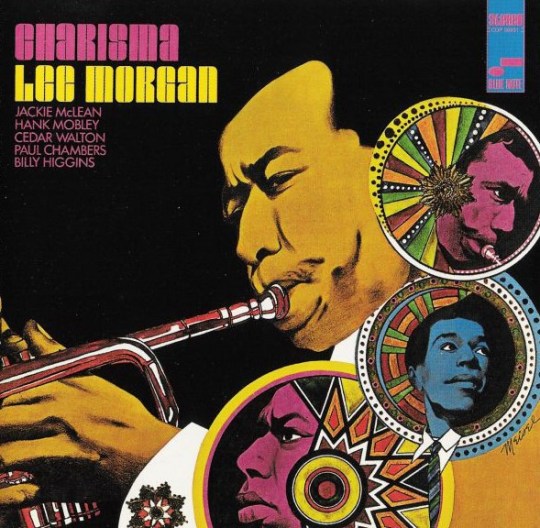
Lee Morgan: Charisma

With a lineup that immediately ensures a high level of quality, Charisma was recorded in 1966, but not released until May 1969.  Compared to the plethora of free jazz albums being released in 1969, this may seem embarrassingly accessible to more sophisticated jazz listeners, but there is nothing embarrassing about the quality of the musicianship and the level of improvisation. One can scarcely go wrong with any Lee Morgan Blue Note album, so given that everyone must own a copy of his 1963 Sidewinder album with Joe Henderson as well as the 1964 Search for the New Land with Wayne Shorter, Grant Green and Herbie Hancock, it seems reasonable one would be able to find a place in their music collection for an album where Lee Morgan teams up with Jackie McLean, Hank Mobley, Cedar Walton, Paul Chambers and Billy Higgins, particularly when it is also on Blue Note and is this good!

The album starts with “Hey Chico”, one of those mid-sixties blues-based jazzed numbers tailored for AM radio, though it never got such exposure, followed by, what for me, is the gem on the album, “Somethin’ Cute”,  rich in great solos, particularly the alto solo from Jackie Mac. Walton is exemplary on the lovely ballad, “Rainy Night”, and the fourth track, is another of those relatively simple, commercially friendly tunes, upbeat and perfect for the excellent soloing after the initial statement — particularly impressive is Lee Morgan’s trumpet solo.  This is followed by another Duke Pearson tune, with particularly notable solos by Morgan and Walton.  The last track, “The Double Up”, provides a nice symmetry against the opening track, and includes strong solos by Morgan and Mobley and a notable solo by Walton against the horns.  Chambers and Higgins are excellent, with Higgins flavoring these performances with unobtrusive ranges of shading and percussive hues and tints that lie almost below the range of general perception yet significantly contributes to the overall impact.


Track listing [From Wikipedia]

All compositions by Lee Morgan except where noted

  1. “Hey Chico” – 7:17
  2. “Somethin’ Cute” – 5:39
  3. “Rainy Night” (Walton) – 5:39
  4. “Sweet Honey Bee” (Pearson) – 6:54
  5. “The Murphy Man” (Pearson) – 7:34
  6. “The Double Up” – 6:01

Personnel


Fifty Year Friday: Crosby, Stills and Nash

CSN 1

The first generally-recognized rock “supergroup” was the blues-leaning Cream with Eric Clapton, Jack Bruce and Ginger Baker.  Prior to that, Eric Clapton, Jack Bruce, and Stevie Winwood had formed Powerhouse, originally to have included Ginger Baker, but with only an output of three songs, and with two lesser-known members, Powerhouse could hardly have been considered the first supergroup. When Cream formed, Eric Clapton was already considered an established guitarist, Jack Bruce had survived the Graham Bond Organisation and made a name for himself in Manfred Mann, and Ginger Baker had established his credentials as a skilled drummer in the Graham Bond Organisation before founding Cream in 1966.

The second rock supergroup was formed during the initial stages of the inevitable rise of country-rock and country-folk-rock by three talented and recently “released” artists: David Crosby, was given the boot by the Byrds, mainly due to Crosby’s vision of the direction the Byrds should take not aligning with Roger McGuinn’s and Chris Hillman’s views, Stephen Stills was now free with the break-up of the Buffalo Springfield, and Graham Nash was now seeking new opportunities — Nash, the effective leader of the Hollies, had grown dissatisfied with the Hollie’s aggressive touring schedule and was also no longer interested in having to navigate the gap between Nash’s more creative and musically adventurous aspirations and the other Hollies’ members tendency towards more traditionally pop-oriented music.

Story goes that at a party in July 1968, either at Mama Cass’s or Judy Collin’s home, Nash had asked Stills and Crosby to sing Stills’ “You Don’t Have To Cry” and at some point Nash joined in, harmonizing on the spot.  The three then realized that had something, and soon determined to form a group — but not a group that would continue without any of them — and so they determined the best way to equate the group with the founding members was to name that group after those founding members: “Crosby, Stills and Nash.”

The trio reached out to the management team of Elliot Roberts and David Geffen who signed them with Atlantic, which then had to basically work out a trade for Graham Nash, sending  Richie Furay and his new band Poco to Epic.  (Note that Poco fit nicely into the rising popularity of country rock, releasing their first album, Pickin’ Up the Pieces, on May 19, 1968, only ten days before the release of Crosby, Stills and Nash. I ran out of time last week to review, but for those that like country-rock, this is a very solid country-rock album.)

Recorded in February and March of 1969, and released on May 29, 1969, Crosby, Stills and Nash album became almost instantly popular, with “Marrakesh Express”, a song Nash originally intended for the Hollies, getting airplay on AM radios in the middle of July, eventually reaching number 28 spot, soon followed by Suite Judy Blue Eyes peaking at number 21.  FM radio stations embraced the entire album, playing a number of the other fine tracks.

Excellency is really the hallmark of this album. Even if someone is not a fan of folk-rock, the effervescent and transparent blend of vocals and acoustic guitar work has to resonate with even the most selective of listeners.  If somehow you missed growing up with this classic album, or have otherwise not heard it, seek it out, for it is one of the most enjoyable country-folk rock albums ever recorded, so much so that I include this as another valid entry in my list of non-progressive-rock progressive rock albums!

Track listing [From Wikipedia]

Side one

#

Title

Writer(s)

Lead vocals

Length

1.

Suite: Judy Blue Eyes Stephen Stills Stills

7:25

2.

Marrakesh Express Graham Nash Nash

2:39

3.

Guinnevere David Crosby Crosby with Nash

4:40

4.

“You Don’t Have to Cry” Stephen Stills Stills with Crosby & Nash

2:45

5.

“Pre-Road Downs” Graham Nash Nash

2:56

Side two

#

Title

Writer(s)

Lead vocals

Length

1.

Wooden Ships Crosby, Paul Kantner, Stills Crosby with Stills

5:29

2.

Lady of the Island Graham Nash Nash

2:39

3.

Helplessly Hoping Stephen Stills Stills with Crosby & Nash

2:41

4.

“Long Time Gone” David Crosby Crosby with Stills

4:17

5.

“49 Bye-Byes” Stephen Stills Stills

5:16


Personnel 

Fifty Year Friday: The Who’s Tommy

tommy2

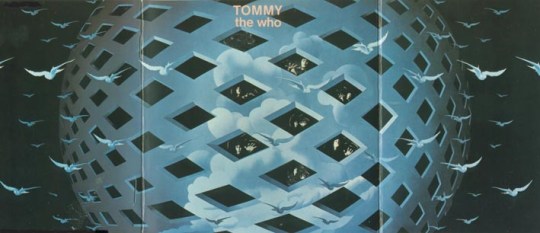
Though not the first rock opera, The Who’s Tommy, released on May 23, 1969, due to its length, two long playing records, the inclusion of an opening instrumental track titled “Overture”, the prominence of Entwistle on french horn, its greater commercial success and overall quality, and the deployment of three recognizably distinct vocalists, surpasses earlier, less operatic, generally more narrative albums by the Pretty Things (SF Sorrow)  and Nirvana (The Story of Simon Simopath.)

It wasn’t until Christmas of 1970 that I got this album.  After hearing “See Me, Feel Me” on the radio when visiting Oregon in the summer of 1970, I determined that this was a must-have album and put it on my Christmas wish list.

And from the start, this album lived up to its promise.  The overture, is a true rock overture, magnificent, dramatic, spacious, and expectant.  Much to my delight (at that time of first listening) the opening of the overture is a simple display of the chord sequence of  the chorus of “See, Me, Feel Me” morphing into a true fanfare section with french horn, coming back to the “See Me, Feel Me” theme, moving away into new material, coming back once again and then touching on material from “Pinball Wizard”, which soon meanders into a brief explanatory vocal, “Captain Walker didn’t come home: His unborn child will never know him.  Believe him missing with a number of men, don’t expect to see him again”, and then meanders back out into a guitar passage that, without any break, becomes the next track, “It’s a Boy.” So much going on in this overture to absorb in the first listening!  Astonished and delighted to hear three alternate references to that “See Me, Feel Me” theme,  I had heard in Oregon! It wasn’t until hearing the album all the way through and starting again, that I could notice that the overture was more Broadway-like than classical, incorporating music from the entire album similar to a Broadway musical overture. And yet, this doesn’t detract from the integrity of this overture, which is one of the finest examples of an instrumental (excepting the short expository-like Townshend vocal) opening to a single-topic rock album.

After less than two years since McCartney fought to get the lyrics included in the Sgt. Pepper’s album, accompanying lyrics were now, in 1969, becoming commonplace — particularly important for an opera. At this point in my life I had started to check out full opera albums from the library and the inclusion of lyrics with Tommy made listening to the music while following the lyrics a similar experience to listening to those opera albums — except instead of having to track the original language at the same time following the translation, Tommy was in English!  That Christmas I had also received Andrew Lloyd Webber’s Jesus Christ, Superstar (lyrics by Tim Rice) and had just purchased a low-cost four LP box set of Handel’s Messiah (lyrics by Charles Jennens)  — this was my first experience in following libretti booklets that required no cross referencing from the original language to the translation.  It made me wonder why the classic operas weren’t recorded in English so they would have wider appeal and be to be more competitive with contemporary albums sold in English speaking countries. It certainly would make following the text much easier.

Looking back, Tommy is certainly not produced like a real opera, as Daltry, Townshend and Entwistle handle all the vocals.  Clearly the 1975 movie soundtrack provides distinct parts, underscoring the inherent operatic nature of the work. This original, though, is the true reference, a musical work of art as good as any album of the 1960s.

Its worth noting that this work incorporated some previously written songs, including “Sensation”, “Sally Simpson” and “I’m Free”, the latter an expression of the spiritual peace Townshend achieved from association with Meher Baba, the Irani-Indian self-proclaimed Avatar and spiritual master.

We also have a blues number based on Sonny Boy Williamson’s “Eyesight to the Blind”, re-titled, “The Hawker” as well as two John Entwistle tunes, written on request from Townshend to cover the heinous actions of Cousin Kevin and Uncle Ernie.  Not surprisingly, given the nature of his earlier compositions, Entwistle makes use of chromatic passages in both songs, creating a darker, perverse mood that contrasts sharply with the usually brighter Entwistle compositions.

In short, this is a classic rock album, and though Who fans may freely dispute if this is better than the preceding Who Sell Out or the two subsequent albums, “Who’s Next”, and Quadrophenia, one point is indisputable: this album has stood the test of time for the last fifty years and will stand up just as nicely for the next fifty years.  It is my favorite Who album, filled with musical color and magic, and it continues to sound fresh, alive and vital to me — even though I listened to it this time around at much lower volume levels!

What is your favorite The Who album and why?

Track listing [from Wikipedia]

All tracks written by Pete Townshend, except where noted.

Side one

#

Title

Lead vocals

Length

1.

Overture Townshend

3:50

2.

“It’s a Boy” Townshend

2:07

3.

“1921” Townshend, Roger Daltrey on chorus

3:14

4.

“Amazing Journey” Daltrey

3:25

5.

“Sparks” Instrumental

3:45

6.

The Hawker” (Sonny Boy Williamson II) Daltrey

2:15

Total length:

18:36

Side two

 #

Title

Lead vocals

Length

1.

Christmas Daltrey, Townshend

5:30

2.

“Cousin Kevin” (John Entwistle) Entwistle and Townshend

4:03

3.

The Acid Queen Townshend

3:31

4.

“Underture” Instrumental

10:10

Total length:

23:14

Side three

#

Title

Lead vocals

Length

1.

“Do You Think It’s Alright?” Daltrey and Townshend

0:24

2.

“Fiddle About” (Entwistle) Entwistle

1:26

3.

Pinball Wizard Daltrey, Townshend on bridge

3:01

4.

“There’s a Doctor” Townshend, Daltrey, Entwistle

0:25

5.

Go to the Mirror! Daltrey and Townshend

3:50

6.

“Tommy Can You Hear Me?” Daltrey, Townshend and Entwistle

1:35

7.

“Smash the Mirror” Daltrey

1:20

8.

“Sensation” Townshend

2:32

Total length:

14:33

Side four

#

Title

Lead vocals

Length

1.

“Miracle Cure” Daltrey, Townshend and Entwistle

0:10

2.

“Sally Simpson” Daltrey

4:10

3.

I’m Free Daltrey

2:40

4.

“Welcome” Daltrey, Townshend and Entwistle

4:30

5.

“Tommy’s Holiday Camp” Townshend

0:57

6.

We’re Not Gonna Take It Daltrey, with Townshend and Entwistle

6:45

Total length:

19:12

The Who


Fifty Year Friday: After the Rain, Everybody Knows This is Nowhere, Unicorn

after the rain muddy waters_

Muddy Waters: After The Rain

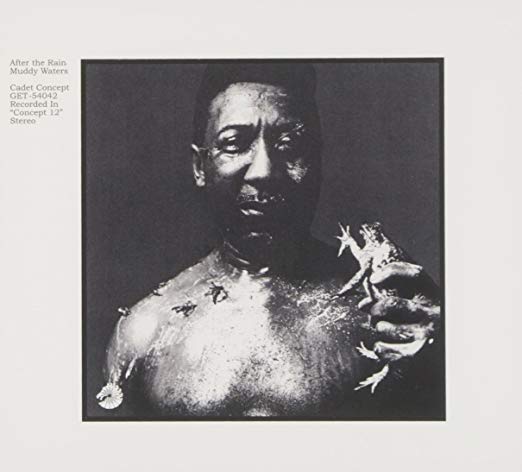
in comparison to a multitude of rock-blues albums and blues-rock albums, and even Mr. Morganfield’s own quasi-psychedelic blues album, Electric Mud, Muddy’s next album After the Rain, released May 12, 1969, stands out for its immediacy,  authenticity and natural, honest modern blues sensibilities. This is a treat to listen to and the music has been captured with clarity, presence, and depth.


Track listing [from Wikipedia]

# Title Writer(s) Length
1. “I Am the Blues” Willie Dixon 4:36
2. “Ramblin’ Mind” McKinley Morganfield 4:44
3. Rollin’ and Tumblin’ McKinley Morganfield 4:47
4. “Bottom of the Sea” McKinley Morganfield 5:21
5. “Honey Bee” McKinley Morganfield 4:14
6. “Blues and Trouble” McKinley Morganfield 4:20
7. “Hurtin’ Soul” Charles Williams 4:35
8. “Screamin’ and Cryin'” McKinley Morganfield 4:59
Total length: 39:11


Musicians


EverybodyKnowsThisIsNowhere

Neil Young with Crazy Horse: Everybody Knows This is Nowhere

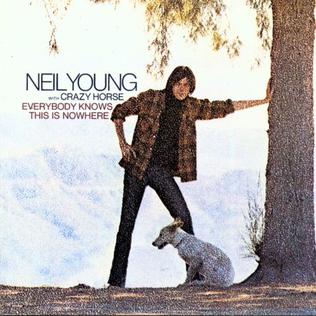
Neil Young releases his second album of the year on May 14, 1969. A sensitive mixture of rock, folk, country and a bit of blues.  Gems include “Cinnamon Girl”, “Round & Round”, “Down by the River”, and the brilliant “Cowgirl in the Sand” If this is not Neil Young’s best albums, it’s clearly in the top three as it effectively and efficiently mixes substance and simplicity.  Neil Young’s lyrics are neither polished nor refined, and his music is forged from the basics with minimal diversions, but all of it comes together well and there are many magic moments like the punctuated single syllable chord changes on “Cin-na-mon Girl.”

Track listing [from Wikipedia]

All tracks written by Neil Young.

Side one
# Title Length
1. Cinnamon Girl 2:58
2. “Everybody Knows This Is Nowhere” 2:26
3. “Round & Round (It Won’t Be Long)” 5:49
4. Down by the River 9:13
Side two
# Title Length
1. “The Losing End (When You’re On)” 4:03
2. “Running Dry (Requiem for the Rockets)” 5:30
3. Cowgirl in the Sand 10:06

Personnel

Crazy Horse

Additional musicians


T rex unicorn-1582333-1230063687.jpeg (2).jpg

Tyrannosaurus Rex: Unicorn

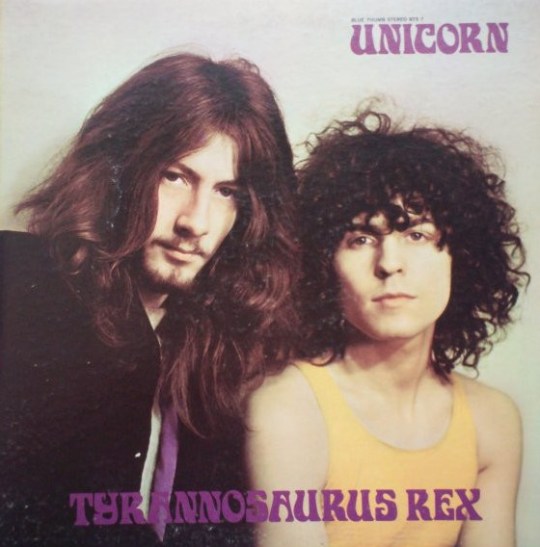
This third Tyrannosaurus Rex album, Unicorn, released May 16, 2019,  is also the last for Steve Took.  Apparently Marc Bolan found various aspects of Steve’s personality and lifestyle (especially Took’s recreational drug use and reputation for spiking beverages with hallucinogens) less than endearing (particularly when Bolan once imbibed some STP-spiked punch) and their relationship came to its end shortly after Took expressed that his own songs should be included in the group’s recorded material.  This record then becomes a document of the duo at their peak, providing hints of Marc Bolan’s future direction.

Though there is much to like on this album, starting with the first track, “Chariots of Silk”, don’t miss the bonus tracks that one finds on the 2 CD deluxe reissue including “Once upon the Seas of Abyssinia” and “Blessed Wild Apple Girl.”

Track listing [from Wikipedia]

All tracks written by Marc Bolan.

Side A

No.

Title

Length

1.

“Chariots of Silk”

2:26

2.

“‘Pon a Hill”

1:14

3.

“The Seal of Seasons”

1:49

4.

“The Throat of Winter”

1:59

5.

“Cat Black (The Wizard’s Hat)”

2:55

6.

“Stones for Avalon”

1:37

7.

“She Was Born to Be My Unicorn”

2:37

8.

“Like a White Star, Tangled and Far, Tulip That’s What You Are”

3:49

Side B

No.

Title

Length

1.

“Warlord of the Royal Crocodiles”

2:11

2.

“Evenings of Damask”

2:26

3.

“The Sea Beasts”

2:26

4.

“Iscariot”

2:53

5.

“Nijinsky Hind”

2:20

6.

“The Pilgrim’s Tale”

2:07

7.

“The Misty Coast of Albany”

1:43

8.

“Romany Soup”

5:40

Personnel

Tyrannosaurus Rex
Additional Personnel

Fifty Year Friday: Nashville Skyline, Songs From A Room, Nazz Nazz

nashville skyline.jpeg

BOB DYLAN: NASHVILLE SKYLINE

“Oh me, oh my,
Love that country pie.”

— Bob Dylan

Especially with singer songwriters, its’ fun to speculate which came first: the lyrics or the music.  Bob Dylan’s 1967 album, “John Wesley Harding” appears to be a well-crafted set of poems that then are set to music.  Dylan’s next album, Nashville Skyline appears to be a set of music compositions, with lyrics added afterwords.  Adding the words later, creates a task much more difficult for the lyricist role of the singer songwriter, particularly if the music does not emerge from a set of chord progressions, but comes from the heart — a melody that one hears with or without its associated chords, that then one must fully form into a song.  I am particularly amazed at the results of lyricist Lorenz Hart who was able to write such excellent lyrics to completed Richard Rogers songs.

However, writing great music to preexisting lyrics seems to be an almost impossible feat. As impressed as I am at the quality of Hart’s lyrics to fit into preexisting music, I am even more amazed at the quality of music that Richard Rogers was able to provide when he switched to working with Oscar Hammerstein, a lyricists whose method of creation was to first write the lyrics, handing those finished lyrics to the composer who then had to create appropriate music for those words.

So, I am not surprised that Dylan, who is not the quality of composer as Richard Rogers, comes up short musically sometimes when creating music to fit his own existing poetry as is the general case with the “John Wesley Harding” album.

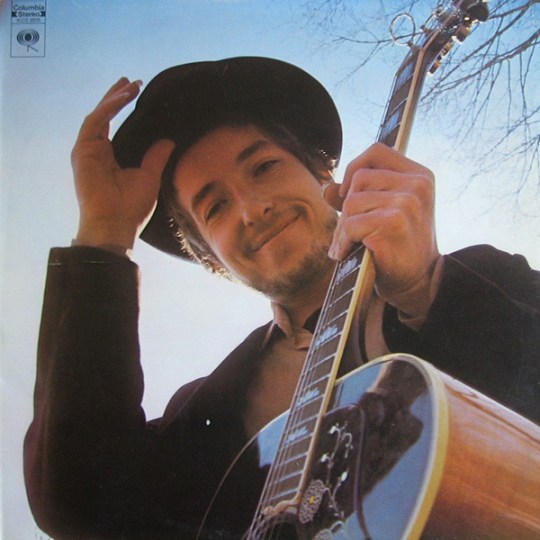
Note that I may be completely wrong with this thesis, but I believe that with Dylan’s 1969 album, Nashville Skyline, released on April 9, 1969, several of the songs were written first with lyrics added.  “Nashville Skyline Rag” was a rare instrumental by Dylan and gives us a clear example of Dylan writing music without preexisting lyrics, but I believe this is also the case with songs like “To Be Alone With You”” I Threw it All Away”, and “Lay, Lady, Lay.”  Unlike the previous album, Nashville Skyline is not a series of songs with verses and no choruses but a collection of traditional,  fairly catchy and easily singable tunes.  The music sounds more natural, and comes across as the primary content — another indicator that the lyrics are there for the music and not the music being created to support existing poetry.

But an additional reason for my assertion that the music came first, is the generally simple quality of the lyrics. On scrutiny, this is a rather weak argument when one considers that not only most of the music, but the associated words are totally in alignment with expected character of late 1960’s country music, and so one could argue that Dylan once again wrote the lyrics first to get the level of authenticity needed for the project and rose to the task of fitting natural, catchy, country music to those lyrics. Either way Dylan deserves praise for the final product and his amazing adaptability.

He also deserves particular praise for the number of musical and lyrical cliches he was able to fit into a short twenty-seven minute album, given there is nothing inherently wrong with cliches: to quote Nicolas Slonimsky, one of the great musicologists of the twentieth century defending a particularly cliche in classical music, “yes, its a cliche, but it’s a good cliche!”   Musically, we find heavy reliance on common country music chord progressions and melodic patterns, but it is the lyrical cliches that interest me even more. For example, the entire content of the third song, “To Be Alone with You” is almost entirely crafted from cliches:

“To be alone with you,
Just you and me,
Now won’t you tell me true
Ain’t that the way it oughta be?
To hold each other tight
The whole night through;
Everything is always right
When I’m alone with you.

“To be alone with you
At the close of the day
With only you in view
While evening slips away;
It only goes to show
That while life’s pleasures be few
The only one I know
Is when I’m alone with you.”

“They say that nighttime is the right time
To be with the one you love;
Too many thoughts get in the way in the day
But you’re always what I’m thinkin’ of.
I wish the night were here
Bringin’ me all of your charms
When only you are near
To hold me in your arms.

“I’ll always thank the Lord
When my workin’ day is through —
I get my sweet reward
To be alone with you”

And so it goes for the rest of the album with such often-used phrases as

“I treated her like a fool”, “in the palm of my hand”, “I threw it all away”. “Love … makes the world go ’round”, “stole my heart away”. “love to spend the night”. “future looks so bright”. “girl is out of sight”. “loved her just the same”. “And I love her so”. “you’re the best thing that he’s ever seen”. “You can have your cake and eat it too”. “tonight no light will shine on me”. “lost the only pal I had”. “I just could not be what she wanted me to be”. “I thought that she’d be true”. “what a woman in love would do”. “I didn’t mean to see her go”. “tell me that it isn’t true”, “They say that you’ve been seen with some other man”. “he’s tall, dark and handsome”. “It hurts me all over”, “all I want is your word”, “you better come through”, “I’m countin’ on you”. “playin’ ’til the break of day”. “that ain’t no lie”, “got nothin’ on me”, “Throw my troubles out the door”, “it was more than I could do”. “your love comes on so strong”, “I’ve waited all day long”, “Is it really any wonder”, “You cast your spell and I went under“, “I find it so difficult to leave.”

One has to conclude, even if  reluctantly, that there is a genius at work here, and whether the lyrics came first or were cleverly fitted into the music, it’s impressive how all these cliches were incorporated into these few songs.

One personal note: “Lay, Lady, Lay” was repeatedly played on AM radio, over and over, starting in July 1969.  I cringed every time it came on. I was fourteen, and this is second worse traumatic experience for me that year — the worst was having to hear The Archies’ “Sugar, Sugar” on the radio, relentlessly repeated with the resumption of the school year that September. What an ordeal! A poor, suffering, helpless fourteen-year-old freshman high school student being subjected to the one song that most exemplified (and historically defined) bubble-gum pop music — and subjected to such inane music and lyrics every morning and every afternoon on the school bus ride.  “Lay, Lady, Lay” was a welcome relief in comparison.

Musicians [from Wikipedia]

Bob Dylan – guitar, harmonica, keyboards, vocals
Norman Blake – guitar, dobro
Kenneth A. Buttrey – drums
Johnny Cash – vocals on “Girl from North Country”
Fred Carter Jr. – guitar
Charlie Daniels – bass guitar, guitar
Pete Drake – pedal steel guitar
Marshall Grant – bass guitar on “Girl from North Country”
W. S. Holland – drums on “Girl from North Country”
Charlie McCoy – guitar, harmonica
Bob Wilson – organ, piano
Bob Wootton – electric guitar on “Girl from North Country”

songsfromaroom7.jpeg

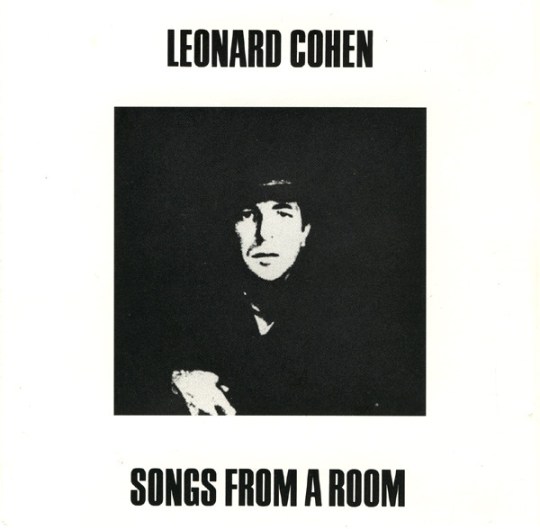
LEONARD COHEN: SONGS FROM A ROOM

Released on April 7, 1969, Leonard Cohen’s second album Songs from a Room, did well on the US Charts (peaking at 63) and impressively in the UK (getting as high as second spot on the UK charts.)  This seems to be another one of those singer-songwriter album which has songs that are based on poetry set to music rather than lyrics devised to fit the music.

The most amazing song, on a relatively strong album, is the powerfully compelling “Story of Isaac”, basically an anti-Vietnam song, set within the story of Abraham and Isaac.  It’s message extends much more broadly, and the song unfolds first as a narrative and then as a commentary.  “A scheme” such as capitalism or communism poorly compares to a divine vision, and if what Abraham did is clearly inappropriate, how much more so is sending our youth off to fight politically-motivated wars?  Or to kill off the promise of future generations by reckless consumption of our planet’s precious resources?  One has to be astonished at how artfully and convincingly Cohen has crafted his message.

Cohen delivers intimate, personal songs from his room that can fully enjoyed when we provide undivided attention to the music emanating from the speakers in front of us in our rooms.

Musicians [from Wikipedia]

Leonard Cohen – vocals, classical guitar
Ron Cornelius – acoustic and electric guitar
Bubba Fowler – banjo, bass guitar, violin, acoustic guitar
Charlie Daniels – bass guitar, violin, acoustic guitar

nazz2

THE NAZZ: NAZZ NAZZ

Todd Rundgren and The Nazz, released their second album, “Nazz Nazz” on April 7, 1969.  This was effectively their last album, originally intended as a double album, with some of the music held back and then later released as “Nazz III” by SGC Records coinciding with Todd Rundgren’s blossoming solo career starting to provide a commercial audience for these earlier tracks.

The diversity of this album is remarkable.  There are two solid blues numbers, “Kiddie Boy” and “Featherbedding Lover”, a fine-blues based hard rock number “Hang on Paul”, sounding as it would almost fit into the Beatles’ White Album, the melodic “Gonna Cry Today”, the richly euphonic “Letters Don’t Count” with its glass harmonic intro and coda and its layered vocals, the heavy “Under The Ice”, the confusingly psychedelic “Meridian Leeward”, and the artfully composed “A Beautiful Song.”   One hears not only influences from The Beatles, Laura Nyro and Burt Bacharach, but Todd’s own singular voice in all the compositions (particularly in the melodies and harmonic modulations), the arrangements, and the overall production. In addition we have Rundgren’s distinct guitar work and his general lyrical competency which sometimes rises to be as profound and effective as anything by the more renown singer songwriters of the sixties. Case in point is this verse from “Gonna Cry Today”

“Are you turned off by my lack of composure?
Please excuse my state, it’s just that I know
Your gonna take away something that I never had
But I thought was mine.”

which is perfectly understated, identifying the essence of not only romantic loss but loss in general.

Track listing [from Wikipedia]

All songs written by Todd Rundgren.

Side one

  1. “Forget All About It” – 3:15
  2. “Not Wrong Long” – 2:30
  3. “Rain Rider” – 3:52
  4. “Gonna Cry Today” – 3:15
  5. “Meridian Leeward” – 3:20
  6. “Under the Ice” – 5:40

Side two

  1. “Hang on Paul” – 2:42
  2. “Kiddie Boy” – 3:30
  3. “Featherbedding Lover” – 2:47
  4. “Letters Don’t Count” – 3:25
  5. “A Beautiful Song” – 11:15

Nazz

Robert “Stewkey” Antoni – vocals
Thom Mooney – drums, vocals
Todd Rundgren – guitar, keyboards, horn arrangements, string arrangements, vocals
Carson Van Osten – bass, vocals


Fifty Year Friday: Genesis: From Genesis to Revelation; Colosseum: Those Who Are About to Die, Salute You

220px-FromGenesistoRevelation

Genesis: From Genesis to Revelation

Selling less than 700 copies, Genesis first album was recorded mostly in August 1968 and was released on March 7, 1969.  Poor sales followed, with a significant percentage of the copies hitting small town UK stores, filed incorrectly, partly due to the absence of the band’s name on the cover, in the religious music bin.  Not helping matters was the guidance from British record producer Jonathan King (once best known for his one hit, “Everyone’s Gone to the Moon”, but now known more today as the discoverer of Genesis)  for the band to simplify the arrangements.  The music, though of lesser quality than later Genesis compositions, was further compromised by removal and trimming of solos, particularly Tony Bank’s keyboard solos, and by later adding orchestral accompaniment to what the band thought was the finished takes.  Yet, with all these musical compromises, the album still is worth listening to, particularly for Gabriel’s vocals, Banks keyboard work, and the generally unconventional nature of the songs, which show harmonic, melodic, and lyrical maturity and more or less make up a concept album roughly centered around the contents of Genesis and Revelations.

There are various versions of CDs that include bonus tracks and there is also the fourth CD of the 1998 Genesis: Archives set which includes demos and tracks from this time frame including “The Mystery of the Flannan Isle Lighthouse”, “Hair on the Arms and Legs,” and the “Magic of Time” with Banks providing jazz-influenced piano.  Though overshadowed by the quality of later Gabriel-era Genesis albums, “From Genesis to Revelation” is more than a historical curiosity — it is a collection of fine pop songs that are better than most of the pop music recorded in 1968 and 1969, an era providing some of the best rock music of all time.

Genesis

Additional musicians

  • Chris Stewart – drums on “Silent Sun”
  • Arthur Greenslade – strings and horn arrangement, conducting
  • Lou Warburton – strings and horn arrangement, conducting

Wikipedia track listing


salute R-9078171-1474382908-2705.jpeg

Colosseum: Those Who Are About to Die, Salute You

The basic idea behind blues is rather straightforward with the most common format being the twelve bar blues, consisting of four measures of the tonic chord (triad or seventh built on thirds from the first note of the scale), two measures of the sub-dominant chord (built on the fourth note of the scale), a return of the tonic chord for two measures, followed by two measures of the dominant (build on the fifth note of the scale which pulls strongly towards the return to the tonic, particularly when including the seventh note), followed by two measures of the tonic.

There are many  variations of this, and basically if one has that I chord (tonic), followed by some flavor of that IV chord (subdominant), with a return to the I chord, followed by the V (dominant), and repeating this pattern, whether in 12 bars, 16 bars or some less-common length, whether additional chords are added such as commonly adding the IV chord prior to the V resolving to the I chord, or adding passing chords or substituting related chords, then one has some version of the blues.  The idea here is that we basically have a I-IV-I-V-I progression that repeats for the duration of the song and upon which, if desired, the are multiple avenues for variation on or divergence from the primary blues pattern.

The early American Rock & Roll was primarily blues, the early British Invasion sound included many blues-based numbers, and many bands of the late 1960s, from Cream to the Yardbirds to Ten Years After to Led Zeppelin relied heavily on blues.  It’s then natural to consider blues-based rock to be more traditional rock, with the more varied chordal progressions (chord progressions that venture beyond those notes found in the I, IV and V chords)  including modal-based chord progressions commonly found in psychedelic rock and extended and altered chords commonly found in jazz to be an indication of more adventurous, exploratory, progressive rock.

And it’s natural that many musicians and bands would first start learning blues progressions and develop from there.  And so it was that many rock bands started out as blues-based bands, later developing into psychedelic bands, hard rock bands, acid or heavy metal bands, or even progressive rock bands.

But should a blues-based album sounds like progressive rock?  Or can a progressive rock band be primarily a blues band?

Such a question may be addressed in retrospect looking back at Colosseum’s first album, recorded in late 1968 and early 1968 and released in March of 1969.  At the time, the term progressive rock had yet to be applied as a label with most listeners not even dividing rock music into genres or styles.  The music of that baby boomer generation was simply the music of the times, whether it was rock, or later became to be known as folk-rock, jazz-rock, blues rock, hard rock, acid rock, or psychedelic rock.  The label of progressive rock was yet to be in play. and so what we have with this first Colosseum album, “Those Who Are About to Die, Salute You”, is simply a well-performed rock album

But what a performance.  The songs don’t stand out: all but two are blues numbers, mostly vehicles for blues and jazz-rock-like improvisation — these two exceptions being Greenslade’s “Mandarin”, ironically based on a Japanese scale and incorporating a short blues-like section before launching into an extended Tony Reeves bass solo, and Colosseum’s version of Procol Harum’s “Whiter Shade of Pale”, titled “Beware the Ides of March” which includes a foray into Bach’s “Toccata and Fugue in D minor” with additional improvisation.   The combination of foundational keyboard work by Dave Greenslade, high quality jazz-based sax work by Dick Heckstall-Smith and outstanding guitar from James Litherland make this a very different blues-rock album than that of contemporary rock bands and qualifies this to be classified as progressive rock — though I must admit, I am never sure what that term really means….

Colosseum

Additional personnel

Wikipedia track listing