Gentle Giant: Power and the Glory, Hawkwind, ELO; Fifty Year Friday: September 1974
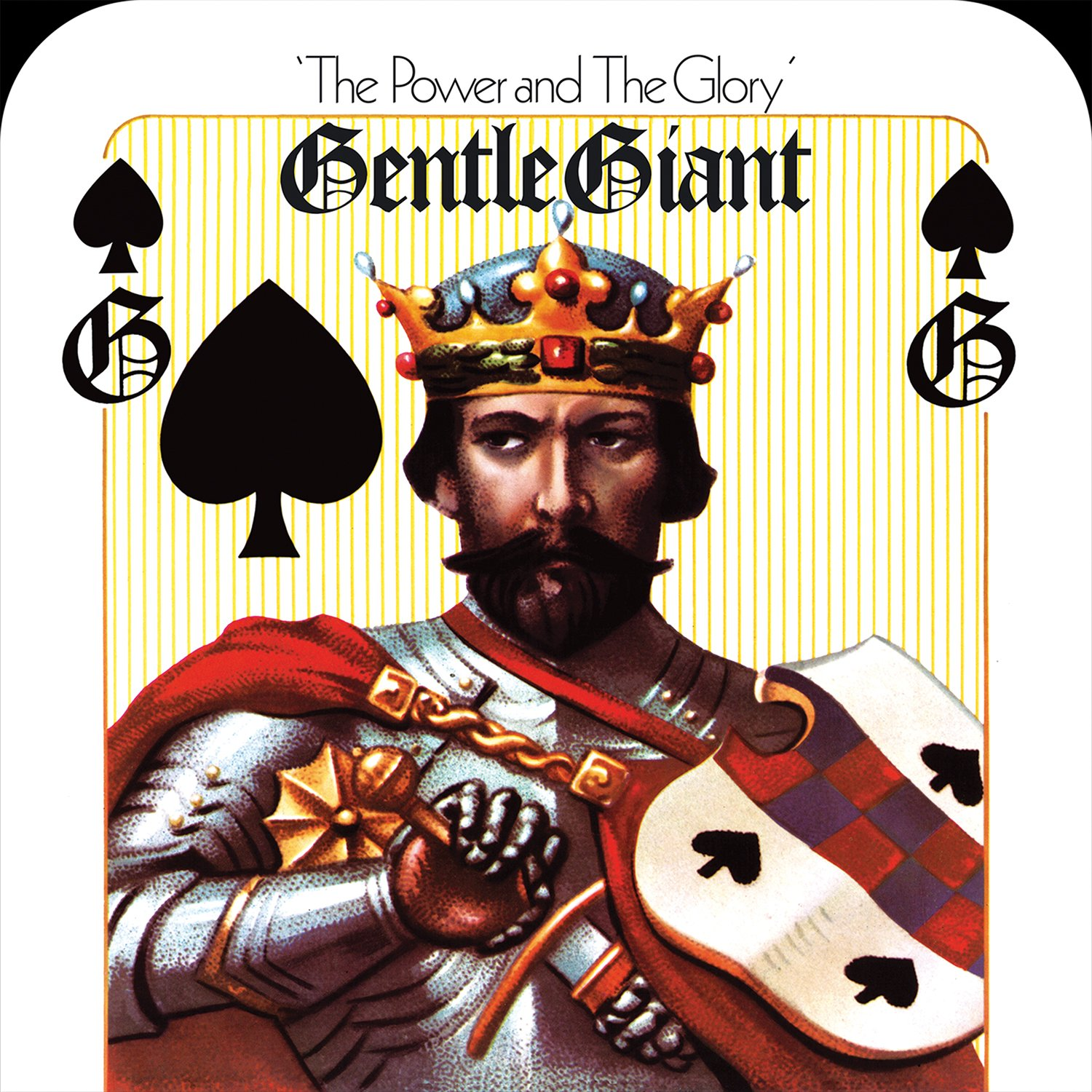
Gentle Giant: Power and the Glory
In late 1973, I had purchased Gentle Giant’s Octopus based on falling in love with “Knots, the most stunningly unique track on a two LP sample set issued by Columbia in 1973 and included as one of several albums my sister purchased for a total of ninety-nine cents to start a membership in the Columbia record club. I had not yet heard of Gentle Giant’s import-only album, “In a Glass House” when I first spotted The Power and the Glory the week of its release at the record store near the college I was attending. Having bought their second and third albums, at this point, I was expecting something similar, and when I brought the album home and put it on, I was a bit mystified of how different it was stylistically than the previous Gentle Giant albums I had listened to.
I did not find it immediately appealing, and was a bit disappointed in the high occurrence of repetitive musical phrases and lack of imitative counterpoint and vocal acrobatics which had made me fall in love with “Knots”, and which gave me hope there might be one selection that would approach “Knots” in terms of inventiveness and artistry. Nonetheless, there was still something appealing about the music, and I played the album a second time the next day, finding that it was already growing on me. By the third or fourth listen, I was embracing this new stylistic direction, particularly enamored by the band’s clever use of repetition of strongly angular and syncopated musical phrases.
Musically, this is another masterwork by Gentle Giant. Besides the group’s deft handling of intriguing, atomic musical components (those concise, angular, cleverly repeated melodic phrases previously mentioned), there are moments of lyrical beauty enhancing and contrasting with the abundant rhythmic vitality . Gentle Giant again uses melodic diminution (repeated musical ideas that get shorter in time by dropping out notes and/or shortening the length of notes) in some of the melodic material in the first and last tracks, “Proclamation” and “Valedictory” with the relationship between these two pieces reminiscent of classical-era exposition, development and recapitulation. The remastered released of this album also contains the initially unreleased studio track “Power and the Glory” recorded as late as June 1974, two months before Richard Nixon resigned his presidency.
The Power and Glory album, itself, is a concept album around political power and its abuse, something quite topical for 1974 with the Watergate hearings having just wrapped up in June of 1974 six months after the recording of the album in later 1973 and January 1974 — and three months before the release of the album into record stores. Readers of this blog, all three of them, may recall that I rarely discuss lyrics, but the topicality of these lyrics are extremely relevant to today’s political chaos in the United States. Here are some excerpts.
(“Proclamation”: The equivocation of political yammering with content scarily reminiscent of recent political speech)
You may not have all you want or you need
all that you have has been due to my hand,
it can change, it can stay the same,
who can say, who can make their claim
The situation we are in at this time
neither a good one, nor is it so unblest
it can change, it can stay the same,
I can say, I can make my claim.
Hail … Hail … Hail
Unity’s strength and all must be as one,
confidence in you hope will reflect in me
I think everyone not as my nation for
you are my people and there must be no change
It can change, it can stay the same
I can say, I can make my claim
(“So Sincere”)
Hear, he’ll do it all for you, you will see it,
wise and knowing what to do, what to be
and every word is …
Lies, he only tells the truth, for he means it,
means, not anything he says, eyes unseen,
but everything is …
So sin–cere, so sin–cere, so sin–cere, so sin…
Yes, that is to say no, understanding
wrong, he makes his promise right, with your hand
you’ll never know why
… So, sincere his thoughts so full, always empty
Good, or maybe things are bad, so sincere,
and every word is …
So sin–cere, so …
(“Aspirations”)
As our faith, maybe aimless blind,
Hope our ideals and
Our thoughts are yours
And believing the promises,
Please make your claims
Really so sincere.
Be our guide, our light and our way of life
And let the world see the way we lead our way.
Hopes, dreams, hopes dreaming that all our
Sorrows gone.
In your hands, holding everyone’s
Future and fate
It is all in you,
Make us strong build our unity,
All men as one
It is all in you.
(“Playing the Game”)
… I can view the power of my position and my
eyes can see more than anyone in any place,
I’ll play the game and never ever lose.
I will steer the helm of all the nation
as the captain
take my rewards for all the good I’m doing now,
and no words that I’m the knave will alter my
philosophy for if any are heard, the games started
again I’ll never ever lose.
(“Cogs in Cogs”)
Empty promise broken the path has
Not been paved any way.
Cogs in cogs the machine
Is being left where it lay.
Anger and the rising murmur breaks
The old circle, the wheel slowly turns around.
All words saying nothing
The air is sour with discontent.
No returns have been tasted
Or are they ever sent.
Slowly burning is the fire, rising murmur breaks
The old circle, the wheel slowly turns around.
(“No God’s a Man”)
Now the words and claims are seen as always
The way they’ll always be, way they’ll always be
Truth is halfway true, the man is only a man
Who fails to know,
The people shouting for him have turned now
Telling him to go
(“The Face”)
Choose your way, realizing our mission,
Figures lay, pulling strings for position.
Take your bows, hear the people are calling.
Play the game, Take the blame as you’re falling.
Time to confess, clean up the mess,
Stand in the white, step in the light.
Use the time, show the face that is sorry…
(“Valedictory”)
And though the hard times,
Are really due to me, it is still in me,
To wave all this unrest.
Things must stay,
There must be no change,
Anyway, time to rearrange.
You must believe, that there’s
Been no betrayal all that I’ve done,
I’ve really done for you.
(“Power and the Glory”)
Run, run, the shotgun has got you in its range.
Turn, turn away, when it’s time to make a change.
Look where you’re going. try not to lose your way.
What good is knowing you have to go away?
Go, you make go, never know, never know.
Time’s run away, so have to go, have to go.
Put back the ace black, you never made it good.
Go while you can go. Go while the going’s good.
And the power and the glory is over, so I’ll take it.
The power and the glory is over, so I’ll make it.
The power and the glory is over, and I’ll break it.
The power and the glory is over….
Face up to reason, you know it’s up to you.
Do what you can do, all that you have to do.
Move over now, and I’ll try to take your place.
Time to remember that I have won the race.
Go, you make go, never know, never know.
Time’s run away, so have to go, have to go.
Pick up the pieces, to you I’ll have to stand.
Break up the power, the glory’s at the end.
And the power and the glory is over, so I’ll take it.
The power and the glory is over, so I’ll make it.
The power and the glory is over, and I’ll break it.
The power and the glory is over….
If you have not heard this album, a youtube link is provided below.

Electric Light Orchestra: Eldorado
This is my favorite ELO album, of those I have heard — I admit I haven’t listened to some of their later albums. I love the orchestration, the overall cohesion of the album, and its simple, melodic appeal. I consider this such a nice combination of musical quality and musical accessibility, I purchased multiple copies of this to give to some of my piano-lesson pupils for Christmas of 1978.
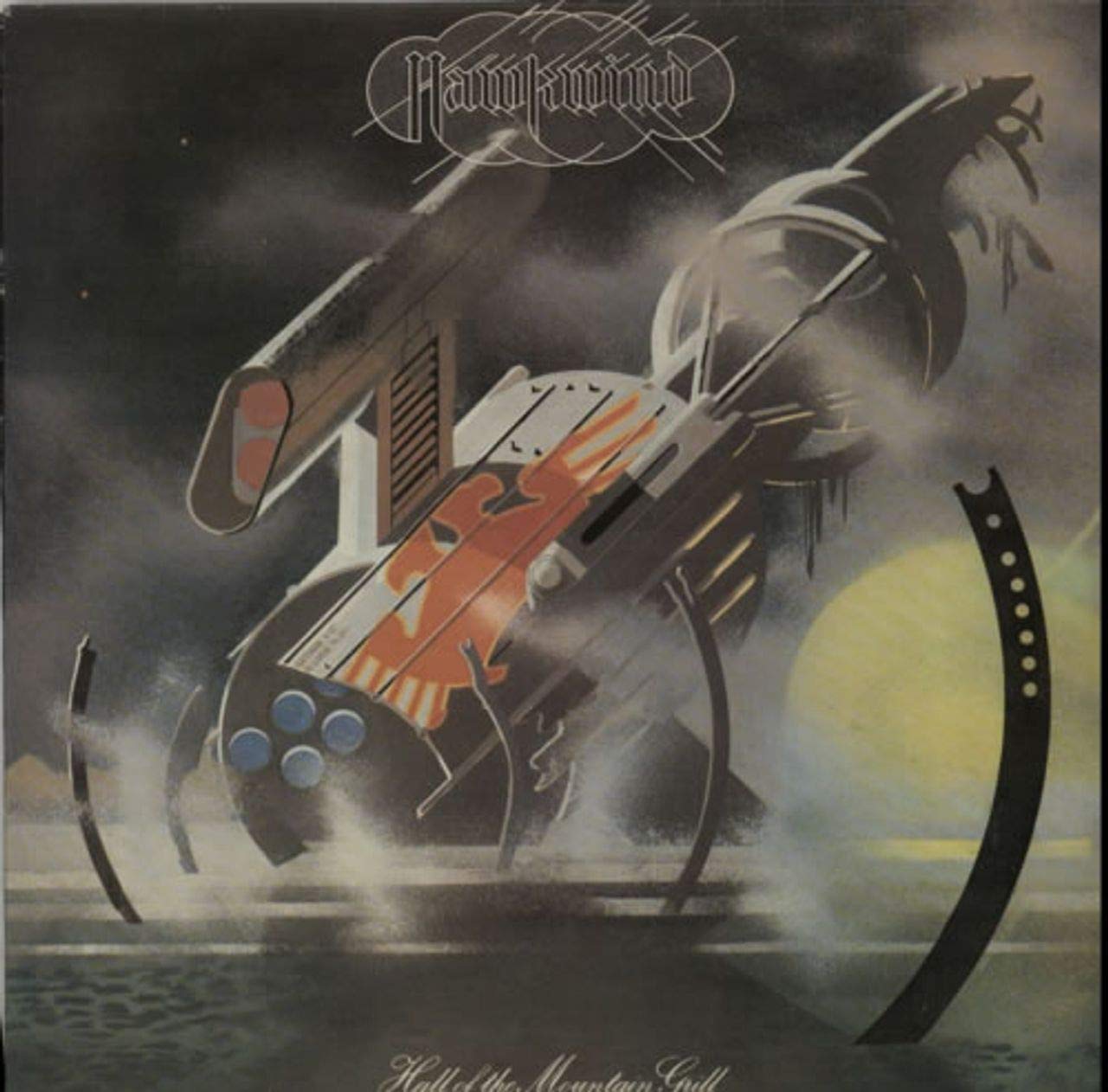
Hawkwind: Hall of the Mountain Grill
Just a quick mention of Hawkwind’s fourth studio album, released on September 6, 1974, with its title an amalgamation of the title of the famous Grieg orchestral composition and the name of a local dining hangout frequented by Hawkwind and other musicians in West London — the Mountain Grill.
The album is mostly Hawkwind-style space rock, with “Web Weaver”, a track played often on one of my local FM radio deep-album cuts stations, the instrumental title track, and two live selections, “You’d Better Believe It” and “Paradox.”