Picchio dal Pozzo, Eberhard Weber, Nektar, Druid; Fifty Year Friday: January 1976
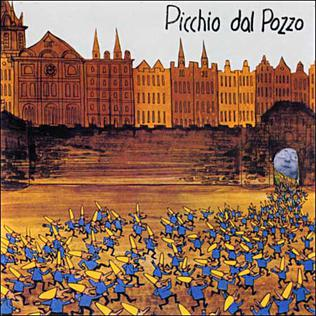
Picchio dal Pozzo: Picchio dal Pozzo
By the start of 1976 the commercial demand for progressive rock was still at its peak, but many of the established English bands were creatively past their peak. In Italy, even before 1976, the top progressive rock band, PFM, started modifying their sound to increase their appeal to English-speaking audiences, releasing albums with English lyrics, a decided artistic and musical misstep, and arguably a commercial mistake as well, as the move did not result in greater American sales and negatively impacted both sales and their image within Italy.
January 1976 was the release month of Picchio dal Pozzo’s first album. Their lyrics, though limited, were exclusively in Italian, and their style didn’t resemble or remind one of Yes, Genesis or ELP. There are certainly traces of the techniques and chamber music approach of the English Canterbury scene, but the album has a solidly Italian and Continental identity with the musical playfulness more in line with the earlier sounds of PFM, RDM and Banco than the bloat and pomposity of some of the late 1970s symphonic rock movement — I won’t mention names, including some of the American groups that were guilty of this.
This Picchio dal Pozzo album starts off with a minimalist, repetitive opening, crescendoing with added Italian vocals. The second track, “Cocomelastico,” is heavily Zappa influenced, with the lightness and musical seriousness of tracks like Hot Rats‘ “Peaches en Regalia,” as well as recalling instrumental passages from Caravan and other Canterbury groups.
The music gets wilder with the longest track of the album, “Seppia,” getting into territory closer to the music of Robert Wyatt, Gong and Soft Machine with even hints of Area in the middle and ending with a softer Caravan-like sound.
The first side ends with the brief instrumental “Bofonchia” (Italian for “grumble”) and side two starts with the adventurous “Napier” (perhaps after the Scottish mathematician who invented logarithms). The track is the longest of the second side, and includes some magical vocals and a range of moods and instrumentation.
The second side continues, adventurous and musically eclectic, with “La Floricoltura Di Tschincinnata,” meditatively with “La Bolla” and its shimmering, post-impressionistic flute and piano, and the final track, “Off,” continuing that mood, more consistently with flute and piano joined with some ethereal vocal work — effectively wrapping up an adventurous, musically compelling album with a beautifully melodic, introspective ending.
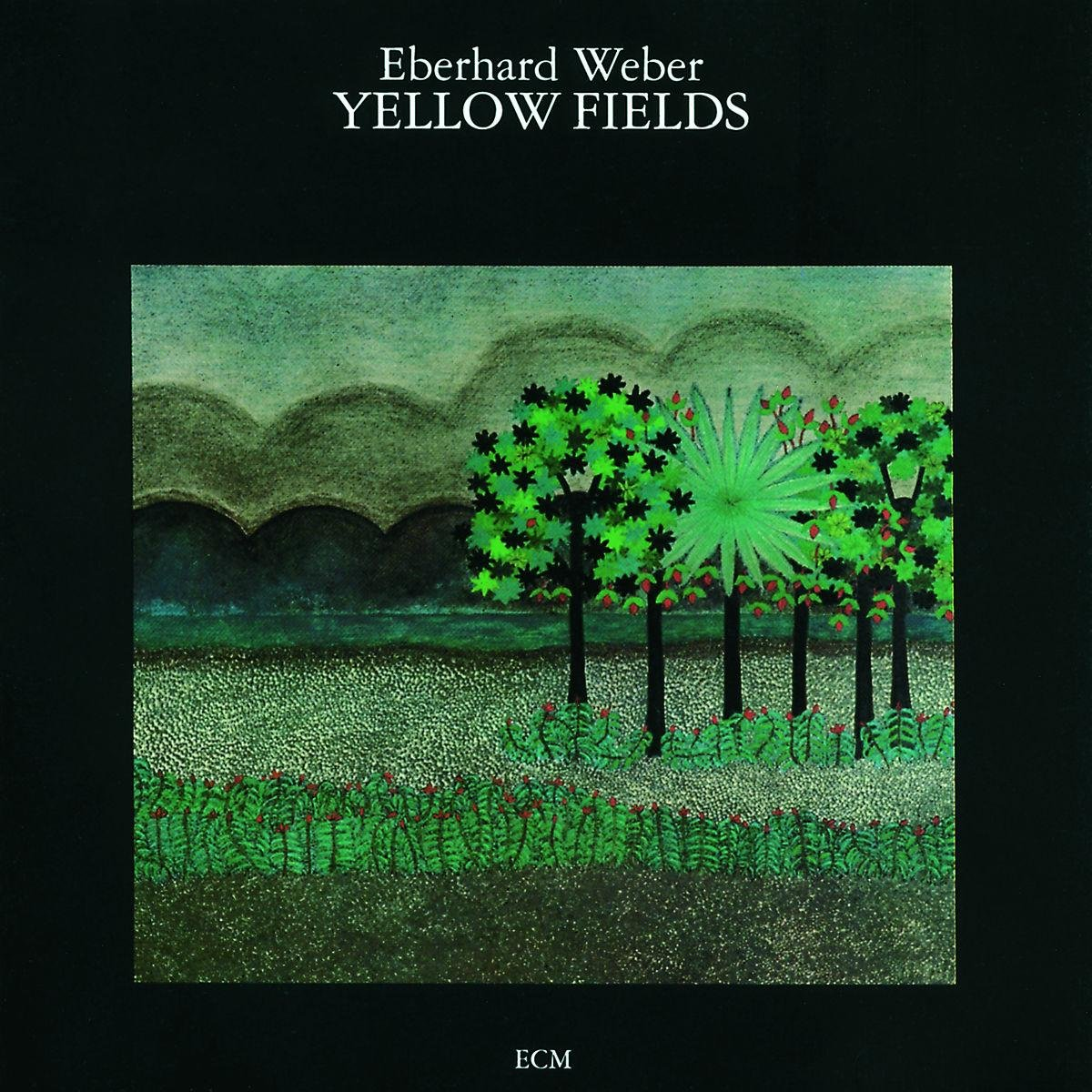
Eberhard Weber: Yellow Fields
Released in early 1976, Yellow Fields is led by German bassist and composer, Eberhard Weber, who delivers one of the finest and most distinctive jazz albums of the year, avoiding any hints of the more commercial and more prevalent fusion jazz of that year, yet still delivering an album that was equally contemporary and accessible.
Like Charles Mingus before him, Weber was classically trained on cello, switched to bass, and integrated his use of the bass to further his musical vision, often using the bass in a more melodic role, utilizing the upper register to create a singing quality, weaving musical tapestries that are foundational to the music.
Now here is the real treat for me: We have Charlie Mariano being an indispensable part of this album’s appeal. I am a big fan of the nagaswaram, sometimes immersing myself in old recordings (from the 78 era) of Indian Classical Music to soak in its magical sounds. The nagaswaram is similar to the more commonly heard shehnai, which Mariano also features on this album, except it is significantly larger, longer, lower in pitch range, and louder. It requires athlete-level lung power and a musical sensitivity to its capabilities to bend pitch and hit the notes between the notes — play those non-Western tones, those micropitches, opening up the full range of musical vocabulary just as the shehnai does. Mariano further extends his timbral and range options on this album with the soprano sax.
Adding to the wide range of colors on this album is classically-trained German jazz pianist, Rainer Brüninghaus, who adds depth to the album but never subverts its mood or flow, playing both acoustic piano and synthesizer.
If you wish to check out an excellent example of 1970s jazz, here is an intense, cohesive, and immersive album that avoids the more prevalent fusion and free-jazz styles of that era and provides a wealth of musical color. Please give it a listen if you haven’t and let me know your thoughts: how would you place it in the diverse range of jazz albums of the 1970s?
Druid: Fluid Druid
There were several albums I considered including in this month’s Fifty Year Friday, albums that I have enjoyed listening to, and one of particular musical significance, but ultimately, I thought best to let other fans of such albums write their own reflections, thoughts or retrospective reviews on those albums. In the case of Druid’s Fluid Druid, released sometime in the first half of 1976, this is an album that was pretty much under the radar in 1976 and pretty much unknown today. (Note: after further research it appears the album was released on April 30th, 1976, but let’s keep this entry here for now, with plans to move it to April if I am still writing these retrospectives at that point.)
This is an English band, consisting of four musicians: the keyboard player and principal composer, Andrew McCrorie-Shand, the bass guitarist, Neil Brewer, the drummer, Cedric Sharpley, and the guitarist, Dane Stevens, who provides the vocals. Now sometimes his vocals, which can be overly affected, annoy me a bit, and sometimes they are quite good. The instrumental passages are quite enjoyable, and overall the music sounds heavily influenced by Yes and, to a lesser degree, Genesis. What matters, though, aren’t the influences, as apparent as they are, but the overall quality. Though this varies a bit, overall this is a strong album. Check out the instrumental track “FM 145,” a bit reminiscent of Greenslade, or “Nothing but Morning,” which sounds like part Yes and part Queen, and where Dane, credited on this album with just his first name, even sounds a bit like Freddie Mercury. If you are a fan of that portion of the Yes catalog and/or the Genesis catalog from the early and mid 1970s, there should be enough attractive material here, as well as in their first album, to make it worth your while to stream or purchase.
