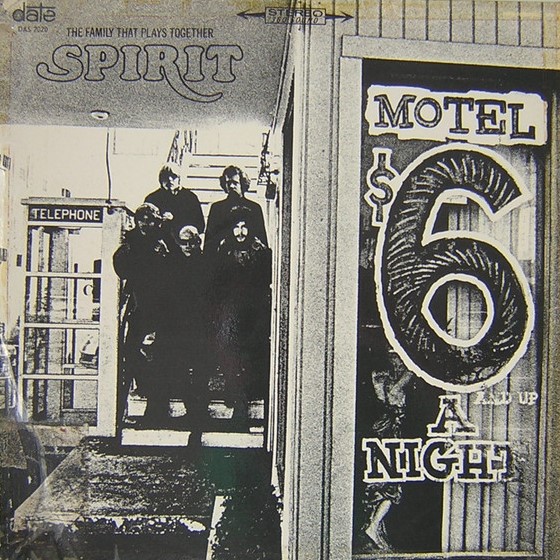
In November 1968, Spirit follows up their impressive first album with an even stronger and more polished second album, again produced by Lou Adler with arrangements by Marty Paich.
The album starts out with Randy California’s rock classic “I Got A Line On You Babe”, first released as a single a couple of months prior to availability of the album, achieving some airplay on FM radio before later becoming a modest hit on AM. Full of energy and unstoppable enthusiasm with a aggressive, celebratory guitar work, it represents youthful romantic optimism reversing the viewpoint of that classic Kink’s song “You Really Got Me” but sharing many musical and emotional qualities.
“It Shall Be” is evocatively sensual with flute and wordless vocals alternating in A-B-A-B-A form with a more down-to-earth B section. This is followed by a set of three semi-psychedelic songs by Jay Ferguson, and a country-like tune, “Darlin’ If” composed by Randy California
Side two opens up strongly with “It’s All the Same,” a mixture between psychedelic and early seventies rock, including a brief, relatively uninteresting drum solo in the middle. The second track, is Caifornia’s “Jewish”, a short but expressive modal-melody pre-progressive track with Hebrew lyrics. The album ends with with three more Jay Ferguson tracks, each with its distinct identity but all three incorporating elements of the psychedelic era of songwriting; note the intriguing guitar work in the not-always-so-consistently-interesting last track, “Aren’t You Glad.”
Bonus tracks are available on the CD, including the artful, ambient instrumental, “Fog” and two other instrumentals by keyboardist John Locke as well as Ferguson’s sweeping, gothically dark “Now or Anywhere.”
This fine double album, one LP from a live concert in June 1968, and the other from 1968 studio recordings, sparkles with precise, consistently clearly articulated acoustic and vocal passages that nicely blend folk, rock, jazz and classical renaissance elements to provide an engaging audio and musical experience. Highlights of the live LP include Danny Thompson’s rendition of Mingus’s Haitian Fight Song, the group’s interesting take on Mingus’s homage to legendary Lester Young, “Good Bye, Pork Pie”, and the medley of three renaissance dances. Highlights of the studio LP include the immersive contrapuntal “Three Part Thing”, Jaqui McShee’s rendition of “Sovay”, the jazzy Brubeck-like instrumental “In Time”, the bluesy “I’ve Got a Feeling”, the classic folksy “The Trees They Do Grow High” and the final track of side two, “Hole in the Coal.” Throughout the four sides the interplay between the two guitars and bass is exceptional. Additional tracks are available on CD that were not on the original two LP Set.
Though not one of my favorite albums, one has to give credit where credit due and there are a number of reasons to recommend this often blues-based, somewhat historic album.
The first is the earthy and relatively respectful rendition of Robert Wilkins”Prodigal Son.” Is that Mick Jagger on vocals? Hard to believe…
The second is Nicki Hopkins on piano.
The third is the mournful “No Expectations.”
The fourth is the bluegrass/country-blues “Dear Doctor.”
The fifth is the anthem-like “Salt of the Earth” replete with a chorus.
The sixth is the Keith Richards application of his chance-discovery of the already existing technique of five-string “open G” tuning, basically removing or avoiding the low sixth string, with the five strings tuned G-D-G-B-D (aligning with the overtone series of G-G-D-G-B-D) and in the case of Richards, and others to follow, using a sliding three-fingered guitar technique.
The sixth is the stretching of the then-current record-industry norms with songs with lyrics like “Sympathy for the Devil”, “Parachute Woman”. and “Stray Cat Blues”, the last two, perhaps even more offensive now in the context of political correctness than in 1968.
The seventh is the historical impact of this record, setting the tone, whether we like it or not, for how future bands would approach traditional blues and country music (like the music found on pre-WWII 78s) and songs about Satan and groupies.
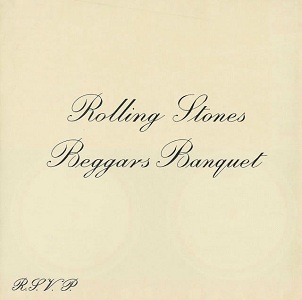
This work veers away from the accelerating trend of greater complexity and sophistication, taking a U-turn towards simplification. It really is a collection of the basics of music, some as simple and crude as the album cover the Stones had originally intended for the album. My apologies if I offend anyone by using the original LP cover that I associate with this album instead of the one prevalent on the CD reissues.
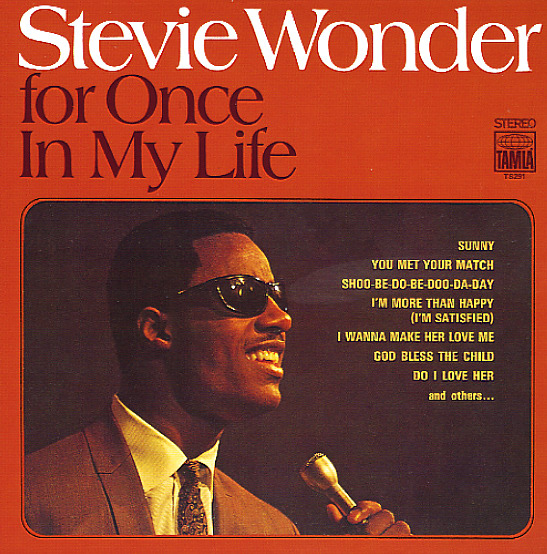
Recorded in 1967, while Stevie Wonder was still 17, this ninth studio album, released December 8, 1968, after Wonder was eighteen years old, is really the work of a mature adult artist. Though Wonder only is credited as a co-author for the eight selections that lists his name, one can distinctly hear the composer of the early seventies albums. Besides the developing compositional skills, we have strong vocals and quality harmonica and keyboard work .
“The House on the Hill” (Lawrence Brown, Berry Gordy, Allen Story) 2:36
James Taylor: James Taylor
There is always something reassuringly soothing in James Taylor’s voice. Like so many baby boomers, my first exposure to Taylor was his second album, Sweet Baby James, which my next door neighbor loaned my in 1970.
This first album, released December 6, 1968, and on the new, but short-lived, Beatles’ Apple label, which signed Taylor after Apple label A&R director Peter Asher (friend of Paul McCartney, brother of Paul’s girlfriend from 1963 to 1968, and member of the British group Peter and Gordon, which had recorded several of McCartney’s songs including their #1 hit, “A World Without Love“) had heard a forty-five minute demo tape Taylor had sent into to the new label.
Overall this is an amazingly strong debut, and rivals or surpasses the quality of later Taylor albums, with the exception of the second one, which has the wonderfully transcendent “Fire and Rain. Beatles fans should note that George Harrison and Paul McCartney make guest appearances on “Carolina on My Mind” and jazz fans should note Freddie Redd’s keyboard contributions.
Besides James Taylor’s simple, home-spun, relaxed vocals, and his quality song-writing, there are some sophisticated instrumental introductions written by arranger Richard Anthony Hewson that are worth mentioning, whether they are an integral part of the track, as with “Sunshine Sunshine” or seem more like they were added after the final take of the song. Yes, they don’t effectively assist in creating a single artistic identity to the album, or even bring out the best in the inherent nature of these James Taylor compositions, but both the handful of introductions and the arrangements have merit and add interest to the album, bringing an additional dimension to the final work.
If you have not heard this album, its worth the effort to check it out, particularly with the number of strong songs, the fine acoustic guitar work and other instrumentation, the quality of the arrangements and production, and the sterling sound quality (for 1968), partly as a result of the entire album having been recorded at Trident studio in England, at that time a state-of-the-art studio, using some of the session time that was previously booked by the Beatles.
Track listing [from Wikipedia]
All songs written by James Taylor unless otherwise noted. Times are from the original Apple LP vinyl label.
Though the first BS&T album, a work of love from Al Kooper, includes jazz instruments, this second album really begins the era of what is commonly called “jazz-rock”, a genre quite different than jazz fusion or rock-influenced jazz. Later adherents to this style, more or less, included American groups like Chicago and Chase, the Canadian band Lighthouse, and the British group If.
This second album (produced by James William Guercio at the same time he was producing the Chicago Transit Authority album) left the generally more critically admired, Al Kooper first BS&T album in the dust, commercially,selling millions of copies and by March of 1969 taking the top US album chart spot away from Glen Campbell, twice until the Hair soundtrack displaced both for a bit, with the BS&T album again rising to the #1 spot for four more weeks in late July and August.
The album provided three top five singles, Laura Nyro’s “When I Die”, Fred Lispius’s arrangement of fellow-BS&T-band member and lead singer David Clayton Thomas’s “Spinning Wheel” and the Al Kooper’s arrangement of Brenda Halloway’s modestly successful single, “You Made Me So Very Happy”.
The album is yet another 1968 that includes music by a classical composer. In this case, this album starts out with an abridged, but tasteful arrangement of two of the three pieces of Eric Satie’s “Gymnopédies.” For many listeners, including myself, this was one of the highlights of the album, and was my first introduction to Eric Satie.
This is followed by BS&T’s extended version of Traffic’s “Smiling Phases”, with its traditional jazz piano trio middle section and then the evocative Dick Halligan arrangement of Steve Katz tune “Sometime in Winter.” Next is “More and More”, which, as a thirteen-year old, was my favorite track on the album, with its fierce brass and drums.
Also, leaving an impression on me was the last track of the first side, Billie Holiday’s “God Bless the Child.” As I had not heard the original version, or any Billie Holiday recordings, I made the mistake of considering this the reference version of the song. (What kind of society would make it possible for the vast majority of Baby Boomers to have no knowledge of Billie Holiday until the release of the 1972 film “Lady Sings the Blues”?)
Blues — Part II has an interesting, progressive rock opening with Dick Halligan on organ, which is followed by a short brass outburst and then electric bass and drum solos as well as some flugelhorn, sax, electric guitar, and reflective, bluesy vocals. The album ends with a short reprise of Satie’s first “Gymnopédie“, providing a complete, fulfilling and distinct listening for anyone in 1968 and 1969 that had only a smattering exposure to real jazz. Just as seventh grade Physical Education introduced me to basketball, which led to my watching John Wooden’s UCLA Bruins and then in 1969 West, Baylor and Wilt Chamberlain’s Los Angeles Lakers, groups like BS&T and Chicago help lead my way towards the many jazz classics recorded prior to 1968.
Track listing [from Wikipedia]
Side 1
“Variations on a Theme By Erik Satie” (1st and 2nd Movements) – 2:35
“The whole record, in fact, is one of the most startling achievements of the recording industry in this generation and certainly one of the great feats in the history of ‘keyboard’ performance” Glenn Gould
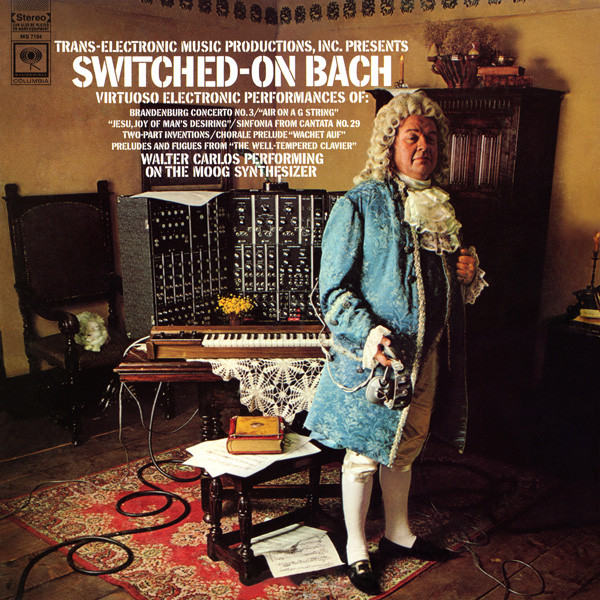
This is the album that endeared myriad music lovers to the sound of the Moog synthesizer. Young college radicals and middle-aged classical music aficionados, alike, found a place for this album among their dearest music treasures of Zappa, Hendrix and early heavy metal on the one hand and Beethoven, Mozart, Bach, and newly-released Baroque music offerings on the other.
Staying atop the classical music Billboard charts for three years, this album had a lasting impact on many musicians including the Grateful Dead, Pink Floyd, Stevie Wonder, Keith Emerson and Don Dorsey (Bachbusters) and was the vehicle that gave Carlos the opportunity to provide film scores for two of Stanley Kubrick most successful movies: A Clockwork Orange in 1972 and The Shining in 1980.
Though not all of the album is consistently off-the-charts excellent, particularly by today’s standards of electronic-music production, there is much of great merit here. Side one particularly deserves high praise for the realization of the individual contrapuntal lines that are so much of Bach’s late Baroque compositional palette. It is the magic inherent in these Bach compositions that are so carefully and thoughtfully highlighted. This is all the more amazing, considering the technical limitations of the 1964 version of the Moog Synthesizer used — it could only play one note at a time, with the previous note having to be released before pressing the next, and it did not stay in tune for more than a few phrases. No surprise, then, that the album tallied up more than one thousand hours of production time over a five month period.
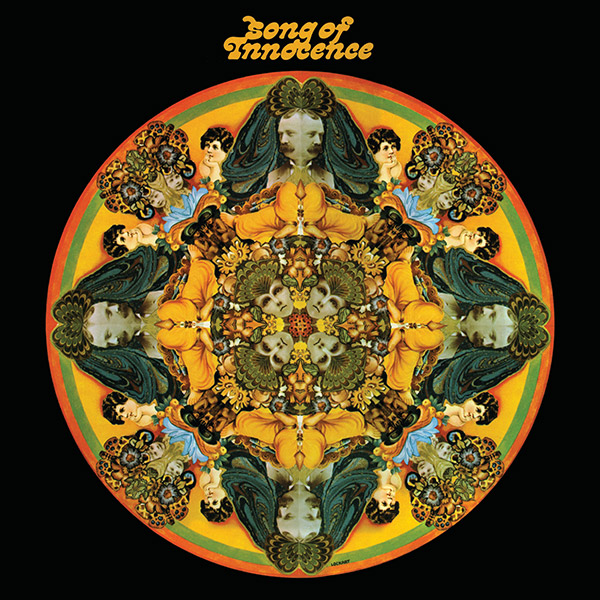
One of those landmark albums that is better appreciated in the context of the fifty years of music that followed its October 1968 release, David’s Axelrod’s first release, Song of Innocence, is an ambitious and visionary work performed by 33 top L.A. Session musicians. A mixture of jazz, rock, world (middle-eastern), and movie-music elements, incorporating strings, horns, vibes, electric organ, drums, ear-catching electric guitar work and thick, palpable electric bass, drawing upon some of the premises of third-stream jazz, and coming only months after his earlier barrier-busting Mass in F minor (covered here in an earlier post), Axelrod anticipates both some of the common aspects of fusion-jazz and an entire approach of music composition that was to appear so prevalently in some of the more ambitious and creative New Age albums that would appear in the 1980s. Per the liner notes of the latest release of Songs of Innocence, Miles Davis played the album before conceiving his own fusion of jazz and rock for Bitches Brew (1970).
Axelerod draws upon Blake’s illustrated 1789 collection of poems Songs of Innocence, for several of the tracks on the album. Axelrod originally intended to set the text to music with a choir taking on the lyrics, but instead produced a instrumental album covering additional Blake material including his extended writings on the demiurge-like “Urizen” and his four-line “Merlin’s Prophecy” from Gnomic Verses.
As one might expect from something this boldly different, the album received mostly negative reviews, with categorizations of pretentious and indulgent, and rock critics taking issues with the orchestral aspects and classical music critics taking issue with the electric guitar passages. “Holy Thursday”, the most jazz-fusion-like track on the album, received some airplay, but overall the album sold poorly and was generally forgotten until the 1990’s when the digital era brought out reassessments of almost all music material from the sixties and early seventies, with Songs of Innocence now receiving significant praise from websites like allmusic.com and tinymixtapes.com. Additionally, in the 1990’s, the album attracted the attention of multiple hip-hop artists that sampled content, particularly “Holy Thursday.”
Deep Purple’s second album, released in October 1968, takes the group one step closer to establishing an identifiable sound despite the general ecelecticism of the whole which unrestrainedly, though not recklessly, tackles hard rock, early heavy metal, psychedelic rock, and early prog.
The album starts of with the quirky homage to the Welsh 14th Century “Llyfr Taliesin” (Book of Taliesin), mixing hard rock and sixties psychedelia to support respectably decent lyrics, followed by the bluesy instrumental “Wring Thy Neck” (retitled “Hard Road” in the US. release as an act of “corporate wisdom” censorship) including solid organ work and an indulgent, though somewhat tame, guitar solo. Other notable tracks include the remaining original numbers, “Shield” and “Anthem” with the effective mix of hard rock and progressive elements. The remaining tracks include a cover of a Neil Diamond song that actually got some airplay in the U.S., the Ike and Tina Turner “River Deep – Mountain High”, and the last track on the first side which covers Beethoven, Tchaikovsky and the Beatles with the treatment of the two 19th century composers faring musically better than the Lennon/McCartney interpretation. All in all, an enjoyable album with substantial organ and guitar passages, strong vocals by Rod Evans and an effective balance between hard rock and early progressive rock, getting closer to the classic “progressive rock” sound than any album up to that point in time.
Though my primary source of exposure to music was, first, my dad, then my sister, then my friends, particularly the three brothers in the corner house next to ours, it was during the summer after eighth grade (1969) that I discovered the availability of albums at the local public library. One of the first albums I checked out, was Steve Miller’s Sailor. Fascinated by the dramatic fog-horn opening and the conscientiously paced, slightly suspenseful, early space-rock music of that first track, and further pulled in by the general accessibility and variety of the remaining tracks, I realized the value of exploring groups that were far off the radar screens of my circle of friends.
Besides the well-known “Living in the USA”, the album contains the superb ballad, “Dear Mary”, with it’s Beatlesque opening and the seven-count lengthy first note on “Dear”, the leisurely yet evocative “Quicksilver Girl” (“A lover of the world, she’s seen every branch on the tree”), and Boz Scaggs’ “Overdrive” with its Dylanesque verses and its earthy chorus anticipating early seventies rock.
Though not as strong as the other albums covered in this post, Steppenwolf’s second album has its moments, particularly on side two which opens with the Rolling Stone influenced “28” with its Nicky Hopkins-like piano work. Next is Steppenwolf’s classic “Magic Carpet Ride”, not about sex or drugs as some may infer from a casual listen to the lyrics, but about John Kay’s recently-purchased, expensive stereo system. Seriously!
“I like to dream, yes, yes,
Right between the sound machine.
On a cloud of sound I drift in the night;
Any place it goes is right —
Goes far, flies near
To the stars away from here.”
This is relevant, in the context of side two, as it opens a tribute to the blues and to blues-rock, which I suspect John Kay listened to frequently, with the opening track an authentic blues number followed by three of Kay’s compositions.
Track listing [From Wikipedia]
All music composed by John Kay, except where indicated.