Zumwalt Poems Online

Posts tagged ‘Robert Wyatt’

Fifty Year Friday: May 1975

Henry Cow: In Praise of Learning

Henry Cow released their second album featuring members of Slapp Happy on May 9, 1975. Fiercely uncompromising, both musically and ideologically, it seamlessly blends rock, Twentieth century classical composition, and radical political commentary with a precision, ambition, and effectiveness as praiseworthy as any work in the 1970s.

Vocalist Dagmar Krause provides a stellar brilliancy the moment she takes over the vocals from Peter Blegard, four seconds into the album on “War,” which at 2:31 in length would have been perfect for radio play in some alternate universe — but alas our universe wasn’t quite up to the challenge of accepting irregularly contoured melodic phrases, asymmetrical time signatures, complex and politically charged lyrics, ominous incursions of harmonic instability, and the interspersion of harnessed chaos between vocal passages.

With the listener’s musical mind properly attuned, Henry Cow unleashes Tim Hodgkinson’s 16-minute “Living in the Heart of the Beast.” Initially, Peter Blegvad was asked to provide the lyrics, but ultimately Hodgkinson took over the task, crafting a set of syllables and meanings that seamlessly support the music. The work avoids any traditional structure, initially navigating shifts between vocal intensity and instrumental reflection until a wonderful organ solo introduces a forceful, uplifting instrumental interlude. This gives way to serious introspection from the organ, which then returns to the insistent, march-like vocal over metrical shifts, now irrevocably increasing in intensity until the coda winds down the work. Perhaps this may musically recall for some listeners the finale of ELP’s Tarkus as the wounded Tarkus retreats from the battlefield; however, in this case, the music is a call to charge into “fight for freedom,” providing a remarkable level of optimism and energy, effectively enveloping the listener in an afterglow as side one comes to a close.

Continuing the topic of marching to fight for freedom, side two opens up with “Beginning: the Long March”, an abstract, avant-garde representation of the march towards battle. It’s unstructured collage of electronic effects and musique concrète sensibilities may not appeal to the casual listener, but for someone focused on the overall flow and intent of the album this is a very appropriate and effective transaction to the next musical milestone, “Beautiful as the Moon; Terrible as an Army with Banners.”

This second track of side two, “Beautiful as the Moon; Terrible as an Army with Banners”, begins with Krause’s finely controlled, expressively nuanced delivery, dominating the first half with the entreaty to “seize the morning.” An instrumental commentary propels the start of the second half, with some excellent pointillistic contrapuntal piano punctuation with authoritative commanding vocals seizing the spotlight again to effectively close the work.

The last track, Morning Star, given its significance by the previous track’s lyrics of “A star mourns souls ungraved – ignored. Slow wheels: Mira. Algol. Maia” and “Rose Dawn Daemon Rise Up and seize the morning” brings the album to an effective close, firmly resolute and transcendent, firmly tying the album’s musical and verbal themes of awake, consider, prepare, engage and, ultimately, arrive and be!

Robert Wyatt: Ruth Is Stranger Than Fiction

Robert Wyatt’s Ruth Is Stranger Than Richard, released in May 1975, is a strikingly unpredictable album, filled with angular compositions that shift direction almost from note to note. Unlike his previous two solo albums, which were composed entirely of his own material, this third album finds Wyatt showcasing the music of others, creatively arranging and in most cases adding lyrics. Most compositions are by Wyatt’s friends and musical associates, but Wyatt also provides a fine treatment of jazz bassist Charlie Haden’s “Song for Che.”

The album’s eclecticism is immediately apparent with a strong focus on jazz. Is this jazz-rock, jazz-prog-rock or mostly jazz? Not sure, but it is wonderful and a non-stop thrill from start to finish! The flow of the album never flirts with predictability, its angularity lending a sharp, dynamic energy that keeps the listener engaged.

With contributions from Brian Eno, trumpeter Mongezi Feza and Fred Frith on piano, Ruth Is Stranger Than Richard thrives on musical interplay and spontaneity. It’s a thrilling listen, bursting with invention, providing a richness of the unexpected without being disjointed or even mildly inaccessible. Wyatt’s vision is as playful as it is sophisticated, making this a truly exciting and engaging listening adventure.
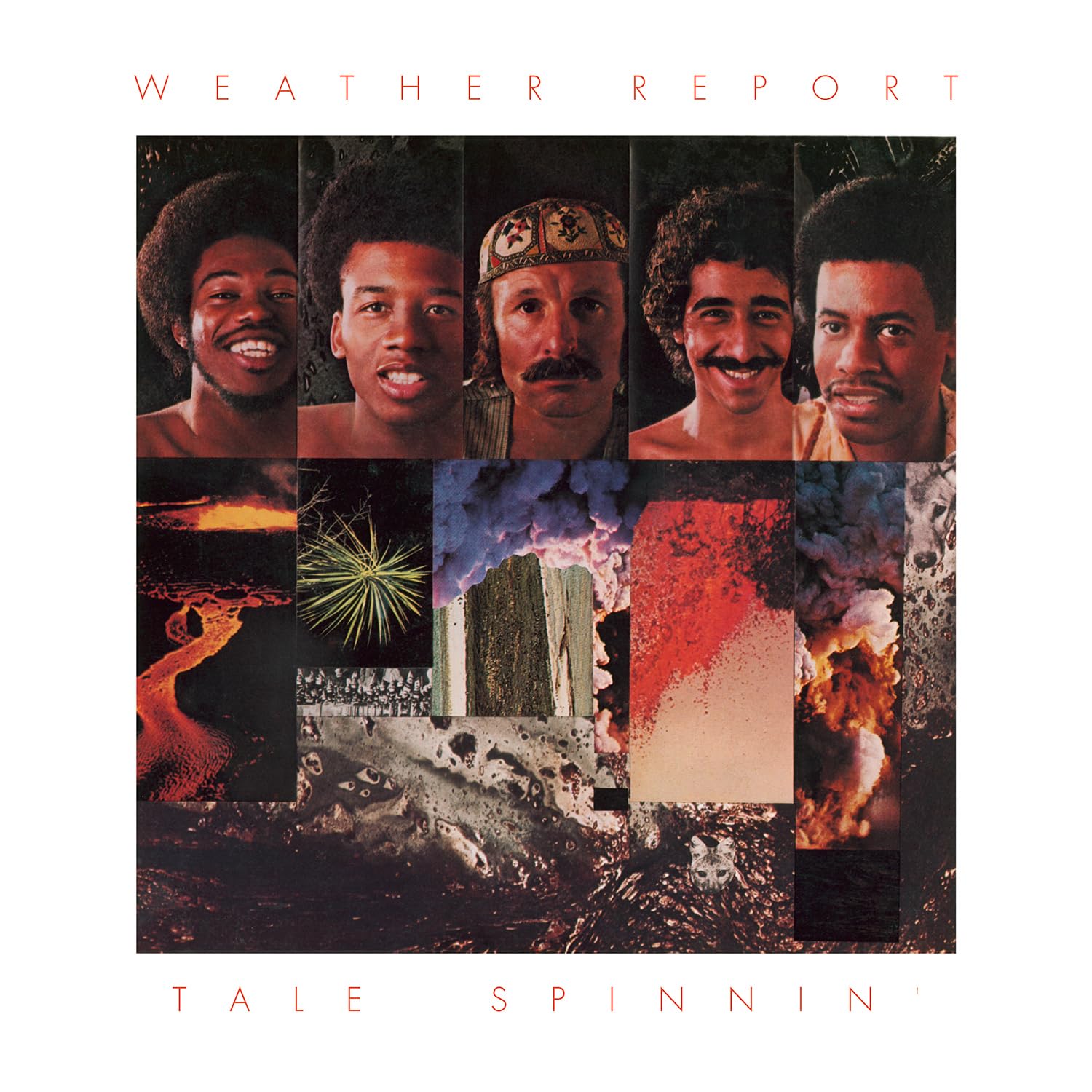
Weather Report: Tale Spinnin

Tales Spinnin’, released in May of 1975, is a vibrant, colorful album that showcases Weather Report at the height of their fusion creativity. The first side of the album is particularly striking, filled with bold, dynamic compositions that blend intricate melodies with rich textures. It is if I can almost hear colors when listening to this first side — it is that visually evocative, aurally. I wish I had some sophisticated color display screens for both the left and right channels that would translate the music into various bursts and evolving strands of colors, but lacking that, I can luxuriate in the radiant waves of Zawinul’s lush synthesizers and Wayne Shorter’s fluid, expressive saxophone work. The interplay between all five musicians is electric, creating a vivid musical landscape that’s both sophisticated and exploratory. The rhythms are complex yet accessible, propelling the tracks into lush, otherworldly soundscapes that are full of life and color.
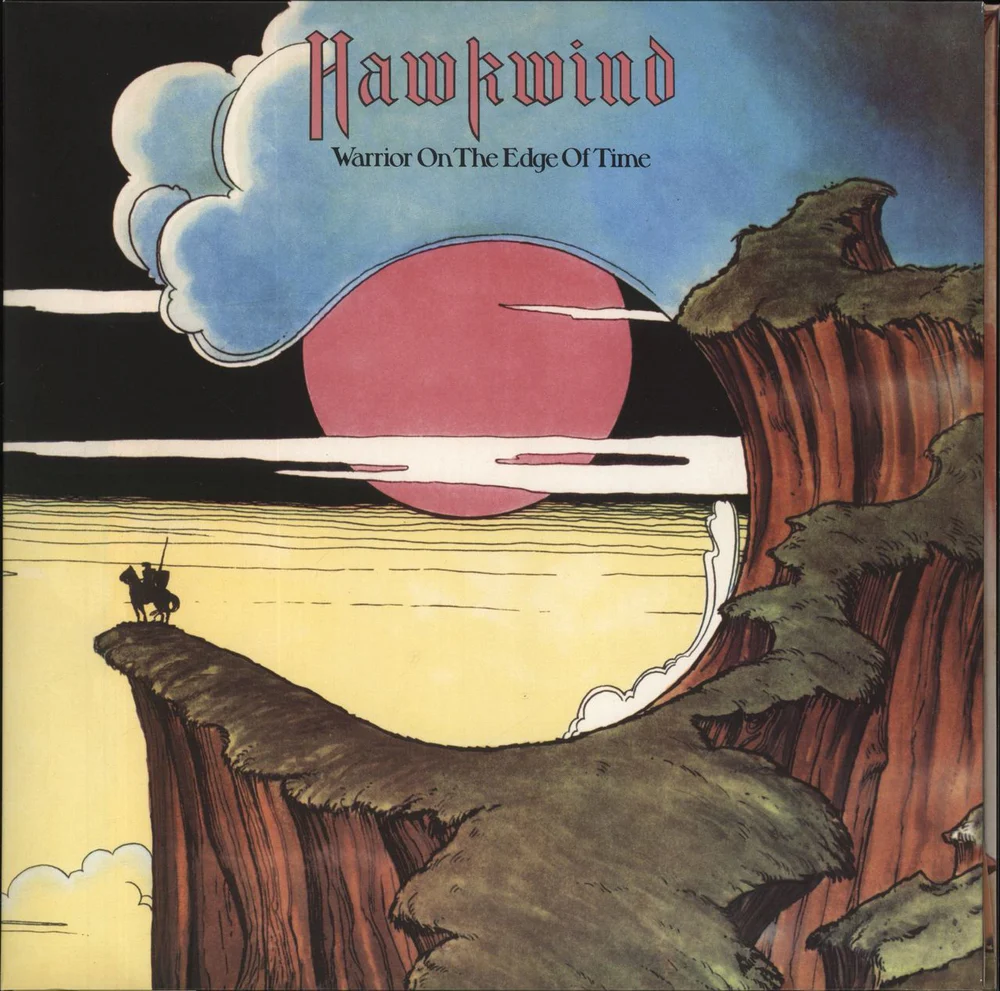
Hawkwind: Warrior On the Edge of Time

Released on May 9. 1975, Hawkwind’s Warrior on the Edge of Time is both engaging and consistently accessible, effectively blending their signature space rock with more traditional prog-rock elements. There is strong emphasis on synthesizers with some effective flute, guitar and even violin to supplement the keyboards, thundering bass, and the often incessant forward-driving percussion. “Assault & Battery” begins the album in grand style, immediately immersing the listener in Hawkwind’s signature Space Rock. This album showcases Hawkwind at their peak, delivering a memorable, mythic sci-fi journey through the fabric of time and space rock.
Fifty Year Friday: July 1974

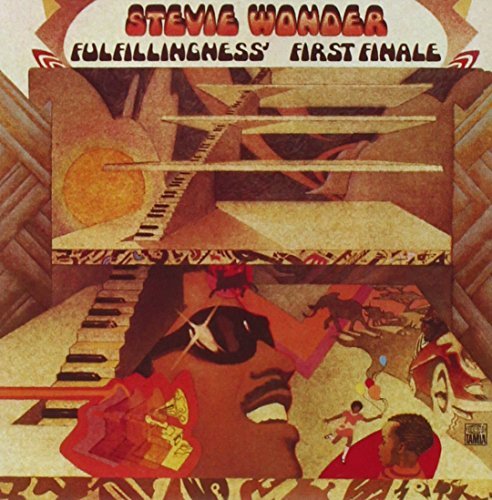
Stevie Wonder: Fulfillingness’ First Finale

Released on July 22, 1974, Stevie Wonders follows up the magnificent Innervisions album with another remarkable musical achievement. The album begins with the mellow, uplifting “Smile Please” which effectively sets the tone for the entire album. Each track could qualify as a highlight of the album, depending on one’s musical preferences. Of particular note are “Creepin”, a hauntingly beautiful song with a misty dreamlike quality and the always politically relevant (unfortunately) “You Haven’t Done Nothin’,” My favorite track is “They Won’t Go When I Go” which with its simple, solemn piano introduction, and profoundly compelling musical material. The album ends with the upbeat yet pleading “Please Don’t Go” with its effective gospel arrangement providing a solid finish to a very memorable album.

Robert Wyatt: Rock Bottom

Released on July 26, 1974, over a year after Robert Wyatt’s accidental fall from a fourth floor window that sadly left him paralyzed from the waist down, this is one of the most exceptional, individually idiosyncratic prog rock albums of the 1970s. It is clearly a work of love and dedication. Wyatt used material mostly written before the accident and singularly sculpted it into an unconventionally effective and rather original album. Wyatt excels at making quirky chord changes sound both natural and logical, and then he furthers elevates his material through highly interesting arrangements that profoundly enhance the musical material. Innovative and compelling, stimulating and emotionally engaging, the album fully delivers a challenging and rewarding listening experience.

Renaissance: Turn of the Cards

I first discovered this album in 1974 on a visit to our local library. Scouring the very limited LP lending section of the library, this was one of the few rock albums available. It had just been released in July of 1974, and the library had put a shiny plastic covering over it, which along with its promising cover art, made it further stand out from the other albums in its bin and the bins that were adjacent to it. I brought it home and was very pleased with the opening piano introduction, particularly appealing to a Keith Emerson fan like myself. I had assumed it was original material, but now know it is an excerpt of a work by French composer and organist, Jehan Alain. Fifty years later, this album sounds even better than I remember — sometimes majestic, often adventurous, progressive rock, sometimes symphonic and often emotive, showcasing Annie Haslem’s soaring vocals and Jon Touts driving, punctuating keyboard work.

Fifty Year Friday: The Canterbury Scene: Soft Machine and Caravan first albums

Establishing the starting point of progressive rock is a hopeless cause since elements of progressive rock appear in bits in pieces long before a general progressive rock style.  The best one can do is try establish the earliest date of the first progressive rock group. Some might argue that such an “earliest date” is established by the formation of the Wilde Flowers, a group of jazz-leaning musicians that took a crack at British Rock and Roll in 1964 and developed a more-or-less accessible, and even partly danceable style of music that foreshadows the music of the Canterbury scene — easily enough explained by the members of the Wilde Flowers all taking prominent roles in these later groups. Though no albums were recorded, we have a set of demos that have been released on CD and are currently available on You Tube.  Keep in mind that these were demos and not particularly representative of Wilde Flower live performances, which included some jazz-based improvisation.

Though I prefer to keep my distance from the term “progressive rock” as a label for a style of music, I support a concept of progressive rock representing the pushing of boundaries of status-quo music and breaking free of the constraints of commercial expectations, particularly when commercially successful as in the case of songs like the Queen’s “Bohemian Rhapsody.”  This means that any rock music, whether by the Beach Boys, the Beatles, Jefferson Airplane, The Doors, The Zombies or some other group from the mid or late sixties that goes past the minimal expectations of pop/rock to explore the passageways that naturally and unnaturally twist and spiral out into Robert Frost’s road not taken.  This is also why I am hesitant to consider some of the “neo-progressive” rock bands as notably progressive — such a use of the “progressive” label creates the ironic condition when applied to today’s musicians, of being indicative of a lack of progressiveness as they are trying to recreate an older style as opposed to pushing out to new territories. However, that said, quality and excellence is a more welcome and appealing feature in any music over progressiveness for the sake of sounding or being progressive. I will more readily listen to the post-romantic British symphony composers of the early twentieth century over many of their contemporary atonal composers.

The Wilde Flowers

Band members included, at various times:

softm1MI0001896961

The Soft Machine: The Soft Machine

The Soft Machine, named after the 1961 novel by William S. Burroughs (titled based on the nature of the human body) started as a quartet in 1966 that included Robert Wyatt and Kevin Ayers from the Wilde Flowers, and classically-trained keyboardist Mike Ratledge and guitarist Daevid Allen from the free-jazz group Daevid Allen Trio. Following a European tour in August 1967, Allen, an Australian, was refused re-entry into Britain due to a previous overstay on an earlier visit.  Allen returned to Paris, to later form the group Gong, leaving Soft Machine a trio. On the first Soft Machine album we also have  Brian Hopper and Hugh Hopper, prior members of The Wilde Flowers, appearing in the writing credits.

This first Soft Machine album is a mixture of psychedelic rock and jazz elements as in tracks like “Joy of a Toy”, based on “Joy to The World” and sounding more like early space rock than Christmas music. Robert Wyatt makes up for any shortcomings as a vocalist with his contributions on drums.

Interestingly, the post of this first Soft Machine album on YouTube (link) has a Dislike to Like ratio of .0257 in the same ballpark of the Beatles’ Sgt. Peppers (link) ratio of .0254 — compare that to the Beatles’ Abbey Road ratio of .15 (link) or Gentle Giant’s Free Hand of .030 (link)

Track listing [from Wikipedia]

Side one
No. Title Writer(s) Length
1. “Hope for Happiness” Kevin AyersMike RatledgeBrian Hopper 4:21
2. Joy of a Toy Ayers, Ratledge 2:49
3. “Hope for Happiness (Reprise)” Ayers, Ratledge, B. Hopper 1:38
4. “Why Am I So Short?” Ratledge, Ayers, Hugh Hopper 1:39
5. “So Boot If At All” Ayers, Ratledge, Robert Wyatt 7:25
6. “A Certain Kind” H. Hopper 4:11
Side two
No. Title Writer(s) Length
7. “Save Yourself” Wyatt 2:26
8. “Priscilla” Ayers, Ratledge, Wyatt 1:03
9. “Lullabye Letter” Ayers 4:32
10. “We Did It Again” Ayers 3:46
11. “Plus Belle qu’une Poubelle” Ayers 1:03
12. “Why Are We Sleeping?” Ayers, Ratledge, Wyatt 5:30
13. “Box 25/4 Lid” Ratledge, H. Hopper 0:49

The Soft Machine

Additional personnel

caravan R-11701362-1520895436-5771.jpeg

Caravan: Caravan

Also made up of band members from The Wilde Flower (Pye Hastings, David and Richard Sinclair, and drummer Richard Coughlan), Caravan started up in 1968 and released their first album about the same time as Soft Machine’s first album.  This would be the first British group signed to Verve records, the famed American Jazz label founded in 1956 by Norman Granz that not only carried the most jazz titles in their catalog of any label, but also was home to Frank Zappa and The Velvet Underground.

Even if one is able to somehow dismiss the first first two Nice albums or the first Soft Machine album as qualifying as fitting into the progressive rock genre classification (once again, I am making a distinction between between being considered progressive rock music and being classified under the prog-rock label), it is much more difficult to dismiss this first Caravan album. It is unfortunate that the balance and mixing of this album is dodgy at best, but the music more than compensates for this otherwise serious failing.

“Place of My Own” with its alternation between the dreaminess of impressionism and the insistent forward progress of a march creates a whole organic work of four minutes that is comparable in substance to a similar length classical or jazz track. With liberal use of keyboard arpeggios and emphasis on the instrumental section over the lyrics, Caravan creates an overall mood and character to the entire work giving it is own identity as effectively as bands like Yes and Genesis would do to many of their songs on their early albums.  This is followed by the Indian-influenced instrumental, “Ride”, the effective forward-moving and sometimes beautiful “Love Song with Flute”, and the quirky, mostly psychedelic Cecil Rons. ” However, the most notable piece is the nine-minute “Where but for Caravan Would I” which is co-written by Caravan and Brian Hopper (who also co-authored some of the tracks on the first Soft Machine album.)  It is epic in nature,  starting off with a relatively simple section, repeated, that modulates to a short contrasting section that quickly returns to the original section again before breaking out into a furious instrumental section dominated by organ that again returns to the original key and the altered and more intense original theme, which is followed by a more complex rhythmical section that nicely functions as the coda to bring the work to a satisfying and complete conclusion.  This is a template for the prototypical prog-rock track, laid bare without any unnecessary frills or complications, something easily grasped and enjoyed, and available to be copied with endless variation and development.  Yes, later groups would move well beyond this, but Caravan provides the necessary starting point — and though it may not so much have influenced other groups as much as it was just an instance of the parallel development of the post-psychedelic rock groups that got their start at the end of the late sixties, it is as an impressive example of the relentless nature of this new music to carve out its own language and means of expression from the available languages and expressions readily available in the diverse music of that time.

Track listing [from Wikipedia]

All tracks credited to Sinclair, Hastings, Coughlan & Sinclair except “Where but for Caravan Would I?” which is written by Sinclair, Hastings, Coughlan, Sinclair and Brian Hopper.

Side One

#

Title

Length

1.

“Place of My Own”

4:00

2.

“Ride”

3:41

3.

“Policeman”

2:45

4.

“Love Song with Flute”

4:09

5.

“Cecil Rons”

4:05

Side Two

#

Title

Length

1.

“Magic Man”

4:01

2.

“Grandma’s Lawn”

3:23

3.

“Where but for Caravan Would I?”

9:01

Caravan

  • Pye Hastings – lead vocals (side 1: 1-2, 4), co-lead vocals (side 1: 5 & side 2: 1, 3), guitars, bass guitar
  • Richard Sinclair – lead vocals (side 1: 3 & side 2: 2), co-lead vocals (side 1: 5 & side 2: 1, 3), bass guitar, guitar
  • Dave Sinclair – organ, piano
  • Richard Coughlan – drums


Side Note:

Interestingly, the post of this first Soft Machine album on YouTube (link) has a Dislike to Like ratio of .0257 in the same ballpark of the Beatles’ Sgt. Peppers (link) ratio of .0254 — compare that to the Beatles’ Abbey Road ratio of .15 (link) or Gentle Giant’s Free Hand of .030 (link)  

Caravan’s first album Dislike to Like Ratio on Youtube (https://www.youtube.com/watch?v=Bt1inf8CRnE&list=PLALZtwXPtUFKvbI7h8Fc5CdqRYoI_qyyd) is .0028 — or 356 likes to only one Dislike — rather unheard of in youtube land.