Zumwalt Poems Online

Posts tagged ‘Charles Tolliver’

Charles Tolliver, Area, Demetrio Stratos, Zappa, Tubes;Fifty Year Friday: June 1975

Charles Tolliver: Impact

Released sometime in 1975, Charles Tolliver’s Impact is an impressive album from the audacious and creative trumpeter, composer, and bandleader. Big band albums were becoming rarer and rarer, particularly those that were inventive, hard-edged, and more late hard bop or post-bop than nostalgic or easy listening. Impact unfurls a colorful, colossal sonic landscape, brimming with hard bop and post-bop intensity and an unbridled, innovative spirit that pushes the boundaries of large ensemble jazz. Tolliver masterfully constructs compelling compositions and intricate, adventurous arrangements that are both challenging and exhilarating, providing a fertile ground for himself and a handful of formidable soloists to unleash their improvisational prowess.

The album begins with the title track, “Impact,” an explosive opener that immediately grabs the listener’s attention with its dense brass voicings and a driving rhythmic pulse. Charles Tolliver himself steps forward, delivering a blistering trumpet solo that cuts through the dense ensemble with a bright, commanding tone, showcasing his characteristic blend of searing energy and melodic ingenuity. Also shining brightly is James Spaulding, whose alto saxophone work wonderfully weaves angular, serpentine lines, interacting with apparent spontaneity with the structured force of the ensemble.

“Mother Wit” begins with strings, which initially set a delicate mood, but the overall atmosphere soon coalesces, leading into beautifully lengthy solo work from Charles Tolliver. Harold Vick provides soulful tenor work, followed by Stanley Cowell’s angular, unconstrained hard bop piano solo. The strings return, followed by Tolliver, bringing the piece to a balanced close.

“Grand Max” bursts out with tightly wound energy, with Tolliver diving right in and maintaining the initial momentum. Rounding out the soloing is Charles McPherson on alto, George Coleman on tenor, and again Cowell on piano. Side two commences with the quirky and distinctive “Plight,” an energetic track that further highlights the dynamic range of the orchestra. Tolliver initiates the soloing, and is soon followed by Spaulding, then Cowell. This is followed by the reflective “Lynnsome,” featuring Spaulding on flute in the intro, with solos from Tolliver and Cowell that maintain and extend the initial mood.

The album concludes with “Mournin’ Variations,” which opens with strings. A dynamic interplay between the strings and the jazz ensemble then sets the stage for George Coleman’s extended tenor solo. This is followed by concluding piano commentary from Cowell before the re-entry of the strings. The two sections then alternate, shifting between wistful and emphatic passages, bringing one of the most enjoyable jazz albums of 1975 to a powerful conclusion.

Area: Are(A)zione

This is one of the few live albums, official or bootleg, of Area with Demetrio Stratos. This first side is amazing and includes live versions of three classic Area works, showcasing the bands exciting instrumental interplay and the one-of-a-kind, next-to-no-one voice of Stratos. The second side is is primarily a live free jazz/rock track, titled “Are(A)zione” matching the album’s title. “Areazione” is Italian for “evaporation,” but the use of case here provides the true meaning: “Area” is of course the group’s name and “Azione” is Italian for action, so freely translated this can be viewed as Area in action. The album ends with a nod to the group member’s socialist affinities, a rendition of “L’Internazionale.”

Frank Zappa and the Mothers of Invention: One Size Fits All

Released in late June of 1975, One Size Fits All provides more consistency and discipline than most Zappa albums allowing all the brilliance to shine through with only minor extramusical annoyances and distractions to detract from the overall positive musical experience. The jazzy” Inca Roads” is the gem of the album, and like “Peaches En Regalia” from Hot Rats provides enough forward momentum to easily forgive any weaknesses or annoyances from any tracks that follow. If one wants accessible Zappa, this is a good album to start with.
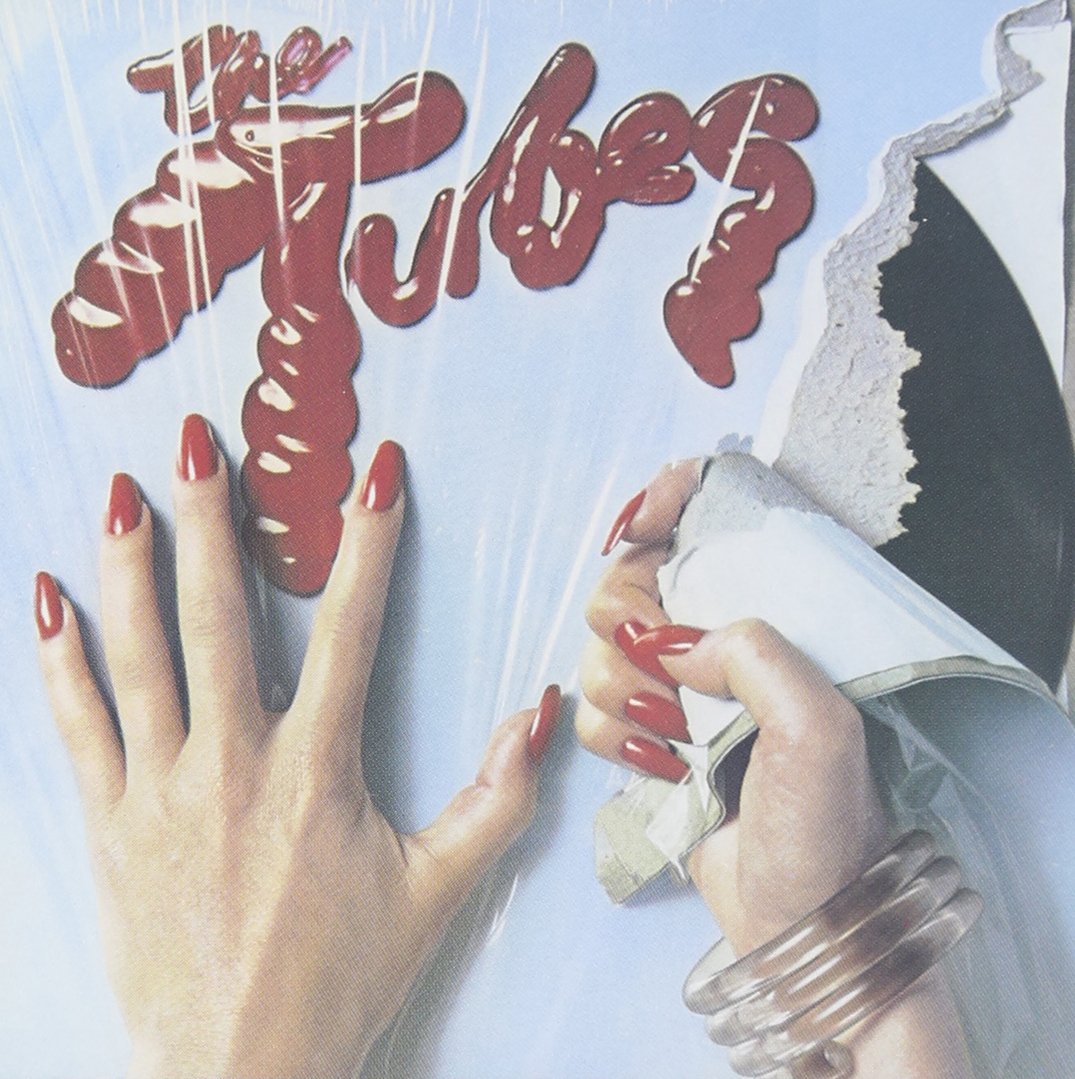
The Tubes: The Tubes

Released with minimal fanfare in June 1975, the album was passed around amongst my friends for its humor and lively use of synthesizer. In contrast to the rougher edges found in the humor seeping from Zappa albums, this was polished with some believable parodies of prevalent styles, primarily glam and punk, mixed with satirical social commentary. The humor enhanced the music, and the music was generally quite impressive itself. “Up from the Deep” kicks off the album with energy, drama and style, warmth and self-deprecating humor. The synthesizer work and keyboard in the instrumental bridge is up to progressive rock standards, and even includes a reference to a prevalent bridge motif in Gentle Giant’s “Knots” from Octopus. This is followed by a mixture of styles, all humorous in their own ways: Space Baby sleekly imitates David Bowie post-Ziggy style of 1973 and 1974, “What Do You Want From Life” drips with dry, razor-edged humor, and “Mondo Bondage” is notable for its relentless striding rhythm which supports the simultaneous metaphorical and literal meanings of the lyrics which are cleverly brought to the forefront. “Mondo Bondage” kicks off side two and is followed by three additionally strong tracks, “What Do You Want from Life?” a dig at materialism and seventies-style consumerism and angst, “Boy Crazy” another glam/Bowie parody that ridicules teenage cluelessness, and the pounding, relentlessly repetitive “White Punk on Dopes” which would eventually get some notable FM airplay in the U.S. and get even wider airplay a couple of years later in the UK. The Tubes went all out when they staged their material live, and though some of the musicality and more subtle aspects of their humor were consequential causalities, they still put on a good show.

Fifty Year Friday: Roy Ayers, Stoned Soul Picnic; Eric Burdon & The Animals, Every One of Us

Stoned Soul Picnic.jpeg

About the time that the Fifth Dimension released their single of Laura Nyro’s “Stoned Soul Picnic”, Roy Ayers recorded tracks for his second album on June 20, 1968  that included Nyro’s tune and would be named for that song. The session and the released album also included three originals, Jobim’s “Wave” and Ron Miller and Orlando Murdon’s “For Once in My Life” (previously recorded by Tony Bennett [#91 on the pop singles chart] and several Motown Artists including the Temptations, before Stevie Wonder’s hit version would be released later that year.) Sometimes these jazz covers of pop hits are just a waste of time to listen to, but not here.

Roy Ayer’s opens the album with his own composition, “A Rose for Cindy”, which starts off like free jazz before dissolving into a sensual chromatic passage that precedes the main section of a thoughtful and introspective ballad.  Notable here is the excellent soloing and interplay between the participants. Hubert Laws and Herbie Hancock are both particularly attuned to the character of the piece and provide an appropriate, impressionistic sensibility that make this the most memorable track on the album.

“Stoned Soul Picnic is vibrant and funky with Evan’s mallet work, Law’s flute, Ron Carter’s bass, Hancock’s keyboard work (he plays what sounds like a Hammond B-3) and Charles Tolliver’s trumpet essential to the sense of freedom and exuberance that permeates this version.  This is followed by a surprisingly engaging and inescapably immersive version of  “Wave” with Miroslav Vitouš replacing Ron Carter for the rest of the album, and strong solos from Gary Bartz and, as the case on every track here, Herbie Hancock.

“For Once in My Life” is treated tenderly. but not over-delicately, followed by Tolliver’s upbeat “Lil’s Pardise” highlighted by Ayer’s vibe solo and Hancock’s piano solo.  The album concludes with Edwin’ Birdsong’s evocative “What the People Say” with introspective yet enchanting solos by Ayers and Laws. Overall, an excellent post-bop album characterized by overall beauty and unaffected optimism.

Track listing [from Wikipedia]

  1. “A Rose for Cindy” (Roy Ayers) – 8:56
  2. Stoned Soul Picnic” (Laura Nyro) – 2:50
  3. Wave” (Antônio Carlos Jobim) – 7:59
  4. For Once in My Life” (Ron Miller, Orlando Murden) – 3:50
  5. “Lil’s Paradise” (Charles Tolliver) – 6:33
  6. “What the People Say” (Edwin Birdsong) – 8:09

Personnel

animals eoou.jpeg

This is not a particularly strong album by the Animals. Listening to this today, it seems there is more filler than essential components, though the political statement Burdon makes on side two is pretty remarkable given the inherent expectations by the record label for a high level of commercial appeal from a group as well known as this.  And there is commercial appeal in “White Houses”, which hints at Caribbean rhythmic and melodic influences, and in the group’s initially very dark, then bluesy and rocking rendition of “St. James’ Infirmary”, a follow-up of sorts to the groups’ very successful version of “The House of the Rising Sun.”

The main item of note, particularly for historical interest, is Burdon’s “Year of the Guru” somewhat modeled after Dylan’s  “Subterranean Homesick Blues”, but with more of a rock than folk character — sounding more like rap music than can reasonably be expected for 1968.  Certainly there are other cases for early “proto-rap”, but “Year of the Guru” sounds too much ahead of its time instrumentally and vocally to be categorically overlooked, particularly in light of the social commentary of the lyrics:

“My leader said son you’d better get yourself together
Never mind the fools who know what we’re getting into
But a forty mile walk would do us both a world of good
And he sat down and watched me take off down the road.”

…..

“Now here I sit in a state-run asylum
Limitless, friendless but much more together
I decided to do some good book readin’
About the art of people leadin’
Now I’m the leader and they’re being led
What’s the matter if they’re crazy till you hear what I’ve said
Being the leader is really where its at
But just how long can a good thing last
Oh, oh leader
Oh, oh leader
Now listen to this baby
This is the year of the guru
Now the thing to do is to ask yourself
What can a guru do for me?
Then you say to yourself
I gotta get a guru”


Track listing [from Wikipedia]

All selections written by Eric Burdon except where indicated.

Side 1 

  1. White Houses” (4:43)
  2. “Uppers and Downers” (0:24)
  3. “Serenade to a Sweet Lady” (John Weider) (6:17)
  4. “The Immigrant Lad” (6:15)
  5. “Year of the Guru” (5:25)

Side 2 

  1. St. James Infirmary” (Traditional, arranged by Eric Burdon) (4:15)
  2. “New York 1963-America 1968” (Eric Burdon, Zoot Money) (19:00)

Personnel 


Fifty Year Friday: Tyrannosaurus Rex, Charles Tolliver, The Doors and more

TRexR-2197752-1382350404-3605.jpeg

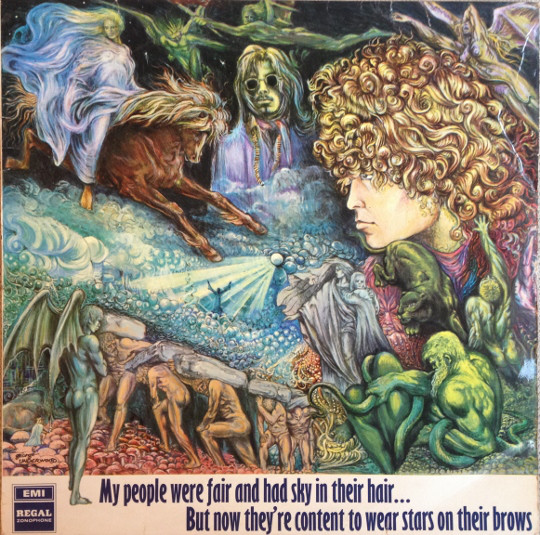
Tyrannosaurus Rex: My People Were Fair and Had Sky in Their Hair… But Now They’re Content to Wear Stars on Their Brows

After the collapse of John’s Children, Marc Bolan hastily formed a new group to play at the Electric Garden club in Convent Garden, London, interviewing band members just a few hours before it was time to go on stage.  The band was booed off, and Bolan dropped the bass and guitarist, keeping drummer, Steve Peregrin Took, and busking in the tube stations as an acoustic guitar and bongos duo, until, championed by famous DJ John Peel, they recorded their first album, which included John Peel reciting Marc Bolan’s prose on the last track of side two.

Released on July 5, 1968, Tyrannosaurus Rex’s debut album, My People Were Fair and Had Sky in Their Hair… But Now They’re Content to Wear Stars on Their Brows, starts off with a basic blues number, a composition from Marc Bolan’s earlier days, but still sung with an authenticity hearkening back to blues 78s from the 1920s.  It is after that point in the album, excepting another earlier song, “Mustang Ford”, that the duo of Bolan (assumed last name based on Bob Dylan) and Peregrin Took (yes, assumed last name from the novel, The Hobbit) embark on their own path, a concoction of folk, blues, and sidewalk musicianship that has an otherwordly, mystical flavor and just enough dissonance to make the music sparkle.

Give some credit, also, to producer Tony Viscounti, for capturing the general spontaneous and naturalness of the duo,  yet delivering a polished, finished product.  Viscounti had been working as an in-house producer for the Richmond Organization which produced music by the Weavers, Pete Seeger, Woody Guthrie,  Georgie Fame, and Anthony Newley as well  as other folk and jazz artists.  Just as one can hear some similarities with Anthony Newley on David Bowie’s first album, there are moments in this T. Rex album that are very much folk, with Viscounti working his magic to create a freshness, vitality and clarity to the music, keeping intact the beauty of the acoustic guitar through this wonderful album.

Track listing [from Wikipedia]

All tracks written by Marc Bolan.

Side A

No.

Title

Length

1.

“Hot Rod Mama”

3:09

2.

“Scenescof”

1:41

3.

“Child Star”

2:52

4.

“Strange Orchestras”

1:47

5.

“Chateau in Virginia Waters”

2:38

6.

“Dwarfish Trumpet Blues”

2:47

Side B

No.

Title

Length

1.

“Mustang Ford”

2:56

2.

“Afghan Woman”

1:59

3.

“Knight”

2:38

4.

“Graceful Fat Sheba”

1:28

5.

“Wielder of Words”

3:19

6.

“Frowning Atahuallpa (My Inca Love)”

5:55

Tyrannosaurus Rex

Also, John Peel, narration on “Frowning Atahuallpa (My Inca Love)”


PaperMan-455315-1396168149-7180.jpeg

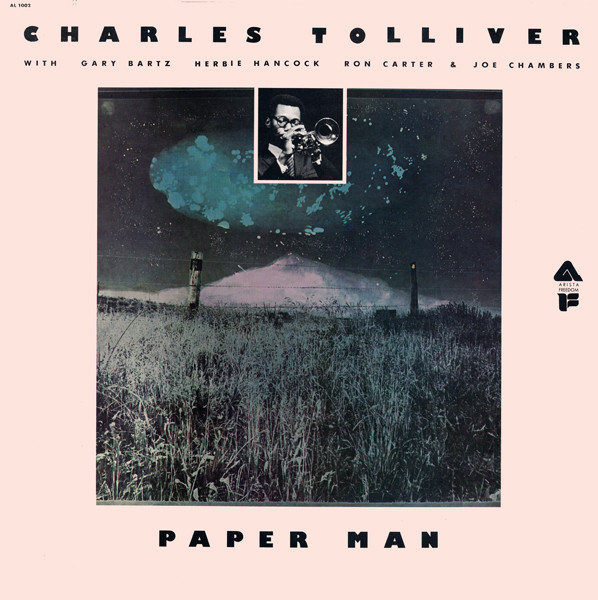
Charles Tolliver: Paper Man

Recorded on July 2, 1968, Charles Tolliver first album as a leader, Paper Man, seems to be one of those overlooked gems of jazz, not easily available today as a CD or LP, though accessible via Amazon streaming or downloadable from Amazon as mp3s.  Tolliver is supported by pianist Herbie Hancock, bassist Ron Carter, drummer Joe Chambers and, for part of the album, altoist Gary Bartz.  Herbie Hancock is particularly inventive, providing diverse accompaniment and soloing, and Charles Tolliver sounds great!  The title track, perhaps intended for radio air play, is the most conservative, and potentially most commercial of the tracks and ends the album, with the first five tracks all being more adventurous and compelling.  The production quality of this album is very good for 1968, with clear definition of Joe Chambers’ excellent drum work on the left channel and Hancock acoustic piano on the right.  Well worth the effort to track this down, and an album that deserves repeated listening.

Track listing [from Wikipedia]

All compositions by Charles Tolliver

  1. “Earl’s World” – 4:23
  2. “Peace With Myself” – 9:37
  3. “Right Now” – 5:47
  4. “Household of Saud” – 6:06
  5. “Lil’s Paradise” – 7:05
  6. “Paper Man” – 6:11

Personnel

Waiting For The Sun

The Doors: Waiting For the Sun

Recorded mostly in the first five months of 1968 and released on July 3, 1968, this third Doors’ album continues along the same path as their second,  however with all but one of Morrison’s cache of original material previously recorded, Morrison and the band had to rush to come up with new music.  Initially, the were going to include a composite piece of earlier Morrison fragments (a version of this can be heard on side four of their live album released two years later), but for whatever reason this was abandoned.  The hit from this album “Hello, I Love You”, was written by Morrison a few years earlier, and was previously recorded in 1965 with an earlier version of the band named Rick & The Ravens. This 1968 version was promoted as the first rock single released in stereo, and it climbed to number one on the pop charts in both the U.S. and Canada.

The album is generally pretty good with Ray Manzarek’s keyboards and Robby Kreiger’s providing interest and substance.  For fans of West Coast jazz, Leroy Vinnegar plays bass on track “Spanish Caravan.”

Track listing [from Wikipedia]

All tracks written by The Doors (Jim MorrisonRay ManzarekRobby Krieger and John Densmore), except as stated.

Side A
No. Title Length
1. Hello, I Love You” (written by Morrison) 2:14
2. Love Street” (written by Morrison) 2:53
3. Not to Touch the Earth” (written by Morrison) 3:56
4. “Summer’s Almost Gone” (written by Morrison) 3:22
5. “Wintertime Love” 1:54
6. The Unknown Soldier 3:23
Side B
No. Title Length
7. “Spanish Caravan” 3:03
8. “My Wild Love” 3:01
9. We Could Be So Good Together 2:26
10. “Yes, the River Knows” (written by Krieger) 2:36
11. Five to One” (written by Morrison) 4:26

The Doors

Additional musicians


Southern Rock from Canada and California

Rock was a child of many parents including Rock and Roll — and Rock and Roll was mainly the child of rhythm and blues, but often with some country thrown in, absorbed, stolen, or otherwise incorporated. One permutation of the more traditional rock-and-roll and blues-based rock music family offshoots that had been influenced by country music was what would later be labelled Southern Rock.  In contrast the progressive exploration and aggressive, rebellious pushing of the envelope taking place in 1968, we see an opposite trend in Southern Rock: a more conservative approach to music generally using a limited set of chord progressions, reverting back to a more homophonic or chordal texture, with solo guitar lines providing a large portion of the musical contrast or musical interest.

Amazingly enough, two of the early commercially successful representatives of this style were a California band sounding as if they had come from Louisiana, and a Canadian band that had first provided backup in Toronto for Arkansas-born Ronnie Hawkins and then later served as Bob Dylan’s touring rock band.

CCR 1R-2754978-1364499991-4672.jpeg

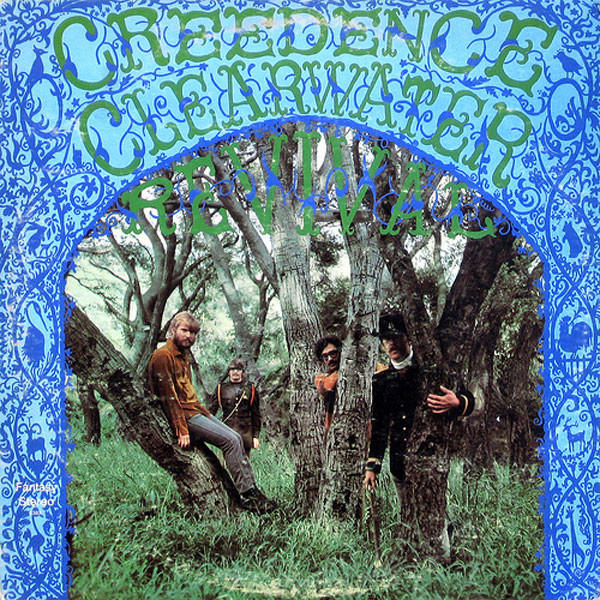
Credence Clearwater Revival: Credence Clearwater Revival

With their three youngest players, including John Fogerty, together since their junior high in Los Cerritos,California, and the fourth being John’s older brother, Tom, who they soon joined up with, the Blue Velvets, played basic rock and roll, eventually signing up with Fantasy Records in 1964, with the unfortunate name of The Golliwogs being thrust on them — which, thankfully, was changed to Credence Clearwater  Revival when Fantasy Records changed ownership.  1960’s rock and roll, blues, rhythm and blues, and country music all contributed components to their first album, titled after the name of the band.

And though this is not the type of music I turn cartwheels over, I have to admit it is pretty good. John Fogerty’s guitar solos are interesting, the production of the album provides clear distinction of the basic rock instruments of drums, bass, rhythm guitar and lead guitar, and music is well crafted and well performed.  The album provided three singles for airplay,  including”Suzie Q”, a “swamp-rock” classic originally recorded and co-written by Dale Hawkins in Shreveport, Louisiana in 1957.  The remaining tracks are also interesting, with the bass and rhythm guitar on the last track, “Walk on Water”, a remake from the earlier days as the Golliwogs, being particularly notable.

BigPinkR-3053853-1406143584-9081.jpeg

The Band: Music from the Big Pink

It’s easy enough to forget how much bad music was on the AM airwaves in 1968.  When we ask a streaming music assistant like Alexa to play music from the 1968, the fare provided is generally some of the better music, the classic tracks, the music that has survived the more critical scrutiny that occurs over time, as opposed to some of the least palatable numbers that found their way to the charts and on to the portable turntables of some of the teenyboppers that had lesser developed musical tastes.  One of the many annoying singles in 1968, was “The Weight.”  Listening to this again in 2018, I still cringe, despite the high audio quality of the track on the Mobile Fidelity SACD release of The Band’s debut album, Music from the Big Pink.  Listening to the album as a whole,  I hear much that is good, but nothing that excites me musically.

I realize that this album is considered a true rock classic by many, and though I don’t deny its historical influence, I don’t particularly celebrate that influence either.  To my ear these songs seemed to have started with a sequence of chord changes,  fairly ordinary chord changes, on which lyrics where imposed with the melody derived from the meter of the lyrics and the underlying chords.  Or perhaps, the lyrics were written first in some cases, perhaps in the case with the three Dylan songs on this album, and the music was something provided to support the lyrics.  However, this was put together, it doesn’t strike me as carefully crafted final set of music and lyrics, but something produced from the output of a series of casual jam sessions consolidated into shorter songs.

That first CCR album and this first album by The Band, along with a few other albums of 1968, such as the August 1968 Byrds album, “Sweetheart of the Rodeo” and the two 1968 albums by Canned Heat, are early examples of country rock and more blues-based rock bands that would become more popular and prevalent in the 1970s, possibly as an alternative to the apparently less-accessible and more complex progressive rock that it would co-exist with.  One should also consider the influence of The Grateful Dead, Country Joe and the Fish, psychedelic rock, blues rock and hard rock on this genre.  As always, pasting labels on music is perhaps effective for display or marketing purposes, but does little to further the enjoyment or understanding of such music. Never let anyone else’s opinion of something influence your innate desire to explore the vast expanse and richness of music left to us by previous or current generations of composers and musicians.