King Crimson: Red, Todd Rundgren, John Lennon; Fifty Year Friday: October 1974
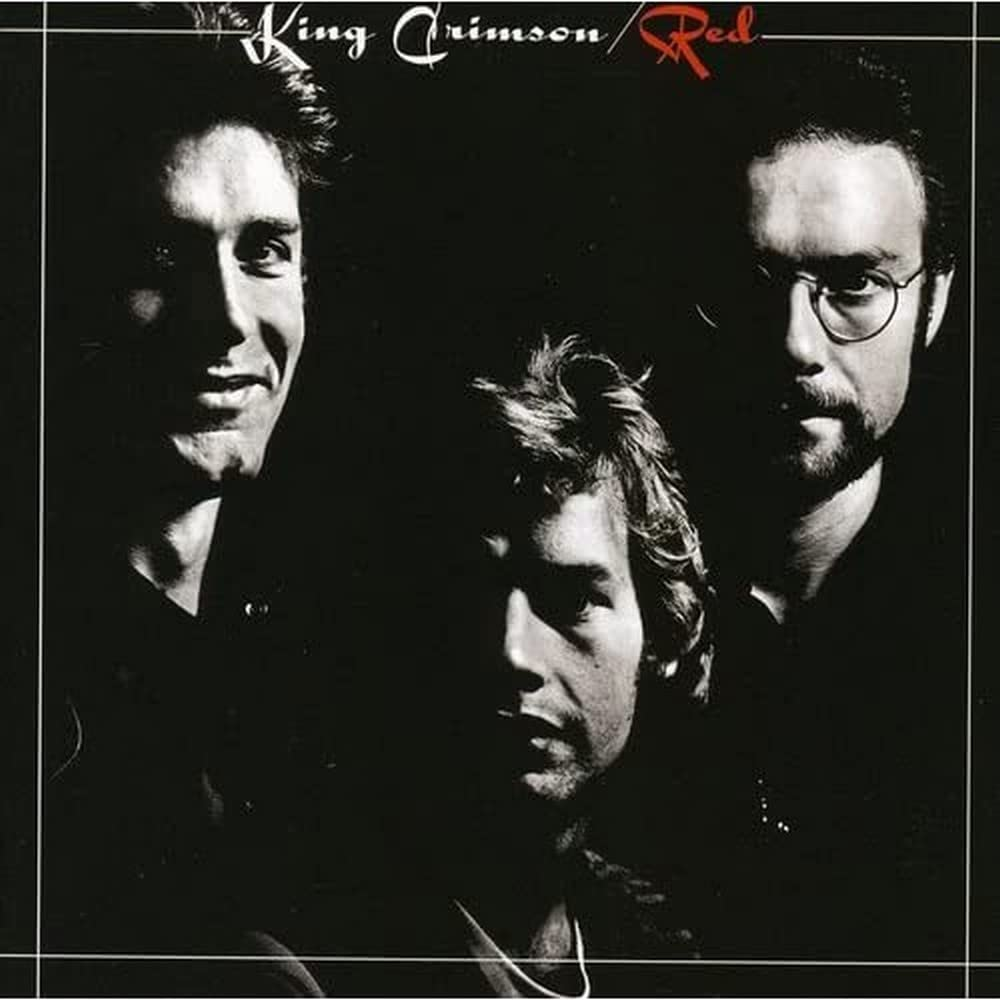
King Crimson: Red
King Crimson’s seventh studio album, Red, released at the beginning of October 1974, dives very deeply into landmark progressive rock territory — providing a historically remarkable hard-edged, aggressive soun for much of the album, with all studio tracks (album includes on live track on side two) deftly blending intensity, complexity, and fiery emotion into a cohesive and powerful musical work.
Opening with the title track “Red,” the album immediately sets a formidable tone. This remarkable instrumental piece is characterized by its driving rhythms and the intricate guitar work from Robert Fripp. The performance is both aggressive and precise, amplifying the inherent dark energy and relentless momentum of the composition with its effective dynamic and musical contrasts on a foundation of unwavering complexity and unstoppable drive.
This is followed by “Fallen Angel,” an emotional work of stark contrasts in ABAB format with its melodically beautiful verse with oboe set against a frenetic chorus (B) section. John Wetton’s vocals are hauntingly expressive, Fripp and drummer Bill Bruford insure the chorus is darkly forbidding aided by Wetton’s bass, March Charig’s cornet.
The third track, “One More Red Nightmare,” is a showcase of Bruford’s extraordinary drumming, combining complex polyrhythms with jazz-like fluidity. The song’s heavy riffs and intense saxophone lines by Ian McDonald (brought in for old time’s sake!) add layers of complexity and raw power. The lyrics, provided by Supertramp-founder Richard Palmer convey a sense of urgency and chaos, mirroring the song’s turbulent musical landscape.
“Providence,” recorded live at the Providence Theater in June 30, 1974, checks the box for the free improvisational material that we expect in a King Crimson album. The track begins with an eerie and atmospheric introduction, gradually building in intensity as Fripp, Wetton, Bruford and violinist David Cross contribute to the evolving sonic tapestry. The improvisational nature of the piece highlights the band’s incredible chemistry and ability to create compelling music spontaneously.
The album culminates in the epic “Starless,” a twelve-minute exploration through multiple musical landscapes, initially intended for their previous album, but as not quite ready, brought to its intended final state for inclusion at the end of Red. The opening section features one of Wetton’s most memorable vocal performances, complemented by a melancholic mellotron backdrop. The middle section builds tension with a repetitive, ascending guitar motif, gradually increasing in intensity until it reaches a frenetic climax. The final segment brings a return to the opening theme, now transformed and imbued with a sense of cathartic release, and in the old days when this music was on LP, ensured that the second side got some significant turntable time also.

Utopia: Todd Rundgren’s Utopia
Todd Rundgren’s Utopia, released around October 1974, is the first studio album of his group, Utopia, an effective vehicle for Rundgren to adventure even further into the progressive rock realm. Up to this point Rundgren had balanced his talents for writing effective, catchy melody with his boldness in exploring advanced studio techniques and harnessing the promise of electronic instruments, particularly the guitar and keyboard. With this album, Rungren works within a more structured, and even more ambitious framework.
From the beginning, Rundgren and his group of three keyboardists, a drummer and bass guitarist/cellist prove they can produce both substantial and impressive progressive rock. The album opens with the live recording of their “Utopia Theme performed with both precision and vigor, filled with creativity and exotic passages. This is followed by the solidly engaging “Freak Parade” with a Zappa-sounding instrumental section as a second theme, and then a march-like section that transitions into a brief whimsical vocal section that gives way to a contemplative instrumental section, followed by fantastically frenzied, keyboard dominated penultimate section with the return march theme, which along with some final bass work provides an effective coda to the work. The first side closes with the anthem-like “Freedom FIghters” an effective blend of Rundgren’s gift for melodic writing and imaginative instrumentation.
At this point, we have had over 28 minutes of great music, but the real attraction of this album is the last track, “The Ikon”, taking up the entirety of side two and running over thirty minutes. What an amazing work! Rundgren has constructed much of the musical material from small repeated motific cells, particular the opening. There are also some amazing lyrical material with vocals that nicely offsets the mostly instrumental landscape. One is just mesmerized listening to this. The music, even in repetitive sections, avoids being predictable, and is always adventurous and creatively exciting with multiple occurrences of memorable melodic material with compelling harmonic changes.

Supertramp: Crime of the Century; Jethro Tull: War Child; John Lennon: Walls and Bridges
These three albums, released in October of 1974, are of mixed quality, but worth checking out for their best tracks.
Supertramp’s Crime of the Century, a concept album composed by Rick Davies and Rodger Hodgson around youthful alienation and anxiety that showcases Supertramp’s semi-progressive pop at its best, from its memorable harmonica solo that opens the album through peppy classics like Dreamer through to the ending title track with its excellent extended instrumental ending featuring John Anthony Helliwell on saxophone.
Jethro Tull’s Warchild was an album I purchased in 1974, listened to a few times and set it aside, but its nice to come back to and hear again, almost fifty years later, particularly for “Back-Door Angels” and “Skating Away on the Thin Ice of a New Day.” If exploring the album for the first time, whether purchasing or streaming, the best bet is to go with the 2002 Remastered version with its multiple bonus tracks.
John Lennon’s Wall and Bridges had an interesting, though functionally awkward LP jacket, that reminded one of the childhood picture books that created different images through folding overlaying segments. Though containing only two particularly strong tracks, “#9 Dream” which musically is instantly recognized as Lennon, and “Steel and Glass” with many similarities to Imagine‘s “How Do You Sleep?”, the album is historically interesting as it was the second and most notable of three albums recorded while Lennon was separated from Yoko and involved with personal assistant May Peng, who deserves credit for bringing more stability and productivity into Lennon’s life, assisting him on cutting down on his excessive alcohol and drug use, encouraging a partly healthier lifestyle, encouraging him to collaborate with other musicians including Elton John, and most significantly, reconnecting him with his son, Julian Lennon, who provides elementary drums on the last track of the album, and Paul McCartney. Also of note, the album contains two tracks with Elton John, with “Whatever Gets You Through The Night” being John’s first number one single as a solo artist in the U.S., as well as the UK.