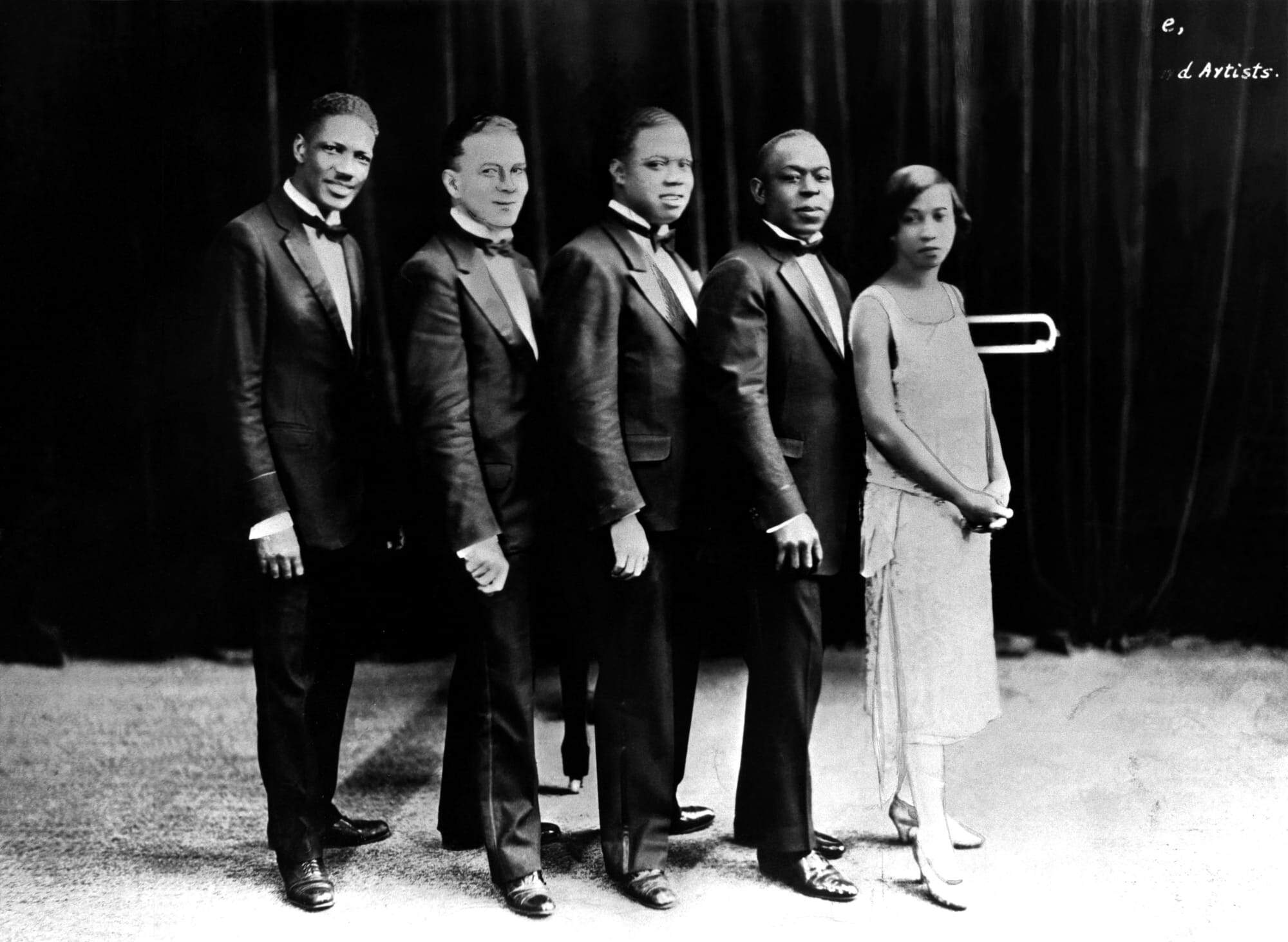
The “Fox Trot” craze continued to sweep the nation in February 1926, serving as the polite veneer for the rhythmic revolution that continued to percolate and bubble through the musical soul of our country.
One of the most important recordings and most productive sessions in American music took place on February 26, 1926, in Chicago. Louis Armstrong and His Hot Five recorded six tracks including the magnificent polyphony of intertwining parts of “Muskrat Ramble,” and “Heebie Jeebies”, where Louis Armstrong scats. Though there is a least one example (“My Papa Doesn’t Two-Time No Time” by Don Redman in 1924) of recorded scatting prior to this, and though there is evidence dating scat singing to 1906 or earlier, this is the recording people point to as the force behind the popularization of scat singing.
We also have a pivotal moment for American culture: on February 7, 1926, historian Carter G. Woodson launched the very first “Negro History Week.” Woodson chose the second week of February to coincide with the birthdays of Abraham Lincoln and Frederick Douglass. Fifty years later, in February 1976, the celebration officially expanded from Woodson’s original week into the full month.
Discover more from zumpoems
Subscribe to get the latest posts sent to your email.

Leave a comment