Fifty Year Friday: November 1974

Yes: Relayer
Yes’s fourth and fifth studio album, Fragile and Close to the Edge, are representatives of Yes at the very best. The eighteen minute title track of Close to the Edge, has no single-track rival in their seven-decades long catalogue. However if one is looking for the closest match possible, one finds it on their seventh studio album (released near the end of November 1974) with its format of one amazing composition on side one and two short works on side two. The longer work, “The Gates of Delirium” inspired by Tolstoy’s “War and Peace: with all the elements of great late nineteenth-century nationalistic tone poems, is wonderfully produced by the ELP and Yes engineer Eddie Offord and shimmers with a multitude of sounds effects and exceptional playing including Patrick Moraz’s synthesizer textures, Chris Squire’s distinctive bass work, Steve Howe’s guitar passages, and Alan White’s selective use of brake drums and auto parts for unconventional percussion effects. Side Two rivals Side two of Close to the Edge with the energetic and rhythmically intricate “Sound Chaser” and the more tranquil, reflective, atmospheric, and deftly shaped “To Be Over” which nicely wraps up the album.
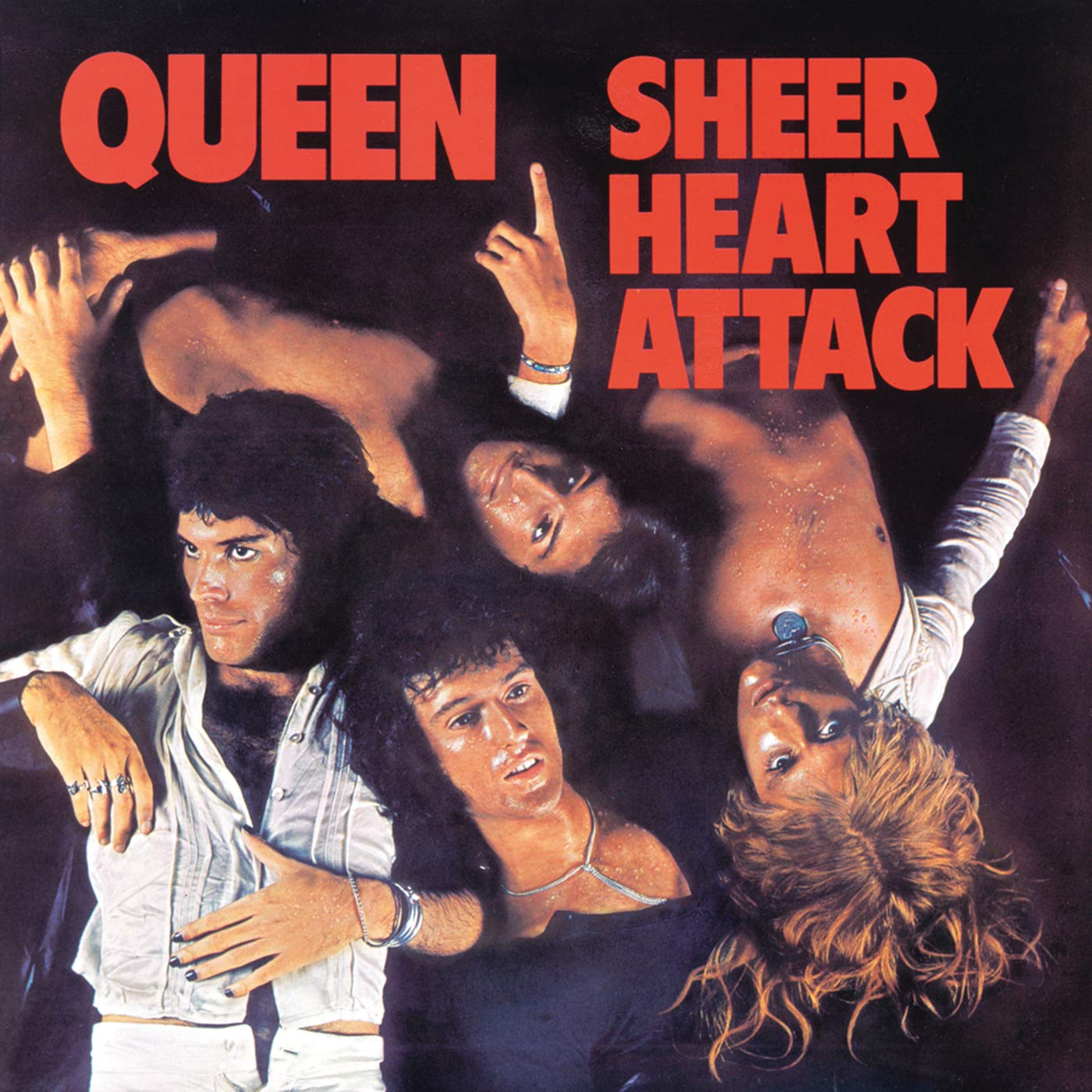
Queen: Sheer Heart Attack
Queen’s third studio album, Sheer Heart Attack, released on November 8, 1974, is a dazzling display of the band’s brilliant inventiveness. The album delivers a attention-grabbing diversity of hard rock, glam, and English Musical hall styles — sometimes playful, sometimes dramatically serious, sometimes campy, sometimes harmonically sophisticated, but always compelling and of impressive quality.
The album opens up forcefully with the explosive “Brighton Rock,” with Freddie Mercury’s jaw dropping vocals and an instrumental section with notable work by Roger Taylor drums and John Deacon on bass and expressive solo work by guitarist Brian May. This is followed by the classic “Killer Queen”, airplay friendly yet artistically flawless. The kaleidoscope of sparkling musical jewels continues to the very end, providing a lively and immersive listening experience.
After purchasing my first Queen album, I quickly noted that my favorite tracks were always those by Freddie Mercury, so upon first opening any Queen album at that point, I would look at the listing of tracks, noting which were by Mercury and anticipating each of those as the LP followed it course to its center. For this album, seven of the thirteen tracks are by Mercury (or in one case Mercury and the rest of the band) with the remaining holding their own quite well, making this the second or third best Queen album, depending on one’s preference for this album or Queen II as the runner up to the indispensable Night At The Opera.

Genesis: Lamb Lies Down on Broadway
Genesis gives it their all with their double LP concept album, The Lamb Lies Down on Broadway, released in late November of 1974. This is the best example I can think of where excellence and brilliance come so dangerously close to flirting with tediousness, but always keep just enough distance. The album is over ninety-three minutes with dense, complex, and seemingly symbolic lyrics and a wide arrange of moods and style of music. There is the mixed meter contributions of Tony Banks, the excellent compositional collaborations between Steve Hackett and Banks, Mike Rutherford and Banks, other collaboration combinations, and individual compositions from both Gabriel, Hackett and Banks. Gabriel provides those difficult, sometimes playful, sometimes clever, lyrics that support all the music, with one exception where Banks and Rutherford wrote lyrics to the return of the melodic material from the start of the album — and both the lyrics and music shift, slither, creep, crawl and demand full attention and acceptance to gain entry into the total experience. Though it is so easy to overuse “one of a kind”, this is truly a one of a kind album. Some of the repetition and material could have been removed to create a tighter, more compact work, but the character and exploratory qualities of the work would have been severely compromised. This is Peter Gabriel’s favorite Genesis album and his last, marking an end to the Gabriel era of Genesis.

Kraftwerk: Autobahn
Released in early November 1974, Autobahn’s fourth album brought them global fame rising as high as number four in the UK charts and number five in the US driven largely by the single, but also by word of mouth and FM airplay of the 22 minute title track, a electronic-based work that captures the feel of extended driving on the German autobahn — that portion of the German modern highway system of that time that allowed unrestricted kilometers per hour speeds for autobahn drivers. The album, particularly that transcendent title track with its addition of a dimension of pop and instant accessibility to the previously more ponderous and gothic German electronic music genre had significant influence on other artists including David Bowie, Brian Eno, Depeche Mode, Gary Numan and Orchestral Manoeuvres in the Dark.

Roxy Music’s fourth studio album, Country Life, released on November 15, 1974, with its then-controversial cover irresistible to at least one particular 19 year old American male, featured a variety of inventive and catchy songs from vocalist and keyboardist Brian Ferry and strong musicianship by the same fine band that excelled on their previous album, Stranded. The variety of styles on the album will likely ensure that there is something that will resonant with most pop music lovers, with “Thrill of it All”, “Out of the Blue” with effective soloing by Phil Manazena and some awesome violin work by Eddie Jobson, and the evocative “Bitter Sweet”, being some of my favorite tracks.
