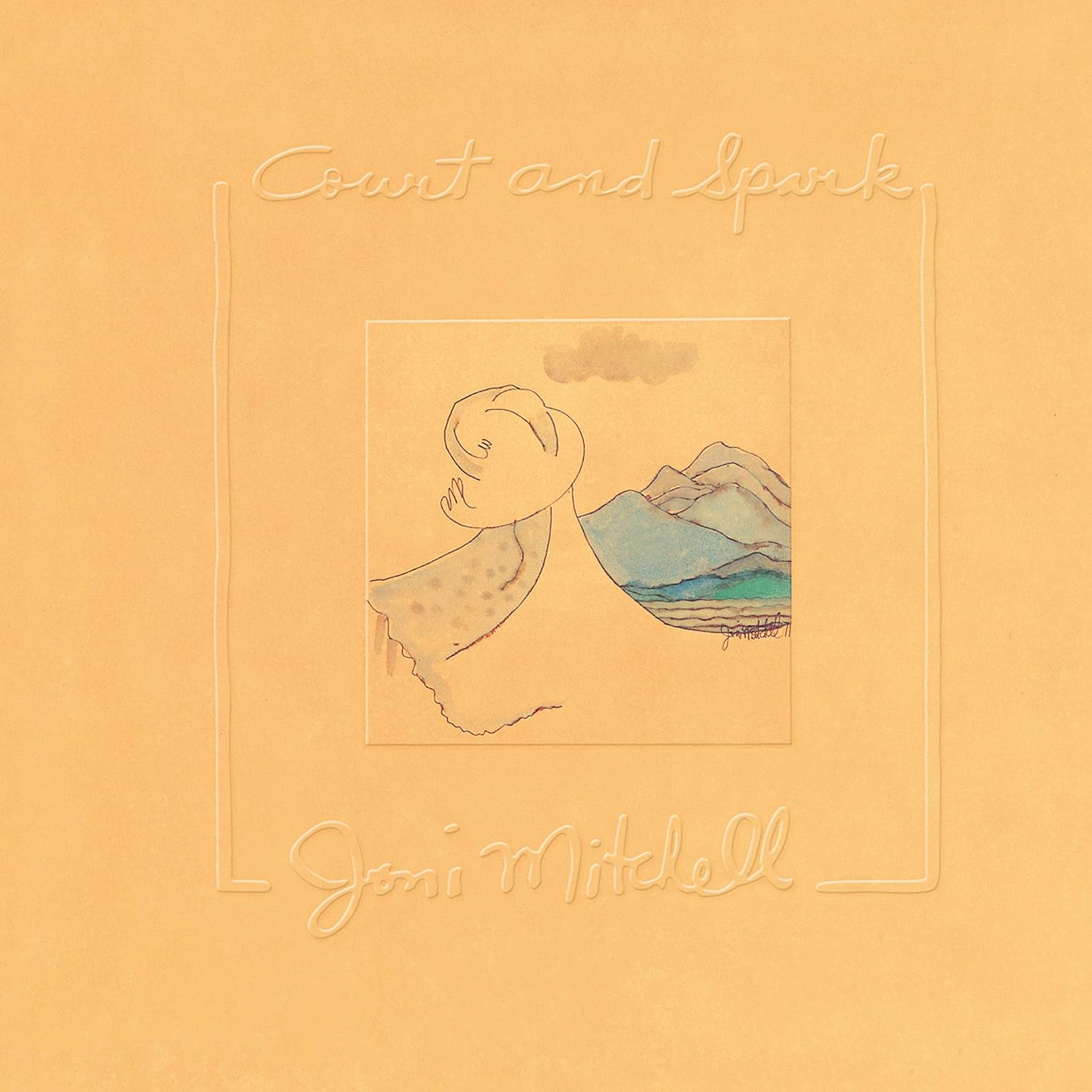
Joni Mitchell: Court and Spark
1974 started with the release of one of the finest singer/songwriter albums of the 1970s, Joni Mitchell’s melodically and harmonically sophisticated, partly jazz-influenced, Court and Spark, an album that ended up in the record collection of most of the young ladies I knew in the 1970s, and deservedly so. As a music lover, it is the quality and distinctiveness of her music that wins me over, and how her music not only supports her nicely crafted set of meaningful lyrics but weaves and seeps into their essence. Ensuring that Mitchell’s vision is fully and artfully realized, and is a masterfully finished product, Tom Scott provides beautiful, engaging orchestral arrangements for some of the tracks and he and other musicians provide remarkable complementary contributions to fully complete Mitchell’s masterpiece. Every track Joni Mitchell has composed is a classic, and she ends the album with “Twisted”, AnnieRoss’s (of Lambert, Hendricks & Ross) clever overlaying of lyrics to Wardell’s Gray’s November 1949 recording of his instrumental composition “Twisted” with its masterful tenor saxophone solo, an appropriate way to end an album which owes part of its magic to Mitchell’s adept incorporation of jazz influences.

Harmonia: Musik von Harmonia
Released in January 1974, Harmonia’s debut album, “Musik von Harmonia” is, in my mind, the debut of German electronic cosmic space music. Many albums released before this have been classified into that umbrella term “Krautrock”, but for that specific flavor of German repetitive, sequence-driven, minimalist-inspired, partly ambient, but mostly hypnotic music that Tangerine Dream perfected and first showcased in their February 1974 release, Phaedra, and which Kraftwerk would popularize later in 1974 with their relatively more pop-oriented Autobahn album, it is this album that provided the prog world its first taste — the amuse-bouche for what is to shortly follow.
Musik von Harmonia is a collaborative masterpiece, uniting the talents of Michael Rother, Hans-Joachim Roedelius, and Dieter Moebius, all of whom were already renowned for their contributions to the German/Swiss avant-garde “rock” music scene. Together, they craft an auditory experience that well exceeds the existing conventional boundaries and expectations of pop music or of the contemporary progressive rock of the time. It works wonderfully as ambient, background music to read or do repetitive tasks during its forty-two minutes of mechanical-like mysteriousness, but it is even better for concentrated listening, as one allows oneself to get pulled into the funneling, black-hole sonics of this trio’s relentless and imaginative industrial-electronic soundscape.

Carly Simon: Hotcakes; Graham Nash: Wild Tales
Released in January 1974, both these albums deserve mention for how they are successfully stamped with the creative musical style of their respective artists. My favorite track on Hotcakes is “Haven’t Got Time for the Pain” written while Simon was with child. While there is no one track that stands out on the Nash album, it bubbles with his captivating, pop-flavored, often country-music tinged musical style. As a bonus we have appearances by David Crosby, Stephen Stills, Neil Young, David Mason and a hint of Joni Mitchell’s vocals.
Discover more from zumpoems
Subscribe to get the latest posts sent to your email.

Leave a comment