Fifty Year Friday: July 1973

Jethro Tull: A Passion Play
After the musically masterful Aqualung and the impeccably crafted and executed Thick as a Brick, there were many of us in 1973 that had very high expectations for Tull’s next release. Those preceding albums had been released in March of 1971 and 1972, respectively, and it wasn’t until July of 1973 that the next studio album saw the light of day. Once it hit the record stores, my next-door neighbor brought it over to be played on the better stereo at my house and give me the opportunity to record on reel-to-reel, which I set at 7 1/2 inches per second, a speed I reserved (since I had limited funds to purchase recording tape) for recording the best albums.
The album starts out with a mysterious, dramatic opening: a heart beat, the wind, and a hint of the recurring musical theme with additional components eventually including a repeated organ pattern accented with drums, then a musical opening as energetic, upbeat, lively, and captivating as the material on Thick as A Brick — initially unfolding as organically as any prog-rock album up to that time. Vocals are added and the main theme is introduced, and this is followed by a wonderful shifting-meter section that includes soprano saxophone. The theme returns, followed by another strong instrumental section with acoustic guitar and soprano or sopranino sax, and all is well approaching the end of side one. Yes, one could argue that there is excessive musical repetition, however that is easily absorbed in any initial listening just as it was easily absorbed during that initial listening back in 1973. So all was great back then, until the last few minutes of side one, with the inclusion of the seemingly irrelevant, textually and musically, “Story of the Hare Who Lost His Spectacles”, which sounds like an aggressively-abbreviated and vastly inferior nod to Prokofiev’s Peter and the Wolf. Oddly this section could have been placed entirely at the end of side one or two, but was divided, Solomon-like, so it marred both the end of the first side and opening of the second side. Thankfully, this diversion only lasts for less than 4 1/2 minutes, but it irrecoverably breaks any momentum and continuity. The second side includes much good material, but even with the forced inclusion of the “Passion Play theme” most notably as a coda to finalize the album, much of the music sounds unrelated to anything from the first side.
How then to critique something that really outshown 98% or more of the music being released at that time, yet it could not meet the standard for musical cohesiveness set by a few exceptionally rare cases, such as Yes’s Fragile, or Jethro Tull’s own Aqualung or Thick as a Brick? Well, for what it’s worth, back in 1973, the two of us, my next-door neighbor friend and I, as teenage listeners, him 19 and I recently 18, our expectations, primed by the two exceptionally strong previous two albums, ended up disappointed. That did not inhibit my immersing myself in multiple replays, on headphones, mostly, of the Passion Play LP content I had recorded on reel-to-reel. I found much to like, and enjoy, but ultimately rarely played the album after the initial week of repeated listening. The album was panned by the senior rock critic of the L.A. Times, whose name I will just as soon not mention — enough just to say that he generally panned all prog-rock, focusing on his perceived excellence of groups like the New York Dolls, whose first album was released also in July of 1973.
Years later, with informed by the wealth of information on the internet, and in preparation to hearing this album again prior to writing this month’s entry in the zumpoem’s blog, I learned that the initial material intended for the new album started as a set of individual songs, even though Ian Anderson’s and the band’s intent was to create something much like the previous Thick as a Brick but done seriously without the intentional irony. The material as it was created and worked out, seemed to have a common theme around how different animals could be related to human behavior, but due to the material ultimately not convincingly coalescing into a final product, perhaps partly due to challenges with food-based illness for some members of the band at the recording venue, the Château d’Hérouville recording studio about 21 miles north north-northeast of central Paris, the material was essentially shelved with only a small portion being leveraged when the band resumed their work in the UK at Morgan Studios, with a general agreement to start anew. Due to upcoming tour dates, the band was left with little time, with that limited time forcing them to work intensely, putting in long hours at the studio, sometimes late into the night. Ian Anderson later expressed his dislike around the mechanics of the sax, an instrument he used generously on the album, and mentioned the awkwardness of dealing with reeds, which became soggy and chaffed his lips, as well as his lack of training, practice, and lack of affinity for the instrument.
Seems to me that it was a combination of circumstances that collectively insured that A Passion Play fell short of the quality established by Thick as a Brick, quite a high bar for any group to expect to clear twice in succession. Fortunately for us, the material from that French chateau recordings was partly or even mostly preserved and made available to us on the first CD of the 1993 Nightcap album and on the 2014 Steven Wilson’s 2 CD remix of A Passion Play with the second disc containing these Château d’Hérouville tracks. It is understandable why the band hit an impasse with the original material, or fell slightly short in their rushed second attempt, yet included in A Passion Play is some exceptionally good music. It makes one wonder whether if the band had had some additional time and had deviated from the common prog-rock approach of creating an album by a generally accretive compositional approach but instead had pruned and sculpted the sum of all the material created in the two studios between the end of 1972 and early 1973 into a single LP, the result might have been the finest Jethro Tull album ever. This was not meant to be, but at least what we have with A Passion Play is an album containing mostly exciting and satisfying musical material, that, though not setting any standards for musical cohesiveness, is incredibly enjoyable and withstands repeated listening and the test of time.
For those without access to the Steven Wilson remastered Passion Play, the Château d’Hérouville tracks are available from the Jethro Tull youtube channel: https://www.youtube.com/watch?v=1L9dPAsadUY&list=OLAK5uy_kqxlbUqgYKgsxvqnHaeb_US5lE6ynHaOA
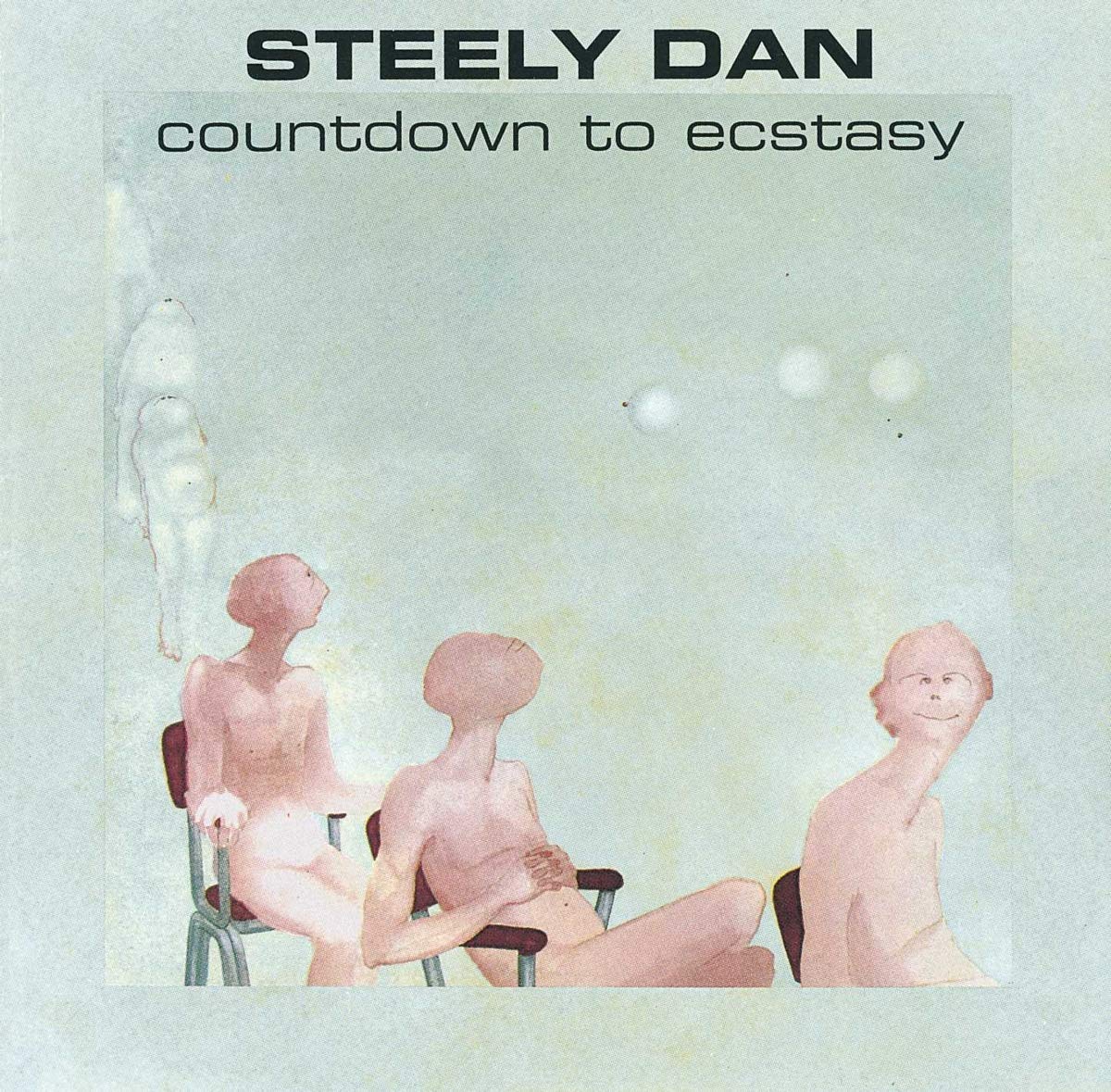
Steely Dan: Countdown to Ecstasy
Released sometime in July 1973, Steely Dan’s follows up their excellent first album with an equally strong second album — this time with all lead vocals handled by Donald Fagan. Some of the songs, such as “Bodhisattva”, a simple blues-progression, rock and roll tune, take on special life through the selective use of substitution chords and imaginative, quality soloing, while some other songs work well by seamlessly combining great music with inventive, imaginative, or memorable lyrics. My favorite is the final track, “King of the World”, which I first heard, for the first, second, third, fourth time, and perhaps fifth time at the 1974 California Jam, from a lengthy mixtape played from the very latest hours of the evening prior to the concert (many of us arrived the night before to get a seat close to the front) until well into the next morning, a few minutes before the start of the first act. Wowed by both music and lyrics, as well as the wonderful, straightforward synth solo, this song has had a place in my heart ever since. The lyrics, how they unfold, portray and characterize the persona, in this case the individual reaching out on the ham radio, and the economy of word usage and choice, are well-suited for study by any beginning lyricist. Of course, the album itself should be of interest to any music lover.

Genesis: Genesis Live
Released in the UK on July 20, 1973, this historically important album contains some of the material recorded for the King Biscuit Flower Hour in February 1973. Genesis’s record label, Charisma, advised the band it was in everyone’s interest to release this material prior on a budget album that could readily be sold at local stores like Woolworths and bookseller/music retailer WH Smith. This was agreed on by the band providing the album was not released in the US, due to concerns from Peter Gabriel over the quality of the recordings. Soon after Selling England by the Pound was released in the US, the Genesis Live album showed up as a low priced album ($2.99) in our local record stores, and so I eagerly purchased a copy.
Maybe the recording quality wasn’t up to the standards wished for by Gabriel, but it provides a great document of a amazingly proficient and creative group capturing them at their artistic best. The material was remastered in 1994, but doesn’t contain “Supper’s Ready”, also captured as part of the 1973 recordings — however, this was eventually released in 2009 as a bonus track on the Live at the Rainbow, . What this live album does include is amazing, particularly this 1973 live version of “The Return of the Giant Hogweed” with its baroque-like counterpoint, creative handling of meter and harmonic progressions, and concert-hall demands on the performers.
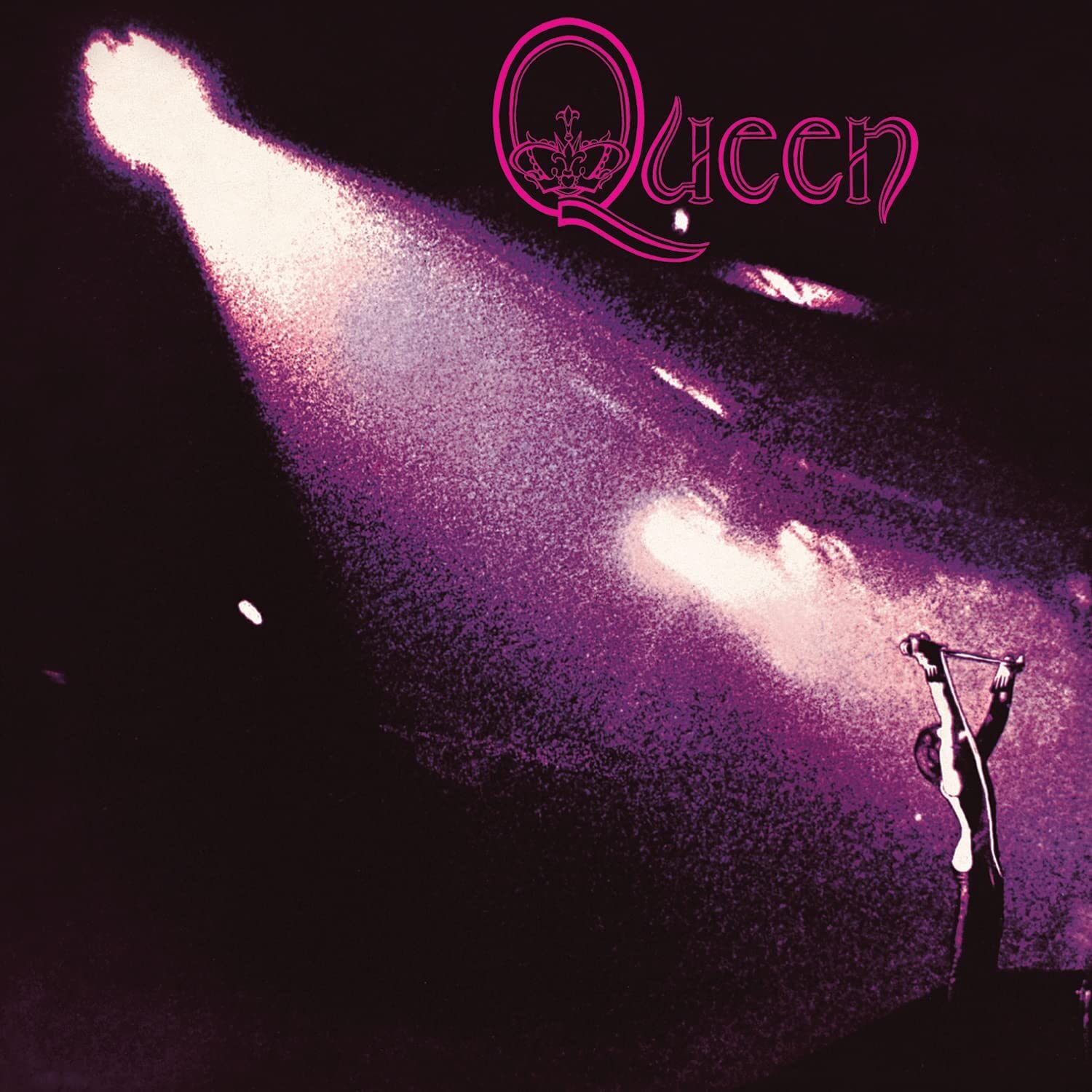
Queen: Queen
Released on July 13, 1973 in the UK and in early September in the U.S., this was an album I bought after getting all the earlier Queen albums soon after hearing tracks from Queen’s third album, Killer Queen and the just released fourth album, Night At the Opera from a cassette played in the car stereo of the friends of my good friend from next door. As I bought albums in reverse order until I got to the first Queen album, I was able to get a sense of how the group progressed and was pleasantly surprised how good that first album was. Of course, I later learned that the group really had been together since 1970, giving them ample time crafting and improving that material for that first album.
What makes the album immediately appealing is the effortless blend of hard rock, prog rock, and prog-folk elements, the vocal harmonies, the dramatic expressiveness, May’s distinctive guitar, and Mercury’s quality vocals. From the first track, already branded indelibly with Queen’s signature sound, to the short instrumental that ends the album, the album has enough of the later Queen energy and cleverness to make it mandatory listening for those of us that love the creativity and musical singularities of this group.
